Tag: Norway

  • ‘Russian spy’ whale was shot dead: animal rights groups

    ‘Russian spy’ whale was shot dead: animal rights groups

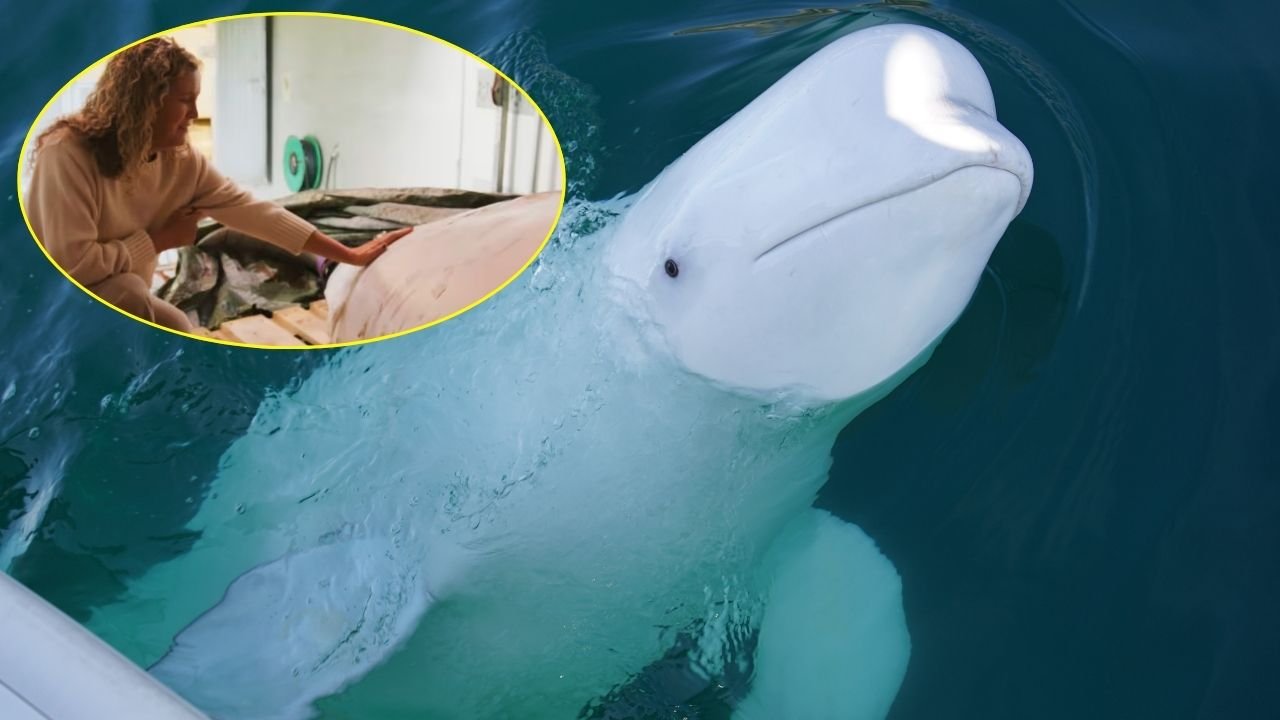
    Animal rights groups on Wednesday said gunfire killed a beluga whale that rose to fame in Norway after its unusual harness sparked suspicions the creature was trained by Russia as a spy.

    The organisations NOAH and One Whale said they had filed a complaint with Norwegian police, asking them to open a “criminal investigation”.

    Nicknamed “Hvaldimir” in a pun on the Norwegian word for whale, hval, and its purported ties to Moscow, the white beluga first appeared off the coast in Norway’s far-northern Finnmark region in 2019.

    He was found dead on Saturday in a bay on Norway’s southwestern coast. His body was transported on Monday to a local branch of the Norwegian Veterinary Institute for autopsy.

    His body was transported on Monday to a local branch of the Norwegian Veterinary Institute for autopsy.

    The report is expected “within three weeks”, a spokeswoman for the institute said. “He had multiple bullet wounds around his body,” the head of One Whale, Regina Crosby Haug who said she viewed Hvaldimir’s body on Monday, told AFP.

    One Whale was founded to track the beluga, which had become a celebrity in Norway. “The injuries on the whale are alarming and of a nature that cannot rule out a criminal act—it is shocking,” NOAH director Siri Martinsen said in a statement. “Given the suspicion of a criminal act, it is crucial that the police are involved quickly,” she said.

    A third organisation which also tracked the whale’s movements, Marine Mind, said it found Hvaldimir’s dead body floating in the water on Saturday around 2:30 p.m. local time. “There was nothing to immediately reveal the cause of death,” director Sebastian Strand told AFP. “We saw markings but it’s too early to say what they were.”

    He said marine birds probably caused some of the markings but said there was no explanation for others at this stage. With an estimated age of 15 to 20, Hvaldimir was relatively young for a beluga whale, which can live to between 40 and 60 years of age. When he was found in 2019, Norwegian marine biologists removed a man-made harness with a mount suited for an action camera and the words “Equipment St. Petersburg” printed in English on the plastic clasps.

    Norwegian officials said Hvaldimir may have escaped an enclosure and may have been trained by the Russian navy as he appeared to be accustomed to humans. Moscow has never issued any official reaction to speculation that he could be a “Russian spy”.

  • 10 easiest European citizenships

    10 easiest European citizenships

    Many people from developing countries aspire to acquire citizenship in European states. Some countries offer relatively straightforward paths to citizenship, while others present significant challenges. Sweden stands out as the easiest country in Europe for obtaining citizenship, whereas Estonia and Latvia are the most challenging.

    A recent study by CIS analysed Eurostat immigration data from 2009 to 2021 to identify which countries have the highest and lowest rates of non-EU residents acquiring citizenship.

    The analysis revealed that the nine most challenging countries to obtain citizenship are located in Central Europe. Estonia ranks as the most difficult country for non-EU citizens to naturalise, with the lowest average acquisition rate—approximately one in 200 residents. Additionally, the acquisition rate for men in Estonia is lower at 0.58 percent compared to 0.69 percent for women.

    Latvia, the Czech Republic, and Lithuania also have acquisition rates of less than 1 percent for non-Europeans, contrasting sharply with the average of 3.56 percent across European countries. Austria, Liechtenstein, Slovakia, Slovenia, and Germany follow, granting citizenship to about one in fifty non-EU residents. Denmark, outside Central Europe, presents the next highest hurdle with an acquisition rate of 2 percent.

    Over the past decade, six of the ten most challenging countries have seen an increase in citizenship grants year-on-year, particularly Denmark, which experienced a notable rise. Germany’s acquisition rate remained stable, while Latvia, Lithuania, and Slovenia saw declines.

    Many countries implement various programs aimed at attracting foreigners, including opportunities for investment, as well as citizenship and tax benefits.

    Individuals seeking migration often favour Golden Visa and Golden Passport routes, terms that are sometimes used interchangeably despite minor distinctions.

    10 Easiest European Countries to Get Citizenship

    According to the report, Sweden ranks as the easiest country, with nearly one in ten (9.3 Perce) non-EU residents obtaining citizenship—more than double the EU average.

    Sweden boasts the highest acceptance rates for both genders, with women experiencing a slightly higher acceptance rate of 10.02 percent compared to 8.66 percent for men.

    Norway, the Netherlands, Portugal, and Iceland follow as the second to fifth easiest countries to acquire citizenship, with an acquisition rate of one in 25 (4 percent).

    Data shows that northern European countries generally have the highest citizenship acquisition rates, with Sweden, Norway, Iceland, and Finland leading the pack.

    In southern Europe, Portugal emerges as the easiest, while the Netherlands, Ireland, and the United Kingdom are the most accessible Western European states for citizenship. The UK ranks eighth, with nearly three in 50 (3.2 percent) residents granted citizenship.

    Poland and Croatia are the easiest countries in Central Europe for changing nationality, with acquisition rates of 4 percent and 3.9 percent respectively. Northern and Western Europe present the most accessible regions for nationality changes, with an acquisition rate of 5.9 percent compared to 1.9 percent in Central Europe and 3.6 percent in the South.

  • Spain, Ireland and Norway recognise Palestinian state

    Spain, Ireland and Norway recognise Palestinian state

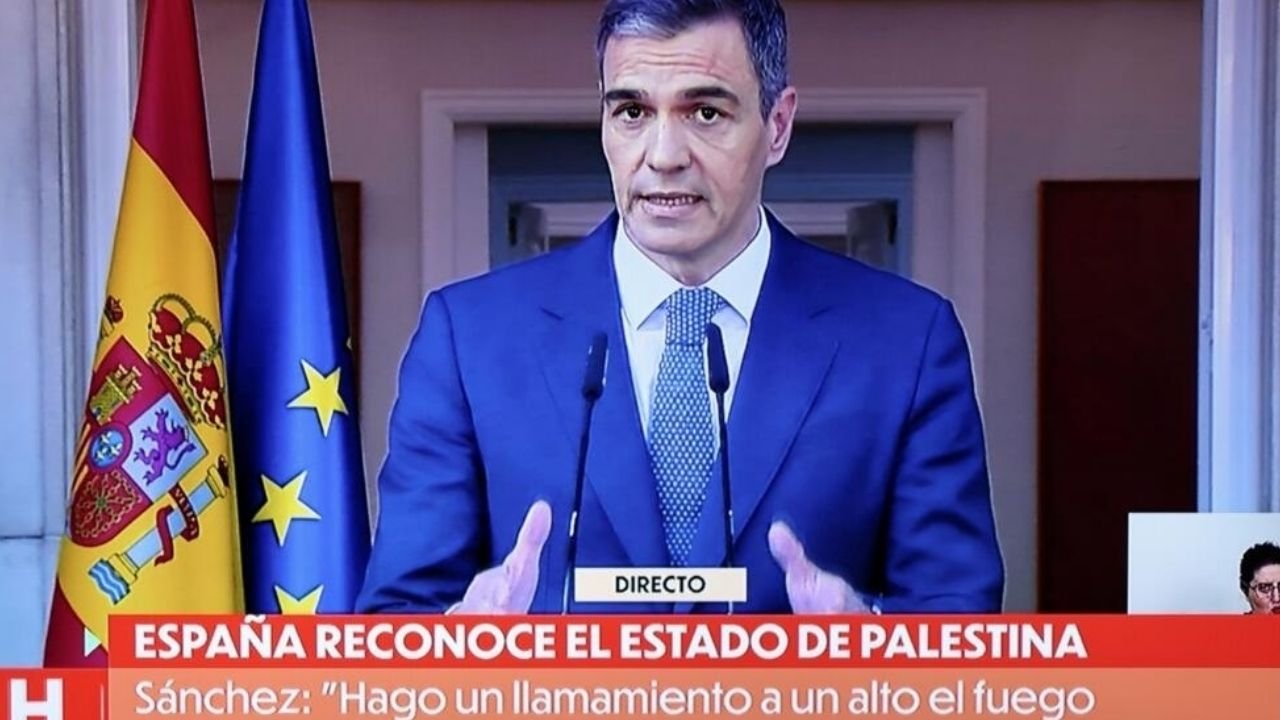
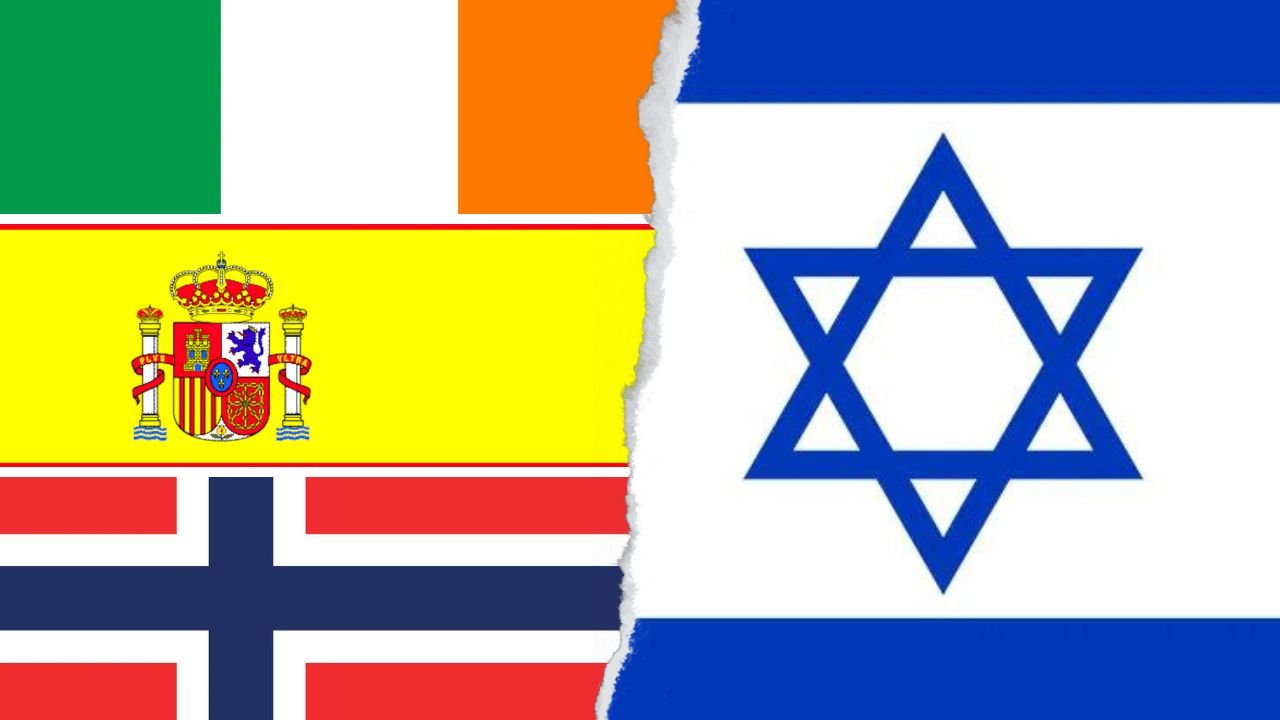
    Madrid (AFP) – Spain, Ireland and Norway are formally recognising a Palestinian state on Tuesday in a decision slammed by Israel as a “reward” for Hamas more than seven months into the genocide against Palestinians in Gaza.

    The three European countries believe their initiative has strong symbolic impact, which is likely to encourage others to follow suit.

    “Recognition of the State of Palestine is not only a matter of historic justice… It is also an essential requirement if we are all to achieve peace,” Spanish Prime Minister Pedro Sanchez said before meeting his cabinet.

    The move, he said, was “not against anyone, least of all Israel”.

    “It is the only way to move towards the solution that we all recognise as the only possible way to achieve a peaceful future — that of a Palestinian state living side-by-side with the state of Israel in peace and security.”

    Sanchez also said the decision reflected Spain’s “outright rejection of Hamas, which is against the two-state solution” and whose October 7 attacks led to the Gaza war.

    The plans were unveiled last week in a coordinated announcement by the prime ministers of the three countries.

    Both the Spanish and Irish cabinets were meeting to formally approve the step on Tuesday morning, while Norway informed Palestinian prime minister Mohammed Mustafa its recognition would also take effect the same day.

    Entering the cabinet meeting, Irish Prime Minister Simon Harris said it was “an important moment”.

    He said it sent “a signal to the world is that there are practical actions you can take as a country to help keep the hope… of a two-state solution alive”.

    ‘Incitement to genocide’

    The decision has provoked a furious response from Israel and further exacerbated diplomatic tensions, notably with Spain.

    Last week, Sanchez’s far-left deputy Yolanda Diaz hailed the move saying: “We cannot stop. Palestine will be free from the river to the sea”, which Israel’s Madrid envoy denounced as a “clear call for the elimination of Israel”.

    The slogan refers to the British mandate borders of Palestine, which stretched from the River Jordan to the Mediterranean before Israel was created in 1948.

    On Tuesday, Israeli Foreign Minister Israel Katz went even further.

    “Sanchez, as long as you don’t fire your deputy and you recognise a Palestinian state, you are participating in the incitement to commit genocide and war crimes against the Jewish people,” he wrote on X.

    On Sunday, Katz posted a video on X splicing footage of the October 7 attacks with flamenco dancing, saying: “Sanchez: Hamas thanks you for your service”.

    Spain condemned the post as “scandalous and revolting”.

    On Monday, Katz ordered the first of a series of “preliminary punitive measures”, ordering Spain’s Jerusalem consulate to stop offering consular services to Palestinians in the occupied West Bank.

    Differences within the EU

    Recognising Palestinian statehood has provoked sharp disagreement within the 27-nation European Union.

    For decades, formal recognition of a Palestinian state has been seen as the endgame of a negotiated peace between Israelis and Palestinians.

    Washington and most Western European nations have said they are willing to one day recognise Palestinian statehood, but not before agreement on thorny issues like the status of Jerusalem and final borders.

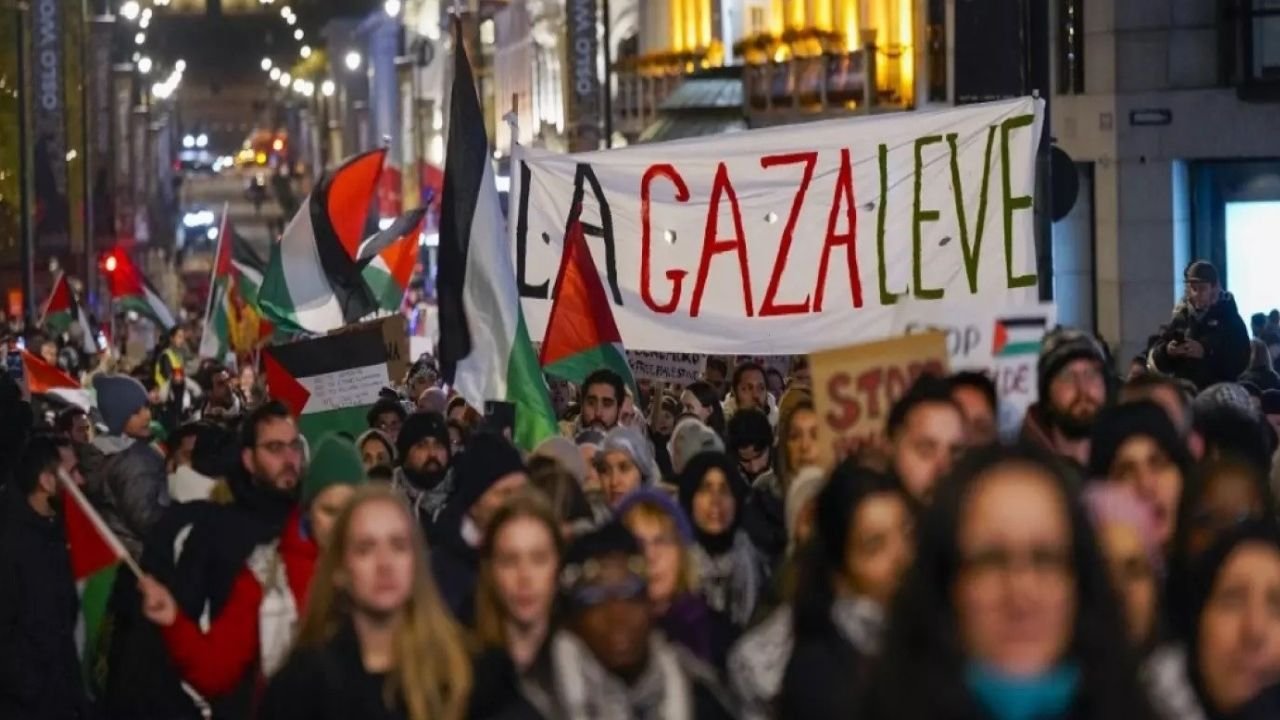
    The Gaza bloodshed has revived calls for Palestinians to be given their own state.

    Ever more European countries are expressing a desire to do so, although others remain reticent.

    France, for example, believes it is not the right time to do so, while Germany only envisages recognition following negotiations between the two sides.

    Tuesday’s move will mean 145 of the United Nations’ 193 member states now recognise Palestinian statehood.

    In 2014, Sweden became the first EU member to recognise a Palestinian state.

    It followed six other European countries that took the step before joining the bloc — Bulgaria, Cyprus, the Czech Republic, Hungary, Poland and Romania.

    Israeli genocide against Palestinians in Gaza has killed more than 36,000 people, also mostly civilians, according to the health ministry.

  • Israel recalls its envoys to Ireland, Norway, Spain

    Israel recalls its envoys to Ireland, Norway, Spain

    Israel recalled its ambassadors to Ireland, Norway and Spain on Wednesday and also summoned their envoys in protest at the three governments’ recognition of a Palestinian state.

    Foreign Minister Israel Katz charged that all three countries were rewarding the Palestinian group Hamas for their October 7 attack which sparked the Gaza war.

    “The twisted step of these countries is an injustice to the memory of the 7/10 victims,” he said in a statement.

    Israel’s envoys were being recalled from Dublin, Oslo and Madrid for “urgent consultations” and threatened “serious consequences”, the minister added.

    Katz said that the three countries’ ambassadors were also being summoned for a “conversation that would rebuke” their governments’ decision to recognise a Palestinian state by May 28.

    Israeli genocide against Palestinians has killed at least 35,647 people in Gaza, mostly women and children, according to the Hamas-run territory’s health ministry.

    Katz said he would show the three ambassadors a video of the kidnapping of female Israeli soldiers during the Hamas attack.

    “They decided to award a gold medal to the murderers and rapists of Hamas,” Katz said. “We will demonstrate to them what a twisted decision their governments took.”

    mod-jd/fz

    © Agence France-Presse

  • Spain, Norway, Ireland recognise Palestine state in historic move

    Spain, Norway, Ireland recognise Palestine state in historic move

    Spain, Norway and Ireland have officially recognised the Palestinian state on Wednesday, paving the way for other European countries to do the same.

    The momentous development comes as yet another setback to Israel after the ICC announced this week that it will seek arrest warrants for Prime Minister Benjamin Netanyahu and Defence Minister Gallant for war crimes.

    “Today, Ireland, Norway and Spain are announcing that we recognise the state of Palestine,” Irish Prime Minister Simon Harris announced at a news conference, adding that other countries will join them within a few weeks.

    Israel reacted by announcing that it has recalled its ambassadors to Norway and Ireland. The occupying country’s ambassador to Spain had already been recalled in November last year.

    During the news conference, Harris said that he viewed the two-state solution as the only viable pathway for peace and security for the peoples of Israel and Palestine.

  • Norway removes Pak from terror threat assessment list

    Norway removes Pak from terror threat assessment list

    The Norwegian government has removed Pakistan from the National Threat Assessment List which is published by the country’s Police Security Service.

    Pakistan’s inclusion in the list poses significant challenges for Pakistani students and researchers who want to pursue their studies or careers in Norway.

    The decision came about after active diplomacy from Islamabad in persuading Norwegian authorities to remove its name from their list of nations of “security concern,” reported the Associated Press of Pakistan (APP).

    “Pakistan’s diplomatic initiatives bore fruit, leading to its removal from the list,” the report read.

    “The announcement came through the latest report issued by Norway’s Police Security Service, which holds responsibility for intelligence and security matters within the country.”

    The terror threat assessment is a crucial report that identifies potential threats to Norway’s national security including Espionage, Proliferation, Terrorism, and threats to government officials.

  • Viva Espana; Spain refuses to cut aid for Gaza

    Viva Espana; Spain refuses to cut aid for Gaza

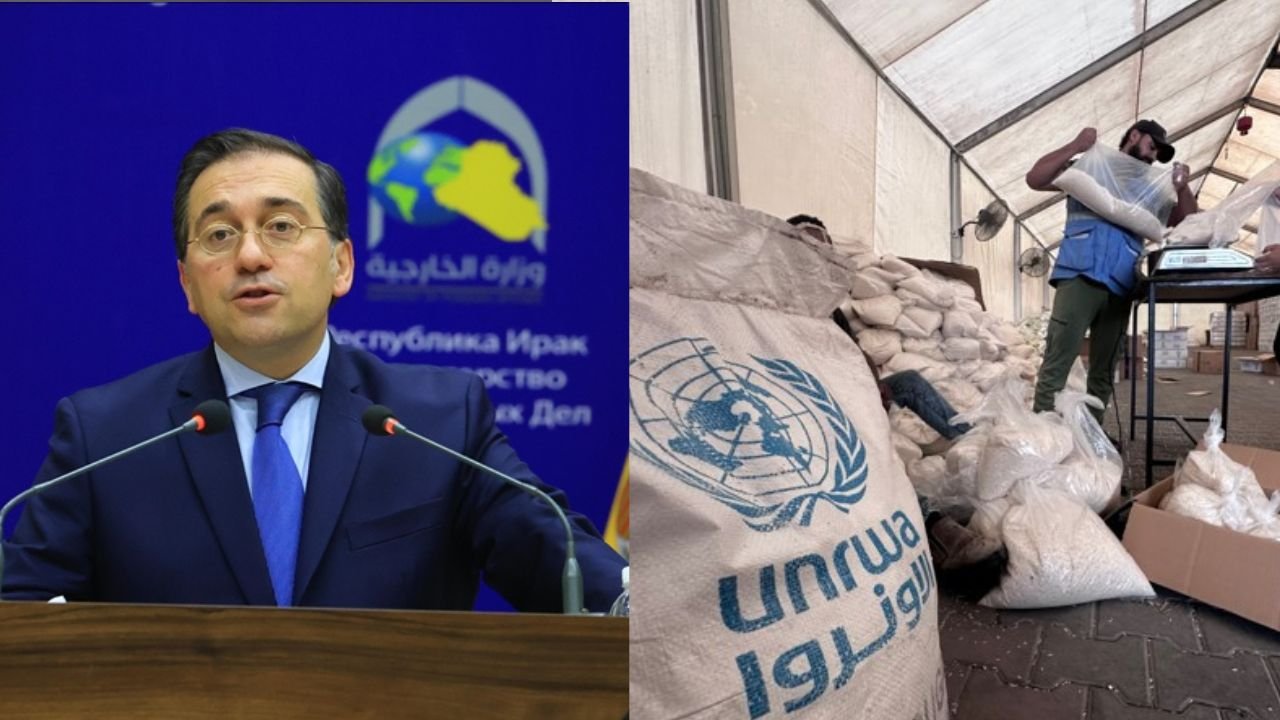
    The Spanish foreign minister has announced that Spain will maintain its support for The United Nations Relief and Works Agency for Palestine Refugees (UNRWA) in Gaza despite USA, Canada and Australia withdrawing its support and funding, reports Alyssa Mcmurty News Agency.

    During a parliamentary commission meeting, Jose Manuel Albares called the UN agency “‘indispensable,” and said the funding helps “alleviate the terrible humanitarian situation in Gaza.”

    His announcement comes after a growing number of Western nations are freezing funding for the agency amid an internal investigation about some employees’ roles in the Oct. 7 attack on Israel after allegations were made by Israel.

    Around a dozen nations, including the United States, Canada, the UK, Germany, France, Japan Australia, and Austria, have suspended funding. Meanwhile, a minority of Western nations like Ireland, Norway, New Zealand, Saudi Arabia, Turkey, Belgium, Kuwait, and Qatar have spoken out against the funding cuts.

    On Monday, Spain’s foreign minister said Spain will be following the agency’s internal investigation closely, but highlighted the inquiry is looking at the acts of “around a dozen people out of UNRWA’s 30,000 workers.”

    On Sunday, the UN agency released a statement saying its “life-saving aid may end” due to the funding freezes, adding that as the primary aid agency in Gaza, it runs shelters for over 1 million people and provides food and healthcare.

    UN Special Rapporteur Francesca Albanese has said that governments suspending funds to the UN’s agency for Palestinian refugees (UNRWA) represents “double standards” when they continue to support Israel, whose actions “plausibly constitute” genocide.

    We are shocked by the reckless decision to cut a lifeline for an entire population by some of the very countries that had called for aid in Gaza to be stepped up and for humanitarians to be protected while doing their job,” the 21 NGOs said in a statement.

    Spain’s junior coalition party Sumar posted on X that the decision to cut aid is “an attack against humanity” and “collective punishment.” It added that it will pressure the Spanish government to boost funding for the organization.

    Meanwhile, Albares added that Spain has tripled its funding to Palestine in recent months to around €50 million ($54 million), which includes funding for UNWRA.

    The Spanish foreign minister also told politicians that Spain supports Friday’s ruling of the top UN court which calls on Israel to prevent genocide. “We urge the integral compliance with this sentence by all parties. We request an urgent cease-fire and the entrance of humanitarian aid,” he added.

    Albares warned that the violence in Israel and Palestine could spill over to neighboring nations, which could have “devastating effects for those countries, and the entire Mediterranean region, which, of course, includes Spain.”

    The Spanish government continues pushing for an international peace conference, which would, in effect, see the entire international community recognizing a “viable” Palestinian state. Albares said that 88 nations now back the idea.

    “We will not resign ourselves to watching more innocent women, men, and children killed in Gaza and more suffering of Palestinian families,” he said. “We will not resign ourselves to keep watching the suffering of the families of hostages. The violence must stop.”

  • US-led coalition to patrol Red Sea against Houthi attacks

    US-led coalition to patrol Red Sea against Houthi attacks

    The United States on Monday announced a 10-nation coalition to quell Houthi missile and drone attacks on ships transiting the Red Sea, with Britain, France, Bahrain and Italy among countries joining the “multinational security initiative.”

    “Countries that seek to uphold the foundational principle of freedom of navigation must come together to tackle the challenge posed by this non-state actor,” US Defense Secretary Lloyd Austin said in a statement.

    Iran-backed Houthi rebels have escalated attacks on tankers, cargo ships and other vessels in the Red Sea, imperiling a transit route that carries up to 12 percent of global trade.

    The security coalition, Austin said, will operate “with the goal of ensuring freedom of navigation for all countries and bolstering regional security and prosperity.”

    It includes the United States, United Kingdom, Bahrain, Canada, France, Italy, Netherlands, Norway, Seychelles and Spain, Austin said.

    Yemen’s Iran-backed Houthi rebels said earlier they had attacked two “Israeli-linked” vessels in the Red Sea in solidarity with Gaza, as more companies halt transit through the troubled but vital waterway.

    The attacks on the Norwegian-owned Swan Atlantic and another ship identified by the Houthis as the MSC Clara are the latest in a flurry of maritime incidents that are disrupting global trade in an attempt to pressure Israel over its war against Hamas militants.

    In a statement, the Yemeni rebels said they had carried out a “military operation against two ships linked to the Zionist entity” using naval drones.

    They vowed to “continue to prevent all ships heading to Israeli ports… from navigating in the Arab and Red Seas” until more food and medicine is allowed into Gaza.

    But the Swan Atlantic’s owner, Norway’s Inventor Chemical Tankers, said in a statement the ship was carrying biofuel feedstock from France to Reunion Island.

    It said the vessel has “no Israeli link” and was managed by a Singaporean firm, adding that the Indian crew were unharmed and the vessel sustained limited damage.

    British oil giant BP became the latest to suspend transit through the Red Sea on Monday, while Taiwan shipping firm Evergreen said it was suspending its Israeli cargo shipments with immediate effect.

    Frontline, one of the world’s largest tanker companies, also said it was rerouting ships and would “only allow new business” that could be routed via South Africa’s Cape of Good Hope.

    That route is far longer and uses more fuel.

    The Red Sea attacks have forced insurance companies to significantly increase premiums on ships, making it uneconomical for some to transit through the Suez Canal.

    Italian-Swiss giant Mediterranean Shipping Company, France’s CMA CGM, Germany’s Hapag-Lloyd, Belgium’s Euronav and Denmark’s A.P Moller-Maersk — the latter accounting for 15 percent of global container freight — have all stopped using the Red Sea until further notice.

    The attacks have become “a maritime security crisis” with “commercial and economic implications in the region and beyond,” Torbjorn Soltvedt of analysis firm Verisk Maplecroft told AFP.

    Monday’s attack took place as the Pentagon chief visited Israel after a stop in Bahrain, home base of the US Navy’s Fifth Fleet.

    “In the Red Sea, we’re leading a multinational maritime taskforce to uphold the bedrock principle of freedom of navigation. Iran’s support for Houthi attacks on commercial vessels must stop,” Austin said at a news conference.

    On Saturday, a US destroyer shot down 14 drones in the Red Sea launched from rebel-controlled areas of Yemen, the US military said.
    Britain said one of its destroyers had also brought down a suspected attack drone in the area.

    Rebel spokesman Mohammed Abdul Salam said neutral Oman had launched mediation efforts to safeguard shipping using the waterway.

    “Under the sponsorship of our brothers in the Sultanate of Oman, communication and discussion continue with a number of international parties regarding operations in the Red Sea and Arabian Sea,” he said on X, formerly Twitter.

    The Gaza war broke out when its rulers Hamas launched an unprecedented attack on Israel on October 7, killing around 1,140 people and kidnapping some 250, according to an AFP tally based on official Israeli figures.

    Gaza’s health ministry says Israel’s military response has killed more than 19,450 people, mostly women and children.

  • World reacts to Israel’s breach of international laws

    World reacts to Israel’s breach of international laws

    While many of its old allies still support Israel as it continues to bomb Gaza, a number of countries are now raising concerns over Israel’s breach of international laws.

    Russia

    President Vladimir Putin responded to the Israel-Palestine escalation by condemning the “catastrophic” deaths and criticised Washington’s involvement in the Middle East peace settlement.

    During a meeting with Iraqi Prime Minister Muhammad Shia al-Sudani, he said “This is a vivid example of the failure of Middle East policies of the United States [as it] tried to monopolise the [peace] settlement”.

    “But, unfortunately, [the US] was not concerned about the search for compromises for both sides and, vice versa, promoted their own conceptions about how it should be done, [and] pressured both sides,” he added.

    Moscow has also refused to label Hamas as a terrorist organisation.

    “We maintain contact with [both] sides of the conflict,” Kremlin spokesperson Dmitry Peskov said.

    “Of course, Russia continues to analyse the situation and keeps its position as a nation that has the potential to participate in the settlement process.”

    China

    On Thursday, China’s top diplomat and foreign minister Wang Yi stated that the issue of Palestinian is central to the Middle East conflict, and that denial of “justice” to the Palestinian people was at its core.

    Turkey

    Turkish President Recep Tayyip Erdogan spoke to German Chancellor Olaf Scholz, asserting that a lasting solution to the conflict lies in the establishment of a sovereign Palestinian state with its capital in East Jerusalem within the 1967 borders .

    Ireland

    Irish Prime Minister Leo Varadkar has criticised Israel for violating international humanitarian law and halting water, food and electricity supply into the Gaza Strip.

    “Israel is under threat. They do have a right to defend themselves, but they don’t have the right to breach international humanitarian law,” he said in an interview with TVE.

    “To me, it amounts to collective punishment. Cutting off power, cutting off fuel supplies and water supplies, that’s not the way a respectable democratic state should conduct itself.”

    He has, however, also urged Hamas to release all the Israeli captives, saying that Israel is “justified in attacking Hamas in Gaza and elsewhere.”

    Former Irish President Mary Robinson has also commented on the escalation, deeming Israel’s response to Hamas attacks as collective punishment.

    Robinson asserted that Ireland has been a “very good voice in acknowledging the suffering of occupation and the continual problems of Palestinians over decades.”

    Richard Boyd Barrett, Irish MP, addressed the Dáil Éireann, the lower house of the Irish parliament, during a discussion on the Irish Government’s response to the situation in Gaza.

    “The Israeli Government has brazenly, publicly and openly declared its intention to commit a war crime, and has commenced that war crime against the people of Gaza”, he said.

    Scotland

    Hamza Yousaf, the first minister of Scotland, has also spoken up against the Israeli attacks on Gaza.

    He posted on X (formerly Twitter), quoting the latest UN statement that warns about the dire consequences of Israeli orders of evacuation of Gaza.

    “The international community must step up and demand an end to collective punishment. Enough. There can be no justification for the death of innocent men, women & children.”

    He also shared a video of his mother-in-law, Elizabeth El-Nakla, calling for help.

    She was visiting her relatives with her husband when Hamas attacked on Saturday.

    Norway

    The Norwegian foreign minister, Anniken Huitfeldt, has said on Thursday that while Israel has the right to defend itself against Hamas, a total blockade of Gaza cannot be supported.

    “The establishment of a full blockade, including on access to electricity, water, food, and other goods that are indispensable for the survival of the civilian population in Gaza, is unacceptable,” she stated.

    She further pointed out that self-defense measures must be taken within international law.

    “The scale of destruction in Gaza is enormous. A large number of civilians have been killed. Given a full blockade by Israel, closed border crossings, and continued Israeli attacks, I fear that the civilian population in Gaza will face even greater hardship in the days to come,” Huitfeldt said.

    She also warned that suspension or decrease in assistance to Gaza can worsen the matter.

    “Functioning Palestinian institutions and the delivery of basic services are crucial to avoid further destabilisation and preserve the objective of the two-state solution.”

  • Actress Rani Mukherjee reveals she had a miscarriage in 2020

    Actress Rani Mukherjee reveals she had a miscarriage in 2020

    Bollywood actress Rani Mukherjee has revealed that she suffered a miscarriage a few years ago. At the Indian Film Festival of Melbourne 2023, she opened up about suffering a miscarriage in 2020, five months after the Covid-19 pandemic began. The incident happened before Mukherjee started filming ‘Mrs Chatterjee vs Norway’.

    “Maybe this is the first time I am making this revelation because in today’s world every aspect of your life is discussed publicly, and becomes an agenda for talking about your film to get more eyeballs. Obviously, I didn’t speak about this when I was promoting the film because it would have come across as me trying to speak about a personal experience that would propel the film…so, it was around the year when COVID-19 struck. It was 2020. I got pregnant with my second baby at the end of 2020 and I unfortunately lost my baby five months into my pregnancy.”

    The ‘Paheli’ actress recalled how the producer Nikhil Advani called her up ten days after the ordeal, and Mukherjee said she immediately connected with the script of the film because of what she was going through at the time:

    “After I lost my baby, Nikhil (Advani) would have called me probably like 10 days later. He told me about the story and I kind of immediately… not that I had to have the loss of a child to feel the emotion but sometimes there is a film in the right time of what you are going through personally to be able for you to connect with it instantly. When I heard the story, I was in disbelief. I never thought in a country like Norway an Indian family would have had to go through.”

    Mukherjee’s recent release ‘Mrs Chatterjee vs Norway’ is based on the real-life story of the Indian couple Anurup and Sagarika Bhattacharya, whose children were snatched away by the Norwegian welfare services, deeming the couple unfit to take care of their children. Sagarika sued the Norwegian government to win back custody of her children.