Tag: nuclear weapons

  • Pakistan’s nuclear program not linked to loan negotiations, says IMF representative

    Pakistan’s nuclear program not linked to loan negotiations, says IMF representative

    The International Monetary Fund (IMF) has refuted allegations that it imposed any conditions on the revival of a loan program that had been suspended for several months despite ongoing discussions between the two parties.

    Pakistan has been in discussions with the IMF since early February to negotiate the terms of the deal, which includes the adoption of policies aimed at addressing its fiscal deficit ahead of the annual budget in June. The funds are part of a $6.5 billion bailout package that the IMF approved in 2019, and which experts believe is critical for Pakistan to avoid defaulting on its external debt obligations.

    The delay in reaching a staff-level agreement with the IMF had prompted veteran politicians, Senator Raza Rabbani and former foreign minister Shah Mahmood Qureshi, to express concerns about whether the delay was due to the country’s strategic assets, including its nuclear and missile programs. They have called on the government to clarify this issue.

    In response, IMF resident representative in Islamabad, Esther Perez Ruiz, released a statement on Sunday denying any involvement in Pakistan’s nuclear program, stating that there was “absolutely no truth” to the rumors that program discussions with the authorities may have covered the issue.

    Ruiz further clarified that the discussions had focused exclusively on economic policies aimed at resolving Pakistan’s economic and balance of payments problems, in line with the Fund’s mandate for promoting macroeconomic and financial stability.

  • India and Pakistan were close to nuclear war, claims former US Secretary of State

    India and Pakistan were close to nuclear war, claims former US Secretary of State

    Former United States (US) Secretary of State Mike Pompeo revealed on Tuesday in his new memoir that arch rivals— India and Pakistan— were on the verge of nuclear war in February 2019.

    Pompeo, who served in President Donald Trump’s tenure, has written in ‘Never Give an Inch: Fighting for America I Love’ that he does “not think the world properly knows just how close the India-Pakistan rivalry came to spilling over into a nuclear conflagration in February 2019.”

    He says at the time, he was informed by his Indian counter-partner that Pakistan had begun to prepare for a nuclear strike on India. However, he asked him to give it some time to sort out the matter. Later, he reached out to Pakistani former Chief of Army Staff (COAS) Qamar Javed Bajwa.

    The ex-army chief told Pompeo that Indian allegations were baseless. He believed the Indians were preparing their nuclear weapons for deployment.

    Moreover, the former US official said that it took them a few hours and remarkably good work by their teams on the ground in New Delhi and Islamabad to convince both countries to desist.

    In February 2019, Delhi launched strikes to attack Pakistan after a militant attack on Indian troops in Kashmir. However, Pakistan shot down two Indian military jets and captured a fighter pilot who later was released.

    In 1974, India became the first country in the region to become a nuclear power while Pakistan attained nuclear power in 1998.

    It is pertinent to mention that neither India nor Pakistan has commented so far on Pompeo’s claims.

  • US is confident of Pakistan’s ability to keep its nuclear assets safe and secure

    US is confident of Pakistan’s ability to keep its nuclear assets safe and secure

    The United States (US) has said that it is confident of Pakistan’s ability to keep its nuclear assets safe and secure.

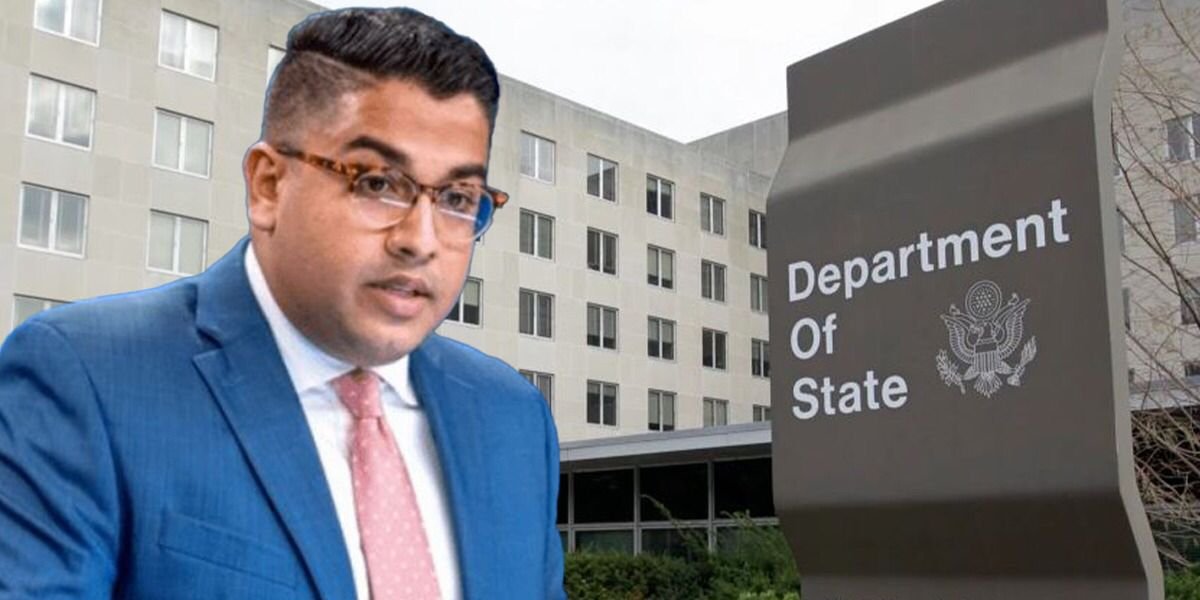
    “The United States is confident of Pakistan’s commitment and its ability to secure nuclear assets,” US State Department spokesperson Vedant Patel told journalists in Washington shortly after a meeting between Ambassador Masood Khan and Counselor Derek Chollet.

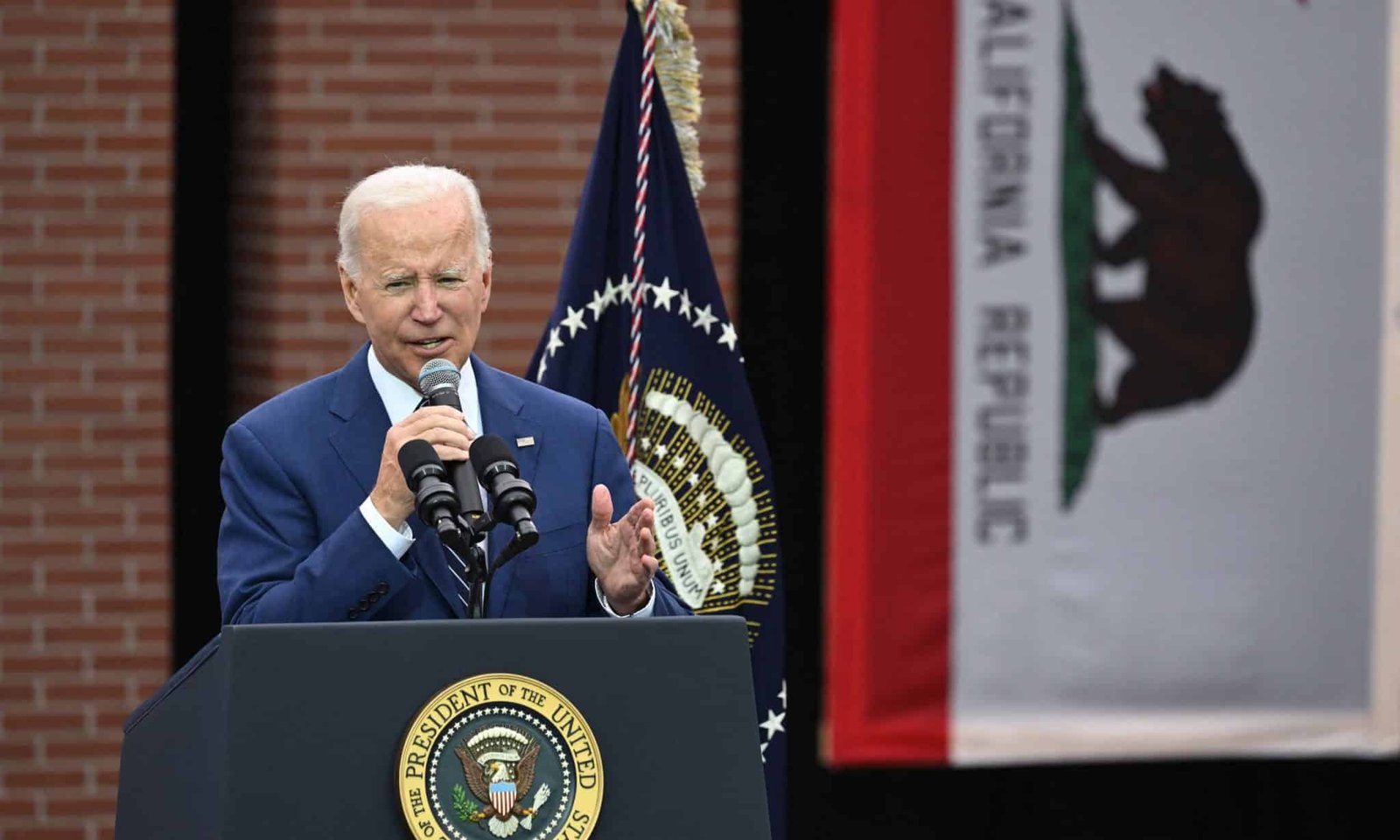
    The statement came after US President Joe Biden made a off-the-cuff remark on Pakistan’s nuclear programme last week while at a private Democratic Party fundraiser in California where he was talking about challenges faced by President Xi Jinping of China, a close ally of Pakistan.

    “And what I think is maybe one of the most dangerous nations in the world: Pakistan. Nuclear weapons without any cohesion,” Biden said, according to a White House transcript.

    Patel, responding to questions, gave a detailed answer regarding what was said about Pakistan by President Biden, and said: “The US has always viewed a secure and prosperous Pakistan as critical to US interests. And more broadly, the US values our long-standing cooperation with Pakistan.”

    The two countries “enjoy a strong partnership”, said the State Department official, adding that Pakistan’s Foreign Minister Bilawal Bhutto-Zardari visited Washington recently where he met Secretary Blinken as well.

    He recalled that Counselor Chollet also visited Karachi and Islamabad during the floods, as did USAID Administrator Sam Power.

    “So, this is a relationship we view as important, and it’s something that we’re going to continue to remain deeply engaged in,” said Patel, pointing out that US and Pakistani officials meet regularly.

    But when the journalist insisted on a response to his question about President Biden’s remarks, the US official said: “I don’t have any specific conversation to read out, but the United States is confident of Pakistan’s commitment and its ability to secure its nuclear assets.”

  • Pakistan may be ‘one of the most dangerous nations in the world’, says US President

    Pakistan may be ‘one of the most dangerous nations in the world’, says US President

    President of the United States of America (USA), Joe Biden, has said that Pakistan may be “one of the most dangerous nations in the world” as the country has “nuclear weapons without any cohesion”.

    The remark came during the US president’s address at a democratic congressional campaign committee reception.

    What did the US President say?

    “Did anybody think we’d be in a situation where China is trying to figure out its role relative to Russia and relative to India and relative to Pakistan,” the American President asked during his speech at the reception.

    Talking about his Chinese counterpart Xi Jinping, the US president termed him as a man who knew what he wanted but had an “enormous” array of problems.

    “How do we handle that? How do we handle that relative to what’s going on in Russia? And what I think is maybe one of the most dangerous nations in the world: Pakistan. Nuclear weapons without any cohesion,” Biden said, adding that despite a lot going on, the US has a hunk of opportunities to change the dynamic in the second quarter of the 21st century.

    Reactions to the US President’s statement:

    Prime Minister (PM) Shehbaz Sharif reacting to US President’s statement said that Pakistan rejects the remarks reportedly made by the US President, which are factually incorrect and misleading.

    “Over the past decades, Pakistan has proven to be a most responsible nuclear state, wherein its nuclear programme is managed through a technically sound and foolproof command and control system,” read an official statement from the prime minister’s office.

    “The real threat to international peace and security is posed by ultra-nationalism, violation of human rights in regions that are struggling against illegal occupation, violation of global norms by some states, repeated nuclear security incidents, and arms race among leading nuclear weapon states and introduction of new security constructs that disturb the regional balance.”

    “Pakistan and the US have a long history of a friendly and mutually beneficial relationship. At a time, when the world is confronted by huge global challenges, it is critically important that genuine and durable efforts are made to recognize the real potential of the Pakistan-US relationship while avoiding unnecessary comments. It is our sincere desire to cooperate with the US to promote regional peace and security.”

    “Let no one have any doubts. Pakistan is a responsible nuclear state and we are proud that our nuclear assets have the best safeguards as per IAEA requirements,” tweeted the premier.

    “We take these safety measures with the utmost seriousness,” said the prime minister.

    Pakistan Muslim League-Nawaz (PML-N) supreme leader Nawaz Sharif said that Pakistan is a responsible nuclear state that is perfectly capable of safeguarding its national interest whilst respecting international law and practices.

    “Our nuclear program is in no way a threat to any country,” he said on Twitter. “Like all independent states, Pakistan reserves the right to protect its autonomy, sovereign statehood, and territorial integrity.”

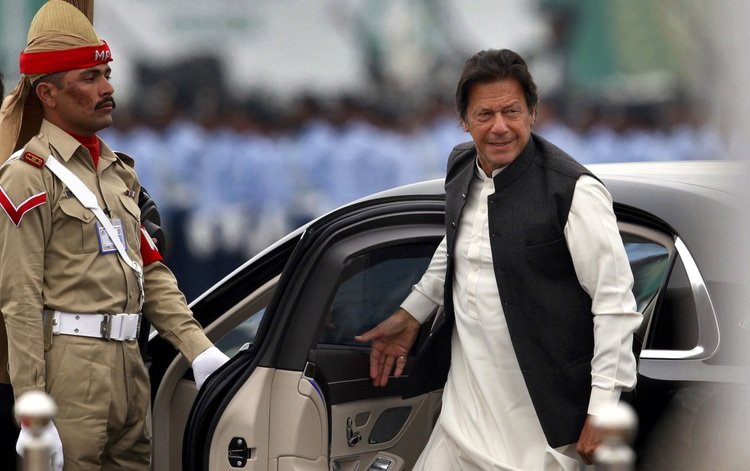
    Pakistan Tehreek-e-Insaf (PTI) Chairman Imran Khan said he had two questions regarding the US president’s statement. “On what info has Biden reached this unwarranted conclusion on our nuclear capability when, having been PM, I know we have one of the most secure nuclear command & control systems?

    “Unlike the US which has been involved in wars across the world, when has Pakistan shown aggression esp post-nuclearisation,” he asked.

    Khan claimed that Biden’s statement showed the “total failure of the imported government’s foreign policy and its claims of a reset of relations with the US”.

    “Is this the ‘reset’? This government has broken all records for incompetence,” Imran tweeted, adding that he feared the incumbent government would end up compromising national security.

    The ruling PML-N has held PTI responsible for Biden’s statement, saying, the lobbying firm hired by the Imran Khan-led party is doing what it was paid to do.

    “Make no mistake about it, this is a direct attack on the national security of Pakistan.”

    Minister for Power Khurram Dastgir Khan — a senior member of Prime Minister Shehbaz Sharif’s cabinet — has termed the US president’s statement about Pakistan’s nuclear programme “baseless”.

    While answering a question about President Joe Biden’s comments regarding Pakistan during a press conference today, the former defence minister said, “Pakistan’s nuclear command and control system is absolutely safe which has been confirmed by international organisations many times”.

    He said that the US president’s doubts about Pakistan’s nukes are “completely wrong and the statement is baseless”.

    Meanwhile, ex-minister Fawad Chaudhry demanded that Biden should immediately retract his statement, asserting that Pakistan’s leadership may be weak but its people were not.
  • ‘Not bound by it’: Pakistan questions legitimacy of UN treaty on nuclear weapons

    ‘Not bound by it’: Pakistan questions legitimacy of UN treaty on nuclear weapons

    Pakistan says it is not bound by any of the obligations enshrined in the Treaty on the Prohibition of Nuclear Weapons — adopted in July 2017 — as the accord failed to take on board the “legitimate interests of all the stakeholders”.

    The UN Treaty on the Prohibition of Nuclear Weapons (TPNW) was adopted by the UN in 2017 and it reached 50 ratification in October by Austria, Ireland, Mexico, New Zealand, South Africa, Nigeria, and Thailand among other countries.

    In a statement issued by the Foreign Office, Islamabad said this treaty neither forms a part of nor contributes to the development of customary international law in any manner.

    According to the statement, the treaty was negotiated outside the established UN disarmament negotiating forums.

    “None of the nuclear-armed states, including Pakistan, took part in the negotiations of the treaty which failed to take on board the legitimate interests of all the stakeholders. Many non-nuclear armed states have also refrained from becoming parties to the treaty,” it added.

    “The United Nations General Assembly, at its first special session devoted to nuclear disarmament in 1978, had agreed by consensus that in the adoption of disarmament measures, the right of each state to security should be kept in mind, and at each stage of the disarmament process, the objective would be undiminished security for all states at the lowest possible level of armaments and military forces,” the statement said.

    The FO said the nuclear prohibition can only be achieved “as a cooperative and universally agreed undertaking through a consensus-based process involving all the relevant stakeholders which results in equal and undiminished security for all states”.

    “It is indispensable for any initiative on nuclear disarmament to take into account the vital security considerations of each and every state,” the FO statement implored.

  • Naya Pakistan: US report says Pakistan ‘most improved’ country in nuclear security

    Naya Pakistan: US report says Pakistan ‘most improved’ country in nuclear security

    A leading United States (US) non-proliferation watchdog has ranked Pakistan as the most improved in the security of those countries holding nuclear materials, improving its overall score by seven points.

    In its annual report, the Nuclear Threat Initiative (NTI) said, “Pakistan’s improvements in the Security and Control Measures category are significant because strengthened laws and regulations result in durable boosts in Pakistan’s score as well as provide sustainable security benefits.”

    The NTI Nuclear Security Index is a public benchmarking project of nuclear security conditions on a country-by-country basis in 176 countries. Laura Kennedy, a former American diplomat, also commended Pakistan’s improvement in security ranking.

    “One welcome bit of news reported by #NTIindex is that #Pakistan ranked as most improved in security of those countries holding nuclear materials,” she tweeted.

    The report stated that the majority of Pakistan’s improvements are in the Security and Control Measures category because of its passage of new regulations. The country also improved in the Global Norms category.

    It said that Pakistan improved its score with the passage of time with eight points in 2014, two in 2016, and six in 2018 owing to new regulations for on-site physical protection.

    “In 2016, it passed new cybersecurity regulations. In 2018, it improved its insider threat protection. Its newest regulations mark a much larger shift.”

    The report further stated that Pakistan’s score improvement for regulatory measures is the second-largest improvement for regulations in the Index since 2012.

    Among countries with weapons-usable nuclear materials, Australia ranked first for the fifth time. It also ranks first in the sabotage ranking for the third time. Despite its repeated position at the top of the ranking, Australia continues to better its score, improving by +1 in both rankings.

    The report stated that among countries with weapons-usable nuclear materials, Canada and Switzerland tie for second, Germany is fourth, and the Netherlands and Norway tie for fifth.

    Among countries with nuclear facilities in the sabotage ranking, Canada, Finland, and the United Kingdom rank second, third, and fourth, respectively, and Germany and Hungary are tied for fifth.

    New Zealand and Sweden tie for first in the theft ranking for countries without weapon-usable nuclear materials, followed by Finland (third), Denmark and South Korea(tied for fourth), and Hungary and Spain (tied for sixth).

    In the ranking for 153 countries and Taiwan without materials, New Zealand and Sweden tie for first.

  • Pressure chamber seized from Chinese ship could be for Pakistan’s nuclear weapons: Indian media

    Indian media reports have quoted Defence Research and Development Organisation (DRDO) experts as saying that the industrial autoclave — a pressure chamber used to carry out industrial and scientific processes — seized from Chinese ship Dai Cui Yun, can be used for the manufacture of very long-range ballistic missiles or satellite launch rockets.

    According to Hindustan Times, the ship on February 3 was detained by Customs at Kandla Port in Kutch District of the Indian state of Gujarat while en-route to Port Qasim in Karachi “on the basis of an intelligence tip-off” and later allowed to proceed to Pakistan on February 20 after dual-use equipment was seized.

    The autoclave was declared as an industrial dryer.

    According to top government and intelligence officials, the DRDO’s technical experts and missile scientists informed the Kandla Customs, the Ministry of External Affairs and national security planners on Tuesday morning that the seized 18 metres by 4 metres autoclave could indeed be used in the manufacture of weapons of mass destruction (WMD) platforms.

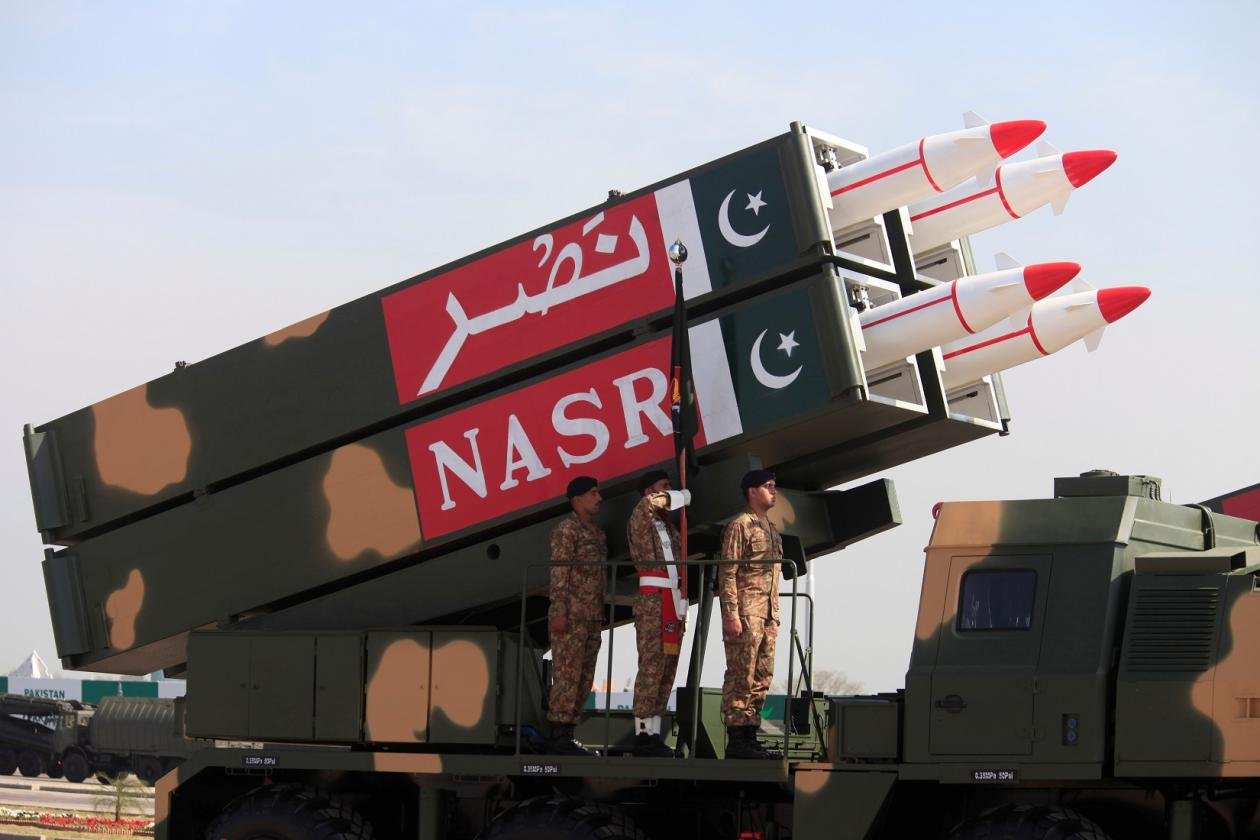
    “The autoclave can be used for the manufacture of the motor of very long-range missiles, with range upwards of 1,500 kilometres or even in the construction of a motor for the launch of satellites. Pakistan has the Shaheen-II missile in the 1,500-2,000 kilometre range and the platform was tested last May,” the report quoted an official as saying on the condition of anonymity.

    Islamabad’s nuclear missile programme is not indigenous and is based on Chinese design with Beijing helping Islamabad since the 1980s. India claims it is for no other reason that China is blocking India’s entry into the Nuclear Suppliers Group (NSG) till Pakistan is also allowed to enter the nuclear club”.

    The report added that given the seizure of the autoclave, Indian “friends” such as France and the United States (US) “could now pressure Beijing to allow India into the NSG”.

  • Islamabad responds to Indian hint at ‘using nukes against Pakistan’

    Islamabad responds to Indian hint at ‘using nukes against Pakistan’

    Pakistan has taken exception to Indian defence minister’s statement on the use of nuclear weapons, saying the “substance and timing of the statement was highly unfortunate and reflective of India’s irresponsible and belligerent behaviour”.

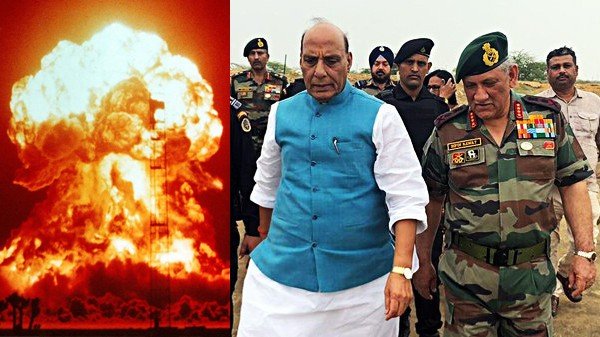
    Rajnath Singh had on Friday said that New Delhi may see a major shift in its nuclear weapons doctrine by doing away with the ‘no first use’ policy in the future. ‘No first use’ is a pledge to not use nuclear weapons as a means of warfare unless first attacked by an opposition using its nuclear arms.

    “Till today, our nuclear policy is ‘no first use’. What happens in future depends on the circumstances,” the Indian defence minister had said while addressing a gathering in Pokhran, the site of India’s nuclear tests in 1998.

    In a subsequent tweet, Singh had added:

    “It further exposes the pretense of their no first use policy, to which we have never accorded any credence,” Pakistan Foreign Office said while reacting to the Indian defence minister’s statement.

    “No first use pledge is non-verifiable and cannot be taken at face value, especially when the development of offensive capabilities and force postures belie such claims,” the statement read and added that Pakistan always proposed measures relating to nuclear restraint in South Asia.

    “Pakistan will continue to maintain a credible minimum deterrence posture.”