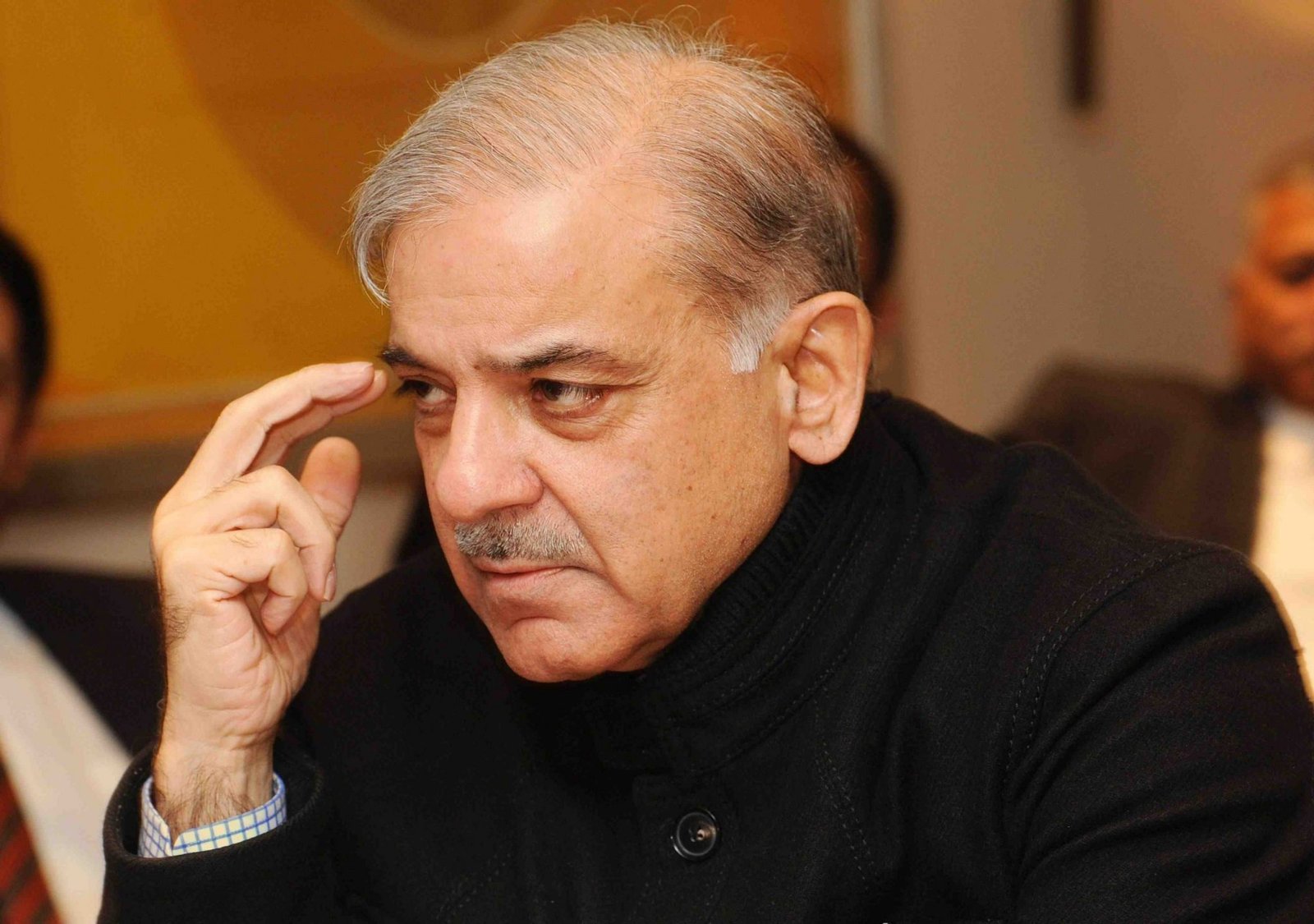
The National Accountability Bureau (NAB) has once again arrested the leader of the opposition in the National Assembly, Shehbaz Sharif, from outside the Lahore High Court (LHC) in a money-laundering case.
The arrest came as the court rejected the bail petitions filed by the PML-N president in the said case as well as that pertaining to his assets.
Shehbaz had earlier reached the LHC for a hearing on his interim bail petition in the money-laundering case by NAB.
A two-member bench of the LHC presided over the hearing, while lawyers representing the former Punjab chief minister (CM) presented their arguments after a three-day hiatus.
A large number of PML-N party workers reached the court to express their support for Shehbaz, Geo reported.
On Thursday, a two-judge bench of the LHC had extended Shehbaz’s interim bail in the same case till September 28.
In December last year, the anti-graft watchdog had issued orders to freeze 23 properties owned by former Punjab chief executive and his sons, Hamza and Suleman, over claims they had acquired assets beyond their known sources of income and committed money-laundering.
According to the NAB, an investigation against Shehbaz, Hamza, Suleman, and others had revealed that the PML-N president had acquired properties in the name of his wives Nusrat and Tehmina Durrani.
While the authorities are also reportedly tightening the noose around Suleman, who is in London, Hamza already remains incarcerated.
It’s time for us to meet! Are you willing to make the commitment to fill out surveys, tell us your opinion and have a chat over some free food? Fill out this form to win a chance to have A FEW free lunches hosted by the interviewer of The Current Life. Offer for Lahore only.
Scholar and preacher Allama Zameer Akhtar Naqvi passed away in Karachi on Sunday.
He reportedly suffered a heart attack and was shifted to the Aga Khan University Hospital Saturday night.
His body is being taken to the Ancholi Imambargah where his funeral prayers will be held.
Allama Naqvi was born on March 24, 1944 in India’s Lucknow.
He authored over 300 books in various fields, including literature, culture, religion, philosophy, logic, journalism, sociology, science, oratory, and language. He was also known for lectures he gave on topics such as science, philosophy and history.
He was the president of the Mir Anees Academy and editor-in-chief of quarterly magazine Al-Qalam.
Following are some snippets that stood out from Urdu newspapers on August 13, 2020, which The Current takes no responsibility for.
‘NAB Usman Buzdar se mutmayin nahi’
It is reported by daily Jang (13 august 2020) NAB was not satisfied with CM Punjab Usman Buzdar. Har sawal kay jawb mei pta nhi ,yad nhi ,bhool gya khty rahy….
‘Quaide Azam knew that August 14 was celebrated as Kashmir Day’
It is reported by daily Jang (13 august 2020) Famous Journalist Hamid Mir wrote in his column” according to British government documents Pakistan like India came into being on august 15 while quid-e –Azam knew that from 1931 to 1947 august 14 was celebrated as Kashmir day. Therefore quaid-e-Azam approved the celebrations of Independence Day on august 14 instead of august 15. “
‘Hukmarano ko apni muddat puri naa honay ka yaqeen hai’
It is reported by daily Jang (13 august 2020) Ameer Jamat-e-Islami siraj-ul-Haq said “ Lagta hai hukmarano ko apni mudat puri na hony ka yakeen hai isi liye wo ujlat aur afra tafri mei qadam utha raahy hain”
‘Usman Buzdar ki protocol ke baghair peshi siyasi mukhalifeen k liye sabaq hai’
It is reported by daily Express (13 august 2020) Information Minister Punjab Fayyaz-ul-Hassan chohan has termed the appearance of chief minister Punjab Usman Buzdar without protocol as a high example of observance of constitution. Usman Buzdar ki peshi mein shrapasnd, badayanat aur takhreebkar siyasi mukhalifeen k liye ummda sabaq hai”
Federal Minister for IT and Telecommunication Syed Amin Ul Haque has said that the national-level training program of the Ministry of IT has imparted training to 1.28 million youth in freelancing.
Amin Ul Haque was talking to DigiSkills freelancers who called on him. The Minister met DigiSkills freelancers to have a direct account of their experiences of learning and earning through DigiSkills.
He said that his Ministry is taking necessary steps to equip the freelancers, students, housewives, professionals, etc., with knowledge, skills, tools and techniques necessary to see the opportunities available in local and international online marketplaces to earn a decent living.
He also informed the visiting freelancers that MoITT has entered into a partnership with JazzCash that will enable them to transfer money from their Payoneer accounts into their JazzCash Mobile Account in real-time and at the best exchange rates.
In addition to this, DigiSkills freelancers can also register their Payoneer Account from the JazzCash App, eliminating the need for commercial bank accounts.
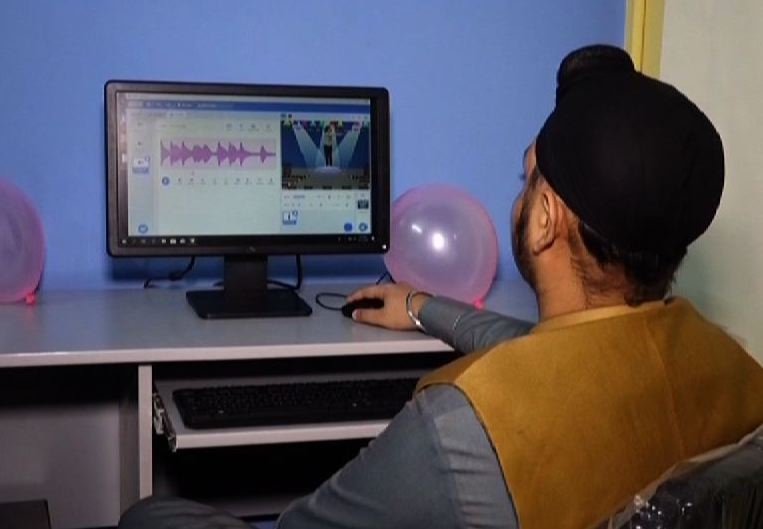
Federal Minister for IT said that all issues of freelancers will be resolved and ordered for extending the outreach of DigiSkills program to schools and colleges. The Federal Minister also directed to increase the ratio of women in DigiSkills program from 23 per cent to 33 per cent and incorporating the minorities and transgender persons in this program.
Visiting freelancers apprised the IT Minister that in the face of the current economic crunch DigiSkills Training Program has been a game-changer in their lives that has enabled them to continue their educational pursuits besides supporting their families.
IT Minister appreciated the youth for their initiative to learn marketable intermediate digital skills that have enabled them to be self-employed besides earning vital foreign exchange for the country.
Secretary IT said that he appreciates the youth trying to explore opportunities to overpower the conventional barriers and dependencies.
Earlier in his opening remarks, Syed Junaid Imam, CEO Ignite welcomed and thanked the freelancers for taking time out for the interaction. He said that Ignite is focused on building an ecosystem for ‘future of work’, financial inclusion, and poverty alleviation.
A National Level Training Program (DigiSkills.pk) was launched by the Ministry of Information Technology & Telecommunication through Ignite National Technology Fund which has been providing free training in freelancing and other marketable skills.
The program comprises of 10 courses including Freelancing, Digital Marketing, Search Engine Optimization, Graphic Design, Digital Literacy, e-Commerce Management, Creative Writing, QuickBooks, AutoCAD, and WordPress.
The government is aiming $5 billion for export remittances through Information Technology (IT) and IT-enabled services (ITeS) in the next three years.
The target will be achieved by digitalising payment gateways, setting up broadband internet in unserved areas and by practising e-governance in Pakistan.
This was revealed in a meeting of Dr Ishrat Hussain, Advisor to the Prime Minister on Institutional Reforms, and Federal Minister for Information Technology and Telecommunication Syed Aminul Haq.
The advisor was informed that the ministry is taking steps to provide broadband services in the country through the IT Universal Service Fund, the services which promote the development of telecommunication services in un-served and under-served areas of the country.
The minister added that plans for laying fibre optic cable in remote areas and providing faster internet service are also underway.
The IT and ITeS export remittances comprising computer services and call centre services surged by23.71 per cent to $1.230 billion in the fiscal year (FY) 2019-20 compared to $994.848 million during the same period last year (2018-19).
“After record export remittances through IT exports, the next target is $5 billion during the next three years”, said Haq. “A payment gateway and e-office projects will be completed soon”, Federal Minister for IT said.
Dr Ishrat Hussain said, “the important role of the Ministry of IT in the development of the country cannot be ignored. The Ministry of IT deserves congratulations on the significant increase in IT exports.”
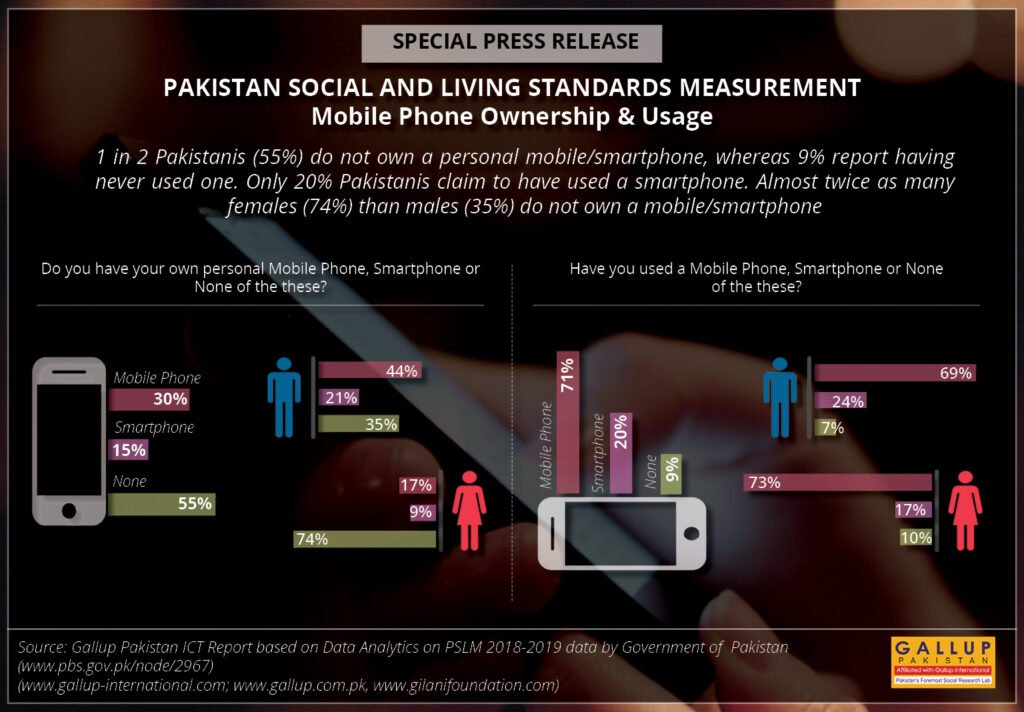
Gallup Pakistan, a research organisation has performed research on the topic of laptops and tablets ownership in Pakistan.
It was discovered that only 7% of Pakistanis own a personal laptop, whereas 2% said that they have a tablet. Islamabad and urban Khyber Pakhtunkhwa (KP) have the highest ownership stats with 27% and 16% respectively.
The main goal of the survey was to study the effects of the pandemic and how it has impacted the ownership of smart devices since it has made them a necessity rather than a luxury.
The survey is conducted once every two years by the Pakistan Bureau of Statistics and it covers more than 24,000 households and over 115,000 respondents.
In a regional breakdown, Balochistan reports the lowest number with only 2% ownership stats. 5% of the people from Islamabad and Karachi own a tablet while provincially, urban Sindh and Punjab report the highest in this regard.
This further adds authenticity to the criticism raised by the country and many students about the lack of facilities available to continue their education through the ongoing pandemic.
There are many things on Dr Rehman Rasheed’s mind when he walks into his small, unassuming clinic tucked away in the north of Karachi, but the overriding concern of coming across a novel coronavirus patient has taken a backseat.
After drawing comparisons with Brazil, which is now seeing an average of 50,000 new cases daily, Pakistan has dramatically reversed course and brought its number of daily new coronavirus cases from a high of 6,850 on June 13, to less than a thousand reported cases on July 26. This was also the first time in almost three months, since May 2, when Pakistan’s daily new cases were in the three figures.
“When the pandemic started, and when there was a surge in cases, there were a lot of Covid-19 patients,” says the 58-year-old general practitioner who has been working in the sprawling locality of New Karachi for the last three decades.
“But now, since the surge has been curtailed, the number of Covid-19 positive patients has drastically gone down,” says Dr Rehman.
According to the latest census, the primarily low-income area of New Karachi is home to nearly 900,000 of Karachi’s population of around 20 million, with poor levels of education and income.
Dr Rehman says one reason for continuing his clinic was that the people of the area have limited access to healthcare due to the abysmal state of government hospitals and the presence of a large number of quacks in the area. But his greatest motivation stems from the Hippocrates Oath that is historically taken by physicians. “It gives me peace that I am of some use to the people of this area. Secondly, I love being a doctor.”
This is the reason that despite his age, he is at his clinic seven days a week, working at least six hours a day and seeing a patient every five minutes.
“On average, I see 100-150 patients daily,” says Dr Rehman. But he doesn’t let this compromise on his thoroughness when checking the patients, comprising primarily of daily-wage earners.
Because of the (New Karachi) area, he does not charge a lot. “I charge Rs120 per patient,” he says, which is less than a dollar.
“The charges are close to non-existent,” says Mrs Asif, who has been bringing her ten-year-old son to the clinic since he was six months old. “Dr Rehman is basically doing welfare as he charges a token amount.”
COVID CONCERN
With the high number of walk-ins, the threat of a Covid-19 patient infecting him or other patients was always high on his mind. This problem is compounded in neighbourhoods with densely populated residential pockets and informal settlements that have poor ventilation, with residents’ miseries compounded by poor system of hygiene and sanitation as is the case in this area.
The doctor says he takes all the necessary precautions like keeping the air-conditioner off and doors open while ensuring ventilation. “I have placed a pedestal fan in front (to disperse the viral load).”
He took off the N-95 mask on our request but wears it at all other times along with his face shield, gown and gloves. This means that the situation could become sweltering, particularly for the doctor wearing multiple layers.
He also urges all his patients to wear masks at least when coming to the clinic. “Some wear masks, others don’t.”
HAPPENSTANCE
Dr Rehman’s three decade long association with the area started by chance. He took over the already operational clinic in New Karachi a few years after his graduation from the city’s DowMedical College in 1986.
Back then, his family lived nearby. However, he later shifted to the central part of the city, almost 20 kms from the clinic, but continued with it as he had already developed a clientele.
Since then, it has blossomed into a love affair, with the doctor at his clinic come rain or shine. “I am very satisfied working over here, and I make enough from my practice to have a good life.”
His wife Sadia, who works at a children’s school, agrees. “We live comfortably enough and have been able to provide quality education for our three daughters,” she says, with the eldest also a doctor.
“I expose myself to the virus more than Rehman, who covers himself completely when venturing out,” she chides herself. “There is always the nagging concern that if one person gets infected, they will give it to everyone else. That is the scary part but we take all the precautions we can.”
FRONTLINER FEARS
Healthcare professionals are at a higher risk of contracting the virus due to their proximity with potential patients, and at least 60 medical doctors have lost their lives to the virus, says Dr Atif Hafeez Siddiqui of the Pakistan Islamic Medical Association, who also heads the ENT department at the Civil Hospital Karachi.
“Those who lost their lives died of a ‘blind bullet’,” he says, explaining that a doctor sitting in his clinic won’t know which patient is carrying the virus.
He blames the poor healthcare structure and the inadequate response from the government, including unavailability of personal protective equipment. The shortage became acute initially and particularly during the time of a spike in cases, making doctors more vulnerable.
But both doctors agree that the numbers are declining and the curve flattened and on a downward trajectory, which was corroborated by their personal experiences with patients, though Dr Atif noted that the numbers of tests had also decreased.
“Previously, every third patient seemed Covid-19 positive, which isn’t the case anymore,” says Dr Rehman.
But they warned against complacency while calling for strict enforcement of standard operating procedures (SOPs).
“The number of positive cases rose to 60,000 by the end of Ramazan (May). Then, there was a peak in June, with around 135,000 infected in that month only,” says Dr Atif, adding that the burden (on healthcare) isn’t as severe as it was a month or so ago, when ICU beds weren’t available.
“Previously, the positivity rate was 25%, but that has gone down to 5%, as per late July statistics,” he added.
LIVING WITH THE DISEASE
The case incidence might decline in Pakistan and globally but until there is a vaccine, the virus will not be eradicated, says Dr Rehman.
“Most probably, the vaccine won’t be available before February next year,” he says, adding that people must learn to live with the virus and take all the precautions till that time.
Dr Atif is worried about another potential surge, similar to the one in June when there was a spike post Eid. “We have another Eid, the festival of sacrifice, coming up. We had a peak post Eidul Fitr, which has since been curtailed. If we don’t follow necessary precautions, there can be an upsurge in cases.”
This concern about a potential spike was also voiced by Sindh Health Minister Dr Azra Pechuho. She said congregations during the Islamic months of Muharram and Rabiul Awwal could result in a second wave. “Moreover, the virus impacts lungs, so a peak is possible in winters as well.”
TEPID PERFORMANCE
Calling the government’s response inadequate, he called the pandemic another wake up call for those holding the reins of power.
“If the government did its job, we wouldn’t have had to step in,” he said, saying that his organization distributed personal protective equipment (PPEs) worth Rs125 million across the country.
Dr Rehman, who dealt with the local administration, had a similar story of lip-service. “Once, the district’s deputy commissioner came to my clinic, who offered to provide essentials and get the clinic sanitized. However, I never heard from him again.”
Dr Rehman credited pharmaceutical companies for support while Dr Atif said that philanthropists and organizations stepped in to plug the gaping hole left due to the inadequate healthcare system.
“There have been a lot of announcements regarding additional salary, risk allowance, etc. But all these things are on paper only,” added Dr Atif about the Sindh government, while calling for compensation to be provided for doctors and healthcare professionals who have either died or gotten infected with the virus.
While expressing hope that the government would be ready for the second wave, Dr Rehman urged people to be responsible. “If something happens to us, it will only be a statistic for the government. But for us, it impacts our life and family.”
VIDEO CREDITS
Producer: Muhammad Hussain & Adil Jawad Shoot: Noman Ali Edit: Noman Ali & Manaf Siddique