Tag: Ogra

  • Forced stabilisation of oil prices causes oil industry to face over Rs7 billion in losses: OCAC

    Forced stabilisation of oil prices causes oil industry to face over Rs7 billion in losses: OCAC

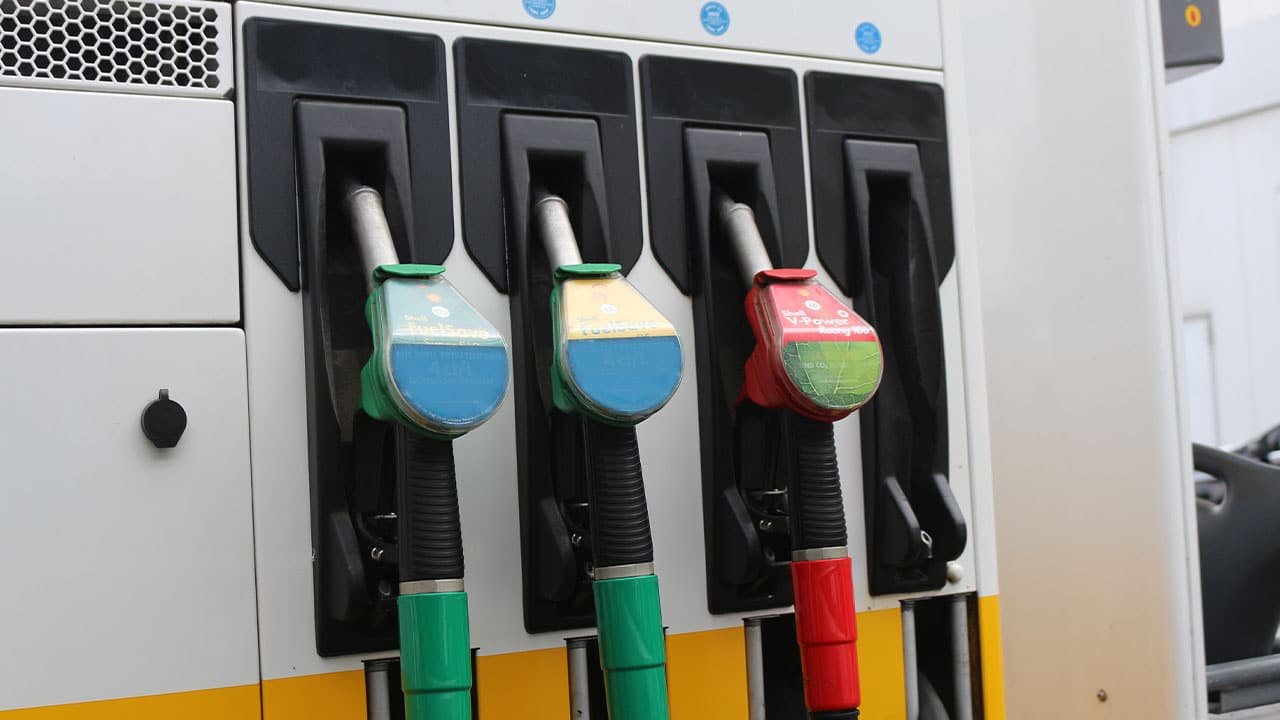
    Maintaining oil prices for the second consecutive fortnight could harm the oil industry and disrupt petroleum products supply. The oil industry claims that it has suffered a loss of over Rs7 billion due to the government’s plan to keep oil prices artificially low.

    The nation’s oil industry protested against the government’s “manipulation” of the pricing system in its most recent fortnightly review to keep ex-depot petroleum product prices the same for the next 15 days.

    “This forced stabilisation of oil prices at the cost of the industry is not sustainable and will severely impact the already crippled oil industry,” wrote the Oil Companies Advisory Council (OCAC) — an umbrella organisation of more than three dozen oil marketing companies (OMCs) and refineries — to the Ministry of Energy on Wednesday.

    Following political pressure from the opposition Pakistan Tehreek-i-Insaf (PTI), the government declared on Tuesday that all product prices will remain unchanged. However, market participants, including Ogra, had predicted hikes in POL prices beginning on November 16.

    The oil sector claimed that the government was maintaining the rates in defiance of the long-standing pricing system. Over the next 15 days, the oil industry is expected to lose more than Rs7.6 billion as a result of the unilateral shift in pricing.

    According to the OCAC, the price freeze would result in losses for OMCs of Rs8.34 on each litre of petrol and Rs7.15 on each litre of high-speed diesel (HSD), totaling Rs7.55 billion.

    Even though the rates were rising in accordance with the pricing methodology set by the government itself, it claimed that the prices of motor fuels had remained the same for the second fortnight of November. Instead of passing on the increase or absorbing the increase by lowering the petroleum levy, it was claimed that the price components were “very forcefully and unjustly reduced.”

    “The industry is already facing a severe financial crunch due to high global prices, depreciation of the rupee, increased charges on confirmation of letters of credit, high premiums on import, etc and will not be able to survive if these unfair adjustments are not removed immediately”, the OCAC wrote to the Oil and Gas Regulatory Authority (Ogra) and the Petroleum Division.

    According to Dawn, inland freight equalisation margin (IFEM), a collection of transportation fees paid to OMCs, was decreased by Rs3.21 and Rs2.72 per litre on petrol and HSD, respectively, according to the OCAC. According to sources, the Ministry of Finance called the senior Ogra officials on Tuesday night to make these cuts.

    On gasoline and HSD, respectively, the exchange loss adjustment was also decreased by Rs3.01 and Rs2.11 per litre. Additionally, the long-awaited increase of OMC’s sales margins from Rs2.68 to Rs6 per litre was approved by the ECC on October 31. With another loss of Rs2.32 per litre on both products, the “revised margin for both products has not been incorporated in the prices.”

    Based on estimated sales volumes for the second fortnight of November from Ogra, the OCAC estimated a total loss of Rs7.55 billion, including Rs4.25 billion for petrol and Rs3.30 billion for HSD.

    The “forced price stabilization” could pose problems for the supply chain and jeopardise the industry’s survival, according to the OCAC, given the lower stock levels and higher import volume requirements.
  • Oil industry warns OGRA of looming petrol, diesel shortage

    Oil industry warns OGRA of looming petrol, diesel shortage

    Due to limited imports and constrained domestic supplies, the oil industry has warned the government that the country may witness a shortage of petrol and high-speed diesel (HSD) in the upcoming days.

    The Oil & Gas Regulatory Authority (OGRA) has been written about the shortfall by the Oil Companies Advisory Council (OCAC), an organisation that represents the oil industry.

    The Oil Marketing Companies (OMCs) were given permission to import motor spirit/petrol and HSD in accordance with their demand in the product availability review of products for the month of November 2022, the OCAC stated. This decision followed considerable consideration.

    A shortage of 210,000 MT of HSD and 147,000 MT of gasoline was calculated during the product review. Due to restricted supply on the global market and extremely expensive premiums, it was noted at the meeting that HSD imports in November would be difficult. As a result, only PSO has so far reserved supplies from Flow Petroleum of 220,000 MT and 10,000 MT.

    Alarmingly, though, fuel import that corresponds to the expected sales volume and the stock cover has also not been scheduled. According to the OCAC letter, the importers were supposed to finalise the import plan, but as of now, there is a gap in the import plan.

    The conference with representatives from the industry held on November 1 also brought up this crucial issue, but no clear guarantees have been obtained in writing from the importing OMCs, it stated.

    According to Geo, the OMCs, who were expected to bring imports for use in October, got their shipments in the final week of the month; hence, the product wasn’t ready for usage during the month it was intended for. Similar to how OMCs who were permitted to import goods the month before for usage the following month had already used the shipments, the letter observed.

  • OGRA announces 13% reduction in RLNG price

    OGRA announces 13% reduction in RLNG price

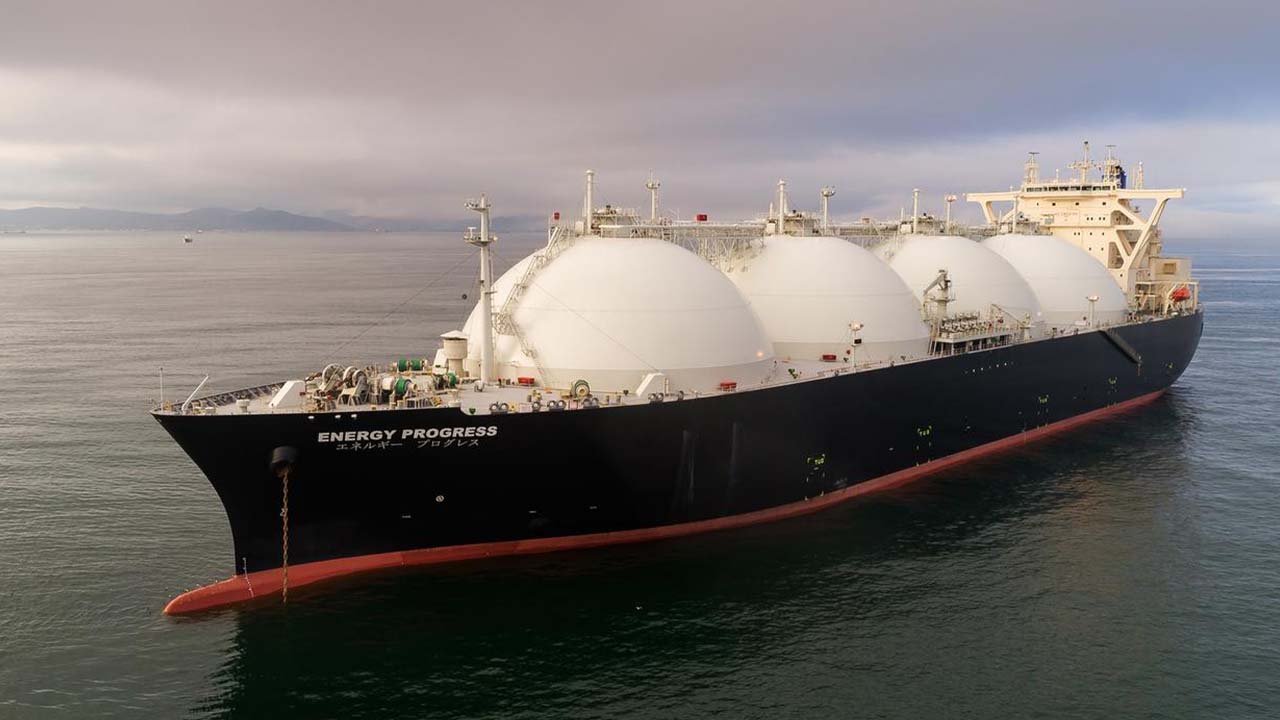
    The Oil and Gas Regulatory Authority (Ogra) has announced a 13 per cent decrease in the cost of re-gasified liquefied natural gas (RLNG) for this month, as the international spot market remained out of reach for Pakistan and the average cost of cargos under a long-term contract fell slightly as oil prices fell.

    According to Brecorder, the basket RLNG price was also lower owing to the second LNG contract with Qatar, which is available to Pakistan at 10.2 per cent of Brent, included four cargos instead of the usual two. The number of LNG cargos from Qatar under the first contract was four for the period, rather than the usual six, at a rate of 13.37 per cent of Brent.

    The average basket price for LNG supply at the import stage (delivered ex-ship), according to a notification from Ogra on Monday, was calculated to be $11.56 per million British thermal unit (mmBtu) for Pakistan State Oil (PSO) for eight cargos (all from Qatar) and $11.856 per mmBtu for Pakistan LNG Limited (PLL) for one cargo under another long-term contract with an LNG trader at 12.14 per cent of Brent.

    As a result, the price of imported RLNG for two gas firms, SSGCL and SNGPL, decreased by roughly $2.2 to $2.3 per mmBtu, or about 13 per cent. SNGPL’s sale price was announced as $14.78 per mmBtu and SSGCL’s as $15.19 per mmBtu. In addition, the price per mmBtu at transmission stage fell by 15–16 per cent in July, from $19.07 to $18.8 per unit in June, to $16.

  • Petrol, diesel prices may increase by Rs10-17 per litre

    Petrol, diesel prices may increase by Rs10-17 per litre

    Despite the fact that the prices for petroleum products and crude oil have remained largely stable, the price of petrol and diesel may increase by Rs10 to Rs17 per litre as of August 1, 2022. The depreciation of the Pakistani rupee is anticipated to be the cause of the upcoming increase.

    According to The News, sources claim that without taking into account the petroleum levy (PL), a price increase of Rs10 for petrol and Rs16–17 for diesel has been estimated. Additionally, Mogas prices have been forecasted at Rs15 per litre and diesel at Rs23 per litre if the government increases the petroleum levy of Rs5 per litre on gasoline.

    The anticipated increase in POL prices has also been calculated without taking into account the ECC’s Thursday approval of an increase in dealers’ margins (DMs) on POL prices of Rs2.10 per litre for gasoline and Rs2.87 per litre for diesel to Rs7 per litre. Petrol’s price could increase by Rs2.10 to Rs17.10 per litre, and diesel’s price could increase by Rs2.87 to Rs25.87 per litre.

    The increase in dealers’ margin will take effect on August 1, 2022, if the federal cabinet approves this decision in the next two days. Industrial sources reported that the US dollar has increased in value by Rs40 so far this month.

    The current exchange rate against the US dollar is Rs239.9427, and the open market price is Rs246.15. However, they did say that the exact price of gasoline and diesel will depend on the exchange rate in force as of today (Friday).

    Since the price of crude oil as of Thursday settled at $99.4 per barrel, according to independent experts, Pakistani consumers won’t be able to benefit from the decrease in price of POL as a result of the rising exchange rate. The government seems more inclined to impose PL on both gasoline and diesel by Rs5 per litre each.

    Liquefied petroleum gas (LPG) costs also rose by Rs10 per kilogramme on Wednesday without an Oil and Gas Regulatory Authority notification (OGRA).

    The chairman of the LPG Distribution Association (LDAP), Irfan Khokhar, told Profit that a household cylinder now costs Rs2,750 after an increase of Rs150, while the cost of a commercial cylinder has increased by Rs450 to Rs10,438 as a result of the unannounced price increase.

  • OGRA slashes LPG prices by Rs13 per kilogram

    OGRA slashes LPG prices by Rs13 per kilogram

    The Oil and Gas Regulatory Authority (OGRA) has announced a Rs13 per kilog price cut for liquefied petroleum gas (LPG).

    The cost of an LPG household cylinder has been decreased by Rs155, according to a notification released today. Under the revised tariffs, it will be offered for Rs2,581.35, which includes the sale of a commercial cylinder for Rs9,931.65.

    Chairman of the LPG Distributors Association Pakistan, Irfan Khokhar, commented on the matter, claiming that LPG is 45 per cent cheaper than petrol and diesel at present pricing.

    If the government focuses on the sector, he claims that LPG prices can be decreased by another 60 to 65 per cent.

    This is somewhat good news, as many house owners in developing housing societies lack access to Sui Gas connections and rely on LPG cylinders, which are offered at exorbitant costs. The recent price reductions may help consumers cope with the effects of inflation.

    It is important to note that LPG is an alternative and fuel that is mostly utilised for cooking, heating, and lighting especially in rural and hilly sections of the country where natural gas pipelines are not available.

  • Another hike of Rs4.9 per unit approved in power tariff

    Another hike of Rs4.9 per unit approved in power tariff

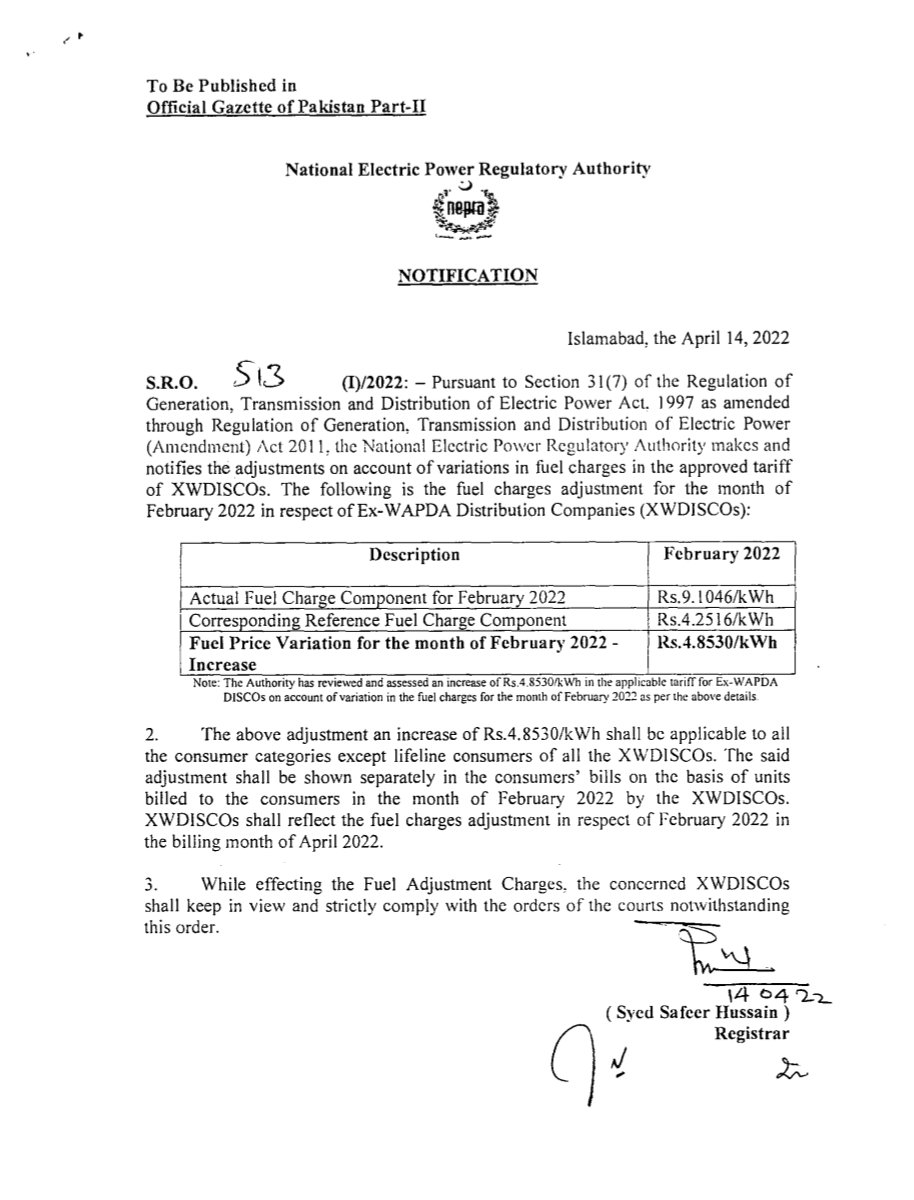
    Owing to the monthly Fuel Cost Adjustment (FCA) for February, the National Electric Power Regulatory Authority (NEPRA) on April 15 increased the price of electricity by Rs4.85 per unit.

    It has also announced an increase in the price of power, stating that the power output in February was more expensive than the previously set fuel price.

    According to the notice, the power distribution companies (DISCOs) will collect the amount from electricity consumers in the April bill. In addition, consumers will be hit with a charge of Rs37.7 billion, excluding general sales tax (GST). However, K-Electric and lifeline customers will be exempt from the hike.

    On March 31, the NEPRA held a hearing to determine the FCA but did not make a decision. The Central Power Purchasing Agency (CPPA) requested that the cost per unit be increased to Rs4.94 by the NEPRA.

    Following the monthly FCA, which only operates for one month, the administration had already hiked the power price to Rs5.95 per unit for the month of January.

    As per NEPRA’s data, the most expensive energy production sources, including High-Speed Diesel (HSD) and Residual Fuel Oil (RFO), were used more than average in the prior months, raising the overall cost of production.

  • Oil companies warn govt of fuel shortage in Pakistan

    Oil companies warn govt of fuel shortage in Pakistan

    Oil marketing companies and refineries have reportedly expressed serious concerns and warned of a fuel crisis in the country after the government’s announcement of a relief package, according to Geo News.

    In a meeting between Oil and Gas Regulatory Authority (OGRA) and the petroleum division, several questions have been raised regarding petroleum prices. They argued that how can they sell petroleum products at cheaper prices when they are buying them at an expensive rate from the international market. They asked, “who will pay the price difference?”

    According to the secretary of petroleum, the government is preparing a price adjustment mechanism and the government will pay later. Till then, oil marketing companies and refineries should bear the price difference.

    In response to this, oil marketing companies and refineries said that the situation doesn’t seem to be sustainable as the country can face an interruption in the supply of petroleum products.

    Prime Minister (PM) Imran Khan, in an announcement on Monday, said that the government has slashed petrol, diesel prices by Rs10 per litre and electricity prices by Rs5 per unit as part of a series of measures to bring some relief to the public. He also promised that the government will not increase the prices of these commodities till the next budget, which will be announced in June.

  • Petrol prices likely to increase by Rs5.90 per litre

    The Oil & Gas Regulatory Authority (Ogra) has sent a summary to Prime Minister Imran Khan for the approval to increase the price of petrol by Rs5.90 per litre, Geo News has reported. The petrol prices are likely to be increased on October 16, 2021 as per sources of Geo News.

    If approved, The petrol prices can reach up to Rs133.2. In addition, Ogra has recommenced an increase in high-speed diesel price by Rs10.

    In early October, the government had increased the price of petrol by Rs4 per litre taking its price to a record level of Rs127.30 per litre.

  • Petrol price to be raised Rs1.71 per litre on Aug 1

    Petrol price to be raised Rs1.71 per litre on Aug 1

    Prime Minister Imran Khan’s aide on political communication, Dr Shahbaz Gill, announced that the government has raised the price of petrol by Rs1.71 per litre, starting August 1.

    According to Gill, the decision was made as per the recommendation of the Oil and Gas Regulatory Authority (OGRA). Petrol will consequently cost Rs119.80 per litre.

    Gill said that it was decided that the rate of high-speed diesel be kept constant, as a hike in this commodity impacts the “common man and farmers more”. Thus, diesel will continue to be priced at Rs117.53 per litre.

    Similarly, no change has been made to the price of light diesel oil.

    Meanwhile, Kerosene, starting August 1, will cost Rs0.35 dearer, at Rs85.75 per litre.

    It was rumoured that OGRA recommended a Rs1.71 per litre increase in the price of petrol and a Rs2.27 per litre increase in the price of diesel.

    Gill asked the nation to “bear in mind” that the majority of the 27 countries that have petrol prices lower than the rate in Pakistan are “self-sufficient in petroleum products”.

    “At this time, the government is collecting a nearly zero per cent tax on petroleum products,” Gill said, adding: “Right now, the whole world is in the grip of inflation due to corona.”

  • Govt to automate petroleum sector for end to artificial shortages

    Govt to automate petroleum sector for end to artificial shortages

    The Petroleum Division has tasked energy and technology experts to carry out a technical assessment for the automation of the petroleum sector.

    With the help of technology, an automation system will be created that will record real-time data of petroleum products’ daily sales.

    The structured and organised real-time data will also help streamline the fuel supply countrywide which would make oil-sector self-sufficient, and save billions on its annual petroleum import bill.

    The government of Pakistan is working on a strategy to revamp the oil and gas sector of the country.

    The primary function is to supply uninterrupted fuel across Pakistan by recording daily sales of oil depots and petrol pumps along with increasing the technical and professional capacity of the Oil & Gas Regulatory Authority (OGRA).

    According to the officials of the Petroleum Division, they have drafted a bill that will legally bind oil depots and petrol pumps to allow the government to record daily sales once signed into law.

    Oil depots and petrol pumps will have no choice but to follow as in case of refusal, OGRA would be legally authorised to seal the disputing depots and pumps and cancel their licences.

    “The government will not approve the attitude of Oil Marketing Companies (OMCs) from now on and will put an end to the issue of artificial fuel shortage once and for all,” an official said.