Tag: oil

  • Pakistani delegation leaves for Russia to hold discussions on cheaper oil

    Pakistani delegation leaves for Russia to hold discussions on cheaper oil

    Minister of State for Petroleum Dr Musadik Malik and the petroleum secretary have flown to Russia to hold talks over oil and gas, a source with knowledge of the situation said on Monday on the condition of anonymity.

    The trip comes as the country struggles to meet domestic gas supply demands as winter approaches while battling to contain a current account deficit swelled by energy payments, mostly for oil.

    Ishaq Dar, the federal minister of finance, had already stated that the delegation will discuss an oil contract with Moscow.

    “We should pray the visit is successful and the government manages to secure a deal on favourable terms and conditions,” Dar said during an interview.

    Given the sharp rise in the cost of energy commodities in recent months, buying Russian oil at lower prices has gained popularity. This has been difficult, especially for emerging economies like Pakistan, whose energy requirements are mostly met by imports of petroleum.

    The State Bank of Pakistan (SBP) said that during the first four months of the current fiscal year, Pakistan imported petroleum products worth $7.547 billion.

    Dar had earlier stated, speaking to a crowd in Dubai on November 13, that Islamabad hoped to clinch an import pact with Moscow on conditions comparable to those of New Delhi. He said that Pakistan could purchase oil from Russia since India was doing the same, and the US had been informed of this.

  • Saudi Arabia to set up $12 billion refinery, petrochemical complex in Pakistan

    Saudi Arabia to set up $12 billion refinery, petrochemical complex in Pakistan

    The government has convinced Saudi Arabia to resume a significant project to build a cutting-edge deep conversion refinery and petrochemical complex in Pakistan.

    A high-ranking team from the kingdom led by Crown Prince Mohammad Bin Salman will visit Pakistan in the final week of November, when a formal announcement is anticipated in this regard, according to a top official at the Energy Ministry.

    According to Geo, the Pakistani government reportedly made a tremendous effort to convince the kingdom to uphold the memoranda of understanding and invest in Pakistan. Riyadh and Washington are at odds over a reduction in the supply of oil on the world market, and Islamabad has thrown its support behind Riyadh in this dispute.

    Saudi Arabia signed MoUs in February 2019 during Mohammad Bin Salman’s visit to Pakistan for an investment of $21 billion in a number of economic sectors, including the $12 billion deep conversion refinery and petrochemical complex project.

    At this regard, the Saudi oil tycoon Aramco also carried out research, which concluded that building a refinery in Gwadar was not practical. However, the official claimed that it may be erected in Hub, Balochistan, or close to Karachi.

    Later, the insider claimed, when relations between Imran Khan’s administration and Saudi Arabia became tense, the kingdom’s top leaders essentially put $21 billion in MoUs on hold that had been inked in February 2019.

    According to the source, the Ministry of Petroleum is currently updating the draught for the refining policy in order to attract investment for the construction of new refineries.

    In addition to broadening the tax holiday’s application, the government is considering offering investors profitability at 14–15% instead of the 9% that was previously promised in the PTI administration’s plan for policy refinement.

  • Pakistani rupee finally snaps 13-day winning streak versus US dollar

    Pakistani rupee finally snaps 13-day winning streak versus US dollar

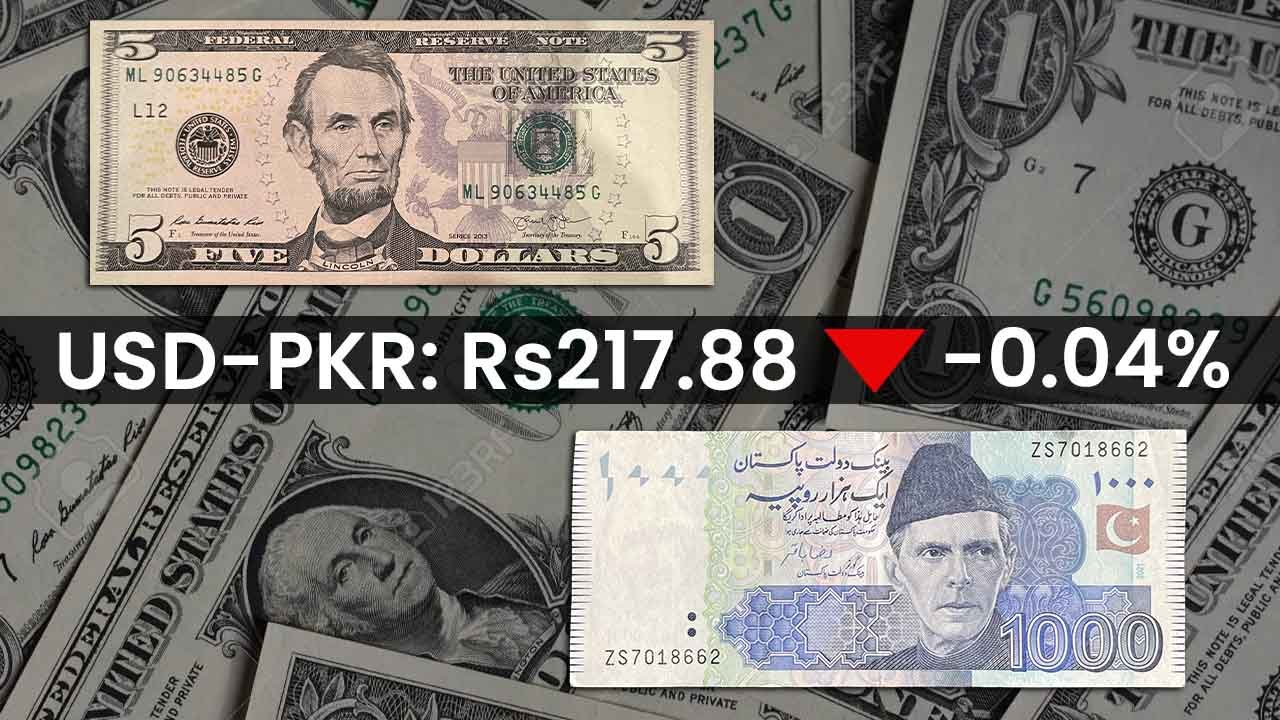
    The Pakistani rupee (PKR) on Wednesday finally stopped rising against the US dollar after 13 sessions as it dropped by 0.04 per cent in the inter-bank market.

    It dropped nine paisas in today’s interbank market to settle at Rs217.88, depreciating by 0.04 per cent against the USD. During today’s open market session, the local currency was quoted at a day low of Rs217.65 against the US dollar.

    The recent increase in the value of the rupee is linked to a change in sentiment and the central bank’s operations against participants in currency speculation.

    On Wednesday, as traders prepared for US inflation data and its implications for future Federal Reserve rate hikes, the dollar reached new 24-year highs internationally.

    After the International Monetary Fund (IMF) predicted that Pakistan’s inflation rate will be 19.9 per cent in 2023 as opposed to 12.1 per cent in 2022, the rupee halted its 13-day winning run.

    The lender predicted Pakistan’s GDP growth rate would be 3.5 per cent in 2023 compared to 6 per cent in 2022, however this does not take the current floods into account.

    Wednesday also saw a global decline in oil prices for the third day in a straight as investors feared the impact of increasing COVID-19 regulations in China and mounting global economic threats on fuel demand.

  • Reduction in POL prices without IMF approval is a ‘reckless’ decision, says Miftah Ismail

    Reduction in POL prices without IMF approval is a ‘reckless’ decision, says Miftah Ismail

    Pakistan’s former finance minister Miftah Ismail has called the coalition government’s decision to maintain the petroleum development levy (PDL) this month unchanged “reckless”.

    However, he maintained that what the earlier PTI administration did to the nation was “unforgivable.”

    Shaukat Tarin, the leader of the PTI and a former finance minister, had tweeted about the PMLN’s -alleged doublespeak, to which Ismail responded.

    “We were blamed for violating IMF conditions. According to Miftah sahib, they did not wait to get clearance from MD IMF before announcing the fuel prices. Clear doublespeak,” he tweeted.

    https://twitter.com/shaukat_tarin/status/1576568757056512000?ref_src=twsrc%5Etfw%7Ctwcamp%5Etweetembed%7Ctwterm%5E1576568757056512000%7Ctwgr%5E5e775af4ab091b03900a542aeb8050d970a7d429%7Ctwcon%5Es1_&ref_url=https%3A%2F%2Fwww.dawn.com%2Fnews%2F1713254

    Ismail replied that the PTI administration had in fact broken the terms of the IMF deal.

    “You agreed to increase sales tax to 17 per cent but reduced it to zero. You agreed to raise petrol levy every month by Rs4 to Rs30 but brought it to zero. You agreed to not give amnesty but gave one anyway,” he said, in reference to the previous administration’s decision to temporarily freeze fuel prices.

    Ismail argued that the subsidy was “unfounded and unsustainable” and that the PTI nearly put the nation into bankruptcy. He continued by saying that, while serving as finance minister, he had visited the IMF and prevented the nation’s default.

    “Not increasing PDL this month without IMF approval is reckless, but what PTI did with our economy was unforgivable,” he insisted.

    Ismail brought up the fact that his administration had not sought IMF approval before freezing the petroleum charge for the second time in two days.

    Ismail claimed that when Ahad Cheema, the establishment adviser to Prime Minister Shehbaz Sharif, requested him to contact the IMF managing director if gasoline prices could be held for three months, “I said that I would die but not ask this.” Ismail was speaking at an event in Karachi on Saturday.

    “In any case … I asked the MD if we could freeze the tax for three months. The answer did not arrive and the government unilaterally did it. So may God have mercy.”

    On Tuesday, September 27, Ismail resigned from his position as finance minister to make room for Ishaq Dar. Three days later, on Friday, the administration decided to lower petrol costs (Sept 30).

    Petrol costs now cost Rs224.80 per litre, down from Rs237.43 previously. This reduction in price amounts to Rs12.63. High-speed diesel (HSD) is now available at Rs12.13 less per litre, at Rs235.30 instead of Rs247.43. Kerosene’s cost per litre dropped from Rs202.02 to Rs191.83 by Rs10.19. Light diesel oil (LDO) was reduced in price from Rs197.28 to Rs186.50 per litre by Rs10.78.

    By lowering the petroleum development fee on gasoline by Rs5 per litre to Rs32.42, the government lost money. On HSD, the price was raised to Rs12.58 by an additional Rs5 per litre.

    According to DAWN, the government currently charges Rs12.58 per litre PDL for HSD, Rs15 for kerosene, Rs10 for LDO, and Rs30 for High Octane Blending Component. Additionally, the cost of gasoline and HSD includes a Rs22 per litre customs fee.

  • Petrol, diesel prices likely to go down as International oil prices fall

    Petrol, diesel prices likely to go down as International oil prices fall

    Due to a dramatic drop in oil rates on global markets, POL prices are expected to fall by Rs15 from October 1st.

    According to experts, the price of diesel could drop by Rs15 and the price of petrol could drop by Rs5 for the next two weeks, reports Geo.

    They stated that the new price would be determined based on the price of oil on the global markets through September 29.

    On Monday, oil prices fell for a second day due to concerns about weaker fuel consumption from an anticipated global recession brought on by rising global interest rates as well as the fact that non-dollar buyers of crude are less able to purchase it due to the strengthening US dollar.

    At 06:40 GMT, the price of Brent crude futures for November settlement fell $1.35, or 1.57 per cent, to $84.80 per barrel. The contract dropped to $84.51, its lowest price since January 14.

    The November delivery price of US West Texas Intermediate (WTI) oil futures fell $1.15, or 1.46 per cent, to $77.59 a barrel. WTI dropped to $77.21, its lowest level since January 6.

    The government is required to levy a fee on petroleum products as part of an agreement with the International Monetary Fund. The application of a petroleum levy on gasoline is currently set at Rs37.50 per litre and on diesel at Rs7.50 per litre, according to a notification released on September 1.

  • Govt increases petrol price instead of decreasing, new rate stands at Rs237.43 per litre

    Govt increases petrol price instead of decreasing, new rate stands at Rs237.43 per litre

    The government officially announced the amended prices for petroleum products on Wednesday after a delay of almost a week, notifying consumers of an increase of Rs1.45 in the price of petrol.

    According to the notification, the price of gasoline has gone up from Rs235.98 to Rs237.43, while the price of high-speed diesel (HSD) has remained the same at Rs247.43.

    Light diesel oil’s price has dropped from Rs201.54 to Rs197.28 by Rs4.26, and kerosene’s price has dropped from Rs210.32 to Rs202.02 by Rs8.3.

    According to initial reports, the cost of petroleum products were expected to decrease from Rs235.98 per litre to Rs226.36 per litre on Friday, September 16, after a reduction of Rs9.62 per litre for the next two weeks.

    The new petroleum prices were expected to be revealed on September 16, but the administration postponed the announcement.

  • Shell Pakistan posts after-tax profit of Rs7.4 billion in first half of 2022

    Shell Pakistan posts after-tax profit of Rs7.4 billion in first half of 2022

    The results for the first half of the year are announced by Shell Pakistan Limited’s (SPL) Board of Directors. In comparison to the profit of Rs2,153 million recorded during the same period last year, the company reported an after-tax profit of Rs7,469 million in 2022.

    The significant rebound is a result of increased company performance with a strategic focus, a positive shift in the government’s pricing methodology for the S&P Global Platts indexes, and safe and effective fuel operations.

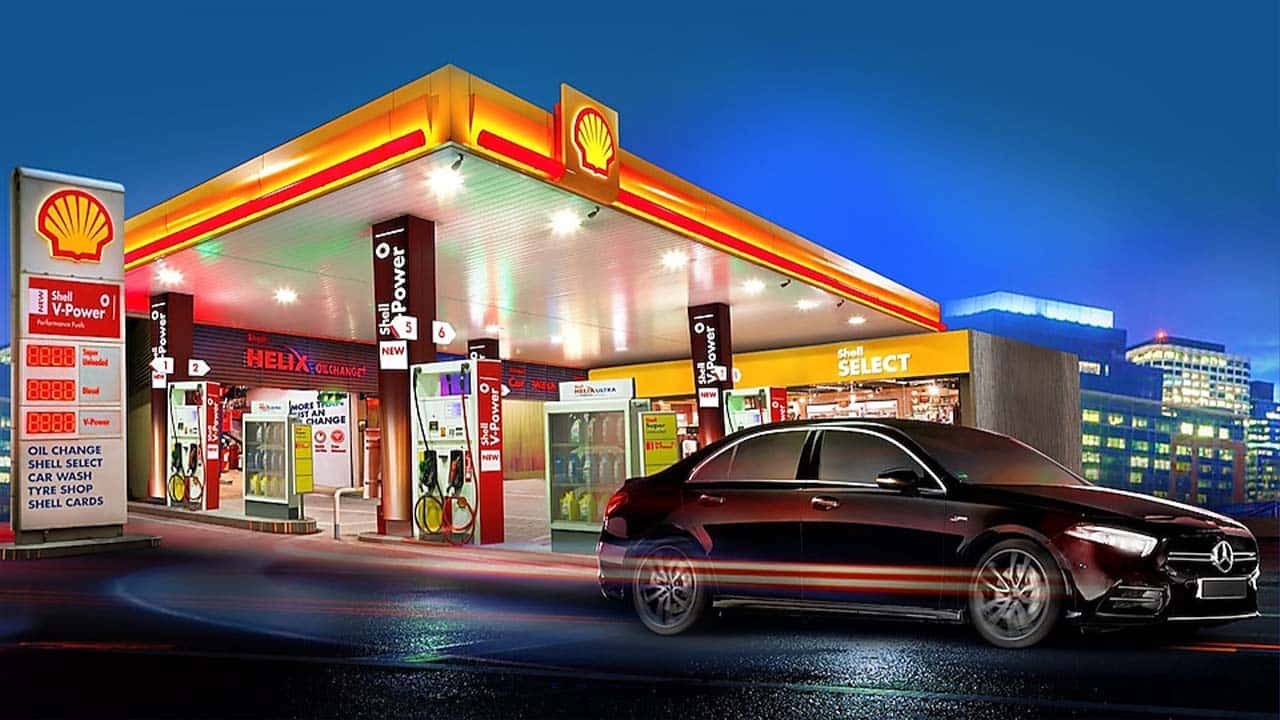
    According to Brecoder, the petroleum business added 13 new retail locations during this span, that will contribute to increased volume. In the market for premium fuels, Shell V-Power continues to be the market leader.

    In order to ensure that the business plays a significant part in the development of Pakistan’s energy future, the company will actively work to curtail the impact of present impediments and strive to grasp opportunities.

    Earlier, the business also confirmed its decision to cease its aviation operations in Pakistan. Currently, SPL operates its aviation-related business out of four locations.

    Including Nawabshah Airport, Begum Nusrat Bhutto Airport in Sukkur, Quetta International Airport, and Jinnah Airport in Karachi. SPL has concluded that it is no longer commercially viable to continue with its aviation operations in the country after careful consideration.

    In order to promote practices that will make Pakistani roads safer, the business also wrote the road safety book “Once Upon a Road.” The book will be covered in Pakistan’s sixth-grade curriculum developed by the Care Foundation.

  • Edible oil and ghee prices may decrease soon: Miftah Ismail

    Edible oil and ghee prices may decrease soon: Miftah Ismail

    The price of edible oil and ghee has decreased, according to Finance Minister Miftah Ismail, who expressed hope that the reduced costs will result in a reduction of Rs100 to Rs150 in the price of edible oil in the local market.

    The finance minister expressed optimism about lower petroleum product prices in the near future while speaking at a press conference alongside Bilal Kayani, a member of the Ministry of Finance’s Privatization Committee.

    He claimed that because the price of crude on the international market had dropped to $100, Pakistan’s citizens would “benefit” from lower prices at the “right time.”

    Miftah noted that lower pricing will also result in lower import costs for Pakistan.

    The finance minister continued to criticise the Pakistan Tehreek-e-Insaf (PTI) administration, stating that the previous administration had left an economic minefield but that despite difficulties, the economy was now stabilising and foreign exchange reserves were increasing.

    Imran’s administration left behind a “record trade deficit,” Miftah continued. The finance minister explained the $6 billion loan package for Pakistan from the International Monetary Fund (IMF) and expressed optimism that any outstanding concerns will be handled quickly so that the nation may get the next instalment.

    Additionally, he stated that because wheat prices were stabilising on the global market and that tenders will soon be opened, flour prices would decrease on the local market.

    Due to the fact that Russia and Ukraine are two of the world’s top producers of wheat, wheat prices reached historic highs at the commencement of the Russo-Ukrainian War in February of this year.

    The country’s persistent power shortage was also brought up by the finance minister, who noted that current generation levels are below the necessary 30,000, but expressed optimism that the problem would be resolved in the upcoming weeks.

    He claimed that the PTI government failed to release LNG tenders in a timely manner, which is why there is currently a shortage of liquified gas, and blamed the Imran-led government for the power problem.

    Major LNG producers throughout the world are now supplying Europe with LNG as a result of the continent’s reduction in its reliance on Russian gas, and fuel is in short supply for other consumers.

    The government is vigorously supporting the use of solar energy, Miftah continued, and a nuclear power plant will soon be put into operation.

  • Pakistan aims to enhance Saudi oil facility to $3.6 billion

    Pakistan aims to enhance Saudi oil facility to $3.6 billion

    A spokesperson for the Petroleum Division said that Pakistan is in talks with Saudi Arabia to increase the size of an oil facility on deferred payments from its current $1.2 billion to $3.6 billion.

    According to The News, when former Prime Minister Imran Khan visited Riyadh in October of last year, Saudi Arabia made a $4.2 billion support agreement, which included a $1.2 billion oil loan facility for Pakistan.

    Syed Zakria Ali Shah, joint secretary of international and joint ventures at the Pakistani petroleum division, revealed that the division was attempting to increase the value of its current facility with Saudi Arabia from $1.2 billion to $3.6 billion.

    Pakistan receives monthly oil deliveries worth $100 million under the current Saudi oil facility with deferred payment. Oil prices were low when the deal was struck, but because of their exponential rise, we are currently negotiating with the Saudis to increase their oil facility from $100 million to $300 million every month.

    A member of the Islamic Development Bank (IsDB) group, the International Islamic Trade Finance Corporation (ITFC), Shah claimed Saudi Arabia was also assisting Pakistan in using another existing oil financing facility.

    The last framework agreement for this facility was signed between our economic affairs division and ITFC on February 21, 2022, according to Shah. “The government of Pakistan has this facility for oil and liquefied natural gas (LNG) imports under the framework agreement with ITFC since 2017–18,” he said.

    The facility will cost a total of $4.5 billion over three years, from 2022 to 2024, or roughly $1.5 billion per year on a best-effort basis, the official continued.

  • Imposing super tax on the rich will reduce budget deficit: Miftah

    Imposing super tax on the rich will reduce budget deficit: Miftah

    The government’s recently announced indirect tax (super tax) is intended to assist the country in increasing tax revenue and lowering the budget deficit, according to Finance Minister Miftah Ismail.

    He was relating to the large industries’ 10 per cent super tax or poverty alleviation tax.

    13 industries, including LNG terminals, sugar, cement, steel, textile, tobacco, fertiliser, banks, oil and gas, beverages, automobiles, and steel, will be subject to this one-time levy, according to Miftah. The government labelled these 13 industries for a special tax as they made significant profits last year.

    Companies in these sectors earning more than Rs300 million will be subject to a 10 per cent super tax, he added.

    According to the finance minister, this tax is a one-time levy that will only be in effect for fiscal year 2022–2023.

    He clarified on Twitter that the 4 per cent super tax will be imposed on all industries.

    “For the specified 13 sectors, another 6 per cent will be added for a total of 10 per cent,” he said. “So their tax rates will go from 29 per cent to 39 per cent. This is a one-time tax needed to curtail the previous four record budget deficits.”

    The imposition of a super tax on the wealthy, according to Finance Minister, will lessen the country’s reliance on foreign aid, lower the budget deficit, and bring the country closer to financial stability.

    Other businesses that make over Rs150 million will be subject to a 1 per cent super tax, and those that make over Rs200 million will be subject to a 2 per cent tax. On top of the current rates, it is worth noting that these taxes are additional.

    Businesses that earn more than Rs250 million in revenue will pay a 3 per cent super tax, and those that earn more than Rs300 million will pay a 4 per cent super tax.

    He continued, citing statistics, that there were 9 million retail and wholesale establishments in Pakistan, and that the government wanted to bring an additional 2.5–3.5 million into the tax system.

    “We are linking the income tax and sales tax of these shops with the electricity bill,” Miftah said. “Now, small shops will pay a fixed tax of Rs3,000 and large shops will pay Rs10,000.”

    Only 22 of Pakistan’s more than 30,000 gold trading companies, he claimed, were registered, and their average annual sales came to Rs4,000.

    Sales tax and a fixed income of Rs40,000 will now be paid by gold shops of 300 square feet or less.

    He said that the government would lower the sales tax on large stores from 17 per cent to just 3 per cent.

    The withholding tax on jewellery sales to gold shops by the general public has been reduced from 4 per cent to 1 per cent.

    According to Miftah, fixed tax structures similar to these will be introduced for real estate agents, car dealers, and builders. Since this tax only applies to income and not to spending, inflation will not rise.

    Additionally, the withholding tax for the IT sector has been eliminated. Sales and income taxes would not apply to IT companies with annual revenue of less than Rs80 million.

    Miftah emphasised that Pakistan needs the IMF programme to resume as the country’s foreign exchange reserves are at a critical point.