Tag: oil

  • OGDCL confirms gas discovery near Ghotki, Sindh

    OGDCL confirms gas discovery near Ghotki, Sindh

    On Wednesday, the Oil and Gas Development Company Limited (OGDCL) announced the finding of gas from an exploration well near Ghotki, Sindh.

    “The joint venture (JV) of Guddu Block comprising Oil & Gas Development Company Limited as an operator (70 per cent), SPUD Energy PTY Limited (SEPL) (13.5 per cent), IPR Transoil Corporation (IPRTOC) (11.5 per cent), and Government Holdings (Private) Limited (GHPL) (5 percent) has discovered Gas from an exploratory well namely Umair South East # 01, which is located in District Ghotki, Sindh,” the company stated in a notice.

    The Umair South East # 01 well, according to OGDCL, was spudded on May 9, 2022, as an exploration well to investigate the hydrocarbon potential of the Pirkoh Formation and Habib Rahi Limestone (HRL) to a projected depth of 785m.

    “Based on the interpretation of wireline logs, successful Drill Stem Test-1 in HRL tested 1.063 million standard cubic feet per day (mmscfd) gas through choke size 32/64” at 210 pounds per square inch (PSi) Well Head Flowing Pressure (WHFP)”.

    The finding of Umair South East-1 is the outcome of Guddu Joint Venture Partners’ aggressive exploration approach, according to the Pakistani oil and gas business.

    “It has opened a new route and will favourably contribute to alleviating energy demand and supply gaps from indigenous resources, while also adding to OGDCL’s and the country’s hydrocarbon reserves base,” it said.

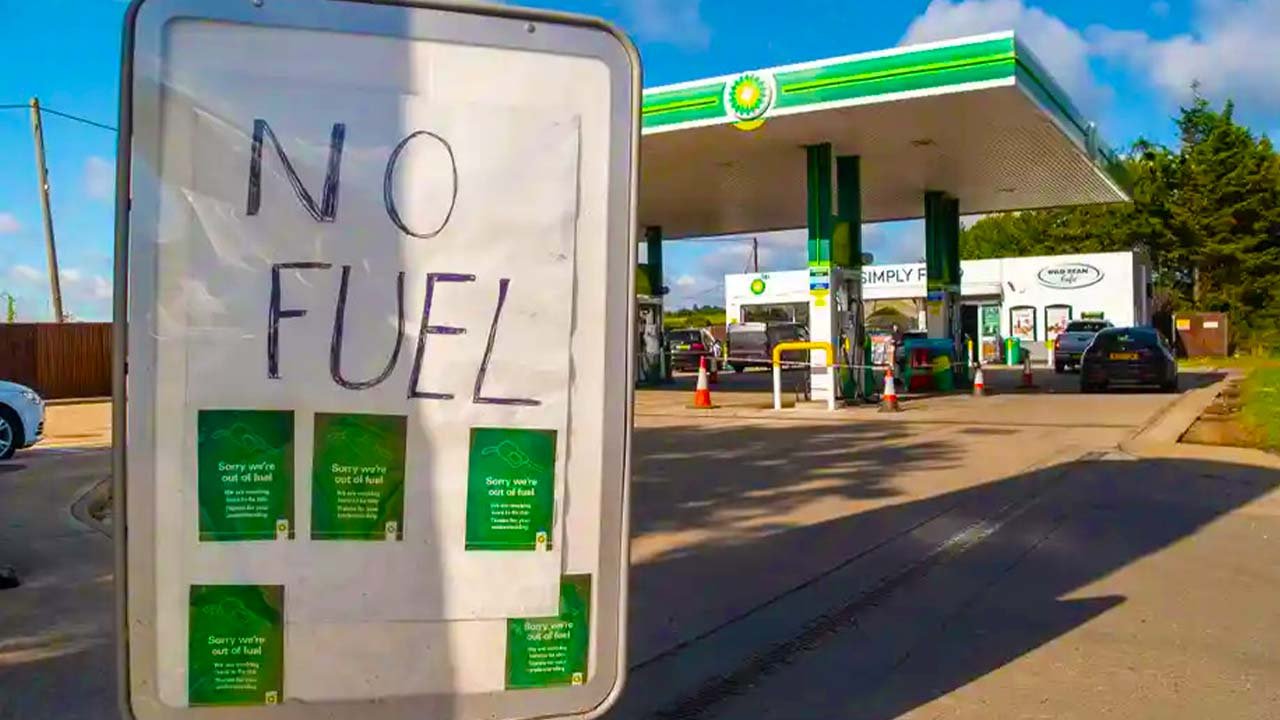
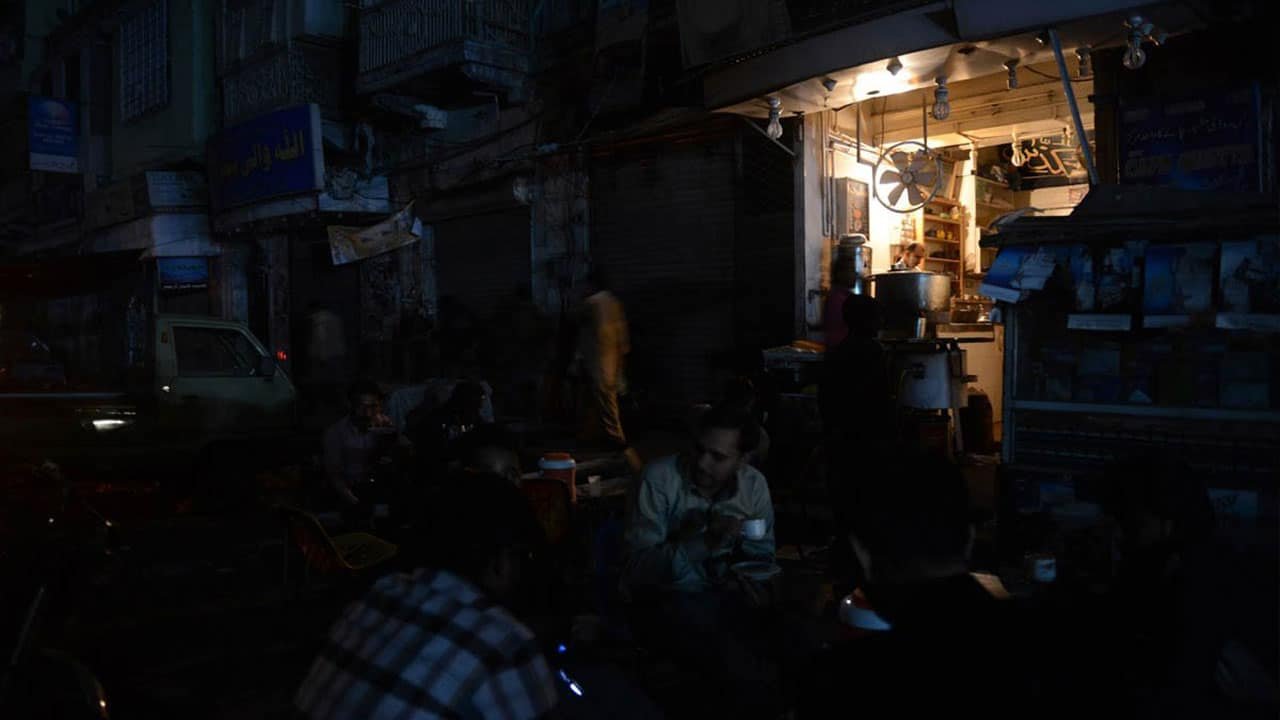
    The discovery comes at a fortunate time for Pakistan, which has recently experienced huge power outages and a gas scarcity.

    Mari Petroleum Company Limited (MPCL) discovered gas/condensate earlier this month in the Bannu West-1 ST-1 Exploration Well, which was drilled in the Bannu West Block in North Waziristan, Khyber Pakhtunkhwa.

  • Pakistan pushed into darkness due to Europe’s decision to cut off Russian fuel

    Pakistan pushed into darkness due to Europe’s decision to cut off Russian fuel

    The European attempt to abandon Russian oil is intended to punish Moscow for its invasion of Ukraine. It’s also wreaking havoc thousands of miles away, throwing Pakistan into darkness, destabilising one regime, and jeopardising the country’s new leadership’s stability.

    According to Bloomberg, Pakistan invested heavily in liquefied natural gas and inked long-term contracts with Italian and Qatari suppliers. Some of those suppliers have now defaulted, although continuing to sell into the more lucrative European market, putting Pakistan in the very situation it hoped to avoid.

    The country took particular precautions a decade ago to protect itself from the sorts of price increases that are currently shaking the market.

    Last month, the government spent about $100 million on a single LNG shipment from the spot market to avert outages during the Eid holiday, a record for the cash-strapped country.

    The country’s LNG costs could reach $5 billion in the fiscal year ending in July, more than double what they were a year ago. Even still, the government is powerless to protect its citizens: the IMF is in talks to bail out the country on the condition that it reduces fuel and energy subsidies.

    Outages lasting more than 12 hours

    Parts of Pakistan are currently suffering scheduled blackouts lasting more than 12 hours, reducing the ability of air conditioning to provide respite during the current heat wave. The former prime minister continues to gather enormous audiences to demonstrations and marches, exacerbating voters’ discontent with 13.8 per cent inflation. The hosts of prime-time talk shows frequently discuss how Pakistan will obtain the petroleum it requires and how much it would have to spend.

    The administration introduced a fresh set of energy-saving measures last week. Civil servants were relieved of their normal Saturday shifts, and the security budget was slashed by half.

    Prime Minister (PM) Shehbaz Sharif remarked in an April tweet before of the Eid holiday, “I am acutely aware of the sufferings people are facing”. That same week, he ordered his government to resume purchasing costly overseas natural gas shipments.

    He also warned earlier this month that they don’t have the money to keep importing gas from other countries.

    Rerouted supply to power plants

    There will be more than just outages as a result of the supply shortage. The government has rerouted existing natural gas supply to power plants, causing fertiliser manufacturers to be shortchanged. This approach could jeopardise the next harvest, resulting in even higher food prices the following year. Backup generators are being used by cellphone towers to keep service going during the blackouts, but they, too, are running out of fuel.

    There’s not much hope in the future. LNG prices have risen by over 1,000 per cent in the previous two years, first due to post-pandemic demand and subsequently due to Russia’s invasion of Ukraine. Russia is Europe’s largest natural gas supplier, and the possibility of supply disruptions pushed spot rates to an all-time high in March.

    Increasing LNG demand in Europe

    Meanwhile, Europe is increasing its need for LNG. Europe’s LNG imports have increased by 50 per cent so far this year compared to the same period last year, and show no signs of slowing down. As they cut ties with President Vladimir Putin’s regime over the crisis in Ukraine, European Union policymakers created a plan to considerably increase LNG deliveries as an alternative to Russian gas.

    Floating import terminals are being built at a breakneck pace in countries like Germany and the Netherlands, with the first ones set to open in the next six months.

    “Europe is draining LNG from the rest of the globe,” according to Steve Hill, executive vice president of Shell Plc, the world’s largest LNG trader. “However, this means that less LNG will be sent to developing markets”.

    Pakistan was formerly thought to be the LNG industry’s bright future. Demand for the fuel had peaked in developed markets by the mid-2010s. However, technological developments had reduced the costs and time it took to build import terminals, and new gas sources had reduced the cost of the fuel itself.

    Poor nations could finally contemplate the gasoline at the new, lower prices. Suppliers flocked to these new markets, and when Pakistan published a request for long-term LNG supply, over a dozen businesses competed for the contract.

    Pakistan chose Italy’s Gunvor Group Ltd to sell LNG to the country for the next decade in 2017. The terms were favourable at the time, and the prices were lower than those of a comparable arrangement struck with Qatar the previous year.

    Delay in supplies

    However, due to the rise in European gas prices, the two suppliers have postponed more than a dozen shipments slated for delivery between October 2021 and June 2022.

    According to Bruce Robertson, an expert at the Institute for Energy Economics and Financial Analysis, such defaults are nearly unheard of in the LNG market. Bloomberg spoke with traders and industry insiders who couldn’t recall the last time so many cargoes were rejected without being linked to a big outage at an export terminal.

    Eni and Gunvor stated they had to cancel because they were experiencing their own supply problems and didn’t have enough LNG to export to Pakistan. When exporters confront such difficulties, they typically replace deliveries by purchasing a consignment on the spot market, but Eni and Gunvor have not done so.

    Vendors are generally averse to cancelling orders. It harms the company connection and is often extremely costly. In established markets, fines for “failure to deliver” might be as high as 100 per cent.

    “It’s quite rare for LNG suppliers to renege on long-term contracts beyond force majeure occurrences,” says Valery Chow, an analyst at Wood Mackenzie Ltd.

    Pakistan’s contracts stipulated a lower cancellation penalty of 30 per cent, most probably in exchange for cheaper overall costs. The European spot market prices are currently high enough to more than compensate for the penalties.

    Pakistan’s $12 million LNG supply contract

    As per sources, an LNG supply to Pakistan for delivery in May under a long-term contract would cost $12 per million British thermal units. In comparison, spot cargoes to Europe for May delivery were trading for more than $30. Eni and Gunvor have kept their promises to customers in the region.

    As a result, Pakistan is back to square one, in a weaker negotiation position than before. After a dispute with Pakistan’s army over a variety of problems, including his management of energy supply and the greater economy, Prime Minister Imran Khan was deposed in April.

    Shehbaz Sharif, the new prime minister, has directed the state-owned importer to obtain the petroleum at any cost in order to end the debilitating blackouts. It’s also attempting to reach new long-term LNG purchase agreements, albeit the conditions will almost probably be harsher than six years ago.

    High risk of default

    The cost is having its own cascading repercussions. The government is now “at high risk of default,” according to a paper published last month by the Institute for Energy Economics and Financial Analysis. Moody’s Investors Service reduced Pakistan’s outlook from stable to negative, citing financial worries including a potential IMF bailout delay.

    Pakistan’s dependency on LNG, as well as its suppliers’ tendency to default, has exacerbated the country’s energy dilemma. Pakistan isn’t alone in this regard. Emerging economies all around the world are trying to meet their residents’ requirements while staying within their budget restrictions.

    It has also prompted them to purchase electricity from Russia, reducing the impact of Europe’s attempts to isolate them.

    Pakistan seeks LNG supply contract with Russian companies

    According to reports, Pakistan is also looking at long-term LNG supply agreements with Russian companies. India has already increased its purchases from Russia, and this trend is likely to continue. The government has directed power plants to purchase fuel from overseas in response to the scorching summer heat.

    Other cash-strapped importers, such as Bangladesh and Myanmar, are likely to suffer as a result of Pakistan’s problems. Bangladesh’s state-owned utility recently purchased the country’s most expensive LNG shipments on the spot market to keep the grids functioning and industry stocked, while Myanmar has stopped importing LNG for the past year owing to price increases.

    Other nations, such as India and Ghana, may be prompted to reconsider long-held plans to increase their reliance on super-chilled fuel as a result of Europe’s major change. Instead, governments would increase their reliance on polluting coal or oil, thwarting efforts to meet ambitious emission reduction objectives this decade.
  • ‘No MoU on wheat and oil with Khan’s govt’: Russian ambassador to Pak

    ‘No MoU on wheat and oil with Khan’s govt’: Russian ambassador to Pak

    Danila Ganich, Russia’s ambassador to Pakistan, has said that in his opinion the Russian visit could have been “one of the factors” for the removal of former Prime Minister (PM) Imran Khan from power but added that it was a sheer coincidence that Khan happened to be in Russia the day the Ukraine war broke out.

    “I think that was one of the factors but I also know that it was a sheer coincidence that he happened to be in Moscow on that very day,” said Ganich when asked if Khan’s government was removed from power because of his visit to Russia in an interview with Aaj News‘ senior anchorperson Shaukat Piracha.

    “The proof of that is just the fact that he was in Moscow on that very day, had he known that the operation would start on that very day, definitely he would have tried to refrain from being there on that very day. So that was a coincidence.”

    “As an ambassador of a foreign country I prefer not to interfere in your internal affairs.”

    “I do know that Pakistani [authorities] concluded that there was no conspiracy. So here I would like to say period. I cannot take sides here, especially when your judge concluded that there was no conspiracy,” said Ganich.

    Ganich said that Russia and Pakistan did not conclude any memorandum of understanding (MoU) on Khan’s claims that Russia had agreed to sell both wheat and oil at a 20 per cent and 30 per cent discount to Pakistan due to the efforts of his government.

    “I can confirm that we did not conclude any MoU,” the ambassador revealed. “As for what kind of discounts could have been offered [on oil and wheat], I cannot comment on this, as these are confidential negotiations.”

    Earlier, Russian Counsel General in Karachi, Andrey Fedorov said that a proposal was discussed between the two parties, while categorically denying that any letter was written by the Pakistan Tehreek-e-Insaf (PTI) government to Russia, reported Samaa News.

    Finance Minister Miftah Ismail in an interview with CNN’s Becky Anderson refuted Khan’s claims that Russia has not offered a 30 per cent discount on oil or wheat.

    Miftah further said that even though a letter was written by former minister Hammad Azhar, Russia did not respond to the letter.

    Former premier Khan recently said that during his time in power, the PTI government had signed an agreement with Russia to buy cheap oil and wheat. Adding that his government remained in power Pakistan would not have to face the petrol bomb.

  • Govt announces Rs3 billion subsidy to provide ghee at discounted rate

    Govt announces Rs3 billion subsidy to provide ghee at discounted rate

    The Minister for Information and Broadcasting Marriyum Aurangzeb announced on Monday that the government would provide a Rs3 billion subsidy to lower the price of ghee to assist the masses.

    She told a press conference that the market price of ghee is currently Rs550 per kg, but it is being sold at Rs300 per kg in utility stores across the country, according to AAJ News

    “The government is bearing a cost of Rs250 per kg,” she added, adding that the price of ghee was Rs150 per kg when the Pakistan Muslim League-Nawaz (PML-N) handed over the office to the Pakistan Tehreek-e-Insaf (PTI) in 2018.

    On the other hand, the government has increased the price of ghee and cooking oil at other retailers.

    She further stated that a 10 kg wheat bag could be purchased for Rs400 at any utility store in Pakistan.

    The minister said that on June 6, about one hundred mobile vans were added to the Utility Stores Corporation (USC) network, citing residents of Khyber-Pakhtunkhwa (KP) having difficulty obtaining discounted items due to limited distribution of utility stores.

    9,500 new utility stores

    “In addition, on June 9, 500 new USC stationary stations were set up to deliver wheat, and 100 more items are being added today,” she stated. “Since June 6, the USC network has grown by 700 units”.

    Price control committees have also been established, according to her, to keep hoarding and reselling of USC materials under check. The availability of items at utility retailers, she said, was also being watched.

    The minister stated that Rs17 billion had been set aside to give the public with low-cost sugar, ghee, and wheat.

  • Weekly inflation based on SPI, records a slight decline

    Weekly inflation based on SPI, records a slight decline

    Pakistan Bureau of Statistics (PBS) revealed that the weekly Sensitive Price Indicator (SPI) for the joint consumption group fell 0.26 per cent for the week ending May 26, owing primarily to a drop in the prices of vital food products.

    The consolidated index was 174.62 on May 19, 2022, compared to 175.08 on May 19, 2021, while the SPI increased 16.97 per cent year on year when the index was 149.29 on May 27, 2021.

    The minor price reductions in essential items may be a sign that the government is finally gaining control of the country’s skyrocketing inflation, which has afflicted the poor strata.

    Here are the items that witnessed a decrease or increase in their prices:

    Decrement

    Wheat Flour (12.25 per cent), Chillies Powdered (6.48 per cent), Chicken (4.41 per cent), Garlic (2.99 per cent), and non-food item LPG (0.43 per cent) were among the commodities that saw a decline in their rates on a WoW premise out of the 51 supervised items, with a cumulative effect of (-1.00 per cent) into the total SPI for the blended group of goods (-0.26 per cent).

    Increment

    27 items elevated in the week, including potatoes (8.43 per cent), tomatoes (6.33 per cent), eggs (6.29 per cent), rice basmati broken (4.71 per cent), mustard oil (4.16 per cent), pulse masaoor (3.93 per cent), milk fresh (3.47 per cent), onions (3.03 per cent), pulse gramme (2.58 per cent), curd (2.35 per cent), washing soap (2.13 per cent), cooked beef (1.55 per cent), beef (1.42 per cent), pulse mash (1.33 per cent), cooked daal (1.24 per cent). While 19 commodities’ prices remained stable.

  • The recent ban on imports might barely make a dent

    The recent ban on imports might barely make a dent

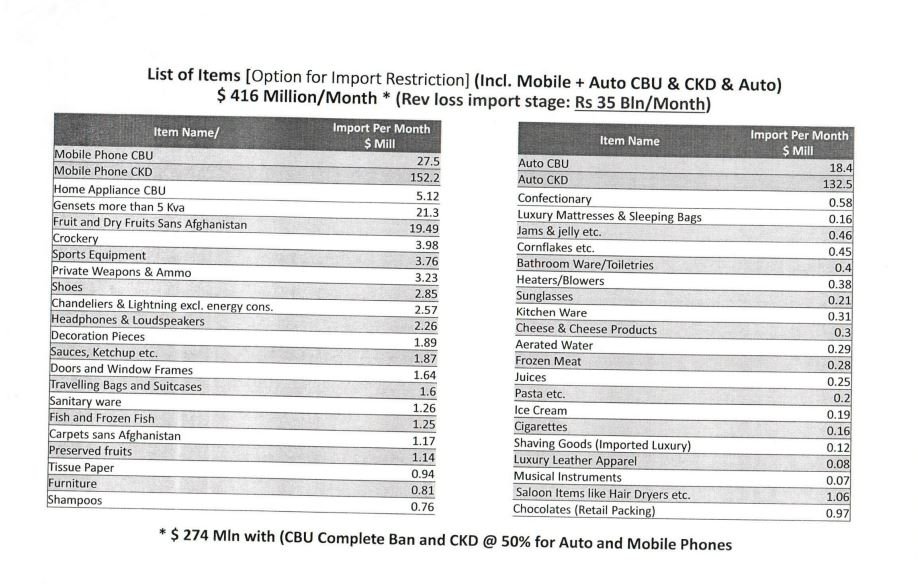
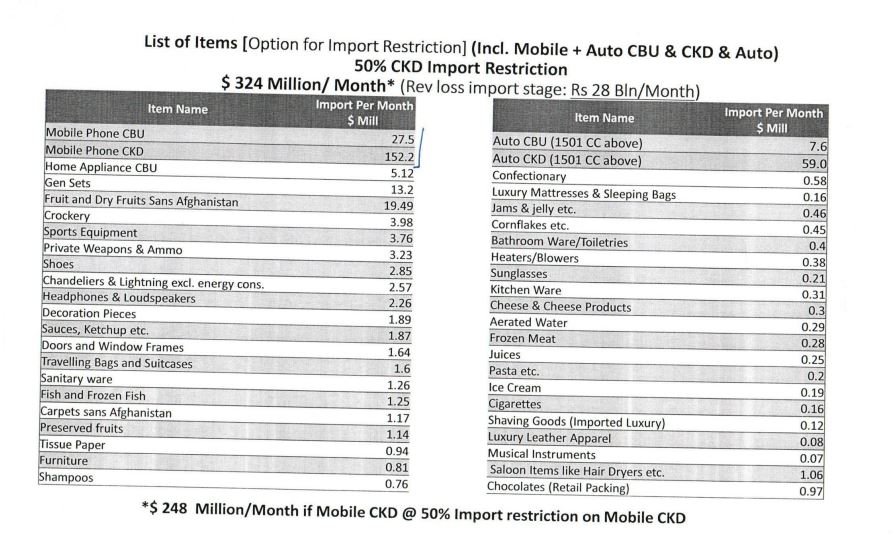
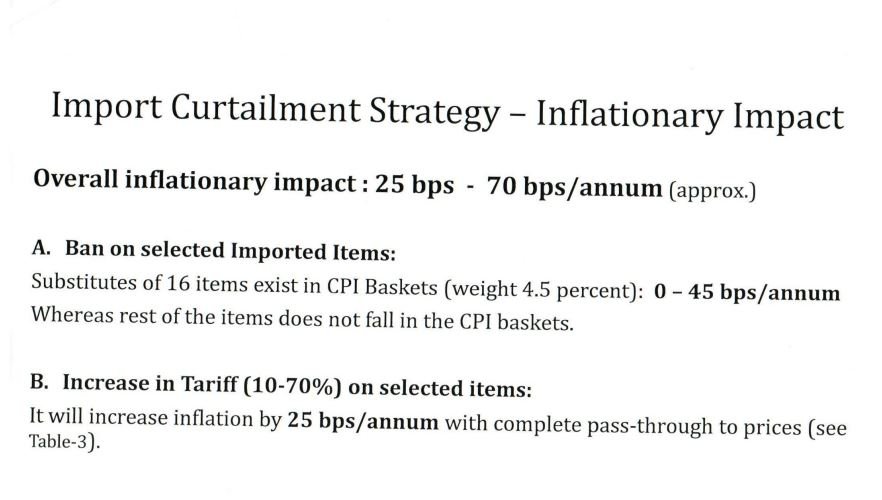
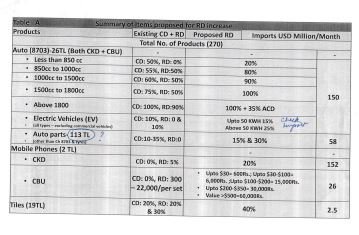
    On Thursday, May 19th, 2022, the federal cabinet issued a list of 41 items which will be banned from being imported for two months. This is in an attempt to address the current account deficit. The list of products is banned from being imported into the country, which means that essentially any shops or restaurants which rely on using these products will be forced to find local alternatives.

    These products will be banned regardless of what branding or packaging they use and only on the basis of whether the specific product is imported or not. Even products which are imported from abroad but packaged locally, will now be banned.

    Economists, university professors and business journalists took to Twitter to analyze and assess the merits and demerits of this decision. The discussion around luxury products and the fact that a lot of products which are labelled as “luxury items” are actually essential. Sanitary imports, valued at $16.4m are wrongly categorized as non-essential and although local alternatives also exist but it is definitions like these which disallow such decisions to be founded in research and expertise.

    The valuation of these imports which was published by the Pakistan Bureau of Statistics, was being quoted to ridicule the decision by many. What’s interesting to note is that most brands which appear to be entirely local, import a major chunk of their supply and will now be forced to smuggle goods instead.

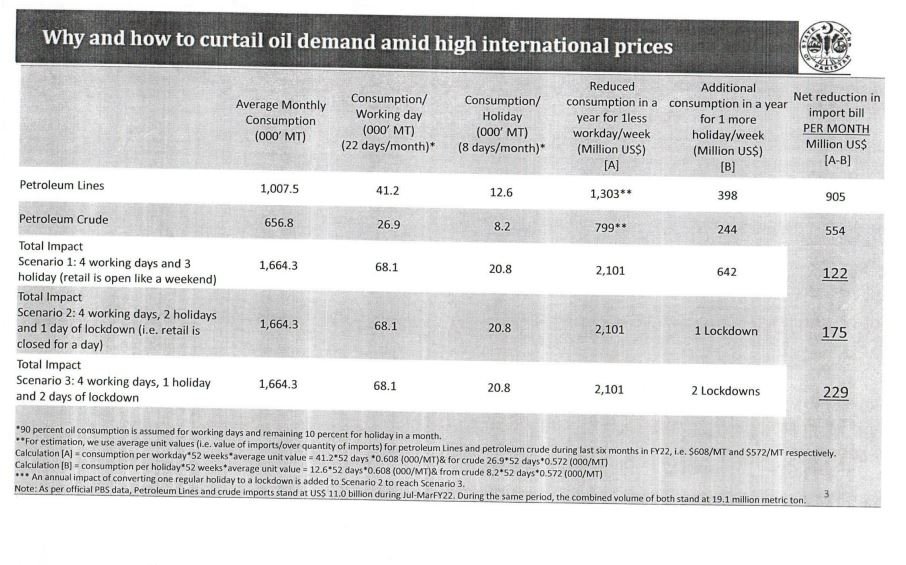
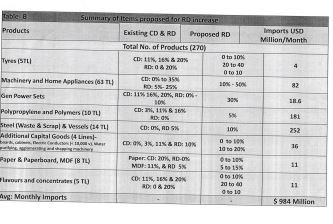
    Only from the data shared by PBS it becomes clear that for the fiscal year 2022, June to March, the total value of petroleum imports was $11 billion, while the total value of banning all these non-essential “luxury” items is a total $984 million, which forms only about 8.9% of the total value of petroleum imports.

    In conversation with Profit Magazine’s Ariba Shahid, she clarified that this would still prove to be a largely fruitless move since the most significant chunk of the import bill is still being used up to run the energy sector without any thought being given to the humongous fuel subsidies . “For a very long time the State Bank of Pakistan has been talking about how if we remove the oil component from it, the current account deficit is improving, which is true and basically means that people are not spending money to buy other items and most of the import bill is petrol and soy bean oil.”

    Economists Ammar Khan and Atif R Mian also took to Twitter to analyze this decision of “patchwork economics”. Commenting on this unsustainable gap in Pakistan’s balance of payment, on April 15th, 2022 during a discussion on Pakistan’s economy at Princeton University, he explains that for Pakistan to grow it is a necessary condition for Pakistan to deal with this problem and digs deeper into the structure of the economy. He particularly takes apart urban land reforms, the necessity to levy a capital gains tax on speculative real estate transactions and analyzes how Pakistan is not even economically stable enough to grow at the rate of India and Bangladesh and it is primarily due to the elite capture of the economy that disallows the economy to attempt to fix its loopholes.

    Echoing similar sentiments, Ariba Shahid explained that due to a weaker economy, the import bill is not as significantly high due to a reduced demand pull because of a lowered purchasign power and hence banning these products will be insignificant and might barely make a dent in the current account deficit. “The need of the hour is to reverse the fuel subsidy,” says Shahid, “This decision will swell up the grey market economy and smuggling will increase.”

  • Crisis-hit Sri Lanka has enough petrol left for one day, PM warns

    Crisis-hit Sri Lanka has enough petrol left for one day, PM warns

    As the country suffers its greatest economic crisis in more than 70 years, Sri Lanka’s new Prime Minister (PM) declared that the country is headed to its last day of petrol stock.

    PM Ranil Wickremesinghe said the country urgently needed $75 million in foreign currency to pay for crucial imports in a televised address. In order to pay government salaries, he claims the central bank will have to print money.

    Sri Lankan Airlines, which is owned by the government, may be privatised, according to PM Wickremesinghe.

    The pandemic, soaring energy prices, and populist tax cuts have all wreaked havoc on the island nation’s economy. Medicines, fuel, and other essentials were in low supply due to a chronic shortage of foreign cash and rising inflation.

    Auto rickshaws, the city’s most popular mode of transportation, and other vehicles have been queuing at gas stations in Colombo.

    The country has enough petrol for one day at the time. Mr Wickremesinghe, who was appointed Prime Minister last week, cautioned that the next few months will be the hardest of our lives.

    He noted that shipments of petrol and diesel using an Indian credit line could provide fuel supplies in the coming days.

    Mr Wickremesinghe stated that the nation’s central bank will have to print money to assist the government in meeting its salary bill and other obligations.

    The PM stated that he is forced to allow the printing of money against his will in order to pay state employees and purchase vital products and services. However, the nation must keep in mind that printing money causes the local currency to depreciate.

    Read more: CNG prices pushed to Rs140 per kg for sales tax collection

    As part of his efforts to stabilise the country’s finances, he advocated selling out Sri Lankan Airlines. In the fiscal year ended March 2021, the airline lost 45 billion rupees ($129.5 million; £105 million).

  • Safe to fill up fuel tanks to the max in this heat?

    Safe to fill up fuel tanks to the max in this heat?

    Considering Pakistan’s scorching summer and rising petroleum prices, a claim has been made regarding how much fuel should be topped inside a vehicle.

    According to a viral image being attributed to Pakistan State Oil (PSO), motorists should not fill gasoline to the full capacity of the tank owing to rising temperatures since it may trigger an explosion in the tank. Drivers can fill half of their tank and leave the rest for air.

    Conversely, there has been no official word from the oil company in this regard; however, a similar image went viral years ago when PSO clarified that filling fuel tanks to their full capacity poses no harm to automobiles or passengers.

    The announcement came after a Whatsapp message went viral on the internet in 2018. In view of rising temperatures, the message falsely claimed that PSO had warned the public against filling gasoline tanks to full capacity.

    According to the statement from PSO, the auto-igniting temperature of gasoline is far higher than the peak summer temperatures in Pakistan. Filling a petrol tank to the maximum capacity poses no danger to the automobile or its occupants, and is considered fully safe and advantageous to the vehicle’s operation.

    Read more: CNG prices pushed to Rs140 per kg for sales tax collection

    Also, the idea that filling the vehicle’s gasoline tank to the full capacity will cause an explosion defies scientific logic.

    This is because the auto-ignition temperature for petrol is 495°F (257°C), which is the lowest temperature required to ignite a gas or vapour in air without the presence of a spark or flame. The highest recorded temperature on earth was 56.7°C (134°F), observed on July 10, 1913, at Greenland Ranch, Death Valley, California, USA.

  • Global oil prices rise amid supply concerns

    Global oil prices rise amid supply concerns

    Oil prices increased on April 20, swamped by fears about tightening supply as the European Union (EU) considers a possible ban on Russian oil imports, which would further impede global oil commerce.

    After reaching a high of $109.80, Brent oil futures finished up $1.53 to close at $108.33 a barrel. After earlier reaching a high of $105.42, U.S. West Texas Intermediate (WTI) crude futures ended up $1.60, or 1.6 per cent, at $103.79.

    Consumers also reacted to continued disruptions in Libya, where blockades at major fields and export terminals have resulted in a loss of about 550,000 barrels per day of oil supply.

    Brent has climbed about 8 per cent in the last seven days of trading, but the advance has been calm and steady, unlike the frenzy that surrounded Russia’s invasion of Ukraine in late February and again in mid-March.

    Last week, US crude exports increased to more than 4 million barrels per day, slightly countering Russian crude losses caused by US and European bans.

    Read more: Pakistani rupee plunges by Rs1.05 against the US dollar

    The oil market is still constrained, with the Organization of Petroleum Exporting Countries and its affiliates, led by Russia, striving to achieve output commitments and US crude inventories plunging dramatically in the week ending April 15.

  • Global oil prices climb to highest in three weeks

    Oil prices increased on Monday as fears of limited global supply intensified, with the developing crisis in Ukraine raising the risk of more penalties from the West against Russia, the world’s leading exporter.

    Brent futures were up $1.50, or 1.3 per cent, at $113.20 a barrel, while US West Texas Intermediate futures were up 98 cents, or 0.9 per cent, at $107.93 per barrel. Both contracts surged more than 2.5 per cent on April 14, ahead of the Easter weekend holidays, on news that the European Union would phase in a ban on Russian oil imports.

    Last week, EU governments said that the bloc’s executive was working on ideas to ban Russian oil, but officials said Germany was not actively backing an immediate ban.

    Those remarks came before the Ukraine situation escalated over the weekend, with the Ukrainian military defying a Russian demand to lay down arms in the pulverised port of Mariupol on Sunday. Moscow, which refers to its efforts in Ukraine as a “special operation,” said its soldiers had nearly entirely captured the city, with no sign of a truce in sight.

    Read more: Oil prices jump following Russia’s biggest production decline

    Due to sanctions or importers voluntarily rejecting Russian shipments, the International Energy Agency has warned that around 3 million barrels per day (BPD) of Russian oil might be shut in from May onwards.