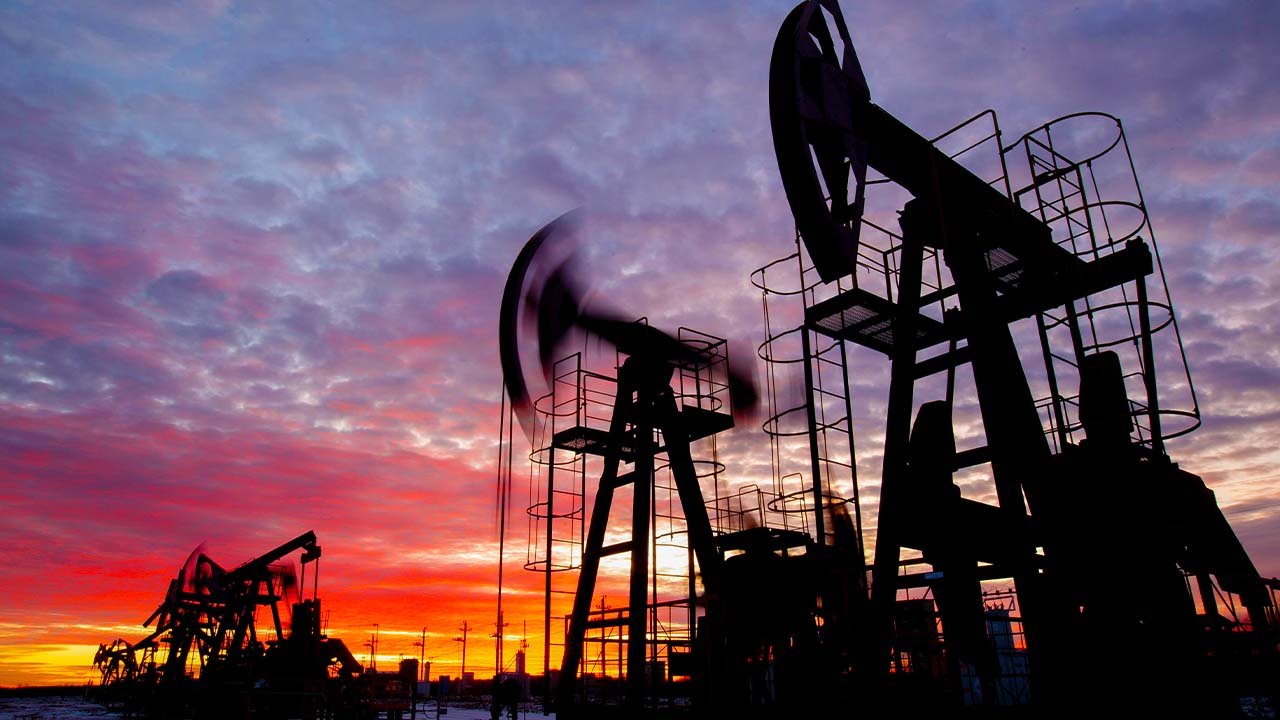
Tag: oil

  • International oil prices declined by 4%, crashing below $100 per barrel

    International oil prices declined by 4%, crashing below $100 per barrel

    Brent crude slid below $100 for the first time since March 16 amid plans to release huge amounts of petroleum and oil products from strategic storage, and also China’s prolonged coronavirus closure.

    Crude oil was down $4.1, or 3.99 per cent, at $98.68 per barrel. The price of US West Texas Intermediate (WTI) crude fell $4.28 a barrel, or 4.28 per cent, to $94.07 per barrel.

    The International Energy Agency (IEA) recently announced that member countries will release 60 million barrels over the next six months, with the United States matching that amount as part of its 180-million-barrel release announced in March.

    The actions are meant to make up for a shortfall of Russian crude after Moscow was extensively sanctioned for what it claims was a “special military operation” in Ukraine.

    As per JP Morgan analysts, the release of Strategic Petroleum Reserve (SPR) volumes will amount to 1.3 million barrels per day (BPD) over the next six months, enough to cover a 1 million BPD shortfall in Russian oil supplies.

    The release of strategic government oil reserves is projected to relieve some market tightness in the coming months, reducing the likelihood of oil prices rising and re-enforcing near-term supply constraints.

    While this is the largest release since the IEA stockpile was established in 1980, market participants believe it will fail to affect the principles of the oil market and will just delay further increases in production from crucial suppliers.
  • State Bank of Pakistan hikes interest rate to 12.25% in an emergency meeting

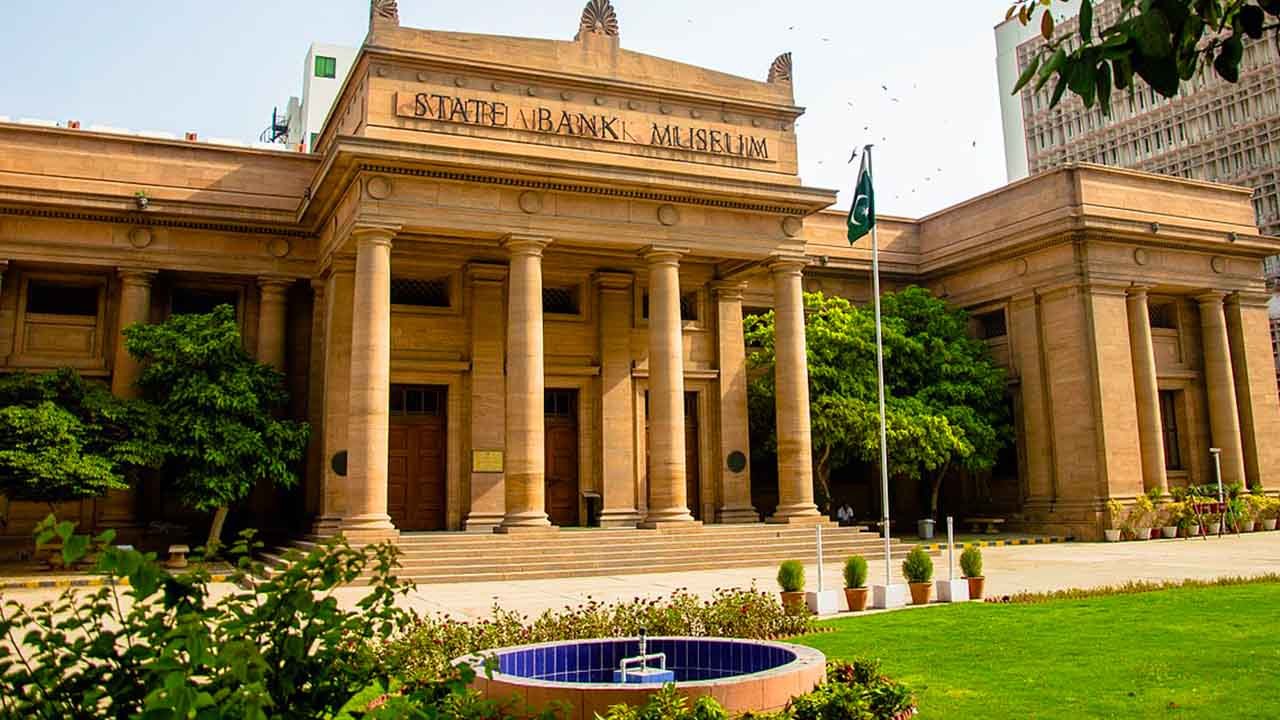
    State Bank of Pakistan hikes interest rate to 12.25% in an emergency meeting

    Following an emergency meeting, the State Bank of Pakistan (SBP) raised interest rates by 250 basis points, as mounting political uncertainty and rising worldwide oil prices threaten to drive the country into a full-fledged economic catastrophe.

    The key rate is now 12.25 per cent, as per the latest statement released by the central bank on Thursday. According to the report, this makes the real rate “mildly positive” and will assist maintain external and price stability.

    The judgment came a few hours before the Supreme Court was due to rule on the constitutionality of Prime Minister Imran Khan’s disputed move to dissolve parliament and hold new elections. Pakistan may find it difficult to persuade the International Monetary Fund (IMF) to grant a much-needed loan tranche due to the political limbo.

    At the recent briefing, SBP governor, Reza Baqir, said, “We thought it’s important to take decisive action”.  He added that the body does not intend to do anything else.

    The central bank claimed that intensified domestic political turmoil contributed to the rupee’s 5 per cent loss and caused a jump in local bond rates, as well as Pakistan’s Eurobond yields and Credit Default Swap (CDS) spreads. Oil prices are likely to remain elevated, and the Federal Reserve of the United States is expected to compress sooner than expected, according to the report.

    The PKR broke all records on Thursday, selling at more than Rs189 per dollar in intraday trading in the interbank market, continuing a slump that has witnessed its decline of more than 10 per cent since March 4.

    Read more: Pakistan to import 32.7 million barrels of oil to cover petroleum needs

    Pakistan’s political instability, in addition to money from the IMF, is causing delays in a planned $1 billion green bond offering. A refinancing from China is also expected; the repayment in recent weeks caused Pakistan’s foreign-exchange reserves to plummet to their lowest level since records began in 2010.

    In a meeting last month, SBP cautioned that it might convene earlier than planned to avoid a crisis. It revised its average inflation prediction for the fiscal year ending in June from 9 per cent to little more than 11 per cent.

  • PML-N’s Miftah Ismail fact-checked by PTI’s Hammad Azhar on load-shedding, Miftah acknowledges

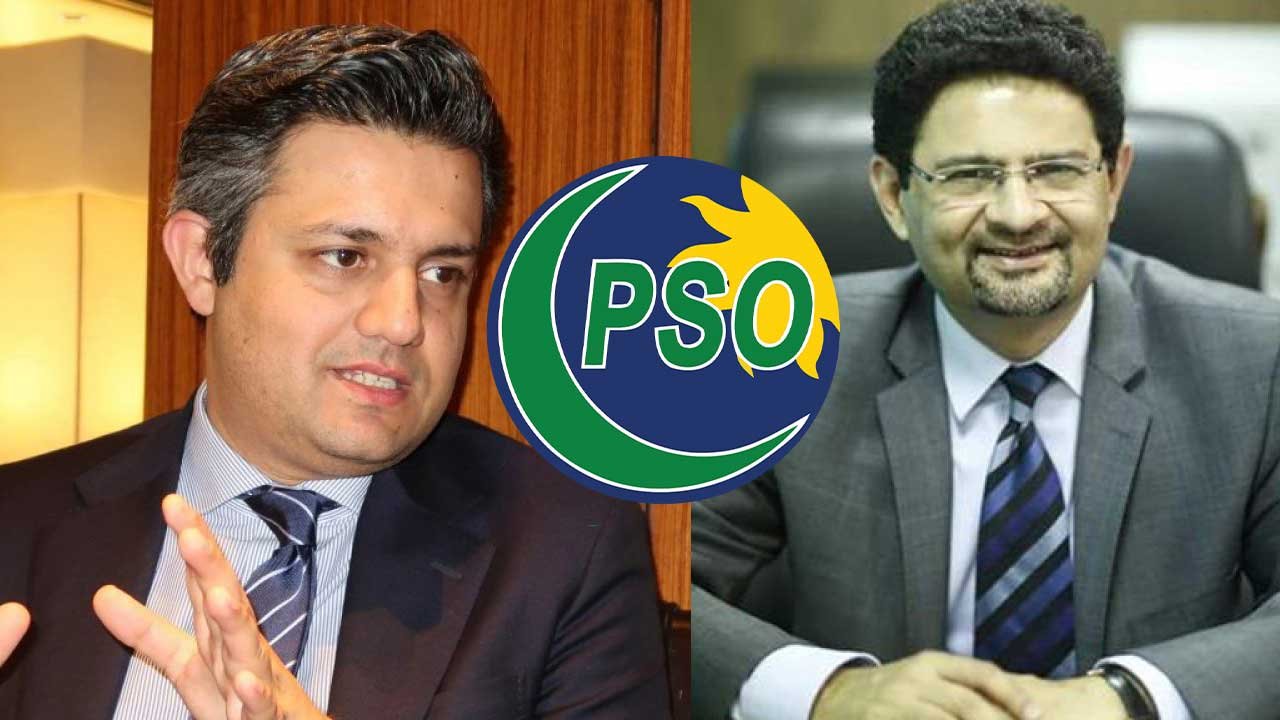
    PML-N’s Miftah Ismail fact-checked by PTI’s Hammad Azhar on load-shedding, Miftah acknowledges

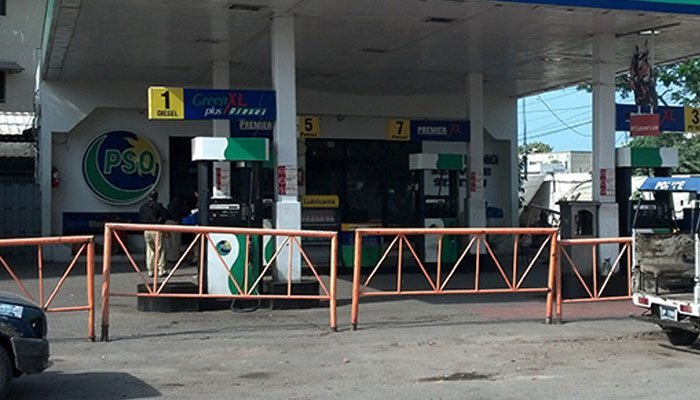
    Miftah Ismail, General Secretary of the Pakistan Muslim League-Nawaz (PML-N) in Sindh, recently took to Twitter, saying that Pakistan State Oil (PSO) has restricted fuel supplies to Independent Power Projects (IPPs), potentially resulting in significant load shedding in the coming week.

    He directly accused Prime Minister (PM) Imran Khan of the impending power outage, writing that it is the result of his incompetence, corruption, falsehoods, and “lust for power: that has gotten the country into such a mess.

    After an hour, Former Energy Minister, Hammad Azhar responded to Ismail’s tweet, calling it “Fake news” and claiming that he had checked with PSO and there had been no such supply cuts notified for IPPs.

    “My statement regarding IK’s corruption (Farah), incompetence (Buzdar), lying (Sh Rasheed) & hunger for power (Suri) is valid,” Ismail responded with a strange tweet to cover up his incorrect finding about PSO.

    It is worth noting that PSO serves a diverse range of customers, including Pakistan’s industrial sector, several power projects, aviation, and maritime sectors. On a daily basis, the company meets the POL needs of millions of clients.

    Apart from selling oil to Pakistan’s power utilities, such as K-Electric and Wapda, PSO is the primary supplier of furnace oil to all IPPs in the country, with a local market share of more than 80 per cent.

  • Petroleum sales increase by 23% in March, despite hefty oil prices

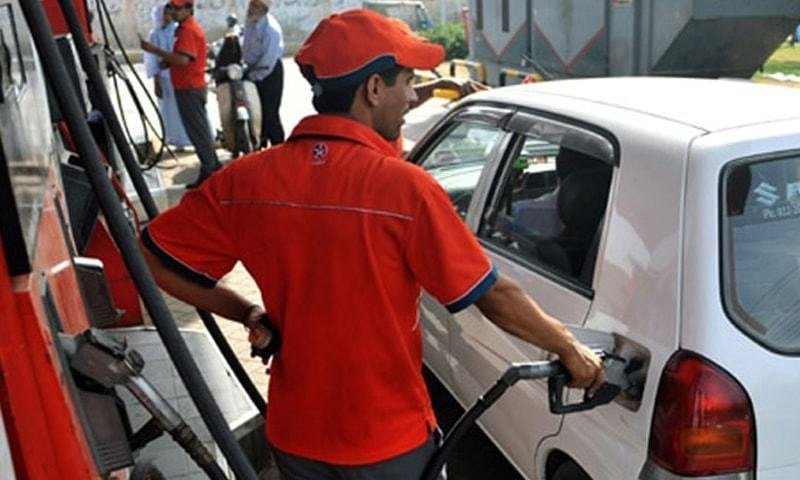
    Petroleum product sales rebounded in the last month after a dismal February with Oil marketing companies (OMC) witnessing an increase of 23 per cent in sales of petroleum products on a year-over-year (YoY) basis in March 2022.

    Overall petroleum sales in March 2022, increased to 1.82 million tonnes compared to 1.54 million tonnes in March 2021, as per the data released by Arif Habib Limited.

    The stability comeback shows a 19 per cent increase in overall OMC sales on a month-over-month (MoM) basis.

    OMC volume growth was driven by furnace oil, which climbed by 34 per cent on a YoY basis, followed by HSD volume growth of 29 per cent and MS volume growth of 13 per cent. MoM growth in OMC volumes followed a similar pattern, with FO taking the lead.

    Although the increase in furnace oil volumes was driven by increased furnace oil usage in the power sector due to low gas and Re-Gasified Liquefied Natural Gas (RLNG) availability.

    The increase in HSD volumes was driven by increased demand from the transportation and agriculture sectors and increased usage in generators and the power sector.

    Moreover, the government’s price caps and the additional number of days in March compared to February were the main contributors to MoM growth in diesel and gasoline sales.

    Consequently, petroleum sales increased by 19 per cent on a YOY basis in 9MFY22, with double-digit increases for petroleum products.

    Diesel sales grew by 17 per cent, followed by 16 per cent increase for furnace oil and a 10 per cent growth for motor oil.

    While some are expecting a drop in petroleum sales due to the political turmoil and rising commodity prices, others say that higher oil consumption cannot be overturned as the summer is already here and people are likely to consume more electricity, also that the power sector may switch to furnace oil due to RLNG commitment defaults.

  • Ramzan Relief Package: Utility Stores Corp announces discount on 1,500 items at 4,000 outlets

    Utility Stores Corporation of Pakistan (USC) will sell various food items at prices cheaper than the open market through its country-wide retail outlets as a part of its Ramzan Relief Package.

    The state-owned enterprise is offering discounted prices for 19 food items besides 1,500 total items that will be available at 4,000 stores throughout the holy month of Ramzan.

    Consumers will pay Rs950 for a 20-kilogram wheat flour bag under the package, instead of its original price of Rs1100-1350. Similarly, one kilogramme (kg) of sugar would be offered at Rs85 instead of Rs86-93. One kg of subsidized ghee costs Rs260 at USC, whereas edible ghee costs Rs470 on the open market.

    The price of one liter of cooking oil at USC is Rs407, while the open market is offering the same at Rs500.

    Likewise, one kg of daal channa costs Rs162 at USC, while it is being sold at Rs180-190 on the open market. Similarly, a kg of dal moong (washed) costs Rs170, and the open market sells it for Rs180-200 per kg. Washed daal mash costs Rs268 at USC, as compared to its price of Rs280-320 on the open market.

    Furthermore, one kg of daal masoor costs Rs215 at USC, instead of Rs250-280 in the open market. Sella rice will cost Rs165 per kg, basmati rice Rs155 per kg, and tota rice Rs85 per kg.

    The dates will cost Rs140 per kg, whereas dates on the general market will continue selling for Rs200 and Rs240. The 950gm tea pack costs Rs1,042 at USC, in contrast to its price of Rs1,250 in the open market.

    Read more: FBR records 29.1% growth during July 2021 to March 2022

    Ultra-high temperature (UHT) or pasteurized milk at USC is offered at USC for Rs142, and costs Rs165 in the general market. Squashes are sold for Rs250 instead of Rs290, and squashes and syrups (1,500 ml) are available for Rs437, compared to the original price of Rs495 in the open market.

  • Pakistani rupee continues its record-breaking decline against the US Dollar

    Pakistani rupee continues its record-breaking decline against the US Dollar

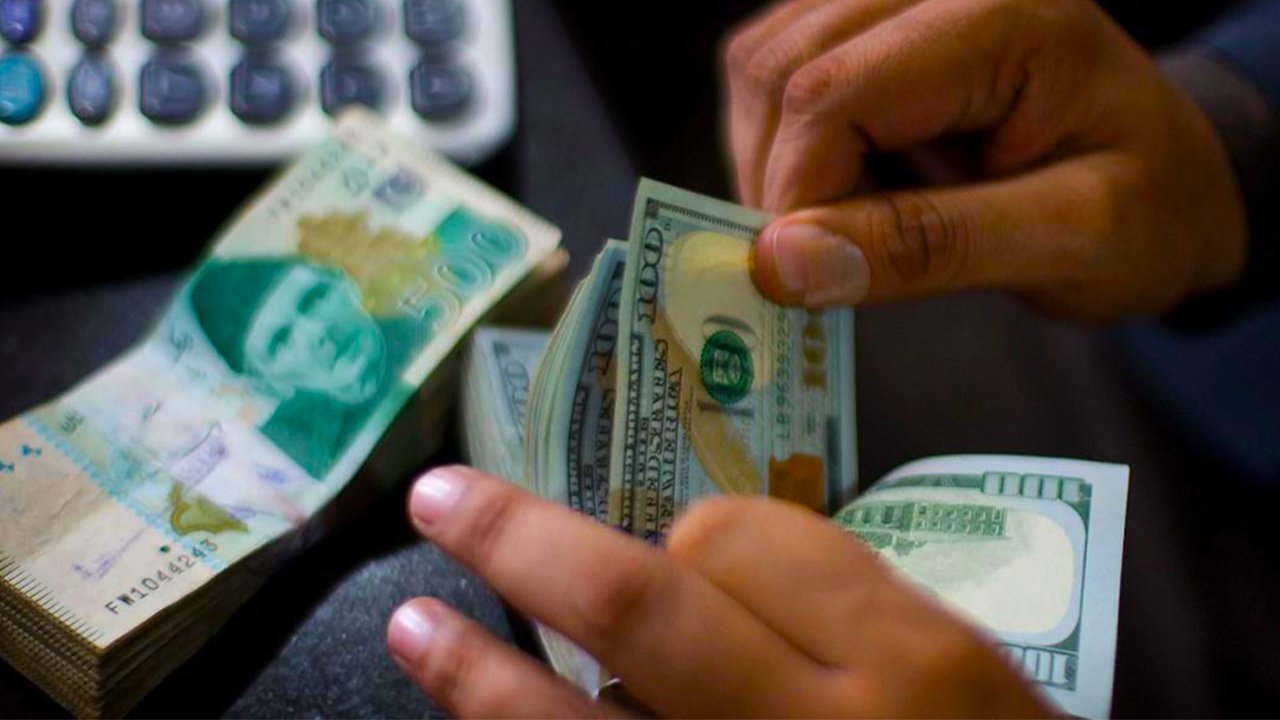
    The Pakistani Rupee (PKR) continued its decline against the US Dollar (USD) today, reporting losses in the interbank market. At the close of the session today, the local currency lost 30 paisas against the US dollar.

    It fell 0.16 percent against the US dollar, closing at Rs182.64 after losing 30 paisas and closing at Rs182.34 in the interbank market on Tuesday, March 29.

    Pakistan’s ongoing political volatility and economic problems continue to weaken currency reserves as the country attempts to remove obstacles toward financial relief.

    After global oil prices surged on Monday, the PKR maintained its downward trend against the greenback.

    The rupee has lost about 17 per cent of its value since its last peak in May 2021. To date, the local currency has lost more than 13.6 per cent of its value.

    It is worth noting that the Pakistani currency depreciated 30.5 per cent against the US dollar in the last three years under the government of Prime Minister (PM) Imran Khan.

  • Oil companies warn govt of fuel shortage in Pakistan

    Oil companies warn govt of fuel shortage in Pakistan

    Oil marketing companies and refineries have reportedly expressed serious concerns and warned of a fuel crisis in the country after the government’s announcement of a relief package, according to Geo News.

    In a meeting between Oil and Gas Regulatory Authority (OGRA) and the petroleum division, several questions have been raised regarding petroleum prices. They argued that how can they sell petroleum products at cheaper prices when they are buying them at an expensive rate from the international market. They asked, “who will pay the price difference?”

    According to the secretary of petroleum, the government is preparing a price adjustment mechanism and the government will pay later. Till then, oil marketing companies and refineries should bear the price difference.

    In response to this, oil marketing companies and refineries said that the situation doesn’t seem to be sustainable as the country can face an interruption in the supply of petroleum products.

    Prime Minister (PM) Imran Khan, in an announcement on Monday, said that the government has slashed petrol, diesel prices by Rs10 per litre and electricity prices by Rs5 per unit as part of a series of measures to bring some relief to the public. He also promised that the government will not increase the prices of these commodities till the next budget, which will be announced in June.

  • ‘Hamaray paas paisa ziada aya hai’: PM Khan reveals reason for slashing petrol, diesel prices

    ‘Hamaray paas paisa ziada aya hai’: PM Khan reveals reason for slashing petrol, diesel prices

    Prime Minister (PM) Imran Khan on Wednesday revealed the reason for giving relief to Pakistanis in terms of reduction in electricity charges and petrol prices as the country now has more money.

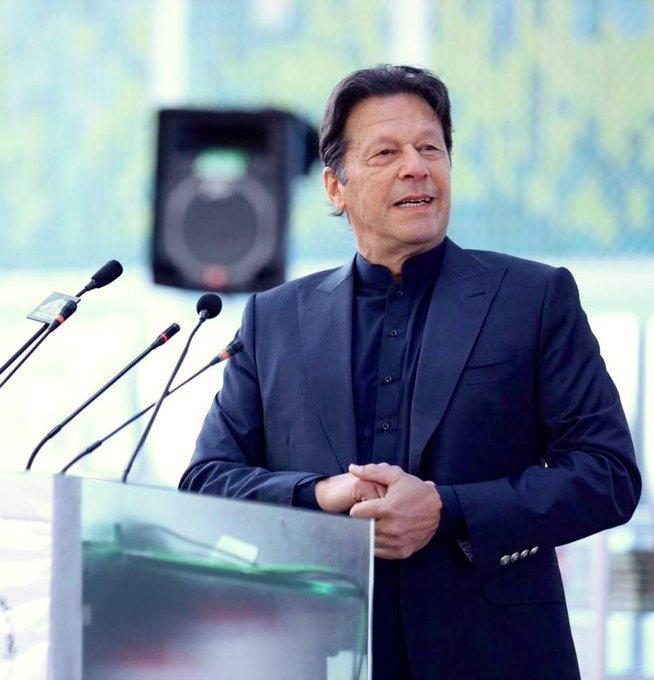
    Addressing a ceremony to launch the disbursement of interest-free loans for people of low-income groups under the Kamyab Pakistan Programme, the premier said, “This time we collected record tax in Pakistan. And because of this, I reduced the prices of petrol and oil.”

    “Hamaray paas paisa ziada aya hai [We have more money now]. The more tax you will pay, the more I will utilise all of it to uplift the poor in the country. This is my promise to the nation,” said PM Khan.

    Imran Khan regretted that Pakistan in the past could not achieve its due place in the comity of nations because it “did not pursue the ideology for which it was created”. He noted that the “nations that forget their ideology never succeed”.

  • Petrol prices likely to increase by Rs5.90 per litre

    The Oil & Gas Regulatory Authority (Ogra) has sent a summary to Prime Minister Imran Khan for the approval to increase the price of petrol by Rs5.90 per litre, Geo News has reported. The petrol prices are likely to be increased on October 16, 2021 as per sources of Geo News.

    If approved, The petrol prices can reach up to Rs133.2. In addition, Ogra has recommenced an increase in high-speed diesel price by Rs10.

    In early October, the government had increased the price of petrol by Rs4 per litre taking its price to a record level of Rs127.30 per litre.

  • OGRA proposes slashing petrol, jacking diesel price

    OGRA proposes slashing petrol, jacking diesel price

    Oil and Gas Regulatory Authority (OGRA) has proposed slashing petrol, and increasing diesel prices due to existing tax rates.

    According to reports, the authority has calculated and proposed a two percent increase in diesel prices. It has moved a summary with calculations of petroleum prices on the basis of existing rates of the general sales tax (GST) and petroleum demand. 

    The Ministry of Finance is expected to announce a detailed list of prices of petroleum products based on the import parity (the price that a purchaser pays or can expect to pay for the imported goods). 

    PROPOSED RATES

    OGRA says about Rs2.47 per litre of High-Speed Diesel (HSD) and Rs1.10 per litre in Light Diesel Oil (LDO) should be increased. 

    On the other hand, the regulatory has calculated six paisas and 66 paisas per litre reduction in the price of petrol and kerosene oil respectively. 

    The rate of HSD has been calculated at Rs129.73 per litre instead of Rs127.26, showing an increase of 1.9pc. In addition, light diesel oil (LDO) has been worked out at Rs85.61 per litre instead of the existing rate of Rs84.51, showing an increase of 1.3pc.

    On the contrary, petrol price has been proposed to go down to Rs116.54 per litre from the existing rate of Rs116.60, down 0.1pc.

    The ex-depot price of kerosene has been proposed to be reduced by 0.7pc to Rs98.79 per litre from the existing rate of Rs99.45 per litre.

    The government has already increased GST on all petroleum products by a standard rate of 17pc across the board to generate additional revenues.