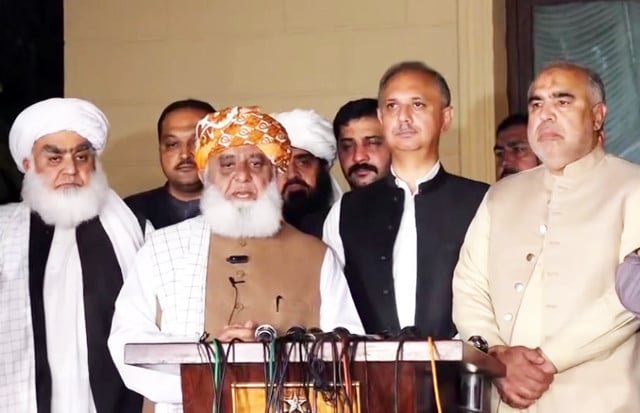
Pakistan Tehreek-e-Insaf (PTI) has constituted a five-member negotiation team for holding talks with Jamiat Ulma-e-Islam-Fazl (JUI-F) chief Maulana Fazlur Rehman to establish an extensive opposition alliance.
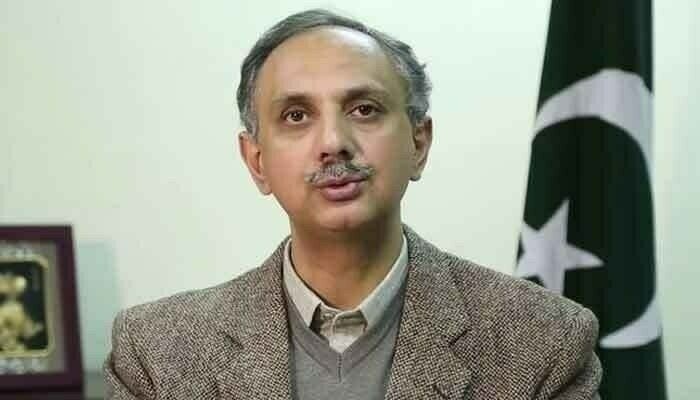
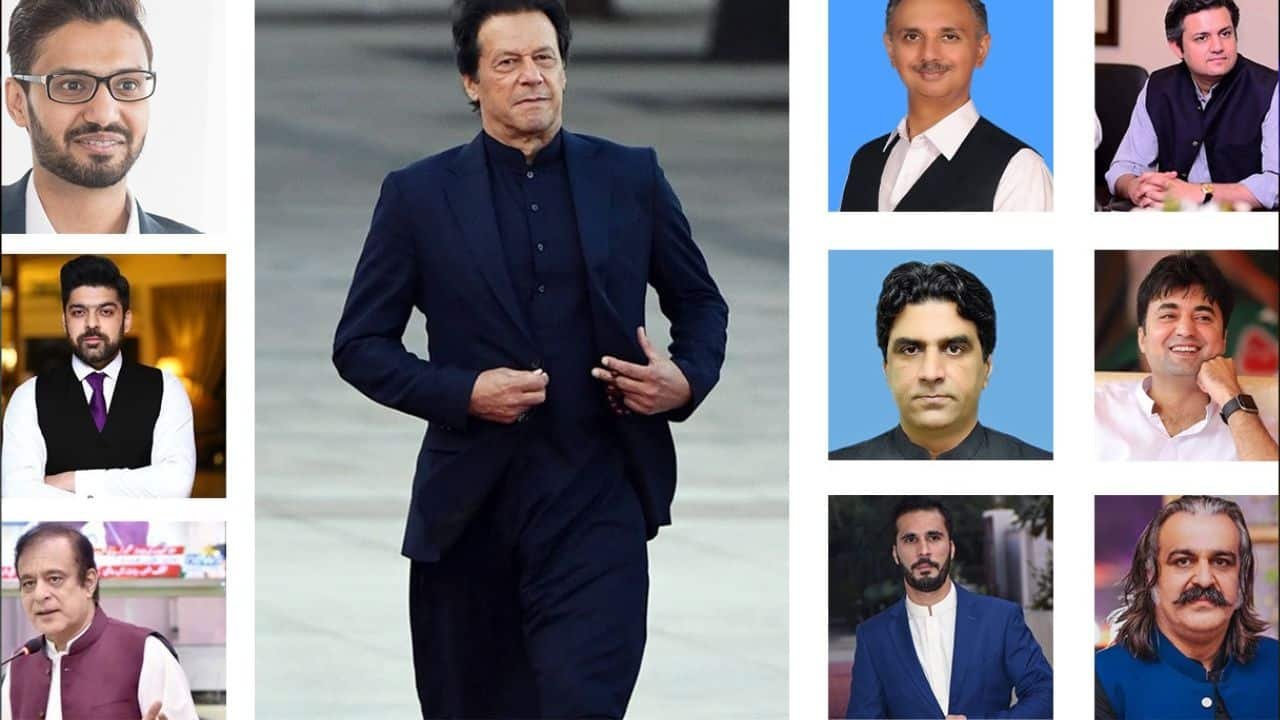
The negotiation team includes PTI Chairman Barrister Gohar, former National Assembly (NA) speaker Asad Qaiser, party’s Central Information Secretary Raoof Hasan, Senator Shibli Faraz, and NA Opposition Leader Omar Ayub Khan.
Both parties have the same agenda, namely that the February 8 general elections were not free and fair. PTI formed a six-party opposition alliance in April to give the Pakistan Muslim League-Nawaz (PML-N) a hard time.
In a meeting between PTI’s Asad Qaiser and Maulana Fazlur Rehman in Islamabad last month, both the leaders agreed to play a vital role of opposition in NA.
Omer Ayub Khan, lawmaker backed by Pakistan Tehreek-e-Insaf (PTI) and Sunni Ittehad Council (SIC), strongly objected to the oath-taking of members of the National Assembly (MNAs) on reserved seats, calling it “unconstitutional.
A group of newly elected lawmakers on reserved seats in the NA were sworn in. NA Speaker Ayaz Sadiq administered the oath to the MNAs amidst chanting by PTI-backed SIC lawmakers.
Taking the floor, Ayub — Imran Khan’s pick for the leader of the opposition — said: “Today’s oath-taking of MNAs on reserved seats is illegal and has no [legal] standing.”
Raising questions over the oathtaking, the PTI leader asked a country can be run without the rule of law. “The system cannot work like this.”
The Peshawar High Court (PHC) has extended a stay order on the oath-taking ceremony for lawmakers who were supposed to take their oaths on reserved seats supported by the PTI-backed SIC. This extension lasts until March 13.
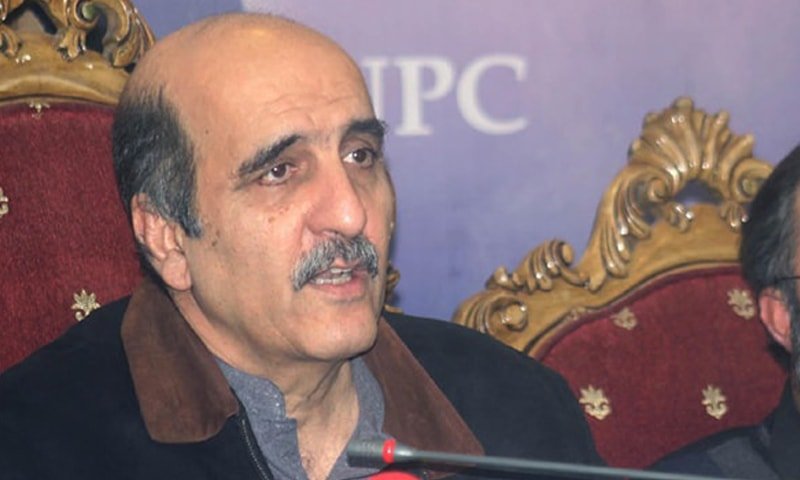
Disgruntled Pakistan Tehreek-e-Insaf (PTI) founding member Akbar S Babar filed two separate petitions with the Election Commission of Pakistan (ECP) to challenge the party’s intra-party elections for the second time.
The Supreme Court (SC) on January 13 upheld the ECP’s verdict regarding the party’s intra-party elections as invalid, leading the party to lose its ‘bat’ electoral symbol.
A five-member ECP bench headed by Chief Election Commissioner (CEC) Sikandar Sultan Raja declared the PTI’s internal polls unlawful.
In the fresh petition, Babar has requested the ECP to declare the recent intra-party polls invalid too.
PTI’s fresh intra-party elections were held on March 3.
The beleaguered party’s federal election commissioner Raoof Hasan formally announced last Sunday that Barrister Gohar Ali Khan and Omar Ayub Khan had been elected as the party’s chairman and secretary general unopposed, respectively, in the intra-party polls.
Taking to journalists, Babar said that he moved the ECP against the “fresh fraud” of the PTI, adding that he was kept away from the intra-party elections.
Barrister Gohar Ali Khan has won the intra-party elections unopposed as the chairman of Pakistan Tehreek-e-Insaf (PTI). This is the first time in PTI’s history that he is the only person to hold the top position in the party twice.
“At the conclusion of the withdrawal phase of candidates/panels, there is only one candidate/panel remaining,” the PTI said in a statement late Thursday.
Member of the National Assembly (NA), Omar Ayub Khan, was elected as the PTI’s central general secretary after intra-party polls.
Dr Yasmin Rashid, Ali Amin Gandapur, and Haleem Adil Sheikh were also among party leaders who were elected unopposed to the positions of the party’s presidents for Punjab, Khyber Pakhtunkhwa (KP), and Sindh respectively, as no candidate came forward to contest against them.
The former ruling party will organise intra-party elections in Quetta to elect the president of Balochistan.
“The final result of the election will, however, be declared by the Federal Election Commissioner on March 3, 2024, at the conclusion of the election process,” read the statement.
In the politics of Pakistan Tehreek-e-Insaaf (PTI), the Urdu letter “Ain” holds immense importance.
PTI founder Imran Khan has nominated Omar Ayub Khan, whose name starts with “Ain,” as the prime ministerial candidate.
PTI also nominated Ali Amin Gandapur, whose name also starts with “Ain,” as the party candidate for the chief minister of Khyber Pakhtunkhwa (KP).
There are interesting and funny comments about this on social media, reminding us that Imran also begins with Ain, Usman Buzdar with Ain, Arif Alvi, Omar Ayub, and Ali Amin Gandapur all start with Ain.
During PTI government, speculation was rife that Bushra Bibi asked Iman Khan to appoint a person whose name starts with ‘Ain’ as the chief minister of Punjab. After that, the PTI founder chose Usman Buzdar.
Gohar Ayub Khan, former foreign minister and ex-Speaker of the National Assembly, breathed his last on Friday. The Secretary General of Pakistan Tehreek-e-Insaf (PTI),verified that his father has passed peacefully after a brief illness. “Qul will be offered at 11am at Omar Ayub Khan’s residence Main G.T Road Haripur on 19th November,” he added.
Born in 1937, the former foreign minister was under treatment in a private hospital in Islamabad for quite some time, PTI spokesperson Rauf Hussain confirmed.
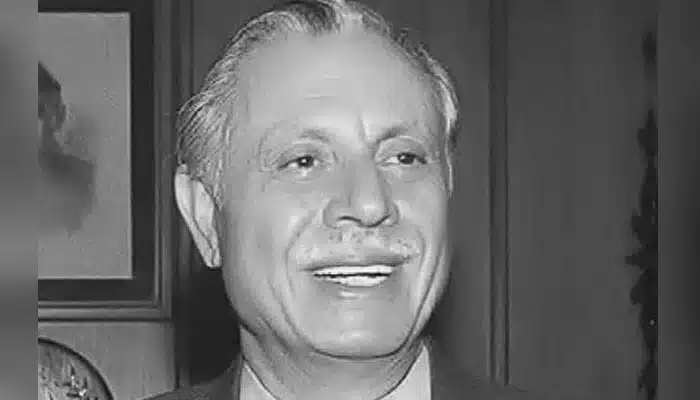
Gohar Ayub Khan was the son of former field marshal president Ayub Khan. President Dr. Arif Alvi conveyed profound sadness and Omar Ayub Khan sorrow on the passing of the former foreign minister. He extended heartfelt condolences to the grieving family.
Interim Prime Minister Anwaar-ul-Haq Kakar also conveyed profound sadness and condolences on Gohar’s passing. In a message, the premier offered prayers for the high ranks of the departed soul and for the grieving family to find strength in coping with their loss.
An Islamabad court has issued perpetual arrest orders for nine Pakistan Tehreek e Insaf (PTI) leaders due to their alleged involvement in a violent incident outside the Federal Judicial Complex.
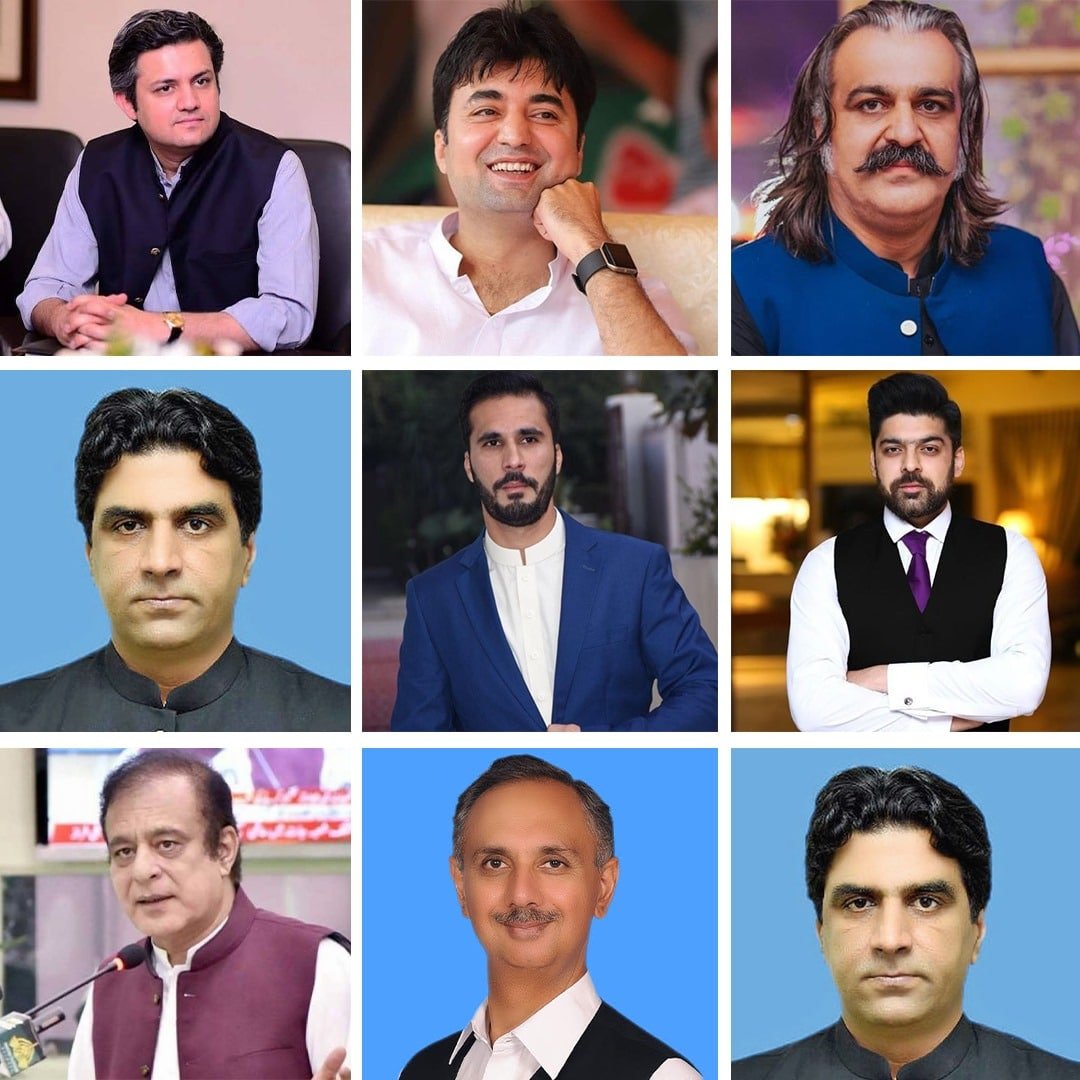
The list includes prominent figures like Hammad Azhar, Shibli Faraz, Murad Saeed, Omar Ayub Khan, Ali Amin Gandapur, Ali Nawaz Awan, Hassaan Khan Niazi, Umer Sultan, and Muhammad Asim.
The decision came out after the suspects failed to appear despite summons, prompting their declaration as proclaimed offenders.
The incident dates back to March, during a hearing of the Toshakhana case when clashes broke out between the police and PTI workers.
Both sides resorted to aggressive measures, with PTI supporters reportedly using rocks and petrol bombs, leading to injuries sustained by 25 officials.
Several cases were filed against Imran Khan and other PTI leaders, with Parvez Elahi also being arrested in connection with the case.
Elahi’s judicial remand was extended till November 21 following his initial arrest in September, despite a temporary release granted earlier by the Islamabad High Court.
The court has urged the authorities to apprehend the suspects and bring them to justice.
In a separate case, the district and sessions courts, Islamabad, have once again issued a non-bailable arrest warrant for PTI leader Shahbaz Gill in a sedition case.
Judge Tahir Abbas Sipra heard the case on Wednesday and directed the SHO to arrest the proclaimed offender and produce him before the court.
The court ended the trial of co-accused Ammad Yousaf following the Supreme Court’s direction.
This recent issuance of arrest warrants stems from the PTI leader’s continued absence from court proceedings, leading an additional district and sessions court in Islamabad to declare him an absconder on July 26, 2023.
Despite multiple summonses, Shahbaz Gill had failed to appear before the court, prompting Additional Sessions Judge Tahir Abbas Sipra to issue arrest warrants. Furthermore, the court had instructed relevant authorities to post an absconder notice at Gill’s residence in Faisalabad.
This is the second instance of non-bailable arrest warrants being issued against Gill, with the first set being issued on June 7, 2023, in connection with the same case.
Shahbaz Gill is in USA now a days.
Dr Shahbaz Gill, Salman Ahmad, and Dr Moeed Prizada addressed the community members who participated in the Solidarity with Imran Khan Cricket Event in Virginia, USA.
The event helped create awareness about the human rights situation and the state of democracy in Pakistan among… pic.twitter.com/qs03wAmEcO
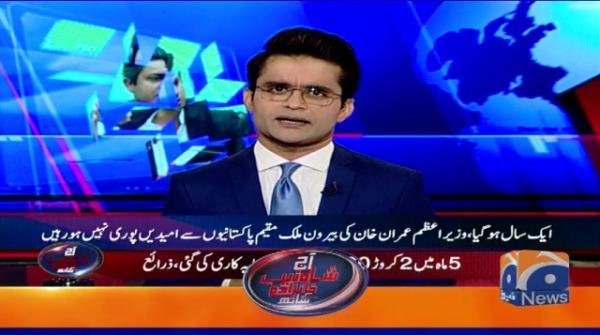
Whopping losses of Rs122 billion were inflicted to the national exchequer in the petroleum sector alone due to fallout of illogical delays and misguided decisions, but the prime minister (PM) and his teammates are not prepared to disclose as to who benefitted from the damage, journalist Shahzeb Khanzada has claimed.
During his show on Geo News, the journalist claimed deliberate falsehood was spread in the media by ministers and the special advisers who, instead of owning the decisions, hold the media, bureaucracy or the past governments responsible.
While he also accused the government of losing taxpayers’ money to the tune of Rs400 billion in wheat and sugar scandals and taking no action against the ministers responsible, Khanzada raised the question about delayed purchase of Liquefied Natural Gas (LNG) in August and September.
“In July, the LNG was available at 5.7 per cent for August but the government instead of timely tender purchased the commodity in August at the inflated rates of 9.3 per cent that turned out to be $5 million more expensive and the next bid further heaped a loss of $2.5 million. The same was repeated in the purchase of LNG for September in August.”
He said it was available at 6.9 per cent but the timely decision was delayed and then suddenly in September it was decided to purchase the cargo which cost 10.8 per cent. These two cargos alone cost the country Rs1.5 billion. When Special Adviser to Prime Minister (SAPM) Nadeem Babar was asked about it, he blamed K-Electric and accused it of suddenly raising the August and September demand instead of raising advance warning of depleting stocks.
When Federal Minister for Power and Petroleum Omar Ayub was asked if he did not know of the required demand in time, he said the power utility had not intimated of the demand and the load shedding duration in Karachi was increasing prompting the federal government to release their stocks for K Electric.
But, according to Khanzada, the true picture is entirely different from that being stated.
In the last few years, there were differences between the government and the K-Electric due to non-negotiation of a new agreement, The News reported. The power utility kept on demanding gas from the Sui Southern Gas Company (SSGC) on the basis of allocation. But the government denied that on the pretext that there was no prior agreement. The confusion led to a severe power crisis in Karachi.
Back in April 2018, the Cabinet Committee on Energy decided that the Karachi power utility be provided 130 MMCFD gas from the SSGC and 60 MMCFD LNG. Under the agreement, K-Electric kept getting 190 MMCFD since 2018. But SAPM Nadeem Babar and Federal Minister Omar Ayub erroneously claimed that the sudden raising of demand by the Karachi power utility in August and September forced them to tender expensive gas.
MMCFD stands for million standard cubic feet per day.
The anchor maintained the federal government provided K-Electric 198 MMCFD LNG in June, and 121 MMCFD LNG in July but reduced it to 73 MMCFD LNG in August and 66 MMCFD LNG in September. This clearly shows that the K Electric had not suddenly raised the demand in August and September but the government in fact had reduced the amount of gas supply. Not only this was far reduced than the amount given during June and July but was equivalent to the gas supply provided in August and September last year.
There was no justification for purchasing the LNG late in those months, Shahzeb maintained. The prime minister must ask his cabinet why the treasury was inflicted massive loss of Rs 1.5 bn because of this incompetency. Khanzada said when in June the petroleum crisis emerged why the government failed to import the fuel. Both SAPM Nadeem Babar and Federal Minister Omar Ayub blamed fuel companies and announced a thorough probe the results of which are still awaited. Due to this, the refineries had run out of furnace oil stocks and there was nothing left for K-Electric. Here once again the responsibility was lumped on the Karachi power utility.
In January 2019, the government banned the import of furnace oil and the PM ordered cheaper power generation through coal and LNG. It was decided that if need arise the K-Electric would be asked to procure furnace oil from the refineries. Against this scenario, K Electric could not have imported the furnace oil on its own. Furthermore due situation emerging out of Covid-19, the refineries had run short of furnace oil. Primarily, it was the responsibility of the government to monitor the fuel stocks. They must have imported LNG when it was cheaply available globally.
In June, the second LNG terminal was running only at its 45 per cent capacity but the government did nothing. In April, the K-Electric had informed the government in advance of its requirement of 120,000-tonne furnace oil for June.
But in June, the demand was increased to 130,000 tonne furnace oil but the PSO only provided 69,000 tonnes as the refineries had run short of furnace oil. In June 2019, PSO had provided 113,000 tonne furnace oil.
The PSO had informed the Ministry of Petroleum of the increased demand by K Electric on June 2, 2020, while reminding it of the May 19 directive by the Ministry of Petroleum to the refineries to supply maximum furnace oil.
But to this day, there has been no confirmation about it nor the allocation was increased. The PSO had intimated the Ministry of Petroleum of the impending crisis due to shortage of furnace oil, but it was not imported.
Similarly, the LNG was available at rock bottom prices but even that was not imported, causing power and fuel crisis in the country leading to losses running into billions of rupees, Khanzada said. He said the criticality of the situation forced the government to import furnace oil in panic at the last moment.
The anchor said ever since the inauguration of the PTI government, this was not the first time the gas crisis had occurred, but the central government ministers blamed the K Electric and the Sindh government for it.
In 2018 winters, a similar gas crisis had created severe problems for the people, but the government did not import the LNG in time nor it owed its responsibility for it and by blaming the MDs of the SNGPL and SSGC instead sacked them. This negligence led to power production using expensive furnace oil in 2018. In Dec 2018, the power sector was given 200 MMCFD gas which generated only 1,200 MW power instead of the needed 2,600MW. Furthermore, 1,600MW was produced by furnace oil which increased its daily consumption from 4,200 tonnes to 18,000 tonnes. The expensive power generation caused a loss of Rs 10 billion. When the then Minister for Petroleum Ghulam Sarwar was asked that though the SSGC and SNGPL MDs were sacked but if the Ministry of Petroleum and Ministry of Power had “in time “raised gas demand or if the two MDs had to import LNG on their own, Sarwar conceded that the meeting was held late in December.
Today the situation is being repeated in exactly the same manner and expensive power is being generated by furnace oil. Omar Ayub is continues to be the Minister for Oil and Power, while Ghulam Sarwar’s portfolio has been changed to that of aviation. He has, however, struck disaster with the national airline and the pilots. Nothing has changed, no responsibility has been affixed on the members of the cabinet.
Even today cheap LNG is available globally. In July, once again expensive power was generated from furnace oil at 18 month high rates and even then the gas is not available for bitter winters.
Khanzada said that from October to January one million tonnes furnace oil needs to be imported, expensive power would be generated, forex would be wasted with an additional loss of Rs25 billion.
GOVT RESPONDS:
Reacting to the report on Wednesday, PM’s petroleum aide said that LNG terminals are being run on full capacity while arrangements are being made to import around 1,300 cubic feet of LNG to meet domestic needs.
The special assistant said that it’s unfortunate that a negative media campaign is being run against the government about LNG through fudged statistics.
Addressing a press conference along with Information Minister Shibli Faraz, he said that the present government has imported 35 cargo ships of LNG in the last 27 months at a 20 per cent low rate as compared to expensive LNG agreements signed by the Pakistan Muslim League-Nawaz’s (PML-N) previous government with Qatar.
Babar said that the government has also allowed the private sector to construct LNG terminals in the country and two companies have shown their readiness to establish these facilities in Pakistan. In addition, he said that the last PML-N government had established two LNG terminals with the government’s guarantee of running these facilities, inflicting a huge loss to the treasury.
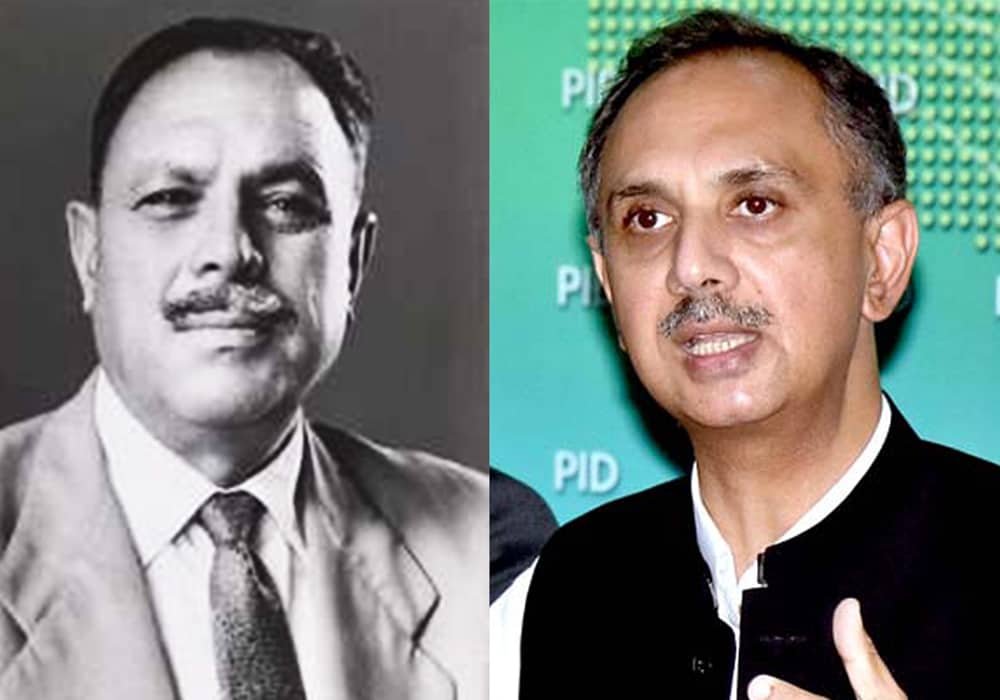
Minister for Power Division Omar Ayub Khan has said his grandfather and former president of Pakistan, Ayub Khan, had “laid the foundation of China-Pakistan Economic Corridor (CPEC)”.
Taking the floor of the National Assembly on Wednesday, Omar Ayub said, “Former president of Pakistan Ayub Khan had laid the foundation of CPEC by starting work on the Karakoram Highway.”
He further said that the Prime Minister (PM) Imran Khan-led government was determined to achieve the set target of Rs5,500 billion in the financial year 2019-20.
The minister added that the country had to pay billions of rupees as interest on the loans taken by the Pakistan Muslim League-Nawaz (PML-N) and Pakistan People’s Party (PPP) governments.
CPEC:
CPEC is a collection of infrastructure projects that are currently under construction throughout Pakistan with China’s help. Originally valued at $46 billion, the value of CPEC projects is worth $62 billion as of 2017.
The project is expected to generate employment and boost the country’s economy in the years to come.