Tag: onions

  • Export of onions and bananas banned in first meeting of cabinet

    Export of onions and bananas banned in first meeting of cabinet

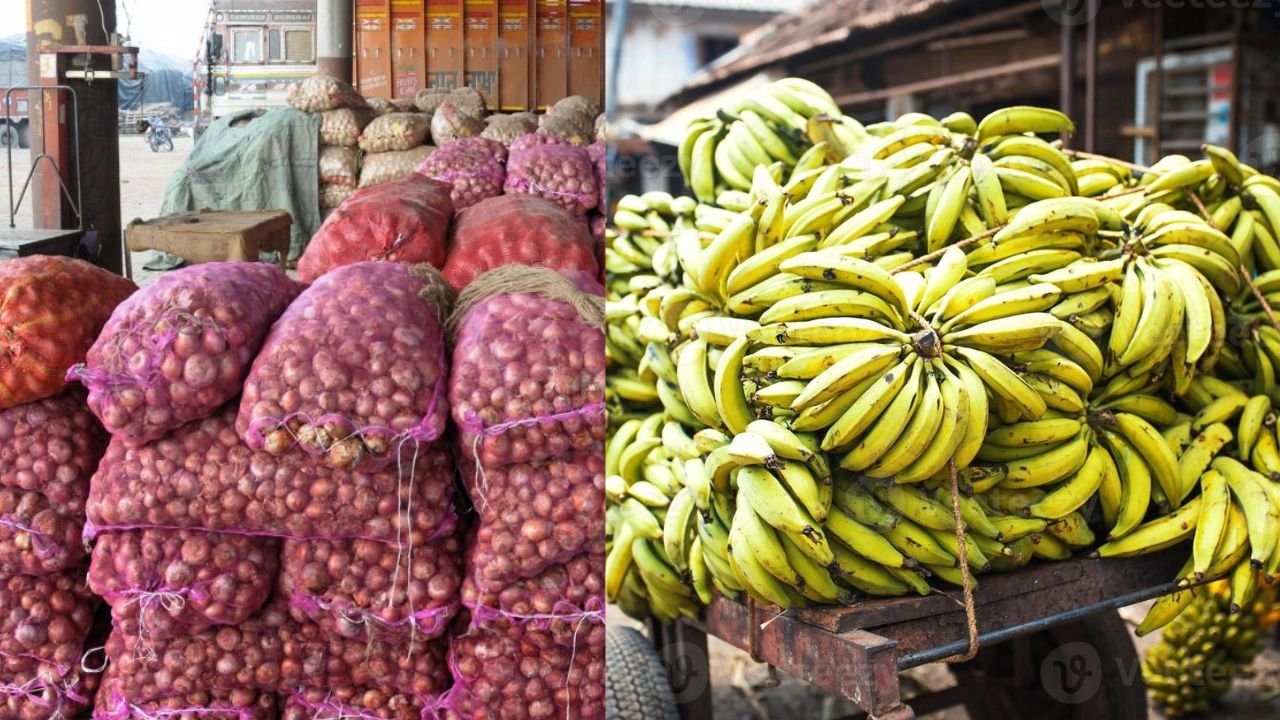
    The federal cabinet has approved a ban on the export of bananas and onion till April 15, 2024, a step taken to bring down rates during Ramzan, reporting Geo News.

    The first meeting of the newly elected federal cabinet was held under the chairmanship of Prime Minister Shehbaz Sharif in which the economic situation of the country was deliberated upon and important decisions were taken including the ban on exporting bananas and onions.
    The ban was imposed to ensure ample availability in the market.

    Prime Minister Shehbaz Sharif directed officials to immediately form a committee to control the prices of food items. The cabinet says that the committee will closely monitor the prices of food items in collaboration with the provincial governments.

    The Prime Minister also issued orders to take strict action against unnecessary increase in prices of essential commodities and illegal profiteering.
    Shahbaz Sharif said that no negligence will be tolerated in taking strict action against profiteering.

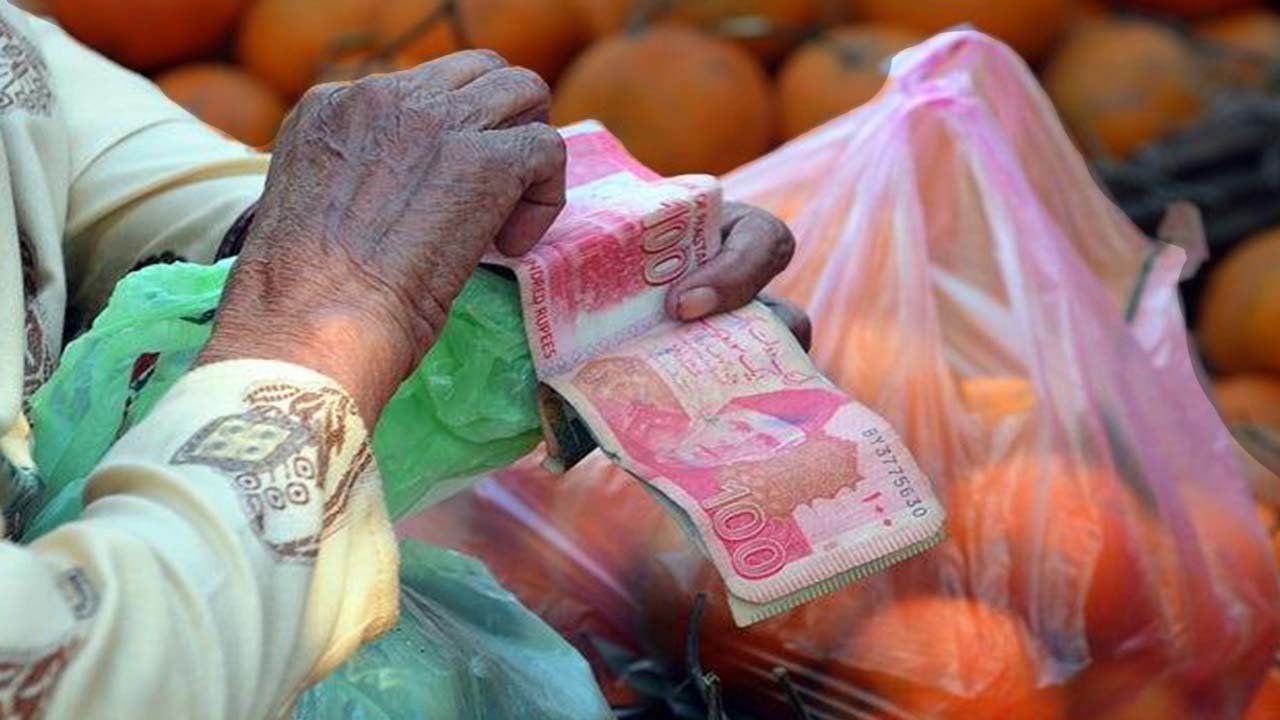
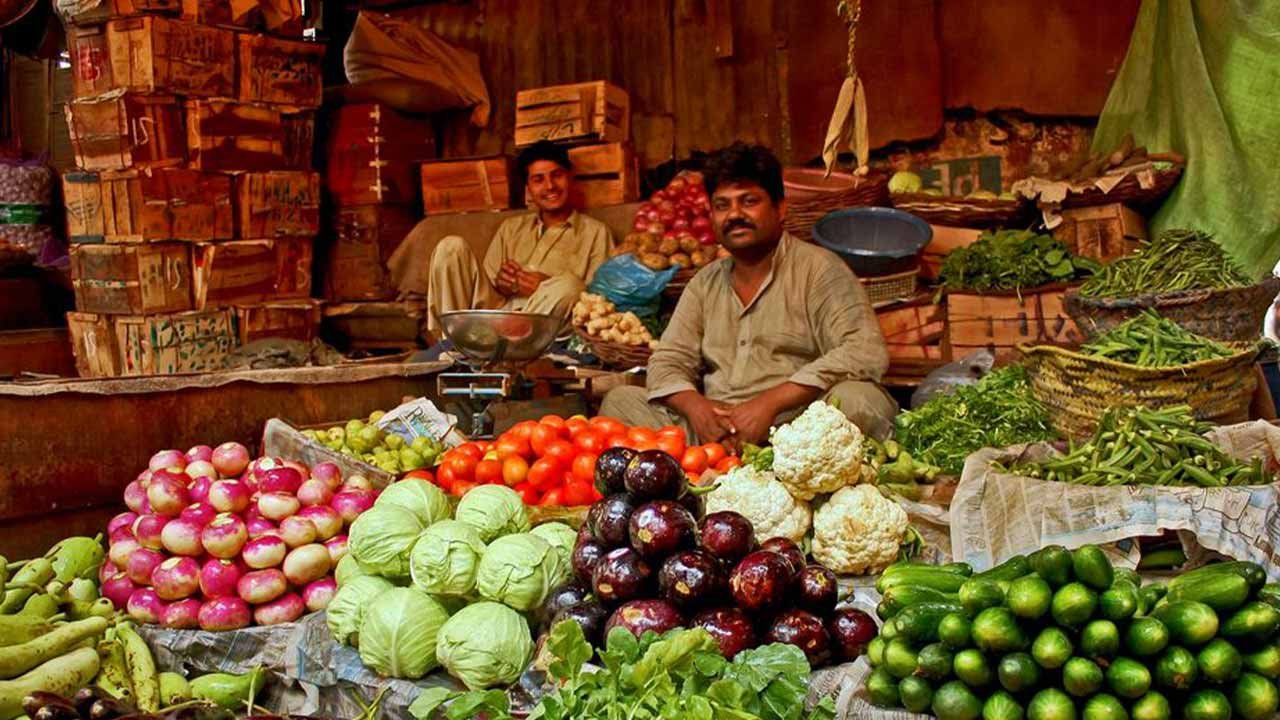
    With the beginning of Ramzan, onion prices have reached 300 rupees per kg, while the prices of other food items are also very high.

  • ‘Arain ki Barbie’, Resham’s Chingchi rickshaw ride goes viral

    ‘Arain ki Barbie’, Resham’s Chingchi rickshaw ride goes viral

    A video of veteran Pakistani actress Resham is getting a lot of attention on social media. In the video, Resham is riding in a chingchi rickshaw wearing a pink tracksuit. Towards the end, she is seen enjoying ‘Chole Bhatore’ at a restaurant.

    @reshamreal #foryou #therealresham #foryoupage #viraltiktok #resham ♬ AA Arif Lohar Roach Killa Deep Jandu Jazba Ent – Arif Lohar

    People on social media are leaving interesting comments about this viral video. Some are saying Resham looks like a 12-year-old girl based on her expressions while riding in the chingchi rickshaw.
    Others are calling her ‘Arain ki Barbie’ because she’s wearing a pink outfit and passionately eating onions. Onions and Barbie?

  • Cost of living rises: SPI records increase in weekly inflation 

    Cost of living rises: SPI records increase in weekly inflation 

    The Sensitive Price Indicator (SPI) recorded a slight increase of 0.71 per cent for the week ending November 3, 2023, compared to the previous week.

    According to data from the Pakistan Bureau of Statistics (PBS), the combined index stood at 279.08 on November 3, 2023, up from 277.11 on October 26, 2023, and significantly higher than the index of 214.88 recorded a year ago on November 3, 2022.

    Out of 51 items, the prices of 12 items increased, 14 items decreased, and 25 items remained stable. 

    The most notable price increases were seen in tomatoes (25.58 per cent), onions (25.25 per cent), chicken (10.79 per cent), potatoes (1.61 per cent), Lipton tea (1.58 per cent), eggs (1.30 per cent), garlic (0.50 per cent), basmati broken rice (0.19 per cent), georgette (0.28 per cent), and firewood (0.05 per cent).

    Conversely, significant price decreases were observed in gur (2.66 per cent), bananas (1.78 per cent), 5-litre cooking oil (1.62 per cent), 1 kg vegetable ghee (1.23 per cent), LPG cylinders (1.05 per cent), masoor pulse (0.93 per cent), wheat flour (0.62 per cent), washing soap (0.41 per cent), and mustard oil (0.32 per cent).

    The weekly SPI percentage change across different income groups revealed an increase in SPI for all quantiles, ranging from 0.64 per cent to 0.86 per cent.

  • Pakistan’s weekly inflation reaches record high of 48.35%

    Pakistan’s weekly inflation reaches record high of 48.35%

    According to data from the Pakistan Bureau of Statistics (PBS), the Sensitive Price Indicator (SPI) has risen by 1.05 per cent to reach a record high of 48.35 per cent year-on-year for the week ending May 4. The SPI for the aforementioned week was recorded at 254.84 points, compared to 252.2 points the previous week.

    Of the 51 monitored items, 30 items experienced an increase in average price, while 9 items decreased, and 12 items remained unchanged during the week.

    The items that experienced an increase in average prices on a week-on-week (WoW) basis were chicken (8.91 per cent), potatoes (3.99 per cent), powdered milk (3.81 per cent), pulse gram (1.96 per cent), pulse masoor (1.83 per cent), eggs (1.81 per cent), mutton (1.71 per cent), pulse mash (1.58 per cent), cooked daal (1.36 per cent), and bread (1.13 per cent). The non-food items that saw an increase were gents sponge chappal (58.05 per cent), gents sandal (33.36 per cent), ladies sandal (14.31 per cent), and washing soap (1.27 per cent).

    On the other hand, a decline was seen in the prices of onions (16.69 per cent), garlic (3.44 per cent), tomatoes (3.41 per cent), diesel (1.70 per cent), mustard oil (0.99 per cent), LPG (0.96 per cent), cooking oil 5 litre (0.40 per cent), and vegetable ghee 2.5kg & 1kg (0.10 per cent each).

    Monitored Items Average Price Increase/Decrease
    Chicken +8.91%
    Potatoes +3.99%
    Powdered Milk +3.81%
    Pulse Gram +1.96%
    Pulse Masoor +1.83%
    Eggs +1.81%
    Mutton +1.71%
    Pulse Mash +1.58%
    Cooked Daal +1.36%
    Bread +1.13%
    Onions -16.69%
    Garlic -3.44%
    Tomatoes -3.41%
    Diesel -1.70%
    Mustard Oil -0.99%
    LPG -0.96%
    Cooking Oil 5L -0.40%
    Vegetable Ghee 2.5kg -0.10%
    Vegetable Ghee 1kg -0.10%
  • ‘Haye Raam’: Indian Charge d’Affaires on price of onions in Pakistan

    Dr M. Suresh Kumar who is currently serving as the Charge d’Affaires at the Indian Embassy in Islamabad, has arrived in Lahore for the first time since his appointment two years ago. Jang reported that the diplomat had breakfast with senior journalists, where he revealed an interesting tibit about food prices in the capital. He was recently purchasing groceries and was shocked to find out that the price of onions was Rs 300/kg, when in New Delhi it was Rs 20/kg.

    Dr Kumar also addressed the matter of improving business ties between India and Pakistan, by saying that Pakistani businessmen are refused a business visa in India because of the fact that there are no business ties between the two countries. To which Pakistani businessmen asked how will business ties between both countries improve if they aren’t given a visa. To which Dr Kumar responded its like asking which came first- the chicken or the egg?

    To answer another question, Dr Kumar said that Gujranwala is the city of wrestlers, and felt that there should be wrestlying and kabadi competitions between the two countries.

    Dr Kumar also said that he will talk to the higher authorities in New Delhi to send an invitation to a delegation of journalists from Pakistan to visit India.

    Jang also reported about a conversation with a senior official from the foreign office in New Delhi who remarked that after the restoration of relations between Saudi Arabia and Iran in the region, efforts should be made to improve the relation between Islamabad and New Delhi.

  • Weekly inflation in Pakistan jumps to 42.3% as prices increase ahead of Ramadan

    Weekly inflation in Pakistan jumps to 42.3% as prices increase ahead of Ramadan

    According to data released by the Pakistan Bureau of Statistics (PBS) on Friday, weekly inflation surged by 1.37 per cent week-on-week and 42.27 per cent year-on-year during the week ended March 9. This marks a 25-week high on an annualized basis, as prices of perishables have started to rise ahead of Ramadan. The surge in the sensitive price indicator (SPI) was attributed to the increase in prices of various commodities, including tomatoes, potatoes, onions, sugar, bananas, cooking oil, wheat flour, vegetable ghee, printed lawn, curd, milk, tea, shirting, broken basmati rice, and powdered salt. Meanwhile, a major decrease was observed in the prices of chicken, garlic, pulse moong, eggs, pulse masoor, LPG, firewood, and pulse gram.

    For the week under review, SPI was recorded at 243.87 points, compared to 240.57 points registered last week and 171.41 points recorded during the week ended March 10, 2022. Brokerage Arif Habib Limited noted that this was the highest weekly YoY number since September 8, 2022, when Pakistan recorded a rise of 42.70 per cent YoY on account of an all-time high in the prices of wheat flour following massive flooding across the fertile plains of Punjab and Sindh.

    The PBS data attributed the YoY rise in SPI to the jump in the prices of onions, cigarettes, gas charges for Q1, diesel, eggs, rice Irri-6/9, petrol, broken basmati rice, bananas, pulse moong, tea, pulse mash, pulse gram, and bread. Inflation has been rising sharply over the past couple of years, with Pakistanis, particularly those from lower and middle-income groups, struggling to make ends meet.

    The sticky inflation numbers, along with the stalled International Monetary Fund (IMF) programme, have pushed the State Bank of Pakistan (SBP) to raise its benchmark interest rate by 300 basis points to a 26-year high. Pakistan is desperately trying to persuade the IMF to disburse critical $1.1 billion funding, but inflation worries have led the central bank to elevate its interest rates by 10 percentage points since January 2022.

    Analysts expect that the recent decisions taken by the government to please the IMF for a meagre $1.1 billion bailout tranche could result in massive poverty, while businesspersons have also not ruled out a default despite fiscal tightening. The YoY SPI increased by 39.09 per cent, 40.98 per cent, 41.79 per cent, 42.53 per cent, and 44.14 per cent respectively for the groups spending up to Rs17,732; Rs17,733-22,888; Rs22,889-29,517; Rs29,518-44,175; and above Rs44,175.

  • Weekly inflation increases more than 38% as prices of petrol and food items hit the roof

    Weekly inflation increases more than 38% as prices of petrol and food items hit the roof

    According to the latest data released by the Pakistan Bureau of Statistics (PBS), the Sensitive Price Indicator (SPI) based inflation for the week ended February 16, 2023, registered an increase of 2.89 per cent. The rise in inflation can be attributed to an increase in the prices of both food and non-food items.

    Food Items that saw an increase in prices

    The following food items saw a significant increase in prices during the week ended February 16, 2023:

    • Cooking oil 5 litre (8.65 per cent)
    • Vegetable ghee 1kg (8.02 per cent)
    • Bananas (8.01 per cent)
    • Chicken (7.49 per cent)
    • Vegetable ghee 2.5 kgs (6.76 per cent)

    Non-food items that saw an increase in prices

    The following non-food items saw an increase in prices during the week ended February 16, 2023:

    • Petrol (8.82 per cent)
    • Diesel (6.49 per cent)
    • Cigarettes (6.18 per cent)

    Year-on-Year Trend

    The year-on-year trend depicts an increase of 38.42 per cent mainly due to an increase in the prices of the following items:

    • Onions (433.44 per cent)
    • Chicken (101.86 per cent)
    • Diesel (81.36 per cent)
    • Eggs (81.22 per cent)
    • Rice irri-6/9 (74.12 per cent)
    • Rice basmati broken (73.05 per cent)
    • Petrol (69.87 per cent)
    • Moong (67.98 per cent)
    • Bananas (67.68 per cent)
    • Tea Lipton (63.89 per cent)
    • Pulse gram (56.93 per cent)
    • Bread (55.36 per cent)
    • Maash (53.42 per cent)
    • LPG (52.68 per cent)
    • Cigarettes (50.02 per cent)

    On the other hand, the prices of tomatoes (65.30 per cent), electricity for q1 (7.50 per cent), and chillies powdered (7.42 per cent) saw a decrease during the same period.

    SPI for the week under review

    The SPI for the week under review in the above-mentioned group was recorded at 234.77 points against 228.17 points registered in the previous week. Out of 51 items, prices of 34 (66.67 per cent) items increased, 05 (9.80 per cent) items decreased and 12 (23.53 per cent) items remained stable.

    SPI for different consumption groups

    The SPI for the consumption group up to Rs17,732, Rs17,732-22,888, Rs22,889-29,517, Rs29,518-44,175 and above Rs44,175 consumption group increased by 2.45 per cent, 2.73 per cent, 2.79 per cent, 2.88 per cent, and 2.94 per cent, respectively.

    Items that recorded an increase in average prices

    The following items recorded an increase in their average prices during the week over previous:

    • Petrol super (8.82 per cent)
    • Cooking oil Dalda or other similar brand (sn), 5 litre tin each (8.65 per cent)
    • Vegetable ghee Dalda/Habib or other superior quality 1 kg pouch each (8.02 per cent)
    • Bananas (8.01 per cent)
    • Chicken (7.49 per cent)
    • Vegetable ghee Dalda/Habib 2.5 kg tin each (6.76 per cent)
    • Hi-speed diesel (6.49 per cent)
    • Cigarettes Capstan (6.18 per cent)
  • Weekly inflation jumps by over 29% due to rising food prices

    Weekly inflation jumps by over 29% due to rising food prices

    The Sensitive Price Indicator (SPI) based inflation for the week ended December 29, recorded a decline of 0.09 per cent due to a reduction in the prices of food and non-food items, according to the Pakistan Bureau of Statistics (PBS).

    The year-on-year trend shows an increase of 29.30 per cent owing to an increase in the prices of onions (498.08 per cent), tea lipton (65.41 per cent), diesel (65.05 per cent), chicken (64.20 per cent), petrol (52.19 per cent), salt powdered (51.99 per cent), eggs (49.11 per cent), pulse moong (46.94 per cent), bananas (45.06 per cent), pulse gram (44.42 per cent) and mustard oil (41.64 per cent), while decrease is observed in the prices of chillies powdered (34.18 per cent), electricity for q1 (13.96 per cent) and gur (1.38 per cent).

    During the week, out of 51 items, prices of 23 (45.10 per cent) items increased, 07 (13.72 per cent) items decreased and 21 (41.18 per cent) items remained stable.

    The SPI for the consumption group up to Rs17,732, Rs17,732-22,888, Rs22,889-29,517 and above Rs44,175 decreased by 0.07 per cent, 0.12 per cent, 0.03 per cent and 0.12 per cent respectively while it increased by 0.02 per cent for the consumption group Rs29,518-44,175.

    The items, which recorded an increase in their average prices during the week over previous include eggs (2.86 per cent), rice basmati broken (2.81 per cent), wheat flour bag 20 kg (2.81 per cent), bread plain (2.76 per cent), firewood whole 40 kg (2.49 per cent), LPG (1.61 per cent), energy saver (1.27 per cent), bananas (1.18 per cent), gur (0.99 per cent), garlic (0.90 per cent), pulse masoor (0.80 per cent), mustard oil (0.72 per cent), rice irri-6/9 (0.60 per cent), pulse mash (0.54 per cent), tea prepared (0.45 per cent), sufi washing soap (0.28 per cent), pulse gram (0.26 per cent), onions (0.25 per cent), curd (0.23 per cent), chicken (0.20 per cent), milk fresh (0.15 per cent), pulse moong (0.12 per cent) and beef with bone (0.02 per cent).

    The items, which saw a reduction in their average prices included potatoes (8.85 per cent), tomatoes (6.02 per cent), electricity charges (2.44 per cent), vegetable ghee dalda/habib (1.47 per cent), sugar (1.22 per cent), vegetable ghee dalda/habib or other superior quality 1 kg pouch each (0.45 per cent) and cooking oil dalda or other similar brand (sn), 5 litre tin each (0.04 per cent).

  • Pakistan to import vegetables from neighbouring countries to overcome shortage

    Pakistan to import vegetables from neighbouring countries to overcome shortage

    After devastating floods ravaged the nation, Pakistani officials made the decision to import onions and tomatoes from Iran and Afghanistan due to the rising prices and imminent food crisis.

    The production and supply of vegetables and other crops has been impacted by the recent torrential rains and flooding.

    At a meeting presided over by Commerce Minister Naveed Qamar, the Ministry of Commerce made the announcement. The minister also examined the country’s supply of tomatoes and onions.

    To address the nationwide demand for these crops, the session voted to facilitate the import of onions and tomatoes from Afghanistan and Iran.

    According to The News, the panellists predicted that there will be a tomato and onion shortage in the nation within the next three months. They also stated that because recent flooding has harmed crops, a shortage and price increase are anticipated.

    The News reports that the importation of tomatoes and onions will help to uplift their availability and maintain their pricing.

    The Ministry of Commerce would collaborate with the FBR and the Ministry of National Food Security, it was decided at the meeting. The session also resolved to request reductions in taxes and charges from the federal cabinet’s Economic Coordination Committee for imported tomatoes and onions.

    Earlier, Qamar had emphasised the importance of taking quick action to make tomatoes and onions available to consumers and to stabilise the skyrocketing costs of these commodities. Due to a lack of supply in the market as a result of recent floods, the price of onions and tomatoes has reached Rs 300 per kg.