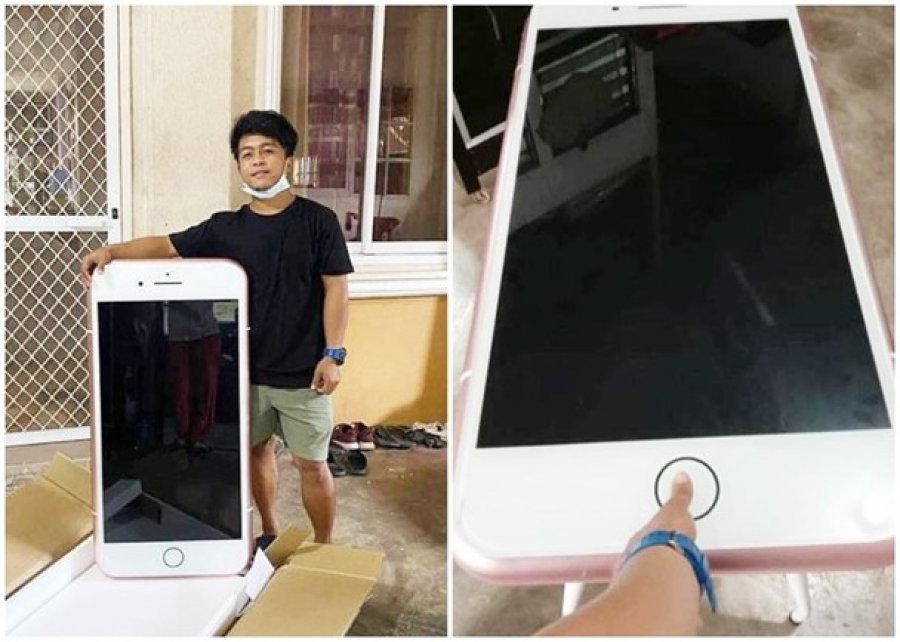
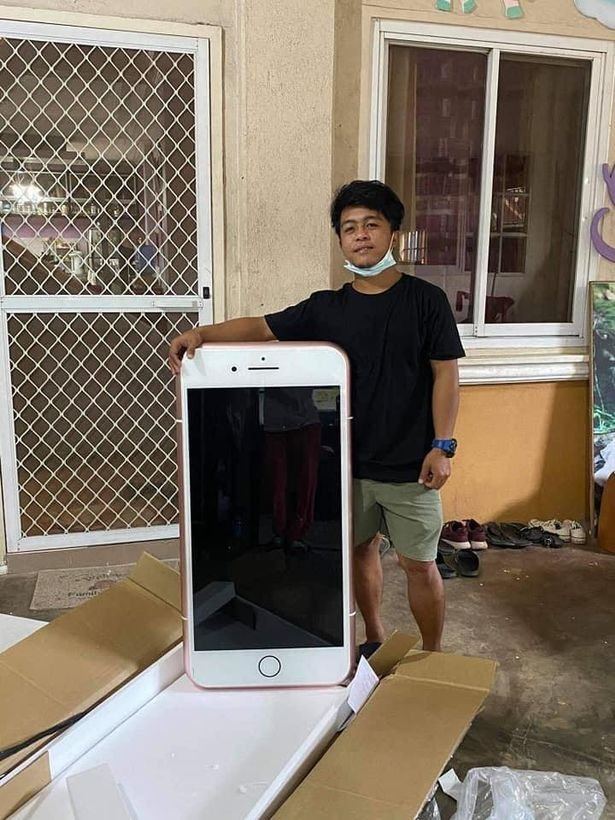
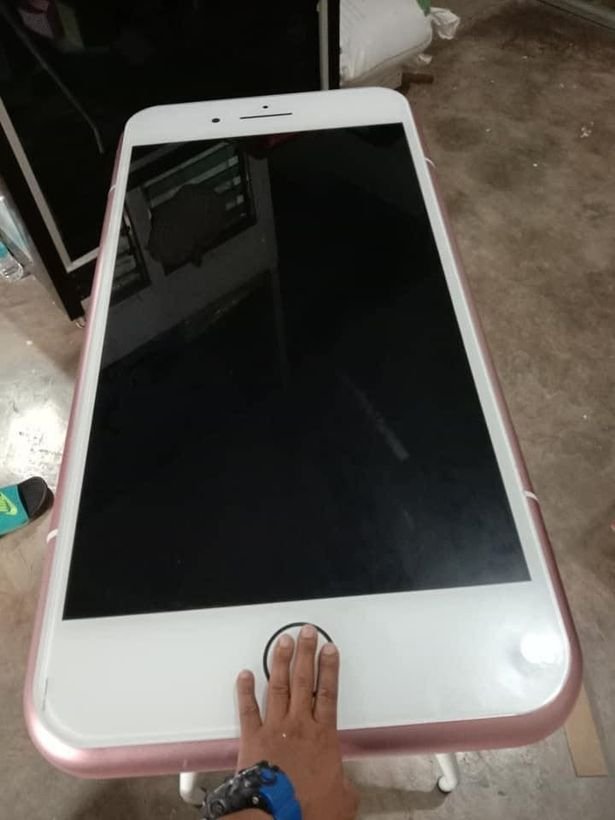
A teenager was left gobsmacked after he ordered a cheap iPhone online, which actually turned out to be a massive iPhone-shaped table.
As per details, the teen from Thailand, had been excited when he stumbled upon what seemed to be a great deal for one of Apple’s beloved iPhones.
While the shipping costs were a bit higher than he had expected, he couldn’t say not to what he thought was a total bargain. Unfortunately for him, he got a new bit of furniture instead of a brand new iPhone.
The teen shared his story on social media, and it was clear to see he must have noticed something was wrong as soon as the package arrived.
Instead of getting a phone-sized parcel, he was greeted with a cardboard box that measured a good few feet in length.
When he unpackaged the item, he realised that he hadn’t actually ordered one of Apple’s phones, but a large iPhone-shaped table.
According to the reports, the shopper later admitted he hadn’t checked the details of his order as closely as he probably should have.
The story quickly gained a lot of attention on social media, as many people used it to warn others that they need to shop with care when buying items online.
It is not yet known whether the teen attempted to return his phone-shaped table after realising his mistake.
A couple in France was shocked when they discovered that they received a tiger cub instead of the kitten they had ordered online.
According to details, the couple had paid 6,000 euros (Rs 1,157,793) to buy a ‘Savannah cat’. The French couple said they were doubtful about the animal after taking care of it for a week. When they called the cops, the investigation resulted in a very strange revelation that the animal was a Sumatran tiger cub.
The Sumatran tiger (Panthera tigris sondaica) is a protected species of big cats and is forbidden for private ownership. The Savannah, on the other hand, can be kept as a pet. According to the Convention on International Trade in Endangered Species (CITES), a tiger cannot even be transported without paperwork.
After the case came to the light, the couple and nine other suspects were arrested for trafficking the protected species. Meanwhile, others involved in this incident are facing charges of being involved in organised crime.
The cub is in good health and was handed over to the French Biodiversity Office.
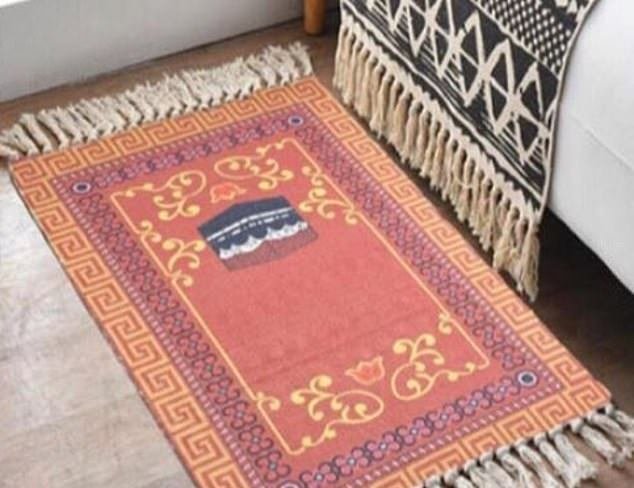
Online Chinese retailer Shein has apologised for selling Muslim prayer mats as decorative mats after people on social media criticised it for religious insensitivity.
In an apology note, posted to social media, the brand said: “We offer our sincerest apology to all those whom we have hurt and offended, and hope we can earn your forgiveness.”
The brand informed its customers that the product was instantly removed from its website and that other retailers were also ordered to stop selling the products to others.
“We have also formed a product review committee with staff from different cultures and religions so a mistake like doesn’t happen again,” read the post.
“The smartphone has transformed online shopping in Pakistan and the COVID-19 lockdown has accelerated it,” says Jarrar Shah of 24seven, an online grocery store based in Lahore.
Shah’s words ring true because the past couple of weeks have witnessed a great shift in the way the world functions. As cases of coronavirus rose in Pakistan, the country went into lockdown, until recently, with all offices, shops, malls, restaurants closed. Only pharmacies, grocery stores and essential businesses were allowed to operate and that too for a limited number of hours. Unfortunately, us Pakistanis are not very used to that lifestyle – our day begins well into the afternoon and ends just before midnight – but changing circumstances forced us all to alter our routines and many of us turned to online shopping in a bid to make life easier for ourselves. According to Google Trends, searches for ‘online grocery’ grew exponentially in the last few weeks with the sharpest rise registered in the week following the lockdown.
While we’re all aware of how online shopping works at our end, on the other side it’s a whole different ball game.
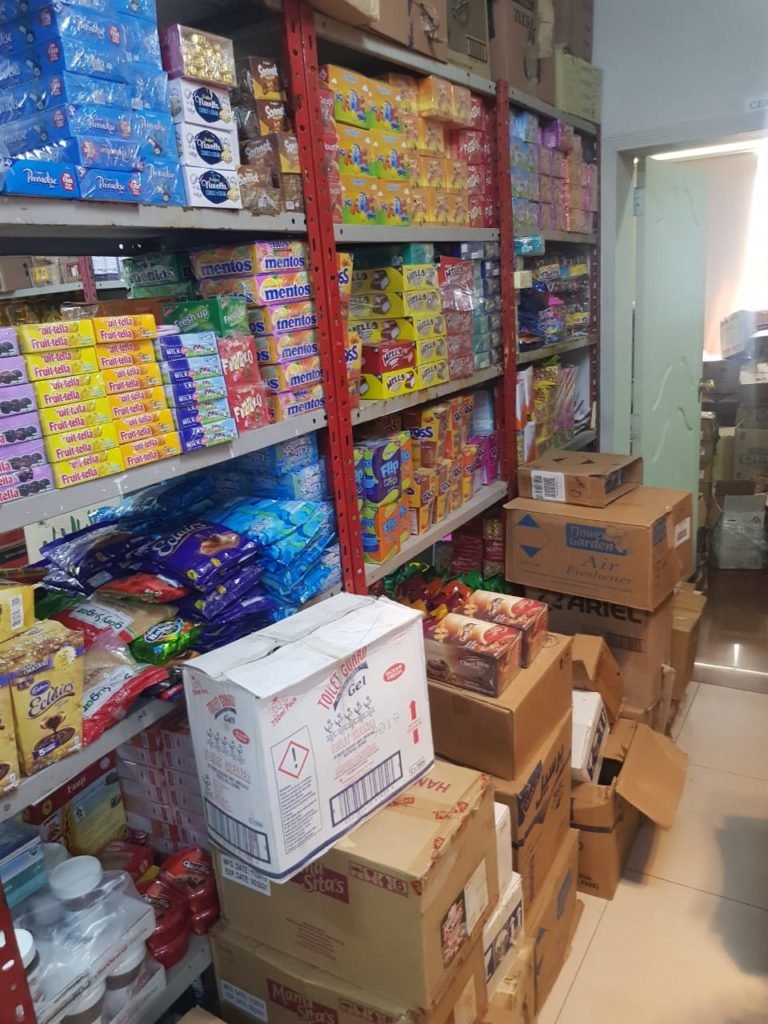
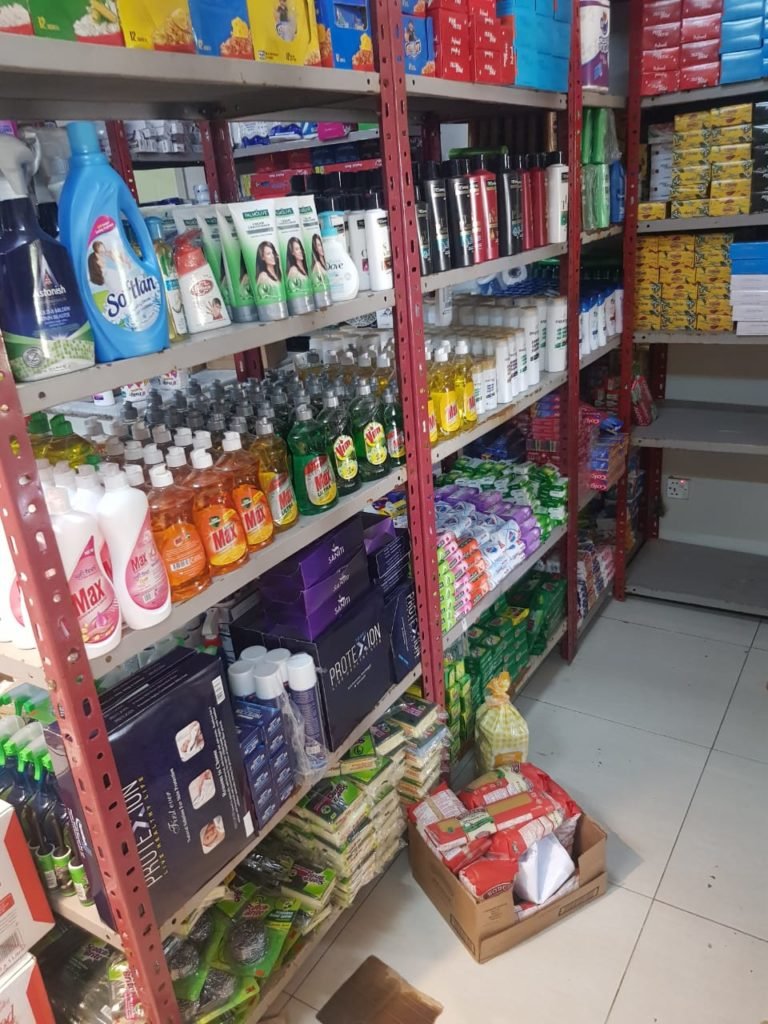
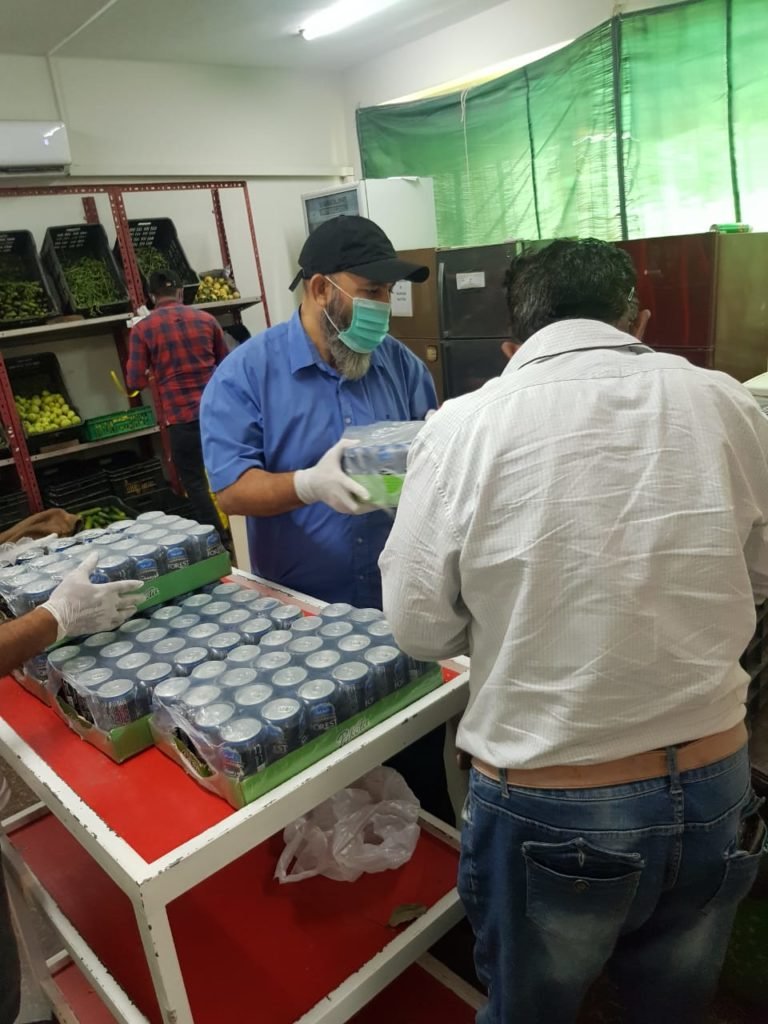
Speaking to The Current about the procedure that follows, Jarrar explained that after the customer places an order on any of their portals – website, application, Whatsapp – the order is processed and their team begins to collect the items. He shared that though they have their own warehouse, they have partnered with other stores, bakeries and meat shops and sometimes depending on the order placed, they have to collect items from different locations to complete an order. Both Jarrar and Bilal Bakhtawari of D Watson, Islamabad said that the app is the most convenient of them all because it mentions the price and availability of products saving the time of both the customers and the stores. Once the order is complete, the riders deliver it.
In this whole process, the rider perhaps has the toughest job.
“We provide the riders with all the necessary precautions, including sanitisers, masks and regular temperature checks, but to what extent can we keep them safe? These guys often have to deliver stuff, come rain, come sun and often have to travel long distances to deliver orders,” says Bilal, adding that if any of the riders feel ill, they are told to immediately get themselves checked and are sent home.
Both Jarrar and Bilal also asserted that their premises are regularly disinfected and cleaned.
While most customers are accommodating and patient and are willing to overlook delays and incomplete orders, given the situation, there is a small percentage of them who tend to be unreasonable.
“Customers have been by and large accommodating. Only ten percent of them have issues,” says Shah.
Both business owners explained that they initially faced problems because they were not prepared to manage such a situation as they went from a few orders to a hundred or more orders every day. However, with time they managed to streamline their services by increasing staff and opting for better rider services.
24Seven’s warehouse
Sharing a particularly harrowing experience, Shah shared that someone placed an order from abroad for their loved ones in Lahore using a credit card.
“When the rider went to deliver they said the stuff is not up to the mark and kept the rider hostage, demanding that we refund them the amount in cash. It turned out that the whole situation was a scam. The person from abroad wanted to send money to Pakistan and because all money wiring services were closed, they attempted to use our store to do so.”
“We’ve referred the matter to the police,” he added.
Similarly, Bilal recounting his nightmarish experience shared that a lady placed an order for fruits and vegetables on their app after store timings. He said that the prices of fresh goods are revised daily and when her order was processed the next day, she was informed of the change in prices before confirming her order. However, when the rider went to deliver her order, she claimed that she had cancelled her order. After a whole fuss, it was revealed that her husband was not satisfied with the prices and was not willing to pay for the order because of which she put the entire blame on the management to try to get out of the situation.
Orders being put together at 24Seven’s warehouse
While people in Pakistan still prefer to go and buy their groceries in person, online shopping is slowly but steadily getting popular, especially among those who lead fast-paced lifestyles and have limited time.
On whether this is feasible in Pakistan or not, Jarrar is positive that it is. However, Bilal feels that until online payments like Paypal don’t come to Pakistan, online businesses won’t flourish.
“As we have observed in the past couple of weeks, the market for online shopping is definitely promising. However, in my opinion, it won’t flourish until a proper payment system is put into place,” says Bilal. “We often receive bogus orders with Cash on Delivery because of which our business suffers. People place orders but when our rider goes to the address, there is no one to receive the order.”
“Until online payments come to Pakistan, online businesses will not flourish.”
It’s so difficult to find V day gifts in Pakistan and if you go out looking, they probably won’t be that nice and will be super expensive. If you’re working, you probably don’t even have the time to go out looking for something grand. Here are three online platforms you can check out and order valentine’s day presents for your loved one.
An online website, its got a lot of Valentine’s Day stuff that you can order and also personalize. We particularly love how they have a lot of shirts and mugs dedicated to singles.
The young, hip brand does some cool stationery for V day. They also have water bottles and framed images that you can give to your office going Valentine.
So, this isn’t a website but a facebook platform that has many small businesses, most of which are home-based. The sellers are vetted by the admin and people generally have a good experience when ordering from them. Some sellers have posted V day presents that can be ordered.
Sheops is a facebook group for buying and selling
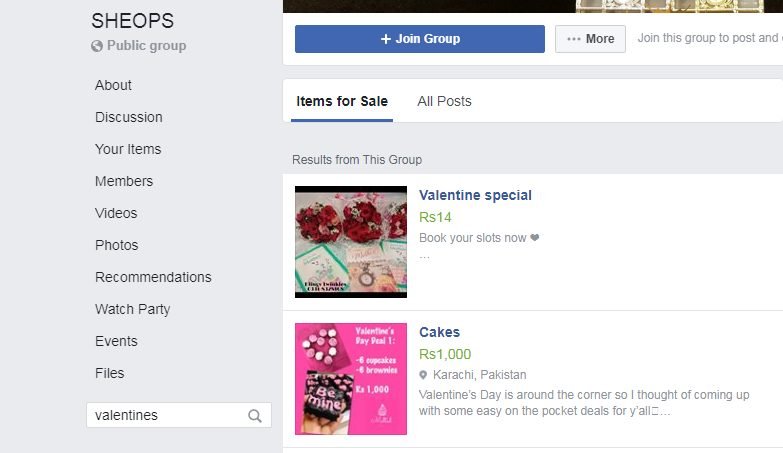
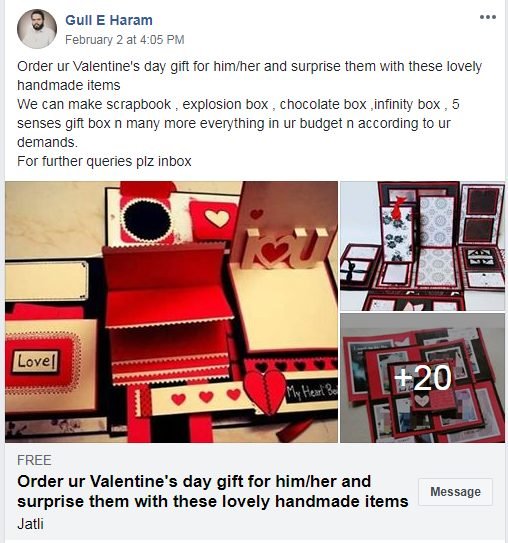
People are selling V day items on the facebook group
A consumer court imposed heavy fines on prominent online retailer Daraz.pk for providing a faulty product to a customer.
According to reports, consumer court judge Mukesh Kumar Talreja directed Daraz.pk to pay Rs50,000 to the claimant in compensation and also pay a fine of Rs15,000 to the government treasury account.
The court also directed the online retailer to change the product or return the amount (Rs7,795) paid by the customer for the product and improve its services and standards as per the expectation of consumers. It further ruled that if the defendant failed to fulfill these orders within one month, he or she will be punished with imprisonment along with a heavier fine.
The court in its order said it is undderstood that when mental torture, agony and emotional stress was made out then the court has to grant damages as compensation and therefore, the court quantified the general damages for suffering mental agony and emotional distress as Rs50,000.
Dania Kashif filed a complaint against Daraz.pk via its managing director under Section 26 of the Sindh Consumer Protection Act, 2014. She ordered one Play-Doh DohVinci from the website of Rs7,795 which was delivered in a sealed parcel in November, but the product was dry and in bad condition and the price mentioned on the box was Rs6,730 instead of Rs7,795. The plaintiff felt severe stress and agony because of the faulty order. Before approaching the court, she had filed a complaint through the website’s helpline, but they did not entertain it.
The defendant party denied the allegations and argued that the claim was filed beyond the legal period of 30 days and the complainant ordered the product by agreeing to terms and conditions of the website which read that the defendant was not a party to the contract with either the seller or any other third party. However, the court did not rule in their favour and slapped them with a fine.
Are you an online shopping addict? Well, it has now been recognised as a mental health condition. Psychotherapists say it is an actual mental disorder, called the ‘Buying-Shopping Disorder’ (BSD).
“It really is time to recognise BSD as separate mental health condition and to accumulate further knowledge about BSD on the Internet,” says Dr Astrid Müller, a psychotherapist at Hannover Medical School in Germany. Her colleagues say the condition had gone unrecognised for too long.
In a study they looked at evidence from 122 patients seeking help for their online shopping addictions and found they had higher than usual rates of depression and anxiety. They argue the rise of online stores, apps and home delivery have added an entirely new dimension to the concept of a shopaholic. The research was published in the journal Comprehensive Psychiatry.
The internet has made shopping more available, anonymous, accessible and affordable. You can purchase things through Facebook or Instagram pages or websites. Cash on Delivery (CoD) option or online bank deposits has also made online shopping quite easy without stepping out of the comfort of your house.
Currently, BSD is not classified as a disorder on its own but is part of a category named ‘other specified impulse control disorder’. Online shopping can cause a loop of extreme cravings for buying things and satisfaction when spending money. This can then lead to a breakdown in self-control, ‘extreme distress’, other psychiatric problems, relationship difficulties and physical clutter and debt.
Are you addicted to shopping? Buying-Shopping Disorder (BSD) often happens alongside other mood, anxiety or eating disorders. It often appears in the late teens or early 20s, and usually gets worse over time.
Symptoms may include:
Accumulating debt
Hiding purchases from loved ones
Tensions or breakdowns in relationships between friends and family
Compensating for negative feelings by buying things