Tag: open market

  • Pakistani rupee sinks to record low of Rs308 against US dollar in open market

    Pakistani rupee sinks to record low of Rs308 against US dollar in open market

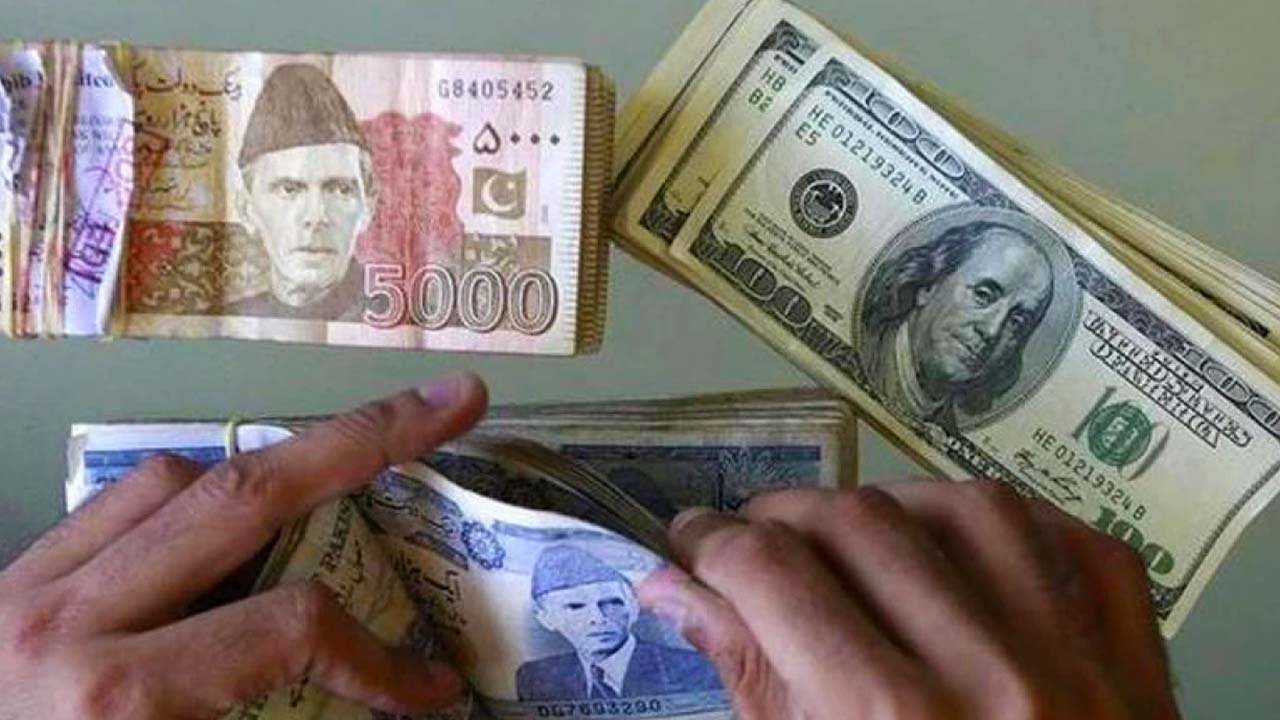
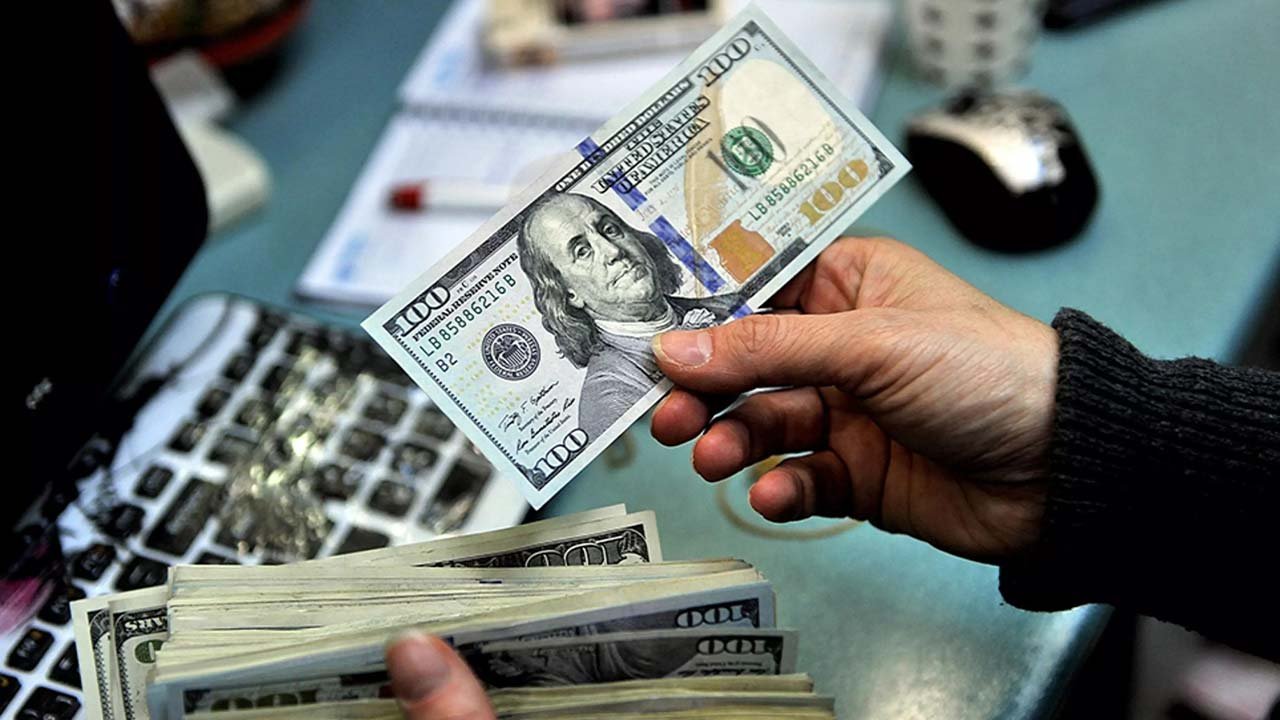
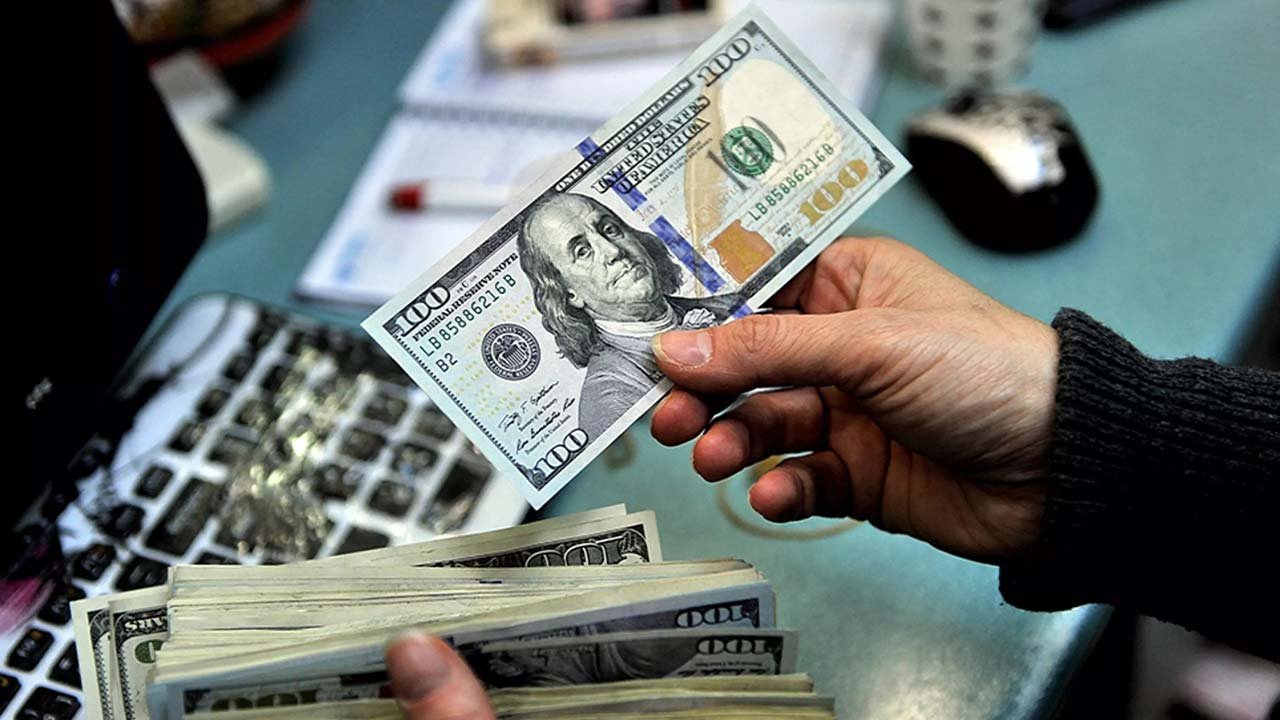
    On Tuesday, the Pakistani currency experienced a significant decline, reaching a new record low of Rs308 against the US dollar in the open market. This marked a 1 per cent decrease, or Rs3, from the previous day’s closing rate, as reported by the Exchange Companies Association of Pakistan.

    Consequently, the disparity between the exchange rates in the open market and the inter-bank market widened considerably, reaching a historic high of Rs21 to a dollar. Just a couple of months ago, this difference was in the range of Rs1-3.

    In inter-bank transactions, the central bank stated that the rupee continued its downward trend for the fifth consecutive working day, dropping by 0.21 per cent, or Rs0.59, to a 12-day low at Rs287.15 against the US dollar.

    There has been speculation in the market that the rupee is facing mounting pressure due to the expanding gap between the demand and supply of the US dollar in the currency market.

    In the meantime, Pakistan’s foreign exchange reserves have been consistently depleting and have now reached a critically low level of $4.3 billion. This is concerning because the country requires a comparatively large amount of foreign currency to cover import expenses and repay foreign debt.

    By the end of June 2023, Pakistan has to repay $3.7 billion in foreign debt. Additionally, it needs another $3.7 billion each month to ensure smooth importation of essential goods.

    Currency dealers in the open market have revealed that commercial banks are purchasing dollars in the informal market (kerb market) to settle international payments made through their clients’ credit cards. Furthermore, individuals are acquiring Saudi riyals and US dollars to cover expenses during the Hajj and Umrah pilgrimages.

    Experts strongly emphasize that the government must persuade the International Monetary Fund (IMF) to resume its $6.7 billion loan programme. Additionally, they urge friendly countries to provide fresh financing, which will help mitigate the risk of defaulting on external debt obligations.

    The resumption of the IMF programme will not only assist Pakistan in averting an imminent default but will also enable the country to attract financing from other global lenders and friendly nations. This new financing will bolster the foreign exchange reserves and aid in the reopening of the partially closed economy.
  • Pakistani rupee’s three-day winning streak ends due to delayed IMF deal

    Pakistani rupee’s three-day winning streak ends due to delayed IMF deal

    The value of the Pakistani rupee (PKR) decreased 0.45 per cent against the US dollar following a three-day period of gains due to prolonged delays in critical funding from the International Monetary Fund (IMF).

    During the interbank session held today, the PKR depreciated by Rs1.3 to settle at Rs279.12 per USD, compared to yesterday’s closing of Rs277.87 against USD.

    Throughout the session, the local unit traded within a range of Rs1.75, reaching a high bid of Rs278.75 and a low offer of Rs277.5. In the open market, the PKR was traded at Rs277/Rs280.5 versus USD.

    On the other hand, the local unit gained Rs5.1 against the Pound Sterling, with the day’s closing quote at Rs329.98 versus GBP, while the previous session closed at Rs335.11 per GBP.

    Furthermore, the PKR’s value also strengthened by Rs2.9 against the EUR, which closed at Rs294.19 at the interbank today.

  • Exchange companies suggest higher US dollar rate to increase remittances

    Exchange companies suggest higher US dollar rate to increase remittances

    The government has been advised by the Exchange Companies Association of Pakistan (ECAP) to “set” the dollar rate to lessen currency market volatility as the country fights a severe economic crisis and declining foreign exchange reserves.

    The general secretary of ECAP Zafar Paracha said in a statement on Monday, “It is advised to fix the rupee/dollar exchange rate for export-import bills and remittances”. He further said these remittance proceeds could be received by banks and money changers at a fixed rate of Rs240 per dollar.

    Pakistani rupee closed at Rs228.34 per US dollar, compared with the previous close of Rs228.15 in the interbank market. In the open market, the local unit was trading at Rs238.75 against the greenback.

    Paracha suggested the government to set the rate of Rs240 per dollar for overseas Pakistanis and for inward remittance.

    He expects that by making the change, the official channel would be strengthened, remittances would increase, Hundi/Hawala would decline, and eventually, the grey market would vanish.

    According to Paracha, the exchange rate between the dollar and the local currency has hit Rs267 to Rs270. The offer could be made at Rs228 against/ the dollar in order to obtain exporters’ revenues. Additionally, the rate for importers would be determined by the weighted average of the exporter and home remittance rates. He said that it would help remittances and exporters.

    It will boost the nation’s foreign exchange reserve, encourage exporters to bring dollars, and strengthen the exchange companies’ remittances division.

    The country received $14.1 billion in remittances during the first six months (July-December) of the current fiscal year, a decline of 11.1 per cent from a year earlier.

    As of January 6, Pakistan’s foreign exchange reserves at the State Bank of Pakistan fell by $1.2 billion to $4.3 billion, just enough to fund three weeks’ worth of imports.

    Due to significant repayments of foreign debt and a lack of external funding, which have severely reduced Pakistan’s foreign reserves and resulted in ongoing dollar shortages, the country is currently facing a balance of payments crisis.

  • Intraday trade: PKR resumes downward spiral against US dollar, falls to Rs223

    Intraday trade: PKR resumes downward spiral against US dollar, falls to Rs223

    The Pakistani rupee was trading between Rs222-223 on Wednesday as losses against the US dollar persisted in the early hours of trading.

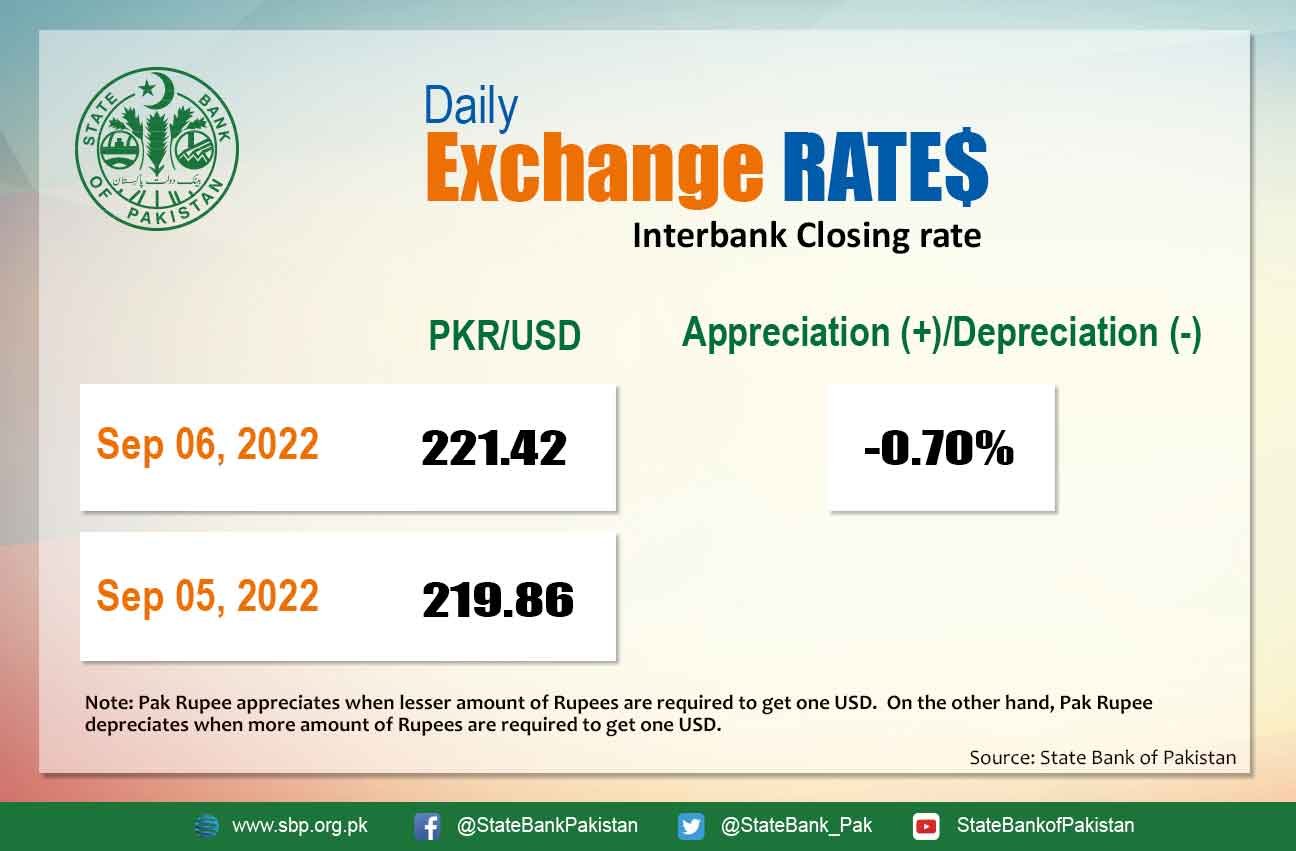
    During intra-day trading, the rupee was quoted at Rs222.49 at roughly 10:30 am, depreciating by Rs1.07 or 0.48 per cent against the US dollar.

    The local unit lost for the third session in a row on Tuesday, falling down Rs1.56 or 0.7 per cent against the dollar to close at Rs221.42.

    According to analysts, the government’s decision to let the duty-free import of edible commodities to promote food security after floods severely damaged the nation’s agriculture sector has led to a spike in demand for dollars on the local market.

    However, the dollar is also strengthening globally. On Wednesday, after U.S. economic data supported the notion that the Federal Reserve will continue with policy tightening, it reached fresh highs against the yen and the Australian and New Zealand dollars.

    The US dollar index, which compares the value of the dollar to six important rival currencies, increased 0.08 per cent to Rs110.43, remaining close to the 20-year high set on Tuesday of Rs110.57.

    On Wednesday, oil prices, a major factor in determining currency parity, fell more than $1 to their lowest level since before Russia invaded Ukraine as COVID-19 restrictions in the world’s top crude importer China and anticipation of further interest rate increases stoked concerns about a global economic slowdown and a decline in fuel demand.

  • Rupee gains ground against dollar for second day, closes at Rs238

    Rupee gains ground against dollar for second day, closes at Rs238

    Following days of increases in the interbank and open markets, the US dollar fell against the Pakistani rupee on Tuesday as a result of assurances from the government and State Bank of Pakistan (SBP) that the nation will have enough money for FY2022-23 after receiving IMF tranches.

    For the third straight session, the Pakistani rupee appreciated versus the US dollar in the interbank market on Tuesday. This occurred as a result of the market’s stability following the government’s assurance that it would successfully tackle the challenging economic situation.

    After the rupee dropped for 10 straight sessions in the final days of July and depreciated by about 5 per cent just last week, the dollar began to lose strength on Friday.

    Tuesday’s interbank trading ended with the rupee up a pitiful Rs0.46 or 0.19 per cent, reaching Rs238.38, from 238.84 in the previous trading session. In the meantime, the open market exchange rate remained constant at Rs241.

    Forex dealers report that the US dollar lost Rs0.94 in interbank trading and is now trading at Rs237.90. The banks are offering to sell dollars for Rs238.50.

    The US dollar dropped to Rs239 in the open market after crossing the Rs250 threshold.

  • Open market: Lemon being sold at Rs1,100 per kg in Lahore

    Open market: Lemon being sold at Rs1,100 per kg in Lahore

    The local price of lemon increased by Rs105 per kg, to Rs770 to 775 per kg, and was sold at an unbelievable price of Rs1,100 per kg in open markets and a few online stores with available stock.

    Due to the district administration’s inability to impose official rates at Ramazan bazaars, consumers are unable to get relief from overbilling and skyrocketing rates of fruits and vegetables in Lahore. 

    High prices of perishable commodities are massively affecting the urban population due to rising production costs and transportation costs from rural production centers to urban areas.

    Read more: Shopkeepers fined in Islamabad for not adhering to DC rates

    Senior administrators and Prime Minister Shehbaz Sharif paid surprise visits to Ramazan bazaars, but shoppers were not relieved. Containing volatility and successfully administering official rate lists to bring inflation relief to the public is a task for the new government.