Tag: OpenAI

  • AI Tools Generate Sexist Content, Warns UN

    AI Tools Generate Sexist Content, Warns UN

    The world’s most popular AI tools are powered by programs from OpenAI and Meta that show prejudice against women, according to a study launched on Thursday by the UN’s cultural organisation UNESCO.

    The biggest players in the multibillion-dollar AI field train their algorithms on vast amounts of data largely pulled from the internet, which enables their tools to write in the style of Oscar Wilde or create Salvador Dali-inspired images.

    But their outputs have often been criticised for reflecting racial and sexist stereotypes, as well as using copyrighted material without permission.

    UNESCO experts tested Meta’s Llama 2 algorithm and OpenAI’s GPT-2 and GPT-3.5, the program that powers the free version of popular chatbot ChatGPT.

    The study found that each algorithm — known in the industry as Large Language Models (LLMs) — showed “unequivocal evidence of prejudice against women”.

    The programs generated texts that associated women’s names with words such as “home”, “family” or “children”, but men’s names were linked with “business”, “salary” or “career”.

    While men were portrayed in high-status jobs like teachers, lawyers and doctors, women were frequently prostitutes, cooks or domestic servants.

    GPT-3.5 was found to be less biased than the other two models.

    However, the authors praised Llama 2 and GPT-2 for being open source, allowing these problems to be scrutinised, unlike GPT-3.5, which is a closed model.

    AI companies “are really not serving all of their users”, Leona Verdadero, a UNESCO specialist in digital policies, told AFP.

    Audrey Azoulay, UNESCO’s director general, said the general public were increasingly using AI tools in their everyday lives.

    “These new AI applications have the power to subtly shape the perceptions of millions of people, so even small gender biases in their content can significantly amplify inequalities in the real world,” she said.

    UNESCO, releasing the report to mark International Women’s Day, recommended AI companies hire more women and minorities and called on governments to ensure ethical AI through regulation.

  • Artificial Intelligence could destroy humanity within 10 years, CEOs warn

    Artificial Intelligence could destroy humanity within 10 years, CEOs warn

    At its annual CEO Summit, Yale School of Management conducted a survey amongst 119 CEOs from a varying range of sectors. 42% of candidates believe Artificial Intelligence (AI) could destroy humanity in the next 5-10 years.

    The survey breakdown is as follows: 34% of CEOs said AI could potentially destroy humanity in ten years, 8% said it could happen in five, and 58% said it could never happen and that they are ‘not worried’.

    In an interview with CNN business, Yale professor Jeffrey Sonnenfeld expressed the findings as “pretty dark and alarming.”

    The survey comes shortly after monumental announcements from big players in the field. The ‘Godfather of AI’, Geoffrey Hinton, who oversaw the development of technology at the heart of chatbots like ChatGPT for 50 years, left his job at Google to “blow the whistle”, warning people of the serious harm that could potentially be caused by AI.

    In a television interview, Hinton explains how he suddenly realized AI is smarter than humans and warns that, since it knows how to program, it could bypass restrictions set by humans. Moreover, he expressed fears that AI could manipulate humans to do its bidding.

    When questioned about solutions and regulations, Hinton countered, “It’s not clear to me that we can solve the problem. You can’t stop the progress.” However, he stressed that it is of utmost importance for governments and scientists to prioritise discovering a solution.

    Hinton is joined by the likes of Sam Altman, who was one of the hundreds of signatories of a joint statement calling for society to take the necessary steps to guard against the dangers of AI. Altman is the CEO of OpenAI, the site that introduced AI-powered tools like ChatGPT and Dall-E.

    Top executives from Google and Microsoft also signed the statement.

    The CEOs present at the Yale Summit indicated that AI will have the most transformative impact in three key industries: healthcare, professional services/IT, and media/digital. More immediate impacts of AI would pertain to risks of misinformation and the loss of jobs.

  • OpenAI partners with Bing to supercharge ChatGPT with cutting-edge search experience

    OpenAI partners with Bing to supercharge ChatGPT with cutting-edge search experience

    OpenAI has announced its decision to implement Bing as the default search engine for ChatGPT. The introduction of this enhanced search functionality will be gradually rolled out to ChatGPT Plus users, starting today, and will soon be extended to all free ChatGPT users through a plug-in integrated within ChatGPT.

    In a blog post published today, Yusuf Mehdi, Microsoft’s head of consumer marketing, expressed his enthusiasm for the partnership between Microsoft and OpenAI. Mehdi stated, “Our collaboration with OpenAI has been instrumental in the development of the new Bing. ChatGPT will now benefit from an exceptional search engine integrated within, providing more current and timely answers sourced from the web.”

    Similar to how Bing’s chat experience utilizes GPT-4 and includes citations for links, OpenAI’s AI chatbot, ChatGPT, will incorporate search capabilities and web data that also incorporate citations. The integration of Bing into ChatGPT represents a significant achievement for Microsoft’s search engine, particularly after recent speculation that Samsung might switch from Google to Bing Search. This integration builds upon Microsoft’s extensive investment in OpenAI, which amounted to a “multibillion dollar investment” earlier this year, following years of close collaboration between the two companies.

    Moreover, Microsoft has pledged to employ the same open plug-in standard utilized by OpenAI for ChatGPT, facilitating compatibility and seamless integration between plug-ins for Bing Chat, Microsoft’s Copilot platform, and ChatGPT.

  • OpenAI introduces ChatGPT app for iPhone users with voice input and synced chat history

    OpenAI introduces ChatGPT app for iPhone users with voice input and synced chat history

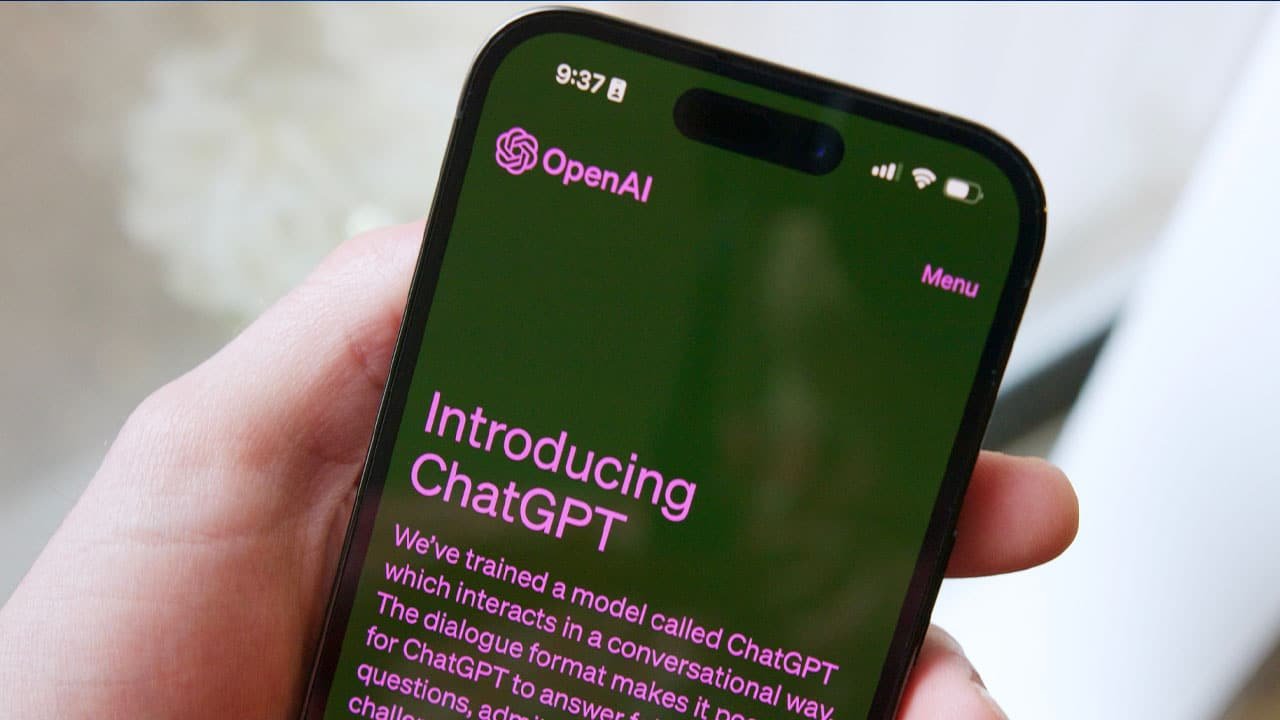
    OpenAI has recently launched an exclusive ChatGPT application for iOS users, catering to the needs of those on the go. This downloadable and installable app provides added convenience for interacting with the bot, along with a host of impressive functionalities.

    One noteworthy feature is the incorporation of voice input, utilizing OpenAI’s open-source speech recognition model, Whisper. This integration enables users to engage with the bot using their voice, presenting an additional avenue for chat interactions.

    Moreover, the application seamlessly synchronizes your chat history across different platforms, including the web version of ChatGPT and other connected devices. This ensures a consistent and unified user experience, allowing you to effortlessly continue your work and keep track of previous queries while on the move.

    For subscribers of ChatGPT Plus, a variety of benefits await. These include access to the enhanced GPT-4 version, early access to upcoming features, and faster response times—much like the web version.

    Presently, the application is available for download on the Apple App Store to iOS users in the United States. It is expected that the availability of the app will soon expand to other countries. Android users can anticipate a similar timeline for the release of their version of the app.

  • ChatGPT’s impact on the job market: Which professions will be most affected?

    ChatGPT’s impact on the job market: Which professions will be most affected?

    The rise of artificial intelligence has led to concerns about job displacement and unemployment. As a large language model trained by OpenAI, ChatGPT is one such example of AI technology that has the potential to impact the workforce.

    In this article, we will explore the ways in which ChatGPT may affect jobs, and whether it is ultimately beneficial or detrimental for employees.

    What is ChatGPT?

    Before delving into the impact of ChatGPT on jobs, it is important to understand what it is and how it works. ChatGPT is a natural language processing model that uses deep learning techniques to generate human-like responses to text-based queries. It was developed by OpenAI and is based on the GPT-3.5 architecture, which enables it to understand and generate language with remarkable accuracy.

    ChatGPT can be used for a variety of purposes, including customer service, chatbots, and even creative writing. It has the ability to learn from large amounts of data, which means that it can continue to improve and become more accurate over time.

    Impact of ChatGPT on jobs

    The rise of AI technology has led to concerns about job displacement and unemployment, particularly in industries that rely heavily on manual labor or routine tasks. However, the impact of ChatGPT on jobs is more nuanced and depends on the specific industry and job type.

    To better understand the potential impact of ChatGPT on jobs, let’s take a closer look at some of the industries and job types that may be affected:

    Customer service

    One of the most obvious applications of ChatGPT is in customer service. Chatbots powered by ChatGPT can provide customers with quick and accurate responses to their queries, without the need for human intervention. This has the potential to reduce the number of customer service representatives needed, particularly for routine inquiries.

    Still, ChatGPT is not a complete replacement for human customer service representatives. While it can provide quick and accurate responses to routine inquiries, it may struggle with more complex or nuanced queries that require empathy and human judgment.

    Creative writing

    Another potential application of ChatGPT is in creative writing. ChatGPT has the ability to generate human-like responses to text-based prompts, which means that it can be used to write articles, scripts, and even novels.

    While this may seem like a threat to human writers, it is important to note that ChatGPT is not capable of original thought or creativity. It can only generate responses based on the data it has been trained on. Human writers will still be needed to create truly original and creative content.

    Data entry

    Data entry is a job that involves manually inputting data into a computer system. While this may seem like a mundane task, it is still a job that many people rely on for their livelihood. ChatGPT has the potential to automate some aspects of data entry, which may reduce the need for human data entry clerks.

    However, it may struggle with handwriting recognition, and may not be able to accurately input data from non-textual sources such as images or audio recordings.

    Benefits of ChatGPT for employees

    While there may be some potential job displacement due to the rise of ChatGPT, there are also several benefits for employees. Here are just a few:

    Quick and convenient support

    One of the most significant benefits of ChatGPT is that it provides quick and convenient support to employees. With ChatGPT, employees can quickly get answers to their questions without having to wait for a human representative. This can save employees a significant amount of time, enabling them to focus on their tasks and responsibilities more effectively.

    Improved productivity

    ChatGPT can also help to improve employee productivity. By providing fast and accurate answers to employee queries, ChatGPT can reduce the amount of time employees spend looking for information. This can free up more time for employees to focus on critical tasks, helping to improve productivity and efficiency.

    Enhanced learning and development

    ChatGPT can also be used as a tool for learning and development. By providing employees with access to a wealth of information and resources, ChatGPT can help to enhance employee knowledge and skills. This can be particularly useful for employees who are new to a job or those who are looking to expand their knowledge in a particular area.

    Increased accessibility

    Another benefit of ChatGPT is that it can increase accessibility for employees. With ChatGPT, employees can access information and support from anywhere and at any time. This can be particularly useful for remote workers or those who work outside of traditional office hours.

    Personalised assistance

    Finally, ChatGPT can offer personalised assistance to employees. By using machine learning algorithms, ChatGPT can learn about employees’ needs and preferences over time, providing more personalised support and assistance. This can help to improve the employee experience, leading to increased engagement and job satisfaction.

  • AI ChatBot passes MBA exam given by a Wharton professor

    AI ChatBot passes MBA exam given by a Wharton professor

    According to recent research by a professor at the University of Pennsylvania’s Wharton School, the chatbot GPT-3, powered by artificial intelligence, was successful in passing the program’s final exam for the Master of Business Administration (MBA) degree.

    Professor Christian Terwiesch, who wrote the research paper “Would Chat GPT3 Get a Wharton MBA?” A Prediction Based on Its Performance in the Operations Management Course,” claimed that the bot scored between a B- and B in the exam.

    The bot’s score shows its “remarkable ability to automate some of the skills of highly compensated knowledge workers in general and specifically the knowledge workers in the jobs held by MBA graduates, including analysts, managers, and consultants,” according to Terwiesch.

    The AI bot did an “amazing job at basic operations management and process analysis questions, including those that are based on case studies,” Terwiesch wrote in the paper, which was published on January 17. He also said the bot’s answers were “excellent.”

    The bot is also “remarkably good at modifying its answers in response to human hints,” he concluded.

    The results of Terwiesch’s research come as schools become more worried that AI chatbots may encourage cheating. Despite the fact that chatbots are not a recent invention, ChatGPT took off on social media in late 2022. The New York City Department of Education announced earlier this month that ChatGPT would no longer be allowed on any equipment or networks in its schools.

    The majority of the argument is centered on how difficult it is to differentiate between human responses and ChatGPT’s conversational speech style and cohesive, topical response style.

    Experts in artificial intelligence and education have admitted that ChatGPT and other such bots may eventually harm education. However, other educators and professionals said in recent interviews that they weren’t worried just yet.

    The GPT-3 model utilised in the study seems to be an older sibling of the most recent ChatGPT bot, which has generated debate among academics and AI professionals.

    ChatGPT, the newest version, “is fine-tuned from a model in the GPT-3.5 series,” according to OpenAI’s website.

    While Chat GPT3’s results were impressive, Terwiesch noted that Chat GPT3 “at times makes surprising mistakes in relatively simple calculations at the level of 6th-grade math.”

    According to NDTV, the present version of Chat GPT is “not capable of handling more advanced process analysis questions, even when they are based on fairly standard templates,” Terwiesch added. “This includes process flows with multiple products and problems with stochastic effects such as demand variability.”

    However, Terwiesch said ChatGPT3’s performance on the test has “important implications for business school education, including the need for exam policies, curriculum design focusing on collaboration between humans and AI, opportunities to simulate real-world decision-making processes, the need to teach creative problem solving, improved teaching productivity, and more.”