Tag: Pakistan Bar Council

  • SJC recommends not using  titles ‘judge’, ‘justice’ with Mazahar Naqvi’s name

    SJC recommends not using  titles ‘judge’, ‘justice’ with Mazahar Naqvi’s name

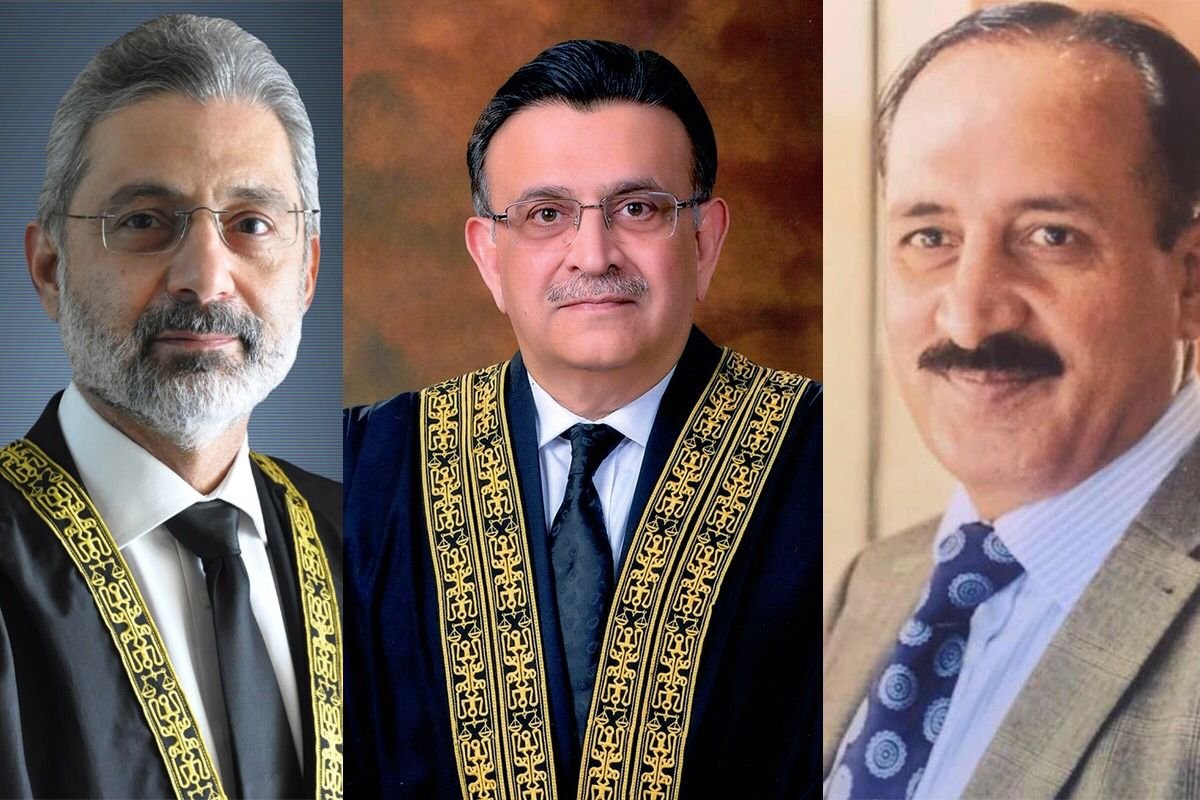
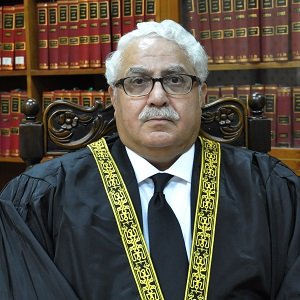
    A five-judge bench of the Supreme Judicial Council (SJC) has released a 33-page detailed opinion on Friday,  stating that former judge of the apex court, Sayyed Mazahar Ali Akbar Naqvi, has committed misconduct. The council recommended his removal from office and advised against using the titles ‘Justice’ or ‘Judge’ with his name in the future.

    The SJC discovered that the judge committed several instances of misconduct, which harmed the reputation of the judiciary.

    While Mr Naqvi had resigned a day before the SJC began proceedings on nine complaints against him under Article 209(6), the council decided to continue with its proceedings, with Chief Justice of Pakistan (CJP) Qazi Faez Isa saying it was “necessary to remove the misperception that the institution of judiciary is above the law”.
    The Supreme Judicial Council, led by the Chief Justice of Pakistan, praised the Pakistan Bar Council (which oversees lawyers) and Advocate Mian Dawood for filing complaints to support the rule of law and accountability.

    The council found Naqvi guilty of violating his oath of office and the Code of Conduct for judges after at least five allegations made by the complainants were proven true.

    The council explained that it could not be stated that Mr Naqvi was “untouched by greed”, “was above reproach”, his conduct was “free from impropriety expected of a judge” in his official and private affairs and thus he violated Article II and III of the Code of Conduct. According to the SJC opinion, it was clear that he violated Article IV as his actions were swayed by consideration of “personal advantage”.

  • Supreme Court upholds Pervez Musharraf’s death sentence in a treason case

    Supreme Court upholds Pervez Musharraf’s death sentence in a treason case

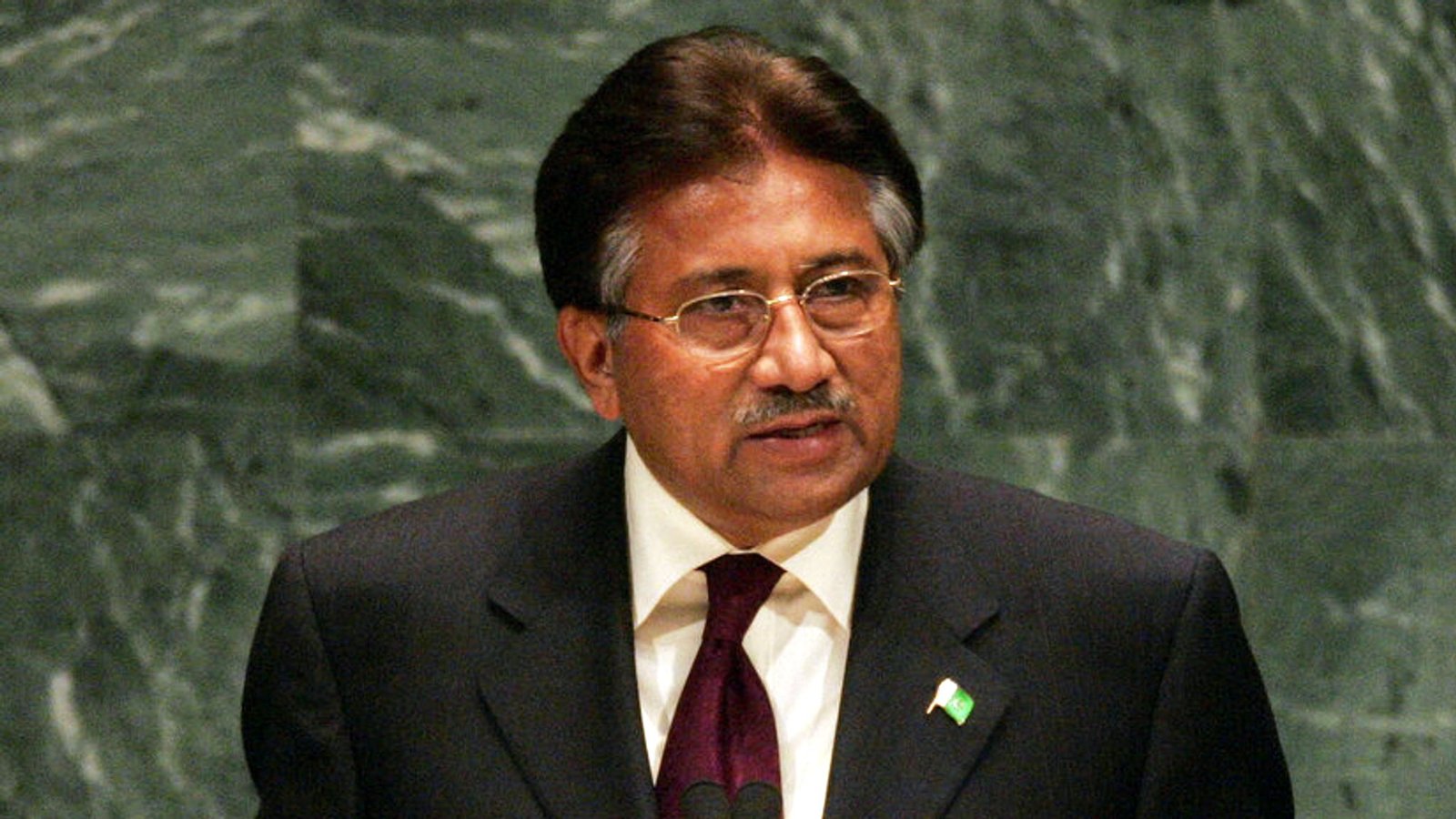
    The Supreme Court (SC) upheld the death sentence imposed on former President General (ret) Pervez Musharraf by a special court in 2019 in a high treason case.

    A four-member bench headed by Chief Justice of Pakistan (CJP) Qazi Faez Isa and comprising Justice Mansoor Ali Shah, Justice Aminuddin Khan, and Justice Athar Minallah conducted the hearing. 

    A special court awarded a death sentence in 2019 to the former dictator according to Article 6 of the Constitution. A high treason case was filed against Musharraf during Pakistan Muslim League-Nawaz’s (PML-N) tenure for imposing an “unconstitutional” emergency in the country in 2007.

    The Lahore High Court (LHC) declared the verdict of special court to hear the case against Musharraf under Article 6 “unconstitutional” on January 13, 2020.

    After that, the Pakistan Bar Council and senior lawyers, including Taufeeq Asif, challenged the LHC decision in SC.

    The court announced its reserved decision today on the petition filed by the former dictator against a death sentence.

    “Pervez Musharraf’s heirs did not follow the case even on multiple notices,” the SC remarked while rejecting the former president’s appeal.

  • Regulate CJ’s powers to constitute benches, say lawyers

    Regulate CJ’s powers to constitute benches, say lawyers

    The legal fraternity on Wednesday demanded the regulation of the exercise of jurisdiction of the Supreme Court (SC), particularly ending the sole discretion of the chief justice of Pakistan (CJP) in the constitution of benches and fixing cases.

    The request was made in a joint meeting of the Supreme Court Bar Association (SCBA) and Pakistan Bar Council (PBC).

    The meeting emphasised its demand that the Judicial Commission of Pakistan (JCP) immediately amends its rules to allow nominations for judicial appointments to be initiated by any member of the Judicial Commission rather than the chief justice alone (which is even otherwise violative of Article 175-A of the Constitution) and, moreover, to frame fair, transparent and objective criteria and procedures to gauge the suitability of prospective appointees.

    Moreover, they demanded that Article 184(3) of the Constitution be amended in order to provide one right of appeal. They asked the federal government to immediately withdraw the curative review filed against Justice Qazi Faez Isa.

    SCBA President Ahsan Bhoon in a press conference said that the appointment of judges to the higher judiciary was not a matter of election, adding that the chief justice of Pakistan and members of the Judicial Commission should strictly adhere to the principle of seniority.

    Govt to withdraw review petition against Justice Qazi Faez Isa

    The federal cabinet on July 27 decided to withdraw the curat­ive review petitions filed against Justice Qazi Faez Isa.

    The cabinet meeting, chaired by Prime Minister (PM) Shehbaz Sharif, observed the action taken against Justice Isa by the Pakistan Thereek-e-Insaf (PTI) government was through “unfair use of authority”.

    An inquiry committee was constituted, which includes Minister for Kashmir Affairs Qamar Zaman Kaira, Minister for National Food Security Tariq Bashir Cheema and Minister for Education Rana Tanveer.

    The committee, after an assessment of the review petitions filed against Justice Isa, would present a report to the cabinet.

    Justice Faez Isa advised CJP not to bulldoze the due process of judges’ appointment

    Justice Qazi Faez Isa advised Chief Justice of Pakistan (CJP) Umar Ata Bandial not to bulldoze the “due process” for the appointment of more than one-third of the total number of judges in the apex court.

    In a letter written to the Judicial Commission of Pakistan (JCP), Justice Isa said that it was surprising that the JCP’s meeting had been convened to consider the appointment of five SC judges during summer vacations. It is pertinent to mention here that JCP is headed by CJP Bandial.

    “When availing of annual leave no meeting of the JCP was scheduled but as soon as I left Pakistan the CJP decided to hold two meetings of the JCP to consider appointments to the Sindh and Lahore High Courts, and now a third unscheduled meeting of the JCP is to be held during the summer vacations of the SC. The summer vacations of the SC were notified by the CJP himself, and then these were gazetted in the Official Gazette. If the CJP renders his own notification utterly meaningless then let him first withdraw it, instead of violating it,” wrote Justice Isa in his letter.

    “It suggests that the CJP does not want me to be physically present, which is illegal and unconstitutional.”

    Justice Isa said that the matter of appointing judges to the superior courts requires utmost care and due deliberation as it is a delicate matter.

    Addressing the CJP, the judge said: “Please do not ridicule the JCP and your nominees by contravening the Constitution. Restricting the JCP to consider only the CJ’s pre-selected nominees is inappropriate. The JCP deserves to be treated with respect and consideration by its chairman.”

    Justice Isa stressed the need that “all appointments must be made in accordance with the Constitution, on the basis of a predetermined and non-discriminatory criteria. And above all without any impression of favouritism. The Constitution does not grant the CJP any powers additional to those of the other members of the JCP; the CJP is only designated as the Chairman of the JCP.”

    JCP meeting underway to discuss CJP Bandial’s five nominees for elevation to SC

    JCP meeting is underway to discuss CJP Bandial’s five nominees for their elevation to Supreme Court. Justice Isa is attending the meeting from Spain and Attorney General for Pakistan Ashtar is participating from the USA.

  • Judicial reforms and the question of representation

    What could have been a historic moment in the history of Pakistan was lost to politics of deflection by the Bar and the placement of arbitrary power for the process of judicial appointments in the hands of the Chief Justice(s) and the members of the Judicial Commission of Pakistan (JCP) on September 9, 2021, when the possibility of Judicial Commission of Pakistan (JCP appointing its first-ever female to the apex court in the 74 years since Pakistan’s independence failed to achieve the requisite majority for Justice Ayesha A. Malik’s nomination as a judge of the Supreme Court. As a result, Pakistan to date has had no female representation or voice at the highest forum of justice in the country and remains the only country in the region to hold this unfortunate record.

    Given that the courts invariably deal with matters of public policy and adjudicate on fundamental rights that are to be accessed by the most marginalised groups, communities, and persons, including women and minorities, it is vital for there to be more inclusion, transparency, and representation to promote access to justice and build public confidence and trust in the justice system of the country.

    What transpired on September 9, however, must be viewed in the context of the historical issues surrounding the judicial nominations and appointments process, the rather unhelpful digression into the seniority versus merit, junior versus senior debate, and the overall state of representation of women and minorities in the justice sector. The larger socio-political concerns and overarching considerations of patriarchal structures can also not be divorced from the controversy the system and its stakeholders find themselves in.

    Every few years, the question of judicial appointments goes through a similar cycle of division and deflection and is placed within the larger political context of its time. Prior to the 18th Amendment, the process of judicial nominations was centered around the recommendation of a panel by the Chief Justice to the president who selected a suitable candidate from therein. Even though the president had immense discretion to select a candidate from the panel, the central role, however, remained of the Chief Justice of a given court who alone had the power to recommend the panel up to the president for such appointments. This was further cemented in the Al-Jehad Trust Case 1996 in which the courts held that the recommendations of the Chief Justice would ordinarily be binding on the president, except where the president departed from the recommendations, in which case the reasons for his decision would be justiciable. The executive discretion of the president was, therefore, curtailed to a point where it was rendered practically ineffectual. This was done on the grounds of maintaining the independence of the judiciary from political influence.

    After the 18th Amendment to the Constitution of Pakistan, the process for appointments of the higher judiciary was further amended and appointments via a Judicial Commission plus Parliamentary Committee was envisaged instead. The Commission, it was believed, would have a wider composition and representation of stakeholders from both Bench and Bar, including ex-officio members such as the Attorney General of Pakistan, Federal Minister for Law and Justice, senior judges, former judges, and senior advocate of the Supreme Court nominated by the Pakistan Bar Council to promote greater consensus among the stakeholders within the legal profession.  However, no criteria or principles were formulated to base the nominations on. Instead, Rule 3 of Judicial Commission of Pakistan Rules, 2010, placed the power to initiate nominations for consideration by the JCP in the hands of the Chief Justice of the respective court in what is critiqued to be an absolute discretion devoid of any content and objective standards making the entire exercise an arbitrary and non-transparent exercise of power. Even the deliberations within the JCP and the eventual reasons of decision for accepting or rejecting a given nominee are not disclosed.

    Over the years, this lack of transparency in the process on the whole and arbitrary power to initiate nominations has resulted in increased speculation and tension between the Bench and the Bar, especially within the circles that find themselves underrepresented within the current structure and system.

    The calls for greater democratisation of the process once again became louder and relevant when Justice Muhammad Ali Mazhar, the then judge of the Sindh High Court, was nominated for appointment as a judge of the Supreme Court in July 2021. Being fifth in seniority, the assertions for ‘overlooking’ the senior-most judges, i.e. the then Chief Justice of the Sindh High Court, Justice Ahmed Sheikh, came to the fore by the Sindh Bar. Whilst critiquing the process as arbitrary and calling for its reform, they also persisted in demanding that seniority be applied as an interim measure until an objective criterion was formulated. Implications of ethnic tensions were also raised as was the possibility of judicial engineering for political engineering, which led to a massive and organised campaign of the bar against the JCP. The situation on the ground became more complicated when the Chief Justice of Pakistan put forth the name of a female judge, fourth in seniority from the Lahore High Court, for appointment as a judge of the Supreme Court. It was alleged that her gender was being used to neutralise the sentiment against the appointment of junior judges and to justify the earlier nomination of the then Justice Ali Mazhar of Sindh High Court, which was being resisted.

    Several distinct issues appear to have been conflated, which is what led to one of the most intensive and intellectually vigorous legal debates within the community in years. Several notable scholars, and senior lawyers including Salman Akram Raja, Feisal Naqvi, Salahuddin Ahmed, Hamid Khan, and Justice (R) Nasira Iqbal, engaged with this debate in public and shared their respective and divided opinions on the matter.

    The division appeared to be more in relation to specific strategies and interim solutions that the Bar had proposed re-adopting the seniority principle as opposed to the actual need for reform in the process on which there was largely a consensus. Most stakeholders — even with an alternative point of view — agreed that the arbitrary process needs to be retired in favour of greater transparency but disagreed that the seniority principle is that measure of transparency even in the interim. They based this on the grounds that there was no seniority principle that was being violated, to begin with, because the Constitution under Articles 177 and 193 and the Supreme Court judgement PLD 2002 939 SC makes no reference to the right of senior-most judge for such nominations. The appointments to the Supreme Court are in any case to be viewed as fresh appointments and not as ‘elevations’ — therefore, the question of continuing on basis of age and seniority does not arise. They were also of the view that while the process needed reforms to promote transparency and representation, the seniority principle would still not be the guarantee of representation or inclusion. They highlighted the dangers of entrenching seniority as a principle as that would make ‘elevation’ to the Supreme Court a matter of right for senior-most judges which, once established, would be very difficult to reform in favour of inclusion and representation at the Bench. In this way, insistence on seniority could self-defeat the entire ethos and momentum for actual reforms that were supposed to be based on the objective of achieving greater transparency and representation.

    The bar eventually organised to create pressure on the JCP and held several meetings to adopt a collective way forward to challenge the arbitrary exercise of power and to insist the stakeholders work towards developing the criteria for nominations. Strangely, they also held a primarily all-male lawyers convention in Karachi in August to collectively oppose the existing nominees even though there was no irregularity as they had been nominated in line with the existing process in place at the time.

    Justice Ali Mazhar, fifth in seniority, was nevertheless appointed as a judge of the Supreme Court. Justice Ayesha A. Malik’s nomination, fourth in seniority, however, could not be so approved as the JCP also remained divided.

    This dichotomy further brought to fore the need for developing the criteria for judicial nominations as Justice Ayesha Malik’s loss was pinned on the unfettered discretion of the JCP to appoint or not to appoint judges as per their whims in absence of clearly defined and scrutable criteria.

    The issue, however, was never as simple as a matter of seniority versus merit. The lack of representation in the profession at both Bench and Bar is a much more complex challenge that requires a complete overhaul of the entire system. Reforms are required at multiple levels.

    For instance, the JCP itself lacks the inclusivity and representation in its composition, as do the Bar Councils, the Attorney General office, the office of Federal Ministry of Law and Justice, senior and former judges and advocates of Supreme Court that have the support of the Pakistan Bar Council. This lack of diversity is indicative of the structural barriers that have led to the marginalisation of women and minorities in the justice system. It is a lot like the pot calling the kettle black.

    With only 4 women out of 205 members represented in the provincial Bar Councils with none at the Pakistan Bar Council, the Bar needs to do better to be more inclusive — at least when arranging conferences on matters that impact all members of the legal community, including women. However, we do not see a similar rage for reforms in that case. In fact, the years of practice for eligibility to run as candidates was increased by five years via the Legal Practitioners and Bar Councils Amendment in 2018, which had a disproportionate impact on women and their prospect of candidacy in Bar elections held in 2020. This, in turn, had an impact on eligibility for candidacy as members of the Pakistan Bar Council, the apex body of lawyers with a say in the JCP as the candidates are elected indirectly by the electoral college composed of members of provincial Bar Councils. There has been no female Attorney General or a female Federal Minister of Law and Justice since 2010 when the JCP was first established. Despite there being seats for appointing former judges to JCP, in the past 10 years, none of the former female judges have been a part of the composition of JCP in that capacity either and neither has any female advocate Supreme Court been supported by the Pakistan Bar Council as their representative at the JCP.

    If we take an even larger spectrum, the marginalisation of women begins much earlier. It could start as early as from homes, to law schools where female students have been discouraged from pursuing litigation and other ‘hard’ fields citing the non-suitability of those areas for their gender. Most female law graduates were not encouraged to go to courts even though this is now changing and so it would often be years before they would obtain their license to practice. This delay had an impact on their seniority as well as in the time it takes to complete the list of cases in which the counsel has represented clients, which is needed for advancement in the profession for instance, as an advocate of the Supreme Court.

    Any reforms based on the underlying objective of transparency and restoring public confidence in the legal system must, therefore, be holistic and representative at all levels. In this regard, the letter by Attorney General for Pakistan dated September 9, 2021, is a welcome initiative as he has expressed willingness to engage with the legal community on the issue of developing the criteria for judicial appointments and has proposed that affirmative action be taken for representation of women at the Supreme Court. This would be a welcome first step and be in line with Article 25 of the Constitution of Pakistan.
  • Lawyers take to Lahore streets with guns to celebrate victory in bar polls

    Lawyers take to Lahore streets with guns to celebrate victory in bar polls

    Multiple videos of the Lahore-based lawyers have emerged, wherein they can be seen doing aerial firing on the streets of the city to celebrate the victory of their candidate in the Punjab Bar Council elections.

    In the un-dated videos that are being circulated in Whatsapp groups and social media, the lawyers can be seen firing indiscriminately while the police officials looked on.

    They had all sorts of guns — and ammunition, enough to take down an army. AK47s, M-16, G-3s — all prohibited bore weapons — can be seen in the video along with different models of handguns.

    https://twitter.com/TassawarBajwa_/status/1333655495123611650

    Aerial firing is banned in Pakistan, and people involved in this practice can be booked under multiple sections of the Pakistan Penal Code, including the Anti-Terrorism Act (ATA) 1997.

    Following the outrage on social media, Civil Lines police booked several unidentified lawyers on the charge of aerial firing. Police, however, said it will go ahead with the probe once the lawyers are identified.

    On Nov 30, The News reported that Kamran Bashir Mughal, Sadiq Irfan Tarar, Adeeb Aslam Bhindar, Muhammad Ahmed Qayyum and Hafiz Abdul Naeem and 11 others had won the Punjab Bar Council (PbBC) elections held on 16 seats in Lahore.

    A low turnout was seen in the election for 75-member house of Punjab Bar Council (PbBC), the provincial regulatory body of the legal fraternity, on Saturday for a five-year term of 2020-25 apparently due to Covid-19 pandemic, it reported.

  • Farrogh  Naseem can go to jail for representing Gen Bajwa with a suspended licence: Pakistan Bar Council

    Farrogh Naseem can go to jail for representing Gen Bajwa with a suspended licence: Pakistan Bar Council

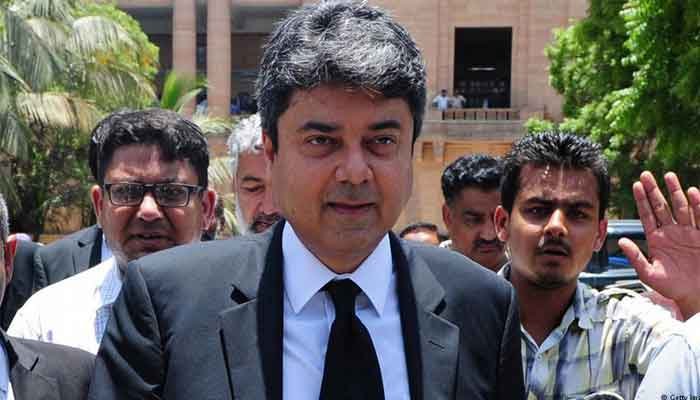
    Pakistan Bar Council (PBC) Vice Chairman Amjad Shah has said that Law Minister Farogh Naseem, who on Tuesday resigned from office to fight for an extension to the army chief in the Supreme Court (SC), cannot legally represent General Qamar Javed Bajwa because the minister’s practice licence was suspended by the council a few months ago.

    In a video tweeted by senior journalist and analyst Hamid Mir, Shah said that if Farogh appeared in court to represent chief of the army staff (COAS) with his suspended licence, they would raise objections and anyone practising law with a suspended licence could face up to one-year imprisonment.

    WATCH VIDEO:

    According to the PBC, Naseem, having joined the federal cabinet as the law minister, was required to get his licence suspended under Rule 108-O of the Pakistan Legal Practitioners & Bar Councils Rules, 1976, but failed to do so.

    Moreover, another reason for the suspension of his licence was filing a reference against an honest top judge, Justice Qazi Faez Isa.

    The attorney general (AG) had subsequently quashed the PBC ruling. However, the council had said it was not AG’s jurisdiction to nullify the ruling. The former law minister will have to approach the council for renewal of his licence.

    Naseem’s resignation Tuesday came soon after a meeting of the federal cabinet. The meeting was summoned to discuss the petition filed by the Jurist Foundation against Gen Bajwa’s extension.

    The cabinet said it was a unanimous decision to give General Bajwa the extension for another three years. The participants of the meeting were of the view that Prime Minister (PM) Imran Khan, being the chief executive of the country, had the authority to extend the army chief’s tenure.

    Earlier in the day, the SC had suspended the official notification extending the tenure of the army chief. The apex court said the AG was asked under which law an army chief’s tenure could be extended or he could be re-appointed. But the country’s top lawyer failed to explain it, the court added.

    WEDNESDAY’S HEARING:

    On Wednesday, a three-member bench of the top court, headed by Chief Justice of Pakistan (CJP) Asif Saeed Khan Khosa and comprising Justice Mazhar Alam and Justice Syed Mansoor Ali Shah, resumed hearing the petition challenging the extension of the COAS.

    Naseem submitted his power of attorney as the CJP Khosa asked AG Anwar Mansoor Khan if they had accepted the points raised by the court Tuesday.

    To this, the AG replied that they have not accepted the mistakes. “This is not a suo motu case, media did not understand it correctly,” CJP Khosa remarked. “We are hearing the case on the petition filed by Raiz Riahi.”

    He then asked the AG to present the summary approved by the federal cabinet in its meeting on Tuesday. “I informed the court yesterday as well that we are waiting for some ministers to respond on the extension notification,” the AG said.

    “If there is no answer, so we assume the answer is yes?” the CJP inquired.

    To this, the AG replied that according to the law, that is correct.

    The top judge then said that this course of action was only acceptable when the answer has to be given in a certain time period. “If this was an open mandate we would have let it go. The cabinet has accepted the mistakes that we pointed out,” he added.

    The attorney general then submitted the documents pertaining to Tuesday’s decisions by the federal cabinet to the court and the hearing was adjorned till 1 pm.