Tag: pakistan economy

  • Planning to travel on the motorway? You’ll be paying more for it now

    Planning to travel on the motorway? You’ll be paying more for it now

    The toll tariff for the Lahore-Islamabad Motorway (M2) underwent a 10 per cent increase, with the new rates becoming effective starting from Saturday, August 26th, 2023.

    The decision to revise the toll rates comes as the National Highways Authority (NHA) releases an official notification, citing the execution of a concession agreement with M/s Motorway Operations and Rehabilitation Engineering (Private) Limited, a subsidiary owned by the Frontier Works Organisation (FWO). 

    The agreement, which was formalised on April 23, 2014, pertains to the modernisation and overlay of the Lahore-Islamabad Motorway (M-2) under the Build-Operate-Transfer (BOT) framework. The agreement spans two decades.

    As per the terms stipulated in the concession agreement, an escalation of 10 per cent in toll rates is set to be implemented from the second operational year onward. Thus, from the 26th of August 2023 to the 25th of August 2024, the revised toll rates are set to take effect.

    According to the official notice provided by the NHA, the revised toll rates are outlined as follows:

    • Car/Jeep/Pickup: Rs1,100, equivalent to Rs3.07 per km
    • Van: Rs1,840, equivalent to Rs5.15 per km
    • Coaster: Rs2,590, equivalent to Rs7.22 per km
    • Coach: Rs3,690, equivalent to Rs10.29 per km
    • Truck: Rs4,800, equivalent to Rs13.39 per km
    • Trailer: Rs6,170, equivalent to Rs17.22 per km

    The decision to raise toll rates by 10 per cent reflects the ongoing economic trends in Pakistan, where a range of commodities and services have experienced notable price increments. 

    The revised toll rates are envisaged to contribute to the sustainability and enhancement of the Lahore-Islamabad Motorway infrastructure, supporting ongoing operational and maintenance efforts.

    As Pakistan grapples with economic dynamics, this adjustment in toll rates underscores the authorities’ focus on maintaining and improving critical transportation networks across the country.

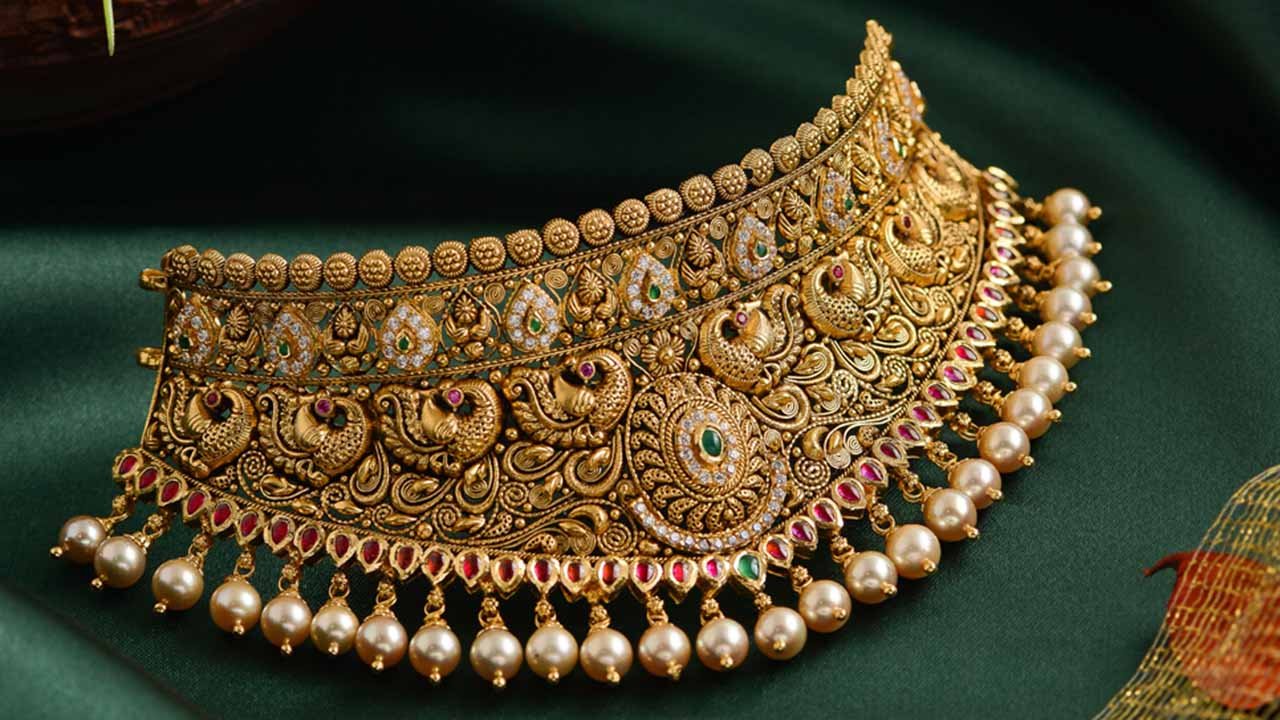
  • Gold price reaches Rs234,000 per tola, nearing new record high

    Gold price reaches Rs234,000 per tola, nearing new record high

    Gold prices in Pakistan continued to rise on Tuesday, influenced by the Pakistani rupee’s decline against the US dollar and an uptick in global prices. 

    According to the All Pakistan Gems and Jewellers Sarafa Association, the cost of 24-carat gold settled at Rs234,500 per tola, marking a substantial increase of Rs4,600. Similarly, the price of 10 grammes of gold rose by Rs3,944 to reach Rs201,046.

    It is expected that the price of gold might reach unprecedented levels due to the relentless and rapid decline of local currency against the greenback.

    The movement of gold prices in Pakistan closely follows the path of the US dollar due to the country’s reliance on gold imports. 

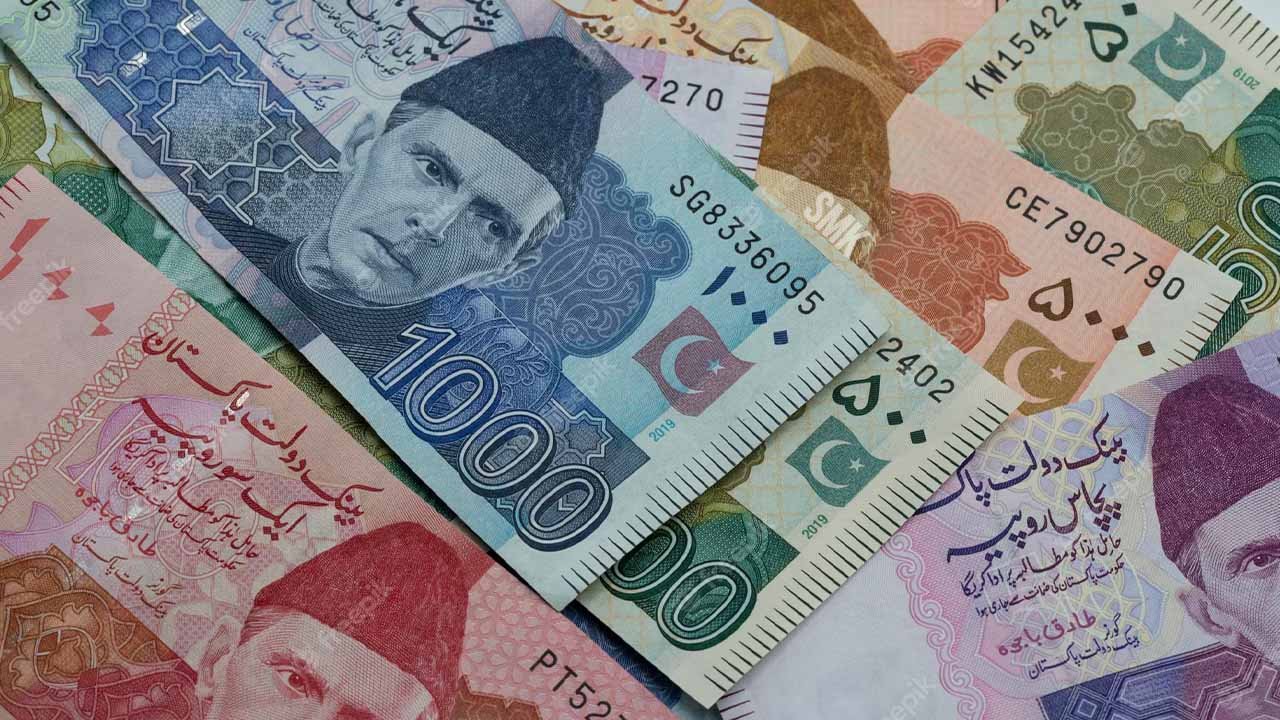
    The Pakistani rupee saw a notable decrease, falling to a new all-time low against the US dollar. It ended at Rs299.01 rupees per dollar, reflecting a decline of Rs1.88, as reported by the State Bank of Pakistan.

    Currency experts attribute the surge in gold prices to the recent depreciation of the rupee. 

    With growing concerns about the country’s economic situation, investors are turning to gold as a safe-haven asset. This shift has resulted in a significant increase of Rs12,700 per tola in just one week.

    Read more: PKR to USD rate

    Notably, the hike in gold prices coincided with political turmoil and a decrease in the local currency’s value, leading to an all-time high valuation of Rs240,000 per tola on May 10, 2023. On the international front, the price of gold saw a $10 increase, reaching $1,901 per ounce on Tuesday.

  • Gold price in Pakistan jumps to Rs229,900 per tola, up by Rs3,100

    Gold price in Pakistan jumps to Rs229,900 per tola, up by Rs3,100

    Starting the week on a high note, gold prices in Pakistan increased due to the Pakistani rupee’s decline against the US dollar and a rise in global rates. 

    Recent data from the All-Pakistan Sarafa Gems and Jewellers Association (APSGJA) shows that the price of 24-carat gold increased by Rs3,100 per tola, reaching Rs229,900, and by Rs2,658 per 10 grammes, reaching Rs197,102.

    Likewise, the price of gold in the international market saw a modest $2 increase, reaching $1,891 per ounce today. 

    Over the last six sessions, the local market experienced a substantial rise of Rs8,100 per tola in gold prices.

    According to the association’s data, the price of silver remained steady at Rs2,800 per tola and Rs2,400.54 per 10 grammes.

    The PKR continued its decline against the US dollar on Monday. The local currency went down by 0.45 per cent, which is about Rs1.35, and closed the day at Rs297.13 in the interbank market, as reported by the State Bank of Pakistan.

    Gold prices in the Pakistani market are consistently rising due to the depreciation of the local unit. Analysts suggest that despite the decline in global prices, local prices remain stable owing to the strengthening US dollar.

    In the event that the PKR continues to depreciate and global prices remain subdued, local gold prices are likely to hold steady. On the contrary, if global prices surge and the Pakistani currency remains weak, gold prices in the country might witness further escalation.

  • Weekly inflation increases to 27.5%, impacting household expenses

    Weekly inflation increases to 27.5%, impacting household expenses

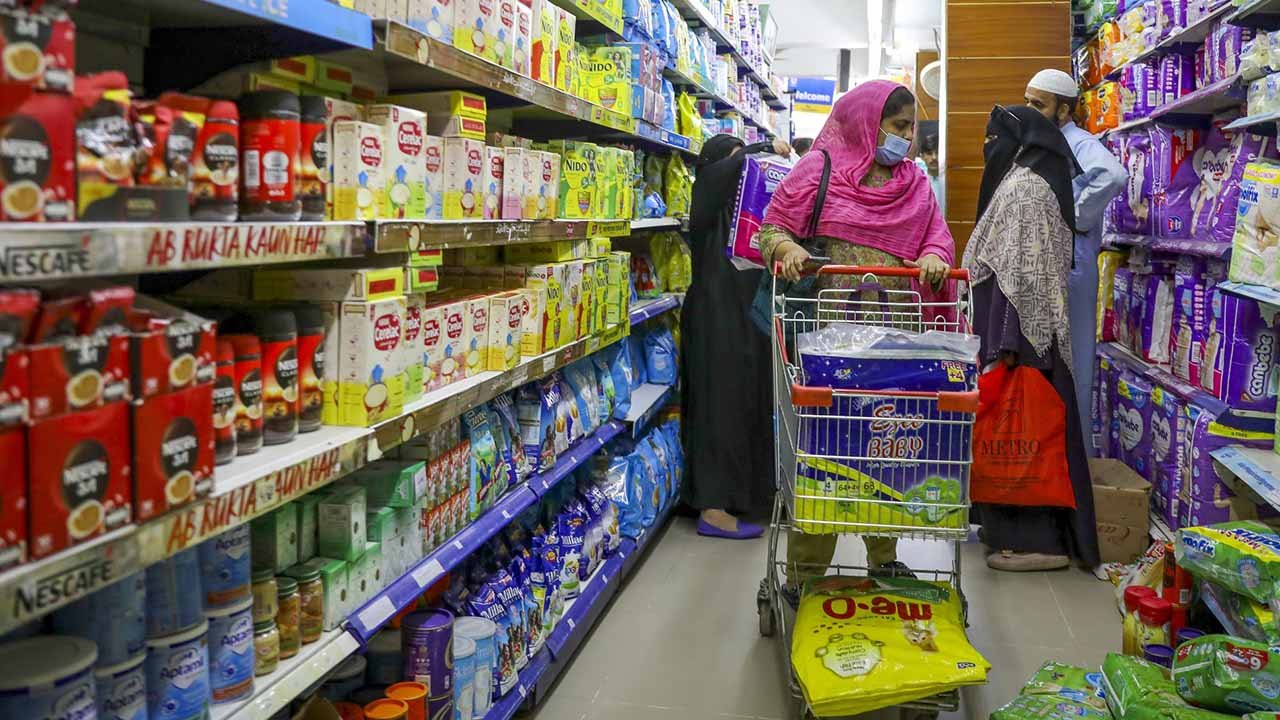
    According to official data from the Pakistan Bureau of Statistics (PBS), the Sensitive Price Indicator (SPI) shows that inflation for the week ending on August 17 increased by 27.57 per cent compared to the same period last year. In simpler terms, things are getting more expensive.

    Looking at shorter periods, within a week, inflation went up by 0.78 per cent. This means prices are rising quickly and there’s no sign of them slowing down, which is worrying for both economists and consumers.

    Comparing some numbers, the overall price index was 275.57 on August 17, up from 273.43 on August 10 this year, and a significant increase from 216.02 on August 18 last year.

    Out of the things people buy, 32 items got pricier, 7 got cheaper, and 12 stayed the same. Among the things that became more expensive this week compared to a year ago were things like chillies powder (up 7.58 per cent), rice irri-6/9 (up 7.48 per cent), garlic (up 5.06 per cent), sugar (up 4.02 per cent), gur (up 3.23 per cent), and chicken (up 2.83 per cent). non-food items like diesel (up 7.29 per cent) and petrol (up 6.40 per cent) also got more expensive.

    On the flip side, the price of some things dropped. Tomatoes got 13.60 per cent cheaper, cooking oil (5 liters) became 1.65 per cent cheaper, and there were smaller drops in prices for things like vegetable ghee and wheat flour.

  • SBP-held forex reserves rise by $12 million to $8.05 billion, sufficient to cover over two months’ worth of imports

    SBP-held forex reserves rise by $12 million to $8.05 billion, sufficient to cover over two months’ worth of imports

    The State Bank of Pakistan (SBP) announced a rise of $12 million in its foreign exchange reserves, reaching $8.05 billion, as detailed in a statement released on Thursday. The nation’s overall liquid foreign reserves, encompassing both SBP and commercial banks, amounted to $13.379 billion as of August 11. Among these, commercial banks held net reserves totaling $5.3237 billion, as reported by the SBP.

    While the central bank did not provide specifics on the cause behind the augmentation of foreign exchange reserves, the situation presents an upbeat stance. Nevertheless, it’s worth noting that the existing reserves would barely cover imports for a span slightly exceeding two months.

    Notably, the previous month saw a notable escalation in SBP reserves due to inflows from the United Arab Emirates, Saudi Arabia, and the International Monetary Fund (IMF), following the formalisation of a $3 billion Stand-by Arrangement (SBA) with the global financial institution.

    According to Geo, in a departure from market predictions, the SBP opted to maintain the key policy rate at 22 per cent during the preceding month. This stance diverged from expectations, particularly those guided by IMF recommendations. SBP Governor Jameel Ahmed conveyed this decision following a Monetary Policy Committee (MPC) meeting. Explaining the rationale, he stated that given the decline in inflation, there was no inclination to increase the interest rate.

    During a press conference, Governor Ahmed also shared insights into the nation’s economic trajectory. He projected a growth rate ranging from 2 per cent to 3 per cent for the upcoming year. Highlighting the government’s actions, he mentioned the complete removal of import restrictions. This move, coupled with financial inflows from the IMF and other supportive nations, led to a $4.2 billion upswing in Pakistan’s foreign exchange reserves in July.

  • PDM govt adds Rs18.5 trillion to Pakistan’s debt in just 15 months

    PDM govt adds Rs18.5 trillion to Pakistan’s debt in just 15 months

    In a span of just 15 months, the Pakistan Democratic Movement (PDM) government has significantly added Rs18.5 trillion to the country’s public debt, a striking amount surpassing the debt accumulation of its rival, the Pakistan Tehreek-e-Insaf (PTI), during its three-and-a-half-year tenure.

    Between March 2022 and the close of the 2022–23 fiscal year, the gross public debt surged from Rs44.4 trillion to Rs62.9 trillion. This rapid increase of 41.7 per cent in just 15 months occurred without a well-defined strategy to curb it. As a result, the federal government’s debt, for which the finance ministry bears direct responsibility, escalated to Rs60.8 trillion by June 2023. The debt bulletin, published on a recent Wednesday, indicates an addition of Rs18 trillion during the PDM government’s one year and three months in power.

    As per a report in the Express Tribune by Shehbaz Rana, this unsustainable surge in public debt is mainly ascribed to unregulated spending, insufficient revenue collection from areas such as real estate, services, and agriculture, alongside the diminishing value of the Pakistani rupee in comparison to the US dollar.

    It’s worth noting that the government under Imran Khan added Rs18.1 trillion to the public debt over a span of 44 months, a threshold that the current administration led by Shehbaz Sharif managed to surpass in just 15 months. However, it’s important to mention that the debt figure for July has yet to be compiled by the State Bank of Pakistan.

    This trend becomes even more significant when we consider that the combined debt addition by the Pakistan Peoples Party (PPP) and the Pakistan Muslim League-Nawaz (PML-N) from 2008 to 2018 was Rs18 trillion. Another Rs18 trillion was added from August 2018 to March 2022 during Imran Khan’s government, and now the PDM government has contributed an additional Rs18.5 trillion in a remarkably brief period of 15 months.

    Comparatively, from September 1, 2018, to the end of March 2022, the PTI government, on average, increased the public debt by Rs14.5 billion per day, more than double the average daily increase of Rs5.6 billion during the PML-N period. The PDM government has further escalated this daily addition to an average of Rs41 billion.

    By the time the PTI government’s term concluded, the total public debt amounted to Rs44.4 trillion, equivalent to 83.5 per cent of the gross domestic product (GDP) before the economy’s rebasing. Following the rebasing process, there was a 15 per cent reduction in public debt relative to GDP but no reduction in absolute terms.

    At present, the public debt constitutes 74.3 per cent of the GDP. Steep currency depreciation has also contributed to the federal government’s debt. Over the past 15 months, the total domestic debt of the federal government surged to Rs38.8 trillion, an addition of Rs10.8 trillion (or 38 per cent). When Imran Khan left office, the domestic debt stood at Rs28 trillion.

    Alarmingly, the external debt of the federal government surged by 48 per cent to Rs22 trillion within just 15 months, with a net increase of Rs7.1 trillion attributed largely to currency depreciation. By the end of March 2022, the external debt, excluding IMF liabilities, was Rs14.9 trillion.

    External debt constitutes roughly 36 per cent of the total debt, and fluctuations in the exchange rate have a significant impact on debt even without borrowing additional funds. In a span of 15 months, the rupee-dollar parity plummeted from Rs183.5 to Rs286.4, a decline of Rs103 or 56 per cent. This substantial and rapid depreciation has also contributed to inflation.

    On a recent Wednesday, the rupee slid further to Rs295. An immediate outcome of this mounting debt is a considerable rise in the cost of debt servicing. It is projected that debt servicing will exceed Rs5.8 trillion by the end of the last fiscal year. 

    As a result of reckless borrowing, Pakistan’s total debt and liabilities have surged to Rs77.1 trillion, equivalent to 91.1 per cent of the national economy’s size. This ratio is deemed unsustainable for a developing nation like Pakistan.

    During the past four years of the IMF programme, Pakistan struggled to enhance the Federal Board of Revenue’s (FBR) tax-to-GDP ratio, despite it being a priority for both the IMF and the World Bank.

    This raises concerns about the effectiveness of obtaining foreign loans for the sake of tax reform. Moreover, there has been a lack of serious efforts to control expenditures. The Shehbaz Sharif government, like its predecessors, continued to allocate funds to projects and initiatives that fall under provincial jurisdiction as per the constitution.
  • Output of Pakistan’s main industries declines by over 10%

    Output of Pakistan’s main industries declines by over 10%

    The economic landscape of Pakistan has faced a notable setback, with the Large Scale Manufacturing Industries (LSMI) output experiencing a decline of 10.26 per cent during the fiscal year 2022–23 when compared to the same period in 2021–22. This concerning information has been revealed by the Pakistan Bureau of Statistics (PBS), shedding light on the current state of the country’s industrial sector.

    The provisional Quantum Index numbers of the large-scale manufacturing industries (QIM) further underscore this decline. Specifically, the LSMI output took a significant hit in June 2023, plummeting by 14.96 per cent compared to June 2022. However, there is a glimmer of hope, as the output experienced a slight uptick of 0.98 per cent in comparison to May 2023.

    Diving into the specifics, the LSMI Quantum Index Number (QIM) for June 2023 has been estimated at 112.21, while the QIM for the period of July–June 2022–23 stands at 114.83. These numbers provide a quantitative overview of the challenges faced by the manufacturing sector during this time frame.

    The foundation for these indices lies in data provided by several key agencies, including the OCAC, Ministry of Industries and Production, Ministry of Commerce, and Provincial Bureau of Statistics (BoS). Their collaboration has enabled the creation of the provisional quantum indices of LSMI for June 2023, based on the 2015–16 base year.

    Various industries have played a role in shaping this decline, with notable contributors including food (-1.14 per cent), tobacco (-0.65 per cent), textiles (-3.65 per cent), garments (2.79 per cent), petroleum products (-0.89 per cent), chemicals (-0.52 per cent), pharmaceuticals (-1.85 per cent), cement (-0.86 per cent), iron and steel products (-0.24 per cent), electrical equipment (-0.54 per cent), and automobiles (-2.21 per cent).

    Analysing the production trends over a larger period, July–June 2022–23, as compared to July–June 2021–22, reveals a mixed picture. While there have been increases in production for wearing apparel, furniture, and other manufacturing (football), there have also been notable decreases in food, tobacco, textile, coke, and petroleum products, pharmaceuticals, chemicals, non-metallic mineral products, machinery and equipment, automobiles, and other transport equipment.

    Industries that demonstrated growth during the July-June period include wearing apparel (27.16 per cent), leather products (1.29 per cent), furniture (35.51 per cent), and other manufacturing (football) (28.99 per cent). However, sectors such as food (6.90 per cent), beverages (6.43 per cent), tobacco (28.36 per cent), textiles (18.68 per cent), and many others have faced declines, indicating a complex and multifaceted economic situation.

    In particular, the petroleum products industry has witnessed a substantial decline of 13.39 per cent during July–June 2022–23. High-speed diesel and furnace oil also experienced negative growth, with decreases of 17.09 per cent and 14.65 per cent, respectively. On the other hand, jet fuel oil managed to buck the trend with a growth rate of 6.63 per cent, suggesting a nuanced narrative within the energy sector.

    Cement production, a crucial indicator of construction and infrastructure activity, also faced a decline of 13.67 per cent during July–June 2022–23, highlighting potential challenges in these sectors.

    As Pakistan navigates through these economic fluctuations, stakeholders and policymakers will need to closely analyse the contributing factors to these declines and strategize effectively to bolster the country’s manufacturing sector, ensuring sustainable growth and resilience in the face of challenges.

  • Remittances to Pakistan decline by 19.3% to $2 billion in first month of fiscal year

    Remittances to Pakistan decline by 19.3% to $2 billion in first month of fiscal year

    Pakistan has experienced a notable decline in remittances during the first month of the current fiscal year, as data released by the central bank reveals a year-on-year drop of 19.3 per cent, amounting to $2 billion. This concerning trend was further accentuated by a month-on-month reduction of 7.3 per cent.

    In the month of July, remittance inflows from Pakistanis residing abroad amounted to $2.2 billion. The distribution of these remittances showed that Saudi Arabia held the top spot with a contribution of $486.7 million, followed by the United Arab Emirates with $315.1 million. The United Kingdom and the United States of America followed closely with $305.7 million and $238.1 million, respectively.

    Economic analysts anticipated this decline in remittances for the month of July, given the post-Eid ul Adha period. The reduction was expected, as Pakistani expatriates tend to increase their cash transfers back home during festive seasons. Interestingly, it seems that some of these remittance inflows have been diverted to the grey market due to more favourable exchange rates for dollars.

    Samiullah Tariq, the head of research at Pak-Kuwait Investment Company, shed light on this shift: “In my view, as this was the month after Eid ul Adha, flows were relatively subdued. Some Pakistanis are opting for unofficial channels to transfer money.” The continuous devaluation of the Pakistani currency is also impacting investment sentiment among overseas Pakistanis, discouraging them from contributing more significantly to the economy.

    The recent release of these remittance statistics coincides with the International Monetary Fund’s (IMF) approval of a $3 billion bailout package for Pakistan. The nation’s economy had been teetering on the edge of default due to mounting debt obligations. Governor Jameel Ahmad of the State Bank of Pakistan (SBP) reassured that the SBP remains committed to upholding its obligations, including maintaining a controlled difference between the interbank and open market exchange rates, as specified in the agreement with the IMF.

    Fahad Rauf, the head of research at Ismail Iqbal Securities, voiced his concern over the decline in remittances: “The extent to which remittances have declined is indeed worrying. Unofficial channels offering higher rates have played a role in this scenario.” He also highlighted the SBP’s efforts to attract more remittances through proposed changes in incentive schemes, including a 50 per cent increase in the reimbursement rate for Saudi Riyal conversions.

    The SBP’s latest monetary policy statement forecasts the current account deficit for fiscal year 2024 to range between 0.5 per cent and 1.5 per cent of the gross domestic product. This projection takes into account both evolving domestic and global economic conditions. The SBP remains optimistic about the prospects of multilateral and bilateral inflows following the IMF’s stand-by arrangement, which is expected to bolster external buffers and address short-term external financing requirements.

    As the nation navigates through these challenges, the market-determined exchange rate will continue to play a pivotal role as the first line of defence against external shocks, further supporting the buildup of reserves. With a cautious eye on global commodity prices and a moderate domestic economic recovery, Pakistan aims to manage its imports and strengthen its economic stability.

  • Govt hikes petrol and diesel prices by nearly Rs20 per litre

    Govt hikes petrol and diesel prices by nearly Rs20 per litre

    In a move to fulfill its commitment with the International Monetary Fund (IMF), Pakistan’s Finance Minister Ishaq Dar has announced a substantial increase in petrol and diesel prices. The revision has taken effect immediately today (August 1st), with petrol price rising by Rs19.95 per litre and diesel price climbing by Rs19.90 per litre.

    Here are the new petrol and diesel prices:

    Product Old prices New prices Increase
    Petrol Rs253 Rs272.95 Rs19.95
    Diesel Rs253.50 Rs273.40 Rs19.90

    Minister Dar stated that the price hike was necessary to comply with the IMF’s requirement to impose a petroleum development levy (PDL) on the rates. He mentioned that despite attempts to mitigate the impact on inflation-weary citizens, the government had little room to maneuver due to the binding agreement with the IMF.

    The announcement was originally scheduled for July 31, but the government delayed the decision as officials sought ways to minimise the impact on the general public. The Finance Minister, making this announcement for the last time before his government’s term ends on August 12, emphasised that the decision was taken in the “national interest.”

    Dar clarified that if it were not for the IMF agreement, the government would have attempted to reduce the PDL to provide relief to the masses. He referred to the measures taken by the previous government that decreased petrol prices but resulted in a breach of commitments with the IMF.

    Explaining the reasons behind the price hike, the finance minister highlighted the surge in international market prices of high-speed diesel, which necessitated adjustments in local rates. He stressed that it was crucial to pass on the minimum amount to the consumers, considering the nation’s interests.

    The sudden increase in fuel prices is likely to have significant implications on the overall economy, including its impact on inflation rates and the cost of living for ordinary citizens. With the government’s term ending soon, the incoming administration will face the challenge of managing economic stability and addressing public concerns over rising fuel costs.

  • Govt gives nod to massive power tariff hike to meet IMF demands

    Govt gives nod to massive power tariff hike to meet IMF demands

    In a recent late-night development, the federal cabinet of Pakistan has given its approval for a significant increase in the electricity base tariff. This decision comes as part of the country’s efforts to meet the conditions set by the International Monetary Fund (IMF).

    According to the information provided by insiders, the federal government has decided to raise the basic power tariff for various consumer categories, with the increase ranging from Rs3 to Rs7.5 per unit.

    The National Electric Power Regulatory Authority (Nepra) played a pivotal role in this decision, as the cabinet approved the tariff hike based on Nepra’s recommendation.

    For non-protected residential consumers who use 1 to 100 units, the proposed increase is Rs3 per unit, which will elevate the current cost from Rs13.48 per unit to Rs16.48 per unit.

    Similarly, residential consumers using above 700 units might see a significant increase of Rs7.5 per unit, raising the existing rate from Rs35.22 per unit to Rs42.72 per unit.

    The government has now referred the matter to Nepra, which will conduct a public hearing to gather input and make a final decision before releasing an official notification. If approved, the new tariff will take effect from July 1.

    It is noteworthy that Nepra had already granted the federal government an increase of Rs4.96 per unit in the base electricity tariff on July 14.

    This move aligns with Prime Minister Shehbaz Sharif’s commitment to IMF Managing Director Kristalina Georgieva, assuring full adherence to the agreement made with the global lender, leaving no room for any violation.