Tag: pakistan economy

  • PM carries the ‘begging bowl’ with him everywhere

    PM carries the ‘begging bowl’ with him everywhere

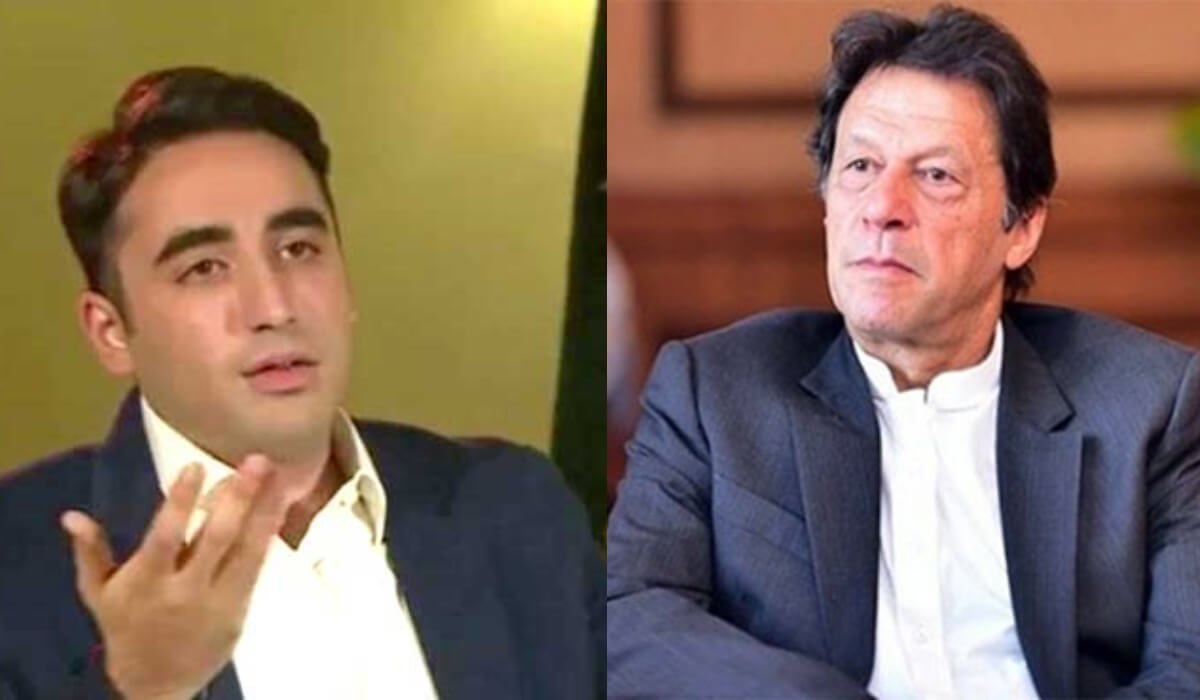
    Pakistan People’s Party (PPP) chairperson Bilawal Bhutto-Zardari on Monday chastised Prime Minister Imran Khan, blaming him for not caring about the common man’s problems in Pakistan.

    In a statement, Bilawal held PM Khan responsible for the dreadful economic situation of the country, adding that “every Pakistani is paying the price of Imran Khan’s ‘Change Tsunami’”

    Speaking about PM’s recent trip to Saudi Arabia, Bilawal said it was unfortunate how the same prime minister, who used to talk about not obtaining loans from other countries, was carrying the “begging bowl” with him everywhere in the world.

    “Mr Prime Minister, surely you hold vast experience in collecting donations. However, countries do not run on donations alone,” said the PPP chairperson.

    “If the money we receive from loans continues to get wasted in corruption, the common man will continue to bear the burden of inflation,” he said, adding: “Imran Khan, you should come out of your palace in Bani Gala.”

    “The Chinese government’s hesitancy [in issuing the funds] is in fact an expression of their lack of confidence in the PTI government,” he said, adding that foreign investors were afraid of investing in Pakistan. 

    The PPP chairperson’s criticism comes after the prime minister returned from the Saudi Arabia visit aimed at strengthening ties between the two countries.
  • SBP governor says bank will implement policies benefitting economy

    SBP governor says bank will implement policies benefitting economy

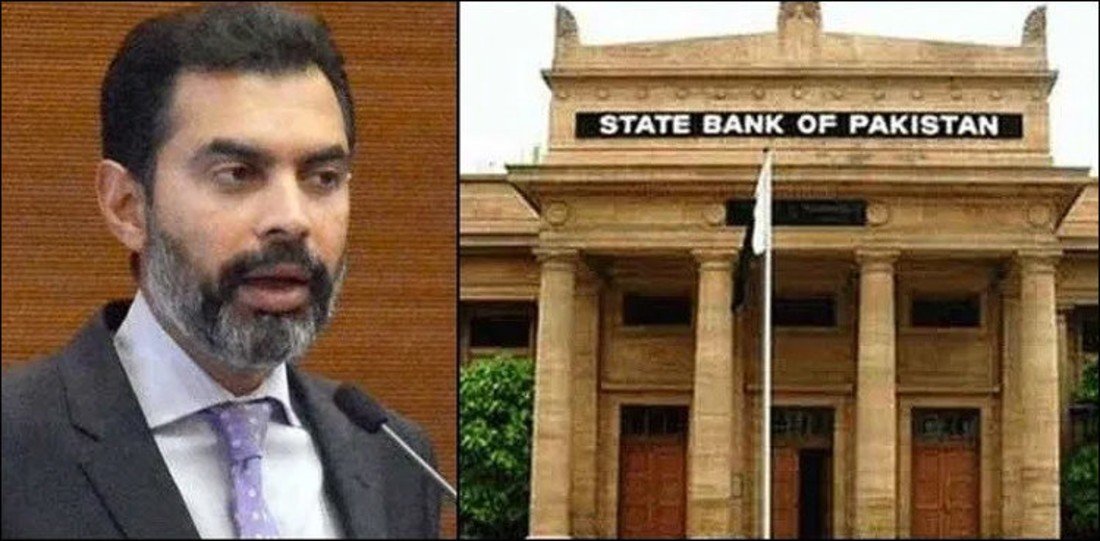
    State Bank of Pakistan (SBP) Governor Dr Reza Baqir on Sunday said that SBP would implement those policies benefiting economy of Pakistan.

    Monitory policy adopted by SBP is supporting the economy of Pakistan, he said in an interview with a private television channel.

    Commenting on approaching International Monitoring Fund (IMF), he said: “We had to seek support of IMF because of weak economic condition.”

    During COVID-19 pandemic, he said the government had to lift loan from IMF amounting to Rs250 billion. Appreciating the steps taken by Pakistan Tehreek-e-Insaf (PTI) government to avert coronavirus pandemic, he said that the SBP and the ruling party had successfully managed to cope the difficulties arisen due to spreading virus that played havoc around the world.

    WATCH THE FULL INTERVIEW:

    In reply to a question about policy rate, he said that the banks have implemented the policy rate that stood at 13 per cent. To another question about SBP’s working in future, he said that the banking system as autonomous body would have better results.

  • ‘Pakistan has the potential to become an economic hub,’ says Asian Development Bank

    ‘Pakistan has the potential to become an economic hub,’ says Asian Development Bank

    The Asian Development Bank (ADB) has said that Pakistan has huge potential for economic progress given its strategic location and youthful growing population.

    In an interview, Country Director of ADB for Pakistan Xiaohong Yang said: “Pakistan has the potential to become a regional hub for trade and economic activity but the major impediment is weak connectivity and trade links. Moreover, the COVID-19 has pandemic caused a sharp downturn in 2020, and is likely to push more people into poverty.”

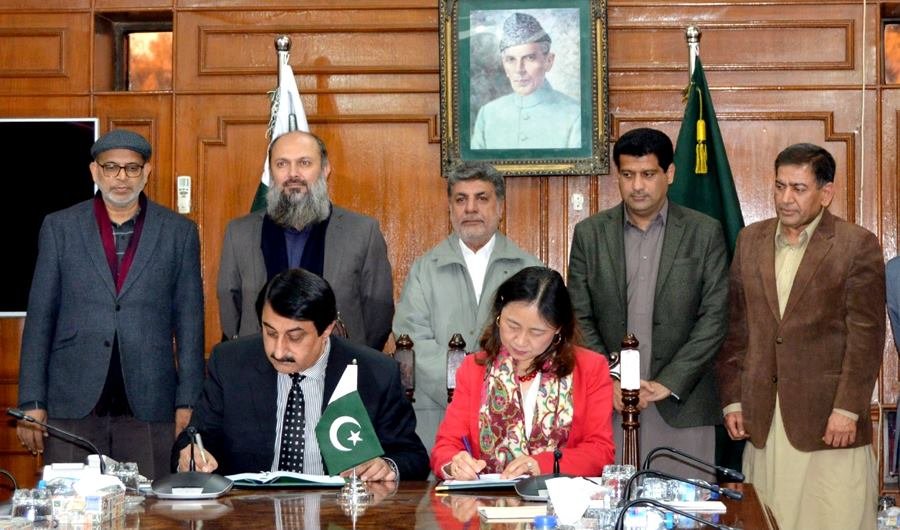
    Yang also said that ADB is taking major steps in providing critical finance to the government to implement it’s pro-poor fiscal and monetary policy, and to deal with the impacts of the pandemic, adding that ADB has also financed a $2 billion loans to help Pakistan overcome the pandemic challenges.

    ADB is working towards introducing best practices, sharing knowledge and trying to develop capacity building through partnerships will all stakeholders, says Yang.

    The bank has also devised a new partnership strategy (2021-2025) for Pakistan. It is designed to restore growth and economic stability by deploying sovereign and non-sovereign operations to support infrastructure, agribusiness, and finance sector investment.

    ADB will target reforms that boost competitiveness and private sector development, create jobs and drive market innovation.

  • SBP reserves recorded at $12.9bn after $82m decrease

    SBP reserves recorded at $12.9bn after $82m decrease

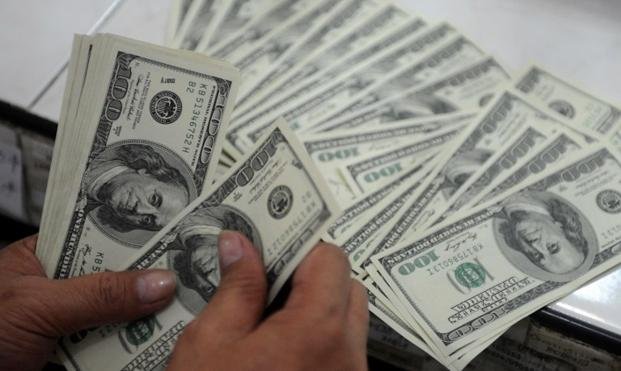
    The foreign exchange reserves held by the State Bank of Pakistan (SBP) has witnessed a 0.63 per cent decrease on a weekly basis, said a statement issued by the central bank.

    After the decrease due to external debt repayments, the reserves held by the SBP stood at $12,949.1 million, down $82 million, during the week ended on February 4. The SBP reserves were recorded at $13,031.2 million in the previous week.

    Similarly, the foreign exchange reserves of commercial banks also slightly dropped to $7.124 billion from $7.131 billion.

    Earlier this week, Pakistan had approached China to seek relief in debt repayment, a report had claimed. Pakistan had made an informal request to ease terms on the repayment of debt on about a dozen power plants set up under the China-Pakistan Economic Corridor over the past eight years, Bloomberg had reported.

    “The parties have canvassed Beijing’s willingness to stagger debt payments, as opposed to lowering equity returns,” the report said, adding that Pakistan has yet to make a formal offer. The report had claimed that “Pakistan will formally make the request…after it concludes deals with those local power producers to reduce electricity tariffs”.

  • IKEA might not really be coming to Pakistan

    Pakistan’s ambassador to Germany, Dr Mohammad Faisal, on Thursday tweeted claiming that IKEA, a multinational conglomerate that designs and sells ready-to-assemble furniture, is coming to Pakistan.

    But soon after the news was announced in the media, the ambassador deleted his tweet and did not reply to queries sent to him regarding the development either.

    To add to the surprise, Profit reported, relevant ministries in the country were also unaware of the development. Officials at Board of Investment (BoI), the premier investment promotion agency of Pakistan working under the administrative control of the Prime Minister’s Office, mandated to promote and facilitate both local and foreign investment was also unaware of the development.

    The official claimed that there was no development, not even at the initial stage, regarding investment by IKEA.

    Similarly, the Ministry of Commerce, and officials at both the offices of adviser to prime minister on commerce and investment as well as secretary commerce were also unaware about the development.

    The official spokesperson at Securities and Exchange Commission of Pakistan (SECP) said that no application for the registration of the company was received by the commission.

    However, SECP’s website shows the registration of a company IKEA TRADING (HONG KONG) LIMITED in 2006, at CRO Karachi. As per the SECP’s record, another firm in the name of IKEA SUPPLY AG SWITZERLAND was registered in Karachi in 2015.

  • 77% Pakistanis believe country is heading in wrong direction: survey

    At least 77 per cent Pakistanis believe that the country is heading in the wrong direction, whereas 23 per cent think there’s nothing wrong with Pakistan, said a survey by research company IPSOS.

    According to The News, the survey was conducted in the first week of December and over 1,000 people participated in it. “The findings were released on Tuesday for the last quarter (Q4) of 2020 and compared with people’s responses from the same period a year ago,” it added.

    Last year, 21 per cent people believed that Pakistan was on the right track, while 79 per cent contested this view.

    This year, 36 per cent said that their current personal financial situation was weak, while 51 per cent said it was neither strong nor weak, and 13 per cent said they were in a strong financial position.

    In comparison with the results of the last year, the people are in a better financial position: the data showed that 38 per cent believed that their financial situation was weak, 5 per cent viewed it as strong, and 57 per cent said it was okayish.

    Meanwhile, on province-wise assessment, the report found that a “poor financial situation” featured in almost all the provinces and inflation ranked number 1 among the list of top four contributors.

    “In Sindh, the second-highest contributor was viewed to be unemployment (20 per cent), followed by COVID-19 (17per cent) and poverty (16 per cent). In Punjab, 23 per cent people felt the province’s poor financial situation was due to unemployment, 8 per cent thought it was due to COVID-19 and 14 per cent believed poverty played a key role,” the newspaper stated.

    Meanwhile, in Khyber Pakhtunkhwa about 18 per cent believed the poor financial situation was the result of unemployment, 12 per cent viewed coronavirus and 8 per cent felt it was poverty that was behind the province’s financial situation.

    Similarly, in Balochistan about 25 per cent responded by blaming unemployment, a mere 2 per cent felt COVID-19 played a role, and 25 per cent felt it was poverty that has led to the province’s dismal state of financial affairs, said reports.

  • Ex-PM Abbasi speaks about meeting on economy with Gen Bajwa

    Ex-PM Abbasi speaks about meeting on economy with Gen Bajwa

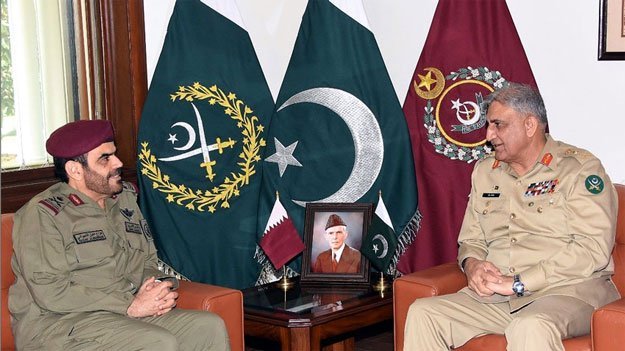
    Former prime minister and Pakistan Muslim League-Nawaz (PML-N) leader Shahid Khaqan Abbasi has revealed that Chief of Army Staff (COAS) General Qamar Javed Bajwa had held a meeting with him in November 2018 to discuss the economic issues prevalent at the time, especially the International Monetary Fund (IMF) bailout.

    Abbasi revealed the details of the meeting in a talk show on Samaa TV. According to the lawmaker, who has also served as a petroleum minister in the cabinet of Nawaz Sharif, PML-N leaders Khawaja Asif and Miftah Ismail were also present in the meeting. “The details of such meetings are usually kept confidential, but now that they are being publicised I don’t see any harm in telling the details,” the ex-PM added.

    The army chief wanted the opinion of the PML-N lawmakers on the economy in the light of growing inflation and a tanking economy, Abbasi said.

    “We relayed our reservations on the state of the economy to the army chief,” he told anchorperson Nadeem Malik. “We told the army chief that Pakistan would face tremendous economic pressure within next three years due to the policies of the incumbent regime,” he said, adding that the government took six months to wreck the economy.

    Last week, former Sindh governor Muhammad Zubair revealed the details of the meeting with Gen Bajwa. Muhammad Zubair, who has been appointed as party supreme leader Nawaz Sharif and his daughter Maryam Nawaz’s spokesperson, revealed further details of his “secret meeting” with Gen Bajwa.

    In an exclusive interview with The Current, Zubair said that he isn’t a big fan of gulab jamun but that’s what they had for dessert the night he met Gen Bajwa over dinner.“I’m not a gulab jamun person but I couldn’t say no to him [Gen Bajwa] since he is a dignitary… he is the COAS,” the former Sindh governor said when asked about the details of his meeting that was also reportedly attended by Inter-Services Intelligence (ISI) Director General (DG) Lt Gen Faiz Hameed.

  • Bajwa’s resignation amid political uncertainty affects stock market

    Bajwa’s resignation amid political uncertainty affects stock market

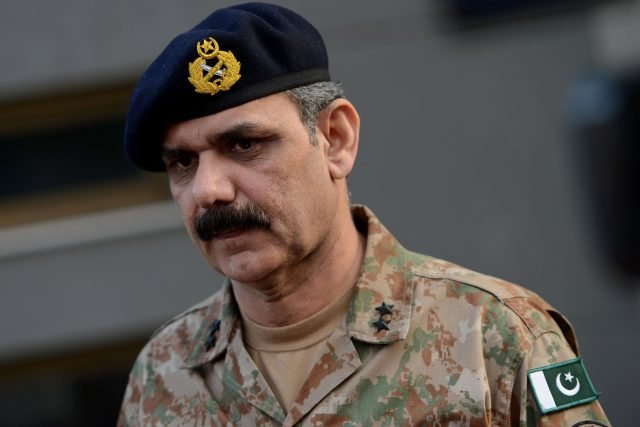
    Pakistan’s stocks reversed gains on Monday as Prime Minister (PM) Imran Khan’s Special Assistant on Information (SAPM) Lt Gen (r) Asim Saleem Bajwa resigned ahead of protests planned by opposition parties, raising concerns of increased political uncertainty, foreign media reported.

    “Imran Khan approved my request to relinquish the additional post,” Asim Bajwa tweeted Monday.

    The resignation of Imran’s key spokesperson comes amid increasing challenges to his about two-year-old government as he struggles to contain inflation and revive the country’s economy. Meanwhile, an alliance of 11 opposition parties is planning on holding its first protest rally this week, which is the start of a series of such meetings aimed at ousting Imran Khan.

    The benchmark KSE-100 index closed down 1.4%, reversing earlier gains of as much as 0.6%. The stocks have advanced 48% since touching this year’s low on March 25. “The investors are being cautious and booking profits after recent events including Bajwa’s resignation and the opposition’s planned protest add to the uncertainty,” said Qasim Shah, head of international sales at JS Global Capital Ltd in Karachi.

    The premier had turned down Bajwa’s earlier request to resign.

  • ‘IMF putting Pakistan on path of stability’ says Dr. Reza Baqir

    ‘IMF putting Pakistan on path of stability’ says Dr. Reza Baqir

    Dr Reza Baqir, the governor of State Bank of Pakistan (SBP) has said that the International Monetary Fund (IMF) is the government’s partner in reforming the country’s current economic system, Pakistan Today reported.

    In a briefing of the Public Accounts Committee (PAC) on Tuesday, chaired by Rana Tanvir Hussain, the SBP governor said that the relationship of Pakistan and the IMF was based on common interests.

    However, he assured the house that “inflation will go down and the general public will feel the relief.”

    Baqir says that the SBP’s monetary policy committee had decided to keep the policy rate unchanged at 13.25 per cent. “The monetary policy committee stance is appropriate to bring inflation down to the medium-term target range of 5-7pc over the next six to eight quarters.”

    Right now, reducing the interest rate would affect the people who have kept their savings in the banks. However, he admitted that higher interest rate created difficulties for the borrowers.

    “The national savings rate is already very low and if the people are discouraged, then the country will have to borrow the required money from international agencies, and that will raise our current account deficit,” he further added.

    “The main focus of the SBP is to maintain foreign exchange reserves in the country.”

    Baqir also noted that if the foreign reserves would grow, Pakistan would not have to approach international agencies for borrowing.

    The SBP governor said due to higher interest rates in the past, manufacturing had almost ended, but after reforms carried out by the incumbent government, manufacturing activities were once again on the rise despite higher policy rates.

    “The present government did not take loans from the SBP due to which inflation is now being controlled. However, the state bank, at the same time, is making efforts to restore the confidence of foreign and local investors.”

  • PM announces buffaloes, cows and goats for women

    PM announces buffaloes, cows and goats for women

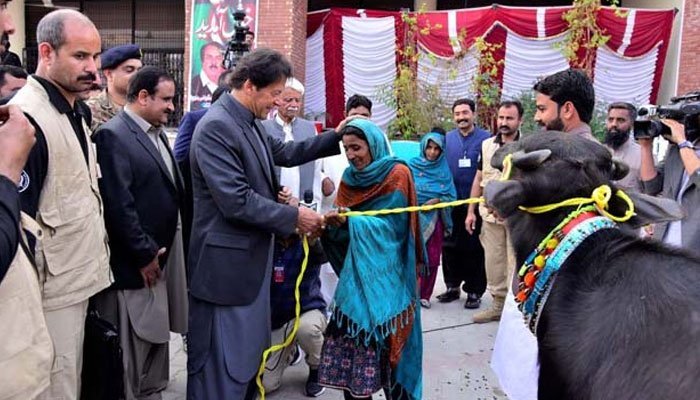
    Prime Minister (PM) Imran Khan has announced to empower women through the allocation of domestic animals to them, so that they can support their families and earn a livelihood, The News reported.

    Addressing the Ehsaas Amdan (income) programme launching ceremony in Layyah on Friday, the premier said the government had decided that women will be given one cow, one buffalo and three goats, so that they could run their households.

    Addressing the gathering, he said the government had launched the programme — which he described as “the first of its kind” in Pakistan — to alleviate the sufferings of the poorest members of society. Soon people will get more good news about their wellbeing and country’s prosperity, PM Imran added.

    The premier assured the nation that Pakistan’s difficult time was over now, and the country had been put on the right track. He said the Pakistan Tehreek-e-Insaf (PTI) government was making efforts for its vision of formation of an Islamic welfare state on the patron of the state of Medina.

    The PM said the government was working on different projects to establish an Islamic welfare state. He said neither he was afraid of death nor defeat, and believed in making his best efforts to leave the matter to Allah, whose all decisions would be acceptable to him.