Tag: pakistan economy

  • Overseas workers’ remittances surge to $3 billion in March

    Overseas workers’ remittances surge to $3 billion in March

    In March 2024, Pakistan witnessed a significant surge in the influx of overseas workers’ remittances, reaching a notable milestone of $3 billion.

    This remarkable figure reflects a remarkable 31.3 per cent increase on a month-on-month basis compared to February 2024, when the remittances stood at $2.25 billion.

    The latest data released by the State Bank of Pakistan (SBP) unveiled this positive trend, highlighting the pivotal role remittances play in Pakistan’s economic landscape.

    Year-on-year comparisons also underscored the upward trajectory, with a 16.4 per cent increase noted in March 2024 compared to the same month in the previous year, when remittances amounted to $2.54 billion.

    Such consistent growth in remittances holds significance beyond mere monetary figures, as these funds contribute substantially to bolstering the country’s external account and fueling economic activity.

    Moreover, they serve as a crucial supplement to the disposable incomes of remittance-dependent households, enhancing their financial resilience.

    In a broader fiscal context, the first nine months of Fiscal Year 2024 witnessed a steady rise in workers’ remittances, totaling $21.0 billion.

    This marks a modest 0.9 per cent increase compared to the corresponding period in the previous fiscal year, where remittances amounted to $20.8 billion.

    Such stability and growth in remittances underscore the resilience of Pakistan’s overseas workforce and their commitment to supporting their families and homeland.

    Breaking down the sources of these remittances, Overseas Pakistanis in Saudi Arabia emerged as leading contributors, with remittances totaling $703.1 million in March 2024.

    This represents a substantial 30 per cent increase compared to the previous month and a noteworthy 24 per cent increase year-on-year.

    Similarly, remittances from the United Arab Emirates (UAE) witnessed a remarkable surge, jumping by 43 per cent on a monthly basis to reach $548 million in March, reflecting a 34 per cent increase compared to the same period last year.

    The United Kingdom also played a significant role in this surge, with remittances soaring to $462 million in March 2024, marking a notable 33 per cent increase compared to February 2024.

    Meanwhile, remittances from the European Union exhibited a robust 19 per cent monthly growth and a 6 per cent year-on-year improvement, amounting to $315 million in March 2024.

    Overseas Pakistanis in the United States also contributed significantly, send`ing $373 million in March 2024, reflecting an 18 per cent increase compared to the previous year and a substantial 30 per cent increase month-on-month.

  • IMF engagement should not hinder Pakistan’s economic progress: PM Shehbaz

    IMF engagement should not hinder Pakistan’s economic progress: PM Shehbaz

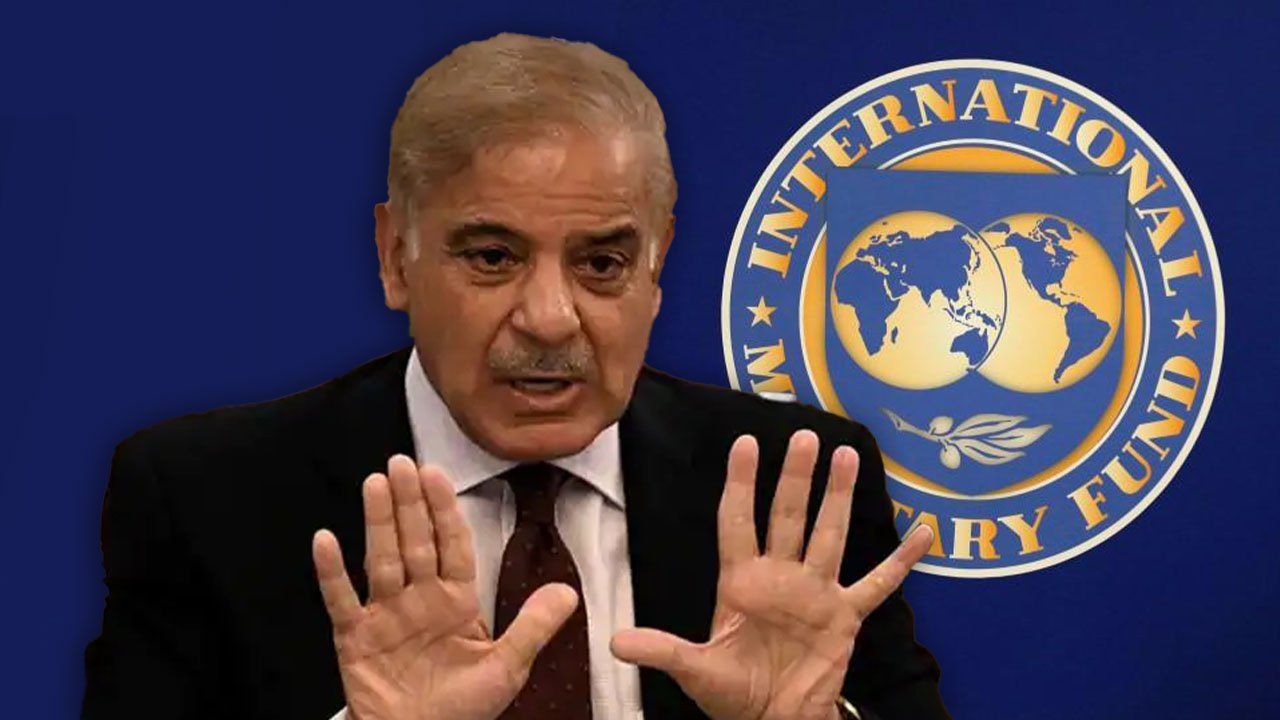
    Prime Minister (PM) Shehbaz Sharif asserted on Tuesday that any forthcoming engagement with the International Monetary Fund (IMF) must not impede Pakistan’s economic progress.

    His remarks come in the wake of discussions regarding a potential Extended Fund Facility (EFF) with the IMF, scheduled for deliberation in Washington next month, as the nation grapples with mitigating a looming economic crisis.

    With the expiration of the standby $3 billion arrangement with the IMF looming on April 11, recent negotiations have culminated in a staff-level agreement, paving the way for the disbursal of the final tranche of $1.1 billion.

    PM Shehbaz, following his re-inauguration, promptly directed his financial team to initiate efforts towards securing an EFF from the IMF.

    Speaking at a ceremony in Islamabad, the Prime Minister underscored the indispensability of another IMF programme while highlighting the imperative of simultaneously pursuing economic expansion.

    He highlighted key areas such as agriculture, IT exports, and both traditional and non-traditional exports as avenues for growth, questioning any limitations posed by an IMF programme on such initiatives.

    “If there is an IMF programme, who has stopped you from doubling agriculture output? from increasing IT exports? from increasing traditional and non-traditional exports?” PM Shehbaz posited, stressing the compatibility of economic growth initiatives with an IMF programme.

    He cautioned against using the IMF as an excuse for stagnation, urging prioritisation of domestically controllable economic avenues.

    In reiterating his stance, Prime Minister Shehbaz Sharif conveys a dual commitment to engaging with the IMF while ensuring a steadfast focus on bolstering Pakistan’s economic trajectory, fostering employment, and curbing inflation.

    As the nation navigates through economic challenges, the Prime Minister’s emphasis on proactive economic strategies resonates as a call to action for sustainable growth and resilience.

  • Gold prices reverse previous day’s gains with Rs4,200 per tola drop

    Gold prices reverse previous day’s gains with Rs4,200 per tola drop

    Gold prices experienced a downturn in the domestic market on Friday, aligning with the global trend.

    The price of 24-karat gold dropped by Rs4,200 to reach Rs228,200 per tola, reflecting fluctuations in international gold prices.

    Notably, the previous day saw a significant increase of Rs4,600 per tola in gold prices in Pakistan.

    According to the Karachi Sarafa Association, the price of 24-karat gold per 10 grammes fell to Rs195,645, marking a decrease of Rs3,600.

    Similarly, the price of 22-karat gold also saw a decline, reaching Rs179,341 per 10 grammes.

    In addition to gold, silver prices also saw a decrease. 24-karat silver was sold at Rs2,580 per tola and Rs2,211.93 per 10 grammes, indicating a decrease of Rs20 per tola and Rs17.15 per 10 grammes, respectively.

    Internationally, spot gold prices retreated after reaching a milestone of over $2,200 an ounce for the first time.

    This drop followed the Federal Reserve’s indication of maintaining its trajectory for three interest-rate cuts this year. Spot gold traded near $2,166.81, showing a decrease of $14.65 or 0.68 per cent for the day.

    The correction in gold prices was influenced by the strengthening of the dollar, which rose by 0.8 per cent after hitting a one-week low.

  • Pakistan’s forex reserves surge to $8.02 billion, SBP data shows

    Pakistan’s forex reserves surge to $8.02 billion, SBP data shows

    The latest data released on Thursday revealed a noteworthy surge in the foreign exchange reserves held by the State Bank of Pakistan (SBP), marking an increase of $105 million over the course of a week, reaching a total of $8.02 billion as of March 15.

    In addition to the SBP’s reserves, the total liquid foreign reserves for the country now stand at $13.4 billion, with commercial banks accounting for $5.38 billion of this amount.

    Despite the significant boost, the central bank did not provide specific details regarding the reason behind this increase.

    However, it did report that during the week ending on March 15, SBP’s reserves climbed by $105 million to reach $8,017.9 million, indicating a positive trend.

    The previous week had also witnessed an increase in Pakistan’s central bank reserves, albeit a smaller one, amounting to $17 million.

    In a pivotal development, Pakistani authorities successfully concluded negotiations with the International Monetary Fund (IMF) on the second and final review of the $3 billion Stand-By Arrangement (SBA).

    As per the agreement reached, pending approval by the IMF’s Executive Board, an additional access of $1.1 billion under the SBA will become available.

    This anticipated inflow from the IMF is expected to further bolster the country’s reserves and serve as a promising sign for its struggling economy.

  • SBP sees surge of over $17 million in forex reserves

    SBP sees surge of over $17 million in forex reserves

    The latest data released by the State Bank of Pakistan (SBP) revealed a notable rise in the country’s foreign exchange reserves. During the week ending March 8, 2024, SBP’s reserves increased by $17.2 million, marking a 0.22 per cent growth, reaching a total of $7.91 billion.

    Additionally, Pakistan’s overall reserves experienced a surge, ascending by $131.3 million, or 1.01 per cent, week-on-week (WoW), to a sum of $13.15 billion. This increase was further complemented by a rise in reserves held by commercial banks, which climbed by $114.1 million, or 2.23 per cent, to reach $5.24 billion.

    In a significant development, the second review of the stand-by arrangement (SBA) with the International Monetary Fund (IMF) is slated to take place from March 14 to 18, 2024. This review holds particular importance as it marks the final assessment under the SBA. Upon reaching a staff-level agreement, the final tranche of $1.1 billion will be disbursed, subject to approval by the Executive Board of the IMF.

    It is noteworthy that in the current fiscal year, Pakistan has witnessed a substantial increase in its total liquid foreign reserves, amounting to $3.99 billion, or 43.57 per cent. Similarly, the ongoing calendar year has seen a rise of $0.48 billion, or 3.77 per cent.

  • IMF mission to arrive tomorrow for final review discussions on Pakistan’s SBA

    IMF mission to arrive tomorrow for final review discussions on Pakistan’s SBA

    The International Monetary Fund (IMF) mission is poised to commence vital economic review discussions from March 14 to 18, 2024, marking the conclusive evaluation of Pakistan’s Standby Arrangement (SBA).

    Sources within the Finance Ministry have confirmed that the IMF mission is scheduled to touch down in Pakistan tomorrow night, kickstarting a series of pivotal discussions set to unfold over the next four days.

    During this intensive period, the IMF mission is slated to engage in comprehensive dialogue with Pakistan’s economic team. Key participants include representatives from the Finance Ministry, Energy Ministry, Federal Board of Revenue (FBR), State Bank of Pakistan (SBP), Planning Commission, and the Petroleum Division.

    Insiders suggest that the IMF mission will delve into discussions covering a spectrum of economic facets. Talks are expected to encompass various critical sectors, including finance, energy, taxation, and central banking.

    Furthermore, in parallel with these discussions, preliminary conversations are anticipated to unfold regarding the potential initiation of a new loan programme with the IMF mission. This prospect adds an extra layer of significance to the ongoing economic deliberations as Pakistan navigates its financial landscape in the pursuit of sustainable economic growth.

    Stay tuned for comprehensive coverage as the IMF mission engages in the final review of Pakistan’s Standby Arrangement, paving the way for crucial decisions that could shape the nation’s economic trajectory in the coming months.

  • Pakistan gears up for crucial IMF talks on $3 billion SBA programme

    Pakistan gears up for crucial IMF talks on $3 billion SBA programme

    Pakistan is set to commence vital discussions with the International Monetary Fund (IMF) concerning the completion of the second review under the $3 billion Standby Arrangement (SBA) programme.

    The formal invitation to the Washington-based lender is expected to be dispatched shortly after the formation and oath-taking of the federal cabinet, with negotiations anticipated to commence in the coming week.

    Simultaneously, Pakistan plans to request a new deal under the 36-month Extended Fund Facility (EFF).

    Sources have indicated that the size of the upcoming EFF programme is yet to be finalized, but Islamabad aims to explore the inclusion of climate finance to potentially increase the programme’s magnitude from $6 billion to $8 billion.

    A significant challenge facing the incoming finance minister is the pursuit of the Federal Board of Revenue’s (FBR) tax collection target of Rs890 billion for March 2024. Failure to meet this quarterly (Jan-March) target with the IMF may prompt additional taxation measures for the remaining fiscal year.

    Prime Minister Shehbaz Sharif chaired a high-level meeting on Tuesday to receive a comprehensive briefing from the FBR team on the future strategy for revamping the taxation system.

    The FBR has, to date, collected Rs5.82 trillion in the first eight months of the current fiscal year, experiencing a shortfall of Rs33 billion in achieving the February 2024 monthly target.

    To meet the targeted Rs9.415 trillion by June 30, 2024, the FBR must collect Rs3.58 trillion in the remaining four months (March-June) period.

    March 2024 holds particular significance, with the monthly target of Rs890 billion crucial for fulfilling the agreed third-quarter (Jan-March) period with the IMF.

    PM Shehbaz emphasized the immediate commencement of automation and digitization of the FBR, personally committing to monitor the entire process.

    According to The News, he urged the adoption of international best practices to enhance transparency, increase tax collection, and eradicate tax evasion, corruption, and smuggling.

    Expressing dissatisfaction with the current progress, PM Shehbaz directed the FBR to start the automation and digitization process immediately, urging the acquisition of services from international firms. He stressed the appointment of officers based on merit in the Track and Trace system.

    During the meeting, FBR Chairman Malik Amjad Tiwana briefed the prime minister on measures taken towards automation, tax net expansion, refund payments to exporters, and anti-smuggling efforts.

    PM Shehbaz, however, insisted on immediate progress, highlighting the collaboration with the Ministry of Interior and the Pakistan Army to combat smuggling effectively.

    As the meeting concluded, PM Shehbaz praised the efforts of caretaker finance minister Dr. Shamshad Akhtar and her team, commending their adherence to the policies laid by the previous government to avert default.

    The prime minister expressed confidence in achieving progress and prosperity through diligent efforts and adherence to the right direction.

    The meeting, attended by key officials, emphasized the urgency of digitalized invoicing and the inclusion of 1.5 million more individuals into the tax net, underlining the government’s commitment to fostering economic stability and growth.

  • SBP reports marginal dip in bank deposits

    SBP reports marginal dip in bank deposits

    In January 2024, the total deposits held by scheduled banks in Pakistan experienced a robust year-on-year growth of 21.03 per cent, reaching Rs27.54 trillion.

    This marks a substantial increase from Rs22.75 trillion recorded in January 2023, as revealed by data released by the State Bank of Pakistan (SBP).

    However, on a month-on-month basis, there was a slight dip of 1.08 per cent in bank deposits compared to December 2024, where the total stood at Rs27.84 trillion.

    The data further highlights a positive trend in total advances, which saw a year-on-year increase of 3.74 per cent, reaching Rs12.09 trillion compared to Rs11.66 trillion in the same period last year.

     Conversely, on a monthly basis, advances experienced a marginal decline of 2.08 per cent from their December 2024 value of Rs12.35 trillion.

    The Advances to Deposit Ratio (ADR) exhibited a decrease, standing at 43.92 per cent, indicating a 732 basis points decline on a yearly basis and a 45 basis points decrease on a monthly basis.

    In terms of investments, scheduled banks in Pakistan reported total investments of Rs25.6 trillion in January 2024, reflecting a substantial year-on-year increase of 32.71 per cent from Rs19.29 trillion in January 2023.

    Additionally, there was a month-on-month increase of 1.28 per cent from the Rs25.28 trillion recorded in December 2024.

    The Investment to Deposit Ratio (IDR) witnessed a notable rise of 818 basis points, reaching 92.97 per cent, compared to the figures from January 2023. On a monthly basis, IDR increased by 216 basis points.

    These statistics indicate a significant positive shift in the financial landscape of Pakistan’s banking sector, with notable expansions in both deposits and investments.

  • Factors behind the continuous decline in car financing in Pakistan

    Factors behind the continuous decline in car financing in Pakistan

    In January 2024, the automobile financing sector in Pakistan witnessed a significant downturn, as car financing recorded a notable decrease to Rs246.26 billion.

    This marks a 25.82 per cent year-on-year (YoY) decrease and a 1.98 per cent month-on-month (MoM) decrease compared to Rs331.98 billion in January 2023 and Rs251.25 billion in December 2023, respectively. The latest data from the central bank provides these insights.

    This decline in automobile financing extends to the nineteenth consecutive month, with a total decrease of Rs114.29 billion over the past 19 months.

    Several factors contribute to this decline, including higher interest rates, increased car prices, regulatory restrictions on acquiring loans, and elevated taxes on the import of automobiles and their parts.

    According to the State Bank of Pakistan (SBP) data, consumer financing for house building amounted to Rs207.62 billion by the end of January 2024.

    This reflects a 3.44 per cent YoY decrease compared to Rs215 billion in the same month last year. Looking at monthly changes, financing for house building saw a marginal 0.26 per cent MoM decrease compared to the previous month’s Rs208.15 billion.

    Financing for personal use stood at Rs243.1 billion, showing a 4.47 per cent YoY decrease and a 0.54 per cent MoM decrease.

    Consequently, the overall credit disbursed to consumers declined to Rs813.96 billion during the review month, registering a fall of 9.04 per cent YoY and 0.52 per cent MoM.

    The outstanding credit to the private sector also experienced a decline, decreasing by 0.76 per cent YoY to Rs8.35 trillion in January 2024. On a monthly basis, this represents a 2.21 per cent decrease compared to the credit of Rs8.54 trillion in December 2023.

    Analysing credit distribution to the private sector, loans to the manufacturing sector amounted to Rs4.81 trillion in the review period, showing a slight 0.33 per cent YoY increase. However, on a monthly basis, there was an 0.89 per cent MoM decline, as December recorded loans to this sector at Rs4.85 trillion.

    Borrowing from the construction sector stood at Rs190.15 billion in January 2024, experiencing a 0.97 per cent YoY decrease and a 5.05 per cent MoM decrease compared to the previous month.

    Looking ahead, the data indicates that loans to the agriculture, forestry, and fishing sectors rose to Rs397.27 billion in the month under review, marking a significant 16.95 per cent YoY increase.

    However, on a sequential basis, loans to this sector recorded a fall of 4.82 per cent MoM.

  • 24 karat gold price surges by Rs800 per tola, silver takes a dip

    24 karat gold price surges by Rs800 per tola, silver takes a dip

    In a notable shift in the precious metals market, the per-tola price of 24 karat gold in Pakistan witnessed an increase of Rs800, reaching Rs213,200 on Saturday. This rise is compared to its previous sale at Rs212,400 on the last trading day.

    Similarly, the price of 10 grammes of 24 karat gold experienced an uptick, climbing by Rs686 to Rs182,785 from Rs182,099.  The All Sindh Sarafa Jewellers Association reported that the prices of 10 grammes of 22 karat gold also saw an increase, reaching Rs167,553 from Rs166,924.

    On the other hand, the price of per tola silver exhibited a decrease of Rs30, settling at Rs2,550. Simultaneously, the price of ten grammes of silver witnessed a decline of Rs25.72, reaching Rs2,186.21.

    Internationally, the price of gold ascended by $9, reaching $2,034 from $2,025, as reported by the Association. These fluctuations in the precious metals market reflect the dynamic nature of global economic conditions, influencing prices both domestically and internationally.