Tag: pakistan economy

  • Govt implements measures to control onion prices amidst rising inflation

    The interim federal government has reportedly chosen to implement restrictions on onion exports due to the persistent surge in prices, as revealed by sources on Sunday. 

    According to detailed information, the government has introduced advance payments to discourage onion exports and has established a minimum export price. 

    These measures are aimed at preventing an anticipated shortage of onions and curbing further increases in prices.

    In light of escalating inflation, Pakistan witnessed a short-term inflation spike of 43.16 per cent in the week ending December 14, primarily driven by increased costs of pulses, rice, and vegetables. 

    The weekly inflation has now surpassed 41 per cent for the fifth consecutive week, influenced by elevated gas prices and electricity tariffs compared to the previous year.

  • Pakistan repays $5.4 billion of $24.6 billion external debt

    Pakistan repays $5.4 billion of $24.6 billion external debt

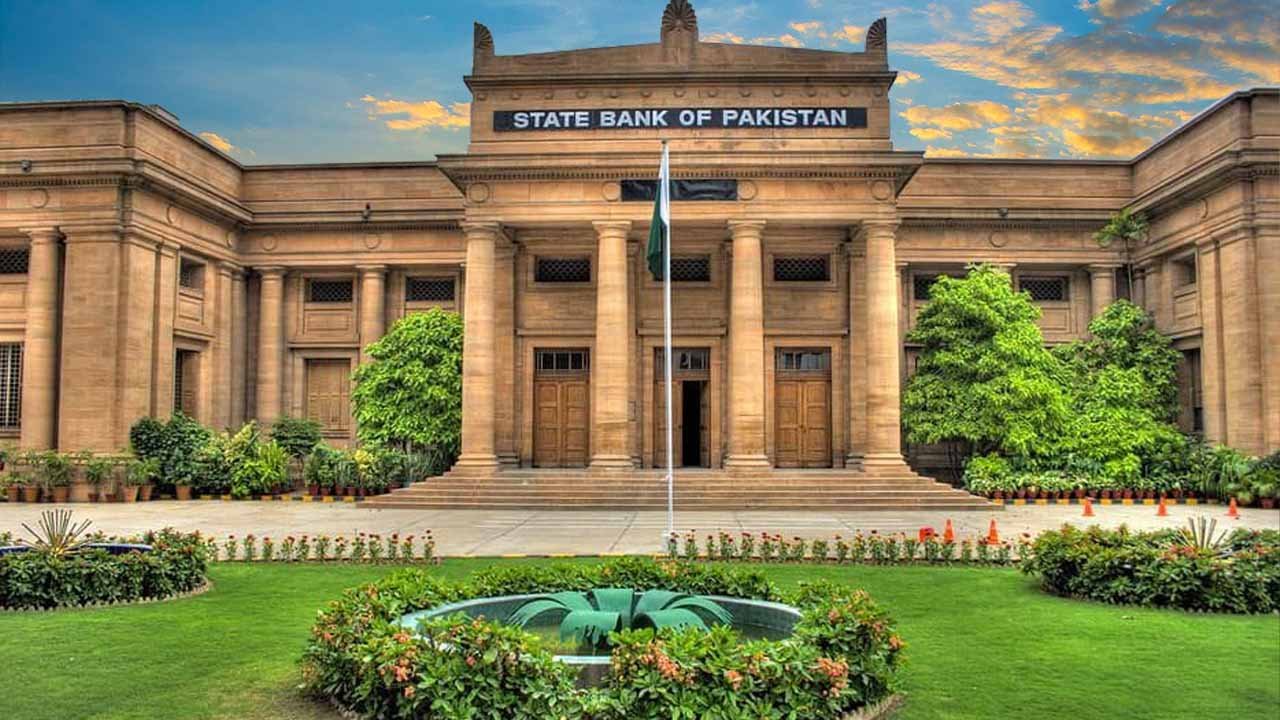
    The State Bank of Pakistan (SBP) governor revealed that Pakistan’s external debt obligations for Fiscal Year 2024 are $24.6 billion, as stated during the post-Monetary Policy Committee (MPC) meeting on Tuesday.

    Breaking down the figures, the principal amount is $20.7 billion, with an additional $3.9 billion accounting for interest.

    Notably, a total of $5.4 billion has already been repaid, encompassing a $4 billion principal payment and a $1.4 billion interest payment.

    As a result, the outstanding debt now stands at $19.2 billion, with plans to rollover $12.4 billion (with $9.3 billion already confirmed), according to the governor.

    This leaves a net remaining amount of $6.8 billion for the remaining seven months of the fiscal year. This comprises a $4.3 billion principal and a $2.5 billion interest payment.

    It’s crucial to note that the current foreign exchange reserves are relatively limited, standing at approximately $7 billion.

  • State Bank of Pakistan to announce monetary policy decision on December 12

    State Bank of Pakistan to announce monetary policy decision on December 12

    The State Bank of Pakistan (SBP) is set to unveil its monetary policy on Tuesday, December 12. A statement released by the central bank on Friday informed that the Monetary Policy Committee (MPC) of SBP will convene in Karachi on December 12 to deliberate on monetary policy. 

    Subsequently, the central bank will issue the official monetary policy statement. In its preceding meeting on October 30, the MPC judiciously opted to uphold the policy rate at 22%, citing global market volatility. 

    The committee underscored the imperative of persisting with a stringent monetary policy stance to mitigate inflation.

    PKR ends another week in green

    The Pakistani currency is experiencing an upward trend against the US dollar for the past several sessions, concluding the week in positive territory on Friday. 

    According to the SBP, the Pakistani rupee gained 0.09 per cent, closing at Rs283.87 against the US dollar.

  • Overseas workers’ remittances to Pakistan dip to $2.3 billion

    Overseas workers’ remittances to Pakistan dip to $2.3 billion

    In November 2023, overseas workers sent a total of $2.3 billion in remittances to Pakistan, reflecting an 8.6 per cent decrease from the $2.5 billion recorded in October 2023, as per data released by the State Bank of Pakistan (SBP). 

    However, on a yearly basis, there was a 3.6 per cent increase in the monthly inflow compared to the same month in the previous year.

    Remittances are a crucial element in supporting Pakistan’s external accounts and play a vital role in boosting the country’s economic activity while also supplementing the disposable incomes of households dependent on remittances.

    The recent rise in remittances was attributed to an improved exchange rate following a crackdown against currency smugglers and hoarders. 

    This crackdown resulted in a reduction of the rate gap between the open and interbank markets. However, despite this positive trend, remittances have observed a decline on a monthly basis again this November.

    In the first five months of the fiscal year 2024, remittances amounting to $11 billion have been recorded, in contrast to $12.3 billion in the same period of the previous year.

    Breaking down the remittances, it was noted that overseas Pakistanis in Saudi Arabia sent the highest amount in November 2023, totaling $540.3 million. 

    This amount represented a 12.5 per cent monthly decline but was 5.5 per cent higher than the remittances in the same month of the previous year. 

    Remittances from the United Arab Emirates (UAE) also declined on a monthly basis by 13.6 per cent, from $473.9 million in October to $409.4 million in November. 

    However, there was a yearly improvement of 7.6 per cent. Remittances from the United Kingdom increased by 3.5 per cent to $341.7 million compared to October 2023.

    Conversely, remittances from the European Union declined by nearly 10 per cent on a monthly basis, amounting to $268.3 million in November 2023. Overseas Pakistanis in the US sent $261.5 million in November 2023, experiencing a month-on-month decrease of 7.7 per cent.

  • IMF praises Pakistan’s economic progress and stability efforts 

    IMF praises Pakistan’s economic progress and stability efforts 

    The Executive Director at the International Monetary Fund (IMF), Bahador Bijani, acknowledged a positive trend in the economic landscape of Pakistan, highlighting the effective measures taken by the authorities. 

    The statement was made during an event hosted by Masood Khan, Pakistan’s Ambassador to the US, bringing together representatives from key international financial institutions (IFIs) such as the IMF, International Finance Corporation (IFC), World Bank, and Multilateral Investment Guarantee Agency (MIGA) at Pakistan House. 

    Expressing optimism, Bijani highlighted Pakistan’s significance regionally and globally, asserting that the nation merits enhanced prospects.  

    This observation coincides with Pakistan’s current status under a caretaker government while participating in an ongoing IMF programme. 

    Nathan Porter, IMF Mission Chief to Pakistan, addressed the assembly of over 40 IFI representatives, expressing contentment with the recently concluded staff-level agreement.  

    Porter praised the interim government’s actions and policies, underscoring their dedication to steering the country towards stability. He expressed the hope that this foundation would enable the pursuit of reforms for a more robust, prosperous, and inclusive Pakistan. 

    Porter further commended the State Bank of Pakistan (SBP) for its cooperative efforts and policies aimed at ensuring fiscal stability in the country.  

    Athanasios Arvanitis, Deputy Director of the Middle East and Central Asia Department at the IMF expressed optimism that the upcoming elections in February would bring about the necessary reforms for Pakistan’s progress. 

    Syed Ali Abbas, Advisor Mission Chief UK, European Department at the IMF, echoed similar sentiments, anticipating a more enduring approach following the successful completion of the electoral process. 

    Ambassador Masood Khan underscored the transformative impact of Pakistan’s economic digitization, emphasising the emergence of new opportunities for the youth and professionals in steering the nation towards a promising future. 

    Khan asserted that Pakistan, as a nation of talented individuals, has the potential for significant accomplishments.  

    The statement aligns with earlier commendations from Kristalina Georgieva, Managing Director of the IMF, who lauded the Pakistani government for its adept handling of economic stability and timely implementation of reforms earlier this month. 

  • IMF proposes solutions for streamlining Pakistan’s budget through digitisation 

    IMF proposes solutions for streamlining Pakistan’s budget through digitisation 

    The Caretaker Minister for Finance recently presided over the inaugural meeting with the International Monetary Fund (IMF) Technical Assistance Mission, focusing on the digitisation of the budgetary process.  

    The mission, led by Fazeer Rahim and Sybi Hida, senior economists from the Public Financial Management Division, along with IMF Resident Representative in Pakistan, Esther Pérez Ruiz, discussed strategies for enhancing the efficiency of the budget-making process through digitisation. 

    During the meeting, the minister highlighted the importance of tailoring the IMF’s recommendations to the specific needs of the ministry.  

    The goal is to streamline and improve the effectiveness of budgetary procedures through the integration of digital technologies. 

    The Technical Assistance Mission is committed to providing practical and implementable solutions tailored to the ministry’s requirements.  

    This collaborative effort seeks to modernise and optimise the budgetary framework, aligning it with contemporary digital practices. 

    In related developments, discussions have surfaced regarding Pakistan’s pursuit of another loan package from the IMF upon the completion of the ongoing standby agreement.  

    The caretaker government has initiated consultations for the forthcoming IMF programme, and sources indicate that talks with the IMF are likely to commence in the current month.  

    Finance ministry officials have clarified that the elected government will carry forward the measures initiated by the caretaker government.  

    It is anticipated that the newly elected government will be responsible for finalising and signing the IMF programme, assuming governance responsibilities. 

  • Gold price in Pakistan increases to Rs221,000 per tola

    Gold price in Pakistan increases to Rs221,000 per tola

    The per tola price of 24-karat gold in Pakistan witnessed a rise of Rs2,600, reaching Rs221,000 on Wednesday. This marks an increase from its previous sale at Rs218,400 on the last trading day.

    Similarly, the price of 10 grammes of 24-karat gold experienced an uptick of Rs2,229, settling at Rs189,472 compared to the previous Rs187,243.

    Meanwhile, the cost of 10 grammes of 22-karat gold rose to Rs173,683 from Rs171,640, according to the All Sindh Sarafa Jewellers Association.

    The prices for both per tola and ten-gramme silver remained unchanged at Rs2,620 and Rs2,246.21, respectively.

    In the international market, the price of gold increased by $29, reaching $2,062 from the previous $2,033, as reported by the Association.

  • SBP data reveals 23.5% YoY decline in auto loans

    SBP data reveals 23.5% YoY decline in auto loans

    In October, auto loans faced a decline for the 16th consecutive month due to high interest rates and inflation, as per data released by the State Bank of Pakistan (SBP).

    According to the SBP, auto loans witnessed a year-on-year drop of 23.5 per cent, amounting to Rs264 billion, and a month-on-month decrease of 3 per cent, down from Rs272 billion in September.

    While auto loans had peaked at Rs368 billion in June 2022, a subsequent decrease of Rs104 billion, or 28 per cent, occurred. This decline followed the SBP’s implementation of tighter monetary policies to address inflation and external imbalances.

    Financial analysts attribute this trend to the SBP’s measures, including elevated interest rates and the rupee’s significant depreciation against the dollar.

    These factors have led to increased costs in car financing and higher car prices, rendering them unaffordable for many consumers. The surge in inflation has further diminished consumer purchasing power.

    An analyst stated, “The auto sector bears the brunt of high interest rates and currency devaluation, rendering car financing and prices prohibitively expensive.”

    Despite recent price reductions by some car manufacturers, the anticipated boost in demand has not materialized. Consumers continue to grapple with high inflation and limited disposable income.

    Data from the Pakistan Automotive Manufacturers Association (PAMA) reveals a 44 per cent decline in car sales, totaling 27,163 units in the first four months of the current fiscal year, commencing in July.

    The SBP has aggressively increased its policy rate by a cumulative 15 percentage points to 22 per cent since September 2021, marking one of the world’s highest rates.

    Speculation suggests that the SBP will initiate a monetary policy easing in the first half of 2024, anticipating a relief in inflationary pressures and an improvement in foreign inflows to enhance the country’s external position.

    SBP data indicates a 0.8 per cent decrease in bank loans to the private sector, amounting to Rs8.10 trillion in October.

    Consumer loans, including an 8 per cent drop to Rs829 billion, witnessed personal loans declining by 4 per cent to Rs246 billion and housing loans falling by 2.7 per cent to Rs207 billion.

    Analysts predict an upswing in credit to the private sector in the coming months, as decreasing interest rates, fiscal consolidation, reducing crowding out, and improved foreign inflows are expected to alleviate liquidity constraints.

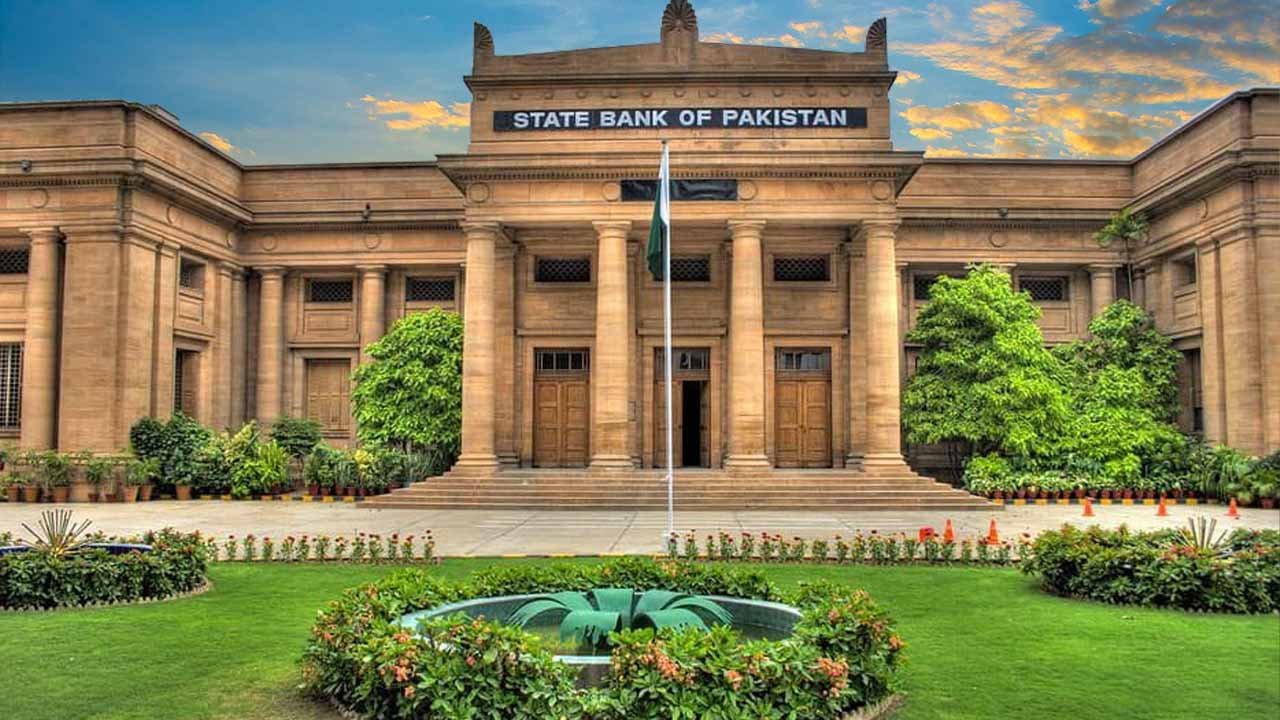
  • SBP reports second consecutive weekly decline in forex reserves

    SBP reports second consecutive weekly decline in forex reserves

    During the week ending on November 17, 2023, the State Bank of Pakistan (SBP) experienced a decline of $217 million in its foreign exchange reserves, settling at $7,180.0 million, as revealed by data released on Thursday.

    The total liquid foreign reserves for the country amounted to $12.3 billion, with commercial banks holding net foreign reserves of $5.1 billion.

    The central bank attributed this reduction in reserves to debt repayments. In a statement, the SBP explained, “During the week ended on November 17, 2023, the SBP’s reserves decreased by US$ 217 million to US$ 7,180.0 million due to debt repayments.”

    This marks the second consecutive week of a decline in the dollar stockpile, following a $115 million decrease in the previous week.

    It’s noteworthy that in July of this year, the central bank’s reserves received a significant boost as Pakistan received the initial tranche of approximately $1.2 billion from the International Monetary Fund (IMF).

    This followed the approval of a new $3 billion stand-by arrangement (SBA). Additional inflows were received from Saudi Arabia and the UAE.

    However, the SBP’s reserves have been facing pressures due to ongoing debt repayments, increased import payments following the relaxation of restrictions, and a lack of fresh inflows.

    In a positive development, the IMF announced last week that its staff and Pakistani authorities had reached an agreement on the first review of the SBA.
    The staff-level agreement is pending approval by the IMF Executive Board.

    The IMF stated, “The IMF team has reached a staff-level agreement (SLA) with the Pakistani authorities on the first review of their stabilisation programme supported by the IMF’s US$3 billion (SDR2,250 million) SBA.”

    Upon approval, approximately US$700 million (SDR 528 million) will become available, bringing the total disbursements under the programme to nearly US$1.9 billion.

    Caretaker Finance Minister Dr Shamshad Akhtar, speaking to the media after the SLA with the IMF, expressed confidence that external financing would not be an issue, anticipating increased inflows in December 2023, which would contribute to boosting the foreign exchange reserves.

  • IMF recommends gas price hike, subsidy cuts for Pakistan

    IMF recommends gas price hike, subsidy cuts for Pakistan

    The International Monetary Fund (IMF) has reportedly urged Pakistan to address the growing concerns surrounding the power sector’s circular debt, which now stands at 4 per cent of the gross domestic product (GDP).

    Despite initial targets for debt reduction not being met, the IMF has not yet made a final decision on its recommendations.

    Sources suggest that the IMF is advocating for an additional hike in gas prices and a reduction in energy sector subsidies, aligning with its persistent calls for such measures.

    It’s noteworthy that no official decision has been reached on these proposals. Simultaneously, Pakistan and the IMF have collaborated on a comprehensive privatisation plan, focusing on state-owned entities (SOEs) that have incurred significant losses.

    This strategic move aims to address the financial challenges faced by these institutions. The Central Monitoring Unit will meticulously evaluate the extent of losses, with findings submitted to the IMF.

    A crucial aspect of the privatization plan involves transferring control of power distribution companies to the private sector. This shift is expected to mitigate losses and improve efficiency in the power sector, aligning with the IMF’s overarching demand for comprehensive reforms in the energy sector.