Tag: Pakistan inflation

  • State Bank cuts policy rate by 200 bps to 17.5%

    State Bank cuts policy rate by 200 bps to 17.5%

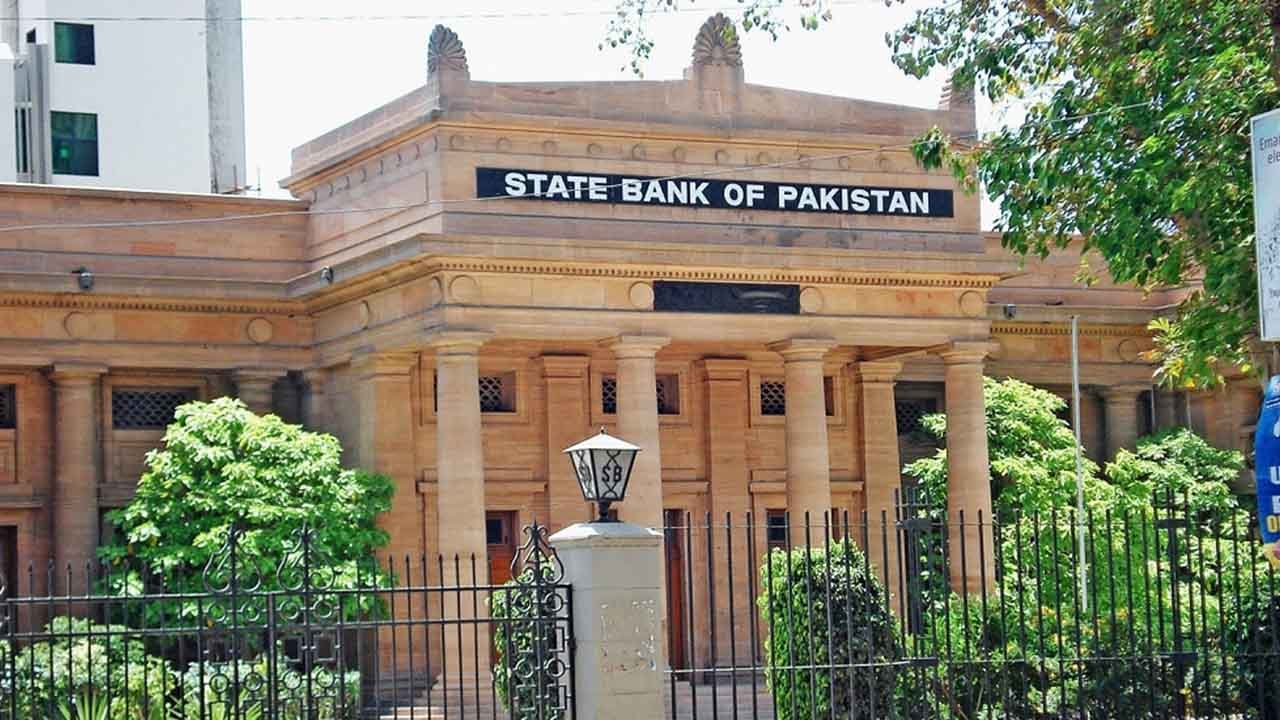
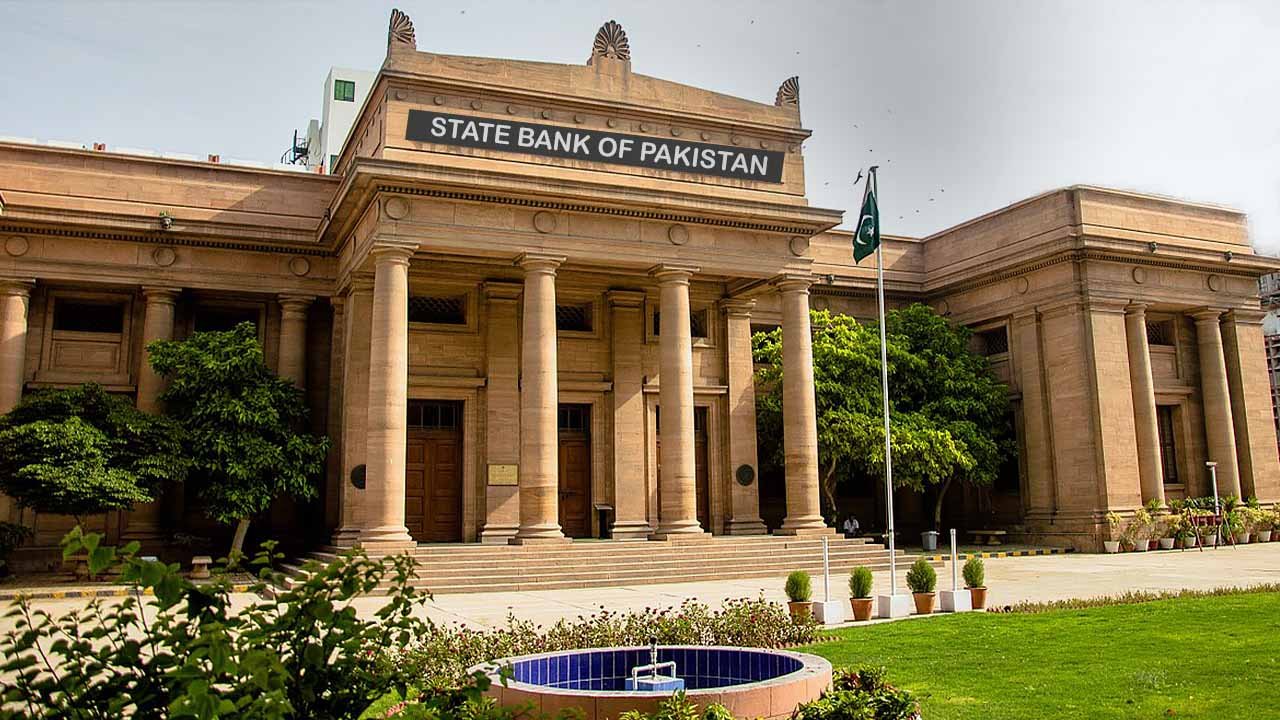
    The State Bank of Pakistan (SBP) has reduced the interest rate by 200 basis points, bringing it down to 17.5 per cent.

    The decision regarding reduction in policy rate was made after the inflation rate slowed in the country.

    The Monetary Policy Committee (MPC) observed that the continued ease in inflationary pressures and the policy rate cuts will support the growth in Pakistan’s key sectors.

    Interestingly, this marks the third consecutive reduction in key policy rate, followed by a 150 bps cut in June and another 100 bps reduction in July.

    “At its meeting today, the MPC decided to cut the policy rate by 200bps to 17.5 per cent, effective from September 13, 2024,” the central bank said in a statement.

    “Both headline and core inflation fell sharply over the past two months. The pace of this disinflation has somewhat exceeded the MPC’s earlier expectations, mainly due to the delay in the implementation of planned increases in administered energy prices and favourable movement in global oil and food prices.”

    The MPC was of the view that the global macroeconomic environment has turned favourable amid the substantial softening of crude oil prices.

  • Analysts expect further 150 basis points cut in interest rate by SBP next week

    Analysts expect further 150 basis points cut in interest rate by SBP next week

    Analysts predict that the State Bank of Pakistan (SBP) is likely to maintain its dovish stance, potentially implementing a third consecutive reduction in its key policy rate, supported by slowing inflation and improved macroeconomic indicators.

    The SBP is set to announce its key policy rate on Thursday, September 12. In its previous two meetings, the central bank has cumulatively reduced the rate by 250 basis points.

    Brokerage firm Arif Habib Limited (AHL) anticipates a 150 basis point cut, which would lower the policy rate to 18 per cent, a level last observed in February 2023 when the rate fell to 17 per cent.

    According to Business Recorder, AHL’s report, based on a recent poll, reveals that 93 per cent of respondents expect a rate reduction, while 7 per cent foresee no change.

    In July, the central bank’s Monetary Policy Committee (MPC) had already cut the key policy rate by 100 basis points to 19.5 per cent. At that time, SBP Governor Jameel Ahmad noted a downward trend in inflation.

    August 2024 saw Pakistan’s headline inflation decrease to 9.6 per cent year-on-year, down from 11.1 per cent in July, according to data from the Pakistan Bureau of Statistics (PBS).

    This return to single-digit inflation for the first time in three years has resulted in a real interest rate of approximately 1,000 basis points, providing further room for a rate cut, AHL suggests.

    JS Global echoes this sentiment, predicting that the easing inflation supports the MPC’s case for another reduction in September, with a projected cut of 150 basis points, bringing the policy rate to 18 per cent.

    Topline Securities’ CEO, Mohammed Sohail, expects a rate cut between 100 and 200 basis points, while Abdullah Farhan, Head of Research at IGI Securities, foresees a reduction of 150 to 200 basis points, driven by the recent decline in inflation.

    Farhan also projects that inflation could rise to 13-14 per cent by year-end due to base effects, with the policy rate potentially declining to 16 per cent by December.

    Ismail Iqbal Securities also supports the view that real rates remain significantly positive, indicating potential for a further rate cut. The firm anticipates a 100 basis point reduction in the upcoming MPC meeting.

    Alongside the downward inflation trend, analysts note improvements in external indicators. The trade deficit narrowed slightly to $3.6 billion in the first two months of FY25. The current account deficit has significantly decreased to $162 million in July, largely due to a 48 per cent year-on-year increase in remittances, which has helped stabilise the Pakistani rupee against the US dollar.
  • Inflation eases to 9.6% in August, first single-digit rate since October 2021

    Inflation eases to 9.6% in August, first single-digit rate since October 2021

    Pakistan’s inflation rate dropped to 9.6 per cent in August 2024, a significant decrease from the 11.1 per cent recorded in July 2024, according to data from the Pakistan Bureau of Statistics (PBS).

    This marks the first time in three years that inflation has returned to single digits, with the last instance being in October 2021 when it stood at 9.2 per cent.

    On a month-to-month basis, the Consumer Price Index (CPI) saw a modest rise of 0.4 per cent in August 2024, compared to a 2.1 per cent increase in July 2024 and a 1.7 per cent rise in August 2023.

    This slowdown in monthly inflation aligns with the predictions of the Ministry of Finance, which had anticipated inflation to fall between 9.5 per cent and 10.5 per cent in its recent economic outlook.

    The Finance Ministry also suggested that if the current economic stability continues, inflation could drop further to between 9 per cent and 10 per cent by September 2024.

    This decline in inflation follows the State Bank of Pakistan’s (SBP) decision to reduce the key policy rate by 100 basis points to 19.5 per cent in July.

    The SBP had warned of potential inflation risks due to fiscal issues and sudden changes in energy prices, but the recent figures show a positive trend.

    Inflation has been a major issue for Pakistan, especially after hitting a record high of 38 per cent in May 2023. However, it has been steadily decreasing since then.

    The recent inflation data also matched projections from various financial institutions. JS Global, a brokerage firm, had predicted a 9.3 per cent inflation rate, noting that this would be the first time in three years that inflation dropped into single digits.

    They believe this trend could lead to further interest rate cuts, with the policy rate possibly dropping to 18 per cent in September 2024.

  • Pakistan’s yearly inflation rate falls to 11.1 per cent in July 2024

    Pakistan’s yearly inflation rate falls to 11.1 per cent in July 2024

    In July 2024, Pakistan’s Consumer Price Index (CPI)-based inflation decreased to 11.1 per cent year-on-year, down from 12.6 per cent in June 2024 and a substantial 28.3 per cent in July 2023, according to data from the Pakistan Bureau of Statistics (PBS).

    On a month-on-month basis, the CPI inflation rose by 2.1 per cent in July 2024, a significant increase from the 0.5 per cent recorded in June 2024 but a slower rise compared to the 3.5 per cent increase in July 2023.

    The data further reveals that urban CPI inflation climbed to 13.2 per cent year-on-year in July 2024, up from 14.9 per cent in June 2024 and down from 26.3 per cent in July 2023. Month-on-month, urban CPI inflation increased by 2.0 per cent, up from 0.6 per cent in the previous month but lower than the 3.6 per cent recorded in July 2023.

    For rural areas, CPI inflation rose by 8.1 per cent year-on-year in July 2024, compared to 9.3 per cent in June 2024 and 31.3 per cent in July 2023. On a month-on-month basis, rural CPI inflation increased by 2.2 per cent, a jump from 0.3 per cent in June 2024 but slightly lower than the 3.3 per cent rise in July 2023.

    The Sensitive Price Indicator (SPI) inflation saw a year-on-year increase of 15.7 per cent in July 2024, down from 16.6 per cent in June 2024 and 29.3 per cent in July 2023. Month-on-month, SPI inflation rose by 2.0 per cent, up from 1.3 per cent in June 2024 and slightly lower than the 2.8 per cent increase in July 2023.

    The Wholesale Price Index (WPI) inflation was recorded at 10.4 per cent year-on-year in July 2024, compared to 10.6 per cent in the previous month and 23.1 per cent in July 2023. On a month-on-month basis, WPI inflation rose by 2.3 per cent, up from 0.4 per cent in June 2024 and similar to the 2.5 per cent rise in July 2023.

  • Pakistan’s inflation eases with further decline expected in coming months

    Pakistan’s inflation eases with further decline expected in coming months

    Pakistan’s headline inflation is expected to range between 18.5 per cent and 19.5 per cent in April 2024, with further deceleration projected in the coming months.

    The Finance Division’s ‘Monthly Economic Update and Outlook’ attributes the downward trend to a favourable base effect, improved domestic supply chains, and administrative measures.

    In March, headline inflation stood at 20.7 per cent, down from 23.1 per cent in February. Despite this easing, the government faces challenges, such as rising crude oil prices on the international market, leading to increased domestic gasoline prices. To offset this, the government has lowered wheat flour prices and imposed stricter controls.

    The Finance Division notes moderate recovery during the first nine months of the fiscal year, with growth in agriculture, a decrease in inflationary pressures, and stability in external accounts. The large-scale manufacturing (LSM) sector also shows positive signs, thanks to improved agricultural output and export demand.

    However, the report acknowledges challenges in fiscal management due to rising expenditure pressures from higher markup payments. To maintain stability, fiscal consolidation is required.

    The State Bank of Pakistan’s Monetary Policy Committee (MPC) recently kept the key policy rate at 22 per cent, citing ongoing risks to inflation from global oil prices and anticipated budget measures. The MPC’s goal is to bring inflation down to 5-7 per cent by September 2025.

    Pakistan’s broader economic struggles include pressure on external accounts and low foreign exchange reserves.

    The International Monetary Fund’s (IMF) $3-billion Stand-By Arrangement (SBA) has provided some relief, but Pakistan is seeking a longer-term programme with the IMF for economic stability and growth.