Tag: Pakistan State Oil

  • Oil marketing companies in Pakistan report 26% increase in sales

    Oil marketing companies in Pakistan report 26% increase in sales

    The sales of oil marketing companies (OMCs) rose by 7 per cent year-on-year (YoY) in May 2024, reaching a nine-month high of 1.39 million tonnes (MTs), compared to 1.30 MTs in May 2023, according to data released by the Oil Companies Advisory Council (OCAC).

    On a month-on-month (MoM) basis, oil sales surged by 26 per cent from April 2024, where sales were recorded at 1.10 MTs.

    In the ongoing fiscal year (11MFY24), cumulative sales stood at 13.83 MTs, a 9 per cent decline from 15.26 MTs recorded during the same period in the previous fiscal year (11MFY23).

    In May 2024, sales of Motor Spirit (MS) and High-Speed Diesel (HSD) increased by 1 per cent and 18 per cent YoY, amounting to 0.61 MTs and 0.64 MTs, respectively. Conversely, sales of Furnace Oil (FO) dropped by 24 per cent YoY to 0.07 MTs.

    On a MoM basis, the sales of MS, HSD, and FO rose by 14 per cent, 37 per cent, and 131 per cent, respectively.

    Attock Petroleum Limited experienced the highest increase in total oil sales, reaching 0.14 MTs, a 14 per cent YoY growth. Shell Pakistan Limited (PSX: SHEL) followed with a 13 per cent YoY increase to 0.10 MTs. 

    Pakistan State Oil (PSO) recorded an 11 per cent rise, reaching 0.67 MTs. In contrast, Hascol Petroleum Limited (HACOL) saw a 39 per cent YoY decline to 0.04 MTs.

    Compared to the previous month, the sales of PSO, APL, SHEL, and HASCOL increased by 19 per cent, 42 per cent, 23 per cent, and 51 per cent MoM, respectively.

    In 11MFY24, all OMCs reported a decline in sales.

    In May 2024, PSO maintained its dominance in the OMC industry with a market share of 47.9 per cent. APL and SHEL held market shares of 10.1 per cent and 7.2 per cent, respectively, during the review period.
  • Tariff hike of Rs1.72 per unit approved for K-Electric consumers 

    Tariff hike of Rs1.72 per unit approved for K-Electric consumers 

    The Economic Coordination Committee (ECC) has granted approval for quarterly tariff adjustments of Rs1.72 per unit for K-Electric, alongside government guarantees of Rs100 billion for Pakistan State Oil (PSO) and a Rs20 billion credit facility for Punjab’s Green Cooperative Initiative. 

    The ECC session, presided over by Federal Minister for Finance Dr Shamshad Akhtar and attended by other federal ministers and senior officials, addressed various summaries submitted by ministries such as Interior, Maritime Affairs, Energy (Power Division), Energy (Petroleum Division), Poverty Alleviation and Social Safety, and Defence. 

    The decision to adjust the tariff for K-Electric was reached after careful consideration of a summary presented by the Ministry of Energy regarding “Uniform Quarterly Tariff Adjustments for K-Electric Consumers on a par with XWDISCOs 2nd and 3rd Quarterly FY 2023.” 

    Following in-depth discussions, the ECC concluded that the tariff rationalisation through adjustments for K-Electric, aligning with the uniform Quarterly Tariff Adjustment (QTA) guidelines already issued to NEPRA, will be applicable to the consumption of July, August, and September 2023.  

    According to The News, these adjustments are set to be recovered from K-Electric consumers in December 2023, January 2024, and February 2024, respectively. 

  • Govt expected to increase petrol price by up to Rs14 per litre for the next fortnight

    Govt expected to increase petrol price by up to Rs14 per litre for the next fortnight

    Petroleum prices are expected to jump by approximately Rs10-14 per litre for the upcoming two weeks. Credible industry sources suggest that the government may contemplate increasing the prices of petroleum products in response to the increasing oil prices in the global markets.

    If the government considers compensating for exchange rate losses, as opposed to the previous review where the authorities did not transfer the impact of rupee devaluation to the public, the hike in prices could increase to as much as Rs14 per litre.

    The ex-depot price of petrol in the country is currently Rs272 per litre, and according to the workings of the oil sector, it is expected to reach Rs286.77 per litre in the next review if the government passes on the impact of global oil prices and exchange rate losses. However, even if the government does not adjust for exchange losses, petrol prices are still likely to increase due to higher global oil prices. The anticipated increase in the price of petrol is based on the current rate of taxes, with the government levying an Rs50 per litre charge on petrol and zero general sales tax.

    The expected rise in petrol prices is based on the Rs5 per litre exchange loss adjustment of Pakistan State Oil (PSO), which the government did not include in the past to keep petrol prices low. The prices of petroleum products would have been higher following the massive depreciation of the rupee against the dollar in the last two and a half months when, under International Monetary Fund (IMF) conditions, the market-based exchange rate was allowed.

    On the other hand, the price of high-speed diesel (HSD) is expected to remain unchanged in the next review of prices, as the current ex-depot price of HSD is the same as the expected price for the next fortnightly period. The anticipated unchanged price of HSD is based on the Rs17.50 exchange loss adjustment of PSO, which was pending when the dollar price increased massively in the last few weeks. Sources suggest that if the government does not adjust for exchange rate losses, the diesel price may decrease by Rs15 per litre.

    The government raised the petroleum levy on HSD to Rs50 per litre under IMF conditions in the last review of prices and charged no GST on it. According to sources, while the oil sector’s workings reflect a rise in petrol prices and no change in HSD, it is up to the government to decide. In the current scenario, the government has no option but to increase the price of petrol, as its financial space is already squeezed. Additionally, the government is making desperate efforts to revive the IMF program to shore up forex reserves.

  • Pakistan moves closer to finalising oil deal with Russia as team arrives in Karachi

    Pakistan has taken a step forward in its efforts to secure a loan deal with Russia, as a delegation has arrived in Karachi to finalise a crude oil deal with Pakistan State Oil (PSO). However, the Energy Ministry has not yet revealed the payment method or the discount rate for the crude oil prices, keeping it confidential for now.

    Technical teams from the Operational Services Centre held talks with the PSO team last month, but progress was not made on the constitution of a Special Purpose Vehicle responsible for importing crude and making payments. The Russian delegation is now in Pakistan to finalise the government-to-government agreement, including the mode of payment. Pakistan wants to pay in rupee, while Russia is asking for payment in China’s Yuan or Ruble. Once the deal is done, Pakistan will place an order with Russia for crude oil purchase.

    According to sources, the Russian ship will arrive in mid-May, and the current Brent price in the international market is $85.16 per barrel, while Russian oil is available at $47-48 per barrel. The State Bank of Pakistan (SBP) is asking local banks to open letters of credit for importing Russian oil, but they are hesitant to do so mainly because of the G7 countries’ regulations of following the price cap of $60 per barrel or below it and making payments under Society for Worldwide Interbank Financial Telecommunications (SWIFT) arrangement.

    PSO has never imported crude oil before, and refineries have been importing crude under long-term agreements from ADNOC and Saudi Aramco. However, in the case of Russian crude, refineries will not be involved in the import, but it will be an SPV with representatives from PSO and PSC. Pakistan may get Russian crude price with a discount close to $50 per barrel, $10 per barrel below the cap price imposed by G7 countries on Russian oil in the wake of the war on Ukraine.

    One of the top officials in the coalition government suggests that the decision to import Russian crude under the government-to-government agreement at a 30 per cent discount may not provide the required relief as shipping and refining costs will erode the maximum discount. Additionally, Pakistan refineries will only be able to extract 10 per cent MS out of Ural crude and 50 per cent furnace oil.

    The government needs to conduct a commercial analysis to determine if importing Russian oil will benefit Pakistan’s economy and to what extent. Industrial sources suggest that the government should evaluate the economic benefits of importing Russian oil carefully.

  • National Refinery halts fuel supply to Pakistan State Oil over unpaid dues

    The National Refinery Limited (NRL) has decided to suspend the supply of fuel to Pakistan State Oil (PSO) due to the state-owned oil marketing company’s failure to make payments to the refinery.

    PSO has encountered a severe financial crisis, leading to outstanding payments owed to various sectors as a result of the supply of petroleum products.

    The amount owed to NRL by PSO is currently Rs3.469 billion. NRL has conveyed its decision to stop the supply of fuel to PSO in writing, according to a report by a national daily.

    Notably, PSO has recently stopped making payments to refineries, including those that supply diesel, gasoline, aviation fuel, furnace oil, and other petroleum products to the state-owned company.

    As per the company’s receivables, Sui Northern Gas Pipelines Limited (SNGPL) is the largest defaulter of PSO, with an outstanding amount of Rs492.102 billion as of March 8, 2023. In response, the Economic Coordination Committee of the cabinet has authorized a sovereign guarantee of Rs50 billion in favor of SNGPL for commercial borrowing on an immediate basis to meet PSO’s liquidity requirement.

    The power sector remains a significant source of difficulty for the state-owned oil marketing company, with outstanding payments of Rs178 billion, followed by Pakistan International Airlines (PIA) and the government of Pakistan, both of which owe PSO Rs92.5 billion. The total receivables, which have risen to Rs762.653 billion, include the most critical payment of Rs124.666 billion in late payment surcharge (LPS).

  • PSO reportedly planning to buy Telenor to expand its business beyond oil

    PSO reportedly planning to buy Telenor to expand its business beyond oil

    Pakistan State Oil (PSO) is reportedly conducting due diligence on the Pakistani operations of a Norwegian telecommunications operator, in response to Telenor’s plans to sell its Pakistani operations valued at around $1 billion. Pending regulatory approval, PSO has expressed interest in acquiring Telenor Pakistan and Easypaisa, following the completion of bidding documentation and due diligence.

    Easypaisa, a leading mobile wallet, mobile payments, and branchless banking services provider, boasts a significant customer base of nine million monthly active users. Launched in 2009 as a money transfer service through Unstructured Supplementary Service Data (USSD) channels, Easypaisa introduced a mobile app in 2016, offering a broad range of financial transactions. Telenor Microfinance Bank owns Easypaisa, and jointly, Telenor Group most recently launched a debit card on January 17, 2023.

    According to Mettis Global, Telenor Pakistan’s decision to exit the market stems from heavy taxation on the telecommunications industry and the policies of the Pakistani Telecommunication Authority (PTA), which have significantly reduced its revenues. Although Telenor Pakistan has faced operational losses for the past three years, there is no certainty that discussions regarding the sale of its Pakistani operations will result in a transaction.

    For PSO, the potential acquisition of Telenor’s operations in Pakistan aligns with its efforts to expand its business beyond traditional oil and gas. If successful, the acquisition could enable PSO to diversify its revenue streams and leverage Pakistan’s growing digital payments market.

  • Safe to fill up fuel tanks to the max in this heat?

    Safe to fill up fuel tanks to the max in this heat?

    Considering Pakistan’s scorching summer and rising petroleum prices, a claim has been made regarding how much fuel should be topped inside a vehicle.

    According to a viral image being attributed to Pakistan State Oil (PSO), motorists should not fill gasoline to the full capacity of the tank owing to rising temperatures since it may trigger an explosion in the tank. Drivers can fill half of their tank and leave the rest for air.

    Conversely, there has been no official word from the oil company in this regard; however, a similar image went viral years ago when PSO clarified that filling fuel tanks to their full capacity poses no harm to automobiles or passengers.

    The announcement came after a Whatsapp message went viral on the internet in 2018. In view of rising temperatures, the message falsely claimed that PSO had warned the public against filling gasoline tanks to full capacity.

    According to the statement from PSO, the auto-igniting temperature of gasoline is far higher than the peak summer temperatures in Pakistan. Filling a petrol tank to the maximum capacity poses no danger to the automobile or its occupants, and is considered fully safe and advantageous to the vehicle’s operation.

    Read more: CNG prices pushed to Rs140 per kg for sales tax collection

    Also, the idea that filling the vehicle’s gasoline tank to the full capacity will cause an explosion defies scientific logic.

    This is because the auto-ignition temperature for petrol is 495°F (257°C), which is the lowest temperature required to ignite a gas or vapour in air without the presence of a spark or flame. The highest recorded temperature on earth was 56.7°C (134°F), observed on July 10, 1913, at Greenland Ranch, Death Valley, California, USA.

  • Pakistan State Oil hires female employees

    Pakistan State Oil hires female employees

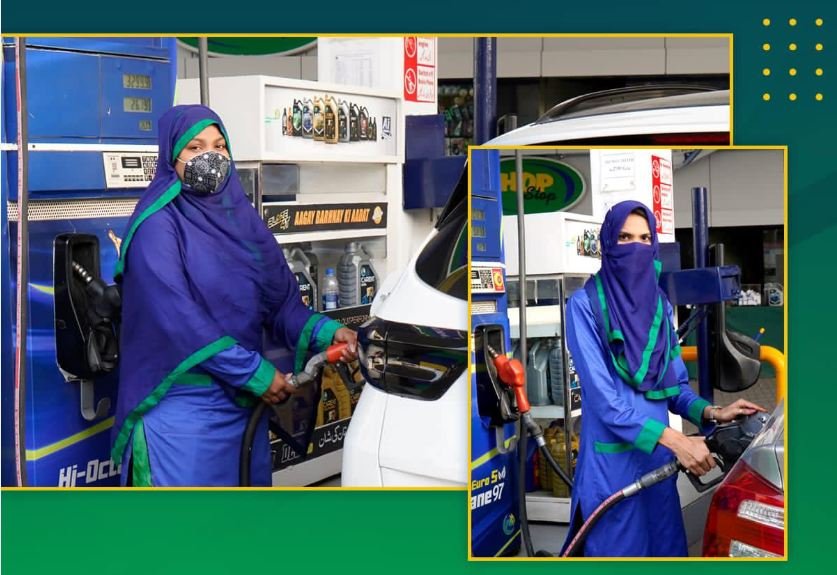
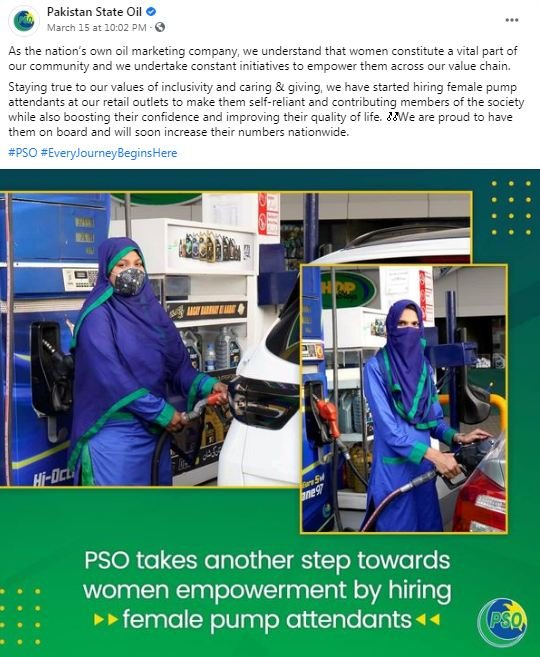
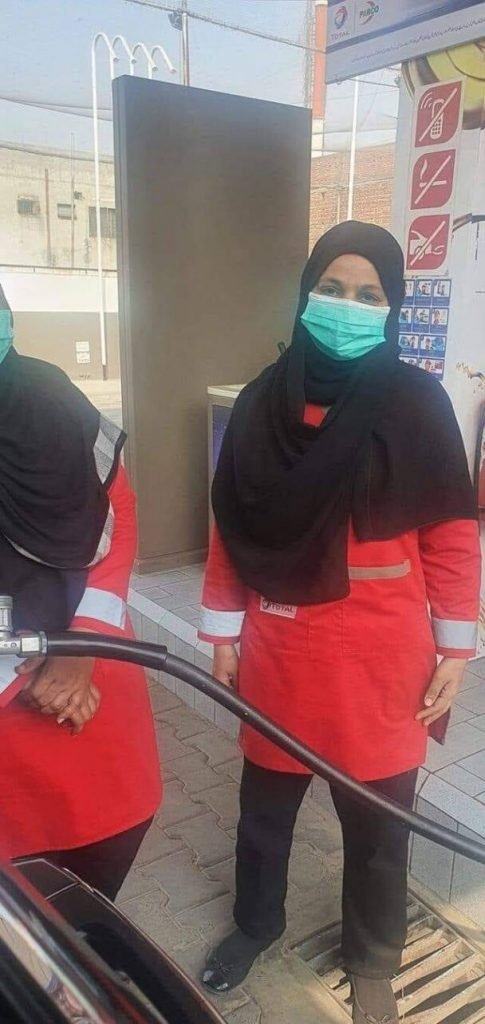
    To keep up with changing times, the Pakistan State Oil (PSO) has started hiring female filling station attendants. Sharing the news on Facebook, PSO highlighted the importance of workplace diversity.

    The Pakistani petroleum corporation shared pictures of the female employees on social media stating that the step aims to empower Pakistani women.

    “As the nation’s own oil marketing company, we understand that women constitute a vital part of our community and we undertake constant initiatives to empower them across our value chain,” said the company.

    PSO further said that they are “proud to have them on board” and that they plan to “increase their number”.

    Earlier, Total Parco had also taken the initiative of hiring female gas station attendants.