Pakistan Muslim League-Nawaz (PML-N) leader Attaullah Tarar warned the Pakistan Tehreek-e-Insaf (PTI) and Punjab government that “all of you” will be arrested if a single PML-N worker is sent behind bars.
Tarar, who was speaking to the media, warned Chief Minister (CM) Punjab Pervaiz Elahi’s government that they “will face the consequences of the trend of revenge they had set”.
“Pervaiz Elahi sahib, you and your son (Moonis Elahi) will face the consequences of this new trend that you have set,” warned Tarar, claiming that Moonis had been issuing instructions for action against PML-N leaders despite not having any official authority.
“Pervaiz Elahi and his Punjab government are being controlled through remote control from Bani Gala. This is his old habit. For God’s sake, stop this, the country has already borne much loss.”
He also linked the action against his party’s members to the “promotion of an anti-state narrative”, alluding to PTI leader Dr Shahbaz Gill’s remarks against institutions.
Tarar alleged that CM Elahi had “fully facilitated [former Prime Minister] Imran Khan in promoting this anti-state narrative”, adding that Elahi was “at the forefront of exacting revenge from us”.
He went on to claim that Elahi and Moonis had directed jail officials not to hand over Gill to Islamabad police even when the court had approved his remand in police custody.
Court issues arrest warrants for Ata Tarar, 11 other PML-N leaders
A judicial magistrate Friday, August 19, issued the arrest warrants for a dozen PML-N leaders, including prime minister’s special assistant Atta Tarar, in relation to a ruckus created at the Punjab Assembly.
A case was registered against the PML-N leaders over the ruckus which took place in April during the chief minister’s election — when Hamza Shehbaz was elected to the top office.
Interior Minister Rana Sanaullah tweeted on Tuesday that a “so-called political party” and its leader “who suffers from insanity” have started a campaign based on hate and malice. Rana advised everyone, especially Pakistan Muslim League-Nawaz (PML-N) supporters, that if any supporters of Pakistan Tehreek-e-Insaf (PTI) heckle them, they should make their videos from their mobile phones instead of responding to them.
“Make a video so that the hecklers can be identified and send it to Director FIA Cybercrime Wing through mail, or WhatsApp or tag FIA on social media after posting the video. Proper action will be taken against them, including blockage of passports and/or identity cards so that people’s right to freedom of movement under Article 15 is protected.”
Rana further added that if the hecklers start physical fights, the law permits self-defence.
ایک نام نہاد سیاسی جماعت اور پاگل پن کے شکار اسکے لیڈر کی طرف سے سیاسی نفرت، بغض، فتنہ اور فساد پر مبنی مہم جوئی اور اسکے پیشِ نظر حفاظتی اقدامات کی خاطر میں تمام پاکستانی شہریوں بلخصوص پاکستان مسلم لیگ (ن) کے احباب سے مخاطب ہوں۔ (1/5)
— Rana Sana Ullah Khan (@RanaSanaullahPK) July 12, 2022
In response to Rana Sana’s series of tweets, PTI leader Fawad Chaudhry said that Rana Sanaullah is a “scarecrow” who is being used by someone else.
Chaudhry said that Rana “has the support of someone else”, which is why he is using this type of language.
Rana Sana justified his tweets and stated: “Let me make it clear that as public representatives, politicians are accountable to people and there is absolutely no restriction on asking questions. But action will be taken if any politician is harassed in the name of freedom of speech.”
PTI Chairman Imran Khan addressed a rally in Lodhran on Tuesday where he justified the heckling of Planning Minister Ahsan Iqbal.
“You must have seen on social media that Ahsan Iqbal went to eat at McDonalds. He claims that Imran Khan has taught people to misbehave. O Ahsan Iqbal, you lying Aristotle. This is not misbehaviour, this is the truth: you’re a thief.”
یہ ویڈیو ان لوگوں کیلئے ہے جو کہتے ہیں کہ عمران خان اپنے فالوورز کو نہیں اکساتا pic.twitter.com/Dm5K35hICI
Last week, a pro-PTI family hurled ‘chor chor’ at Iqbal at a restaurant on the Motorway. The family later apologised to Iqbal for their misbehaviour and visited him at his residence in Narowal.
Interior Minister Rana Sanaullah while speaking on Geo News programme ‘Apas ki Baat’ said that the Pakistan Tehreek-e-Insaf (PTI) government itself had made an offer to them regarding the Financial Action Task Force (FATF) and National Accountability Bureau (NAB) amendments and had invited the Opposition for talks when PTI was in power.
Rana Sanaullah said that the PTI later used their suggestions in the media to attack them.
Sanaullah further said that the then Foreign Minister Shah Mahmood Qureshi called him and said that he wanted to talk to Rana separately.
“Give my salam to Mian Saab [Nawaz Sharif]. All the things you said were correct. We agree but that mad man [Imran Khan] doesn’t agree,” said Qureshi.
“Don’t speak in front of Shahzad Akbar. He is his [Imran Khan]’s agent and tells him everything,” Qureshi said to Sanaullah.
شاہ محمود نے مجھے کہا ایک طرف ہو کر میری بات سنیں باتیں تو آپ کی ساری ٹھیک ہیں لیکن وہ پاگل (عمران) نہیں مانتا
شہزاد اکبر کے سامنے بات مت کیا کریں یہ اس کا ایجنٹ ہے میں یہ باتیں شاہ محمود کے سامنے کہنے کو تیار ہوں رانا ثنااللہ pic.twitter.com/uXtyqv27nK
Anchorperson Muneed Farooq interjected and questioned if Qureshi really called former Prime Minister (PM) Imran Khan ‘pagal’, to which Sanaullah said, “I can say it on oath. Call him in front of me.”
Pakistan Tehreek-e-Insaf (PTI)’s ‘Haqiqi Azadi March’ cost the government Rs149 million to maintain law and order in the capital, reports Dawn.
The amount of Rs149 million was demanded to bear expenses for five days. Rs47,500,000 was sought for hiring 380 containers (each costing Rs125,000 for five days use), Rs1,300,000 for four cranes (each costing Rs65,000 for five days) and Rs1,000,000 for four fork lifters (each for Rs50,000 for five days).
Likewise, Rs2,798,500 for 100 buses for transportation of the force from outside to the capital (each costing Rs27,985), Rs9794,750 for 350 buses for transportation of the force within capital (Rs27985 each), Rs2,798,500 for 100 buses for transportation of the force back to their respective districts (Rs27,985 each), Rs1,685,000 for 100 trucks for logistics teams, food, water (for five days and each costing Rs16,850), Rs260,000 for 10 water tankers for five days (each costing Rs26,000).
Moreover, an amount of Rs41,250,000 was also demanded for food charges for 15,000 officials of the capital and other district police for five days, the officers said. To purchase complete anti-riot kits, another amount of Rs35,300,000 was demanded.
Similarly, Rs4,500,000 were sought for the purchase of miscellaneous items – water, coolers, torches, electricity, etc.
Prime Minister (PM) Shehbaz Sharif while speaking in the National Assembly praised the capital police, Rangers, Frontier Constabulary, and the traffic police along with the capital administration and other departments for their efforts to maintain law and order and for the protection of public and private property.
He also announced a package for a martyr and injured officials of the Punjab Police.
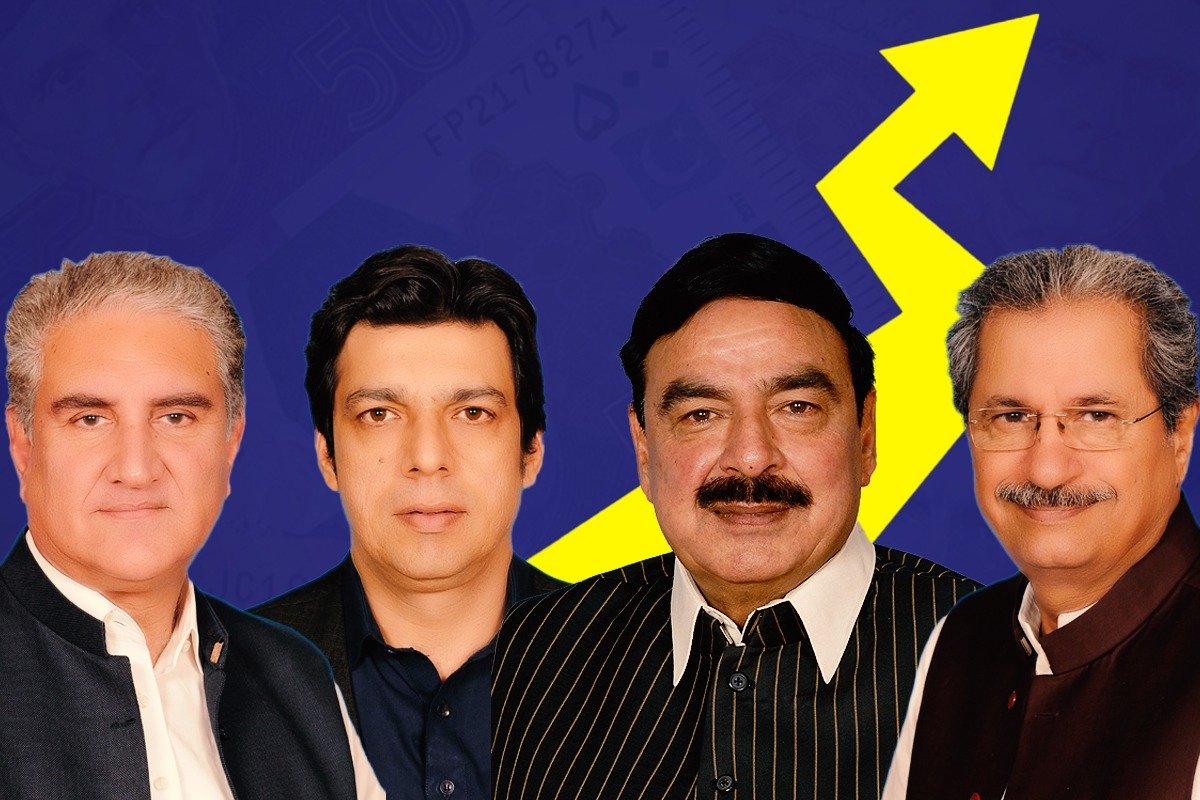
Official documents revealed that several members of Pakistan Tehreek-e-federal Insaf’s cabinet enjoyed gains in their fortunes during their term in parliament and as ministers, despite being elected on pledges of fighting corruption.
According toSAMAA TV, Shah Mehmood Qureshi and Sheikh Rasheed Ahmad, Omar Ayub Khan, Azam Khan Swati, Khusro Bakhtiar, Faisal Vawda, Shafqat Mehmood, Fehmida Mirza, Zubaida Jalal, Mahboob Sultan, and Tariq Cheema are among the listed former ministers.
Since select ministers received notices to explain their excessive wealth, the majority blamed weak wealth and asset declaration regulations, which did not contribute to increases in the valuation of assets overtime or the amalgamation of entities.
An inquiry into assets spontaneously declared before the Election Commission of Pakistan (ECP) and Pakistan’s tax authorities — primarily the Federal Board of Revenue (FBR) — by cabinet members who worked under former Prime Minister Imran Khan disclosed that plenty of of them saw a tremendous upsurge in their riches, with growth proportions primarily in the triple digits.
As per the official record, the ECP sent notices to at least six former ministers while they were still in government in 2019 and 2020, requesting them to clarify their wealth-related issues.
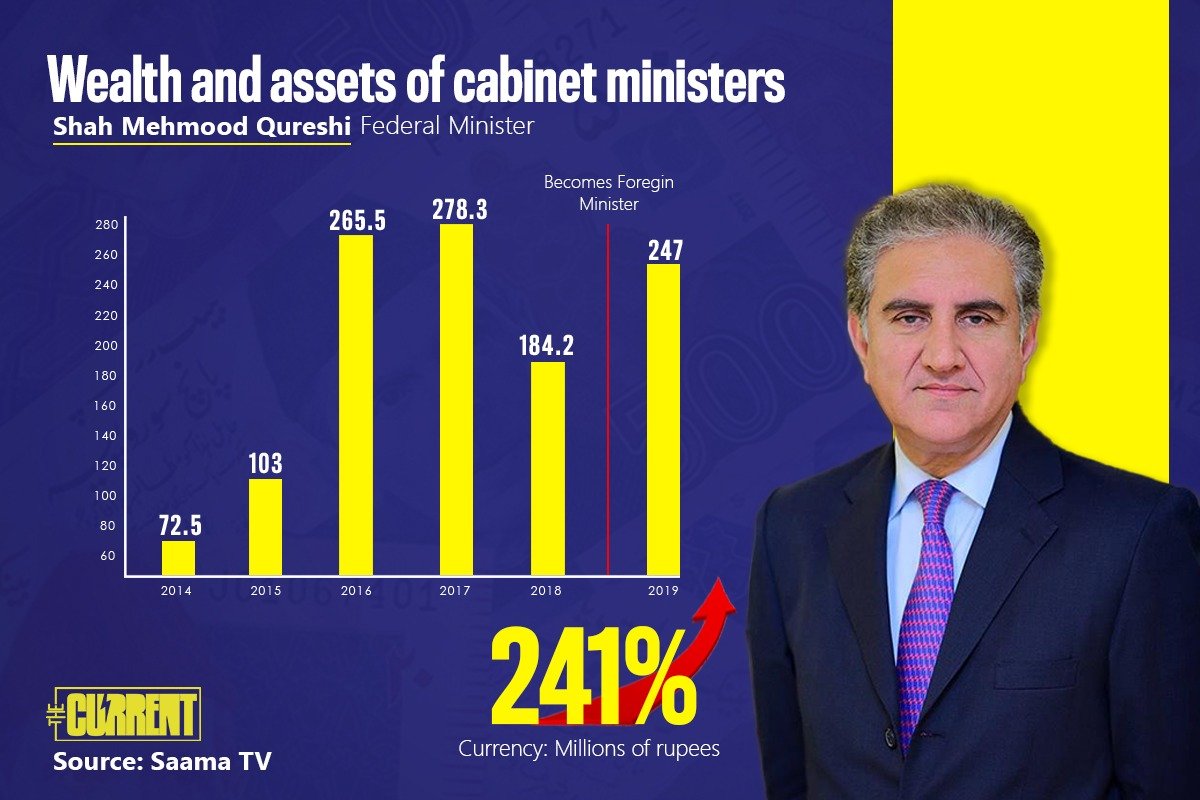
From 2014 to 2019, former foreign minister Shah Mahmood Qureshi, who has been a staple of the parliament for more than a decade and served twice in the federal cabinet in two different governments, had a 241 per cent growth in his wealth.
He and his wife held assets worth only Rs72.5 million in 2014, according to asset declarations he submitted to the ECP and the FBR. In the following three years, his assets nearly quadrupled, reaching Rs278.3 million, a 283.86 per cent increase over his wealth in 2014. Qureshi’s fortune dropped dramatically to Rs184.2 million in 2018, the year he returned to the Treasury benches, albeit with a new party, the PTI. However, while in power, it soon increased to Rs247.1 million in 2019, a rise of 240.82 per cent since 2014.
When questioned, Qureshi recounted how the worth of his assets had evolved over the years.
“The reason for the increase in assets was that during 2015-16, my wife received her share from the sale of property situated in Lahore, which had been gifted by her mother, and shares from sale proceeds of inherited property worth Rs169.6 million and Rs22.6 million,” he claimed. In October 2017, duplicates of sale deeds were handed to the ECP, according to the former minister.
“The ECP raised this observation too,” he said regarding the increase in his wealth, adding, “I and my dependent family members are all filers with the FBR”.
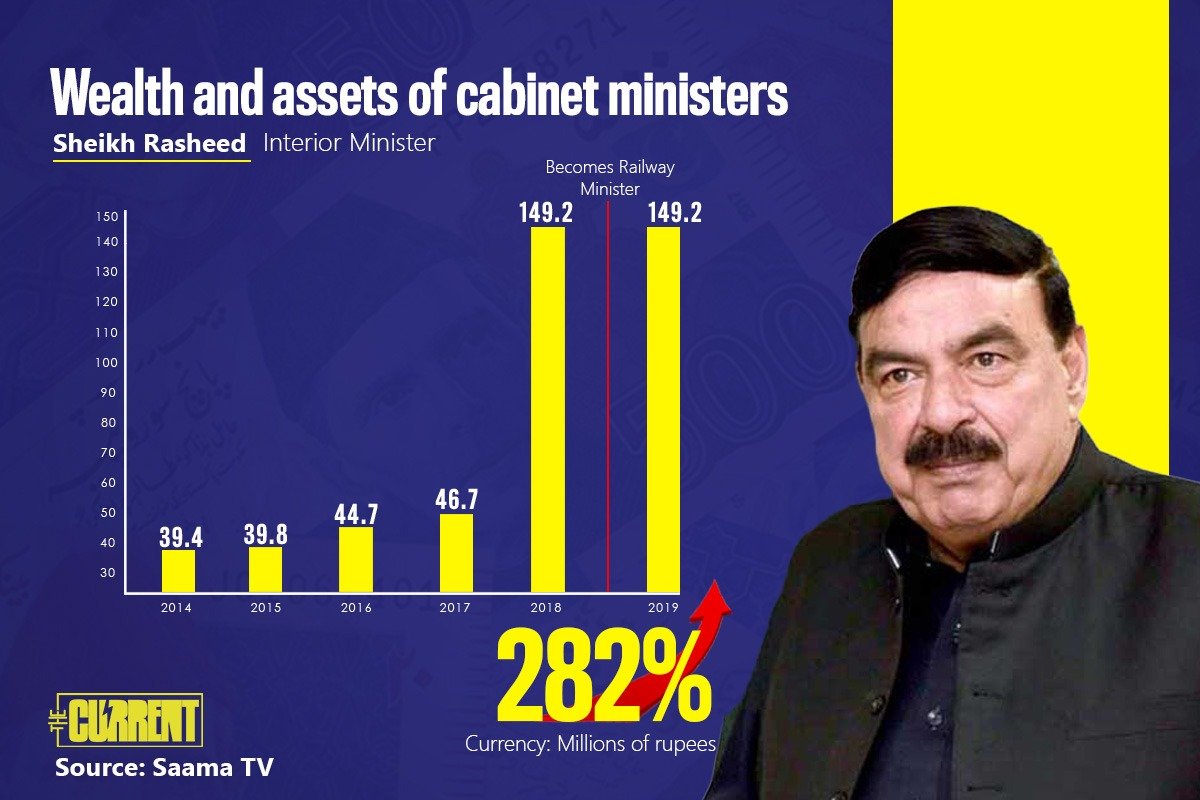
Sheikh Rashid, the former interior minister, watched his fortune increase by nearly 278.68 per cent between 2014 and 2019.
The financial disclosures for 2014 revealed that he only had Rs39.4 million in assets. Earnings climbed by Rs0.4 million to Rs39.8 million. His holdings steadily expanded over the next two years, reaching Rs44.7 million in 2016 and Rs46.7 million in 2017.
Conversely, in 2018, the time he was elected to power, his assets boosted by Rs100 million to Rs149.2 million. In 2019, there was no movement in reported assets. After inquired why his assets had suddenly changed, Rashid said that the discrepancy was due to an advance payment he had obtained for reselling a portion of land in 2018.
“I received Rs100 million as advance after making a deal of land to be sold last year, [2021],” he said, adding, “There is no such increase in my assets”. The former interior minister stated that the rise in his declarations submitted with the FBR and the ECP had been properly disclosed.
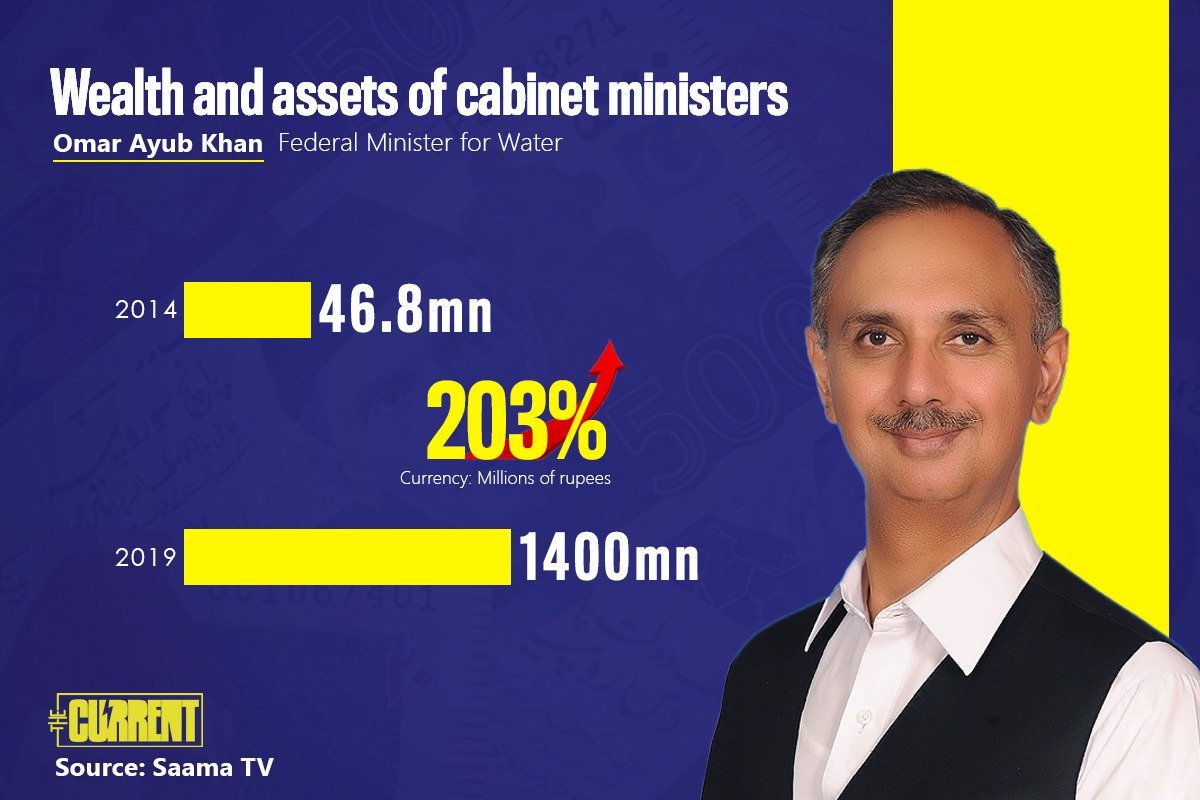
Between 2014 and 2019, the fortune of former federal minister of water Omar Ayub and his wife jumped by 203 per cent.
As per Ayub’s filings to the ECP and FBR in 2014, he and his wife held assets worth Rs461.8 million. This comprised Rs132 million in assets held by his wife and Rs329 million in assets owned by the minister. This value had risen to Rs1.4 billion by 2019. Surprisingly, while his wife’s holdings increased slightly to Rs201 million, Ayub’s assets increased to Rs1.2 billion. Each has debts worth only Rs26.3 million, according to the disclosures.
As a result, the ECP expressed concerns about Ayub’s and his family’s unexpected surge in wealth.
“It was explained to the ECP in 2019 that it [increase in wealth] is because of group formation having no cash involvement,” Ayub said, confirming that the top poll body had issued him a notice on this subject. Ayub claimed that he owned shares in Nova Synpac Ltd. and NovaGene Pharmaceuticals Ltd., which increased in value by approximately Rs1.071 billion.
“My assets have decreased (excluding this group formation) since I took an oath as a minister because I resigned from my group,” he claimed, adding that the increase was due to the consolidation of all of his businesses under the group.
“This cannot be reflected in a declaration, which is always a reflection of statements submitted to the FBR and there cannot be any difference [between them] otherwise it would have been challenged there,” he explained.
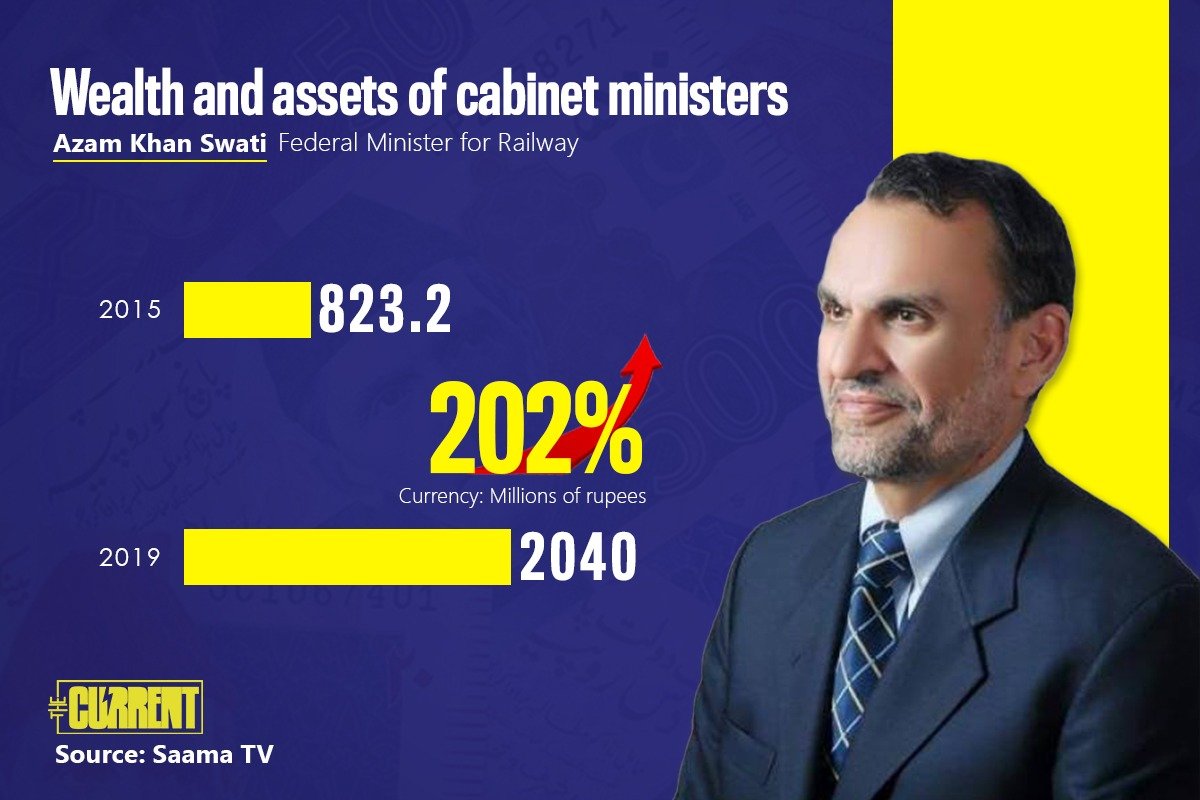
Azam Swati, the former federal railways minister, saw his fortune grow by 202 per cent from Rs823.2 million in 2015 to about Rs2.04 billion in 2019. He reported that his liabilities increased from Rs417 million in 2015 to Rs811 million in 2019.
“[Your] figures are wrong due to incomplete information being furnished before ECP by members and cabinet members owing to faulty legal requirements mentioned in ECP Act 2017,” he explained.
He further said that his situation was slightly unusual. “In Pakistan, I have no income and no business.” I am confident that our FBR wealth statement [filed] will be compared to ECP in 2019 [asset declarations],” he remarked, worried that the statistics may contain a few errors.
“ECP has no efficiency and capability to audit assets and liabilities,” he disclosed, adding, “We were making mistakes filing combined [wife and husband together]”.
“Now we have corrected the mistake and filed separately because the wife is not dependent,” Swati told SAMAA TV.
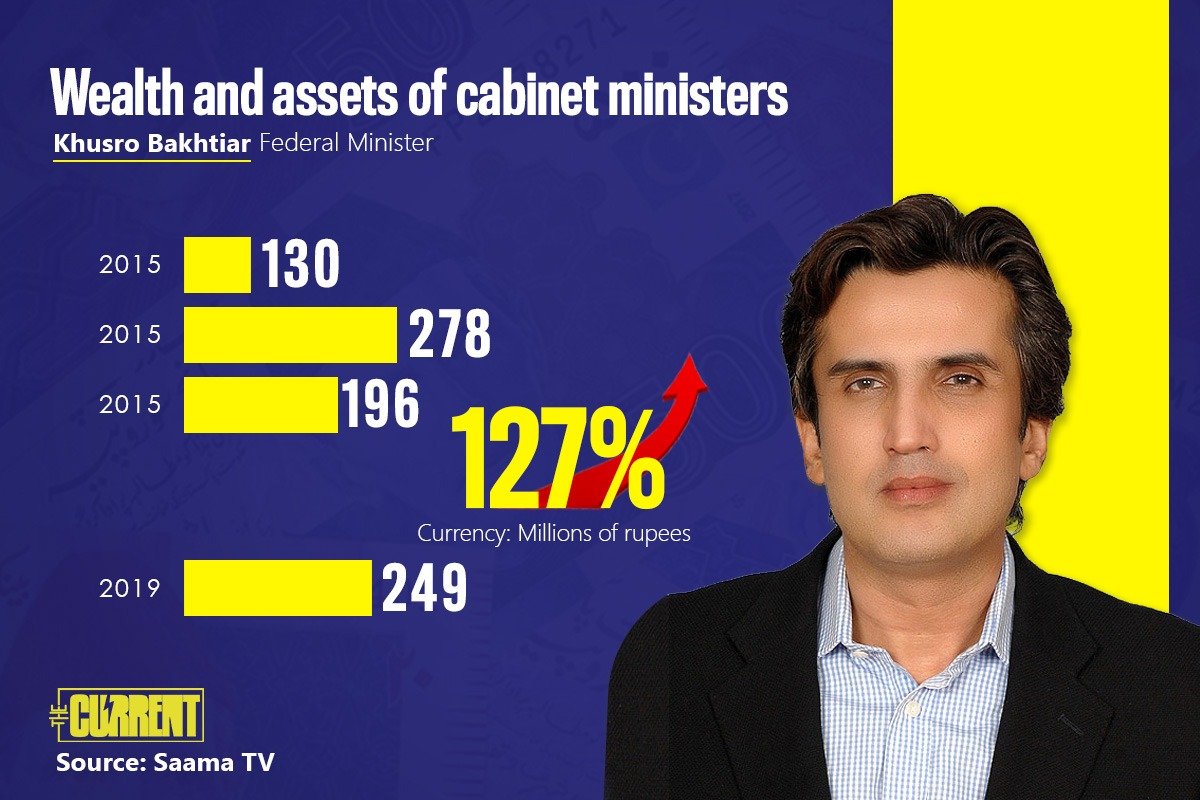
Khusro Bakhtiar, the former federal commerce minister, saw his fortune rise by 127.8% from Rs109.3 million in 2013 to Rs249 million in 2019. In 2014, he had assets of Rs130 million, which more than doubled to Rs278 million in 2015, shrank to just Rs196 million in 2016, and then surged again in the next three years.
“Increase in assets were mainly comprised of [various] sources during the year 2014 to 2019,” he told SAMAA TV, detailing that these sources included savings from agricultural income, proceeds from the sale of land worth Rs40 million, other sources which contributed Rs20 million.
Bakhtiar also claimed that he actually paid Rs27.5 million in agricultural taxes from 2017 to 2020, and that he owed Rs60 million in 2016.
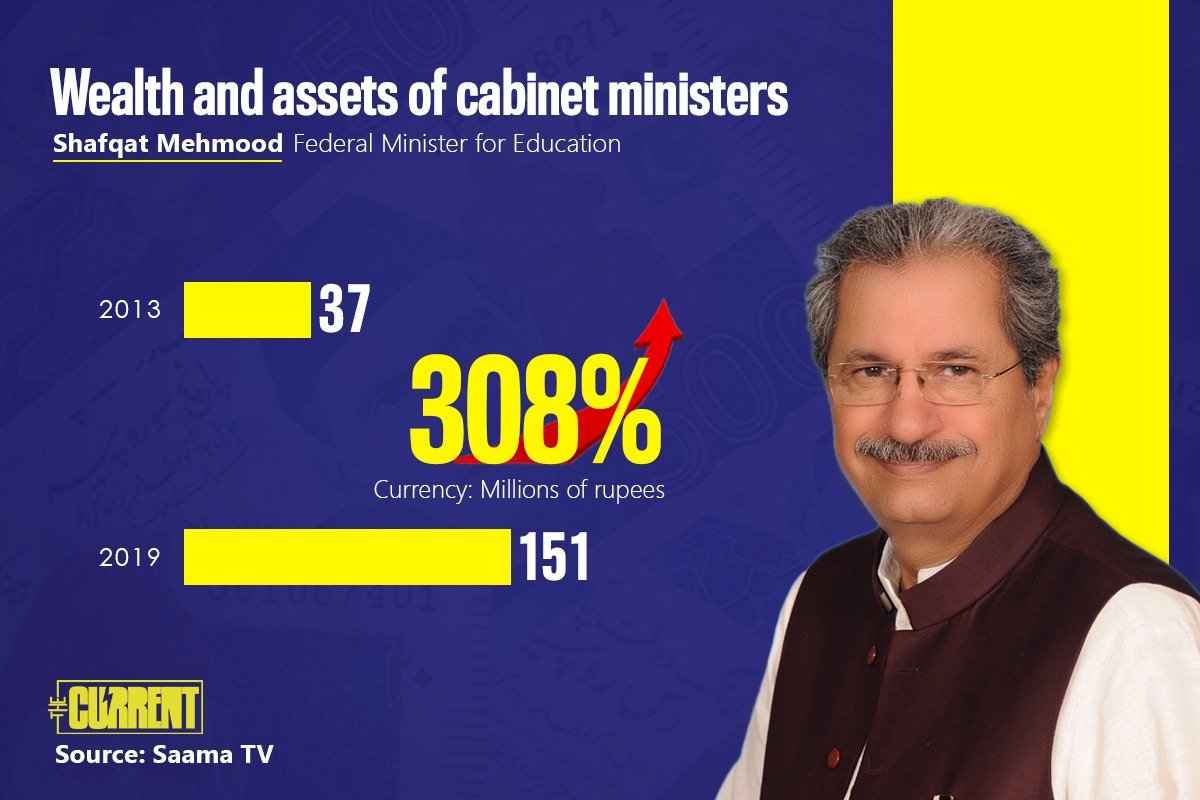
Former federal minister for education Shafqat Mahmood and his family had a 308 per cent growth in asset valuation between 2013 and 2019, making them one of the most successful federal ministers in terms of percentage increases. According to Mehmood’s filings, his and his family’s assets were valued at just Rs37 million in 2013, but had grown to Rs151 million by 2019.
“My assets have not changed since 2013 onwards,” Mehmood asserted, explaining “The change that you see is the cost re-evaluation from purchase price to market price”. The ex-minister further said that he has 360 kanals of hereditary land, a few more plots, and automobiles that he never assessed.
“There will, of course, be some variation regarding bank accounts. There will also be a slight difference in detail offered to FBR and ECP with regards to bank accounts,” he maintained. He went on to say that in his previous disclosure, he had combined the amounts in all of his bank accounts to present a single total.
“My wife is a distinct taxpayer because she works, but I have included her assets as well”, he explained.
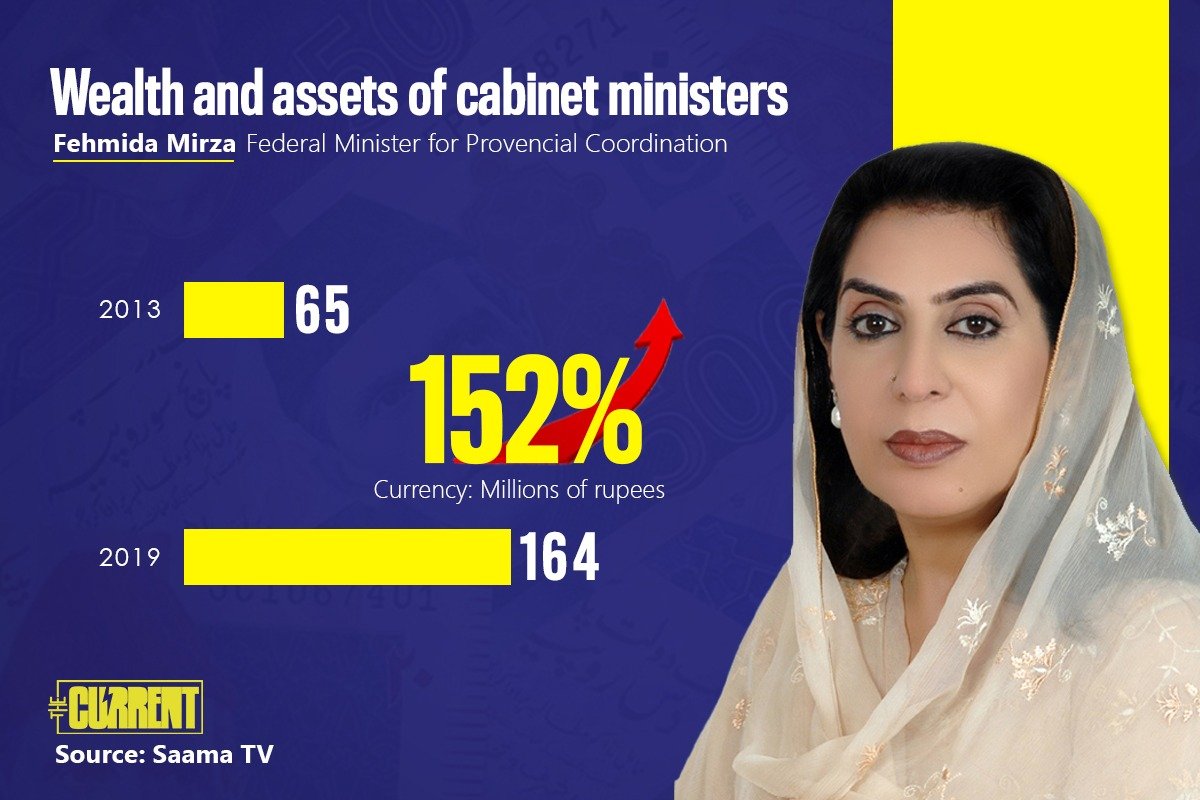
Fehmida Mirza, the former federal minister for interprovincial coordination, had a similar scenario, with her net worth rising from Rs65 million in 2013 to Rs164 million in 2019.
“I did not see any rise in my assets and wealth at all,” she told SAMAA TV. She did, although, reveal that she had sold some property in Pakistan in order to purchase a home in the United Kingdom.
“This new increase in my assets has already been declared with the FBR and the ECP,” she stated.
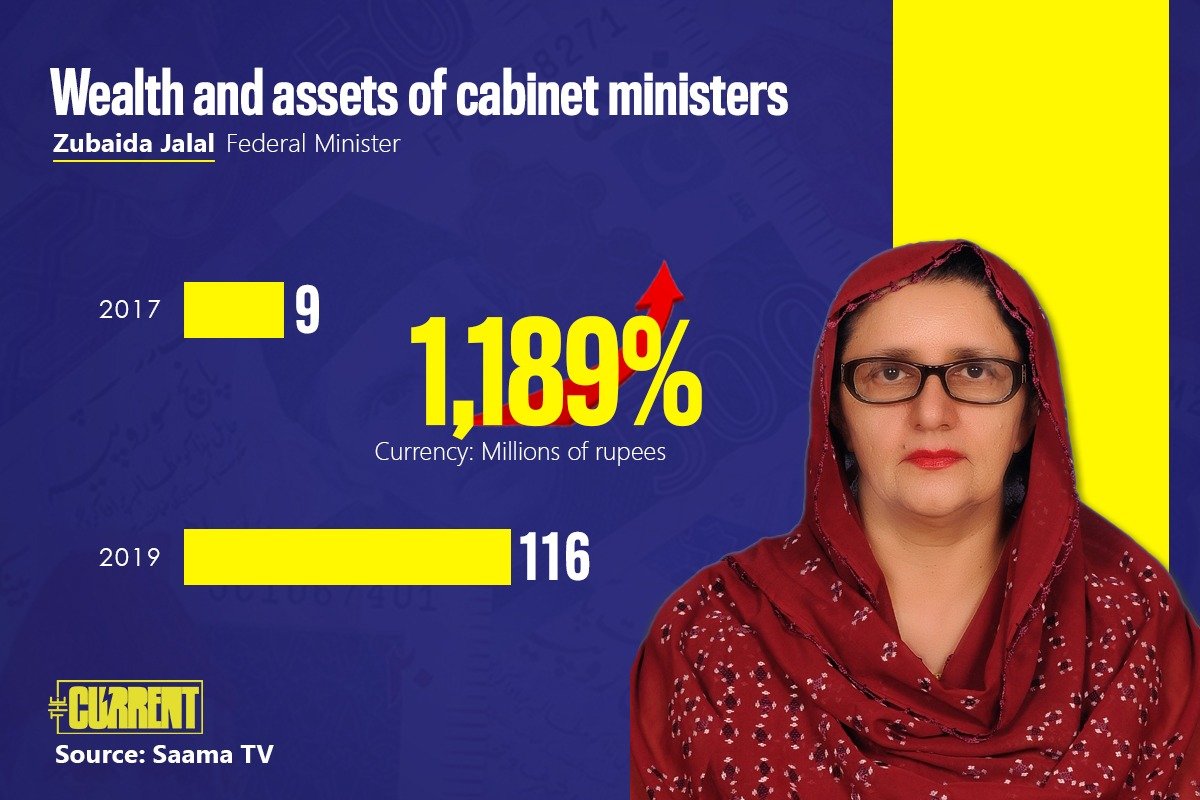
Contrary to the PTI’s cabinet’s millionaire members, one of the “weakest” members of the federal cabinet, former federal minister Zubaida Jalal and her husband, had a 1,189 per cent growth in their fortune in a short period of time. Their riches increased from Rs9 million to Rs116 million in 2019.
Jalal, on the other hand, described the quick spike in wealth as the outcome of changes in declaration requirements.
“There is no big difference in my assets’ declaration” she asserted while speaking to SAMAA TV. The value of immovable assets was not mentioned in data provided in past elections, she said, noting that the ECP declaration requirements changed over time.
“[We are] required to mention values of assets in the asset declaration for this time,” she stated. She explained that the variations in asset values were attributable to market forces working on enterprises.
“Ups and downs will keep happening [in mining operations and business],” she said, as she reminded that her husband owns the National Coal Mining Company since the 1960s.
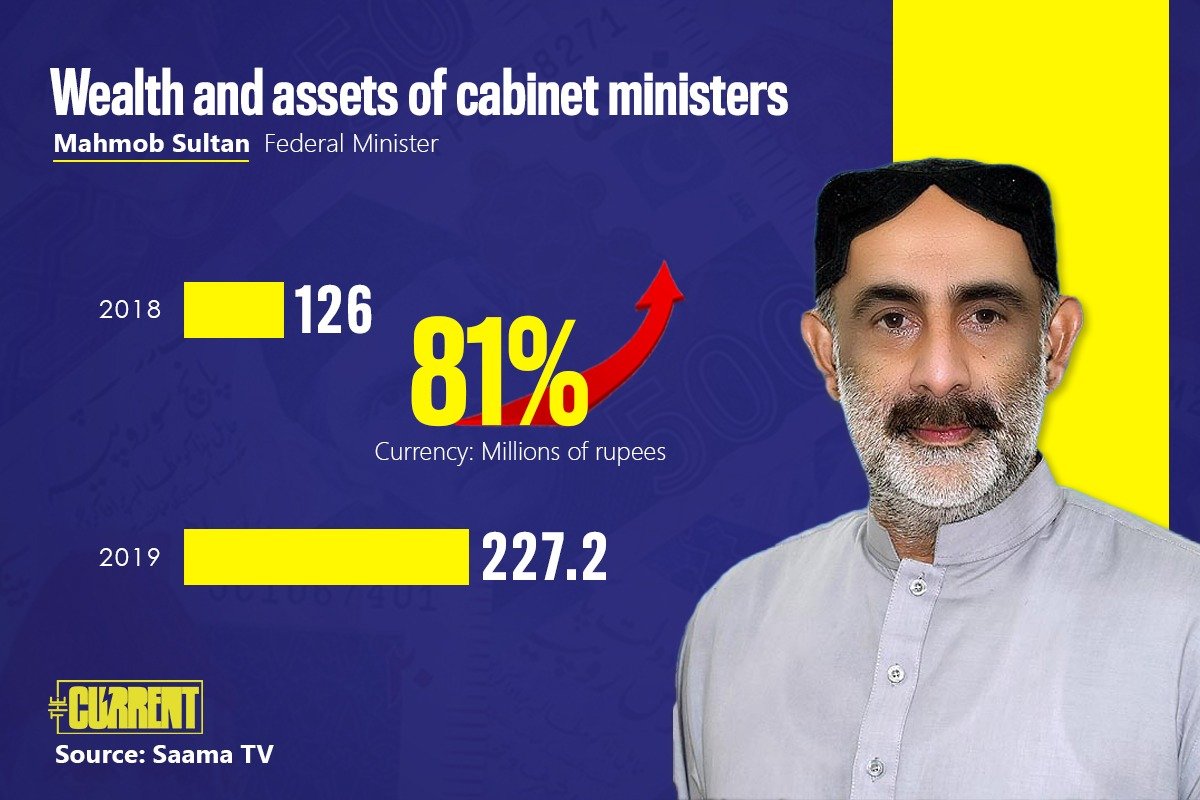
Former state minister Mahboob Sultan was one among the ministers who saw only double-digit asset growth. Only 81 per cent of his assets increased from Rs126 million in 2018 to Rs227.2 million in 2019. It’s worth noting, however, that his growth of nearly Rs100 million occurred while he was in the cabinet of ministers.
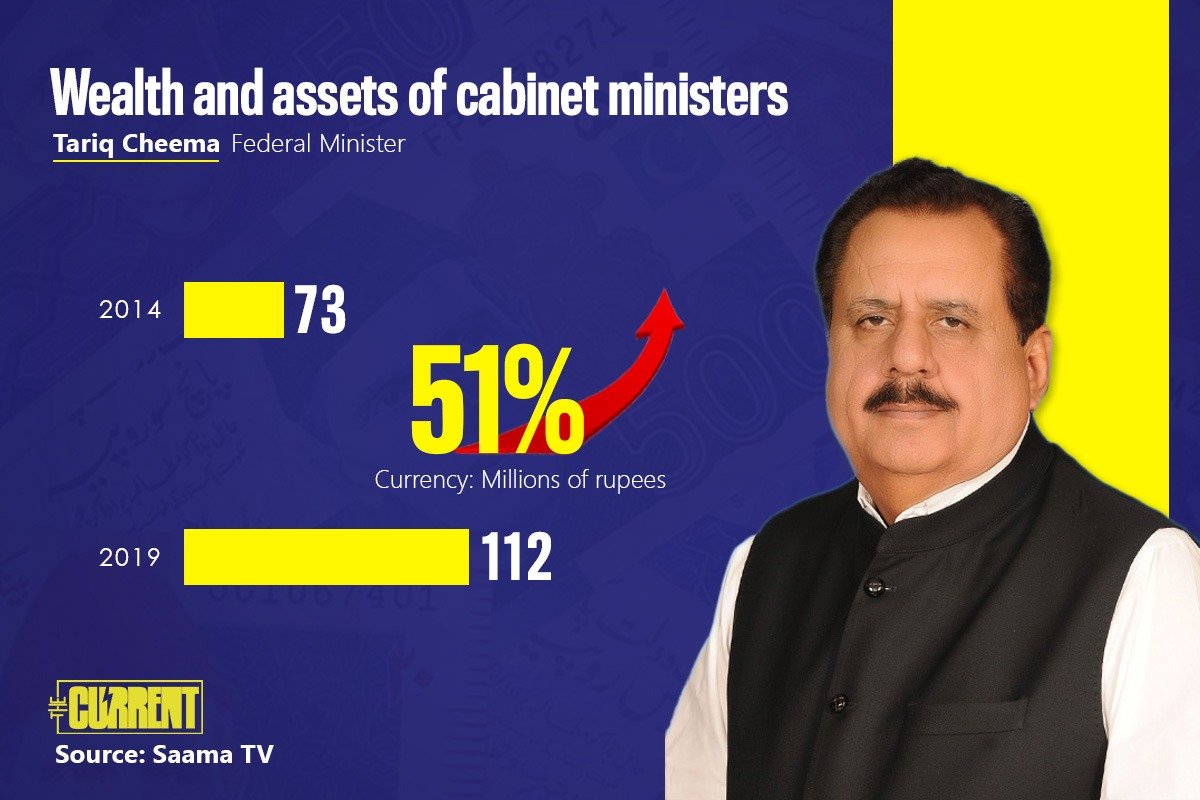
Tariq Cheema, the former federal minister for housing and infrastructure, showed the smallest growth in his wealth, going from Rs73 million in 2014 to Rs112 million in 2019. He did not, however, assess the value of his inherited assets and report them to the electoral or tax authorities.
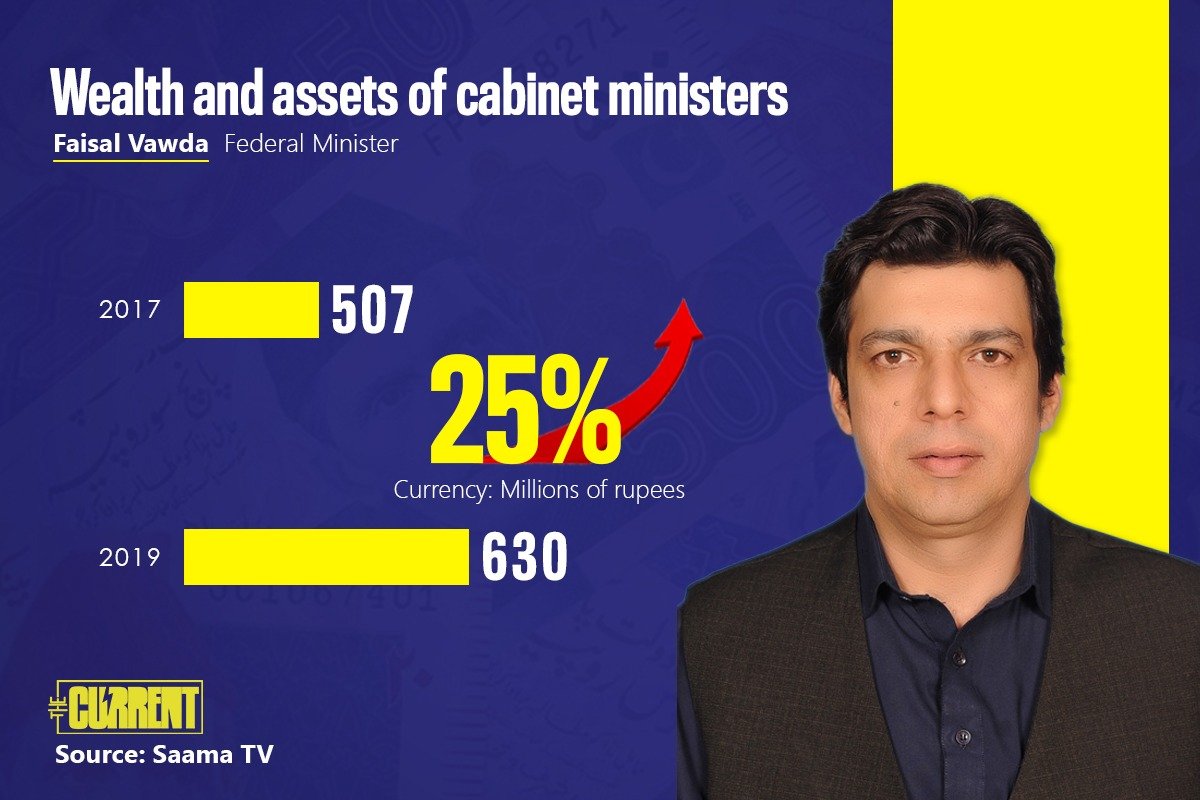
Former federal minister Faisal Vawda and his family witnessed their fortune increase by 25 per cent from Rs507 million in 2017 to Rs630 million in 2019. He was among the most controversial cabinet ministers who were eventually dismissed by the ECP.
Despite multiple requests from SAMAA TV, neither Sultan, Cheema, Vawda, nor an ECP official have commented on inquiries regarding their wealth.
The Islamabad High Court (IHC) on Monday suspended a single-bench’s order, directing the Election Commission of Pakistan (ECP) to decide foreign funding case against the Pakistan Tehreek-e-Insaf (PTI) within 30 days.
The IHC two-member bench suspended the single-bench ruling in PTI foreign funding case till the next hearing on May 17.
The Pakistan Tehreek-i-Insaf (PTI) had challenged the Islamabad High Court’s single bench orders to the Election Commission of Pakistan (ECP).
According to ARY News, Asad Umar, the party’s secretary-general, filed the appeal against the order of a single-member bench which directed the ECP to conclude the proceedings in the foreign funding case within 30 days.
Speaking to media after filing the intra-court appeal against the IHC decision, PTI Secretary General Asad Umar termed the ECP as biased and said that it does not look the incumbent commission could hold free and fair elections in the country.
The Islamabad High Court (IHC) recently also turned down two petitions of the ruling Pakistan Tehreek-e-Insaf (PTI) against Akbar S Babar in foreign funding case.
The IHC rejected a petition filed by the ruling political party to bar the Election Commission of Pakistan (ECP) from handing over the records of the PTI foreign funding case to the petitioner Akbar S Babar.
Another petition of Pakistan Tehreek-e-Insaf (PTI) for separating Babar from the proceedings of the case was also rejected by the high court.
It is pertinent to mention here that foreign funding is being heard by the election commission since November 2014.