Tag: Pakistan

  • Forced begging now non-bailable offence

    Forced begging now non-bailable offence

    The Punjab Home Department has sent amendments to the anti-rape law to the Cabinet for approval.

    According to the spokesman of the Punjab Home Department, under the new law, forced begging has been declared a non-bailable offence.

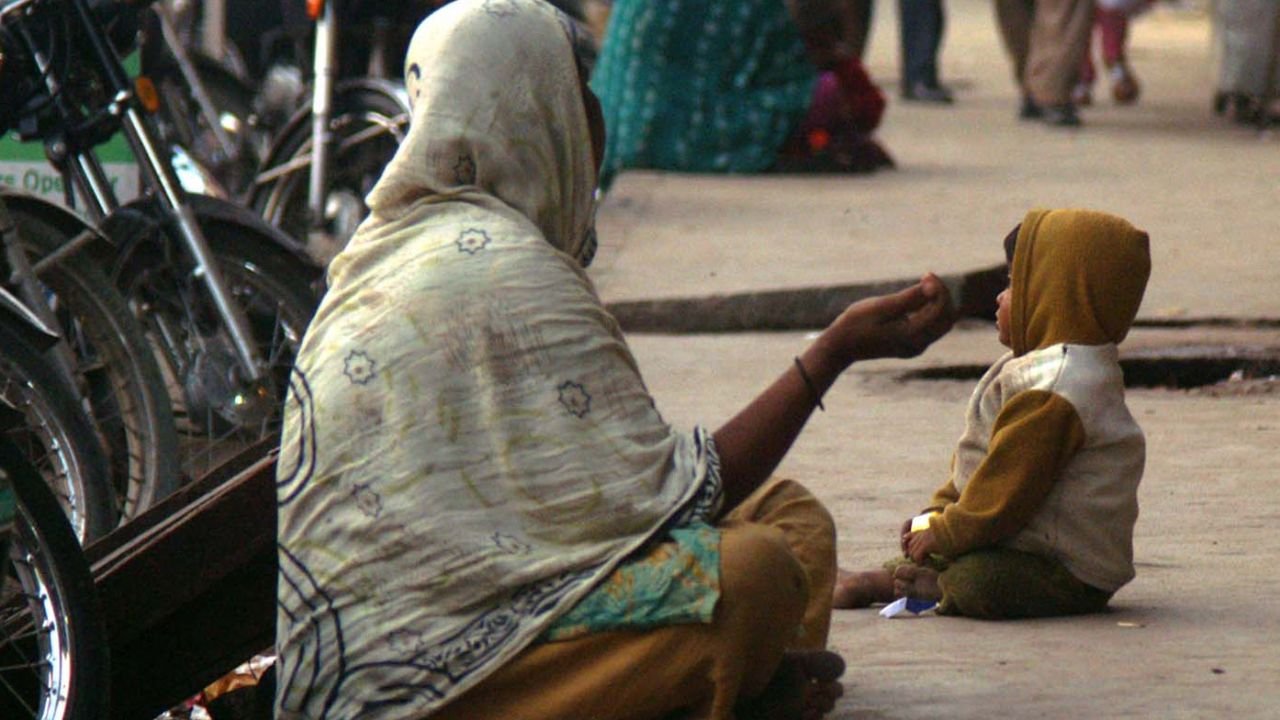
    The spokesperson said that those who force children, the elderly and women to beg will be severely punished, while the gang leaders of beggar mafias will face 10 years of imprisonment with a fine of 20 lakh rupees. In case of non-payment of fine, three additional years of punishment will have to be served.

    Similarly, apart from forcing children to beg, those you physically harm minors are also in for a tough time.

    The Home Department noted that previously, there was no law to punish the gang leaders of the beggar mafia.

  • Govt tables controversial NAB & Election ordinances before NA

    Govt tables controversial NAB & Election ordinances before NA

    The federal government tabled the Election (Amendment) Ordinance 2024 and National Accountability (Amendment) Ordinance 2024 on Thursday through a supplementary agenda with Pakistan Tehreek-e-Insaf (PTI) calling the move “politically motivated.”

    The amendments in the NAB law would increase the remand period from 14 days to 40 days; whereas amendments in the election law would allow the government to appoint retired judges to the election tribunals – a move already challenged in Islamabad and Lahore high courts.

    PTI-backed Sunni Ittehad Council Chief Whip Aamir Dogar strongly criticised the proposed ordinances saying that the government was tabling them because it was afraid of Imran Khan.

    Interestingly, Dogar pointed out that in April 2023 the PDM government reduced the period of physical remand from 90 days to 14 days but now it is trying to change its own previous amendments.

  • Khan tells Supreme Court that country under unannounced martial law

    Khan tells Supreme Court that country under unannounced martial law

    Pakistan Tehreek-e-Insaf (PTI) founder Imran Khan on June 6 told Supreme Court judges that the country was facing an “unannounced martial law” during the hearing of the NAB amendments case hearing.

    Khan also talked about the “victimisation” he had to face since his ouster from power in April 2022.

    The jailed PTI founder appeared before the Supreme Court’s five-member bench via video link from Rawalpindi’s Adiala jail, where has been incarcerated since his conviction in the Toshakhana case last year.

    The SC bench headed by Chief Justice Qazi Faez Isa and comprising Justice Aminuddin, Justice Jamal Khan Mandokhail, Justice Athar Minallah and Justice Hasan Azhar Rizvi heard the case.

    Interestingly, Khan quoted India’s example during his argument that Delhi Chief Minister Arvind Kejriwal was released on bail ahead of the Indian elections to run his campaign.

    Furthermore, Khan expressed dissatisfaction with the top court’s judgement rejecting Khyber Pakhtunkhwa’s government plea requesting the live streaming of the case saying to CJP Isa, “You wrote [in the judgment] that I did political point scoring during the last hearing. I did not get it, what political scoring did I resort to?”

    CJP replied that a judge does not owe an explanation to anyone and that he can “file a review petition.”

    Criticising alleged political victimisation, the PTI chairman suggested that the Supreme Court should appoint a NAB chairman.

    “When opposition and government fail to evolve consensus on the name of NAB chairman appointment then a ‘third umpire’ makes the decision,” he said, adding that the NAB is working under the “third umpire”.

    “Solve the problems by sitting in parliament. This country needs to move forward,” the CJP said to Khan.

  • 85 per cent of Pakistanis content with their mental health: Survey

    85 per cent of Pakistanis content with their mental health: Survey

    85 per cent of Pakistanis are fully satisfied with their mental health while 14 per cent have expressed concerns, reveals a new survey by Gallup Pakistan.

    50 per cent of the people admitted to facing stress in their daily life — often or sometimes — while 50 per cent said that they do not have any stress.

    In the survey, 17 per cent of Pakistanis cited their family or domestic problems as the main cause of mental stress, 15 per cent cited lack of money, 14 per cent said unemployment, 13 percent cited their job, and eight percent cited their health as the main cause of mental stress.

    The rate of Pakistanis suffering from mental stress is clearly lower than the global opinion as a total of 79 per cent are suffering from mental stress globally, while 24 per cent deem their job as the main reason for mental stress.

    Globally, 21 per cent are affected by lack of money while 19 per cent quote family problems as the main cause of mental stress.

  • Pakistan power crisis deepened by mountain tourism

    Pakistan power crisis deepened by mountain tourism

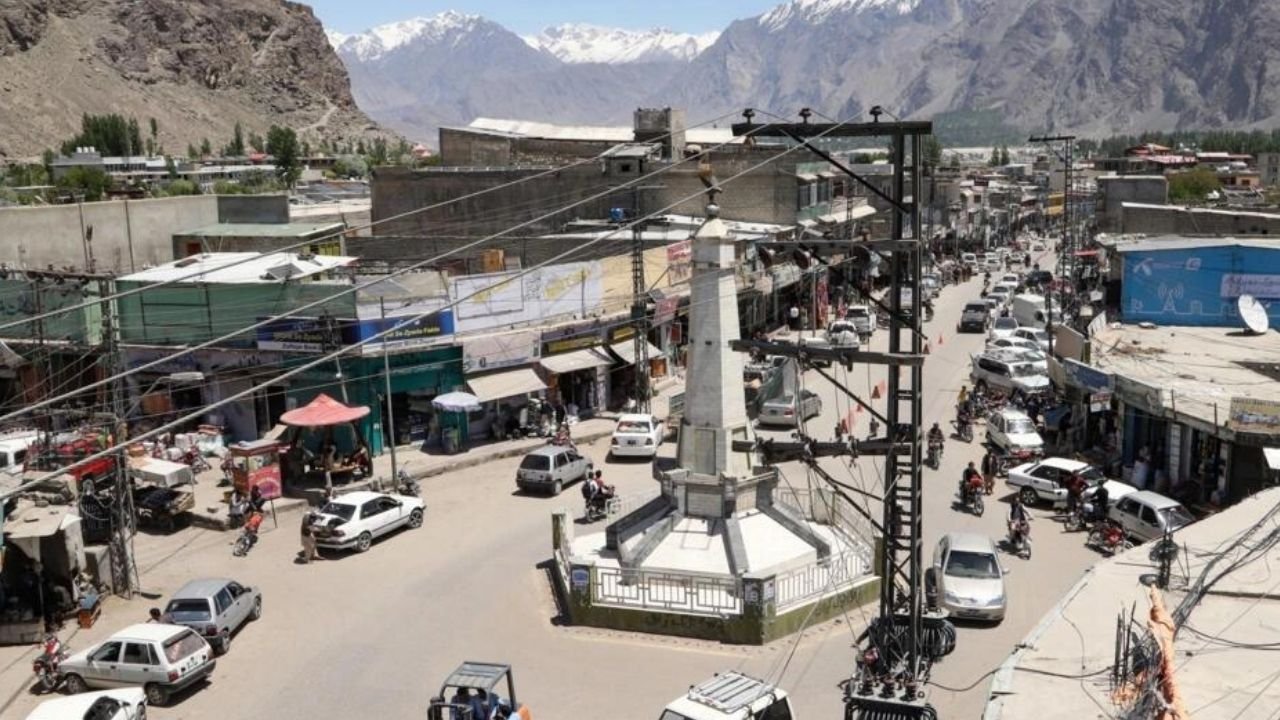
    Skardu (Pakistan) (AFP) – In the mountainous valleys of Pakistan, 18-hour daily power cuts have meant local teacher Aniqa Bano uses her fridge as a cupboard for storing books and kitchen utensils.

    Load shedding is typical across much of fuel-short Pakistan, but few areas consistently suffer the same prolonged outages as Skardu city.

    A surge in mountain tourism, driven by climbers and Pakistanis looking to escape heatwaves, is rapidly depleting the limited energy supply at the gateway to ascend K2, the world’s second-highest peak.

    While higher-end hotels can supplement their supply with solar panels or fuel generators, many locals cannot afford such luxuries.

    “We have to reinvent everything that once used electricity,” said Bano.

    Tourism boom

    Skardu is the largest city in the region of Gilgit-Baltistan, where almost impossibly high peaks tower over the Old Silk Road, still visible from a highway transporting tourists between cherry orchards, glaciers and ice-blue lakes.

    Normally home to around 200,000 people, Skardu becomes heavily bloated in summer when Pakistanis seek the relief of its cooler climate at 2,228 metres (7,310 feet) above sea level.

    The region hosted 880,000 domestic visitors in 2023, up from 50,000 in 2014.

    As the country grapples with energy shortages -– owing to dwindling forex reserves, mismanagement, rapid population growth and climate change –- the tourism boom has proved too much for local power.

    “Due to the increase in population and tourism activities, load shedding hours have increased,” Muhammad Yunus, a senior engineer for the regional government’s water and power department, told AFP.

    There are up to 22 hours of load shedding in winter and between 18 and 20 hours in summer — an increase of around 10 percent each year for the past six years, according to the department.

    Siddiqa, a tailor and handicraft maker who goes by one name, has seen her earnings fall alongside the number of hours of electricity.

    “When we started this business in 2014, there was no issue of power,” she told AFP. “Now, I have replaced all the electric machines and brought hand sewing machines.”

    “In the presence of light, we could prepare 10 to 12 suits every three days. Now, to prepare a single suit, it can take 10 to 15 days.”

    The tourism flow does not appear to be letting up any time soon. There are up to 15 domestic flights a week to the region and, since March, international flights began landing from Dubai.

    In Skardu alone, the number of hotels has increased more than fourfold since 2014, according to the tourism department.

    7,000 melting glaciers

    Owing to its remoteness, Gilgit-Baltistan is not connected to the national grid, so it relies on its own power generation from dozens of hydro and thermal plants.

    But Pakistan’s 7,000 glaciers — more than anywhere outside the poles — are rapidly melting.

    This can temporarily increase the availability of water for energy production, but the glaciers’ long-term ability to store and release water gradually decreases, affecting energy production.

    “The availability of water for hydroelectric plants is becoming unpredictable,” said Salaar Ali, head of the Department of Environmental Science, University of Baltistan.

    Damage to energy infrastructure is also a regular setback.

    Record heatwaves in 2022 caused dozens of glacial lakes to burst their banks, washing away more than 20 power plants, 50 bridges and countless homes.

    Inadequate planning and mismanagement of the power sector can also play a role, engineers have said.

    The Satpara dam on the edge of Skardu city, completed in 2008 for $26 million of aid funding, was supposed to supply 40,000 homes with power.

    But it generates just a fraction of its potential after plans to divert a river were halted, government engineers admit.

    “It has been full only once since its formation,” said Yunus, the engineer in Skardu.

    Without a reliable energy supply, Wajahat Hussain, a 36-year-old carpenter, uses a fuel generator to keep his business in operation — puffing out emissions that contribute to global warming.

    “We run the generator to fulfil the demands,” he told AFP. “There is no work without the generator.”
  • Who is Indian rapper Badshah’s favourite Pakistani?

    Who is Indian rapper Badshah’s favourite Pakistani?

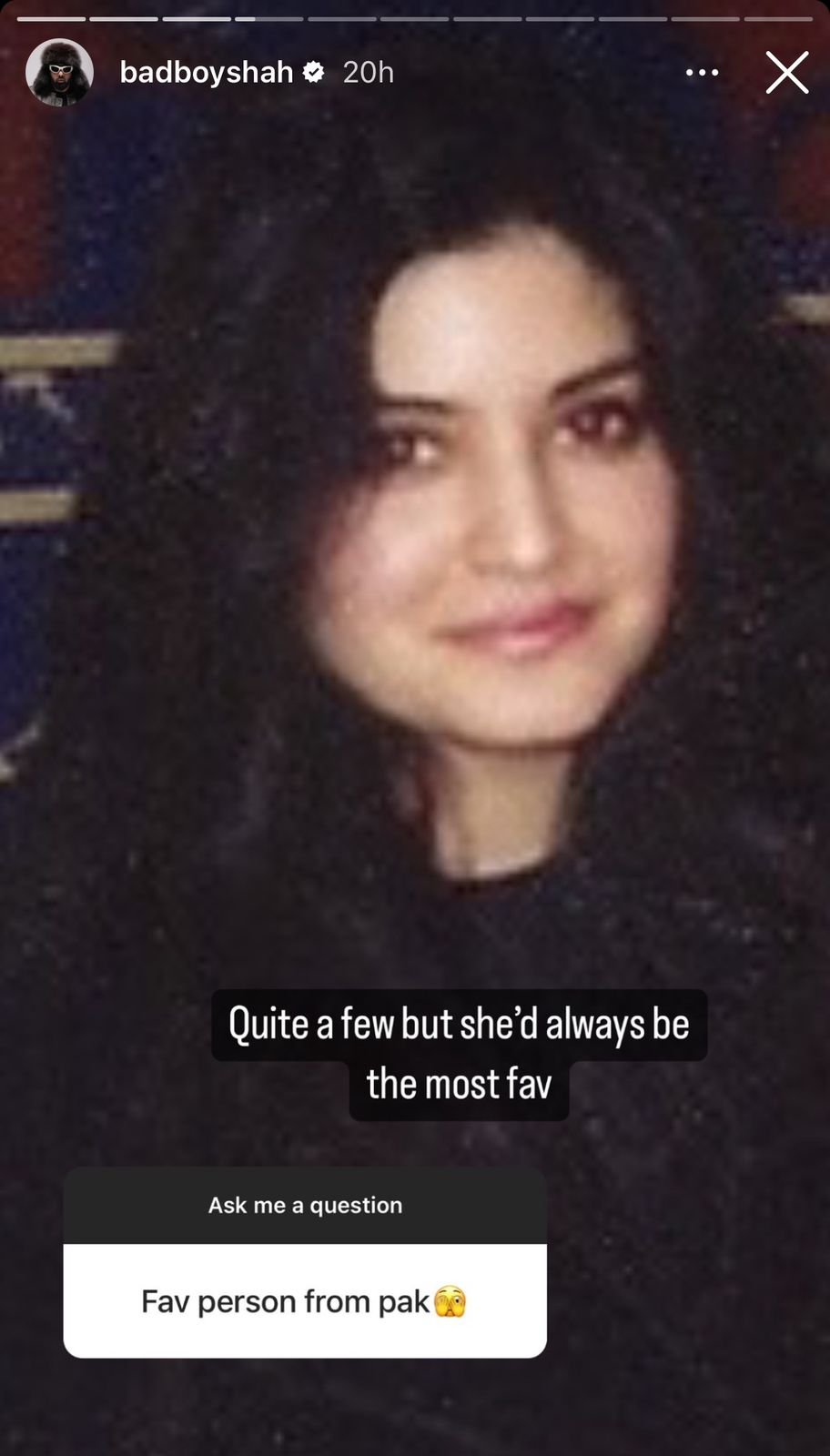
    If you wonder who holds the title of favorite Pakistani for Indian singer and rapper Badshah, let me reveal the answer for you. Badshah recently took to Instagram Stories to answer fan questions, where he disclosed that his favorite person from Pakistan is none other than the legendary pop icon, the late Nazia Hassan.

    Badshah shared a picture of the Boom Boom singer on his Instagram Story along with the question, stating, “Quite a few but she’d always be the most favorite.” This revelation left fans curious about how many classic Pakistani pop hits Badshah might secretly be jamming to.

    Fans of both the rapper and pop singer flooded the comments section with positive reactions. “The queen of pop music,” commented one Instagram user, while another called Nazia Hassan “the legend, our childhood queen.”

  • Justice Minallah says live streaming of Khan’s appearance in court not against law

    Justice Minallah says live streaming of Khan’s appearance in court not against law

    Supreme Court Justice Athar Minallah on June 5 issued a dissenting note on the majority verdict against the petition seeking live streaming of the hearing of the National Accountability Bureau (NAB) amendment case, stating that there was “no substantive reason” to deny the public the right to have access to court proceedings.

    In a 13-page long document, the judge asserted that “Imran Ahmed Khan Niazi is the founder and undisputed leader of a major political party, Pakistan Tehreek-e-Insaaf (PTI).” Therefore live streaming his court appearances wasn’t against the law.

    The development came after the Supreme Court released a detailed verdict on the Khyber Pakhtunkhwa government’s petition last week, stating that broadcasting the court proceedings of cases involving politicians can be used for political “point-scoring”.

  • ‘Bado Badi’ by Chahat Fateh Ali Khan taken down from YouTube

    ‘Bado Badi’ by Chahat Fateh Ali Khan taken down from YouTube

    A piece of bad news for Chahat Fateh Ali Khan fans and lovers who enjoyed his song ‘Bado Badi’. The viral hit has been taken down from YouTube after accumulating over 28 million views. The removal was due to copyright claims, as the legendary singer Noor Jehan owned the original song.

    .Kashif Rana, who performs under the name Chahat Fateh Ali Khan, is a British Pakistani musician and a former first-class cricketer.

    The song ‘Bado Badi’ has been trending on Instagram and YouTube Shorts. The title ‘Bado Badi’ is a Punjabi phrase. The original song, titled ‘Ankh Ladi Bado Badi,’ was sung by Noor Jehan for the film ‘Banarasi Thug.’

    ‘Bado Badi’ Original song:

  • Suspect arrested in Nasrullah Gadani murder

    Suspect arrested in Nasrullah Gadani murder

    A suspect involved in the murder of Nasrullah Gadani, a journalist working for the daily newspaper Awami Awaz, has been arrested by Yaro Lund police in Sindh.

    Gadani was killed in Mirpur Mathelo last month on May 21. He was shifted to Karachi for treatment after an attack, where he succumbed to his injuries.

    According to the police, the motorcycle used in the journalist’s murder was also recovered from the suspect who has been shifted to an unknown location for investigation.

    Raids are being conducted to arrest the associates of the man.

  • Gangsters were planning to use minors to kill Salman Khan: Mumbai Police

    Gangsters were planning to use minors to kill Salman Khan: Mumbai Police

    In a shocking revelation, notorious Indian gangsters Lawrence Bishnoi and Goldy Brar were reportedly planning to use minors to assassinate Bollywood superstar Salman Khan. Mumbai police unveiled the chilling plot days after foiling another attempted attack on the superstar at his Panvel farmhouse.

    According to Indian news agencies, the Navi Mumbai Police have been actively investigating the matter and recently uncovered a video call conversation between Ajay Kashyap, a Lawrence Bishnoi gang member, and Dogar, an alleged accomplice from Pakistan. The conversation revealed that sharpshooters trained under Anmol Bishnoi and Rohit Godara are strategically positioned across Mumbai, Thane, Navi Mumbai, Pune, Raigad, and Gujarat. These sharpshooters, following orders from Goldy Brar, have been instructed to use minors to attack Khan.

    The police also disclosed that 60 to 70 gang members are deployed to monitor the movements of the ‘Tiger 3’ star. A man named John has been specifically tasked with providing a vehicle for the operation.

    In light of this development, a case has been registered against 17 identified individuals, including Lawrence Bishnoi, his brother Anmol Bishnoi, gang member Sampat Nehra, Goldy Brar, Ajay Kashyap alias Dhananjay Tapesing, Sukha Shooter, Sandeep Bishnoi alias Gaurav Bhatia, Wasim China, Dogar, and others at Panvel Town police station.

    The video call also discussed plans to acquire weapons such as AK-47s, M-16s, AK-92s, and Zigana pistols for the assassination. The gang had conducted detailed reconnaissance of Khan’s travel routes, including railway stations, rickshaw stands, and the Panvel bus stand.

    Despite Salman Khan’s use of a bulletproof vehicle, sources indicate that the gangsters plan to ambush and shoot him near his farmhouse using AK-47 rifles. The Mumbai police continue to investigate and monitor the situation closely to ensure Khan’s safety.