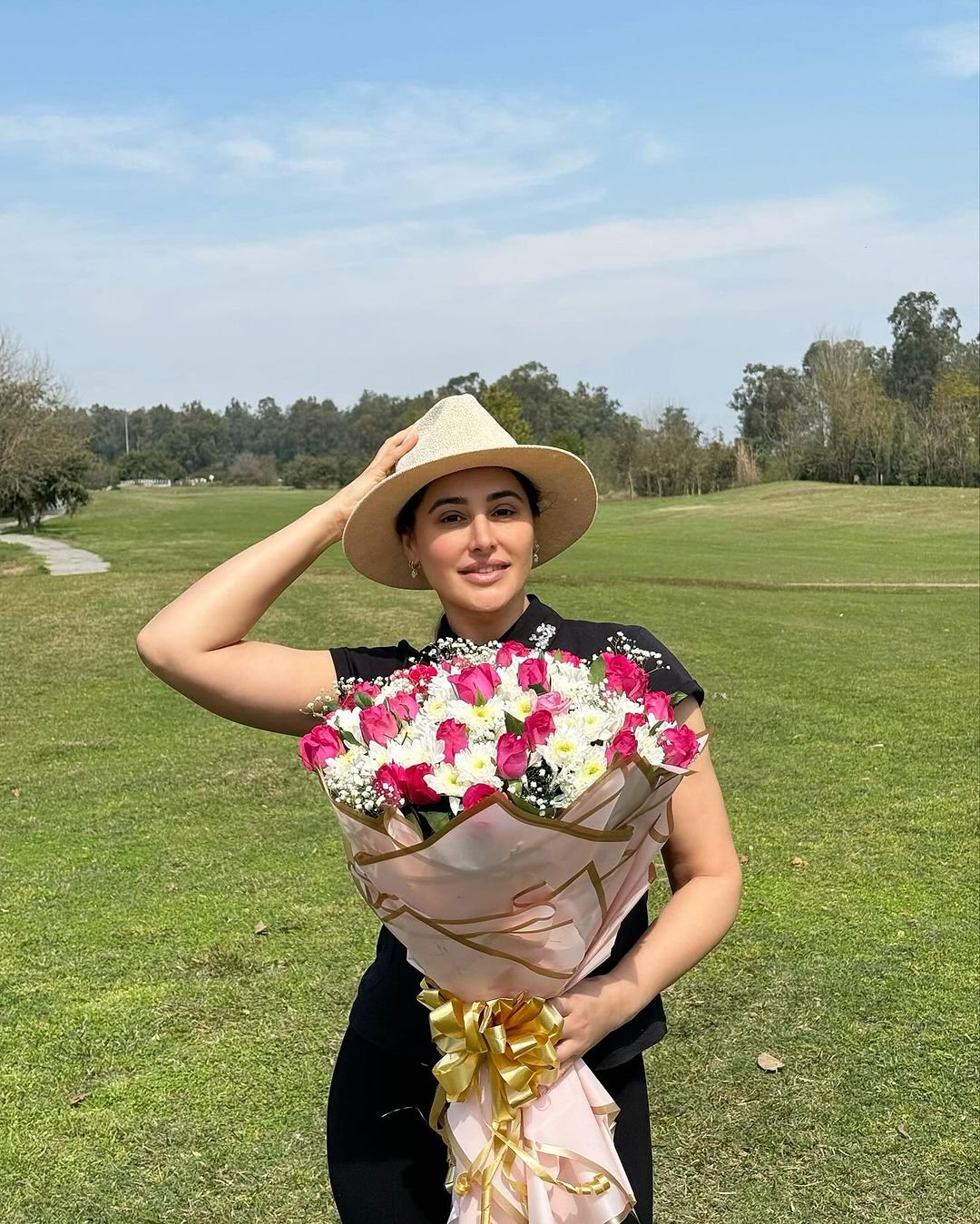
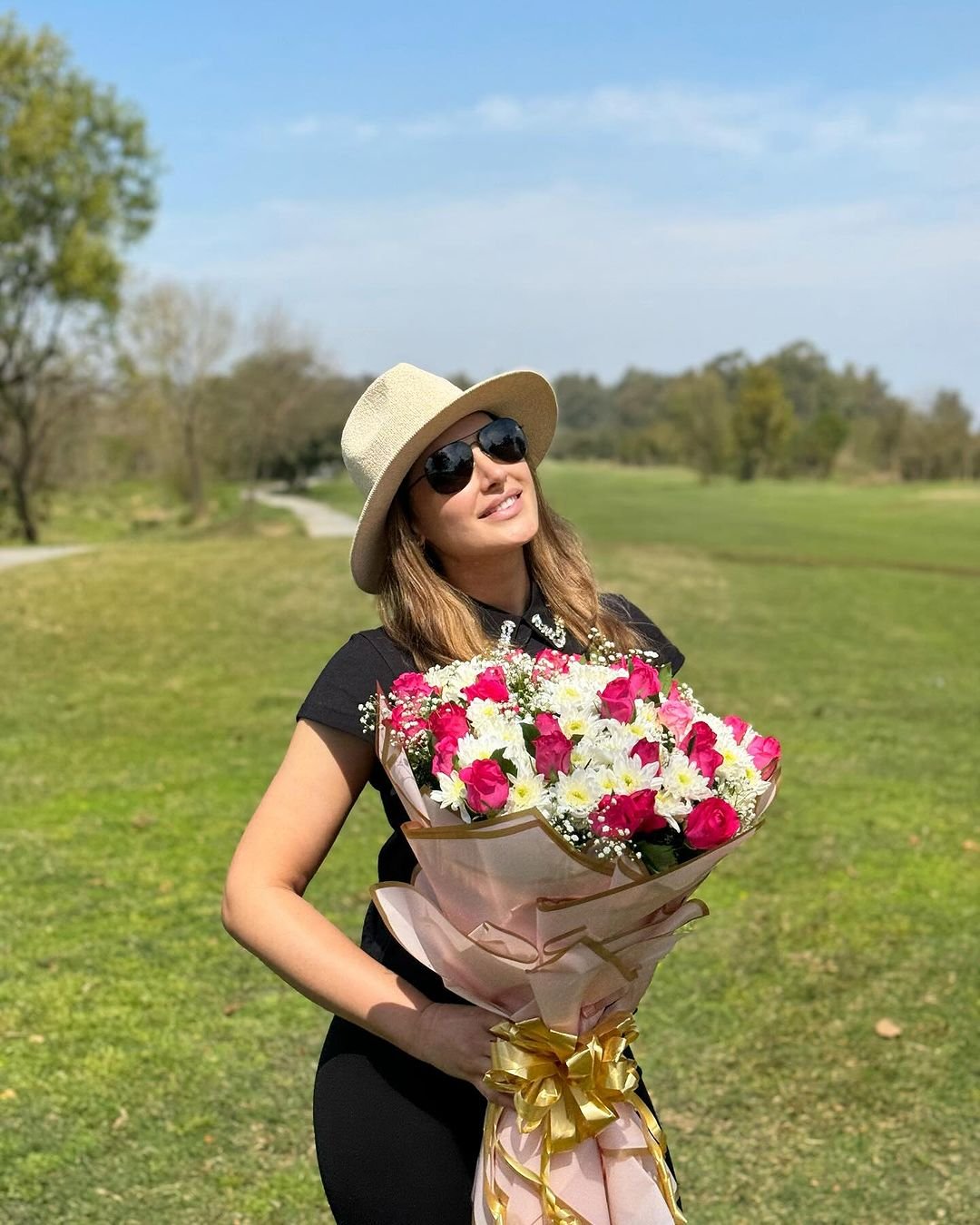
Bollywood actress Nargis Fakhri has shared a bunch of flowers on Instagram, captioning her post with the quote: ‘Embracing the beauty of womanhood, one petal at a time.’ Happy International Women’s Day, wishing women worldwide a happy Women’s Day. Every March 8th, International Women’s Day is celebrated globally to honour women’s achievements and promote gender equality. On this day, organizations and human rights groups host special events. Nargis Fakhri’s post reminded people about the importance of the day. She encouraged women to stay strong and keep working towards their goals. Her message was simple but meaningful, spreading positivity and unity. Nargis Fakhri’s gesture on Instagram resonated with many, showing support for women’s empowerment. This Women’s Day, let’s remember the progress made and continue supporting each other for a more equal world. Nargis Fakhri’s post serves as a reminder to celebrate women’s accomplishments and advocate for their rights.
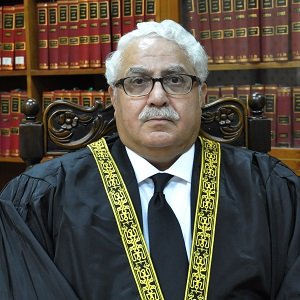
A five-judge bench of the Supreme Judicial Council (SJC) has released a 33-page detailed opinion on Friday, stating that former judge of the apex court, Sayyed Mazahar Ali Akbar Naqvi, has committed misconduct. The council recommended his removal from office and advised against using the titles ‘Justice’ or ‘Judge’ with his name in the future.
The SJC discovered that the judge committed several instances of misconduct, which harmed the reputation of the judiciary.
While Mr Naqvi had resigned a day before the SJC began proceedings on nine complaints against him under Article 209(6), the council decided to continue with its proceedings, with Chief Justice of Pakistan (CJP) Qazi Faez Isa saying it was “necessary to remove the misperception that the institution of judiciary is above the law”. The Supreme Judicial Council, led by the Chief Justice of Pakistan, praised the Pakistan Bar Council (which oversees lawyers) and Advocate Mian Dawood for filing complaints to support the rule of law and accountability.
The council found Naqvi guilty of violating his oath of office and the Code of Conduct for judges after at least five allegations made by the complainants were proven true.
The council explained that it could not be stated that Mr Naqvi was “untouched by greed”, “was above reproach”, his conduct was “free from impropriety expected of a judge” in his official and private affairs and thus he violated Article II and III of the Code of Conduct. According to the SJC opinion, it was clear that he violated Article IV as his actions were swayed by consideration of “personal advantage”.
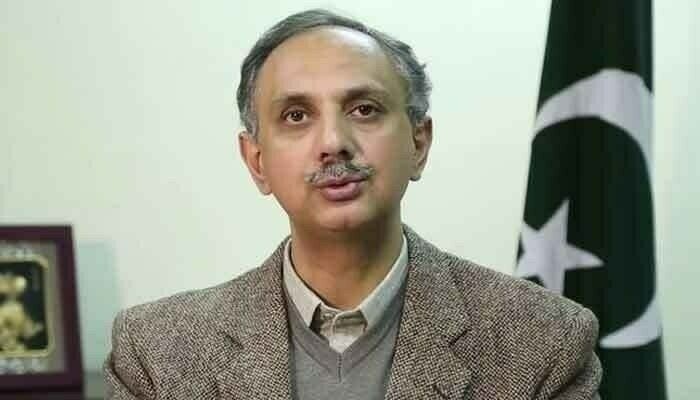
Omer Ayub Khan, lawmaker backed by Pakistan Tehreek-e-Insaf (PTI) and Sunni Ittehad Council (SIC), strongly objected to the oath-taking of members of the National Assembly (MNAs) on reserved seats, calling it “unconstitutional.
A group of newly elected lawmakers on reserved seats in the NA were sworn in. NA Speaker Ayaz Sadiq administered the oath to the MNAs amidst chanting by PTI-backed SIC lawmakers.
Taking the floor, Ayub — Imran Khan’s pick for the leader of the opposition — said: “Today’s oath-taking of MNAs on reserved seats is illegal and has no [legal] standing.”
Raising questions over the oathtaking, the PTI leader asked a country can be run without the rule of law. “The system cannot work like this.”
The Peshawar High Court (PHC) has extended a stay order on the oath-taking ceremony for lawmakers who were supposed to take their oaths on reserved seats supported by the PTI-backed SIC. This extension lasts until March 13.
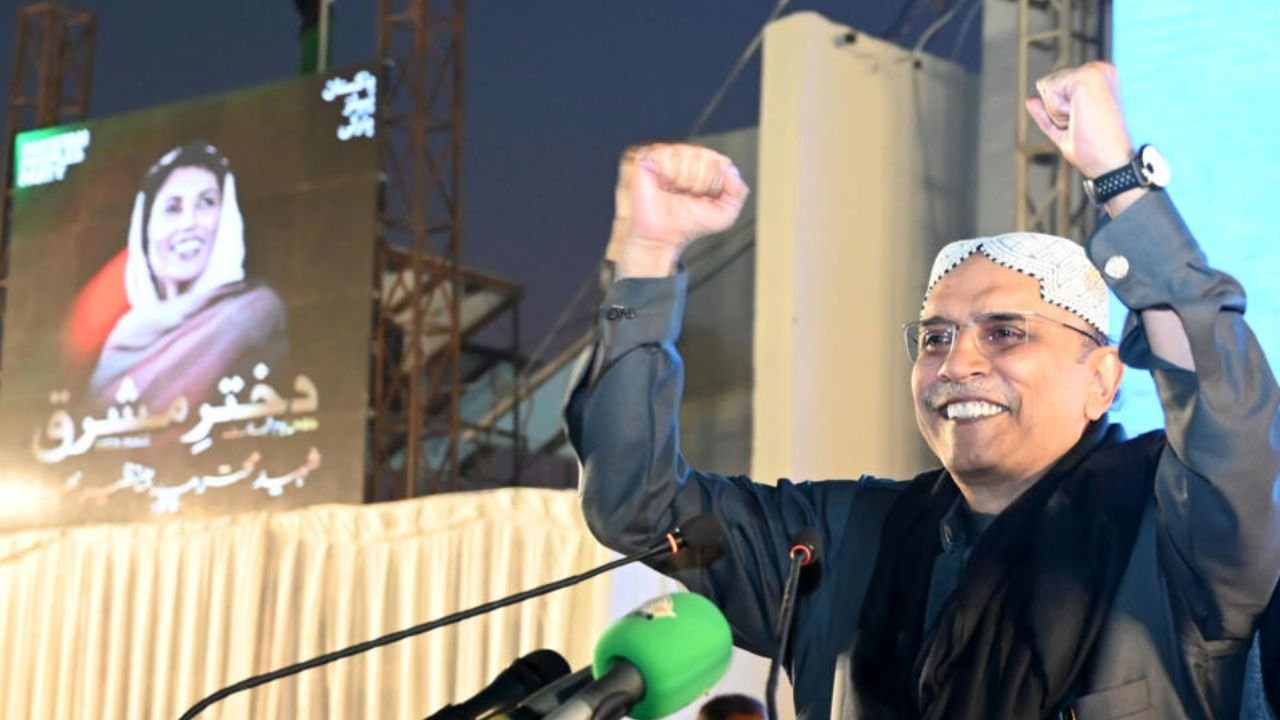
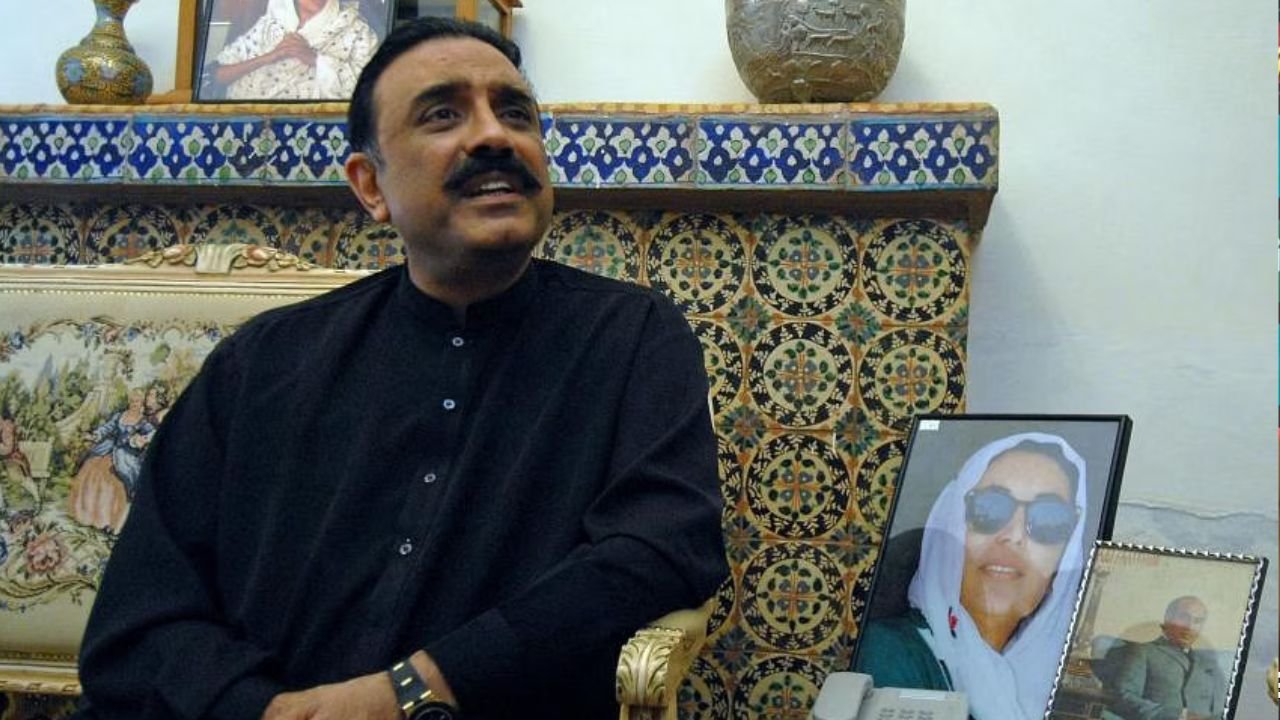
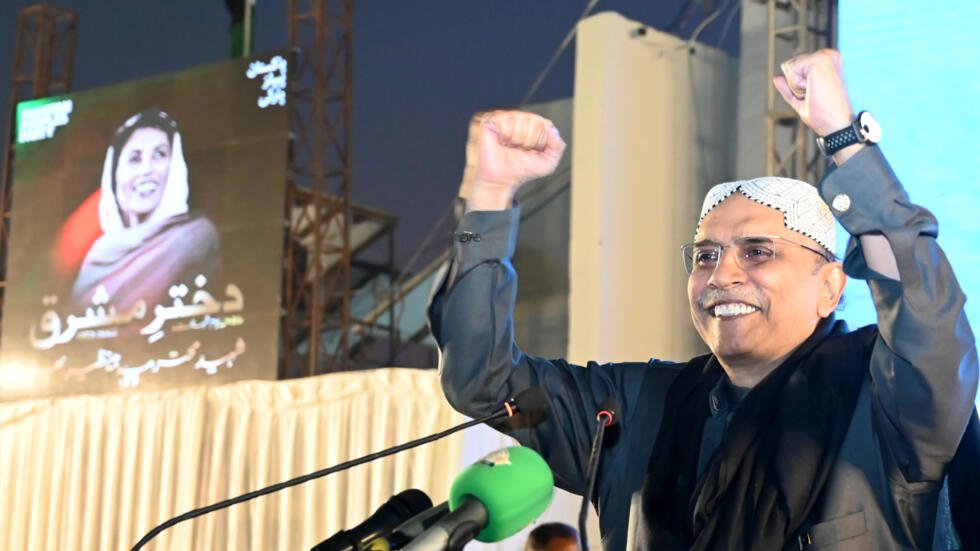
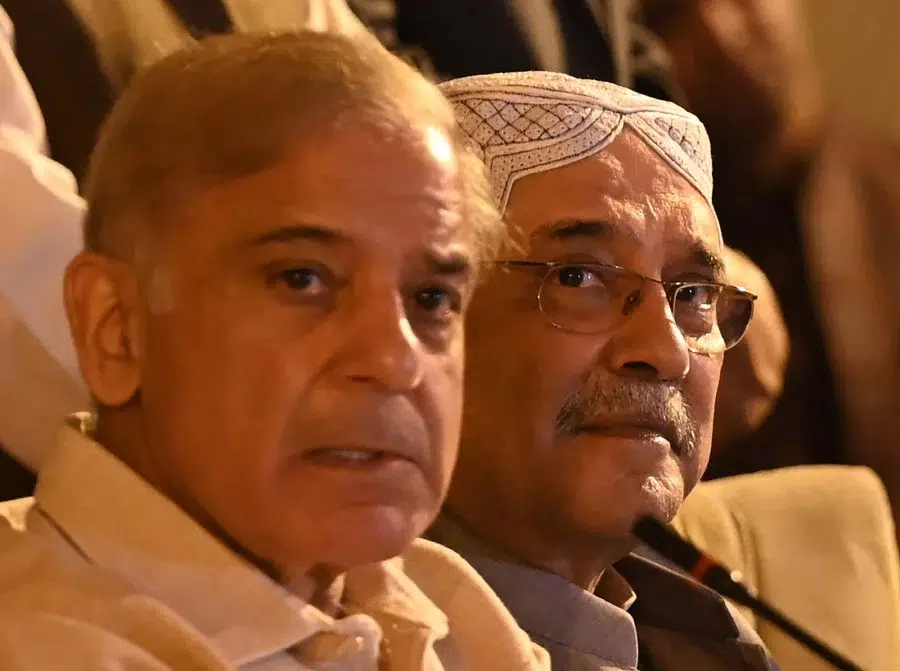
Asif Ali Zardari, the widower of Pakistan’s slain first female premier Benazir Bhutto who has had a life storied equally by tragedy and farce, is set to become president for a second time on Saturday.
Initially a background character as Bhutto’s consort, Zardari was stained by a bevy of corruption and other allegations, including absurd kidnapping plots and taking kickbacks lavished on hoards of jewellery.
Despite a reputation as “Mr. Ten Percent” — the alleged cut he took for rubber-stamping contracts — a sympathy vote propelled him to office when his wife was assassinated in a 2007 bomb and gun attack.
Between 2008 and 2013, he ushered in constitutional reforms rolling back presidential powers, and the 68-year-old’s second term will see him steer a largely ceremonial office.
He has spent more than 11 years in jail, a long time even by the standards of Pakistani politicians, with a wheeler-dealer’s talent for bouncing back after scandals.
Back in 2009, the New York Times said he had a knack for “artful dodging” — “maneuvering himself out of the tight spots he gets himself into”.
Newly sworn-in lawmakers were set to vote him in under the terms of a coalition deal brokered after February 8 elections marred by rigging claims.
Under that deal, Zardari’s Pakistan Peoples Party (PPP) will take the presidency, while its historic rivals the Pakistan Muslim League-Nawaz (PML-N) party secured the prime minister’s position for Shehbaz Sharif, who was officially sworn in on Monday.
Zardari was born in 1955 into a land-owning family from the southern province of Sindh.
“As a child, I was spoilt by my parents as an only son,” he said in a 2000 interview with the Guardian newspaper. “They indulged my every whim.”
He expressed only limited political ambitions as a young man — losing a 1983 local government election.
It was his 1987 arranged marriage with PPP leader Benazir Bhutto that earned him a spot in the political limelight.
Their union — brokered by Bhutto’s mother — was considered an unlikely pairing for a leader-in-waiting from one of Pakistan’s major political dynasties.
Bhutto was an Oxford and Harvard graduate driven by the desire to oust then-president Mohammad Zia-ul-Haq, who forced her father from the prime minister’s office and had him executed.
Zardari was a university dropout with a reputation for brawling, partying and romancing women at a private disco in his family home.
On the eve of their wedding, Bhutto’s team issued a formal statement denying he was “a playboy who plays polo by day and frequents discos at night”.
Their nuptial celebrations were dubbed the “people’s wedding” — doubling as a political rally in the megacity of Karachi, where a crowd of 100,000 fervently chanted PPP slogans.
Initially, Zardari pledged to keep out of politics.
Bhutto served as prime minister from 1988 to 1990 — the first woman to head a democratic government in a Muslim country — and again from 1993 to 1996.
PPP insiders regarded Zardari as a liability, considering him likely to embarrass her leadership.
Their fears were perhaps well-founded. In 1990, he was embroiled in accusations of an absurd plot to extort a businessman by tying a bomb to his leg.
He was jailed for three years on extortion and kidnapping charges but was elected to the national assembly from behind bars.
In Bhutto’s second term, he served as investment minister.
A bombshell New York Times investigation detailed how he tried to engineer vast kickbacks on military contracts over this period while lavishing huge sums on jewellery.
After Bhutto’s government fell in 1996, Zardari was back behind bars within half an hour.
In December 2007, Bhutto was assassinated while on the campaign trail for a third term in office.
Her killing shook the nation to its core, a wave of sympathy carrying the PPP to victory in 2008. The party nominated Zardari as president.
In 2010, he was widely criticised for continuing a European holiday when the nation was devastated by floods that killed almost 1,800 and affected 21 million.
He was also head of state when US commandos trespassed onto Pakistani soil for the 2011 assassination of Osama Bin Laden, an episode that humiliated many compatriots.
He did, however, usher in constitutional reforms rolling back the sweeping powers of the presidency and bolstering parliamentary democracy that had been undermined by three decades of military rule since 1947.
In 2013, Zardari became the first Pakistani president to complete his full term.
He was jailed once again over money laundering charges in 2019 but was released months later.
Zardari and Benazir had three children, including Bilawal Bhutto Zardari, the current chairman of the PPP.
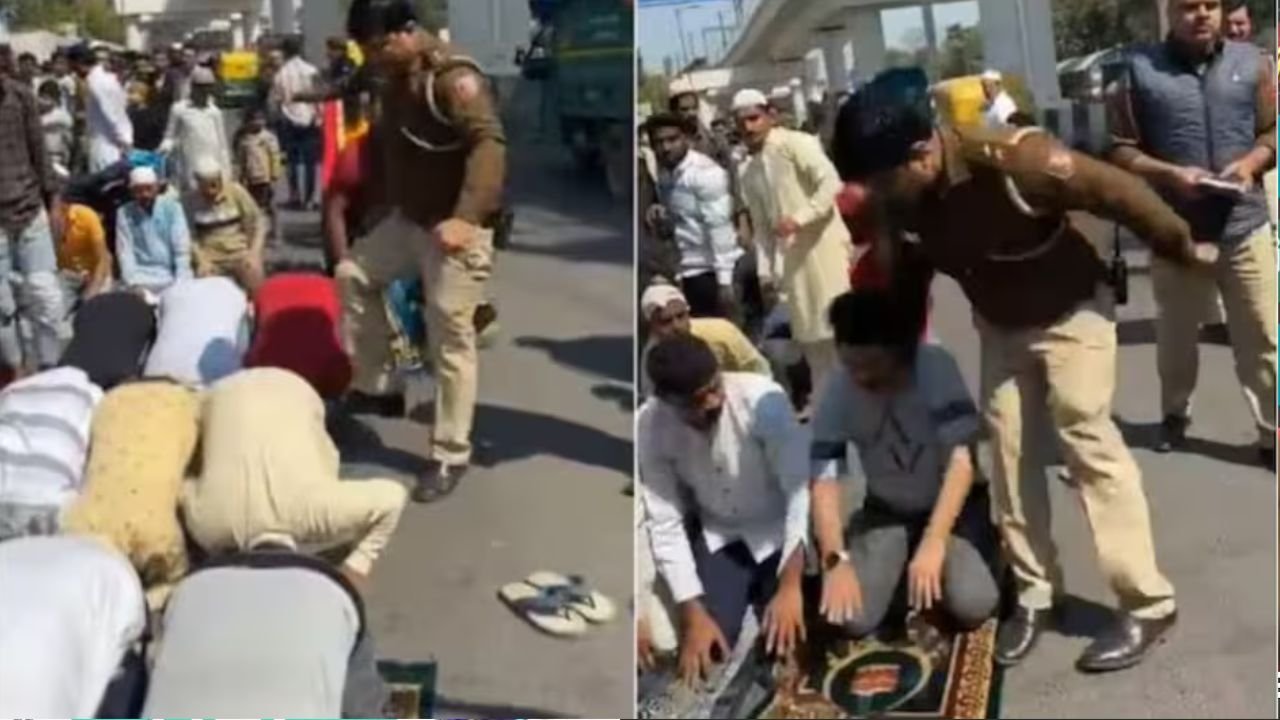
A video of an Indian cop brutally beating Muslim men offering jummah prayers on the roadside in Delhi has gone viral. The video shows the policeman kicking and hitting Muslims who were kneeling down for sajdah (prostration).
The incident took place in Delhi’s Inderlok area where a large number of Muslims gathered at a mosque on Friday, leading to several men praying on the road as the crowd overflowed the premises.
Police officials arrived at the spot mid-prayers and started kicking and punching the Muslims. They can be heard telling the worshippers to vacate the place. The video shows one of them kicking and hitting the Muslims who were kneeling down for prayers. However, a crowd surrounded the cop and objected to his attitude, getting into a verbal brawl.
Sharing the video of the incident, Congress Rajya Sabha MP Imran Pratapgarhi said, “What is this hatred that is filled in the heart of this soldier? Delhi Police is requested to file a case against this official under appropriate sections and terminate his service.”
In an interview with Hindustan Times, Deputy Commissioner of Police (north) MK Meena said that an inquiry into the matter has been initiated. The official has been suspended with immediate effect and disciplinary action will also be taken, the DCP added.
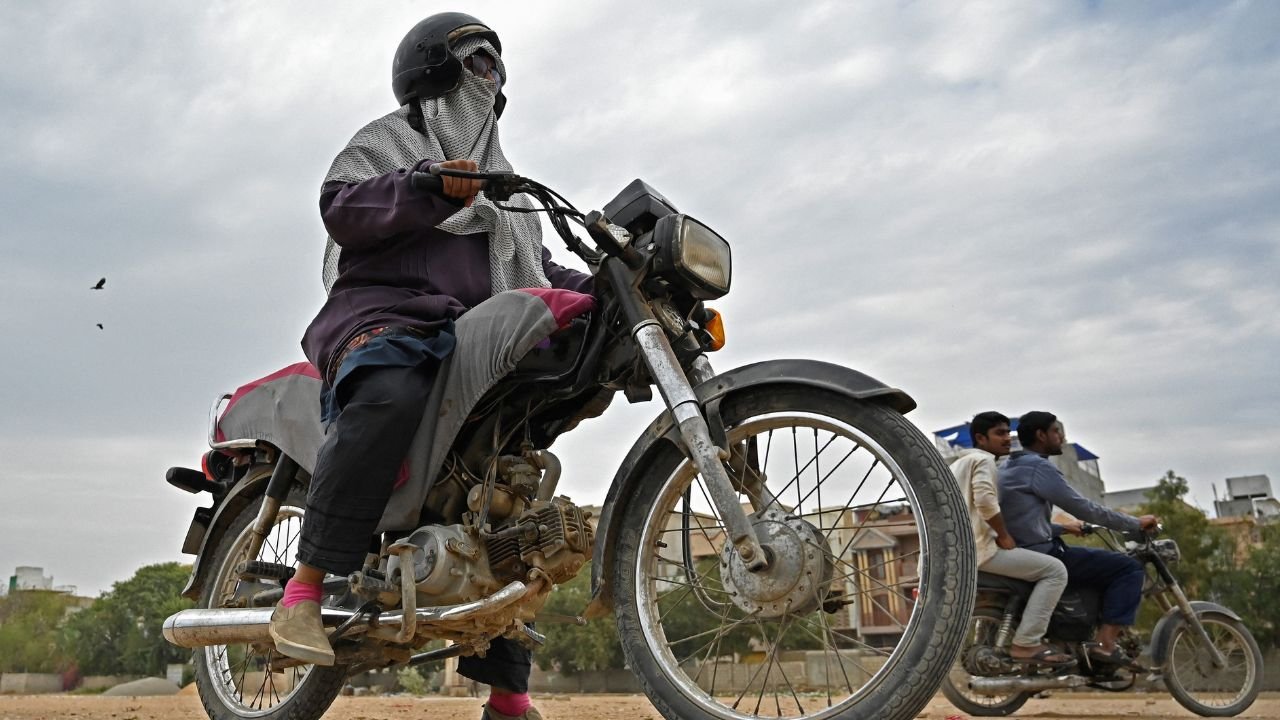
Karachi (AFP) – Revving round a dusty oval in the heart of Pakistan’s largest city, women on motorbikes practise looping a row of safety cones, their helmets securing colourful headscarves in place.
It is a rare sight in the culturally conservative country, where women are typically relegated to the back seats of cars or to riding side-saddle on motorbikes, ferried by a male relative.
“Change is under way,” says Zainab Safdar, demonstrating how to mount a two-wheeler while cloaked in a pink body-covering abaya.
The 40-year-old is an instructor for the “Rowdy Riders”, a women-only group teaching novices in Karachi everything from the basics of balancing on a bicycle to high-octane gear changing and negotiating traffic.
Since being founded in 2017 by a handful of pioneering riders, the self-described “Rowdies” have swollen in number to more than 1,500 housewives, students and professionals.
“In the past, there were misconceptions about girls riding bikes,” Safdar said, referring to doubts about their abilities.
“Fortunately, with greater awareness, these notions have been dispelled.”
Women’s participation in the workforce is impacted by the limited availability of public transport services that ensure their safety.
In the sprawling megacity, granting women the skill and confidence to join legions of male bikers in the helter-skelter of congestion unlocks a new tier of freedom.
Most of the riders hail from Karachi’s middle class, but rigid gender norms often still hold sway.
University lecturer Shafaq Zaman said “it took a while to get permission” from her family to start classes to master a pedal bike two months ago.
Among the few dozen bikers assembled under the mid-afternoon sun, she looks on with her seven-year-old daughter Aleesha as a convoy of women open up their engines and rip past in a haze of dust.
“I am so inspired that now I have my own dream for me, that I want to ride on a heavy bike. I want to ride the whole of Pakistan,” 30-year-old Zaman said.
Her story is not unusual. In Pakistan, very young boys are often seen steering motorbikes, but many of the “Rowdies” did not learn to ride a bicycle until well into adulthood.
“There should be a bike in every house, and usually there is, but it’s rotting because men do not use it and women don’t know how to,” said Sana Kamran, sitting confidently astride a 110cc Suzuki.
“If women can manage household responsibilities and earn a living, why can’t they ride a bike for their convenience?” the 41-year-old asked.
Motorbikes are ubiquitous across Pakistan — most commonly red Honda models or cheaper Chinese reproductions, considered capable of mastering any terrain.
The quest to conquer a bike has seen 26-year-old Farwa Zaidi suffer multiple bone fractures — but the injuries are a badge of honour she wears as proudly as the “Rowdy Riders” crest on her jacket.
“Here I am, standing strong,” she said alongside her 70cc electric scooter.
At four feet and six inches (137 centimetres) tall, Zaidi said her small stature made it difficult to claim a spot on crammed city buses.
Learning to ride gave her a new sense of possibility.
“Once we master cycling, it instils a new-found confidence in our ability to conquer other challenges,” she says.
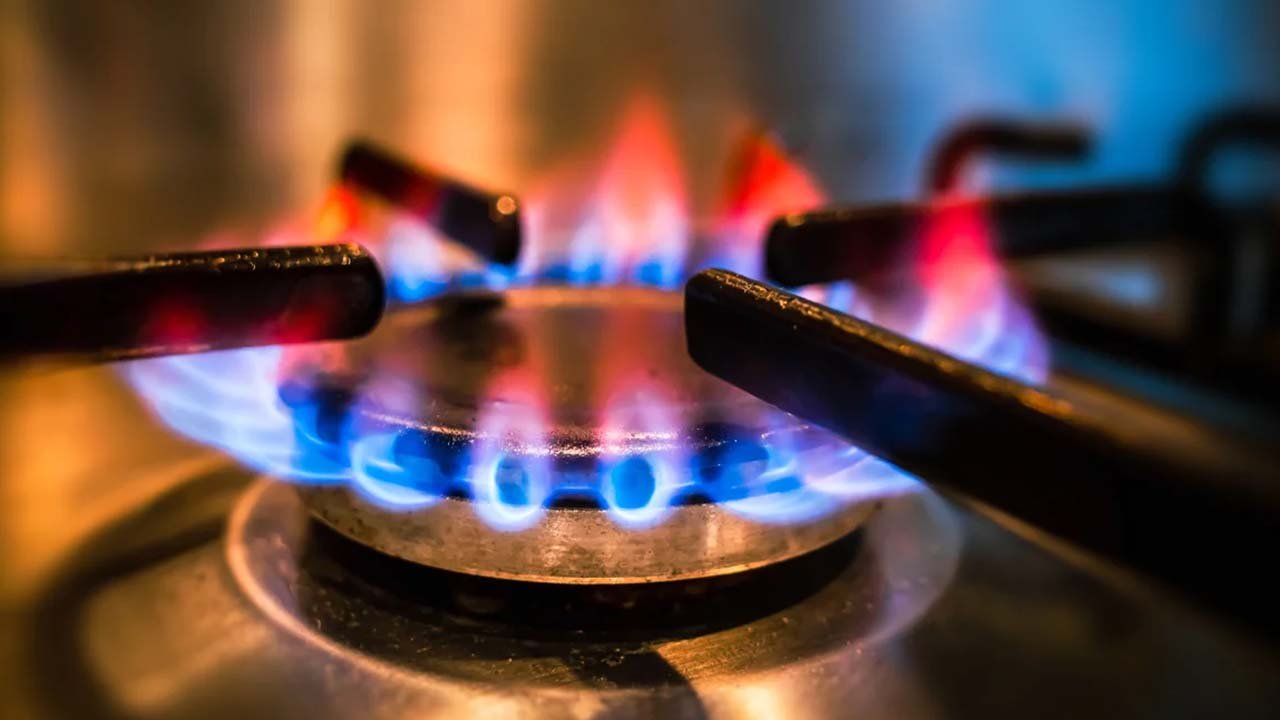
Sui Northern Gas Pipelines Limited (SNGPL) has affirmed its commitment to providing uninterrupted gas supply during the holy month of Ramadan, specifically catering to the Sahr and Iftar periods. The decision comes as a proactive measure to facilitate consumers adhering to their religious practices.
According to a spokesperson from Sui Northern, the gas supply will remain constant from 2:30 am to 8 am for Sahr (pre-dawn meal) and from 3 pm to 10 pm for Iftar (breaking of the fast). This move is aimed at ensuring a seamless gas service for consumers at crucial times during Ramadan.
In addressing potential gas pressure issues, Sui Northern Gas has formed monitoring teams and established control rooms. These initiatives are designed to swiftly resolve any challenges that may arise, emphasising the company’s dedication to a reliable gas supply throughout the holy month.
Consumers experiencing gas pressure or supply problems are encouraged to contact the dedicated helpline at 1199.
In a remarkable eighth consecutive session, the domestic bullion market has maintained its bullish trend, driving the price of 24-karat gold to new heights.
The surge reached an impressive Rs13,800 per tola during this period, with today’s session witnessing a gain of Rs450 per tola, bringing the current trade value to Rs228,600.
The Karachi Sarafa Association reported that the price of 10-gramme 24-karat gold has soared to Rs195,988 per tola, marking an increase of Rs386.
Additionally, the price of 10-gramme 22-karat gold has experienced a notable rise, reaching Rs179,655.
Contrastingly, silver prices have remained unchanged, with 24-karat silver maintaining its position at Rs2,600 per tola and Rs2,229.08 per 10-gramme.
Internationally, the spotlight is on the global spot gold market, which is poised to record its most significant weekly jump in five months.
Over the past eight sessions, spot rates have climbed by 6.7 per cent, or $136, spurred by remarks from FED Chair Jerome Powell that have solidified expectations for interest rate cuts later in the year.
The inverse relationship between gold and bond yields has contributed to the precious metal’s robust performance.
Additionally, the rally in procyclical asset classes, particularly equities, has provided further support to gold as investors seek to diversify their risk exposure.
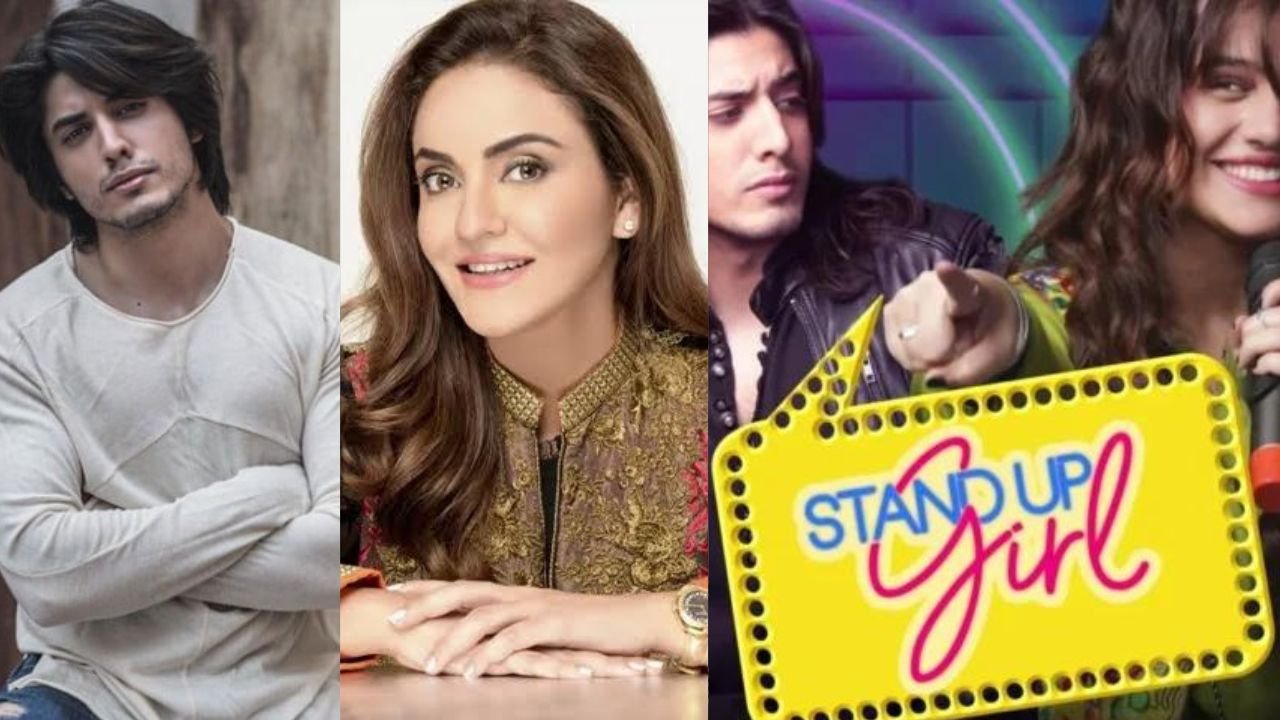
Senior actress and TV host Nadia Khan has praised Ali Zafar’s younger brother, singer and actor Daniyal Zafar for his acting and personality. Former actress Nadia Hussain recently appeared as a guest on a show ‘Kya Drama Hai’ along with director and actresses Marina Khan and Rubina Ashraf. Meanwhile, these three senior actresses were expressing their opinions on the on-air dramas and the performances of the budding artists in them. Nadia Khan also spoke about Daniyal Zafar’s acting and personality.
The actress said, “He looks like a hero on screen but does not try to look like a hero, he acts in his unique and natural Lahore style, his acting is very simple, serious and very sincere to his role.”
Appreciating Daniyal Zafar’s performance in private TV’s drama serial ‘Stand Up Girl’, Nadia Khan further said, “I liked Daniyal Zafar’s acting very well, Daniyal Zafar’s personality is such that as soon as you see him Fall in love with this boy.” It should be noted that ‘Stand Up Girl’ is a comedy drama serial in which actress Zara Noor Abbas is working opposite Daniyal Zafar.
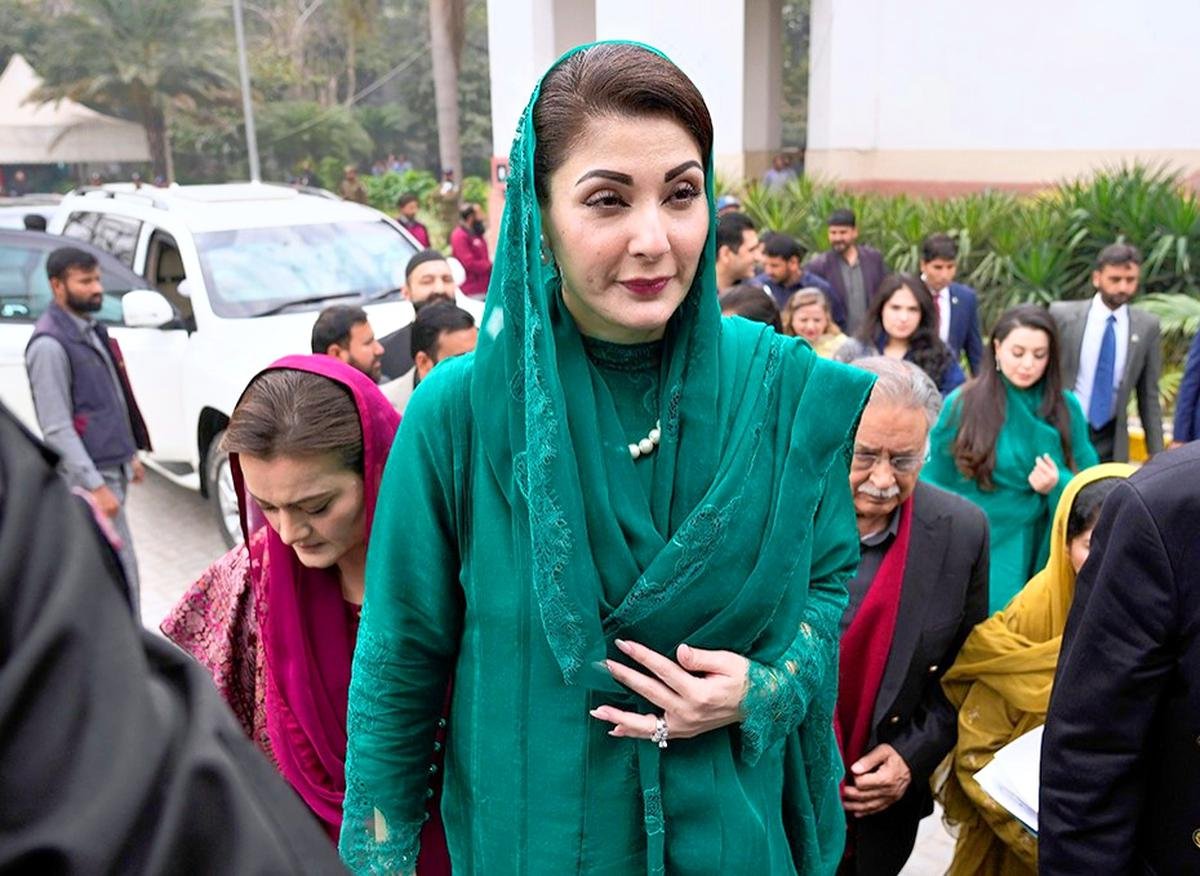
Punjab Chief Minister Maryam Nawaz said on Friday that she struggled for 12 to 13 years to make her place in the male-dominated Pakistan Muslim League-Nawaz (PML-N).
“My presence here is a message to mothers, daughters, and sisters that if you want to do something, then being a woman is not an obstacle in achieving your dreams,” Maryam said addressing an event related to the International Women’s Day in Lahore.
The newly appointed chief minister expressed her wish for a woman to replace her in Punjab and also stated her desire for women to be elected to the chief executive’s office in other provinces as well.
Maryam Nawaz took oath as the chief minister of an important province Punjab on February 26, and she is the first female chief minister in Pakistan.
The PML-N vice president won the chief ministerial election after obtaining 220 votes in the provincial assembly.