Tag: Pakistan

  • Only 20 per cent students passed Inter Arts 1st year

    Only 20 per cent students passed Inter Arts 1st year

    The results for first-year (Part-I) examination announced by the Board of Intermediate Education Karachi (BIEK) raises concerns as more than 50 per cent of the students have failed.

    According to the inter board spokesperson, 72 per cent of the candidates failed in arts first year (private) and 80 per cent in arts (regular).

    He added that 11,046 candidates participated in the Arts (regular) exams in which only 2,298 candidates were successful while 2,795 candidates participated in the Arts private exams in which 792 candidates passed all the papers.

    Additionally, 63 per cent of the candidates failed in Commerce (private) as 1,986 candidates participated in the exams, out of which 744 candidates passed all the papers.

  • Saif Ali Khan admitted to hospital for surgery

    Saif Ali Khan admitted to hospital for surgery

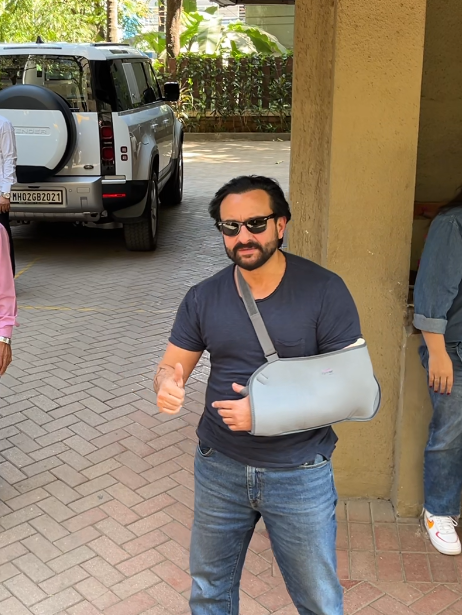
    Bollywood actor Saif Ali Khan has been admitted at Kokilaben Dhirubhai Ambani Hospital in Mumbai for surgery.
    It has been reported in Indian media that he has a fractured knee and shoulder, but the details of how that happened are not known yet. There has been no official statement from Saif’s team about the incident.

    Saif’s wife, actress Kareena Kapoor Khan, is with him at the hospital. They reached the medical facility at around 8 a.m. on Monday, January 22. Despite trying to get a response from Saif’s team, there has been no official comment about the situation.

    Saif Ali Khan and Kareena Kapoor are parents to Two children, Taimur and Jehangir Ali Khan. Saif was previously married to actress Amrita Singh, with whom he has a daughter, actress Sara Ali Khan, and a son, Ibrahim Ali Khan.

  • ‘Pakistan’s economy performed best under Nawaz Sharif’: Bloomberg

    ‘Pakistan’s economy performed best under Nawaz Sharif’: Bloomberg

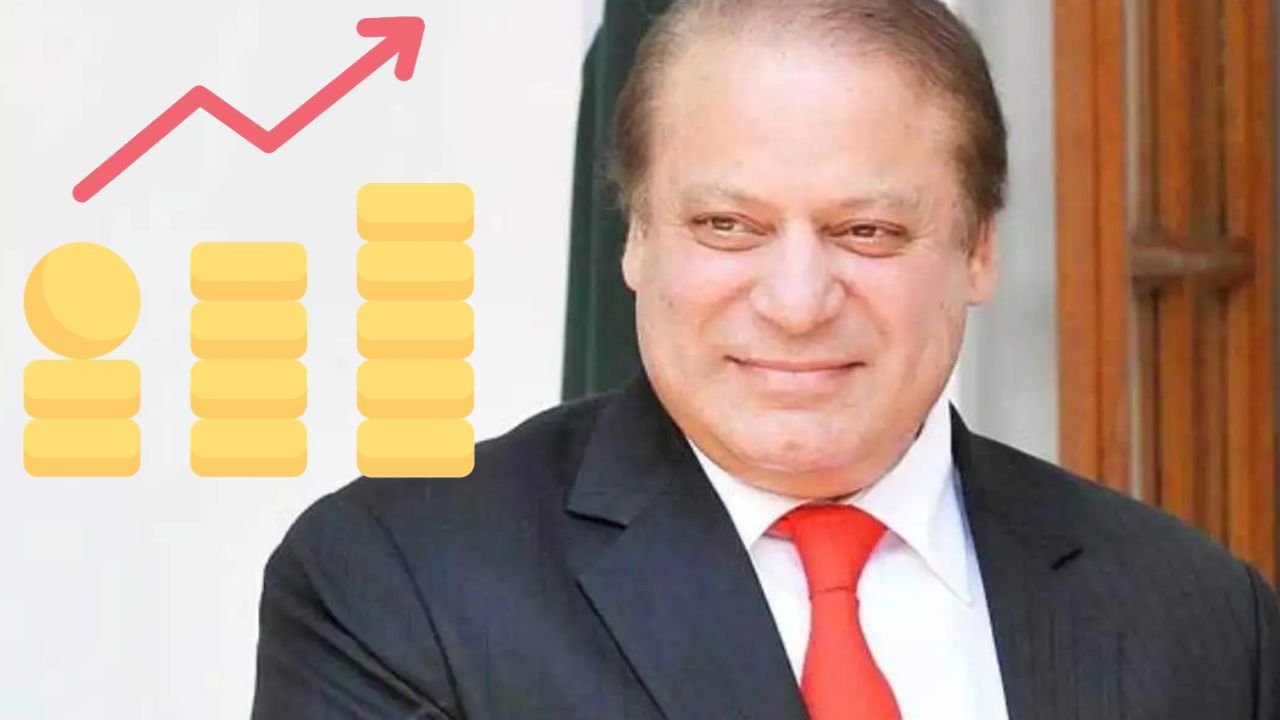
    An analysis by Bloomberg Economics reveals that Pakistan’s economy witnessed its best performance in the past three decades under the leadership of Nawaz Sharif, who served as Prime Minister thrice.

    The report compares economic indicators during Sharif’s tenure with those of his rivals, including Imran Khan’s Pakistan Tehreek-e-Insaf (PTI) and Bilawal Bhutto Zardari’s Pakistan Peoples Party (PPP), using a misery index that combines inflation and unemployment rates.

    According to Bloomberg Economics, the analysis utilized an average of the misery index values over the years when each major political party ruled Pakistan since 1990.

    The results indicate that Sharif’s Pakistan Muslim League (PML-N) outperformed both PTI and PPP in managing economic challenges.

    With general elections scheduled for February 8, Bloomberg suggests that Nawaz Sharif seems poised to return to power for the fourth time, especially as Imran Khan faces legal issues and incarceration.

    Despite Khan’s popularity, with a 57% approval rating according to a recent Gallup poll, Sharif has experienced a surge in popularity from 36% to 52% in the past six months.

    The past three decades saw the PML-N rule Pakistan four times under Sharif and his younger brother Shehbaz Sharif. The PPP under the Bhutto dynasty has held power three times, while Khan was in office for a four-year term ending in April 2022 when he was ousted from power in a parliamentary no-trust vote.

    “Bloomberg Economics used an average of the index values over the respective years when each of the major political parties ruled the country since 1990. A higher value indicates more economic hardship for citizens,” the publication said, explaining its conclusions.

    Bloomberg Economics Misery Index Results for Pakistan showed the Pakistan Muslim League scored 14.5 percent, Pakistan Tehreek-e-Insaf 16.1 percent, and the Pakistan Peoples Party 17.2 percent.

    Pakistan is currently grappling with economic challenges, including seeking a financial bailout from the International Monetary Fund (IMF).

    Inflation is close to 30 percent in Pakistan, the currency was Asia’s worst performer last year and foreign exchange reserves have slumped.

    The incoming government, as per IMF conditions, will need to implement potentially unpopular policies such as withdrawing subsidies and raising taxes. The IMF forecasts a 2% growth in Pakistan’s economy for the current fiscal year after experiencing a contraction in the previous year.

    Despite the positive economic indicators during Sharif’s governance, the report underscores the formidable tasks awaiting the new government in addressing the country’s economic hardships.

  • What is Canada’s new visa policy for students?

    What is Canada’s new visa policy for students?

    As per official data, last year Canada issued nearly one million study permits, about three times that of a decade ago, and now they are changing their policy.

    In response to a housing shortage aggravated by explosive growth in foreign student numbers, Canada has announced a temporary two-year cap on the intake of international students.

    Last year, the country issued nearly one million study permits, triple the figures from a decade ago, according to government data. The new proposal aims to reduce the intake by almost a third.

    Canada’s Immigration Minister, Marc Miller, revealed that the Liberal government will implement a two-year cap on student visas, resulting in the issuance of approximately 364,000 visas in 2024.

    The plan also includes limitations on post-graduate work permits for foreign students, potentially encouraging them to return to their home countries.

    Previously viewed as a straightforward path to permanent residency, these permits will now be subject to stricter regulations.

    However, those pursuing master’s or post-doctorate programs will still be eligible for a three-year work permit.

    Additionally, spouses of international students enrolled in undergraduate and college programs will no longer be eligible for permits, Miller stated.

    The acceptance of new study permit applications in 2025 will be reassessed at the end of the current year.

    The government’s decision comes in response to the surge in international students, creating a housing crisis and driving up rents across the country.

    December 2023 saw a 7.7 per cent year-on-year increase in rents nationwide, according to Statscan. Prime Minister Justin Trudeau’s popularity has been dented mainly due to the affordability crisis, and opposition Conservative Party leader Pierre Poilievre has taken a commanding lead over Trudeau in opinion polls ahead of an election next year.

    Concerns about the quality of education provided by some institutions have also prompted the government to reevaluate its immigration policies.

    The move will not only affect the housing market but will also have economic implications. International students contribute approximately C$22 billion ($16.4 billion) annually to the Canadian economy.

    This decision will likely impact educational institutions that expanded their campuses in anticipation of a continuous influx of students.

    Ontario, the most populous province, has been the primary recipient of international students. Some businesses, including restaurants and the retail sector, have warned of potential labor shortages due to the cap on foreign students.

    Canada’s move will have repercussions for Canadian banks, as international students are required to have Guaranteed Investment Certificates (GICs) of over C$20,000, covering living expenses.

    Most foreign students, approximately 40%, hail from India, with China coming in second at around 12%, based on official data from 2022.

    In response to these changes, the University of Toronto has expressed its readiness to collaborate with all levels of government to ensure that the allocation of study permits considers institutions like U of T and addresses challenges in the system.

  • Palestinian faith gives rise to Islamic belief system around the globe

    Palestinian faith gives rise to Islamic belief system around the globe

    It has been more than 100 days since Israel began the genocide in Gaza. Not just for people in the West but also for Muslims at large, this period has been a time of self-realization and a strengthening of their beliefs. Yakeen Institute for Islamic Research, surveyed 1800+ English-speaking Muslims to gauge the change of attitude in their religiosity and the results are astounding.

    Demographics of the Yakeen sample include 74 per cent female; 61 per cent live in North America, 13 per cent live in Europe, 18 per cent live in Asia, and 6 per cent live in Africa; 41 per cent are under 35 years of age; 50 per cent were South Asian, 17 per cent Arab, and 10 per cent black/African.

    70 per cent of people in Yakeen’s sample believe that the liberation of Palestine is a religious issue. Consequently, 93 per cent believe that Palestine is ‘very’ or ‘extremely’ important to them personally, and 97 per cent believe its liberation is a high priority for the Muslim world, with 70 per cent saying it is the highest priority for the Muslim world. The people are also in agreement that Muslim nations should not normalize relations with Israel, with 96 per cent stating they are opposed to normalization and feel that it would cause additional harm to the people of Palestine.

    78 per cent of those surveyed reported that their relationship with Allah has improved since the assault on Gaza began. Yakeen Institute said that this is likely because people were reminded of death but the most important factor is the unshakeable faith of the people of Gaza, elevating the ummah’s religiosity and consciousness.

    There are many videos from the besieged strip but one, of a little boy thanking Allah Almighty even in the most dire circumstances where 8 of his family members have been martyred, is particularly hard-hitting.

    Witnessing this has caused 91 per cent of respondents to state that the people of Gaza have given them ‘quite a bit’ or ‘a lot’ of religious inspiration, with 97 per cent reporting being ‘quite’ or ‘extremely’ proud of the people of Gaza.

    Many have started opening the Qur’an to understand the divine message that instills messages of resilience in the people of Gaza. Famous TikToker Meghan B Rice is one such example. 85 per cent of Muslims reported feeling ‘quite a bit’ or ‘a lot’ of comfort in the Qur’an, and 80 per cent found similar levels of comfort in the biography (seerah) of Prophet Muhammad ﷺ. The Qur’an has come to life in new ways for Muslims.

    The details of the afterlife found in the Qur’an and Sunnah have also brought tremendous comfort and clarity to Muslims worldwide. For example, 96 per cent reported that knowing that our brothers and sisters who were martyred are alive in paradise brought ‘quite a bit’ or ‘a lot’ of comfort.

    Almost 30 Australian women accepted Islam seeing the steadfastness of Gazans.

    TikTok is the budding platform promoting such voices as the famous pro-Palestine Instagram account palestineonaplate posted, “The faith of the Palestinians in Gaza has woken up the world. Not just in support against the genocide that is happening but also towards Islam. Atheists, Christians, non-believers, reverts, everyone has been inspired by the faith the Gazans have in Allah and more and more people are converting to Islam because of this.”

  • More than half a million Afghans return from Pakistan

    More than half a million Afghans return from Pakistan

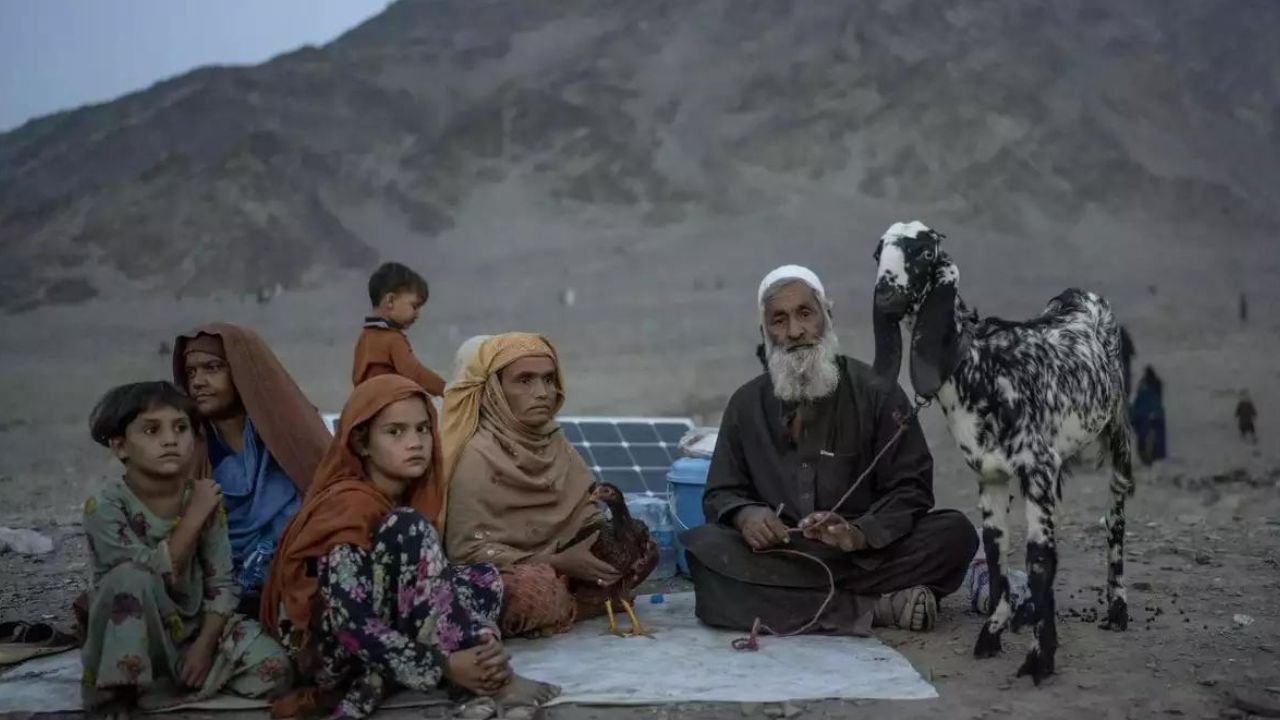
    More than 500,000 Afghans have fled Pakistan in the four months since Islamabad ordered undocumented migrants to leave or face arrest, the International Organization for Migration (IOM) said Monday.

    According to the latest figures reported by the UN migration agency, 500,200 Afghans left Pakistan between September 15, 2023 and January 13, 2024.

    Most rushed to the border in the days leading up to a November 1 exit deadline Islamabad set for the 1.7 million Afghans it said were living illegally in Pakistan, and as police opened dozens of holding centres.

    “Since the initial peak around November 1, the number of individuals crossing these official border points have consistently decreased but remains higher than pre-September 15th,” an IOM statement said.

    Pakistan defended the crackdown by pointing to security concerns in its regions bordering Afghanistan and pressure on its struggling economy.

    “Some Afghans forced to return may be at risk of persecution, arbitrary arrest and detention and/or torture or ill-treatment,” the UN’s Afghan mission said in a report on Monday.

    Meanwhile, the busiest border crossing between the two countries remained closed for the tenth day running in a dispute over document rules for commercial drivers.

    The row centres on demands for drivers from both sides to have visas and passports — documents many Afghans do not have — as Pakistan cracks down on cross-border movements.

    More than 400 trucks were stranded on the Pakistan side of the Torkham crossing on Monday, according to a border official who asked not to be named.

    Relations between Pakistan and Afghanistan have grown increasingly fraught in recent months, with Islamabad accusing the Taliban government of failing to root out militants staging attacks in Pakistan from their soil.

    Kabul has always rejected the allegations.

    Millions of Afghans fleeing conflict have poured into Pakistan over the past four decades, including some 600,000 since the Taliban ousted the US-backed government and imposed its harsh interpretation of Islamic law.

    Some of the Afghans crossing into Afghanistan as a result of Islamabad’s eviction scheme were entering the country for the first time, having lived their whole lives in Pakistan.

    Upon arrival, migrants have received modest assistance from the government and NGOs in a country contending with one of the worst humanitarian crises in the world.

  • Why shouldn’t court try Qasim Suri for violating Constitution, asks CJP Isa.

    Why shouldn’t court try Qasim Suri for violating Constitution, asks CJP Isa.

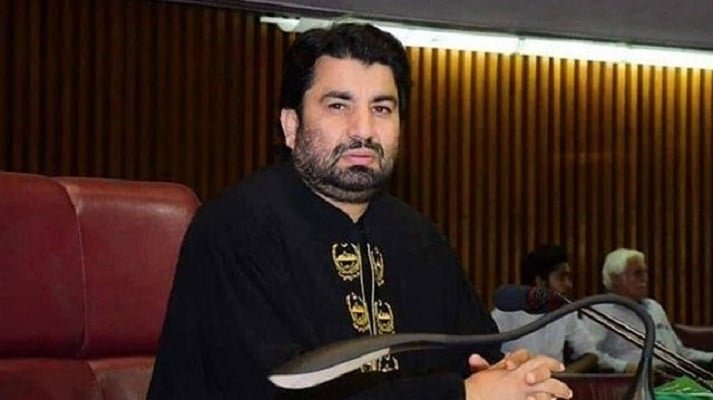
    Chief Justice of Pakistan (CJP) Qazi Faez Isa has asked why the Supreme Court (SC) should not proceed against former National Assembly (NA) deputy speaker and Pakistan Tehreek-e-Insaf (PTI) leader Qasim Suri for violating the Constitution.

    “Qasim Suri did not hold [voting] on the no-confidence motion. He became the cause of the constitutional crisis in the country,” the CJP remarked while referring to the 2022 crisis related to the ouster of then-prime minister Imran Khan via parliamentary vote.

    The CJP also stated that it was suggested that a former NA deputy speaker should be tried under Article 6 for treason. “Then tell us, why we should not proceed against you on abrogation of the Constitution?”

    The CJP passed the remarks during the hearing of Suri’s 2019 petition challenging the election tribunal’s decision to declare his election from NA-265 (Quetta-II) unlawful on September 27, that same year.

    In 2019, a three-member bench of the apex court headed by Umar Ata Bandial rejected the petition of the election tribunal and restored Qasim Suri’s membership.

    Baloch leader Lashkari Raisani had challenged Suri’s victory in the Quetta constituency during the 2018 elections.

  • Baloch protestors call off Islamabad sit-in after a month

    Baloch protestors call off Islamabad sit-in after a month

    The Baloch Yakjehti Committee (BYC) led by Dr Mahrang Baloch, has on Tuesday called off their over 30 day-long sit-in outside the National Press Club (NPC) in Islamabad, Geo News has reported.

    Baloch protesters had been protesting in the federal capital since December 20, 2023, against “enforced disappearances and extra-judicial killings”.
    Activist Dr Mahrang Baloch said they are returning to Balochistan from Islamabad.

    “We will hold a rally in Balochistan on January 27,” she added.

    The development comes a day after NPC Islamabad on Monday lodged a complaint with the Kohsar Police Station requesting to remove the Baloch protesters from the open park in front of the NPC.

    According to The News, the club’s administration, in its complaint, felt a security threat due to certain reasons as many political and social personalities of national stature visit the NPC to attend different functions.

    The NPC administration said that the protesters’ sit-in had been going on for over two months, causing financial loss as the people belonging to political and social sectors, avoided holding press conferences and other political and social functions at the NPC. However, it is also important to note that the security situation in Islamabad raised concerns when several educational institutes located in Islamabad reportedly were closed until further notice amid security concerns.

    Earlier this month, the Islamabad High Court (IHC) had ordered local authorities and police to refrain from creating any hindrance or using force to remove the Baloch marchers.

    Moreover, Justice Mohsin Akhtar Kayani had issued orders on a petition filed by a Baloch activist Sammi Deen Baloch, who was also among the protesting families in Islamabad, against harassment and attempts to remove marchers by force.

  • Faysal Quraishi reveals touching story about Shaan Shahid

    Faysal Quraishi reveals touching story about Shaan Shahid

    Faysal Quraishi recently talked about a very touching incident involving Shaan Shahid.

    During an appearance on ARY’s ‘The Knock Knock Show’, the actor said that there was a time when he was going through a tough phase and didn’t have much money. Even though things were getting better, managing his wardrobe was still a challenge. During the shooting of a film song, he met superstar Shaan Shahid.

    The megastar noticed Faysal’s clothes and advised him to wear something classy, suggesting a leather jacket with a good T-shirt. When Faysal asked how he could afford it, Shaan generously gave him his own leather jacket and T-shirt, putting on the shirt Faysal was wearing. Faysal expressed gratitude to Shaan for his kindness during a difficult time.

  • PTA warns of possible internet disruption in next 90 days

    PTA warns of possible internet disruption in next 90 days

    Pakistani internet users experienced disrupted internet once again on January 20 — previously disrupted on December 17 and January 7. The Pakistan Telecommunication Authority (PTA) claimed that the internet disruption was caused by technical reasons — system upgrades.

    Caretaker Information Minister Murtaza Solangi has on Tuesday reiterated the claims of technical issues while also warning of the possibility of further hiccups.

    These frequent and dubiously timed blackouts have brought PTA under public scrutiny.

    Samaa news writes that “Pakistan’s tech-savvy populace expressed palpable outrage at the apparent lack of transparency and the extended timeframe for resolution”.