Tag: Pakistan

  • New Zealand awards SSP Sonia Shamroz Khan from Khyber Pakhtunkhwa

    New Zealand awards SSP Sonia Shamroz Khan from Khyber Pakhtunkhwa

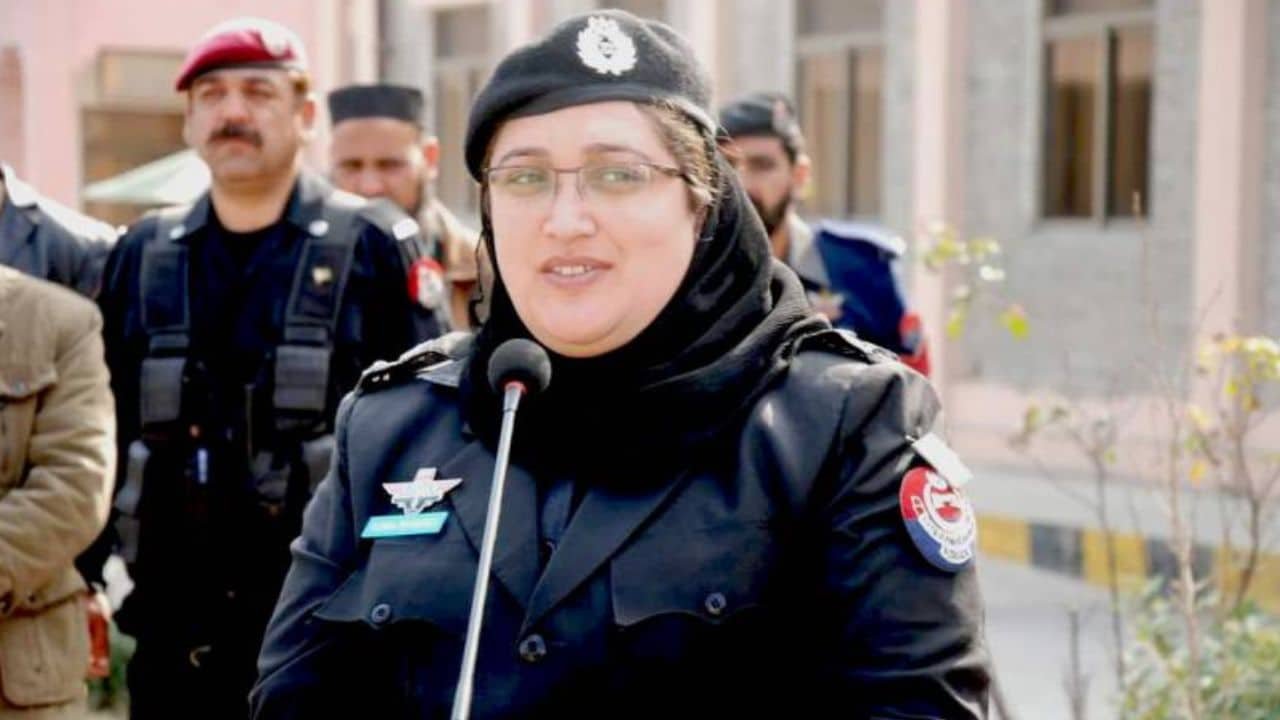
    Khyber Pakhtunkhwa’s Senior Superintendent of Police (SSP) and District Police Officer (DPO) of Battagram district, Sonia Shamroz Khan, received ‘Officer of the Year’ award from International Association of Women Police (IAWP) in Auckland, New Zealand.

    SSP Battagram Sonia Shamrose has been awarded for excellence in policing strategies and prevention of violence against women.

    She previously worked as DPO Chitral during which she actively worked on local social issues, including establishment of a complaint cell to prevent forced marriages.

    While speaking to Geo News, SSP Sonia Shamzroz Khan dedicated her award to all the women victims of gender discrimination and diligent women police officers who are working tirelessly to ensure peace and security.

    She added that she has always been mindful of cultural norms and sensitivity attached to certain issues while working. Previously, she highlighted, women in Battagram did not approach the police, but now, there is an increase in crime reports pertaining to their issues.

  • Pakistan to launch digital rupee to reduce printing and distribution costs

    Pakistan to launch digital rupee to reduce printing and distribution costs

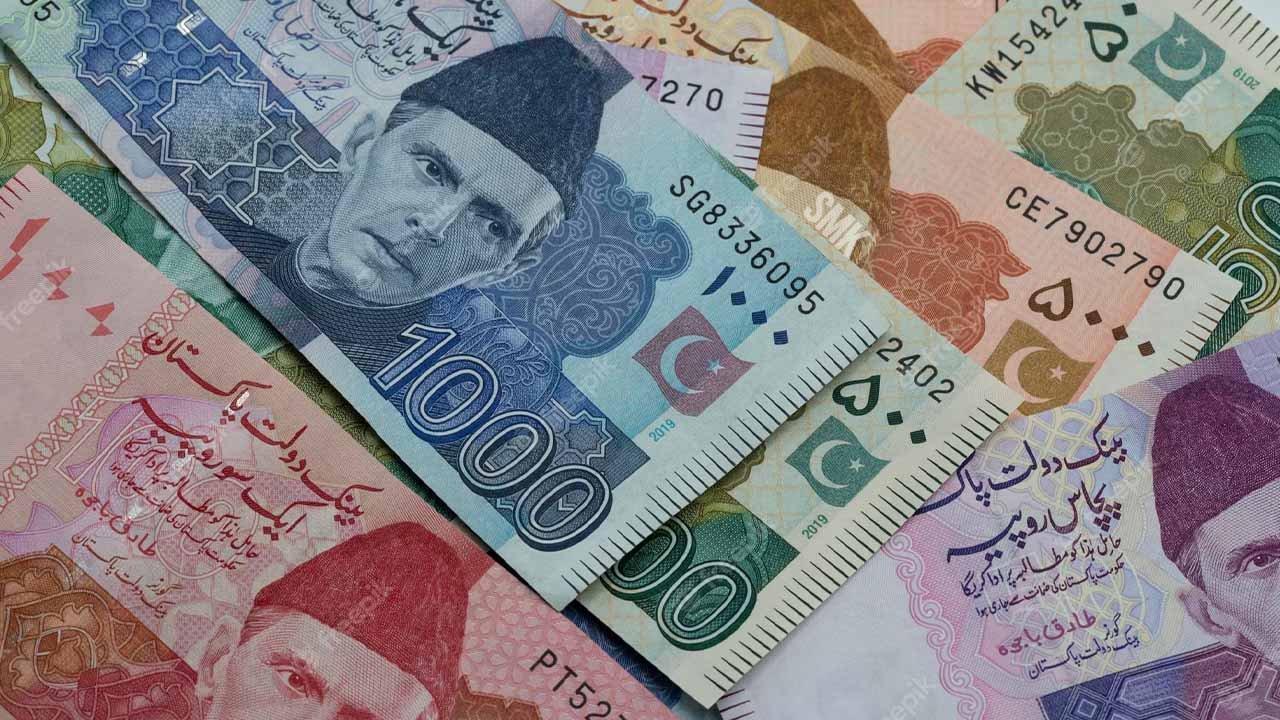
    The government has opted to introduce a digital currency as a strategic move aimed at reducing expenses associated with currency printing and distribution.

    According to The News, this digital currency initiative is expected to contribute to the appreciation of the rupee’s value, bolster the overall economy, and facilitate extensive financial transactions.

    Much like the Chinese digital currency, where one unit is equivalent to one Chinese Yuan, the value of this digital currency will be pegged to the Pakistani rupee. The State Bank of Pakistan (SBP) will be the driving force behind this endeavour, offering government-backed guarantees similar to traditional currency notes. The SBP has already begun its efforts, enlisting the expertise of professionals for its development.

    To oversee this transformation, a specialised department known as the Central Bank Digital Currency has been established. This department is diligently assessing the cost benefits and feasibility of the digital currency to ensure seamless transactions upon its launch.

    The government’s objective is to gradually replace physical currency notes with digital currency while maintaining an 80:20 ratio, allowing currency notes to coexist as a backup in unforeseen circumstances.

    The adoption of digital currency will also yield significant savings by eliminating the expenses associated with printing, distributing, and disposing of physical notes. Additionally, every digital transaction will be meticulously documented, enhancing the effectiveness of monetary policy enforcement.

    Furthermore, digital currency holds substantial potential for advancing cross-border trade and investment and extending access to financial services for the unbanked population. The World Bank acknowledges its potential to enhance the financial industry’s efficiency, resilience, and reliability, with blockchain technology serving as one of the pivotal distributed ledger technologies supporting these advancements.

  • Deadly virus kills 35 ibex in Kirthar

    Deadly virus kills 35 ibex in Kirthar

    Ibex goats are dying in large numbers in Kirthar National Park, authorities have confirmed.

    According to local sources, four more ibex were found dead on Sunday while nine infected animals were traced by wildlife officers.

    Local sources have also reported that dead ibex are being cremated and buried, while efforts are being made to clean the ibex’s watering holes.

    The water in which the dead ibex were found has been blocked by planting bushes around it. While the water has become very polluted after decomposing ibex were found in it, locals claim the water will clean naturally with rains.

    Ibex are apparently suffering from an epidemic called Peste des Petits Ruminants, or PPR.

    Locals explain that this ‘goat plague’ is a virus that spreads rapidly, usually infecting sheep and goats. It is thus feared that the disease has been spread to ibex from goats

    Currently, there are around 25 thousand ibex in Kirthar and so far, 35 have died.

    Deputy Conservator of the Department of Wildlife, Hyderabad, Wahid Shaikh told Geo News that samples of the dead ibex have been sent to the laboratory for analysis, adding that the Sindh Wildlife Department has sent more teams to the affected area.

  • Bilalwal asks ECP to announce poll dates

    Bilalwal asks ECP to announce poll dates

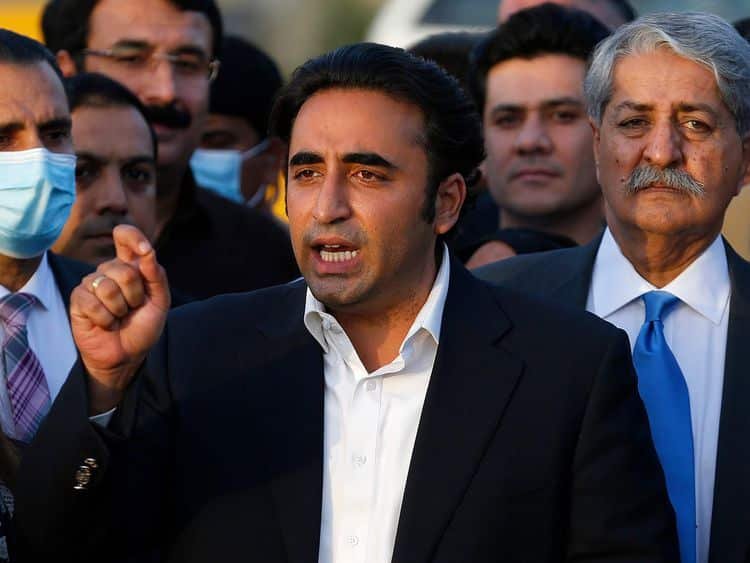
    Bilawal Bhutto-Zardari, the chairman of the Pakistan Peoples Party (PPP), has stated that he will only be able to remark on making “alliances” with other political parties when the election date has been made public.

    While addressing a press conference in Okara, the former foreign minister once more urged that the Election Commission of Pakistan (ECP) to announce the election date so that the party could plan and launch its election campaign.

    “It is our request to the ECP to announce the election schedule,” the PPP chief said, emphasising that the matter of alliances can only be addressed once the election timetable is established.

    When asked about the expected return of Pakistan Muslim League (PML-N) chief Nawaz Sharif, Bilawal stated: “Mian Sahib’s return has been a long-standing demand of the PPP.”

    “The PPP is not being pushed to the wall, we didn’t even back out from the 2007-2008 elections,” the party chairman stated in response to a question.

  • Nawaz holds the ex-military leadership, Saqib Nisar, accountable for Pakistan’s condition

    Nawaz holds the ex-military leadership, Saqib Nisar, accountable for Pakistan’s condition

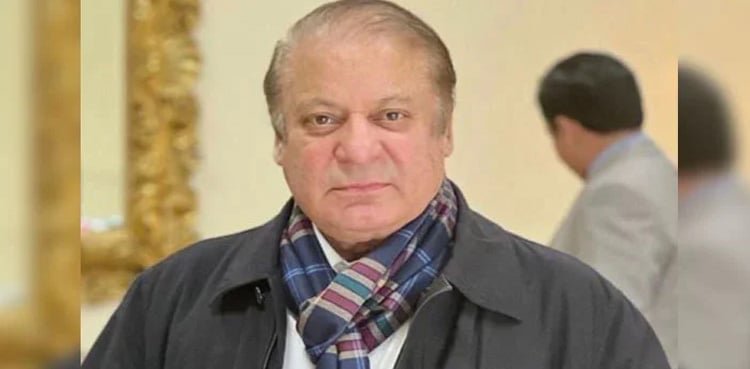
    Pakistan Muslim League-Nawaz (PML-N) chief Nawaz Sharif has said on Monday that the Pakistan Democratic Movement (PDM) government had saved Pakistan from defaulting.

    His statement came during a party meeting via video link from London, where he emphasised that the PML-N rescued Pakistan from an economic crisis by making sacrifices. He was also confident that PML-N would achieve success in the upcoming elections.

    In addition, the PML-N leader blamed former ISI chief General (retd) Faiz Hamid, former chief of the army, General (retd) Qamar Javed Bajwa, and former chief justice Mian Saqib Nisar for Pakistan’s current condition.

    “Today, the poor is craving bread; who brought the country to this state” the senior politician questioned, regretting how people were worried about putting two meals on their table.

    Recalling that the economic conditions were different in 2017 when he was in power, Sharif said that flour, ghee, and sugar were cheap but now the poor people of the country are unable to pay their bills.

  • Can democracy deliver? Pakistanis answer in new report

    Can democracy deliver? Pakistanis answer in new report

    Open Society Barometer conducted a survey on one question: Can Democracy Deliver?

    The survey is based on representative polling in 30 countries with a combined population of over 5.5 billion people, including Pakistan, to reflect on geographic, economic, and political diversity.

    The report surveyed 36,344 respondents aged 18 or older in each country

    According to the survey, 86 per cent of respondents have faith in democracy while only 20 per cent believe that authoritarian countries can deliver “what citizens want.”

    72 per cent believe that human rights have been a “force for good” in the world, and 71 per cent agree that “human rights reflect values that I believe in.”

    It is noteworthy that only 57 per cent of 18-35-year-olds prefer democracy to any other form of government, compared to 71 per cent of older respondents.

    Democracy and Pakistan
    The global average percentage of respondents who deem it important to live in a democratically governed country is 86 per cent while in Pakistan it is 79 per cent.

    Similarly, 56 per cent of Pakistanis preferred democracy over other form of governance in comparison to 62 per cent of the global average.

    The global average percentage of respondents who believe human rights have been a force for good in the world is 72 per cent while in Pakistan it is 81 per cent.

    Human Rights and Pakistan

    With the global average of 72 per cent respondents, 81 per cent Pakistanis believe human rights have been a force for good in the world.

    78 per cent of Pakistanis believe human rights reflect the values that they believe in in comparison to the global average of 71 per cent.

    The highest percentage of Pakistanis, i.e. 39 per cent, rank economic and social rights as the most important. This is followed by civil and political rights with 23 per cent, environmental rights with 16 per cent and digital rights with 12 per cent.

    Most importantly, 43 per cent of Pakistanis disagree with army rule as a “good way of running a country” in comparison to 33 per cent who agree.

    Likewise, 45 per cent of Pakistanis disagree with having a leader who “does not bother with parliaments or elections is a good way of running a country” while 33 per cent agree.

    Equity, justice and Pakistan

    73 per cent of Pakistanis fear that political unrest in their country could lead to violence next year in comparison to 58 per cent of the global average.
  • What is Practice and Procedure act 2023?

    What is Practice and Procedure act 2023?

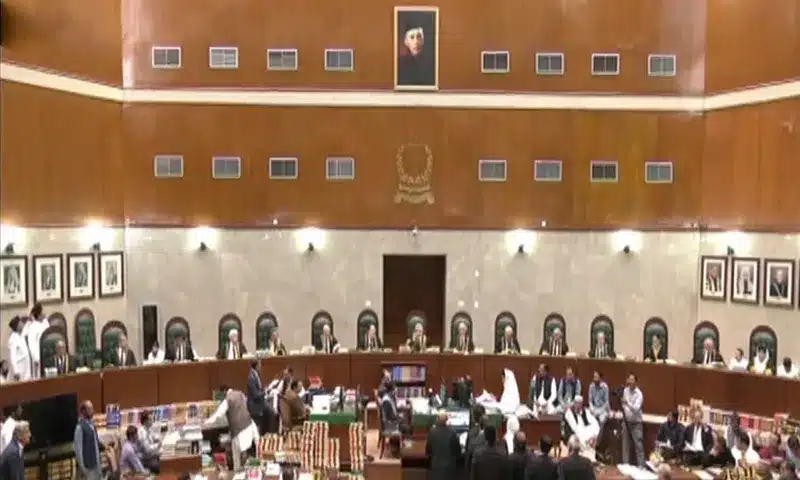
    On March 29 and March 30, 2023, the National Assembly and Senate, respectively, adopted and enacted the (Practice and Procedure Bill) 2023. Without his signature, the President remitted the bill for review, but on April 10, 2023, the Joint Session of Parliament once more passed the Act after it had complied with all rules and procedures.

    According to the Act, each case, appeal, and subject before the Supreme Court will be heard by benches formed by a committee comprising of the Chief Justice and the two senior most judges.

    It further stated that any issue involving the use of original jurisdiction under Article 184, paragraph (3), shall be brought before the committee for consideration first.
    The committee must then assemble a bench of at least three Supreme Court justices, which may also include committee members, if it deems that the issue involves the enforcement of one or more fundamental rights.
    According to the Act, an appeal must be submitted within 30 days of the larger bench of the Supreme Court obtaining jurisdiction over it and its hearing date must be scheduled no later than 14 days after that. When submitting a review application, it also offers a party the flexibility to choose the lawyer of its choice.

  • PM Kakar wants Islamabad and Kabul to collaborate on shared objectives

    PM Kakar wants Islamabad and Kabul to collaborate on shared objectives

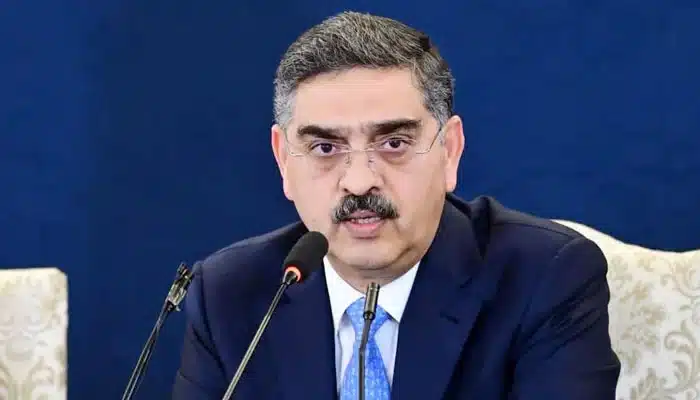
    Anwaar-ul-Haq Kakar, the interim Prime Minister, has urged his Afghan counterpart in a letter to cooperate in order to accomplish shared objectives, The News reported on Monday.

    The letter from PM Kakar to Mullah Muhammad Hasan Akhund, the acting Prime Minister of Afghanistan, comes as tensions between the two nations are rising as a result of an increase in cross-border terror incidents.

    In his letter, PM Kakar said: “Pakistan has close fraternal relations with Afghanistan, as we are neighbours and brothers. Pakistan-Afghanistan relations are rooted in religion, culture, and history.”

    The Premier declared that Kabul and Islamabad will continue to work together to strengthen bilateral, political, security, and economic ties.

    Earlier, Pakistan accused the Afghanistan government of misusing the transit trade agreement.

    “It is important for our customs authorities to ensure that any border trade that takes place complies with the understandings and agreements that exist between Pakistan and Afghanistan and that such commercial activities do not contravene Pakistani laws,” the Foreign Office had said.

  • American entrepreneur paying $4 per hour criticised for exploiting Pakistanis

    American entrepreneur paying $4 per hour criticised for exploiting Pakistanis

    A video shared on X (formerly Twitter) on Sunday is being criticised by users. The video, which features an X user named Christian, says that he remotely hires people from Pakistan to work for him.

    He has a marketing agency and he stated he pays his employees $4 an hour and “they’re extremely grateful to be working with me”.

    Christian explains that he hires a virtual assistant from Pakistan for administrative level tasks for his business like formatting spreadsheets, setting up email accounts and pays them 4 USD an hour.

    He justifies the meagre amount by expounding that an average monthly income in Pakistan is 280 USD, but as he is paying them four USD an hour, they are getting 160 USD a week or 640 USD a month, which is almost 3 times the average income, “a really great living for them”, he adds.

    “They live very very well.”

    He also added that if they perform well, the pay can be raised up to $7 an hour which is 4-6 times the average monthly income of a typical person in Pakistan.

    “They’re really grateful to be working with me because of the money they make. They have a great income, I get a great employee — it’s a win win.”

    He, however, concluded the video keeping in mind the expected criticism;

    “Before you leave a comment, yes i have US based employees. Yes, they make way more than $4 an hour. I’m just saying for this specific task, I pay a Pakistani assistant $4 an hour and they are very appreciative of it.”

    While some appreciated his work, many have criticised him for exploiting people from developing countries by paying them less than those from developed countries.

  • Court issues notice to FIA for Imran Khan’s bail plea in cipher case

    The Islamabad High Court (IHC) has issued a notice to the Federal Investigation Agency (FIA) regarding the Pakistan Tehreek-e-Insaf (PTI) Chairman plea seeking bail before arrest in the cipher case.

    The court issued the notice during the hearing of Khan’s petition challenging the decision of the special court in a diplomatic document case. Imran Khan filed the plea on Saturday.

    The bail pleas of Imran Khan and vice president of PTI Shah Mahmood Qureshi in the missing cipher case got rejected by the special court made under the Official Secrets Act.

    PTI’s lawyer, Salman Safdar, filed a petition on behalf of Imran Khan while IHC Chief Justice Aamer Farooq issued the notice to FIA in response to the petition.

    Imran Khan’s legal team repeatedly requested an early hearing of the case, but the chief justice of the IHC said that the case would be decided according to proper procedure.

    On the other hand, the court ordered the FIA to submit its response regarding Imran Khan’s petition.