Tag: Pakistan

  • Finance Minister rejects idea of coalition govt entering fresh IMF programme

    Finance Minister rejects idea of coalition govt entering fresh IMF programme

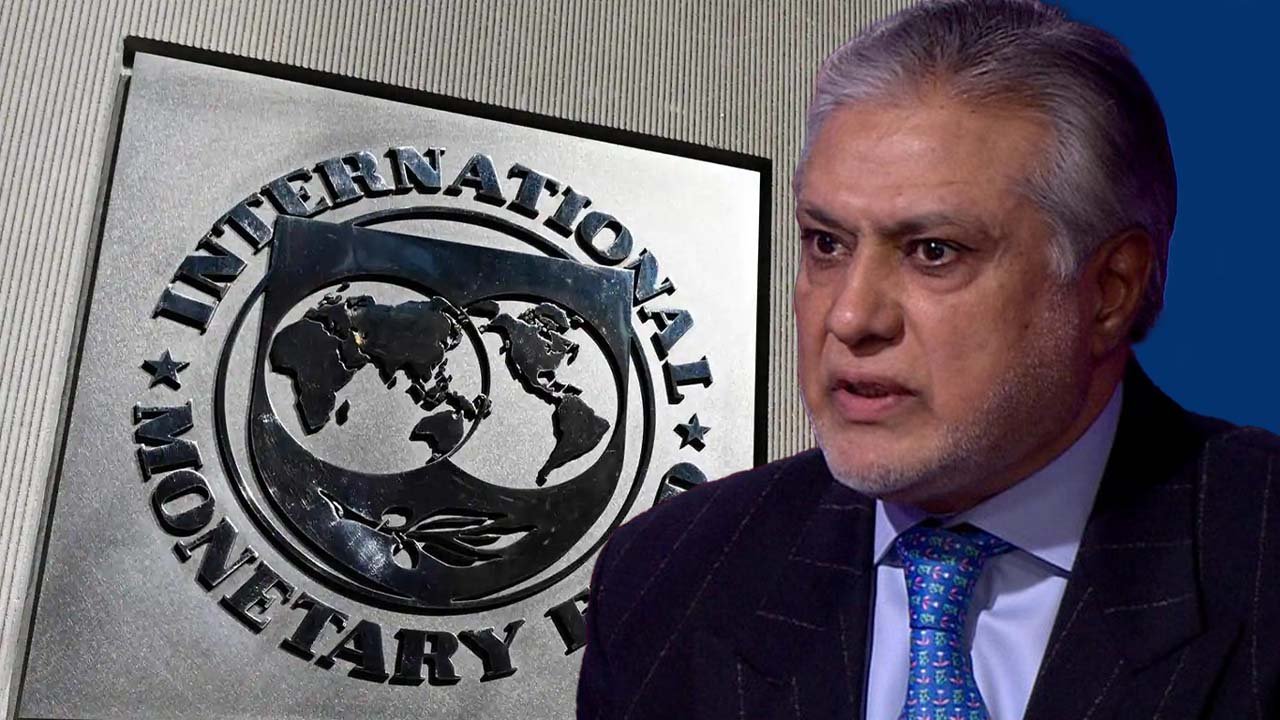
    Pakistan’s Finance Minister, Ishaq Dar, has voiced his opposition to the idea of entering into a new International Monetary Fund (IMF) bailout programme without the consent of the incoming government.

    Speaking at a press conference, Dar emphasised the need for democratic fairness and stated that any future IMF agreement should be the prerogative of the government elected after the ongoing programme concludes on June 30.

    The minister also highlighted Pakistan’s efforts in meeting IMF requirements and expressed hope for the successful completion of the ninth review before the programme’s conclusion.

    Government’s efforts and budget transparency

    During the press conference, Minister Dar reassured journalists that the coalition government had provided the IMF with budgetary information and expressed confidence that the budget numbers shared were without objection.

    He revealed that Prime Minister Shehbaz Sharif had agreed to share the numbers, and there were no issues concerning the figures presented. This transparency is a crucial step in unlocking the ninth review and securing the remaining funds from the IMF’s Extended Fund Facility.

    IMF’s conditions and economic challenges

    Under the current IMF programme, Pakistan has been required to implement several challenging measures, including the removal of energy subsidies, allowing the rupee to float against the US dollar, raising taxes and duties, and restricting imports.

    These measures aim to address Pakistan’s balance-of-payments crisis and reduce its external debt burden. However, the country’s economic challenges, combined with political uncertainty and a decline in foreign investment, have made the task more difficult.

    Esther Perez Ruiz, the IMF’s resident representative for Pakistan, stated that there is only enough time for one final board review before the scheduled end of the $6.5 billion Extended Fund Facility.

    Ruiz emphasised the need for Pakistan to restore the proper functioning of the foreign exchange market, present a budget for FY24 aligned with programme objectives, and secure credible financing commitments to close the $6 billion funding gap. These actions will pave the way for the final review and release of remaining funds.

    The call for ‘democratic’ decision-making

    Finance Minister Ishaq Dar emphasised the importance of democratic principles in determining Pakistan’s involvement in any future IMF programmes. He stressed that the decision to enter into a new programme should rest with the government elected after the ongoing programme concludes, rather than being imposed on a new administration.

    Dar’s stance reflects the need to ensure that any commitments made align with the vision and policies of the elected government, fostering a fair and democratic approach.

    Pakistan’s Finance Minister Ishaq Dar has voiced his opposition to the undemocratic imposition of a new IMF bailout programme. He said that any future agreement should be the prerogative of the incoming government, allowing them to shape policies and commitments in alignment with their mandate.

    As Pakistan works towards meeting the IMF’s requirements and unlocking the remaining funds, it is crucial to balance economic stability with democratic decision-making to ensure sustainable growth and development.
  • Pakistan’s foreign exchange reserves dip to $3.91 billion amid IMF agreement delay

    Pakistan’s foreign exchange reserves dip to $3.91 billion amid IMF agreement delay

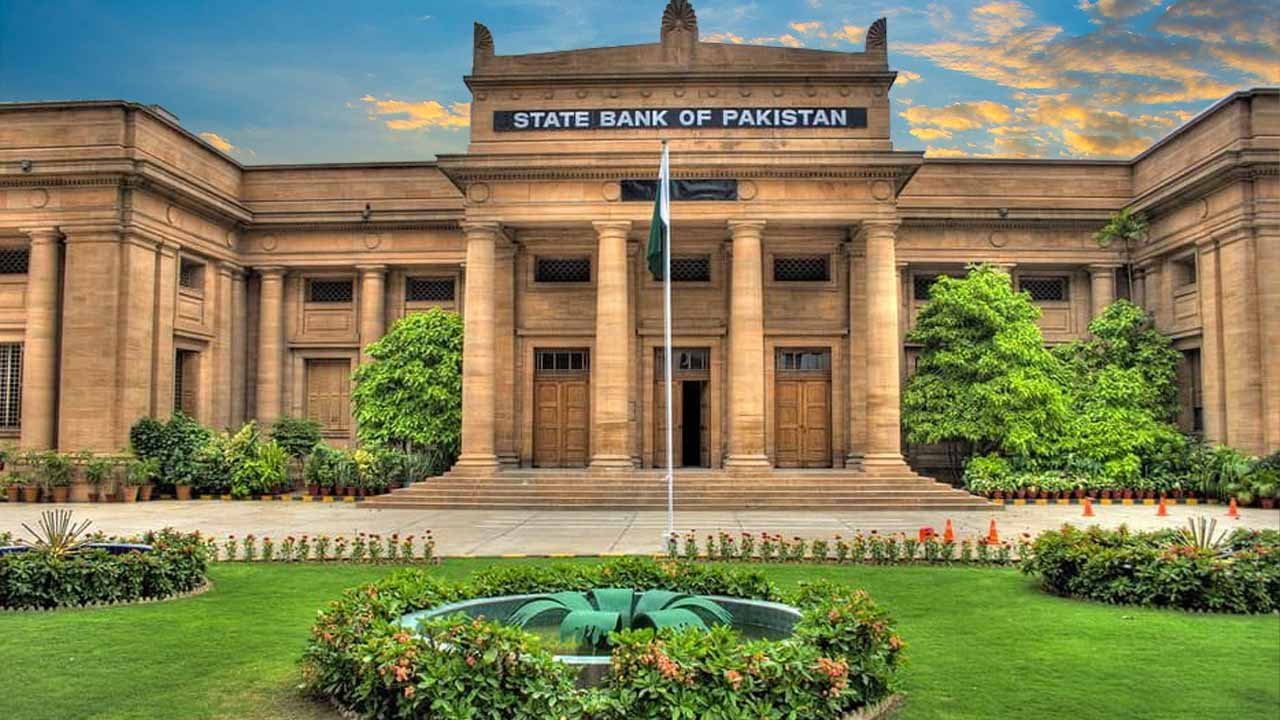
    In a challenging turn of events for Pakistan’s economy, the foreign exchange reserves held by the State Bank of Pakistan (SBP) have plummeted to $3.91 billion.

    The decline in reserves is primarily attributed to external debt payments, coinciding with the expiration of the country’s International Monetary Fund (IMF) program, which has been stalled for several months.

    The SBP announced on Thursday that the reserves decreased by $179 million during the week ending on June 2, leaving the country with barely enough coverage for controlled imports for just one month.

    Commercial banks, on the other hand, are holding net foreign reserves worth $5.42 billion, $1.51 billion more than the central bank. Consequently, Pakistan’s total foreign reserves stand at $9.3 billion as of June 2.

    This marks the sixth consecutive weekly drop in foreign exchange reserves for Pakistan, signaling a lack of progress in securing external financing. Political instability has played a significant role in the deteriorating economy, and the country has yet to secure much-needed funding to avert the risk of default.

    Pakistan’s $350 billion economy is currently in turmoil due to financial woes and the delay in reaching an agreement with the IMF. The pending agreement would release crucial funds that are essential for stabilizing the economy.

    The government has been engaged in discussions with the IMF since the end of January to resume a $1.1 billion loan tranche, which has been on hold since November 2022. This loan is part of a larger $6.5 billion Extended Fund Facility (EFF) agreed upon in 2019.

    Earlier today, Finance Minister Ishaq Dar revealed that the coalition government has shared its budget numbers with the IMF, aiming to unlock the ninth review.

    He expressed confidence that there are “no issues in the numbers.” Pakistan’s government faces significant pressure from the IMF to implement stringent fiscal measures and unlock the final tranche of a vital bailout package.

    To meet the IMF’s requirements, Pakistan must eliminate subsidies in sectors such as energy, allow the rupee to float against the US dollar, increase taxes and duties, and impose import restrictions. These measures are seen as crucial steps toward stabilising the economy and securing external funding.

    The future of Pakistan’s economy hinges on successful negotiations with the IMF and the implementation of effective economic reforms.

    The government must address political instability and work towards regaining the confidence of international lenders to alleviate the financial strains on the country.

  • PCB wants Emirates Cricket Board to reschedule ILT20

    PCB wants Emirates Cricket Board to reschedule ILT20

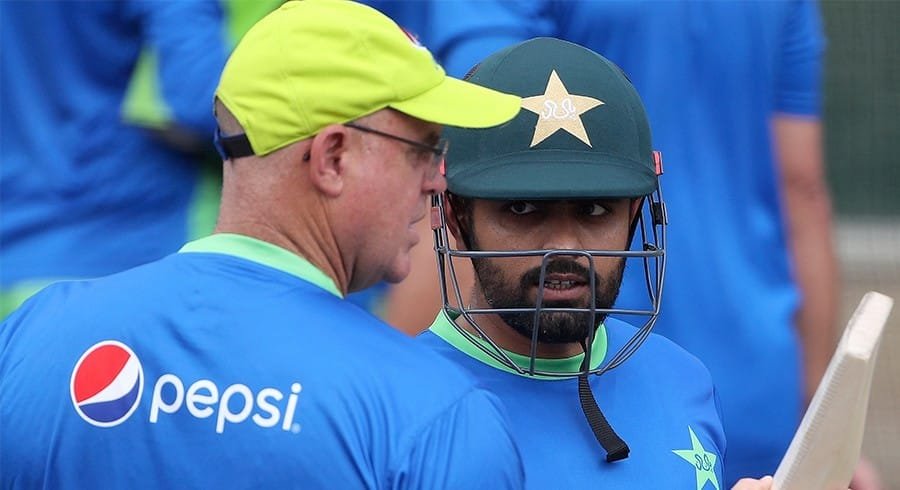
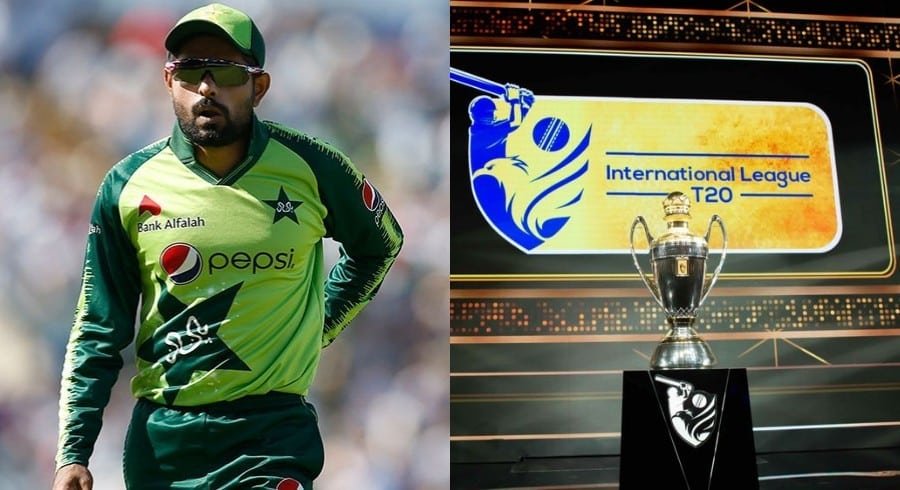
    The Pakistan Cricket Board (PCB) has requested the Emirates Cricket Board (ECB) to make changes to the schedule of the next edition of International League T20 (ILT20).

    The second edition of ILT20 is currently scheduled to take place from January 13 to February 12 in 2024. Considering the clash of dates between ILT20 and Pakistan Super League (PSL), PCB requested ECB to give 10 days concession to accommodate Pakistan cricket team players.

    In the previous edition of the ILT20, which took place from January 13 to February 12 earlier this year, Pakistan players were not allowed to participate despite attractive offers from the UAE-based league.

    As reported by Cricket Pakistan last month, ILT20 organizers offered top players, including Shaheen Afridi, Babar Azam, and Mohammad Rizwan, substantial contracts, along with the opportunity to captain a team and sign a three-year contract.

    However, the PCB did not grant permission to its players to participate in the league. Former -PCB Chairman, Ramiz Raja had even requested compensation from the Emirates in return for releasing the players.

    In contrast, current PCB chief, Najam Sethi, has taken a more flexible approach towards the ILT20, emphasizing the importance of maintaining good relations with the UAE and suggesting that negotiations can be pursued based on the principle of ‘give and take.’ Hence, as reported by Cricket

    Pakistan, national team players are likely to take part in the next edition of ILT20.

    Last month, Cricket Pakistan also reported that there is a possibility of rearranging the home series against West Indies in 2024. PCB conveyed to the franchises during the recent PSL governing council meeting in Lahore that the mentioned series with West Indies might require rescheduling in order to accommodate PSL 9. The West Indies team is currently slated to come to Pakistan in February and March to play two Test matches and three T20I matches.

  • Smith, Babar, Kohli ‘once in a lifetime’ trio, says Mathew Hayden

    Smith, Babar, Kohli ‘once in a lifetime’ trio, says Mathew Hayden

    In the build-up leading to World Test Championship final between India and Australia, former left-hand test great Mathew Hyden opened up about the strength of both teams.

    When asked about the advantage Australia might have over India, Hayden highlighted the importance of putting runs on the board, and in doing so, he praised the batting prowess of Steve Smith, Virat Kohli, and Babar Azam, whom he considers modern-day greats.

    Hyden praised the techniques of Babar Azam, Virat Kohli and Steve Smith, describing them as “once in a lifetime and once in a generation cricketers,” indicating that their abilities and achievements set them apart from their peers.

    Hayden also acknowledged the significance of Marnus Labuschagne and Pat Cummins in the Australian team. Labuschagne’s emergence as a reliable batsman and Cummins’ dual role as a captain and a potent fast bowler add further strength to the Australian lineup.

    “In a big game, it is about runs on the board. Steve Smith is a maestro. When you think about the modern-day greats, Smith, Kohli, Babar Azam, these are once in a lifetime and once in a generation cricketers. So obviously in combination with Labuschagne, those two are extremely critical for Australian batting line-up. And then Pat Cummins as a captain and as a bowler as well,” Hayden said.

    Smith, known for his unorthodox yet effective batting style, has been a key figure in Australia’s batting line-up for several years. His ability to consistently score runs and dominate opposition bowlers has earned him a reputation as one of the best batsmen of his generation.

    Kohli, the former captain of the Indian cricket team, has been a dominant force in world cricket for over a decade. Known for his aggressive and passionate style of play, Kohli is regarded as one of the finest batsmen in contemporary cricket.

    Babar, the captain of the Pakistan cricket team, has risen through the ranks to become one of the most exciting batsmen in international cricket. His elegant strokeplay, impeccable timing, and ability to play long innings make him a delight to watch. Babar’s impressive statistics and consistent performances have cemented his place among the top batsmen in the world.

  • ‘Encourages those suffering to cope’: PPP’s Sharmila Faruqi praises ‘Jhoom’ for talking about mental health

    ‘Encourages those suffering to cope’: PPP’s Sharmila Faruqi praises ‘Jhoom’ for talking about mental health

    Drama serial ‘Jhoom’ has been praised by audiences for its storyline about an older and financially independent woman and her love interest. Eight episodes in, the drama, starring Zara Noor Abbas and Haroon Kadwani, has been praised by for its empowered female characters, the electrifying chemistry between the leads, and for tackling mental health issues in a sensitive manner, especially refusing to depict being admitted in a psychiatric hospital in a negative way.

    In the drama, Aryaan (Haroon Kadwani) suffers from anger issues and depression, which stem from his mother abandoning their family. In a recent episode, he is informed that reports were discovered proving he was admitted in a mental rehabilitation center for some time. But instead of denying it, Aryaan candidly speaks about depression, and reminds the authorities that they should never stigmatise those suffering from mental health issues, especially when they work hard to overcome it.

    Politician Sharmila Faruqi shared the scene in an Instagram post, highlighting how important it is now more than ever that television shows learn to portray mental health issues in a sensitive and empathic manner:

    “Talking openly about mental health can reduce the misconception and stigma and can encourage those suffering from it to cope, seek help and find a support network. It helps communities to be more acceptable towards those who need help. With the right treatment most people recover from depression and anxiety and can lead a normal, productive life. But is the society compassionate about this ? All forgiving ? This scene from the current drama serial “Jhoom” talks about this very important human right.. our mental health. How we feel and think is central to the way we live our lives… Suicide accounts for over 800,000 deaths globally.. Alarming isn’t it? Yes.. support those around you who need help. Every 1 person in 5 experiences a mental health condition. Urgent action is needed to strengthen mental health systems across the globe. Be a part of this.. Thank you to the makers of “Jhoom” for bringing this in the forefront. Very aptly portrayed by @haroonkadwani  ”

    We are in awe of how Pakistani dramas are branching out from the typical saas-bahu narratives, and are daring to tackle topics like these and executing them brilliantly!

  • Countdown to Pakistan’s budget unveiling: Last IMF review holds the key

    Countdown to Pakistan’s budget unveiling: Last IMF review holds the key

    Pakistan is heading towards a crucial phase as it prepares to unveil its budget on June 9, following an arduous bailout negotiation with the International Monetary Fund (IMF). A Fund official revealed that only one board review remains under the current IMF bailout package, which is seen as a step towards a successful review.

    Esther Perez Ruiz, the resident representative for Pakistan at the IMF, emphasised the need to restore the proper functioning of the foreign exchange market to pave the way for the final review.

    Ruiz outlined additional prerequisites, including passing a budget that aligns with the program objectives for the 2023-24 fiscal year, and securing credible financing commitments to address a $6 billion shortfall.

    Experts suggest that the coalition government is striving to strike a delicate balance between satisfying the demands of the IMF and winning over voters in the upcoming general election. Analysts expect the government to announce populist measures in the budget to appease the electorate while aiming to meet IMF prescriptions.

    The IMF program, which concludes this month, has approximately $2.5 billion in funds yet to be released due to ongoing negotiations between Pakistan and the lender. Pakistan’s economy is grappling with severe challenges, including high inflation, fiscal imbalances, and low reserves.

    The government is hoping that the general election scheduled for November will help alleviate the turmoil stemming from a protest campaign led by Pakistan Tehreek-e-Insaf (PTI) chairman after his removal in a no-confidence vote last year.

    Former finance minister Miftah Ismail stressed the importance of securing IMF funding, highlighting the difficulties Pakistan would face without it. Ismail expressed confidence that the government would present a budget in line with IMF prescriptions to ensure the country’s survival in the next fiscal year.

    A staff-level agreement between Pakistan and the IMF to release $1.1 billion from a $6.5 billion package has been delayed since November, further intensifying the country’s need for funds to avert a balance of payments crisis. Experts believe that even after the current program expires, Pakistan will likely seek another bailout in the upcoming fiscal year to avoid defaulting on its debt obligations.

    Pakistan’s central bank reserves can cover imports for only about a month, underscoring the urgency of securing financial assistance. Inflation in the country, home to 220 million people, has reached a staggering 37.97 per cent in May, marking a record high for the second consecutive month and making it the highest rate in South Asia.

    The planning minister recently announced that development spending targets in the new fiscal year would be set at 1,150 billion rupees ($4.02 billion), while projecting an inflation rate of 21 per cent for the same period. With the general election looming, some analysts anticipate that the government will announce vote-winning measures, even if they have to be scaled back later.

    Pakistan’s budget unveiling tomorrow will be closely watched by the nation, as it not only sets the course for the fiscal year but also represents a crucial step in the ongoing negotiations with the IMF and the government’s efforts to regain stability and boost economic growth.

  • Shah Mahmood Qureshi advises Imran Khan to leave the country

    Pakistan Tehreek-e-Insaf (PTI) Senior Vice Chairman Shah Mahmood Qureshi on Wednesday met with party Chairman Imran Khan at Zaman Park in Lahore. This was the first meeting between the top two leaders of PTI since the events of May 9.

    As per The News, both leaders exchanged heated words during the meeting.
    As per sources, Qureshi asked Imran Khan to leave the country temporarily. He also suggested that Khan should stay quiet if he doesn’t want to leave the country.

    The PTI vice chairman requested Imran Khan to let him and others resolve the problems the party is facing, adding that he can take over the party later.

    Shah Mahmood Qureshi also suggested to Khan that he should refrain from making ’emotional decisions’. He also told him that retired people who are misleading him are of no help.

    After the meeting, Qureshi did not talk to the media gathered outside Zaman Park.

    Qureshi was released from Adiala Jail on Tuesday after the Lahore High Court (LHC) Rawalpindi bench ordered his immediate release.

  • Al-Qadir Trust case: Bushra Bibi wants to appear with Imran Khan because of ‘purdah’

    Al-Qadir Trust case: Bushra Bibi wants to appear with Imran Khan because of ‘purdah’

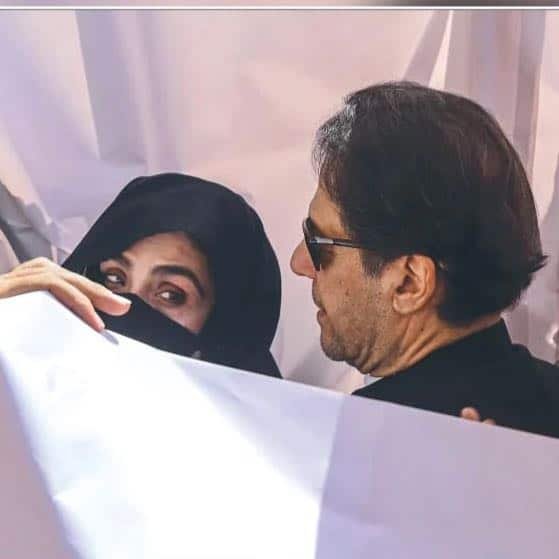
    National Accountability Bureau (NAB), Rawalpindi, had summoned former first lady Bushra Bibi on June 7 to record her statement as a trustee of the Al-Qadir University Trust in the £190 million National Crime Agency (NCA) UK settlement case.

    However, in her reply to a notice issued by NAB, Bushra Bibi has requested that the hearing be shifted to June 8, as her husband Imran Khan was already scheduled to appear before the Islamabad High Court and an anti-terrorism court in the capital tomorrow.

    Bushra Bibi wrote that she observes strict purdah and that is why she would like to be accompanied by her husband when she travels to Islamabad.
    As per media reports, Bushra Bibi would be included as a witness for her testimony. NAB is required by new laws to inform a person if they are being called as a witness or an accused in order to record a statement.

  • Pakistan and Russia aim to strengthen bilateral relations in trade, investment, and energy sectors

    Pakistan and Russia aim to strengthen bilateral relations in trade, investment, and energy sectors

    In an effort to strengthen bilateral relations between Pakistan and Russia, Chairman Senate Muhammad Sadiq Sanjrani engaged in productive talks with Chairman of the Russian Duma, Mr Volodin, during a delegation-level meeting held in Moscow on Wednesday.

    The discussion encompassed various areas of mutual interest and emphasised the significance of parliamentary exchanges in fostering effective diplomacy.

    A press release issued by the Pakistan embassy in Moscow highlighted the consensus reached during the meeting. Both sides expressed their commitment to enhancing parliamentary interaction between the two nations. This step is expected to bolster bilateral ties and pave the way for increased cooperation in trade, investment, and energy sectors.

    Chairman Sanjrani reiterated Pakistan’s dedication to strengthening relations with Russia across all domains of mutually beneficial cooperation. Trade, investment, and energy were particularly emphasised as key areas for future collaboration.

    The significance of continued cooperation in international forums, such as the United Nations and the Shanghai Cooperation Organisation (SCO), was also acknowledged and agreed upon by both parties.

    During the talks, Chairman Sanjrani extended an invitation from the Speaker of the National Assembly of Pakistan to Chairman Volodin, inviting him to visit Pakistan. In a positive response, Chairman Volodin accepted the invitation, reflecting the willingness of both countries to further solidify their ties.

    The meeting between Chairman Senate Sanjrani and Chairman Volodin serves as a significant milestone in the diplomatic efforts between Pakistan and Russia. It highlights the mutual desire to strengthen bilateral relations and lays the groundwork for increased cooperation in various fields, including trade, investment, and energy.

    The forthcoming visit of Chairman Volodin to Pakistan is expected to further enhance the ties between the two nations and open new avenues for collaboration.

  • Murder FIR registered against Imran Khan

    Police have registered a First Information Report (FIR) against former Prime Minister Imran Khan for the murder of Supreme Court lawyer Advocate Abdul Razzaq Shar who was shot dead by armed motor cyclists on Quetta’s Airport Road on Tuesday.

    The case has been registered on the complaint of the deceased’s son at the Shaheed Jameel Kakar police station, Quetta, under the charges of murder, terrorism and other offences.

    Special Assistant to the Prime Minister (SAPM) Ataullah Tarar in a press conference on Tuesday held the Pakistan Tehreek-e-Insaf (PTI) Chairman responsible for the murder.

    Tarrar claimed that the targeted killing was related to a treason case filed against Imran Khan by Shar.