Tag: Pakistan

  • It is our responsibility to get our workers out from jails: Fawad Ch

    It is our responsibility to get our workers out from jails: Fawad Ch

    Former Pakistan Tehreek–e-Insaf (PTI) leaders, Fawad Chaudhry, Imran Ismail and Mahboob Maulvi held a press conference outside Central Jail Rawalpindi (also known as Adiala Jail) on Wednesday, after meeting Shah Mahmood Qureshi.

    Former PTI leader Aamir Kiani was also present in the meeting in which reportedly, the four leaders asked Qureshi to leave the party.

    However in the presser, Fawad said that he had a detailed discussion with Qureshi regarding the current political situation, adding that “we” have to find a solution.

    The former minister said that many PTI supporters are in jail, and it is their responsibility to get them out.

    “We cannot leave open ground for the opposition in present circumstances,” he remarked, adding that the group had also had discussions with Asad Umar, Parvez Khattak, Asad Qaiser, Hammad Azhar and Ali Zaidi.

  • HRCP expresses concern over conducting trials of civilians in military courts

    HRCP expresses concern over conducting trials of civilians in military courts

    The Human Rights Commission of Pakistan (HRCP) in a statement has warned all political stakeholders that unless they desist from any further measures that could imperil the country’s fragile democracy, they may find themselves unable to steer the country safely through the multiple crises it is facing.

    “HRCP has closely monitored the ongoing political crisis and notes with great alarm that civilian supremacy has emerged as the greatest casualty. The government’s inability—or unwillingness—to safeguard civilian supremacy or to preserve the dignity of Parliament has proven tremendously disappointing. At the same time, the political opposition’s history of hostile politics and contempt for the rule of law has played no small part in triggering the wanton destruction of property during 9–10 May. These were not peaceful protests. The evidence points to acts of arson, rioting, looting, vandalism and trespass onto state and private property,” the statement issued by the human rights watchdog of Pakistan read.
    HRCP also expressed its disappointment in the judiciary. “HRCP regrets that the failure of the judiciary to credibly maintain its independence and impartiality has exacerbated the rule-of-law crisis in the country.”

    HRCP also demanded an independent investigation of the allegations of violence against PTI workers.

    HRCP reminded authorities that torture or any form of degrading treatment of persons in custody are serious violations of human rights. The disappearance of at least two journalists must also be investigated in a transparent manner, the findings made public and the perpetrators held strictly to account.
    The human rights organization also expressed concern for conducting military trials of civilians. “While those responsible for the destruction of public and private property must undoubtedly be held accountable, there is ample provision in civilian laws for this. Any government seriously committed to upholding civilian supremacy would strongly consider repealing Article 2(1)(d) of the Act, which allows civilians to be tried in military courts, thereby denying them their constitutional right to a fair trial. HRCP also objects to the arbitrary manner in which certain cases are selected to be tried by military courts, thereby violating the principle of equality before the law and equal protection of the law,” read the statement

  • ‘A love like this’: Nadia Jamil shares how her parents fell in love, moves Twitter to tears

    Nadia Jamil took to Twitter to share how her parents, famous businessman Abdul Jalil Jamil and Nusrat Jamil, met and came to fall in love.

    The powerhouse actress, who lost her father after a long illness in May, wrote down her parents’ love story for her followers.

    “And then they married…4 years after they met. Ma raised in an army family, Abu an old Delhi Saudagran Business family man. Ami down to Earth,practical, political, an activist who loves 2 dance. Abu a poet,philosopher,Sufi lover of Allah & nature! Both avid lovers of literature.”

    The ‘Behadd’ actress then shared a sweet picture from her parents wedding day, in which her father can be seen feeding grapes to her mother.

    Jamil’s moving tribute to her parents made all of us teary eyes, and so did Twitter.

  • Imran Khan says he is not naraaz with Arif Alvi

    Imran Khan says he is not naraaz with Arif Alvi

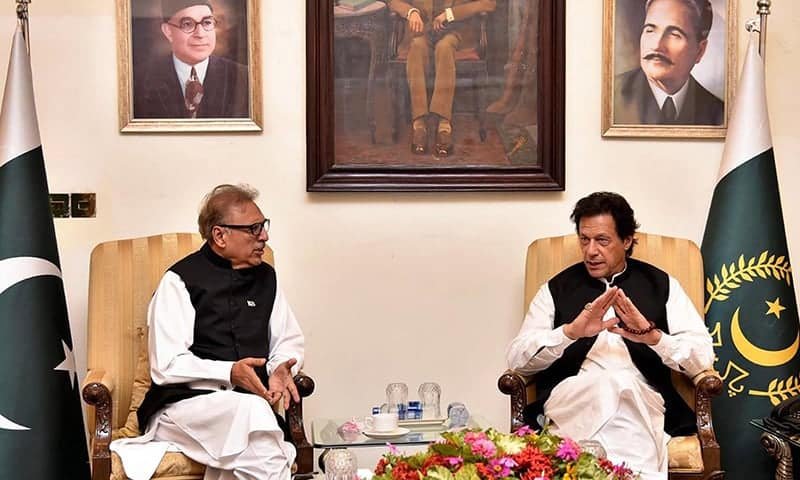
    Pakistan Tehreek-e-Insaf chairman Imran Khan has denied reports of cutting off contacts with President Dr Arif Avli. When asked by Geo News reporter Haider Sherazi, Imran Khan said, ”Arif Alvi kia kisi se naraz hoskta ha? (Can Arif Alvi be angry at anyone?)”

    On Tuesday, a reporter of We News claimed that Imran Khan is leaving President Alvi’s messages on seen, suggesting that the former PM has cut off ties with the President. The reporter also said that both were last in contact on May 24.

    He further said that two days after the last contact, on May 26, President Arif Alvi signed the Supreme Court (Practice and Procedure) Bill, 2023.

  • Minister of State for Finance and Revenue criticises IMF for interfering in Pakistan’s internal affairs

    Minister of State for Finance and Revenue criticises IMF for interfering in Pakistan’s internal affairs

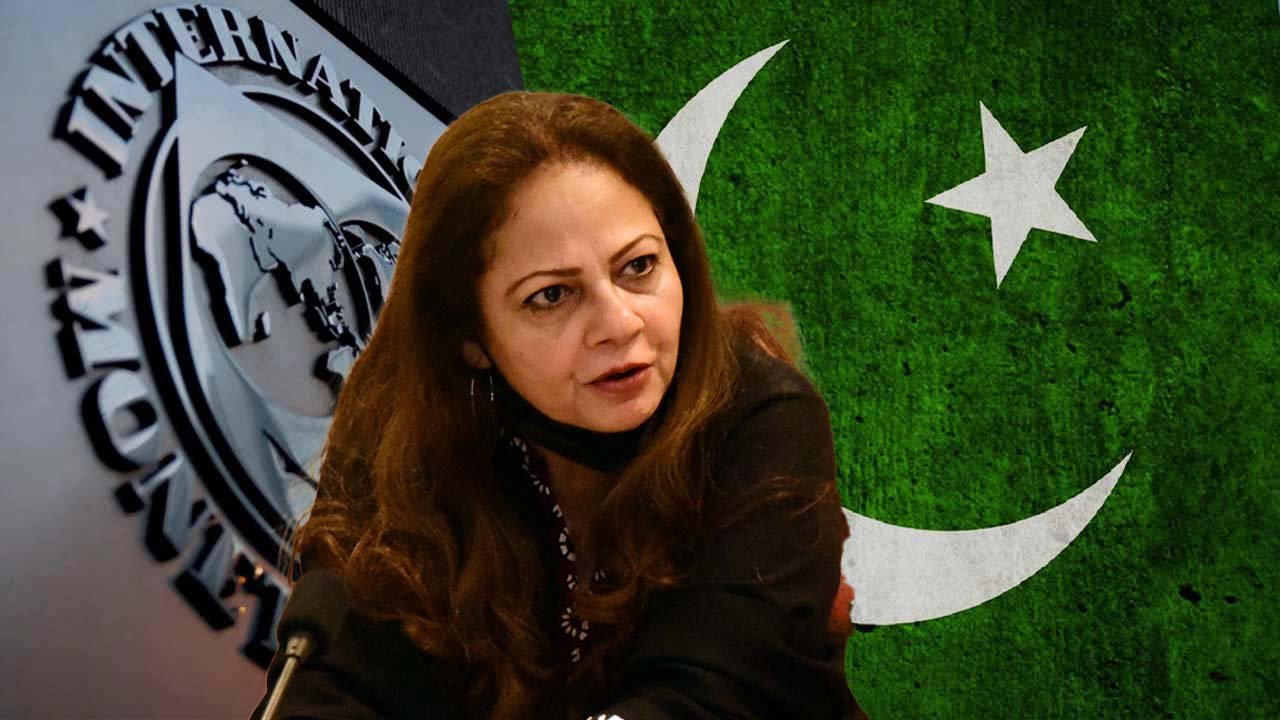
    In a strong rebuke to the International Monetary Fund (IMF), State Minister for Finance and Revenue Aisha Ghaus Pasha criticised the international lender for what she called “intervening” in Pakistan’s internal affairs.

    Speaking on Wednesday, the state minister asserted that Pakistan’s actions were within the boundaries of the law, dismissing the statement made by IMF Mission Chief for Pakistan, Nathan Porter, as “extraordinary.”

    While the IMF typically refrains from commenting on domestic politics, Porter had expressed the hope that Pakistan would find a peaceful way forward in line with the Constitution and the rule of law. The state minister expressed her dissatisfaction with the IMF’s involvement in Pakistan’s political situation, emphasising that the delay in reaching a staff-level agreement was detrimental to both Pakistan and the Fund.

    Dr Pasha confirmed reports that Prime Minister Shehbaz Sharif had reached out to IMF Managing Director Kristalina Georgieva. In their conversation, the prime minister assured the IMF chief that Pakistan would fulfill all its obligations.

    On May 27, Prime Minister Shehbaz had contacted Georgieva, requesting her assistance in revitalising the stalled $6.5 billion facility. It is believed that the prime minister urged her intervention to facilitate the completion of the pending ninth review, which would unlock $1.1 billion in financing for the cash-strapped nation.

    Negotiations between the coalition government and the IMF have been ongoing since November to revive Pakistan’s bailout program, with the financing gap being a major hurdle. Approximately $2.7 billion remains to be disbursed from the $6.5 billion program, which is set to expire next month.

    Responding to a question regarding Pakistan’s contingency plan if it fails to convince the IMF before the program’s expiry on June 30, the state minister stated that while there is always a “Plan B,” the Ministry of Finance’s priority is to revive the IMF program.

    With the federal budget announcement scheduled for June 9, both sides are hopeful of reaching a staff-level agreement before then. The successful conclusion of the agreement would provide a much-needed boost to Pakistan’s economy and help address its financial challenges.

    As the negotiations continue, the Pakistani government remains committed to meeting its obligations and finding a way forward to revive the IMF program, while asserting its sovereignty and independence in internal affairs.

  • Imran Khan’s medical reports do not hint at use of alcohol and cocaine: NAB

    Imran Khan’s medical reports do not hint at use of alcohol and cocaine: NAB

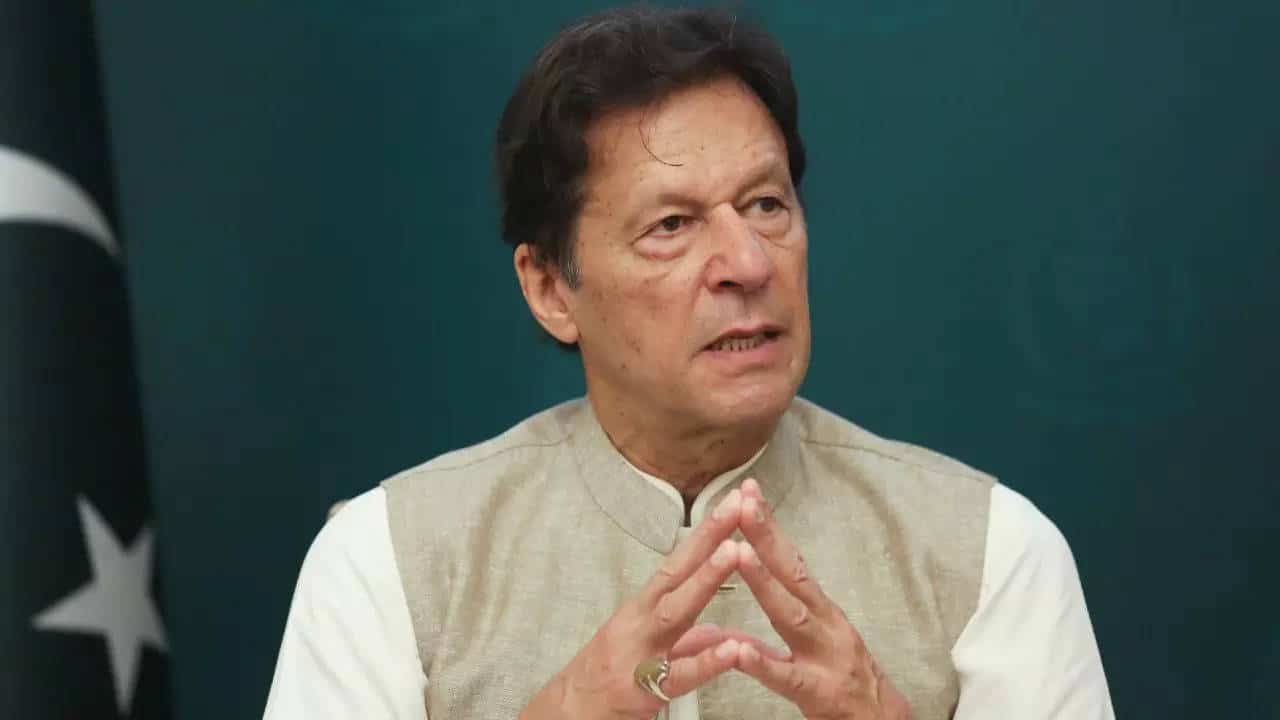
    The medical reports of Pakistan Tehreek-e-Insaf (PTI) chairman Imran Khan with National Accountability Bureau (NAB) do not hint at alcohol and cocaine use, Ansar Abbasi has reported for The News.

    The source quoted by the reporter claimed to have reviewed the medical records, and said that Imran Khan’s health was normal.

    He said that Imran’s blood and urine samples were taken while he was in NAB’s custody.

    “The medical reports as available with NAB do not endorse what the health minister alleged,” the news report quoted a source.

    Imran Khan on Tuesday sent a Rs10 Billion defamation notice to Health Minister Abdul Qadir Patel for sharing details about an alleged medical test conducted during his arrest, stating that the PTI chief had faked his fracture and that he is mentally unstable.

    Imran Khan asked the minister through the legal notice to, “retract his statements in the same mode and manner in which he made them in the first place”.

    The private medical reports of the tests that the government is said to have conducted on PTI leader Imran Khan earlier this month while he was under arrest were made public on Friday.

    The reports stated that Imran Khan’s mental stability was under question and that while no leg fractures were found, there was evidence of alcohol and an illicit substance in his urine.

  • Saqib Nisar son’s audio leak: ‘Who records these audios?’ IHC asks government

    Saqib Nisar son’s audio leak: ‘Who records these audios?’ IHC asks government

    Justice Babar Sattar of the Islamabad High Court on Wednesday heard a plea filed by Najam Saqib, son of former chief justice of Pakistan (CJP) Mian Saqib Nisar, against a special committee formed by the National Assembly speaker to probe into audio clips allegedly featuring his voice.

    During the hearing Babar Sattar asked the federal government, “Who records these audios?”, while suspending the summon notice issued to Najam by the special committee.

    “There is no relevant ministry in this matter, but we will do so,” Khosa said.

    “We only challenged that the speaker and the assembly do not have the authority to look into private matters. The petition does not challenge the matter which is pending in the Supreme Court,” said Latif Khosa, on behalf of the petitioner.

    “The audio leak is an alleged conversation between two private individuals that Parliament has no right to see,” he added.

    Sattar further said, “You have also been a governor. Tell me, who records these audios?”

    “Let the parties answer first, then everything will be clear,” Latif responded.

    On May 2, the National Assembly passed a motion demanding formation of a special parliamentary committee to investigate the audios, while on May 3, National Assembly Speaker Raja Pervaiz Ashraf constituted the committee.

  • Women not being mistreated in Punjab jails: IG Punjab

    Punjab Inspector General (IG) Dr Usman Anwar held a joint press conference with SSP Dr Anoush Chaudhry on Tuesday, to dismiss allegations of mistreatment of women in jails.

    He said that people should have trust in their institutions, adding that there are more than 150 cameras inside Kot Lak Pat jail.

    Dr Anoush said that women were being provided facilities as per rules. She said that she had met with the detained women herself and inquired about any issues they were facing.

    The IG also said that old pictures and videos were being posted to propagate a false narrative.

    Pakistan Tehreek-e-Insaf chairman Imran Khan, in a televised address to the nation on Sunday, claimed that he had received reports that women belonging to his party are being harassed in jails.

    He requested the judiciary to take suo motu action against the arrests.

  • IMF’s conditions for agreement: Pakistan must arrange foreign loans and restore foreign exchange market

    IMF’s conditions for agreement: Pakistan must arrange foreign loans and restore foreign exchange market

    In a recent development, the International Monetary Fund (IMF) has urged Pakistan to address its political disputes in accordance with the constitution. This statement came after Prime Minister Shehbaz Sharif reached out to IMF Managing Director Kristalina Georgieva in a last-ditch effort to revive the derailed $6.5 billion bailout package and avoid default.

    Following the conversation between Shehbaz and Georgieva, IMF Mission Chief to Pakistan Nathan Porter made an unusual statement, expanding the IMF’s focus to the political arena.

    While the IMF typically refrains from commenting on domestic politics, Porter emphasised the importance of finding a peaceful way forward in line with the constitution and the rule of law. This statement comes in the midst of an ongoing crackdown against PTI workers, abductions of individuals, and other political issues.

    Responding to questions from The Express Tribune, Porter outlined the conditions Pakistan must fulfill to reach an agreement with the IMF. These conditions include arranging foreign loans, approving a new budget in line with the IMF framework, and restoring proper functioning to the foreign exchange market.

    Prime Minister Shehbaz sees the IMF as the last resort to avoid default and thus decided to intervene. Following the conversation with the IMF chief, he instructed the finance ministry to share details of the next budget with the IMF.

    Meanwhile, Finance Minister Ishaq Dar criticised the IMF again, stating that it would be biased and shameful if the 9th review did not take place. However, a top finance ministry official confirmed that the prime minister had contacted the IMF managing director to break the deadlock.

    Time is running out for Pakistan, as there is only one month left before the program expires. Pakistani authorities still believe that the IMF can shorten the review completion period by calling a board meeting within two weeks of announcing the staff-level agreement.

    Porter emphasised that sustaining strong policies, obtaining sufficient financing from partners, and engaging in ongoing reforms are crucial for Pakistan to maintain macroeconomic stability. He also stressed the importance of strengthening domestic revenue mobilization, eliminating state-owned enterprise losses, reducing inefficiencies, and allowing for increased social and development spending.

    While Pakistan claims to have fulfilled all the conditions agreed upon in February, the sources indicate that Pakistan is currently not meeting all three conditions set by the IMF. The value of the rupee in the open market is significantly different from its value in the interbank market, and the new budget is not aligned with the IMF’s requirements.

    To bridge the financing gap until June this year, the IMF had asked Pakistan to arrange $6 billion in fresh loans. So far, Pakistan has obtained assurances for $3 billion from Saudi Arabia and the United Arab Emirates. The government is ready to share the details of the budget and the foreign exchange policy with the IMF.

    The $6.5 billion bailout package has been derailed since November last year and is set to expire on June 30. Of the total amount, the IMF has not disbursed $2.6 billion, including a $1.2 billion tranche linked to the completion of the 9th review. Pakistan’s foreign exchange reserves stand at $4.1 billion, which is not sufficient to cover the upcoming $25 billion in repayments.

    There are still differences of opinion regarding the current account deficit for this fiscal year. The government’s revised estimate of around $4 billion to $4.5 billion has not yet been accepted by the IMF.

    Initial reports suggest that the government intends to announce an expansionary budget of around Rs14.6 trillion with a deficit of around 7.4 per cent of the gross domestic product (GDP). However, this budget would need to be adjusted to align with the IMF’s requirements.

    The IMF’s Fiscal Monitor report projected a budget deficit as high as 8.3 per cent of the GDP for the next fiscal year, significantly higher than the government’s proposal. The finance ministry had initially proposed an overall budget deficit of around 6.9 per cent of the GDP or Rs7.3 trillion.

  • ‘People said I was making a mistake’: Director Abu Aleeha on casting Yasir Hussain for ‘Kukri’

    Director of the anticipated crime thriller ‘Kukri’, Ali Sajjad Shah aka Abu Aleeha, sat down for an interview with Geo Digital, where he opened up about his decision to cast actor Yasir Hussain for the film, revealing that initially people thought he was making a mistake with casting the actor:

    “They said I am committing suicide and Yasir can’t pull off this character, I received many calls from the people associated with our industry; however, the statements changed when the poster came out, and the very same people spoke to me again and said ‘Tum ne ye kiya bana diya hai!’”

    He further praised the ‘Badshah Begum’ actor for being one of the finest in the industry:

     “I have seen Yasir’s best work in the theatre, I know how far I can go with him. People have seen his work in dramas but that’s not his finest work.”

    Speaking on how Aleeha and Hussain built up the notorious serial killer Javed Iqbal’s character, who reportedly murdered and raped more than a 100 boys in Lahore giving himself up to the police, the director said that he and Hussain researched to get the accent right:

    “I took Yasir to many chai dhabbay in Androon–e –Lahore. There, I observed local people chatting in different Punjabi accents. I used to record their conversations and that’s how we picked one of the accents for Javed Iqbal. Later, Yasir practised it.”

    Aleeha also talked about why he had chosen to work on the serial killer, a topic that had intrigued audiences last year when the film was announced under the name ‘Javed Iqbal’. The ‘Taxali Gate’ director cited his stint working as a crime news reporter for ten years, which was when he heard about Javed Iqbal:

    “I’ve been working as a crime reporter for a private channel for 10 years. [I remember] a criminal was arrested in Lahore and accused of raping 100 children. It was around 1999 and since then, the character has been stuck in my mind.

    “Musharraf Sahab’s take over and Javed Iqbal were the two most sensational stories at that time.

    “The case was handed over to the honorary Supreme Court and Javed Iqbal was detained, where he committed suicide. 

    “I got a copy of the challan after a month, from a lawyer and decided to make a web series on the serial killer but no one took me seriously. Then, I published the first book about his crimes and it got a massive response.

    “The second edition I published was about the investigation and the back story of this notorious man; the book came out in eight editions and sold out in six months — which indicated that people are intrigued by the story.

    “Then I decided to make a film on Javed Iqbal.”