In a historical move, yesterday the National Assembly passed the ‘Maternity and Paternity Leave Bill’ 2020, which has granted mothers the right to take up to six months paid maternity leave from their workplaces at their first birth, as well as leaves for three to four months during the birth of their second and third child as the bill states:
“Maternity leave shall in the prescribed manner be granted on full pay outside the leave account to a female employee on her option to the extent of one hundred and eighty days on first birth, one hundred and twenty days on second birth, ninety days on third birth.”
The bill also granted paternity leave for fathers, allowing men to take one month paid leaves from their work places on the birth of their child:
“A male employee expecting his wife to give birth to a child shall , at his option, be granted paternity leave on full pay not exceeding thirty days.”
The bill has been passed in federal territory, which means it will be made a legal priority for Islamabad workplaces to include paid paternity and maternity leave in their policies. But hopefully, this progressive step will soon encourage other cities to take note and follow to make inclusive policies that do not push women out of the workplace after their marriage.
The bill was presented at the National Assembly by Pakistan Peoples Party (PPP) Senator Quratulain Marri, who praised her colleagues support to prioritise social issues, which helped in making this landmark legislation possible.
Work becomes less difficult when your Party leadership consistently encourages you & prioritises social issues. So much work by so many people has made passing this landmark legislation possible. So grateful to every one of them. https://t.co/wsOFnWNeYv
Social media users have celebrated the legislation as a progressive step that will stop women from being forced to chose between motherhood and their jobs, and applauded Senator Marri for helping ensure this will happen.
Big news goes unnoticed! Pak’s Parliament passes a historic bill, a remarkable stride for women’s welfare. This progressive legislation emphasizes the importance of family and work-life balance. Kudos to our lawmakers for prioritizing the well-being of families!#ProgressivePakhttps://t.co/7RCUDJiyAF
As a mother myself & having friends who are embarking on this amazing journey of parenthood, I feel this was so much needed in #Pakistan – esp since more & more couples are working! Maternity leaves / paternity leaves give a breathing space to them both! https://t.co/B5pos3xmHX
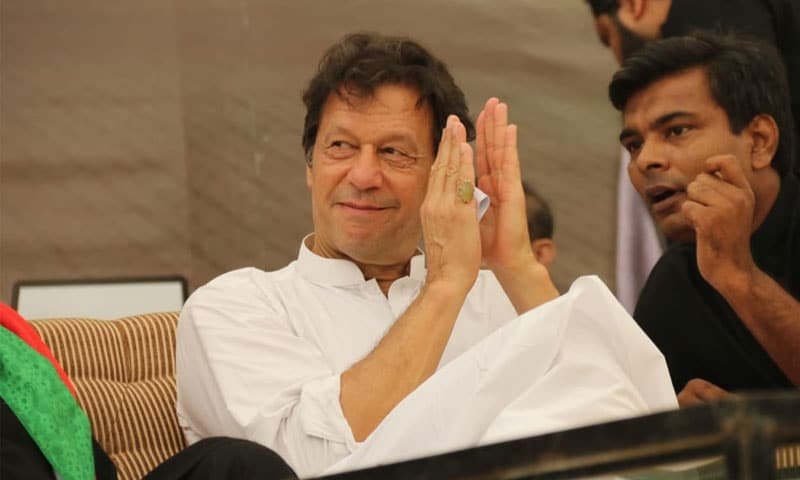
The Islamabad High Court (IHC) has extended bail for Pakistan Tehreek-e-Insaf (PTI) chairman Imran Khan till May 31.
The decision was made during a hearing of PTI’s plea to provide details of more than 100 cases in which Imran is booked.
The former Prime Minister was represented by Barrister Gohar in court today. The government’s attorney asked for extra time to disclose details regarding the charges brought against the PTI chief.
The court, while approving the request of the government’s attorney, postponed the hearing until May 31, passing orders not to arrest Imran Khan until then.
Earlier IHC, barred authorities from arresting Imran Khan till May 17 in any new case registered against him after May 9.
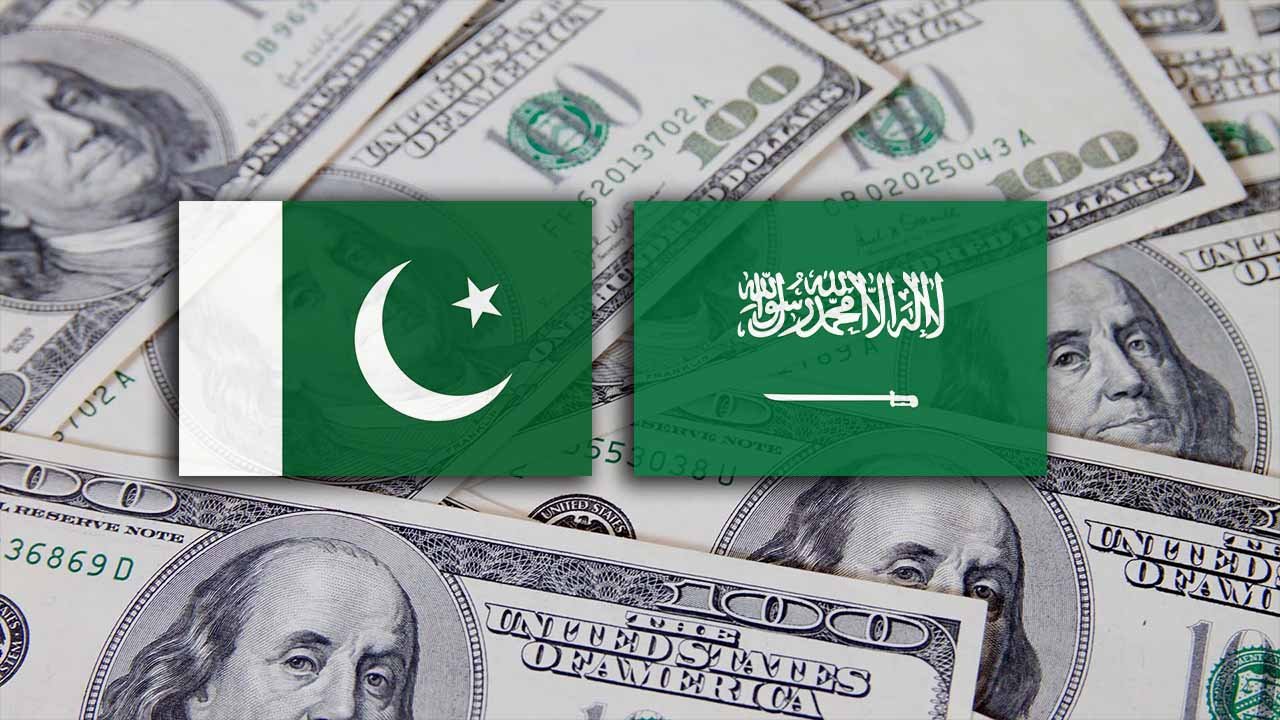
According to reliable sources, Pakistan has agreed to pay an annual profit of four per cent to Saudi Arabia on a deposit of $2 billion with the State Bank of Pakistan (SBP) for a duration of one year.
This decision was made to fulfill one of the prerequisites set by the International Monetary Fund (IMF), which demanded that Pakistan secure external funding of approximately $6 billion, according to Brecorder.
Additionally, the United Arab Emirates (UAE) has also confirmed to the IMF that it will deposit $1 billion with the State Bank of Pakistan.
On May 10, 2023, the Finance Division presented an additional agenda item to the Federal Cabinet, informing them that the Kingdom of Saudi Arabia, through its Ministry of Finance, had agreed to deposit $2 billion with the State Bank of Pakistan for a one-year period. The proposed annual profit rate was set at 4 per cent.
The draft Deposit Agreement, provided by the Saudi side, was sent to the Ministry of Law and Justice and the Office of the Attorney General for Pakistan for examination and clearance in accordance with the Cabinet’s decision on May 14, 2019.
Upon approval by the Federal Cabinet, the Finance Division of the Government of Pakistan will authorize the State Bank of Pakistan to proceed with the Deposit Agreement. The Ministry of Law and Justice has given its clearance to the draft
Agreement, subject to the completion of all necessary formalities, while the Federal Board of Revenue (FBR) has granted its approval for tax exemption.
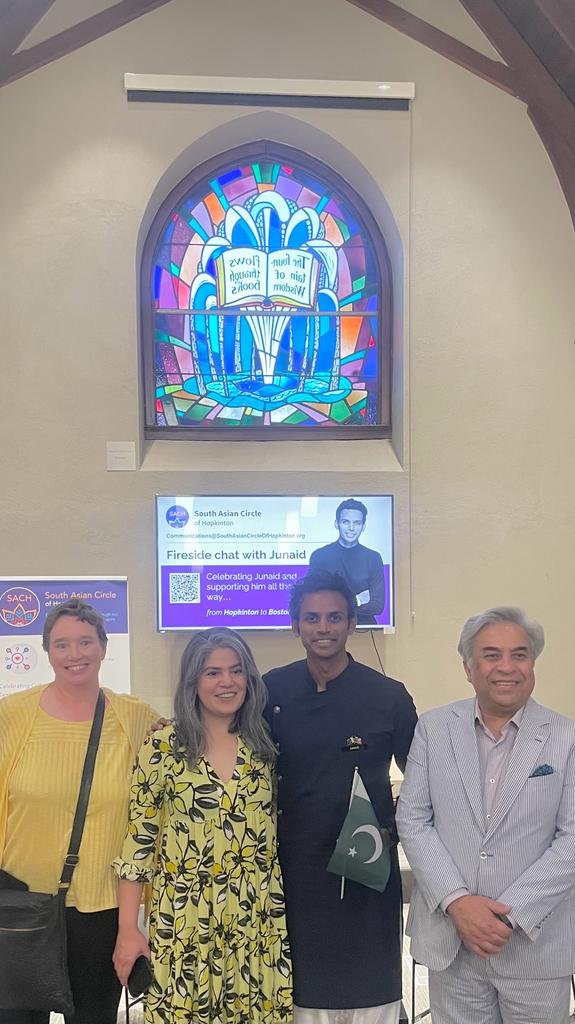
Anchor Muhammad Junaid made the country proud when he became the first ever Pakistani journalist to participate in the Boston Marathon and the London Marathon, a feat he completed in a week.
In the Boston Marathon, held on April 17 in Eastern Massachusetts, Junaid completed the run in 3 hours, 36 min and 38 seconds. He participated along side other Pakistani-Americans like Salman Khan, Hamid Butt, Prem Kumar, Aamad Butt and Shariq Samad. Dr Salman & Hamid Butt are Abbott 6 Start Finishers.
Whereas in the London Marathon, which Junaid finished in 3 hours, 21 minutes and 38 seconds, he ran alongside others Pakistani or Pakistani origin marathons runners. Sadiq Shah, Faisal Shafi, Semeena Khan, Danish Raza, Prem Kumar, Farrukh Sadiq, Dr Jehanzeb Mughal, Danish Elahe, Imran Aleem & Ammar Mumtaz were also among them.
Saqid Shah, a Quetta born and currently a Karachi resident made history at the London Marathon by completing the race in 2 hours, 55 minutes and 20 seconds, becoming the fastest Pakistani runner in London Marathon. He appeared on the Geo News show ‘Geo Pakistan’, along with Muhammad Junaid.
The Current reached out to Junaid to chat about his recent accomplishments, and how running become one of his favorite hobbies, and the Geo News anchor gave us some interesting insights.
Q. You mentioned in your bio that you previously participated in the Boston Marathon. Is running your passion?
Junaid: I started more organised and focused running a few years ago and ran marathons in Karachi and Istanbul. Women and men of the running community realised that the number of Pakistanis in International marathons is very limited and we decided to train to run them. Every marathon has its own value but running Boston marathon can be any runner’s biggest dream. I collaborated with Pakistani Americans & partnered with South Asian Circle of Hopkinton through Hopkinton Board in Massachusetts to run Boston Marathon and open paths for more South Asians in future. It’s an achievement for South Asians in USA and Pakistanis here.
Q. Winning this race seems like an impossible task, so how did you train for this marathon? Especially considering that you’re a Karachi food lover.
Junaid: The goal is to finish the marathon in a good time, preferably faster than your previous time, for any marathon runner 70 KM per week is considered a standard mileage. Per week can vary for everyone, but yes you have got be careful with food. Protein is most important in that because it helps make and repair cells, which are critical for growth and development. So yes chicken, yogurt, milk, eggs, cheese, seafood, nut butters and then good carbs like wholegrain items, sweet potato, brown rice, and lots and lots of water, in my experience anyone involved in sports should avoid carbonated drinks because of the amount of processed sugar in them.
Q. You met politicians like MP Zarah Sultana who congratulated you for your prestigious win! How did that feel?
Junaid: For the Boston Marathon, Pakistani-American Shahid Ahmed Khan, who is currently a member of US President Joe Biden’s prestigious President’s Advisory Committee on the Arts (PACA), Irfan Nasrullah, and the President of South Asian Circle Ruta Upalekar and her team’s role was significant in helping me prepare for the marathon. From Pakistan, it was nearly impossible without support of Geo News. London Marathon was a collaboration for me with the Pakistani-British Journalist Saima Mohsin to raise funds for Scope, a UK charity working mainly for people with disabilities and facing cost of living crises. In that collaboration, we met British Pakistani MPs Naz Shah and Zarah Sultana, who are an inspiration for many and they assured us of their support to work in order to send more Pakistanis of all genders in world sports specially London Marathon.
Q. These initiatives are wonderful but sadly such things have not taken place in Pakistan. Should Pakistani politicians also start setting up running marathons, now that petrol prices are soaring and we’re looking for cheaper ways to travel?
Junaid: Pakistan does not have any international standard running events so far but Shoaib Nizami and other partners are working to organise Pakistan’s first internationally recognised marathon, Karachi Marathon, this year, which can help people here to get first hand experience of running an official marathon.
Junaid revealed that currently he is gearing up along side other Pakistani marathon runners to participate in the upcoming Berlin Marathon being held on September 24, where 50 runners from Pakistan are expected to participate.
Besides the fact that Pakistanis are underrepresented at these races, the number of women runners is even less but the running community is trying to change that. Last year, at London Marathon, Kaukab Sarwar and Hira Diwan ran in the race for TCF with the help of a friend of Pakistan, Mike Nithavrianakis. It is expected that a bigger number of women will be participating in Berlin Marathon this year. Hira Diwan, who is a British Pakistani, has run four world major marathons including New York & Chicago.
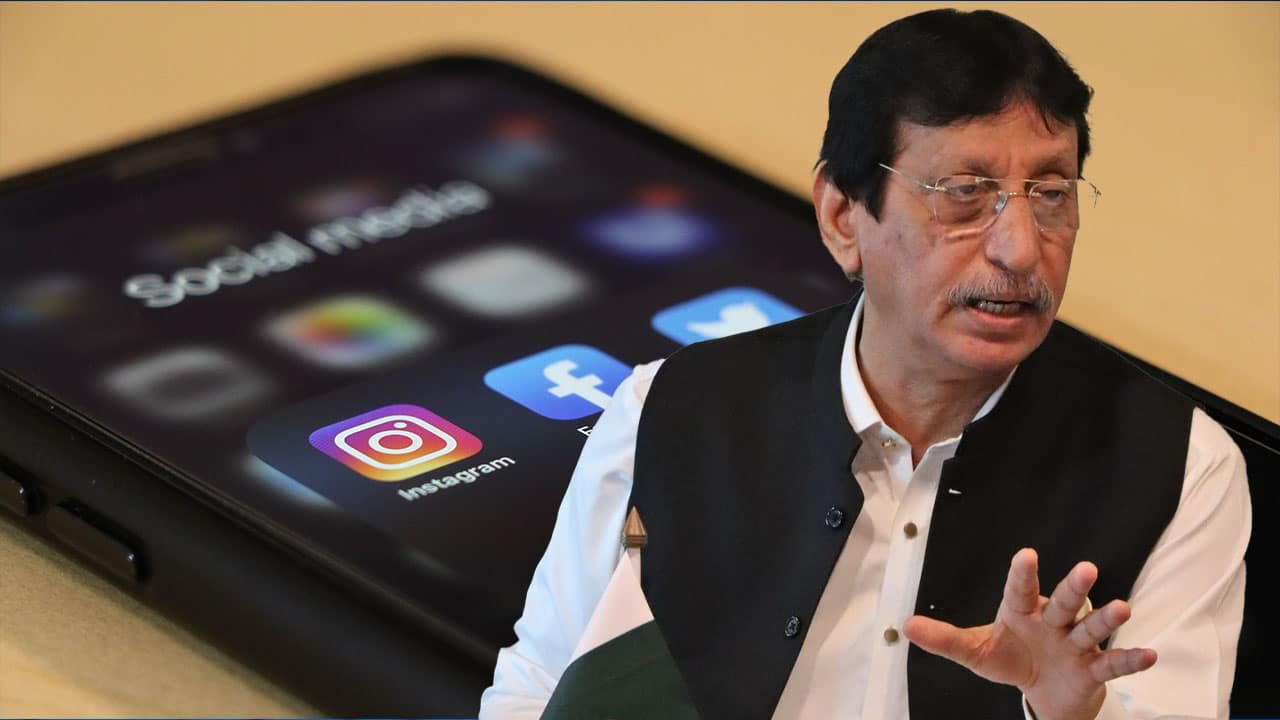
Following the internet blackout in Pakistan, Federal Minister for Information Technology and Telecommunication Syed Amin-ul-Haque distanced his ministry from the blockage, stating that they were not taken into confidence.
According to Geo, Haque revealed that mobile internet services were suspended without the Ministry of IT’s consultation. Since 2017, the Pakistan Telecommunication Authority (PTA) has not been under the Ministry of IT, and the PTA has been operating independently.
The minister explained that blocking social media websites or the internet was not the solution to any issue, and he urged people to be open-minded rather than resorting to using a VPN to access blocked sites.
Haque suggested that instead of completely blocking the internet, it could be blocked in specific areas. He emphasized that the IT sector suffered losses of billions of rupees due to internet blockages.
The suspension of mobile broadband and restricted access to Twitter, Facebook, and YouTube occurred after violent protests arose in response to the Rangers personnel arresting Pakistan Tehreek-e-Insaf (PTI) Chairman Imran Khan from the Islamabad High Court. At least ten people died, and dozens sustained injuries during the days-long protests.
After almost a seven-day suspension, the government restored access to social media platforms such as Twitter, YouTube, and Facebook. The suspension was recommended by the interior ministry and is the longest continuous shutdown in a country that often suspends communication as a tool to quell unrest. Telecom operators suffered an approximate revenue loss of Rs820 million, which was a significant blow to the sector as the economy remained in a fragile state.
Additionally, the government blocked major social media platforms, including Twitter and Facebook, while YouTube services were slower to control the spread of disinformation.
According to the State Bank of Pakistan (SBP), the Pakistani rupee (PKR) strengthened by Rs0.01 against the US dollar in the interbank market on Tuesday.
The local currency managed to recover and closed at Rs284.96.
In contrast, the dollar is being traded at Rs290 in the open market.
It’s worth noting that the rupee had reached a record low of Rs298.93 against the US dollar last week.
Market speculation suggests that the rupee’s gains were further supported by reduced demand for foreign currency, resulting from a significant import payment between May 9 and 11, coinciding with the period of heightened political drama in the country.
Reports indicate that the substantial dollar payment for imports had been arranged by the oil refineries. Oil imports constitute approximately one-fourth of the total import bill for a month.
Earlier, the rupee experienced a sharp decline of 4.71 per cent or Rs14.09 in just two days (May 10-11), hitting a record low of Rs298.93/$ due to worsening political turmoil and deteriorating law and order following the arrest of former Prime Minister Imran Khan. However, the rupee managed to recover some of its losses after Khan’s release on May 12, as ordered by the court.
Pakistan is actively exploring alternative measures to prevent a full-fledged eruption of its balance of payment crisis, as the International Monetary Fund (IMF) continues to prolong the revival of the already-delayed $6.5 billion bailout programme.
According to The News, Pakistan may have no choice but to turn to China to devise a mechanism for rescuing its ailing economy.
“Amid the deepening political and economic crisis in the country, the IMF has adopted a wait-and-see policy, but this approach cannot be sustained indefinitely,” sources informed the publication. “Either the IMF programme must be revived through the completion of the ninth review, or the programme will be abandoned. We will not share any further data with the IMF until the ninth review is completed,” the sources asserted.
Multiple reports indicate that Pakistan has already urged the Fund staff to conclude the review, warning that the budgetary framework for 2023-24 will not be shared otherwise.
Sources recounted an incident where a diplomat from a Western capital questioned a minister about the expected economic meltdown in Pakistan. “This direct question from the dignitary shocked the minister, who assured the visiting diplomat that Pakistan would never default,” the sources narrated.
It is noteworthy that the diplomatic community has also begun inquiring about “domestic political affairs.”
Considering these developments, independent economists are now recommending that the government make last-ditch efforts to revive the IMF programme or turn to China for a potential bailout to support the struggling economy.
Renowned economist Dr Hafiz A Pasha, a former finance minister, expressed that if the IMF fails to make progress, Pakistan would have no alternative but to request China’s assistance in devising a mechanism to avert a full-fledged crisis. He suggested utilizing the Asian Infrastructure Investment Bank (AIIB) as a potential instrument to aid Islamabad in navigating the balance of payment crisis, acknowledging that it falls outside the AIIB’s mandate but emphasizing the need for an institution to assume the role of an Asian IMF.
When approached, Dr Khaqan Najeeb, a former finance ministry adviser, acknowledged the efforts taken by the country to achieve macro stabilization and pave the way for the completion of the ninth review. However, he pointed out the IMF’s cautious stance due to Pakistan’s weak State Bank reserves, which currently stand at just $4.38 billion, and the precarious balance of payment position. The IMF is taking extra care to ensure that financing needs are more than adequately met, despite efforts by authorities to convince the lender in this regard.
Dr Najeeb also highlighted the relaxation of imports, with the IMF keen for Pakistan to build reserves and ease administrative restrictions. Notably, Pakistan’s imports in April (year-on-year) have been halved to $2.9 billion, as reported by the Pakistan Bureau of Statistics.
“The advisable solution is for the IMF to show consideration, as a staff-level agreement can facilitate commercial and multilateral inflows,” Najeeb commented, adding that Pakistani authorities could do more to ensure a robust financing plan.
He concluded that if an agreement is not reached, the country would have to persist with heightened import restrictions, a constrained economy, and borrowing and rollovers from friendly countries wherever possible. “This is not Pakistan’s preferred option to sustain a thriving economy,” he emphasised.
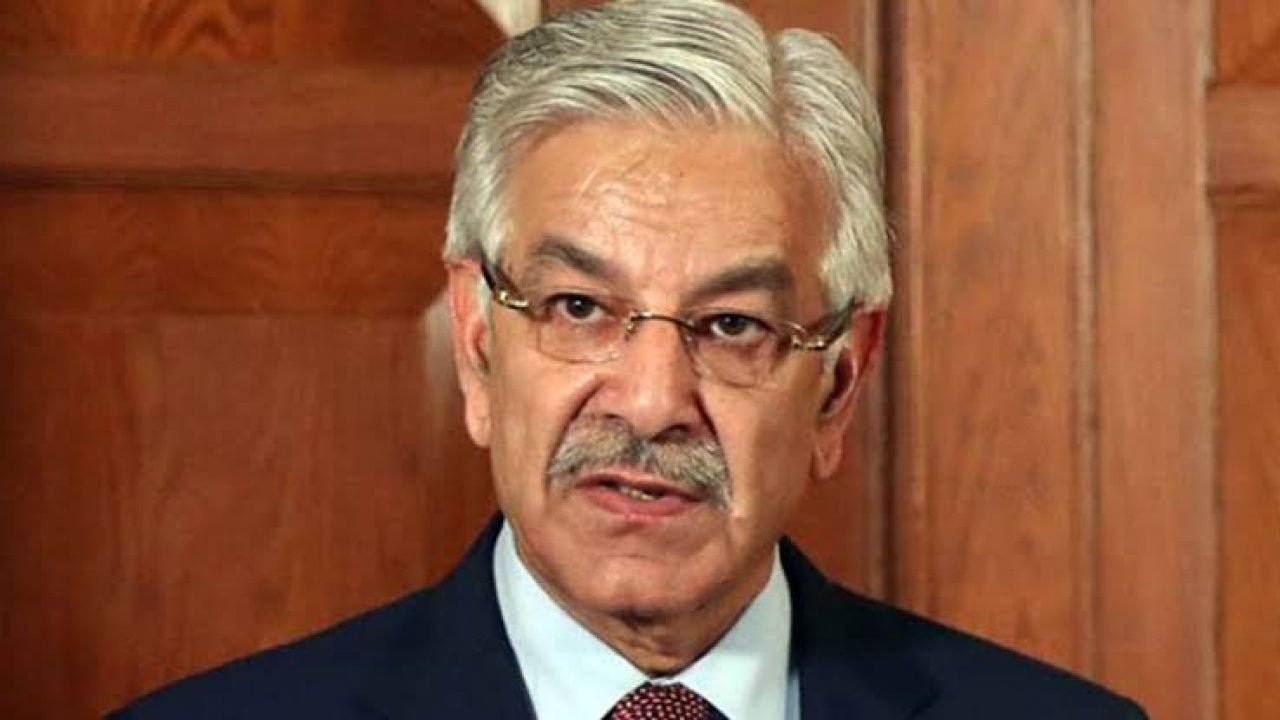
Defence Minister Khawaja Asif appeared on Geo News’ programme ‘Shahzeb Khanzada Kay Saath’ on Monday. During the programme, Asif said that the decision to try Pakistan Tehreek-e-Insaf (PTI) workers under the Pakistan Army Act was yet to be made.
While talking about charging the protesters, the minister said, “If not the Army Act, then should we try them under ‘hooliganism act’?”
“They will face the law for whatever they have done. No one will go scot-free, not even Imran Khan,” he added.
The minister also clarified that the government has no plans to ban PTI.
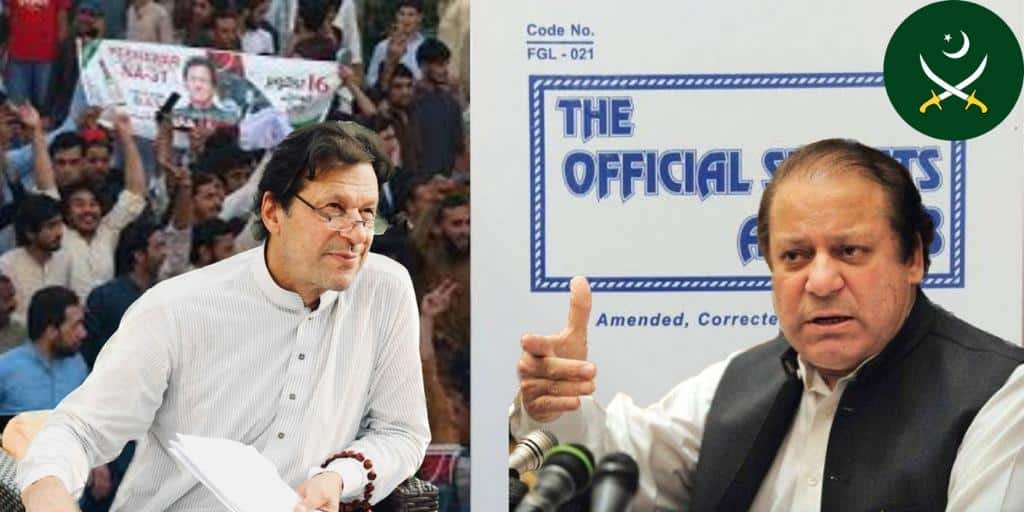
A Corps Commander Conference held in Rawalpindi on Monday, decided that the rioters who attacked military installations and buildings during the protests led by Pakistan Tehreek-e-Insaf (PTI) supporters, will be tried under the Army Act and Official Secret Act.
A Special Corps Commander Conference held at the General Headquarters (GHQ) and presided by Chief of Army Staff General Asim Munir has decided that the planners, instigators, abettors and perpetrators of the attacks on military installations and buildings during the protests led by Pakistan Tehreek-e-Insaf (PTI) supporters will be tried under relevant Pakistani laws, including the Army Act and Official Secret Act. The statement released by the ISPR after the Corps Commanders meeting is not just unprecedented but is being seen as a violation of human rights and fundamental freedoms.
In a statement, Aurat March Lahore said: “Use of military laws and courts to try civilians, the complete absence of due process, transparency and accountability flies in the face of the pretence of democracy under the current PDM regime… State institutions and monuments are not more important than people’s fundamental rights and lives. Respect must be earned through actions, not through the force of draconian laws.”
It must be noted that if convicted under the Army Act, a person can be sentenced to life imprisonment or be handed a death sentence. Pakistan is going through one of its worst crises ever with the entire system tethering on the brink of collapse. From the military establishment to the judicial establishment, all institutions have lost their credibility. It is high time that political parties and parliament take charge of the situation and make sure that the law is followed instead of going down the path of military trials which offer no transparency.
A word of caution: if the PDM government go down this path and allows civilian rioters to be tried under military laws, the same will one day be applied to their leadership, their supporters and workers. We have seen history repeat itself too many times to not learn a lesson. Democracy is not about punishing your opponents; it is about ensuring that no one is targeted unjustly for their political views. Rioters, when identified, should be prosecuted as per the law of the land in courts, not military courts. If PTI justified arbitrary arrests, detentions and draconian punishments, PDM should refrain from doing so. Politics isn’t about personal enmity.
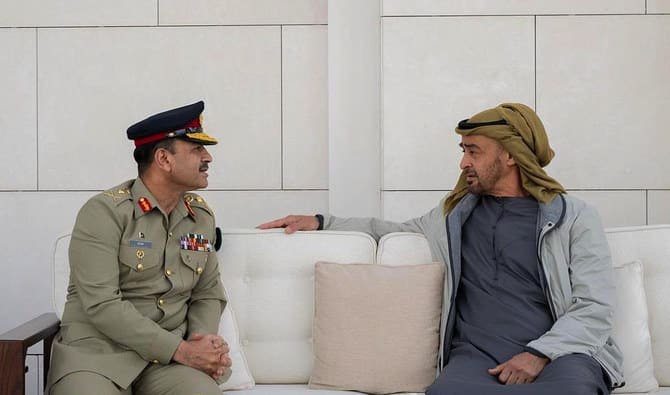
United Arab Emirates (UAE) President Mohammed bin Zayed Al Nahyan has telephoned Chief of Army Staff (COAS) General Asim Munir.
According to media reports, bilateral defense and military relations were discussed, with both emphasising the need to further promote mutual defense and military cooperation.
The conversation has taken place while the country is gripped in political chaos. Recently, after Pakistan Tehreek-e-Insaf (PTI) Chairman Imran Khan’s arrest, his supporters attacked military installations.
Khan has also openly named COAS Munir for his arrest and accused him of spreading anarchy just to save his seat.