Tag: Pakistan

  • Are actors responsible for educating their audiences?

    Once again, the Pakistani entertainment industry is stirring up reminders of why people should stop viewing their content because even they don’t want to own up to the material they work on.

    Actor Danish Taimoor appeared on a celebrity talk show yesterday where he was questioned about his choice of dramas for the past few years, and the criticism his characters are subjected to. Taimoor firmly responded to the rumors by saying that he was an actor, not a teacher. ‘It’s not my job to educate an audience,” he said.

    These kind of statements are usually used to reject society’s expectations. It is not a person’s responsibility to dress the way society wants or to keep imposing restrictions on themselves that hinders their creativity, just so that society remains happy. But when it comes to filmmakers, the line is rather crooked.

    Sorry Mr Taimoor, but when you chose to become an actor and get involved in dramas, you inadvertently become an educator. Films are a platform that educates our audience on issues, and as a person with a public position, the onus does fall on you to be mindful that the kind of message your dramas are sending not harmful.

    Perhaps we should widen the screen to remember what was the kind of content that Taimoor was being questioned on. His past few dramas like Kaisi Teri Khudgarzi and Ishq Hai had attracted widespread criticism for featuring abusive, toxic male leads who were projected as romantic heroes regardless of the way they stalked, coerced and pressurized the female characters to marry him. One of the most memorable examples was a scene in Ishq Hai, where Taimoor’s character holds a gun to his head and starts counting down from 10, threatening the girl that he would shoot himself unless she agrees to marry him.

    Can we allow our actors and other members of the entertainment industry to dissuade their responsibility while depicting such triggering scenes that show a woman being kidnapped, threatened and pressurized in to marriage? Especially in a country like Pakistan where the rape conviction rate is less than 5%, and a recent report that was presented to the National Assembly of Pakistan showed that between 2019 to 2021, more than 3,987 women were killed because of domestic violence? More women in Pakistan are turned away from their families, and the courts in order to bring their abusers to justice because they’re told by public officials, including our own entertainment bretheren, that their wounds don’t matter. Because our screen writers and actors have pushed the narrative through their work that belittles and demoralizes women who aren’t passive or submissive.

    But Taimoor isn’t the first person to respond to criticism with this statement, as so have other members of the acting fraternity as a complete justification to their choice of dramas. When Fahad Mustafa was questioned about his choice to produce Dunk, a drama that revolved around fake sexual harassment allegations, he had responded with the same remark. “I don’t run a school, I am an actor so it’s not my job to educate audiences.” Even another roundabout way to defend the choice of drama was from Yasra Rizvi who had outshone with her brilliant performance in the web series ‘Churails’ but then was one of the main performers in ‘Dunk’. Defending her decisions on her Instagram page, the actor stressed that “Actors who play rapists and murderers are not ACTUALLY rapists and murderers and they are not condoning or justifying such actions in real life by playing said characters.”

    Any sane person watching Akshay Kumar play a broke man in Hera Pheri knows that he actually doesn’t live in a crammed room with three other people, but is playing a character. Your audiences aren’t dumb and they aren’t here to just be entertained, but they are absorbing the message you are sending through playing that characters on screen. Because the reason why the entertainment industry is being held responsible for the kind of material they are churning out is because theirs’ is a powerful medium through which we educate our audiences. Films have the power to reach out across countries and to the masses who are sitting at home and watching it on screens. Actors are not merely just entertainers who get to perform in front of an audience, but they are powerful individuals with platforms that have the power to change and influence ideals that no politician or public official can do so. When our entertainment industry consistently put drama after drama where women are being beaten, and churning out regressive messages, they don’t get to wonder in shock that why is the there a never ending rape pandemic in Pakistan, and how more women are posing a threat to their lives if a video of them dancing on Tik Tok goes viral. It’s because our dramas and filmmakers need to realize that they have a social responsibility to be mindful of the message they are sending out to their audiences.

    Especially for celebrities like Mansha Pasha who had said in defense of Rizvi, that “Actor’s aren’t echo chambers”, then there won’t really be any point of the entire profession. Activism is not a toy you can pick and drop when it pleases your image. Despite public appearances at marches and protests for women’s rights, it is ultimately your films and dramas that define what kind of social issues you are advocating for. So regardless of how you may protest how much of a feminist you are, it is the women from backgrounds less privileged than yours who suffer more because of your stance. The reason why the rise of the right wing government BJP is able to cement their stance and consolidate their anti-Muslim stance was through peddling their narrative with the power of films and influential celebrities.

    Actor Sania Saeed reflected on why more drama creators need to remember that their content isn’t just providing entertainment, but it is also projecting out messages that the audience will follow. In an interview with Something Haute, she spoke about why art has an essential political role in society:

    “Television shows want dense topics they feel can be understood by audiences quickly and will also be easily made and accepted by the people. I feel that this has become a business formula now to write television series, and we have started pressurizing our artists and writers to adjust to this….I do believe that art has a role beyond entertainment which is to help expand our mindsets.”

    The responsibility to educate the masses isn’t something that an actor gets to avoid, but it is attached with every form of entertainment they are sending out to their audience. So to Danish Taimoor, Fahad Mustafa, and other members of the acting industry, it is your responsibility to ensure that your films are not peddling dangerous narratives that hinder the efforts being made by women, transgenders and other minorities to regain their humanity within Pakistan.
  • ‘Pakistan default ho chuka hai’: Khawaja Asif

    ‘Pakistan default ho chuka hai’: Khawaja Asif

    Defence Minister Khawaja Asif has said that Pakistan has already defaulted, and that we’re all citizens of a bankrupt country.

    “You all have heard that Pakistan is going to default. That has already happened. Pakistan has defaulted and we’re all living in a bankrupt country,” the Pakistan Muslim League-Nawaz leader said on Saturday while addressing a public gathering.

    “If we sell two golf clubs we will be able to pay off two third of our debt. These golf clubs are constructed on 1500 kanal of land in Pakistan. Have seen leaders begging for 230 million dollars.” said Khawaja.

    The minister also said that houses of the poor are demolished so that the real estate mafia can make money.

    “A cheetah killed a man in Islamabad, no one had the guts to register the FIR on the right person. The FIR was registered against an ‘unknown’ person,” said Khawaja while addressing the crowd.

    He also said that terrorism came to Pakistan because of our leaders.

  • Pakistan will never shut down social media sites again, IT Minister promises

    Pakistan will never shut down social media sites again, IT Minister promises

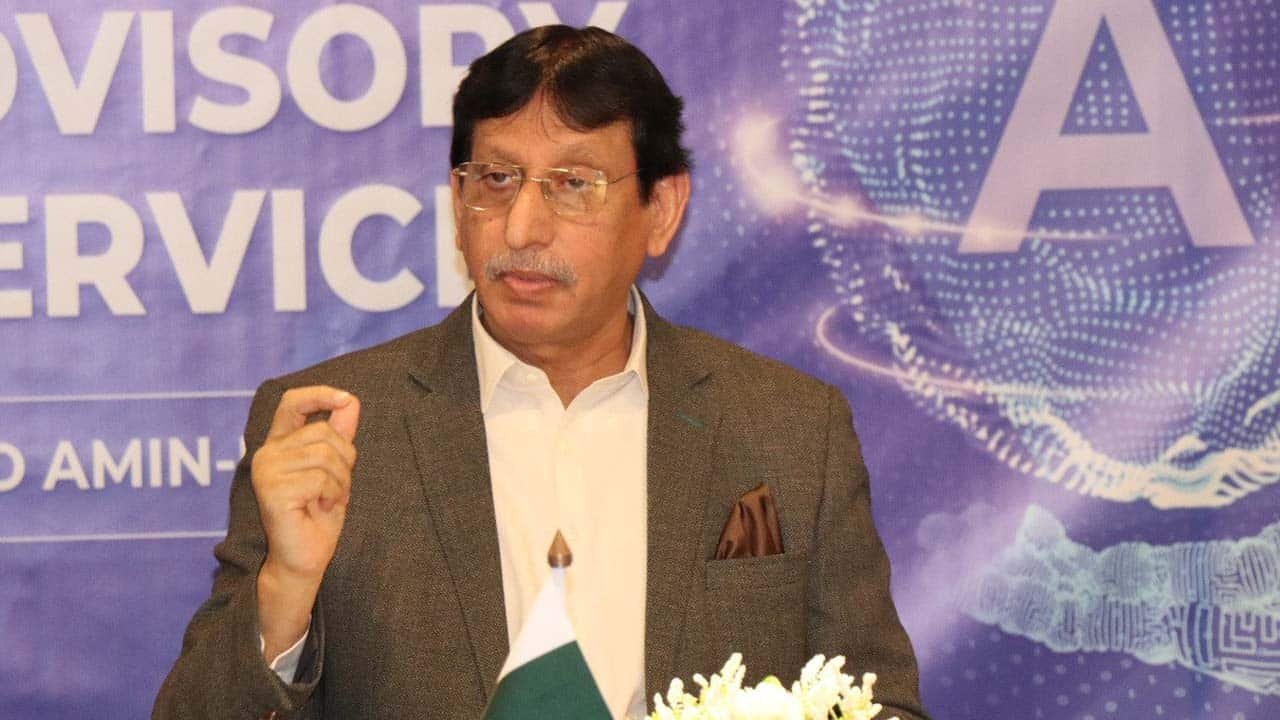
    Speaking at the ‘Accelerating US Investments in Pakistan’ event in Karachi, Federal IT and Telecommunication Minister Aminul Haq said that closing social media sites and applications is not the solution to the problem, and Pakistan has decided that no website or app will be closed in any case.

    Pakistan has a history of banning social media platforms like YouTube, TikTok, and most recently, Wikipedia. However, Haq emphasized that “banning can never be a solution.” Haq’s statement is a significant departure from Pakistan’s previous actions, and he promised that any such action would go through the IT ministry, where there will be no ban from now on.

    Despite bureaucratic hurdles at the Finance Division, the Federal Board of Revenue (FBR), and the State Bank of Pakistan (SBP), Haq’s ministry has been persistent and able to get many things done, such as allowing IT export companies to retain 35% of dollars in their accounts.

    During the event, Haq praised Prime Minister Shehbaz Sharif for supporting the Digital Pakistan vision despite all the bureaucratic hurdles.

  • Pakistan’s export market takes a hit: Textile group exports down 14.83% in January

    Pakistan’s export market takes a hit: Textile group exports down 14.83% in January

    According to the Pakistan Bureau of Statistics (PBS), the country’s textile group exports declined by approximately 8.17 per cent during the first seven months (July-January) of fiscal year 2022-23, totaling $10.039 billion as compared to $10.933 billion during the same period of the previous year.

    The data also showed that textile group exports witnessed a year-on-year decline of 14.83 per cent in January 2023, amounting to $1.321 billion, compared to $1.551 billion during the same month in the previous year. Additionally, on a month-on-month basis, the textile group registered a negative growth of 2.53 per cent compared to $1.356 billion in December 2022.

    Cotton yarn exports experienced a negative growth of 34.66 per cent during July-January, totaling $449.419 million compared to $687.857 million during the same period in the previous year. On a year-on-year basis, cotton yarn exports registered a negative growth of 12.34 per cent, while on a month-on-month basis, it registered a growth of 27.22 per cent.

    Rice exports declined by 15.82 per cent during the first seven months of fiscal year 2022-23, totaling $1.083 billion compared to $1.286 billion during the same period in the previous fiscal year. Overall, the country’s exports during July-January 2022-23 totaled $16.499 billion (provisional) compared to $17.739 billion during the corresponding period of the previous year, showing a decrease of 6.99 per cent.

    In January 2023, the country’s exports amounted to $2.244 billion (provisional) compared to $2.313 billion in December 2022, reflecting a decrease of 2.98 per cent and a decline of 14.15 per cent compared to $2.614 billion in January 2022. The primary commodities of exports during January 2023 were knitwear, readymade garments, bed wear, cotton cloth, rice others, towels, cotton yarn, made-up articles (excluding towels and bedwear), rice basmati, and surgical goods and medical instruments.

  • Rev up your budget: Atlas Honda hikes motorcycle prices by up to Rs35,000 amid economic crisis

    Rev up your budget: Atlas Honda hikes motorcycle prices by up to Rs35,000 amid economic crisis

    The two-wheeler segment’s largest player in Pakistan, Atlas Honda, has raised motorcycle prices following a significant hike in car prices.

    This marks the company’s second rate hike in February, as they already increased the prices of their motorcycles by an amount ranging between Rs7,400 and Rs30,000 earlier this month.

    The new prices became effective on February 15.

    Model Old Prices (Rs) New Prices (Rs) Hike (Rs)
    CD 70 128,900 137,900 9,000
    CD 70 Dream 137,900 147,500 9,600
    Pridor 170,900 181,500 10,600
    CG 125 194,900 205,900 11,000
    CG 125 Special Edition 230,900 243,900 13,000
    CB 125 F 303,900 330,900 25,000
    CB 150 F 383,900 418,900 35,000
    CB 150 F SE 387,900 422,900 35,000
    Latest Honda Bike Price Feb 2023

    During the Finance (Supplementary) Bill 2023, Finance Minister Ishaq Dar announced a rise in the general sales tax (GST) rate to 18%, which is expected to lead to price hikes for various industries and sectors.

    Amidst Pakistan’s ongoing economic crisis, the automobile sector has been significantly impacted due to the depletion of foreign exchange reserves and a weakening rupee, leading to issues with opening letters of credit.

  • Pakistan’s forex reserves increase by 9%, cross $3 billion mark

    Pakistan’s forex reserves increase by 9%, cross $3 billion mark

    After declining for three weeks in a row and losing a cumulative $1,685 million during that period, the foreign exchange reserves held by the State Bank of Pakistan (SBP) have rebounded, according to a statement from the central bank.

    As of February 10, SBP’s foreign currency reserves totaled $3,192.9 million, which is up $276 million from the previous week. This increase represents a gain of over 9 per cent and has broken the streak of declining reserves.

    However, even with this increase, the amount is still only enough to cover one month of imports. Meanwhile, the net forex reserves held by commercial banks are $5,509.3 million, which is $2,316.4 billion more than SBP, bringing the total liquid foreign reserves of the country to $8,702.2 million. The statement did not provide a specific reason for the increase in SBP-held reserves.

    Pakistan’s economy is in dire straits due to a balance-of-payments crisis, political chaos, and deteriorating security. The government has banned all but essential food and medicine imports until it receives a crucial loan tranche from the International Monetary Fund (IMF), which could unlock other sources of funding for the country.

    Inflation has risen sharply, the rupee has declined, and the country is struggling to afford imports, which has caused a severe decline in its industry. Pakistan is no longer issuing letters of credit, except for essential food and medicine, since January, which has led to a backlog of raw material imports that the country can no longer afford.

    According to Geo, the rupee devaluation and the logjam have resulted in a significant decline in manufacturing, including textiles and steel, and building projects.

    While the IMF cash injection alone will not be enough to rescue Pakistan, the government hopes that it will boost confidence and pave the way for other friendly countries like Saudi Arabia, China, and the UAE to offer additional loans.

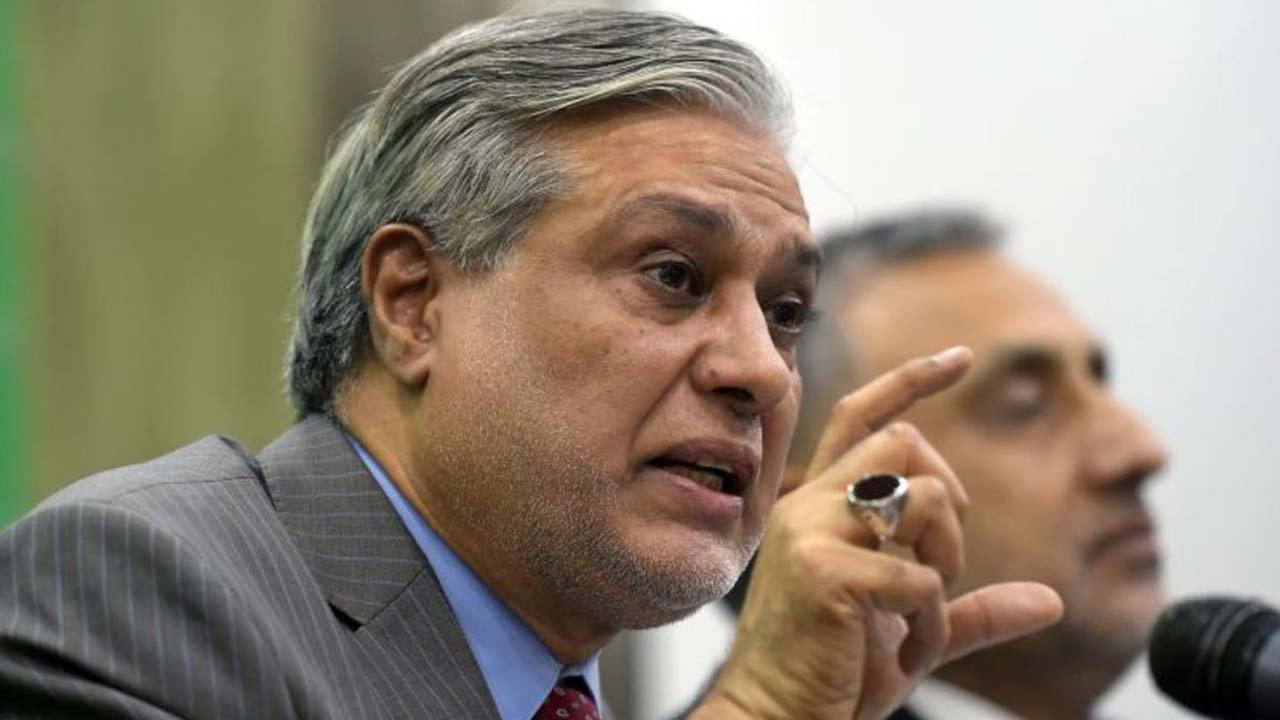
  • Ishaq Dar presents mini-budget in National Assembly to meet IMF conditions

    Ishaq Dar presents mini-budget in National Assembly to meet IMF conditions

    A crucial tax amendment bill to fulfil the conditions of the International Monetary Fund (IMF) to revive a stalled loan programme that the country needs to stave off default was presented in both houses of parliament on Wednesday.

    Finance Minister Ishaq Dar introduced the Finance (Supplementary) Bill 2023 first in the National Assembly and then in the Senate.

    The Pakistani government approved a proposal last night to increase the general sales tax (GST) rate from 17 to 18 per cent and to raise the Federal Excise Duty (FED) on cigarettes. The aim is to generate an additional Rs115 billion out of Rs170 billion, which was agreed upon by Pakistan in accordance with the IMF conditions.

    Through the implementation of the “mini-budget,” led by the Pakistan Democratic Movement (PDM)-led government, the country intends to reduce the budget deficit and enhance its tax collection efforts to meet the conditions set by the IMF, a Washington-based lender.

    The National Assembly will not be referring the bill to the Standing Committee on Finance and Revenue for further review, while the Senate has sent the legislation to the relevant committee. Officials at the Ministry of Finance have stated that they anticipate the bill to be passed by Thursday morning, which will allow for the receipt of funds not only from the IMF but also from other multilateral and bilateral sources.

    Last week, Pakistan and the International Monetary Fund (IMF) were unable to reach an agreement, and the visiting IMF delegation left Islamabad after 10 days of talks. However, negotiations are set to continue. The Pakistani economy, valued at $350 billion, is in dire need of financial assistance as it grapples with a severe economic crisis.

    In an effort to appease the IMF, the government initially intended to implement the fiscal measure via an ordinance. However, President Dr Arif Alvi recommended that the administration obtain the parliament’s approval instead.

    During his address to the lower house, Finance Minister Dar highlighted the unprecedented crises the nation is currently facing due to the “substandard” policies of the Pakistan Tehreek-e-Insaf (PTI) government. In contrast, the country had experienced economic growth during the previous government led by the Pakistan Muslim League-Nawaz (PML-N), during which the Gross Domestic Product (GDP) had increased by $112 billion.

    “The PML-N always tries to take fewer loans. Foreign investment had also increased during PML-N’s tenure. In contrast, during the PTI’s government, the loans hit record highs, and a common man’s income also plunged.”

    According to Geo, the finance minister stated that in addition to the challenges that the current government is confronting as a result of the Pakistan Tehreek-e-Insaf’s (PTI) policies, the country suffered losses exceeding $8 billion due to last year’s floods.

    “But, we should always prefer the state over politics,” he reiterated — the mantra that PDM leaders have time and again propagate as they face an uphill task on the economic front.

    This is a developing story…

  • 2,000 Pakistani workers secured jobs in Korea through EPS, says Korean ambassador

    2,000 Pakistani workers secured jobs in Korea through EPS, says Korean ambassador

    The Ambassador of the Republic of Korea to Pakistan, Suh Sangpyo, announced on Monday that during the year 2022, approximately 2,000 workers from Pakistan secured employment in Korea through the Employment Permit System (E9).

    As per a news release issued by the embassy, the Ambassador expressed his appreciation for the increasing employment opportunities being provided to Pakistani workers through the Employment Permit System (EPS) in Korea. He also pledged to extend his embassy’s full cooperation to further expand the EPS project in the future.

    The Embassy extended its support to the Employment Permit System (E9) project by donating five units of computer equipment, namely scanners, to the sending country (OEC) free of charge. The scanners can be utilised for multiple purposes, including passport scanning.

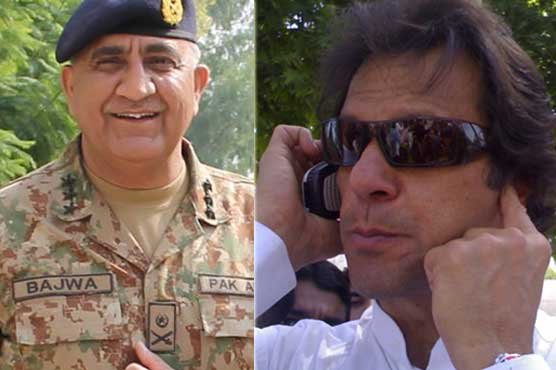
  • Gen Bajwa personally recorded conversations with Imran Khan, claims Aftab Iqbal

    Gen Bajwa personally recorded conversations with Imran Khan, claims Aftab Iqbal

    Television personality and anchorperson Aftab Iqbal has claimed that former Chief of Army Staff (COAS) General (retd) Qamar Javed Bajwa recorded conversations with former Prime Minister Imran Khan when they used to meet.

    “General Bajwa told me that he has audio recordings of Imran Khan praising me for trapping Nawaz Sharif [in court cases and removing him from power]. He [Khan] used to come to me and share ideas of what more I should do with Nawaz Sharif,” reveals Iqbal.

    Iqbal said that Gen Bajwa claimed that he himself recorded the conversations and that former Director-General of Inter-Services Intelligence (ISI) Chief Faiz Hameed also didn’t know about it.

    “Securing Faiz, Gen Bajwa said that he will reveal all information that he has on Khan,” said Iqbal.

    On the other hand, Pakistan Tehreek-e-Insaf (PTI) Chairman Imran Khan has yet again come up with another narrative regarding his version of ‘regime change’. The former Prime Minister said that Gen Bajwa told the United States (US) that Khan is anti-America, which resulted in his ouster.

    In an interview with Voice of America, aired on Saturday, Khan said, “As things unfolded, it wasn’t the US who told Pakistan, it was unfortunately, from what evidences have now come out, it was General Bajwa who actually somehow managed to tell the Americans that I was anti-America and so it was not imported from there actually it was exported from here to there.”

  • Police arrest 60 suspects in Nankana Sahib lynching case

    Police arrest 60 suspects in Nankana Sahib lynching case

     The Nankana Sahib police arrested 60 suspects involved in the lynching of a man outside the police station on Saturday morning, reports Dawn.

    Several police teams launched a massive crackdown at the residences, business points, and other places to round up the suspects.

    Sheikhupura Regional Police Officer (RPO) Babar Sarfraz Alpa said that the police were very clear in its action against the attackers whether they were from any religious organsation or a political party.

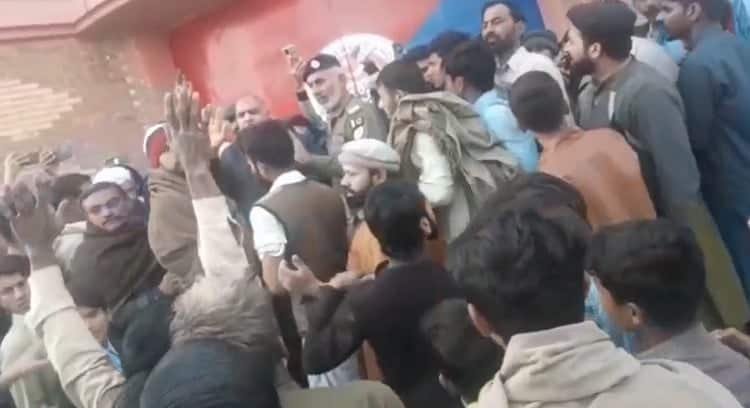
    Mob storms police station, kills man accused of blasphemy

    A violent mob stormed a police station in Nankana Sahib on Saturday, dragging out a man accused of committing blasphemy before burning him to death.

    The man had been accused of desecrating the Holy Quran.

    Inspector General (IG) of Punjab Police, Dr Usman Anwar, suspended Nankana Sahib Circle Deputy Superintendent of Police Nawaz Waraq and Warburton Station House Officer (SHO) Feroz Bhatti. The SHO and other police personnel allegedly ran away from the mob, trying to save their own lives.

    Prime Minister (PM) Shehbaz Sharif also took notice of the incident.

    “Why didn’t the police stop the violent mob? The rule of law should be ensured. No one should be allowed to influence the law,” he was quoted as saying in a press release from the Prime Minister’s Office.

    Meanwhile, Pakistan Ulema Council (PUC) Chairman Tahir Mehmood Ashrafi has condemned the incident, saying killing and burning someone accused of blasphemy is a cruel act.

    This is not the first time that a mob has burnt a man to death on the suspicion of blasphemy. In 2021, Sri Lan­kan engineer Piryantha Kumara was burned to death on the alleged charges of blasphemy by his own factory workers in Sialkot. In 2017, Mashal Khan, a student of Abdul Wali Khan University was lynched by his peers within the premises of the institution on the same accusations.