Tag: Pakistan

  • Will anyone save Balochistan?

    Will anyone save Balochistan?

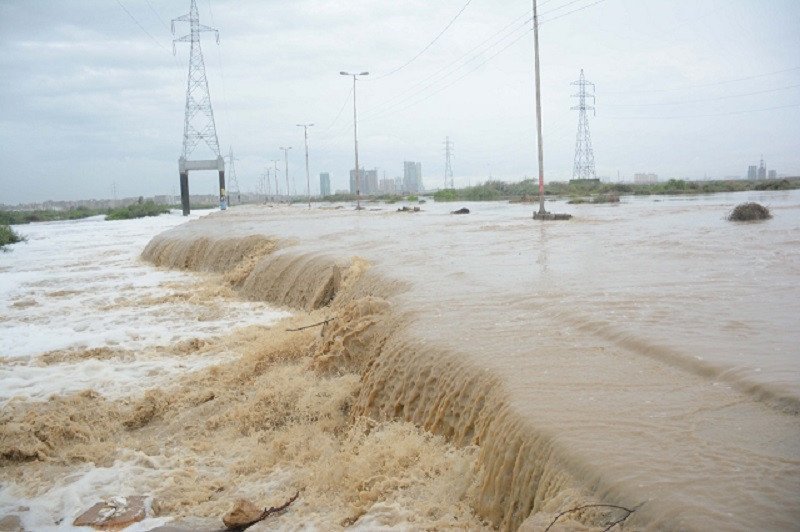
    Continuous rain isn’t showing its mercy to the people of Balochistan, adding to their sorrow. Prime Minister Shehbaz Sharif visited Balochistan yesterday to oversee the relief work being done in the province during the heavy monsoon rains. More than 120 people have lost their lives while 6,000 houses have been completely damaged and over 10,000 partially damaged. The Inter-Services Public Relations (ISPR) said, “Troops are busy in rescue, and relief efforts apart from providing medical care and opening up communication infrastructure.”

    Occasional rain kept pouring on in different cities of the province, exposing the already neglected Balochistan to more tragedy. According to the Pakistan Meteorological Department, Kalat received 50mm of rain, followed by Chaman with 26mm and Ziarat with 21mm during the said period. Rainfall was also reported in Muslim Bagh, Sibi, Mastung, Dalbadin, Khuzdar, Lasbela and Barkhan in the last 24 hours. According to the Provincial Disaster Management Authority (PDMA), at least 127 people have died in rains and floods in the province since June 1. Some of those deaths were reported in parts of the province in the last 24 hours.

    Every year, Pakistan witnesses floods and heavy rains destroying infrastructure. Are the ones responsible for running the country well aware that Pakistan finds itself in this vicious cycle every year but are we prepared? The answer: no. The authorities do not wake up unless floods swamp provinces, people die, families lose their livelihoods, jobs, animals, homes, and above all, their loved ones.

    The plight of Balochistan makes one wonder, why doesn’t our government plan ahead? Why don’t management authorities take preemptive measures? Why can’t we realise that the loss of life is replaceable? Will anyone really see how families have lost their loved ones, how water has washed away life itself? But what’s even scarier is how little we are doing to change this. We hope that our authorities do better. Better as leaders, caretakers, policy-makers, and above all, as humans. The plight of Balochistan is an awakening call for all. The sooner our leaders wake up, the better. Balochistan has been neglected for decades. The people of Balochistan deserve better.

  • Aima Baig, Sahir Ali Bagga collaborate for KPL 2 anthem

    Aima Baig, Sahir Ali Bagga collaborate for KPL 2 anthem

    The much-anticipated official hymn for the second edition of the Kashmir Premier League (KPL), which will take place from August 11 to 25, was unveiled on Saturday.

    The anthem, which is sung by superstar singers Aima Baig and Sahir Ali Bagga, also includes notable Pakistani athletes, including Shahid Afridi, Shoaib Malik, Kamran Akmal, Sharjeel Khan, and Azam Khan.

    The KPL administration also took sure to promote Kashmiri music in the writing of the song and included some magnificent images of the magnificence of the valley.

    The opening match of the second KPL season will take place on August 11 at Muzaffarabad Cricket Stadium, while the championship game will follow on August 25 at the same location.

    Fans of cricket will be able to watch some of Pakistan’s most well-known cricketers, such as Kamran Akmal, Mohammad Hafeez, Mohammad Amir, and Sharjeel Khan, play in the KPL this year as icon players.

  • Religious minorities allotted sites for burials, cremation

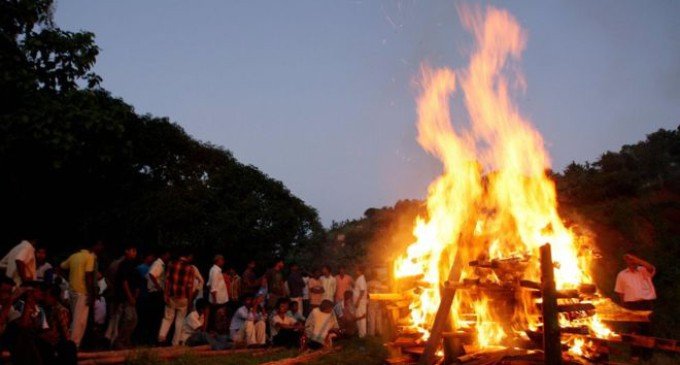
    Religious minorities allotted sites for burials, cremation

    The National Assembly (NA) was told that all religious minorities living in Islamabad have been allotted burial sites, reports Dawn.

    Interior Minister Rana Sanaullah informed the House about this development. He said that all religious minorities have been given cremation grounds and graveyards in the capital.

    About the Hindu community, he said that they have been given grounds in the H-9 sector of the capital. The Buddhist community also has its cremation grounds in this sector.

    Other religious minorities including Christians, Baháʼís and Ahmadis have their graveyards in the same sector.

    The House was told that there is no demand for new sites but if the religious communities will demand more sites, it will be allotted to them.

  • Bilawal Bhutto avoids handshake with Indian foreign minister

    Foreign Minister (FM) Bilawal Bhutto-Zardari met and held meetings with his counterparts from Afghanistan, China, Tajikistan, Kazakhstan, Uzbekistan, and Kyrgyzstan at the Shanghai Coopera­tion Org­anisation’s (SCO) Council of For­eign Ministers’ meeting. However, it has been reported that Bilawal and Indian FM Dr S. Jaishankar avoided handshake and the two ministers sat away from each other.

    Bilawal attended the SCO meeting (July 28th to 29th) in Tashkent and this is where both he and Jaishankar came together since the Pakistani foreign minister took charge.

    It is pertinent to mention that the SCO meeting is being held in connection with the preparations for the SCO Heads of State meeting scheduled to be held in September.

    On the international platform, Bilawal said that there are no plans of any meetings between Indian and Pakistani Prime Ministers (PM) in September, adding that “both India and Pakistan are part of the SCO and the two countries are only engaged in the context of the broad-based activities of the organisation”.

    The foreign minister said: “India is our neighbouring country. While one can decide on a lot of things, one cannot choose its neighbours, therefore, we should get used to living with them.”

    Bilawal recalled that after 2019, constructive dialogue with India became difficult, while statements based on Islamophobia by Indian officials are further creating hurdles in dialogue.

    ‘What is our fault if Khan failed to boost ties with US?’

    Reacting to Imran Khan’s criticism that said Pakistan and the United States (US) relation has weakened during the tenure of the coalition government, the foreign minister said, “There is no truth in Imran Khan’s claims.”

    “Khan tried to strengthen relations with Washington when he was in power,” he said and asked, “What was their fault if he failed to boost ties with the US?”

  • Supreme Court uploads audio of JCP meeting on its website

    The Supreme Court of Pakistan (SCP) uploaded the audio of the Judicial Commission of Pakistan’s (JCP) meeting on its website.

    The recording was of the letters issued by two JCP members — senior puisne SC judge Justice Qazi Faez Isa and Justice Sardar Tariq Masood — both of whom claimed the meeting had disapproved the nominations of judges, proposed by the Chief Justice of Pakistan, for elevation to the top court.

    Justice Sardar Tariq Masood, in a letter, highlighted the need for putting out factual and correct minutes of the meeting, in which details of observations and discussions of each member should be mentioned.

    “The correct minutes of the meeting, if made publically, will stop needless rumours,” Justice Masood wrote in his two-page letter.

    In a similar letter written to other JCP members, Justice Qazi Faez Isa also highlighted that the acting secretary, who had attended the meeting in the absence of the JCP secretary, should immediately release this decision to the media, which would also stem unnecessary speculation and misreporting, as the meeting was held behind closed doors.

    “In these exceptional circumstances the Hon’ble chairman JCP has been pleased to relax the restriction under Rule 5(4) of the JCP Rules, 2010 and has directed for the audio recording of the JCP proceedings of 28.07.2022 to be made available on the official website of the SCP,” said a statement issued by the apex court.

    The audio recording from time slot 1:29:45 to 1:38:08 contains the statement by Attorney General for Pakistan (AGP) Ashtar Ausaf that the matters under discussion should be deferred to frame appropriate rules. He did not assess or reject the merits of any of the high court judges proposed for appointment to the apex court. As a result, five members of the JCP supported the deferment of the meeting as reported in the press note of Thursday,” the fresh statement said.

    In the audio tape, the AGP can be heard saying “when we talk of seniority, ability, integrity, and temperament, we should also consider whether the appellate courts have appreciated their judgements or overturned them”.

    “While nominating judges we should also consider how much time they will have in the Supreme Court to decide matters,” he said, pointing out that if they had only three years, then it would not be enough.

    Justice Isa, who spoke in the end after the CJP, expressed surprise that while the two senior-most CJs of the high courts could sit in the Supreme Judicial Council (SJC), they were not fit to be elevated to the Supreme Court. “What an irony?” he remarked.

    “What does a CJ of the high court bring to this court? [He] brings experience as a CJ. What I have learnt as CJ, I would never have learned as a judge. It is altogether a different ball game,” he emphasised.

    “We all are equal and can nominate and all of us carry one vote to decide. This is not about winning or losing but a question of the future. You are bypassing chief justices,” said Justice Isa.

    “We will be short of five judges next month and we have 50,000 cases,” the CJP pointed out.

  • Shehbaz Sharif, Bill Gates discuss anti-polio campaign

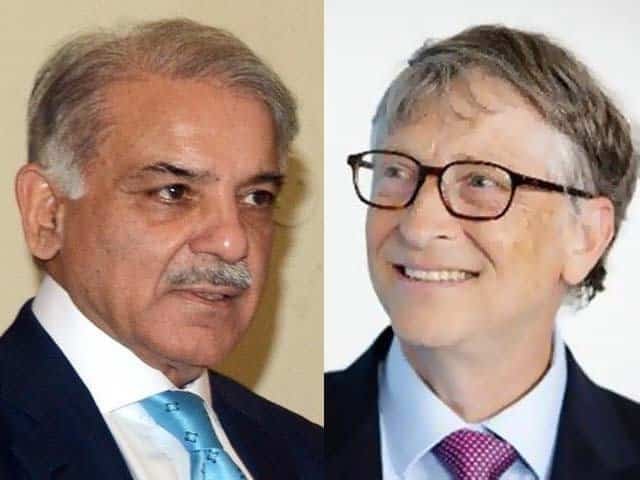
    Shehbaz Sharif, Bill Gates discuss anti-polio campaign

    Prime Minister (PM) Shehbaz Sharif and Co-Chair of the Bill & Melinda Gates Foundation (BMGF) Bill Gates held talks on the phone and discussed the anti-polio campaign in Pakistan.

    In a telephonic conversation, the premier appreciated the valuable support of the BMGF to Pakistan in polio eradication and improving immunisation, nutrition, and financial inclusion in the country.

    Expressing grave concern about the recent increase in the number of confirmed poliovirus cases in Pakistan in 2022, Shehbaz stressed that his government remained committed to ending all forms of polio in the country.

    Gates reiterated the Foundation’s continued support to Pakistan for ensuring that no child is at risk of paralysis due to poliovirus.

    One wild poliovirus type 1 (WPV1) case was reported in Khyber Pakhtunkhwa province bringing the number of 2022 WPV1 cases to 13. In 2021, the number of WVP1 cases was one and the number of circulating vaccine-derived polioviruses (cVDPV2) cases was eight.

  • ECC lifts import ban on goods except CBU vehicles, mobiles and appliances

    ECC lifts import ban on goods except CBU vehicles, mobiles and appliances

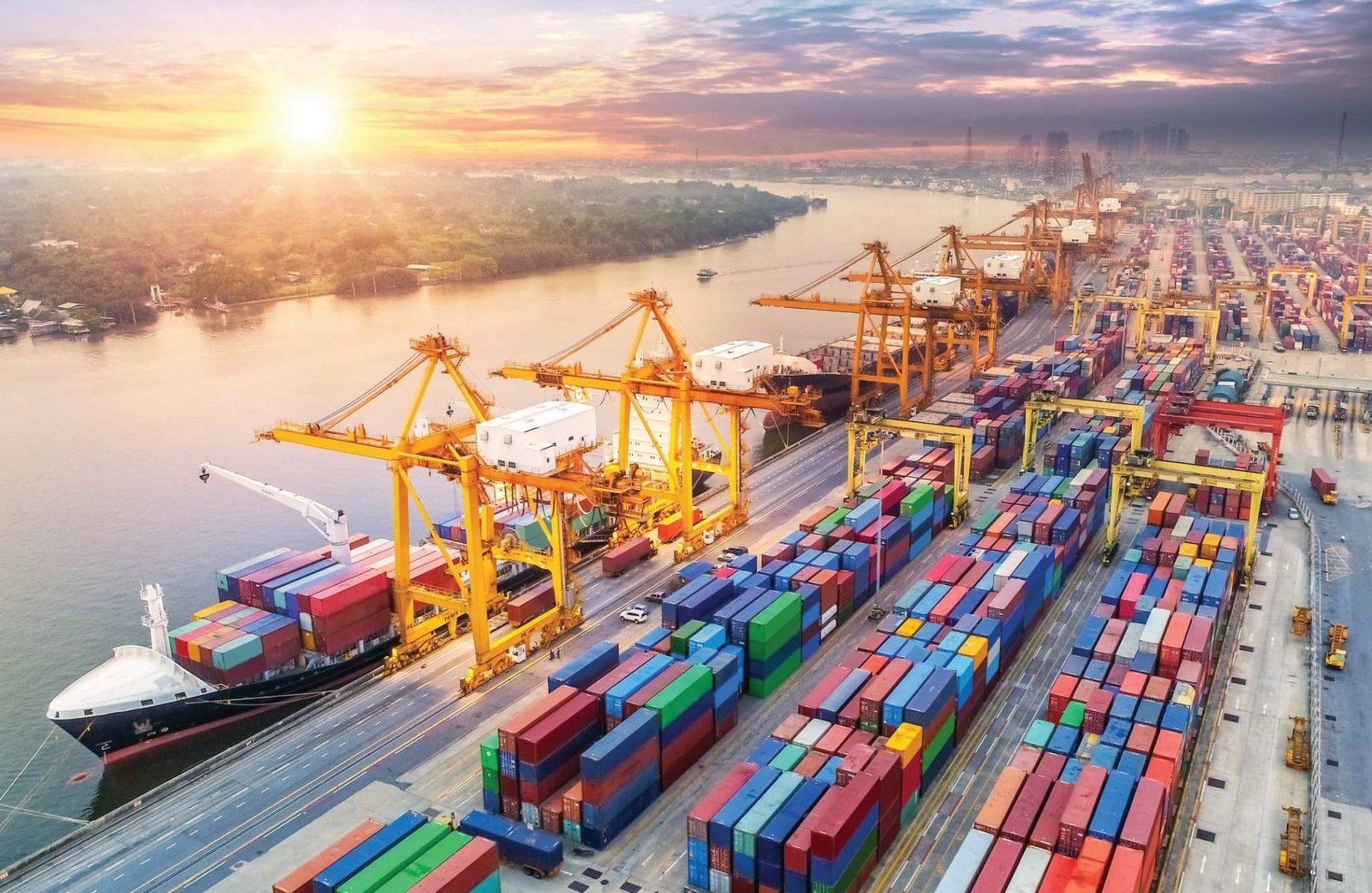
    The Cabinet’s Economic Coordination Committee (ECC) has decided to lift the import ban on all items other than completely built units (CBUs) of automobile, mobile, and home appliances and to permit the import of 200,000 metric tonnes of wheat.

    The increase in petroleum dealers’ margin from Rs4.90 per litre and Rs4.13 per litre, respectively, to Rs7 per litre was also approved at the meeting chaired by Finance Minister Miftah Ismail.

    The Pakistan Petroleum Dealers Association (PPDA), according to sources, has asked the government for an immediate revision of their margins due to inflation, increases in staff salaries and utility costs, etc.

    They have asked that the margins be revised to Rs6.90 per litre including 15 per cent profit (effectively Rs7.94 per litre). The PPDA then used the media to announce a nationwide strike that would begin on July 18, 2022, with the demand that their margins be increased to 6 per cent of the current selling price (effectively, Rs13.81 per litre for MS and Rs4.16 per litre for HSD).

    On the orders of the prime minister, Musadik Malik, the minister of state for petroleum, and Shahid Khaqan Abbasi, the former minister for petroleum, immediately began communication with the PPDA. On July 16 and 17, 2022, several rounds of negotiations took place in Karachi.

    During negotiations, the Secretary of Petroleum and the Chairman of OGRA both remained present. The PPDA changed its position during negotiations and requested that the margins be raised to Rs9.23 and Rs9.46/litre on MS and HSD, respectively, with immediate effect.

    The negotiating team acknowledged that a dealer with daily sales of less than 200,000 litres cannot operate the business profitably on current margins, and that such losses serve as a motivator for dishonest behaviour.

    After lengthy negotiations, the PPDA finally agreed to margins of Rs7 per litre for both MS and HSD. Based on this agreement and the promise that the revised margins will take effect in August 2022, the PPDA cancelled its call for a strike on July 18, 2022.

    The commitment made to the dealers in November 2021 is still less than this agreed-upon margin (4.4 per cent of sales price).

    The 4th international wheat tender for 2022, which was announced and opened on July 25, has prompted the Ministry of National Food Security and Research to ask for urgent advice. The Trading Corporation of Pakistan (TCP) issued its fourth tender on May 19, 2022, in order to secure 200,000 metric tonnes of imported wheat on a CFR basis, it was announced at the meeting.

    The ECC has approved the direct payment of $11.6 million as compensation/goodwill to the company M/s China Gezhouba Group International Engineering Co. Ltd (CGGC) through the Ministry of Foreign Affairs in response to a proposal from the Ministry of Water Resources for a compensation package for the Chinese casualties at the Dasu Hydro Power project.

    The ECC determined that the compensation/goodwill package’s amount, which is US$ 11.6 million, will remain the same as per the ECC’s earlier decision from January 21, 2022.

    it also approved the proposal to switch both the Fatima Fertilizer (Sheikhupura Plant) and Agritech plants to domestic gas on a summary moved by the Ministry of Industries and Production.

    According to the ministry, RLNG is provided to both SNGPL-based plants on a cost-sharing basis, and the gas rate for running these plants is calculated using a variable contribution margin (VCM).

    Both plants have asked the Ministry to revise the VCM and cap the GST at the price paid by the plants due to rising fuel prices and other factors. The proposal to switch both plants to domestic gas was approved by the ECC following discussion in accordance with the Federal Cabinet’s and ECC’s earlier decision.

    The Ministry of Petroleum, Ministry of Finance, Ministry of Food Security, and Ministry of Industries & Production were further instructed by the ECC to determine the gas price/VCM for the fertilisers The ECC also decided that sales tax could be applied to the actual gas cost that the company is paying.

    The Ministry of Commerce also provided a summary stating that the Cabinet approved the ban on the import of approximately 33 classes/categories of goods in order to reduce the current account deficit (CAD), which was on the rise.

    The decision caused an overall decrease in imports of the prohibited goods of over 69 per cent, or from $399.4 million to $123.9 million. Due to serious concerns expressed by significant trading partners regarding the imposition of the ban and taking into account the fact that the ban has had an impact on supply chains and the domestic retail industry, a review meeting was also held to review the ban after two months.

    The government’s ongoing efforts have resulted in a significant decrease in imports, so the ECC decided to lift the ban on imported goods other than auto, mobile, and home appliance CBUs.

    Additionally, all held-up shipments (aside from those that still fall under the banned category) that arrived at the ports after July 1, 2022, may be cleared with the payment of a 25 per cent surcharge.

  • Army chief asks US to help Pakistan secure early dispersal of loan from IMF: report

    Army chief asks US to help Pakistan secure early dispersal of loan from IMF: report

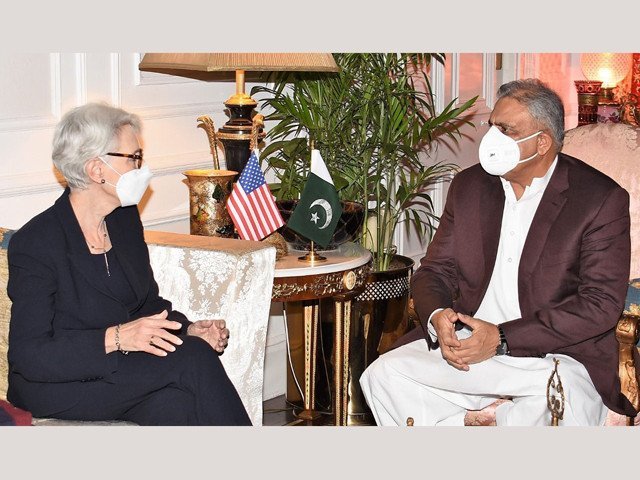
    Chief of Army Staff (COAS) General Qamar Javed Bajwa has appealed to the United States (US) to help Pakistan secure an early dispersal of $1.2 billion in funds under the International Monetary Fund (IMF) programme, reported Wajahat S Khan for Nikkei Asia.

    Gen Bajwa spoke by phone with US Deputy Secretary of State Wendy Sherman earlier this week.

    “The IMF has already granted Pakistan staff-level approval for the loan in question on July 13. But the transaction — part of the IMF’s $6 billion Extended Fund Facility for Pakistan — will only be processed after the multilateral lender’s executive board grants final approval,” said the report.

    According to an IMF official who also spoke on condition of anonymity, the IMF is going into recess for the next three weeks and its board will not convene until late August. Because of the recess, no date has been set for announcing the loan approval for Pakistan.

    “There is a major difference between staff-level approval and board approval. Our stakeholders, the countries that take the vote as to whether they are supporting this or not, make the final decision. This is a difference. So the legally binding step is a board approval, not the staff level agreement,” said the official.

    Pakistan’s former ambassador to Washington, Husain Haqqani, said, “This reflects the Pakistan army’s concerns about the state of the economy. It also reflects that the Pakistan army chief is the authority with whom the global players feel the final word rests.”

    Haqqani said that Pakistan has developed a habit of getting on an IMF plan, getting quick access to a couple of tranches, but then abandoning the deals without making the important structural and systemic changes required for further financing. This has left Pakistan little leverage with international financiers.

    “The reason why the IMF program has been delayed is that Pakistan has a track record of not keeping its word with the IMF,” Haqqani said.

    “Gen Bajwa calling the US administration, if he has done so, suggests that he is assuring the US — and through the US, the IMF — that any promises made will be kept.”

  • Petrol, diesel prices may increase by Rs10-17 per litre

    Petrol, diesel prices may increase by Rs10-17 per litre

    Despite the fact that the prices for petroleum products and crude oil have remained largely stable, the price of petrol and diesel may increase by Rs10 to Rs17 per litre as of August 1, 2022. The depreciation of the Pakistani rupee is anticipated to be the cause of the upcoming increase.

    According to The News, sources claim that without taking into account the petroleum levy (PL), a price increase of Rs10 for petrol and Rs16–17 for diesel has been estimated. Additionally, Mogas prices have been forecasted at Rs15 per litre and diesel at Rs23 per litre if the government increases the petroleum levy of Rs5 per litre on gasoline.

    The anticipated increase in POL prices has also been calculated without taking into account the ECC’s Thursday approval of an increase in dealers’ margins (DMs) on POL prices of Rs2.10 per litre for gasoline and Rs2.87 per litre for diesel to Rs7 per litre. Petrol’s price could increase by Rs2.10 to Rs17.10 per litre, and diesel’s price could increase by Rs2.87 to Rs25.87 per litre.

    The increase in dealers’ margin will take effect on August 1, 2022, if the federal cabinet approves this decision in the next two days. Industrial sources reported that the US dollar has increased in value by Rs40 so far this month.

    The current exchange rate against the US dollar is Rs239.9427, and the open market price is Rs246.15. However, they did say that the exact price of gasoline and diesel will depend on the exchange rate in force as of today (Friday).

    Since the price of crude oil as of Thursday settled at $99.4 per barrel, according to independent experts, Pakistani consumers won’t be able to benefit from the decrease in price of POL as a result of the rising exchange rate. The government seems more inclined to impose PL on both gasoline and diesel by Rs5 per litre each.

    Liquefied petroleum gas (LPG) costs also rose by Rs10 per kilogramme on Wednesday without an Oil and Gas Regulatory Authority notification (OGRA).

    The chairman of the LPG Distribution Association (LDAP), Irfan Khokhar, told Profit that a household cylinder now costs Rs2,750 after an increase of Rs150, while the cost of a commercial cylinder has increased by Rs450 to Rs10,438 as a result of the unannounced price increase.

  • ‘Can’t imagine living without it’: Indian woman flaunts her moustache with pride

    ‘Can’t imagine living without it’: Indian woman flaunts her moustache with pride

    Shyja, a 35-year-old Indian woman from Kerala, is making headlines for flaunting her moustache proudly.

    “I love my moustache,” her WhatsApp status section reads. “All I can say is that I just like it. A lot.”

    “I can’t imagine living without it now. When the Covid pandemic started, I disliked wearing a mask all the time because it covered my face,” Shyja added.

    “I’ve never felt that I’m not beautiful because I have this or that it’s something I shouldn’t have.”

    Talking about her love for her moustache, Shyja said, “I just do what I like. If I had two lives, maybe I’d live one for others.”

    Shyja has battled many health problems. She had six surgeries in the last decade, one to remove a lump in her breast and another to remove cysts in her ovary. Her most recent procedure was a hysterectomy five years ago.

    “Each time I came out of surgery, I would hope that I never had to go back into an operation theatre again,” she says.

    Shyja’s family and friends are supportive of her choices. Her daughter frequently tells her that she looks good with a moustache. However, Shyja claims she has received a variety of comments from people.

    “People make fun of me saying, ‘It’s men who have moustaches, why would a woman have one?’”

    Shyja’s friends frequently respond angrily to these comments on Facebook, but she says it doesn’t upset her at all.