Tag: Pakistan

  • Buzdar changed 3,000 officers in his tenure as CM

    Buzdar changed 3,000 officers in his tenure as CM

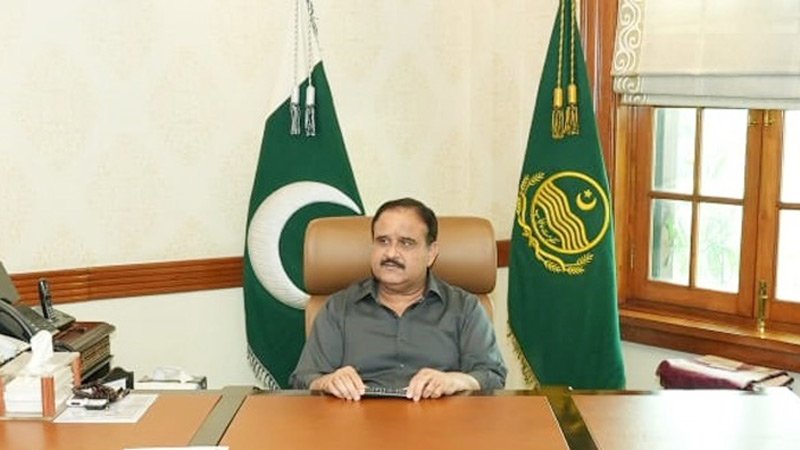
    During a three-and-a-half-year tenure, former Punjab Chief Minister (CM) Usman Buzdar transferred over 3,000 officers in violation of both the tenure policy and the Supreme Court’s (SC) judgment in the Anita Turab case, reports The News.

    In Anita Turab’s case, the apex court barred the government from transferring officers before the completion of their tenure.

    In the Anita Turab case, the SC had laid down the several principles to save the government servants from politicisation. Appointments, removals and promotions must be made in accordance with the law and the rules. Secondly, when the ordinary tenure for a posting has been specified in the law or rules made thereunder, such tenure must be respected.

    According to the news outlet, there have been no suo moto notices and no punishments for the violators.

    Moreover, it has been reported that the Buzdar government transferred around 1,100 secretaries, Director Generals (DG), commissioners, Deputy Commissioners (DC) and additional deputy commissioners in Punjab.

    In the Police Department, there were more than 1,900 senior police officials, including Deputy Inspector General (DIGs), regional police officers, city police officers, district police officers and Sub-Divisional Police Officers (SDPOs), who were transferred.

    The record reveals that Lahore, Gujranwala, Pakpattan and Dera Ghazi Khan were the major districts that were the focus of these changes where maximum numbers of transfers and postings occurred.

    It is pertinent to mention that during Buzdar’s tenure Punjab saw five chief secretaries and seven inspectors generals of police which has never happened before.

    In 36 districts of Punjab, the Buzdar government transferred 198 deputy commissioners in three and a half years. On average, 5.5 DCs were changed in every district during the PTI-led government.

    Dera Ghazi Khan and Gujranwala are the two districts where the maximum number of DCs were changed.

    In DG Khan and Pakpattan, some DCs were transferred within three months. Waqas Rashid was transferred within three months as DC Dera Ghazi Khan and Nauman Yousaf was transferred in three months as DC Pakpattan.
  • The recent ban on imports might barely make a dent

    The recent ban on imports might barely make a dent

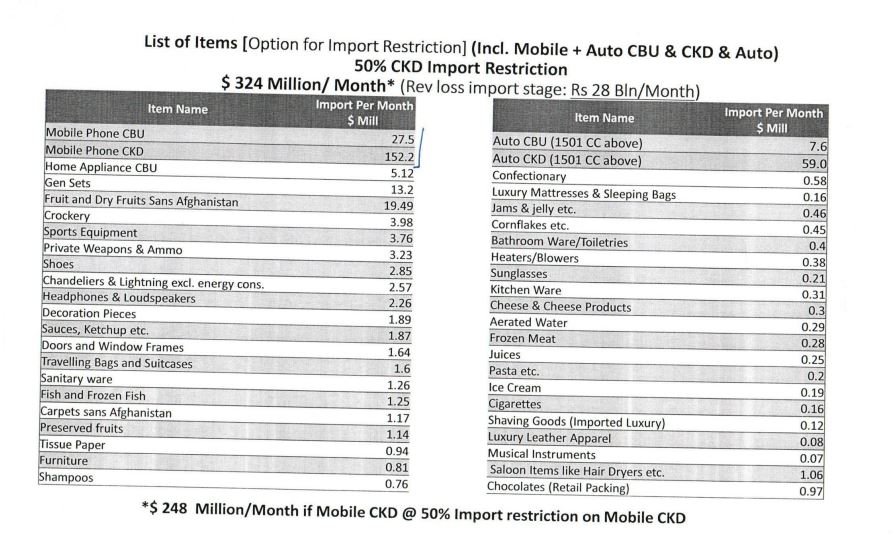
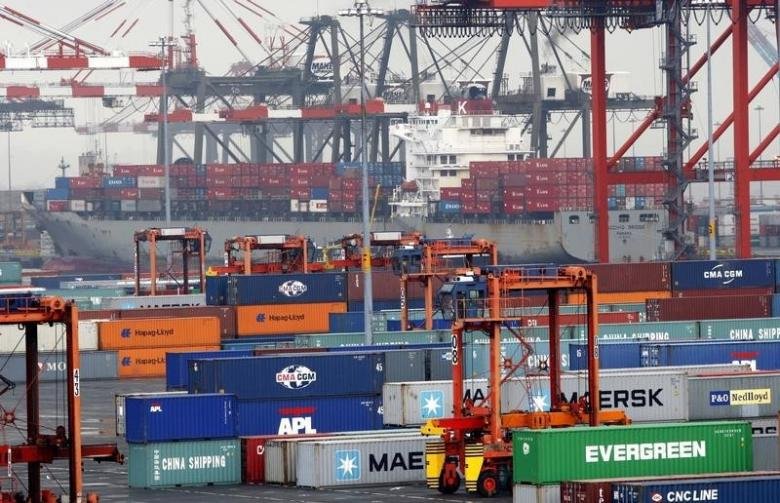
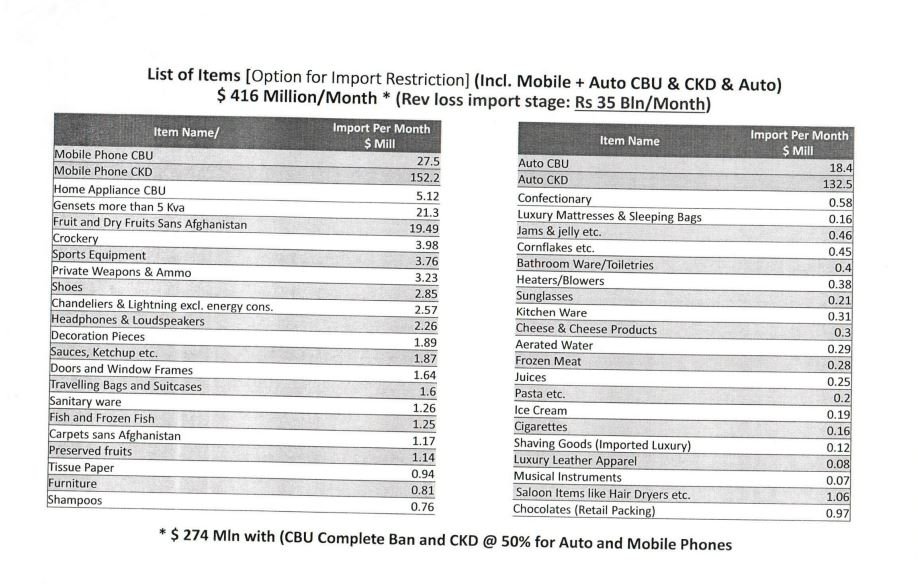
    On Thursday, May 19th, 2022, the federal cabinet issued a list of 41 items which will be banned from being imported for two months. This is in an attempt to address the current account deficit. The list of products is banned from being imported into the country, which means that essentially any shops or restaurants which rely on using these products will be forced to find local alternatives.

    These products will be banned regardless of what branding or packaging they use and only on the basis of whether the specific product is imported or not. Even products which are imported from abroad but packaged locally, will now be banned.

    Economists, university professors and business journalists took to Twitter to analyze and assess the merits and demerits of this decision. The discussion around luxury products and the fact that a lot of products which are labelled as “luxury items” are actually essential. Sanitary imports, valued at $16.4m are wrongly categorized as non-essential and although local alternatives also exist but it is definitions like these which disallow such decisions to be founded in research and expertise.

    The valuation of these imports which was published by the Pakistan Bureau of Statistics, was being quoted to ridicule the decision by many. What’s interesting to note is that most brands which appear to be entirely local, import a major chunk of their supply and will now be forced to smuggle goods instead.

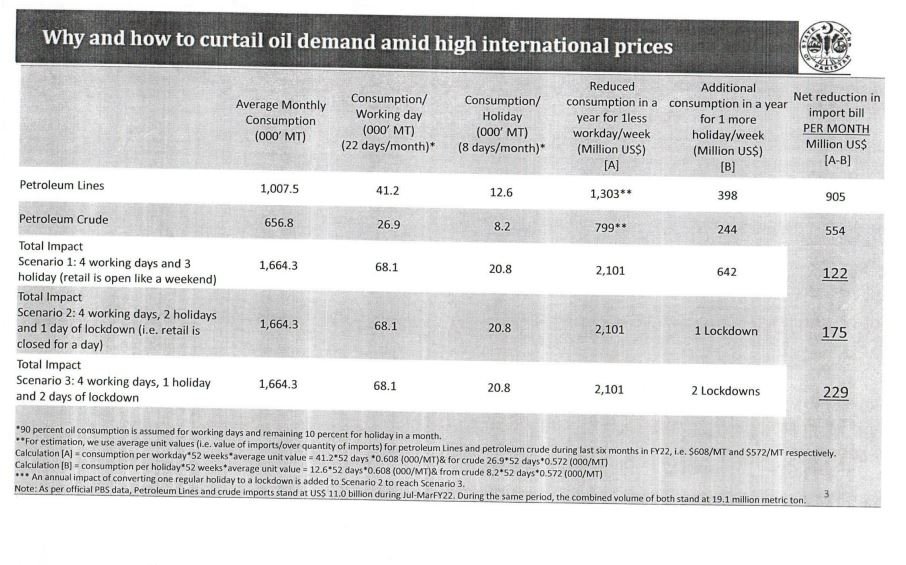
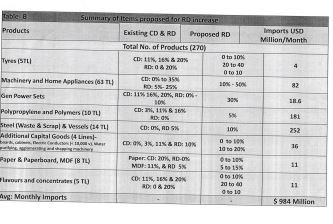
    Only from the data shared by PBS it becomes clear that for the fiscal year 2022, June to March, the total value of petroleum imports was $11 billion, while the total value of banning all these non-essential “luxury” items is a total $984 million, which forms only about 8.9% of the total value of petroleum imports.

    In conversation with Profit Magazine’s Ariba Shahid, she clarified that this would still prove to be a largely fruitless move since the most significant chunk of the import bill is still being used up to run the energy sector without any thought being given to the humongous fuel subsidies . “For a very long time the State Bank of Pakistan has been talking about how if we remove the oil component from it, the current account deficit is improving, which is true and basically means that people are not spending money to buy other items and most of the import bill is petrol and soy bean oil.”

    Economists Ammar Khan and Atif R Mian also took to Twitter to analyze this decision of “patchwork economics”. Commenting on this unsustainable gap in Pakistan’s balance of payment, on April 15th, 2022 during a discussion on Pakistan’s economy at Princeton University, he explains that for Pakistan to grow it is a necessary condition for Pakistan to deal with this problem and digs deeper into the structure of the economy. He particularly takes apart urban land reforms, the necessity to levy a capital gains tax on speculative real estate transactions and analyzes how Pakistan is not even economically stable enough to grow at the rate of India and Bangladesh and it is primarily due to the elite capture of the economy that disallows the economy to attempt to fix its loopholes.

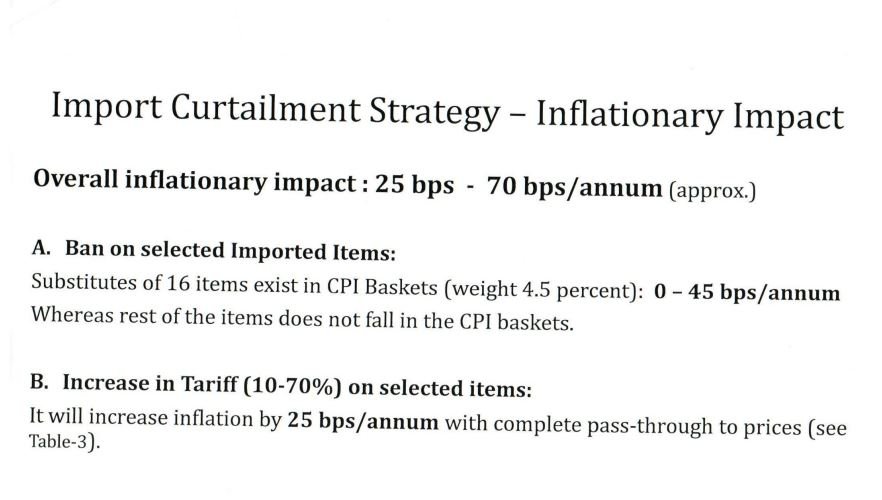
    Echoing similar sentiments, Ariba Shahid explained that due to a weaker economy, the import bill is not as significantly high due to a reduced demand pull because of a lowered purchasign power and hence banning these products will be insignificant and might barely make a dent in the current account deficit. “The need of the hour is to reverse the fuel subsidy,” says Shahid, “This decision will swell up the grey market economy and smuggling will increase.”

  • Good News for Pakistani filmmakers: SHC orders 85% preference for local films

    Good News for Pakistani filmmakers: SHC orders 85% preference for local films

    After the mess that local films like Chakkar, Dum Mastam and Pardey Mein Rehne Do faced with regards to their screening times being allotted to Doctor Strange in the Multiverse of Madness, there has been a major development in the situation.

    The Sindh High Court has ordered that local films get 85% of playing time at Pakistani cinemas, with foreign cinemas being allowed 15% of the exhibition space.

    According to the high court order, foreign releases must comply by rules of the Motion Picture Ordinance, 1979, which states that internationally produced films screening in Pakistan can be allowed 15% screen space of locally created films are screening as well.

    The order states that the defendants must follow the rules of the Motion Picture Ordinance “strictly in letter and spirit” and to provide 85% exhibition time to Pakistani films till the next date of hearing on June 2.

    The Sindh High Court suits numbering 754, 754 and 755 have Cereal Entertainment (Adnan Siddiqui and Akhter Hasnain), Wajahat Rauf and Shazia Wajahat, and Farid Nawaz Productions (Yasir Nawaz and Nida Yasir) as plaintiffs, for their films Dum Mastam, Parde Mein Rehne Do and Chakkar respectively.

    The Ministry of Information and Broadcasting, Central Board of Film Censors, Punjab Film Censor Board, Sindh Board of Film Censors, Competition Commission of Pakistan, J.B. Films, Nueplex Cinemas, Cinepax Cinemas, Cinegold Cinemas, HKC Entertainment and the Karachi District South deputy commissioner.

    Local filmmakers called for compensation in the face of damages the films and makers faced with the distribution of screen time, of which the relevant teams have been vocal about on social media.

    While chaos has already ensued for local films in the wake of the release of Doctor Strange, this ruling may prove beneficial (if gone unchallenged) for upcoming local releases such as Quaid-e-Azam Zindabad and London Nahi Jaunga. Moreover, while the Marvel film has amassed big figures at the box office, upcoming foreign releases such as The Unbearable Weight of Massive Talent, Memory, and Top Gun: Maverick stand to potentially be impacted by this decision.

    Earier this year the Zindagi Gulzar Hai star, Sanam Saeed expressed her disappointment over the absence of posters and standees of her newly released film, Ishrat Made in China, in one of the outlets of Nueplex Cinemas at Minhas Road, Karachi. There were no posters displayed of the film in the cinema.

    She took to her Twitter handle to express her concern and tagged JB Films who is the owner of Nueplex cinemas.

    She wrote, “A little disappointed in #nuplexcinemas for not putting up any of our film posters, especially on Rashid Minhas Road.”

    She also urged the cinema owners to support Pakistani content as Hollywood does not need promotion for superheroes films.

    Meanwhile, Nueplex cinemas also released their official statement and clarified their stance.

    According to the cinema management, the distributor/producer is solely responsible for providing promotional material such as standees and posters. It added, “Hence, this issue may be better addressed if it is taken up with them.”

    They also explained that the film was given only two dedicated screens throughout the opening weekend at Askari IV and DHA. They urged to bring this matter to the distributor first to resolve the issue.

    Ishrat Made in China was released on March 4 along with Hollywood’s superhero film, The Batman starring Robert Pattison in Pakistan.

  • NAB reports Rs864 billion recovery since inception

    NAB reports Rs864 billion recovery since inception

    Since its formation, the National Accountability Bureau (NAB) has recovered Rs864 billion from corrupt elements, directly and indirectly.

    The anti-graft watchdog, NAB has collected Rs584 billion during the tenure of incumbent Chairman Justice Javed Iqbal.

    Due to the NAB’s aggressive prosecution, the Accountability Courts penalized 1,405 accused persons and imposed substantial fines on them, as per a NAB spokesman.

    In the Accountability Courts, NAB has a 66 per cent overall conviction rate. NAB received a total of 405,768 complaints since its formation. A total of 405,212 complaints were handled. The inquiry of 556 complaints is still ongoing.

    100,865 complaints have been acknowledged by the NAB. There were around 100,425 complaints investigated. While 779 complaints were still being investigated. 9883 queries have been approved by NAB.

    8,953 queries were followed through to completion. A total of 930 inquiries were investigated.

    NAB allowed 4,547 investigations since its establishment. A total of 42,100 investigations have been completed. While working on 346, the probe is still ongoing. Since its founding, the NAB has filed 3,645 referrals in accountability courts. 2,398 references were disposed of in accordance with the law. Currently, 1,237 referrals worth Rs1,335 billion are being tried in various accountability courts.

  • Pakistan manufactured 9.72 million mobile phones in four months: Report

    Pakistan manufactured 9.72 million mobile phones in four months: Report

    Pakistan Telecommunication Authority (PTA) revealed that domestic plants produced 9.72 million mobile devices in the first four months of 2022, contrasted to 0.86 million acquired internationally.

    In April 2022, local manufacturing plants developed 2.56 million mobile devices, compared to 0.25 million imported from other countries.

    According to Brecorder, 5.69 million 2G smartphones and 4.03 million 3G and 4G phones are among the 9.72 million mobile handsets developed or assembled locally. 53 per cent of mobile devices on the Pakistan network are 3G and 4G smartphones, while 47 per cent are 2G.

    Despite the growth in local mobile phone production, Pakistan acquired $1.810 billion worth of cellphones in the first ten months of 2021-22, contrasted to $1.684 billion in the same period the previous year, a 7.43 per cent increase, as per the Pakistan Bureau of Statistics (PBS).

    Total telecommunications imports into the country climbed by 14.05 per cent during the review period (July-April) 2021-22, rising from $2.116 billion in July-April 2020-21 to $2.413 billion in the same period last year.

    According to PTA data, the local manufacturing tendency indicates a favourable response to the PTA’s Mobile Device Manufacturing (MDM) Authorization regulatory system.

  • 85 percent of Balochistan is without clean drinking water: report

    85 percent of Balochistan is without clean drinking water: report

    According to the provincial health department, the first case of cholera was identified in Balochistan on April 17th and since then 2,856 cases and six deaths have been reported so far in the province.

    A report, released by Geo News‘ Muhummad Ejaz Khan on the current crisis faced by Balochistan suggests that due to infection of cholera in the region, local health sources are rubbishing the official tally. They claim that at least two dozen people are dead due to the disease.

    Senator Sarfraz Bugti shared a video of locals in which they can be seen protesting in the scorching heat. In the tweet, he urged the concerned authorities to take action.

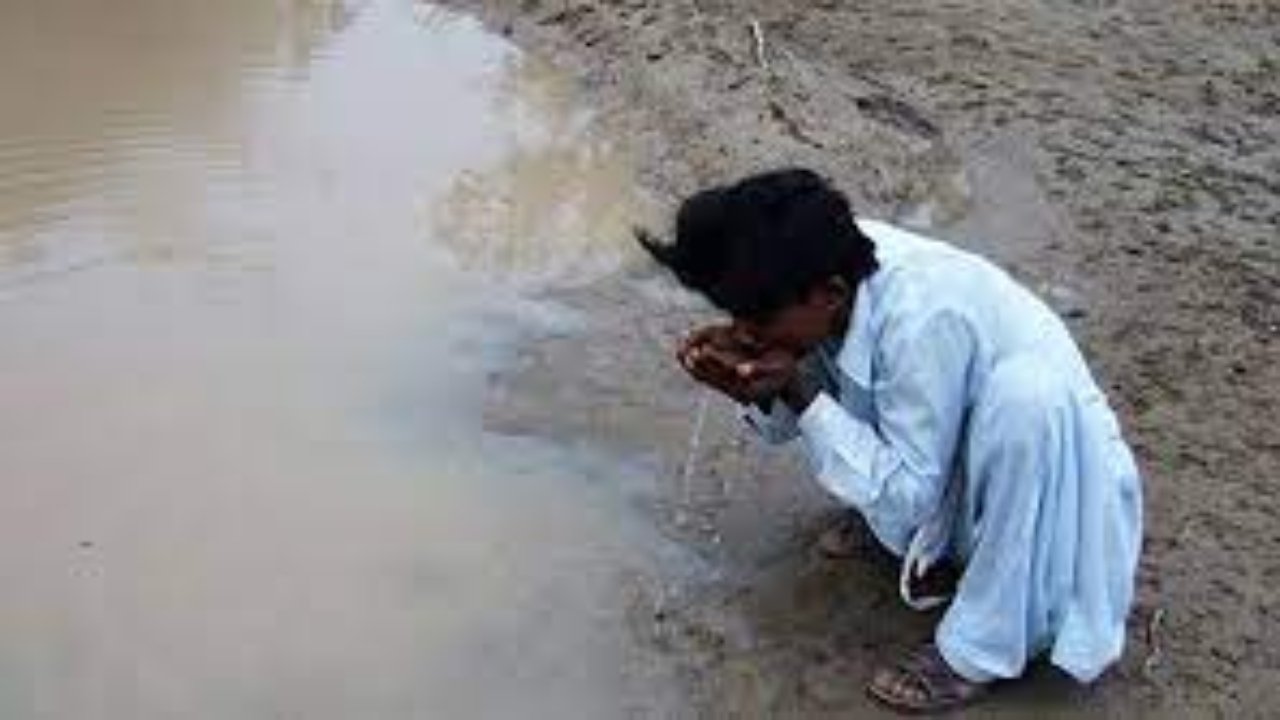
    It has been reported by the media outlet that residents of Dera Bugti (a district in Balochistan) are being forced to drink dirty water because of the unavailability of clean water. Last week, in the district six people, including women and very young children, died within hours of being infected with cholera.

    Dr Muhammad Azam Bugti, the district health officer in Dera Bugti, revealed to the media outlet that local people and animals use the same water ponds for drinking, which has become a major cause of the epidemic.

    “Over 85% of Balochistan’s population is deprived of clean drinking water,” he said. “This at a time when billions of rupees are being allocated every year for water supply schemes in the province”, he added.

    Chief Minister (CM) Mir Abdul Quddus Bizenjo has directed the department of public health and Prime Minister (PM) Shehbaz Sharif has also ordered emergency relief measures.

    Several demonstrations this month were also held in Quetta and other areas of Dera Bugti to demand that the government provide clean drinking water. According to Geo, in the long run, the provincial government will need to set up a research cell to study the epidemic which has now firmly rooted itself in the province.

  • ‘Pakistan is likely to receive $1 billion from Saudi Arabia’: PM Shehbaz

    ‘Pakistan is likely to receive $1 billion from Saudi Arabia’: PM Shehbaz

    Prime Minister (PM) Shehbaz Sharif on Friday said that Pakistan is likely to receive an investment worth $1 billion from Saudi Arabia.

    During his speech, the PM asked businessmen to speak about their problems and said: “We need to analyse the economic situation with patience.”

    The premier then requested the business community to provide solutions as the local currency has lately been fluctuating significantly against the United States (US) dollar. “I am not here for political point-scoring,” PM Shehbaz clarified.

    “When I took the oath on April 11, the rate of United States (US) dollar against the Pakistani currently was 189,” said Shehbaz.

    “The Rs. 60-65 increase in the rupee value against the greenback wasn’t the coalition government’s fault,” Shehbaz said, adding that when the former government speculated that they would be ousted, they reduced the petroleum prices despite a price hike in the international market, thus going against the conditions of the International Monetary Fund (IMF).

    “During the Pakistan Tehreek-e-Insaf’s (PTI) tenure loans worth Rs22,000 billion were taken which shows an 80 per cent increase from 2018,” he said, adding that “powerful echelons” in the country supported their “favourite” person.

    Shedding light on his decision regarding the ban imposed on the import of luxury and non-essential items, PM Shehbaz said that while he banned the import of certain items for some time, he did not increase the duties because the “elite class would have still purchased imported items after paying duties.”

    The premier said: “Pakistan cannot afford to purchase gas worth $20 billion; we have to slowly and gradually move towards solar and wind energy.”

    “If green energy comes to Pakistan, we will save Pakistan’s funds,” said PM Shehbaz.

    The premier arrived in Karachi earlier today on a day-long visit.

  • Rs4.5 per unit increase expected in electricity prices

    Rs4.5 per unit increase expected in electricity prices

    The National Electric Power Regulatory Authority (NEPRA) will hold a hearing on a petition on May 31 to raise electricity prices in conjunction with April’s monthly fuel adjustment. The price of power is projected to rise by Rs4.5, reports ARY.

    The Central Power Purchasing Agency (CPPA) has requested an increase in the power price due to a fuel adjustment for the month of April. The final decision on the rate hike will be taken by the authority after the hearing.

    According to reports, the petition will overburden the masses by Rs59.45 billion.

    According to the CPPA, in April, 18.55% of electricity was generated from water, 16.74% from coal and 12.07% from furnace oil. The cost per unit of electricity generated from furnace oil was Rs28 to 19 per unit, 9.85% from domestic gas and 19.42% from imported LNG in April. 17.37% of electricity was generated from nuclear fuel and 3.59% from wind.

    The increase will not apply to electricity and lifeline customers.

  • Govt bans import of ‘luxury items’ to fight economic crisis

    Govt bans import of ‘luxury items’ to fight economic crisis

    For the first time in Pakistan, luxury or non-essential commodities have been completely banned in the country to help the nation emerge from its financial crisis. Minister of Information Marriyum Aurangzeb confirmed the economic strategy established by the federal government on Thursday.

    The Information Minister stated that this is an emergency situation and Pakistanis will have to make sacrifices under the economic plan. This will have a quick impact on foreign reserves. The ban will have an impact of $6 billion.

    Aurangzeb went on to say that the government’s priority was to cut imports, thus it was going to implement an export-oriented policy that would help local industry and producers.

    Prime Minister (PM) Shehbaz Sharif is working “day and night” to stabilise the economy, according to the information minister, and has decided to ban the import of all commodities that are not in common use.

    Food, decorating, and luxury automobiles were among the imports, according to Aurangzeb, who emphasised that the country was in a “difficult economic condition” as a result of the previous government’s policies.

    Here’s a detailed list of banned goods:

    1. Cars
    2. Mobile phones
    3. Home appliances
    4. Private weapons and ammunition
    5. Fruits and dry fruits (except Afghanistan)
    6. Crockery
    7. Shoes
    8. Chandeliers and lighting (except energy savers)
    9. Headphones and loudspeakers
    10. Sauces, ketchup etc.
    11. Doors and window frames
    12. Travelling bags and suitcases
    13. Sanitary ware
    14. Fish and frozen fish
    15. Carpets (except Afghanistan)
    16. Preserved fruits
    17. Tissue paper
    18. Furniture
    19. Shampoos
    20. Confectionary
    21. Luxury mattresses and sleeping bags
    22. Jams and jelly
    23. Cornflakes
    24. Bathroom ware/toiletries
    25. Heaters/blowers
    26. Sunglasses
    27. Kitchenware
    28. Aerated water
    29. Frozen meat
    30. Juices
    31. Pasta etc
    32. Ice cream
    33. Cigarettes
    34. Shaving goods
    35. Luxury leather apparel
    36. Musical instruments
    37. Saloon items like hairdryers etc.
    38. Chocolates

    The declaration, according to the information minister, is part of the present government’s fiscal plan to combat the PTI’s incompetent policies.

    Aurangzeb chastised the PTI for criticising the incumbent administration over the country’s economic woes, claiming that the Imran Khan-led government had raised inflation, taken historic debts, committed “economic terrorism,” and manipulated the economy by subsidising gasoline prices.

    By subsidising the price of petroleum goods, the PTI administration broke its agreement with the International Monetary Fund (IMF), according to the Information Minister.

    Via: Geo

  • Economic crisis: Finance minister in Doha to hold talks with IMF

    Economic crisis: Finance minister in Doha to hold talks with IMF

    Finance Minister Miftah Ismail along with his team left for Doha on Tuesday to hold talks with the International Monetary Fund (IMF).

    The ministry said that talks with the IMF mission started today (May 18).

    The review talks are expected to continue for a week and will focus on striking a staff-level agreement for the release of a $1 billion tranche under the Extended Fund Facility (EFF).

    It has been reported that Pakistan will have to convince the IMF to revive the stalled $6 billion programme at a time when the government had not started eliminating the unfunded fuel subsidy after making a commitment with the forum.

    The dollar rate is at its peak in the country. Currently, the rupee touched 200 against the US dollar in the open market. This spell of the dollar’s persistent rise against the rupee began last week.