The United States (US) disclosed a list of gifts received by officials from foreign states and dignitaries, which included names of not only the president but also the vice president, senior advisors, secretaries, senators, Central Intelligence Agency (CIA) agents, army officials, judges, and other workers of government departments, reportedThe News.
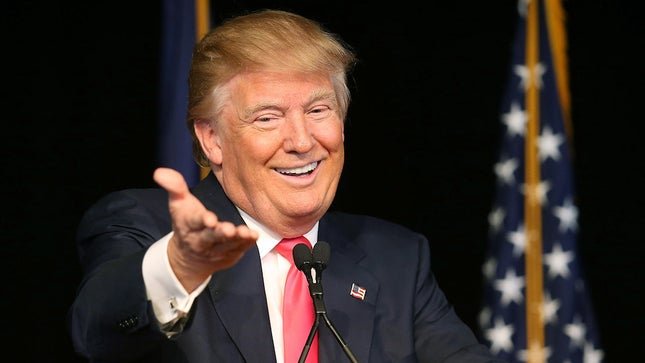
A gift given to former President Donald Trump by Pakistan along with two gifts from Indian Prime Minister Narendra Modi in 2019 are also shown in the information released by the US.
Donald Trump received the most gifts during 2019 out of all other officials of the US government. The former US president declared a total of 23 gifts that he received in 2019 worth $52,626. Trump, according to the list of recorded gifts, did not retain a single gift for himself and rather disposed of all of them to the National Archives and Records Administration (NARA).
Pakistan gifted Donald Trump a silk carpet that had a value of $3,000 in 2019. This was the only gift that America received from Pakistan in 2019. Whereas, two gifts from India were sent, which were delivered by Indian Prime Minister Modi himself on his visit to the US. One was a sculpture with a value of $970 given to Donald Trump and the other was a candle holder, which cost $650 and was given to Jared Kushner, senior advisor.
Ashraf Ghani gifted a handmade carpet to Trump and Lapis Bowl and Lapis Tray to Michael R Pompeo, which was valued at almost $10,000. Two carpets were gifted by the president of Uzbekistan, which cost over $20,000. The president of Egypt gave Donald Trump a frame of his image, which cost over $5,000. Likewise, the Ameer of Qatar gave Trump a statue made of emerald, onyx, gold and diamond worth thousands of dollars.
Federal Minister for Information and Broadcasting Fawad Chaudhry recently revealed that Arab rulers who presented gifts to the Prime Minister (PM) of Pakistan “did not want their names to be made public”.
While speaking on Geo News programme ‘Jirga’with senior journalist Saleem Safi on Sunday, Fawad stated, “Previously, the heads of the government were allowed to take gifts after paying 15 per cent of the actual price.”
“Vehicles were considered personal gifts, but former president Asif Ali Zardari changed the law for personal interest,” he added while criticising the past governments.
Talking about the local elections in the country, the minister admitted that the Pakistan Tehreek-e-Insaf (PTI) government’s biggest failure was “not holding local body elections” in Pakistan. Moreover, he said that the local bodies, formed by former Chief Minister (CM) Shehbaz Sharif, were not effective and could not be restored on a technical basis.
He added that PM insisted on having elections but members within the party, including Chief Minister Punjab Usman Buzdar, didn’t agree to it.
He further said that a review petition against the restoration of the local bodies is being heard in the Supreme Court (SC).
Chaudhry said that the government has no personal rivalry with the Election Commission of Pakistan (ECP) but the election body directly attacked the PM during the Senate polls.
Furthermore, he revealed a total of 0.6 million Election Voting Machines (EVM) will be required for the upcoming general elections of 2023.
Previously, the federal government denied giving out information about the exchange of gifts between the premier and other heads of state. They mentioned in a notice that the matter is reflective of inter-state relations and the disclosure of such information potentially damages the interest of Pakistan in the context of international relations.
A statue of Quaid-e-Azam Muhammad Ali Jinnah installed along Gawadar’s Marine Drive has blown up by the militants, BBC Urdu reported.
Talking to BBC Urdu, DPO Gawadar, Dr Farhan, said that the statue was blown into pieces on Sunday morning around 9:20 am in morning.
The outlawed Balochistan Republican Army has claimed the responsibility for the attack.
Gawadar Deputy Commissioner Major Retired Abdul Kabeer said militants who attacked the statue had posed as tourists to get access to the area.
He said an investigation is underway, though no arrests have been made so far.
The statue was fitted in a high-security zone near the residence of the General Officer Commanding (GOC) and the office of the Deputy Inspector General in June 2021.
DC Gawadar said militants had placed an improvised explosive device at the site. Some reports say that a hand grenade had been thrown at the statue.
Balochistan Chief Minister Jam Kamal Khan has strongly condemned the attack.
The chief minister said that terrorists would not be allowed to disrupt the peace of the province. He ordered the concerned authorities to instantly arrest the perpetrators of the attack.
Social media users condemned the act and questioned the security in Gawadar.
بلوچستان کے دل گوادر میں جدید طرز پر تعمیر کئے گئے ساحلی مقام میرین ڈرائیو پر نامعلوم شرپسند دہشتگردوں نے دستی بم سے حملہ کیا۔ حملے میں ایک مجسمہ کو اڑا دیا گیا ہے۔ دہشت گردی کا یہ واقعہ ہے گوادر سیکورٹی پر سوالیہ نشان ہے۔#Gawadar#MarineDrive#TerrorismiInBalochistanpic.twitter.com/iDz55REdTu
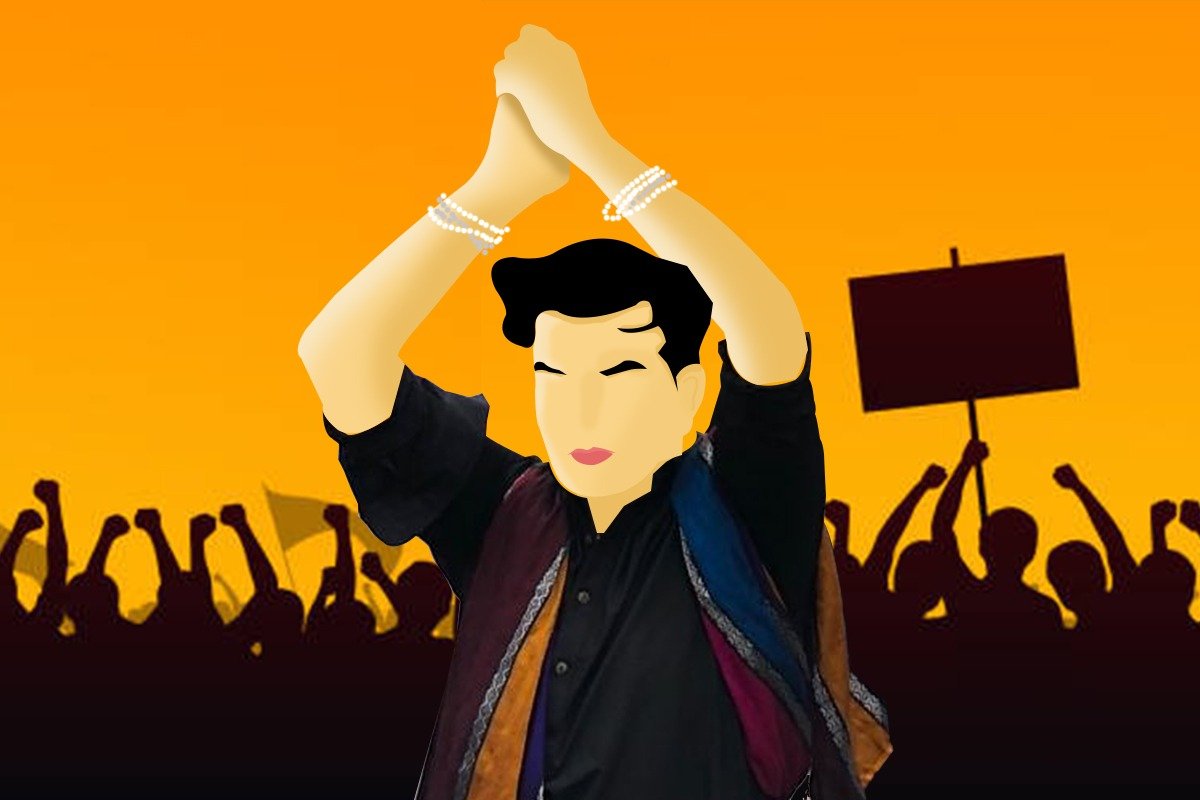
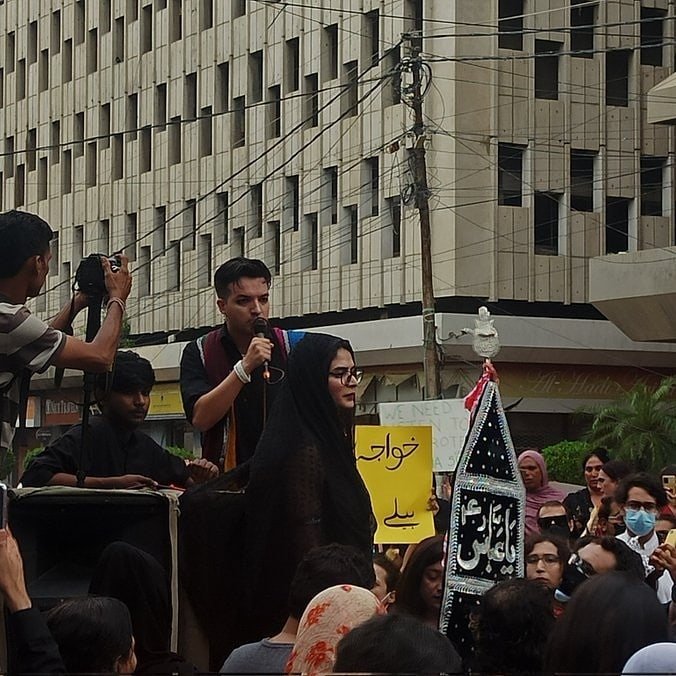
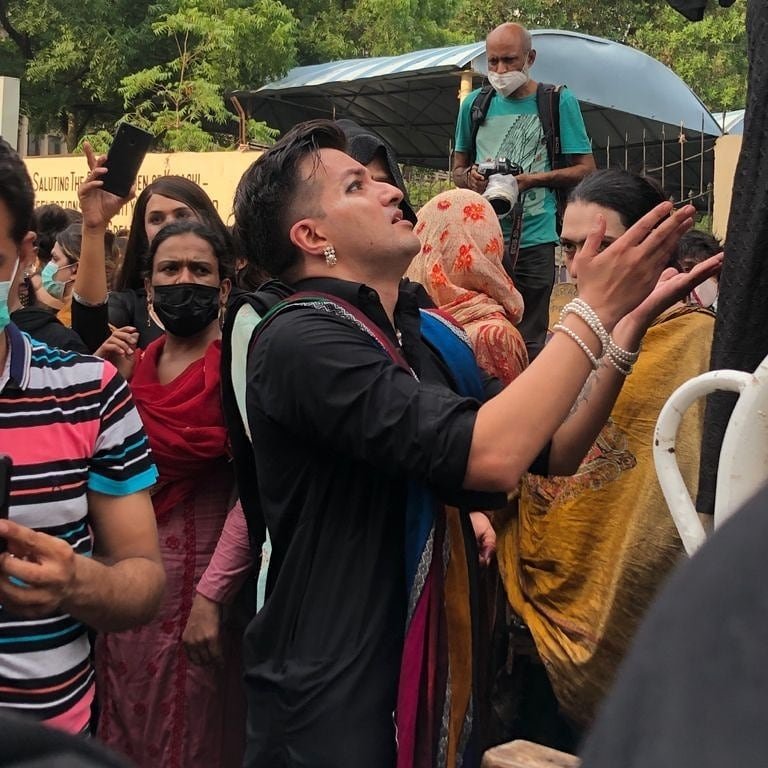
A large number of people from the transgender community and their supporters protested outside the Karachi Press Club against a recent attack on its community by an alleged gang-rape group known as ‘Beelas’.
The protesters also denounced what they called “the beela culture” that has existed in Pakistan since the colonial era.
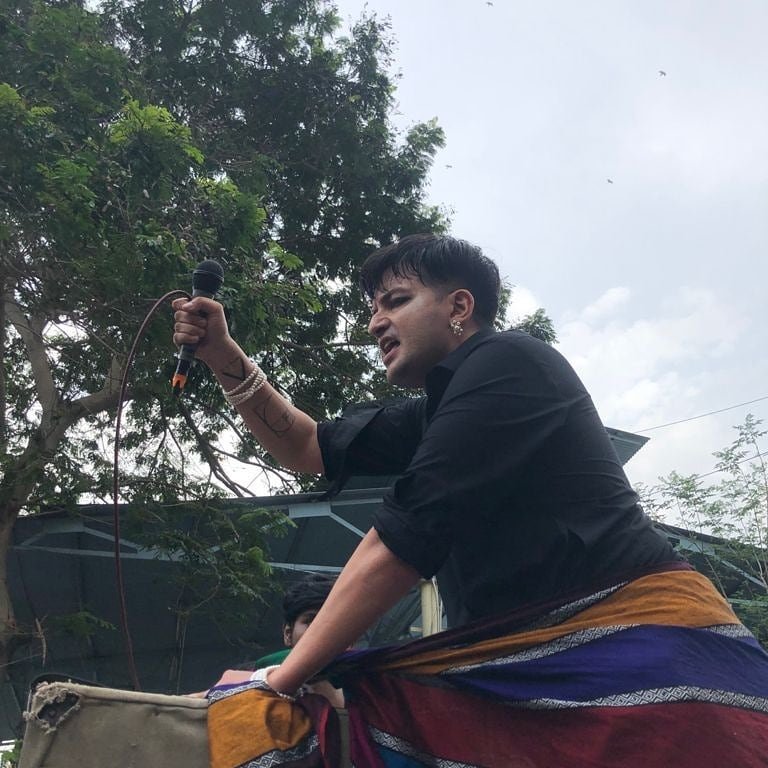
A transgender rights activist Dr Muhammad Moiz organised the protest. He posted the pictures on social media along with the demands and needs of the community in Pakistan.
“Help us dismantle these structures and create a more just and equitable world for everyone by not being silent bystanders as groups like the beela network inflict violence on our community,” Moiz wrote while sharing the pictures from the protest.
Following the protest on Friday, powerful and motivating pictures are making rounds on social media:
Earlier, Moiz came forward to share an incident of organised violence against him by the group [Beela]. A First Information Report (FIR) was registered by him.
In the video, he shared that on the night of September 19, he and his friends went to a birthday celebration of a friend, where the gang-rape group was already present. According to him, the group [Beelas] wanted to rape the ‘londay‘ (khwaja sira/effeminate boys) present there.
In his recent post, he has demanded a special committee overseeing khwaja sira in Sindh and a special helpline that khwaja siras can use in an emergency.
“The police must be sensitised to understand beelas’ behavior, while also addressing internal issues in the police departments that prevent most khwaja siras from launching FIRs,” he said in a caption.
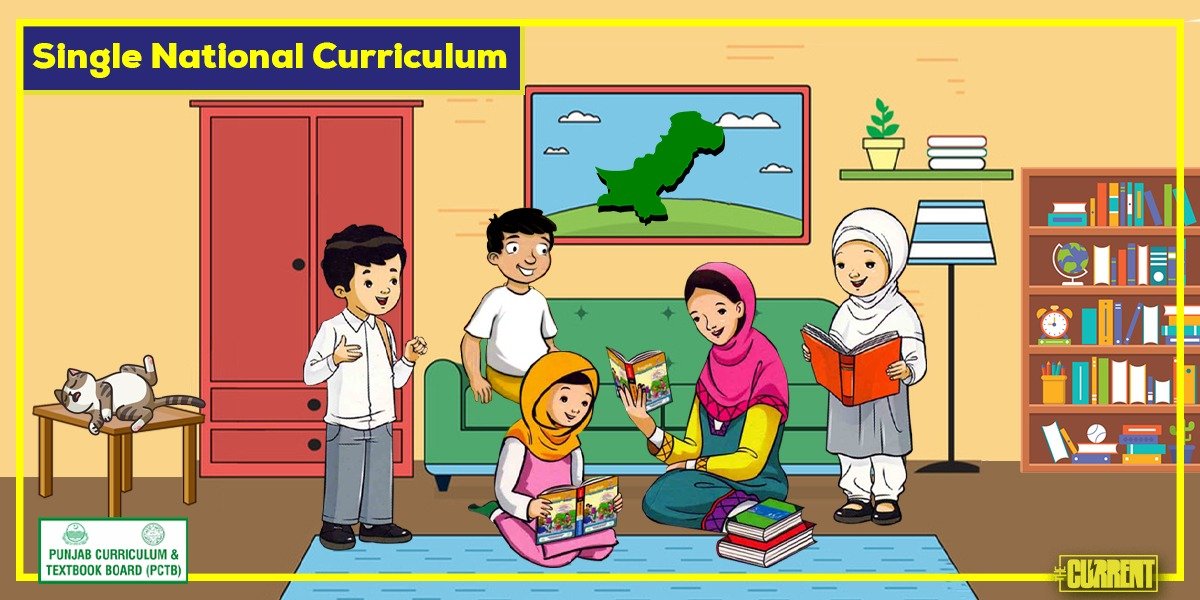
On August 16, 2021, Prime Minister Imran Khan officially launched the Single National Curriculum (SNC). The newly launched curriculum was prepared by the National Curriculum Council (NCC) and the Ministry of Federal Education, in consultation with the provinces. According to PM Khan, “SNC would transform the nation into a unified one.”
What is SNC?
According to the Ministry of Federal Education and Professional Training, the SNC is a ‘uniform’ system of education, which means the same curriculum for everyone. All public schools, private schools, and madrassas were meant to have the same curriculum so that the learning outcomes are similar and without any discrimination in teaching standards. This is not the first time SNC was imposed in Pakistan. It was previously introduced in 2006 by Former President Musharraf. Whereas the previous SNC was a curriculum-based initiative, the one introduced by the PTI government is imposing the use of the textbooks produced by the provincial boards.
Is it being implemented across the country?
No. Sindh has decided not to implement the curriculum since education is a provincial issue. Only Punjab and Khyber Pakhtunkhwa have enforced it so far. However, many schools in both provinces — including the prestigious Aitchison College, Lahore — expressed their concerns over the books in the curriculum. The Director of the National Curriculum Council (NCC), Dr Mariam Chughtai, has also said that madrassas will implement the SNC syllabus in five to six years, which undermines the reason why the government had wanted to introduce the SNC in Pakistan – to bring madrassas into the mainstream so students would be able to get jobs in other professions after they graduated.
Controversies surrounding the SNC
After the SNC syllabus was imposed on schools across Punjab, many controversies surrounding the books and the curriculum came forward. From the disparity in gender representation, the reinforcement of patriarchal gender roles, the lack of female heroes, and religious texts in the non-religious books.
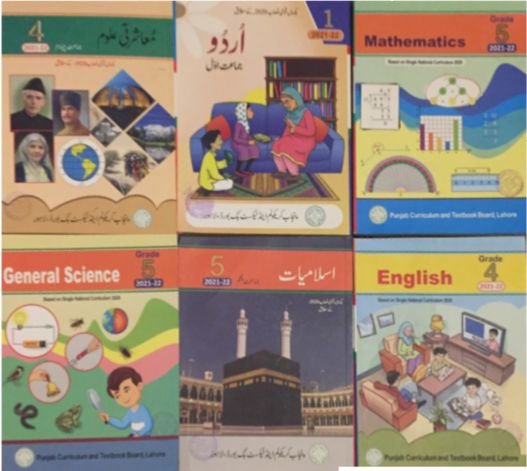
To see if the criticism is valid, The Current analysed the following books published under the Punjab Textbook Board (PTB):
Urdu books from grades 1 to 5, English books from grades 1-5, Mathematics books grades 1, 2, 4, and 5, General Science grades 4-5, Waqfiyat Aama grade 1 and 3, Social Studies 4-5, and Islamiat grade 1- 5.
Two books were not available at the time of research. Grade 3 Math and Waqfiyat Aama grade 2, which have not been included in the study.
The analysis here has been divided into two parts.
Part one comprises the data analysis of all the books included in the SNC by the Punjab Text Book board.
Part two comprises the data analysis of individual subjects being taught to the students.
We studied the total number of male and female representations in the books, a comparison of the eastern and western wear of both genders, the presence of religious (Islam and others) content in non-religious books, and studying the distribution of power roles assigned to both men and women.
Here is the list of most common criticism against the curriculum and the evidence we found:
SUMMARY OF CONTENT IN ALL SNC BOOKS
1- Disparity in Gender Representation:
One of the most debatable points in the entire SNC is the representation of men and women.
After a thorough evaluation, we found that the concerns about the disparity in gender representation are TRUE.
The study reveals that a total of 60.2 percent of the books have images of men, including boys and only 39.4 percent of the books have images of women, including girls.
2-Women represented in hijab vs non-hijab, and women in western clothes:
What the women are wearing became a source of contention in the discussion about the SNC, with critics suggesting that the women should equally represent the country in terms of the hijab, eastern clothes, and the choice to wear western wear.
It is TRUE that there is no equal representation of women’s appearance in the books.
Women’s appearance was divided into three categories.
A) Number of women wearing eastern clothes with hijab.
B) Number of women wearing eastern clothes without hijab.
C) Number of women wearing western clothes.
Our research shows that 41.6% of all women and girls in the SNC books are wearing a hijab, 28.9% are wearing eastern clothes without a hijab, and 29.4% of the images show girls wearing western wear. It is important to note that in the western wear percentage, almost all of the images are of young girls. Older women are not shown wearing western wear.
3-Men represented in eastern vs western clothes:
Since the appearance of women in eastern wear and hijab became controversial, we also studied how many times men appeared in western or eastern wear.
A massive 79.9 percent of men were seen wearing western clothes, in comparison to 20 percent dressed in eastern clothes.
4- More men in ‘power roles’ compared to women:
Another controversy suggested that the books did not show women in positions of ‘power’, and they were mostly listed as helpers or homemakers. While there were many images that showed women in ‘inferior roles’ to men, there were women that were shown in roles of power.
This controversy is TRUE.
We defined power roles shown in the books as doctor, pilot, lawyer, police officer, traffic warden, army sports personality, etc and after analysing all the books, we found that a men are given power roles three times more than women. The results in the graphic below are based on the total number of images shown of men and women in all the SNC Punjab books.
I
5. Religious content in non-religious books
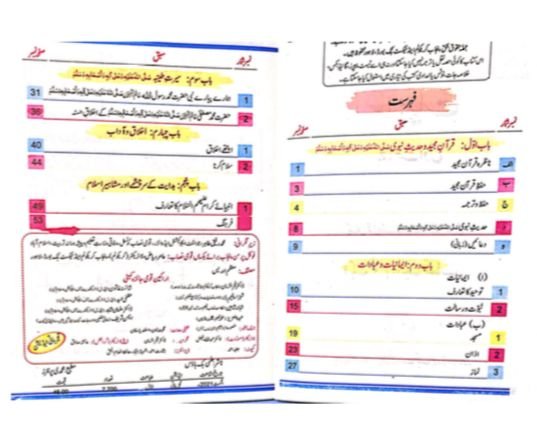
In almost all the books which were studied, we saw the presence of religious references or mentions in non-religious books. Minorities felt their rights were being compromised since books that are not for religious studies should not have references to a specific religion, which may come under the context of ‘preaching’.
In our analysis, we saw a total of 7.77 percent of religious text in all SNC non-religious books, which lends TRUTH to the fact that there is religious content in non-religious books.
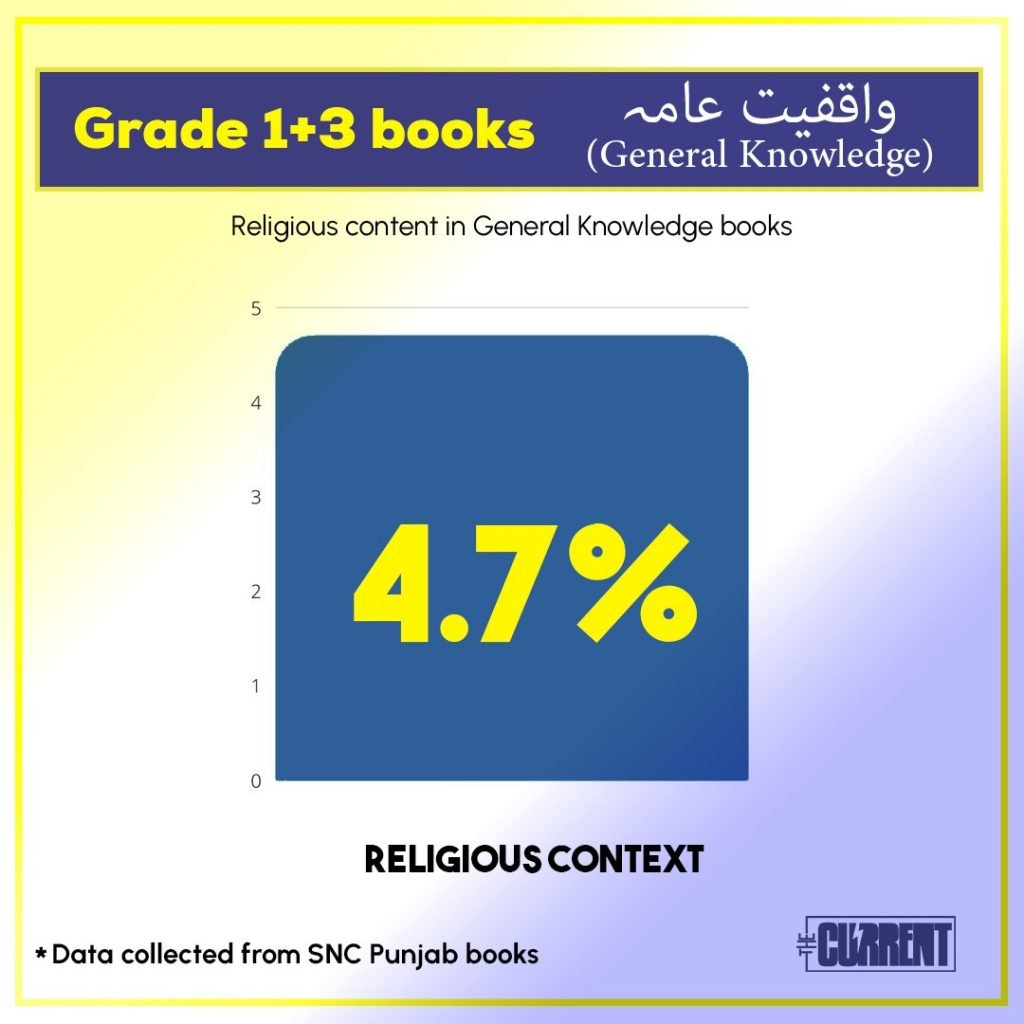
Religious content is present in 7.7 percent of English, Math, Social Studies, Urdu, Science, and General Knowledge books.
7.47 percent of books have references to Islam while 0.27 percent mention other religions in all non-religious books.
Dr Mariam Chughtai, while answering a question for The Current about the religious references in non-religious books, did not provide a clear answer but stated that these are model books that require changes.
SNC BOOKS ANALYSIS – SUBJECT ANALYSIS
This section of the report comprises an analysis of individual subjects being taught to students. The subjects under study were, Urdu books from grades 1-5, English books from grades 1-5, Mathematics books grades 1, 2,4, and 5, General Science grades 4- 5, Waqfiyat Aama (General Knowledge) grades 1-3, Muashrati Uloom (Social Studies) grades 4-5.
The graphical representation of the subject-wise evaluation is as follows:
English:
In 668 pages of English books, 58.1 percent have male representation while females have 41.8 percent.
29.7 percent of women are seen with Hijab and 70.2 percent are without Hijab.
There is a total of 9.8 percent presence of religious text in English books. This is based on the total number of pages in English books.
Mathematics:
In 672 pages of the Math books, when gender representation was analysed, 51.1 percent of the books have male representation and 48.8 percent have female representation.
A total of 53.9 percent of females are seen without hijab and 46 percent are seen wearing hijab.
The Math books have a 4.1 percent presence of religious text. This is based on the total number of pages in Math books.
Urdu:
The five Urdu books comprising 791 pages. A total of 59.7 percent presence of males are seen as compared to 40.4 percent of females.
58.5 percent of women/girls are seen wearing hijab and 41.4 percent are seen without hijab.
12.8 percent of religious text is present in Urdu books. This is based on the total number of pages in Urdu books.
General Science:
Out of 310 pages, 76.8 percent have male representation as compared to 23.1 percent female representation.
64 percent of women/girls are seen without hijab and 36 percent of women/girls are seen with hijab.
The General Science books have a 0.96 percent presence of religious content. This is based on the total number of pages in Science books.
Waqfiyat Aama (General Knowledge):
49.5 percent of male images are seen in comparison to 50.15 percent of females.
23.1 percent of females are seen with hijab and 76.8 percent without hijab.
There is a 4.7 percent presence of religious text in the books studied. This is based on the total number of pages in General Knowledge books.
Muasharti Uloom (Social Studies):
From 234 pages analysed, 65.1 percent of men/boys are represented in the books and 34.8 percent of females are shown.
36.8 percent of females are seen without hijab and 63.1 percent are seen with hijab.
10.2 percent of religious content is present in the books. This is based on the total number of pages in Social Studies books.
The last portion of the report highlights the pros and cons, which we have observed in almost all the books. We have provided both positive and negative outcomes deduced from the books after careful analysis.
The positive outcome deduced from the books:
1. The books are locally published and designed. The books are affordable, with a total set for one grade set at Rs. 800 per child according to Dr Chughtai.
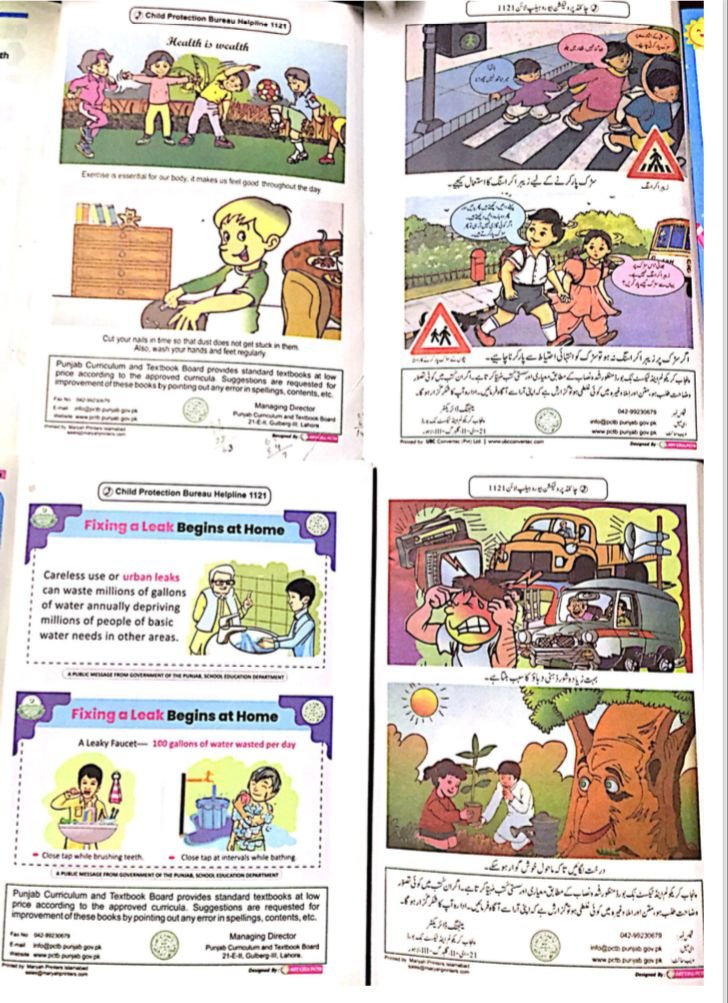
2. There is a public service message printed at the end of each book to raise awareness against talking to strangers, crossing the road, exercising, and even information about fighting dengue.
The possible negative impact of the books
1. After analysing the books, we deduced that mostly nuclear families have been shown in the books. No representation of single parents or children being raised by guardians is seen. Moreover, the presence of both parents is seen as almost essential in all stories in the books.
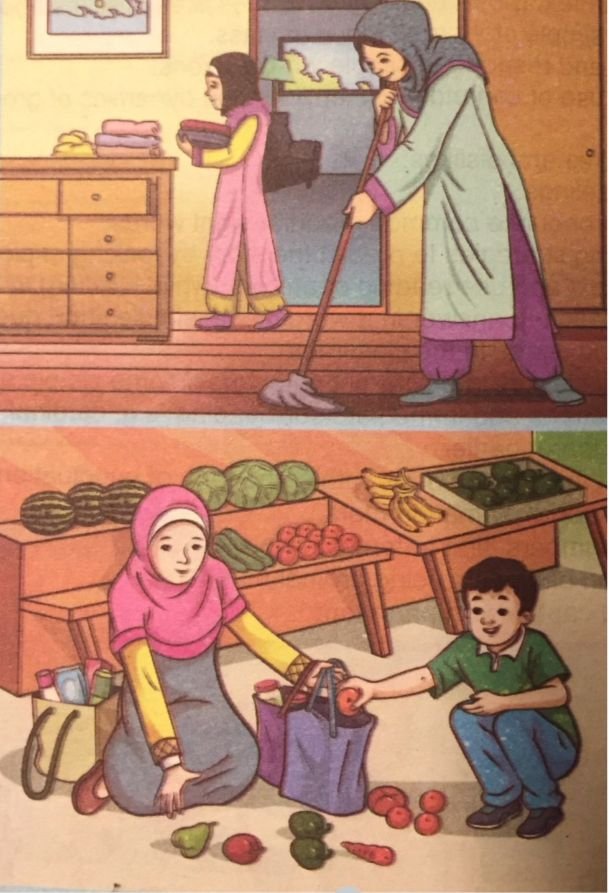
2. Women are mostly shown doing domestic work, taking care of the family, and looking after their children. In stories as well, they seem to come second to their male counterparts.
3. As discussed in detail above, there is the presence of religious text in non-religious books.
4. The stylisation of the books are difficult to understand, fonts and texts are way too clustered. The quality of the pages is not refined, making them unattractive and confusing for students.
CONCLUSION:
According to NCC director, Dr Chughtai, the curriculum is an evolving process and the books can be changed in future publications, based on the response by schools and parents. The biggest hurdle to the books is that the teachers have not been trained in teaching these new books and according to Dr Chughtai, it is up to the school to teach and implement the books. There are no worksheets given with the books and from initial student reactions, students are confused and wary of books that are laid out in a clustered fashion. There is also the subject of a language change. Where students study general knowledge, a precursor to Science, in Urdu, they switch to difficult English in grades 4-5.
While the government should be commended in trying to create a national syllabus, the forced enforcement of the books along with the lack of supplemental information and training will make this very difficult for teachers and students. Moreover, parents should be given a choice as to what they want their children to study. This implementation should be a free choice rather than that of enforcement. What would have been a practical approach is that the government should have improved the structure of the government/public schools, provided better teacher training, spent more on financially improving the conditions rather than lowering the standard for all.
*Graphics credits: Asma Ahmad (Graphic Designer)
How did we collect the data?
The percentage of male characters in the books: Divided the total number of male by the total number of characters. The percentage of female characters in the books: Divided the total number of female by the total number of characters.
The percentage of Islam: Divided the Islamic pictures or references given in the books by the number of total pages of all books. The percentage of other religion: Divided the other religions pictures or reference given in the books by the number of total pages of all books.
The percentage of female power roles: Divided the number of female by the total number of characters (female and male). The percentage of male power roles: Divided the total number of male by the total number of characters (female and male).
The same process/calculation/method was applied to the findings of each book.
Shahrooz Kashif climbed the 8163-meter-high Manaslu peak, the fourth peak of his career.
Shehroz Kashif has climbed the third consecutive peak in the last five months at an altitude of over 8,000 meters — setting a record of summiting peaks in this young age.
Shehroz’s father, Kashif Salman, told Geo News that his son is fully fit and he will reach the base camp in two days
Punjab Sports Minister, Rai Taimur Bhatti, took to Twitter to congratulate Shehroz Kashif for his achievement and lauded him for his bravery at this age.
ہمارے نوجوان قومی ہیرو @Shehrozekashif2 نے نیپال میں8163میٹر بلند چوٹی مناسلو سر کرکے دنیا میں8000میٹر بلند چوتھی چوٹی سرکر لی ہے۔شہروز اس کم عمری میں ایسی بہادری و دلیری کی مثال نہیں ملتی۔آپ کوہ پیمائی کے شعبے میں نوجوانوں کے رول ماڈل ہیں۔اللہ تعالی آپ کو مزید کامیابیاں دے۔آمین! pic.twitter.com/AFtYPuXy5t
The US Embassy in Islamabad has issued a clarification on sending a courier containing books, perfumes, clothes and shampoo to Zahir Jaffer.
“U.S. embassies & consulates abroad are required by U.S. and international law to provide assistance to American citizens (USCITs) who are incarcerated or detained abroad, regardless of the charges against them,” the Embassy said in a tweet.
“When a USCIT is detained overseas, we work to provide all appropriate consular assistance. Consular assistance may include visiting arrested USCITs in prison to ensure proper treatment,” the embassy added in a tweet.
“It includes verification that they have a diet that meets subsistence levels, have adequate medical attention and clothing, and provides reference materials of U.S. origin. As a USCIT, your passport won’t help you avoid arrest or conviction.”
(2/3) When a USCIT is detained overseas, we work to provide all appropriate consular assistance. Consular assistance may include visiting arrested USCITs in prison to ensure proper treatment.
(3/3) It includes verification that they have a diet that meets subsistence levels, have adequate medical attention and clothing, and provides reference materials of U.S. origin. As a USCIT, your passport won’t help you avoid arrest or conviction.
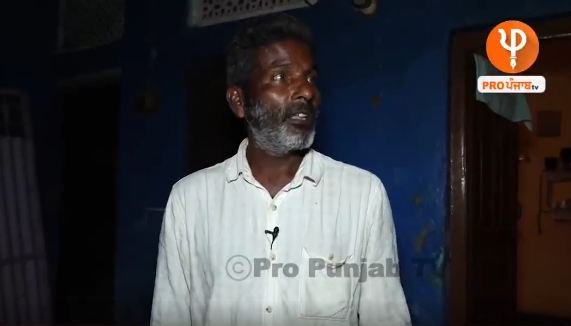
Research and Analysis Wing (RAW) agent, Daniel, who spied on Pakistan for India now lives a miserable life, as he has to drive a rickshaw while his wife works as a maid washing dishes, to earn some livelihood, an Indian news channel Pro Punjab reported.
Daniel, who served a four-year sentence in Pakistan, was smuggled into the country in 1992 to carry out India’s dirty work.
“We used to feel very proud while working for RAW. However, I am disheartened, my agency has abandoned me,” said Daniel.
“I feel abandoned and used,” he said and hoped that if he gets some money, at least he could build a home and live a decent life, or get a job for his elder son.
Speaking to the Indian news channel, he admitted that Pakistan does not send spies in India to carry out subversive activities. Rather, India frequently sends spies over into Pakistani territory.
Daniel said that another Indian spy, Raju, is currently in Pakistan. The former RAW operative said that when he returned to India after getting caught in Pakistan, he was issued a meager Rs15,000 and fired from service. Praising the people of Pakistan, Daniel admitted that the Indian government keeps sending spies to its neighbouring country.
Soon after the video did the rounds on social media, the Punjab police shared a picture of the suspect in custody, saying that the police had registered a case and arrested the suspect.
مقامی پولیس نے فوری کاروائی کرتے ہوئے اس واقعہ کا مقدمہ درج کرکے ملزم کو گرفتار کر لیا ہے ۔ pic.twitter.com/kdptbxsElu
Since the Minar-e-Pakistan incident, the number of sexual harassment and assault cases has increased up to 300 per cent in Lahore.
A police report stated that during the past 1.5 months, 642 cases of sexual harassment were registered under sections 354, 354-A and 509-B as compared to the number of incidents up to less than 150 that had been reported before August 14.
Deputy Inspector General (DIG) Shariq Jamal Khan said that the ratio of sexual assault and harassment cases was high in the past but previously people used to avoid registering cases.
He added that the actions related to the accused in the incident of Greater Iqbal Park have encouraged the women to report such cases. He said that the authorities will take strict action in such cases.
Pakistani students designed a Formula Electric car, which won the second position in a competition held in Russia’s capital city Moscow, ARY News reported.
As per details, the team consisted of 35 engineering students from a private university. The Pakistani team was a runner-up in the competition in which 20 teams participated.
Uzair Mudassir and Saad Ahmed, who were part of the team, said in ARY’s morning show ‘Bakhabar Savera’ that designing the car was a learning curve for them and they want to show a positive image of Pakistan to the world.
They said that technology is evolving every day and it was important for them to represent Pakistan on a global scale.
Uzair Mudassir mentioned that they wanted the world to know that Pakistan has many students who are skilled in the field and have a passion to move forward.