Tag: Pakistan

  • COVID-19: Sindh re-imposes smart lockdown

    COVID-19: Sindh re-imposes smart lockdown

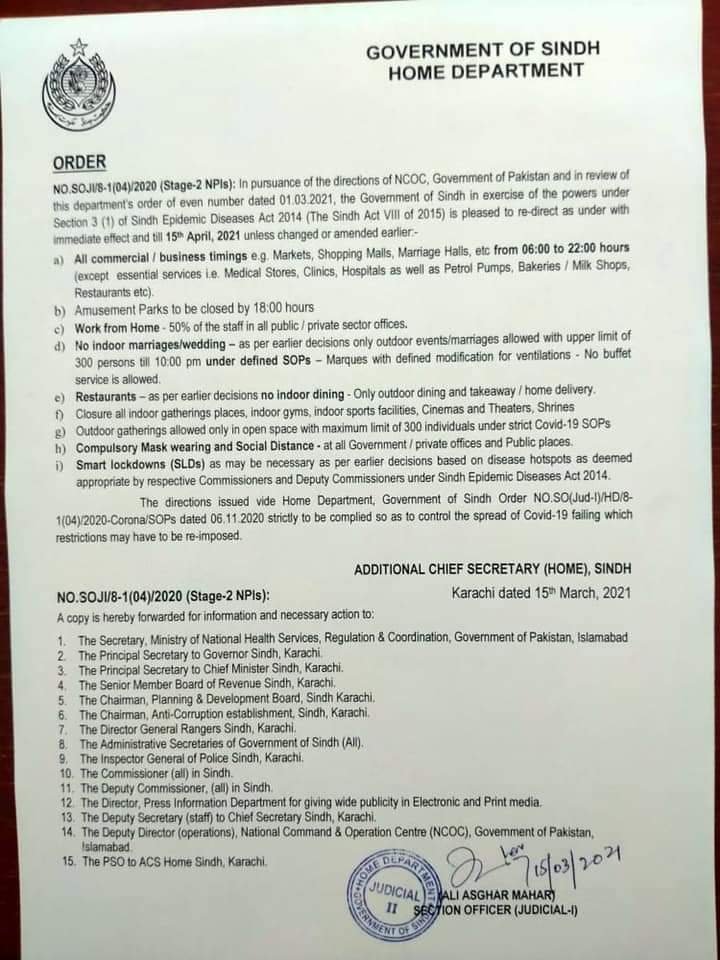
    Amid rising COVID-19 cases, the Sindh government has re-imposed restrictions to curb the spread of the virus. The government has imposed smart lockdown across the province until April 15 to fight against the third wave

    According to a notification issued by the department:

    • All businesses e.g. markets, shopping malls, marriage halls etc. will operate from 6am to 10pm (except essential services i.e. medical stores, clinics, hospitals, petrol pumps, bakeries, milk shops, restaurants etc)
    • Amusement parks to close by 6pm
    • 50% staff in all public/private sector offices will be allowed
    • No indoor marriages will be allowed. As per earlier decisions only outdoor events/marriages will be allowed with a maximum limit of 300 persons till 10pm under defined SOPs.
    • No indoor dining will be allowed at restaurants.
    • All indoor gathering places, gyms, indoor sports facilities, cinemas and theaters, shrines to close.
    • Outdoor gatherings will be allowed only in open spaces with a maximum limit of 300 individuals.

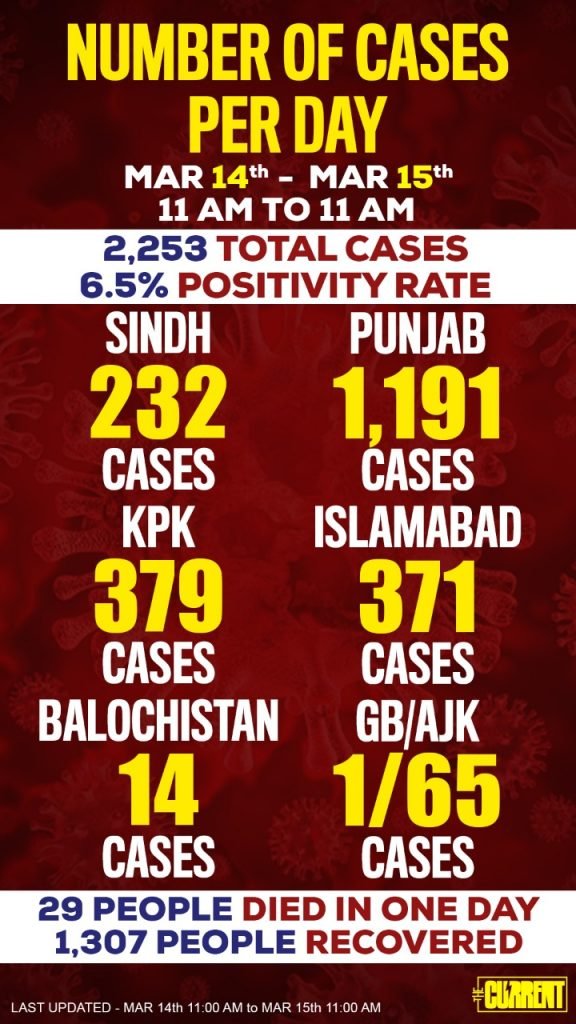
    The province has reported 261,411 cases so far. However, 232 cases have been reported in the last 24 hours.

  • VIDEO: Helicopter showers currency notes on wedding guests in Punjab

    VIDEO: Helicopter showers currency notes on wedding guests in Punjab

    A video showing a helicopter showering currency notes and rose petals on guests at a wedding in Punjab’s Mandi Bahauddin has gone viral on social media.

    According to reports, the groom’s brothers, who had come from abroad to celebrate their brother’s wedding, had specially arranged for a helicopter to shower currency notes and flowers on the ‘baarat’ guests.

    Meanwhile, the Deputy Commissioner of the area has asked officials to take legal action against the organisers for not seeking permission for the helicopter.

    Earlier, a man in Sialkot celebrated his wedding by showering US dollar notes on his guests.

  • Peshawar cleric sentenced to death for raping minor girl

    Peshawar cleric sentenced to death for raping minor girl

     A child protection court on Saturday sentenced a cleric to death for sexually assaulting an eight-year-old girl in Peshawar two years ago. Judge Wadeeya Mustaq Malik ruled that Qari Saeed based in Peshawar was found guilty of an offence of rape.

    As per reports, the convict was also given a fine of Rs300,000 as the girl had suffered mental and physical torture and lifelong trauma. The convict should compulsorily pay a fine to her in the form of saving certificates to be withdrawn by her on reaching the age of 18 years, stated the court in its order.

    “As far as the quantum of sentence is concerned, no mitigating circumstances could be found and rather, aggravating circumstances exist. The rape was committed of a girl aged eight years,” said the judge, adding that the convict was a mosque’s pesh imam (prayer leader), who committed the crime in one of its rooms.

    The convict held the Master’s degree in Islamiyat and led Friday prayers in his mosque.

    The court added that the crime was gruesome, as the convict was also found guilty of committing sexual violence by biting and bruising the child on her neck.

    “The statement of child witness not only found confidence-inspiring, truthful but also has not been contradicted on the material aspect,” said the court. “[The] sole testimony of [the] victim of an offence if inspires confidence can be safely relied upon for the purpose of conviction and when as rule of prudence same is supported through confirmatory medical evidence not a single circumstances can be inferred for false implication of the accused facing trial at behest of police.”

    The FIR of the sexual assault was filed by the police on March 14, 2019, on the complaint of father of the girl.

    The complainant had stated that he and other family members were present in their house when his daughter came from outside crying and said Qari Saeed called her to the mosque on the excuse of giving away an amulet but sexually assaulted her in a room there.

    The convict didn’t accept the charge and claimed that he was falsely implicated in the case at the behest of the Ahmadi community as he was very vocal against it. However, he failed to verify that claim.

    The defence counsel also insisted that the girl might have received injuries accidentally and that she was not subjected to a sexual assault.

    The girl was also presented  in the court as witness where she testified against the prayer leader.

    She said that her father gave her Rs 10 to buy candies and when she was returning from the shop, the convict had asked her to accompany him to the nearby mosque so that he can give her an amulet (taweez). The girl said the convict took her to his room in the mosque and sexually assaulted her.

    The court has also invoked a provision of the KP Child Protection and Welfare Act, 2010, prohibiting the publishing of any information regarding the girl’s identity, including picture, name, status, address or school.

  • Bun Kebab: ‘Pakistan’s most beloved street food’

    Every morning before sunrise in Karachi, Pakistan, while the city is largely asleep, Abdul Ameen ducks through a tunnel and crosses dilapidated railway tracks to the more affluent side of town. Here, parked strategically between a mosque and a marketplace, his pushcart awaits him.

    An incandescent bulb illuminates him as he stacks shami kebab (ground beef-and-lentil patties) brought from home in columns behind glass panes. Next, he forms cascading towers of onion rings, lettuce and thickly sliced tomatoes. Working with almost flamboyant grace, it’s evident his routine has been perfected over the past 30 years.

    By the time the first call to prayer, Fajr, is made (traditionally, when there’s enough daylight to distinguish between white and black thread), he’s already dipping into his 16kg canola oil dabba (a rectangular tin bucket) and warming up his giant cast-iron griddle. Over the next few hours, a donkey cart owner, sleepy office workers, domestic helpers and an armed entourage of personal guards all stop by Ameen Burgers to purchase their greasy bounty wrapped in brown paper.

    But despite the name of his stall, Ameen is not selling burgers.

    Bun-kebabs, widely considered the most beloved Pakistani street food, are thin shami kebab or potato patties in fluffy, milky buns with tangy chutney and crisp vegetables. Optional fried eggs add an extra protein hit. The combination of explosive South Asian flavours, chutney-drenched buns and vegetarian options create a starkly different culinary experience from that of a burger. Ubiquitously available at kiosks and small shops or peddled on pushcarts throughout the country, they are generally sold for between 50 and 120 Pakistani rupees (£0.23-£0.55), depending on the neighbourhood. Some consider them Pakistan’s affordable (and zestier) answer to burgers

    Potato bun-kebabs have long been staples at school canteens, and travellers in Pakistan will see women perched on wooden benches feasting on them in crowded shopping plazas. They’re accessible enough to grab for a quick bite, but not so heavy – on the pocket or the stomach – to require serious investment.

    For many Pakistanis, bun-kebabs are intertwined with nostalgic family memories, often representing a first experience of eating out or getting a takeaway. Osamah Nasir, who founded the Karachi Food Guide in 2013, remembers first eating bun-kebabs during load-shedding (power outages) at his maternal grandmother’s house when he was a child, where nearly a dozen of his cousins spent lazy Sunday afternoons. “In less than 100 Pakistani rupees (£0.46), we’d all be fed,” he said.

    Pinpointing a definitive moment in history when bun-kebabs originated is difficult. Some consider them Pakistan’s affordable (and zestier) answer to burgers, especially because of the unique phenomenon of bun-kebab stalls positioned right outside fast-food franchises. Others, like Haji-Adnan, the third-generation owner of an unnamed bun-kebab stall in Burns Road (a food street in Karachi) think they came about in the 1950s. Haji-Adnan believes his grandfather, Haji Abdul Razzak, introduced them as a mess-free, to-go option for bustling workers in the city centre in 1953 before fast food joints started proliferating across Pakistan’s cities.

    Fahad Bhatti, the founder of A-Lister Mister, Pakistan’s first men’s interest e-magazine, traces their origin to the then-newly partitioned subcontinent’s shared heritage. “They started out as vada pav [spiced potato patties in bread buns accompanied by chutney]… They’ve since been evolving… with non-vegetarian options added for our meat-eating nation,” Bhatti said.

    Today, vendors experiment with their own spins on the iconic bun-kebab – including sliced beetroot and more expensive fillings like hunter beef (a Pakistani version of dried, salted meat similar to corned beef). Some even offer deconstructed versions. But while spiced potato patties or shami kebabs remain favourites of the roadside staple, the patty is not the sole star of the dish.

    Mr Burger, Pakistan’s first burger joint, was created in 1980 when McDonald’s and Burger King deemed the nation not ready for burgers. Adamant to maintain a difference from the local bun-kebab, the creators of the newly introduced burgers viewed condiments and vegetables as frills, instead focusing on perfecting the beef patty and using a “secret sauce” instead of chutney. For bun-kebab vendors such as Ameen, though, these “frills” are necessities – forming the essence of the taste at a fraction of the cost. Instead of juicy cuts of meat, the delectable flavour often comes from simple spice-infused combinations such as coriander, cumin and green chilli, mixed into the patty or ground in the tamarind chutney.

    It is, proudly, a poor man’s burger.

    Bun-kebabs act as universal levellers, even in the polarised opposite sides of town. “Clifton Bridge in Karachi has long served as an infamous symbol of socio-cultural divide,” explained Nasir, referencing a common Urdu saying: “Pull ke us paar, pull ke is paar” (That side of the bridge; this side of the bridge). “The ‘affluent’ side has most high-end eateries. But bun-kebabs? They’re everywhere,” he said.

    They’re one of the last vestiges of local street food without upscale, gentrified versions (unlike “artisanal” chaiNutella-slathered parathasand overpriced chickpea chaat – all dressier, more expensive counterparts to Pakistani street food).

    But in 2019, McDonald’s replicated the beloved “anday-waala burger” (a bun-kebab with egg). Describing it as an “eggcelent fusion of Desi taste”, McDonald’s did attempt to pay tribute to the indigenous roots of the dish, wrapping it in newspaper packaging designed to look like that of bun-kebabs. It was almost as if the trend had come full circle, with the very chain that deemed a nation not ready for burgers changing its menu to cater to local tastes.

    But the “Bun Kabab Meal”, retailing at 250 Pakistani rupees (£1.15) (which is at least three times the price of a roadside anday-waala burger), left some Pakistanis outraged. Others offered two-star ratings, mainly put off by the missing dhaaba (roadside cafe or food stall) experience.

    Curious to find out why locals see the anday-waala burger as being unreplicable, I spoke to Qalander Ali, the second-generation owner of Super Nursery Burgers, an established bun-kebab shop in Karachi. Operational since 1977, it sells a whopping 300 to 400 bun-kebabs daily, with locals and travellers flocking here for the perfectly spiced and tangy chutney.

    According to Ali, the food resists mass-production because labour-intensive steps (such as shaping the sticky patty by hand, dipping it in whipped egg whites immediately before frying, intentionally “smooshing” the egg yolk for fried eggs, greasing the bun on all sides and even slicing the buns as they don’t always come pre-halved) make preparing bun-kebabs ahead of time tricky.

    And even if McDonald’s did manage to distil the taste, the roadside experience is unique and resists standardisation. “When I saw the McDonald’s version of my local favourite, I wasn’t just upset. I was triggered,” said Nasir. “Part of the enduring charm of the bun-kebab is being able to experience it – to smell it – to see the artisan add his little flairs and endlessly customise it,” he explained.

    To many, it felt almost dehumanising to see this idiosyncratic form of self-expression reduced to a mass-produced assembly line. It also felt like an infringement on cultural territory. “I get my McFlurries and Happy Meals from you. Don’t do bun-kebabs,” Nasir said.

    The commodification of the beloved staple may have evoked such strong responses because in Pakistan, the terms “burger” and “bun-kebab” aren’t used just for food. They’re identities.

    “Burger” is a colloquial term for the urban elite that was conceived and popularised by Pakistan’s “King of Comedy”, Umer Sharif. As consumers of imported food, “burgers” are believed to have values aligned more with the West than their own country, and are viewed as part of a demographic that speaks English well, has foreign exposure and is privileged with access to resources. At times, “burger” is used pejoratively, akin to “spoiled”, or “Mama’s boy”.

    But with burgers’ illustrious rise to fame, a homegrown bun-kebab’s identity emerged almost in antithesis. The bun-kebab is what the burger is not: rooted in, not removed from, reality; and owned rather than mocked. As one Pakistani wrote in an article in The Express Tribune, “Dear burgers, I am a bun kebab, and proud of it.”

    However, with time, it seems that the distinction, especially at a linguistic level, is becoming increasingly blurred. As another Pakistani put it, placing a nation’s identity between two slices of bread is a baffling predicament, especially when the terms start being used interchangeably for the food itself. Colloquial slang surrounding the street food fuels the debate. For example, the practice of referring to bun-kebabs – the food – with the tacked on “waala” (Urdu for the one/the one with) implies both familiarity and mystery. “There’s this underlying assumption that you don’t exactly know what goes into the bun-kebab. And that’s the beauty of it,” said Rashid.

    A chicken or beef burger is simply “chicken” or “beef”, whereas “anday-waala”, “daal-waala” or “aloo-waala” bun-kebab (the one with eggs, lentils or potatoes respectively) are the customary orders people place, often with a knowing smile. When Pakistanis ask for “the bun-kebab with…”, they’re asking for more than a snack. They’re asking for an experience – Pakistani-waala.

    In their oily paper packaging, bun-kebabs might get squished. They defy mass-production and don’t offer slick fodder for pretty food-porn.

    But bun-kebabs are unpretentious. They’re home.

    This story is written by Aysha Imtiaz and was originally published in BBC- Travel.
  • After pigeons, India arrests Pakistani balloon

    Indian police in occupied Kashmir have taken into custody a Pakistan International Airlines (PIA) plane-shaped balloon. According to Indian news agency ANI, the balloon landed in Sotra Chak village of Hiranagar on March 9.

    While the detention of balloon with the logo of Pakistan’s national carrier seems silly, the incident was not the first of its kind. Indian security personnel have taken several pigeons and balloons into custody for their alleged links with Pakistan. A Pakistani villager had last year appealed to India to release his pigeon which was being held for spying after it crossed the border between the nuclear rivals.

    Meanwhile, on Twitter:

  • VIDEO: Daren Sammy plays tape ball on the streets of Lahore

    VIDEO: Daren Sammy plays tape ball on the streets of Lahore

    Peshawar Zalmi Head Coach Daren Sammy was spotted playing cricket with locals on the roads of Lahore.

    After the abrupt end of the PSL 2021 due to an outbreak of COVID-19, Sammy is also an honorary citizen of Pakistan, opted to stay back in the country and experience it as a tourist. And one of those experiences include playing street cricket.

    In a video posted on Peshawar Zalmi’s official account, the former West Indies player can be seen playing tape-ball cricket.

    “Peshawar Zalmi Head Coach Daren Sammy stops on his way to play cricket with young cricketers in Lahore,” read the caption.

    https://twitter.com/PeshawarZalmi/status/1368943213961240579?s=20

    As soon as the former West Indies captain came out of his car, he was given a rousing welcome by the locals.

    The Zalmi head coach could be seen enjoying the few balls he played and even called for a free hit when he got a ball above the waist.

    Peshawar Zalmi owner Javed Afridi also thanked him for his contribution to portray Pakistan as a welcoming and peaceful country.

    “Thank you brother. Pakistan is indebted for your contribution,” wrote Afridi.

    Sharing pictures, Sammy said: “Played some street tape ball cricket earlier in Lahore. Where’s next?”

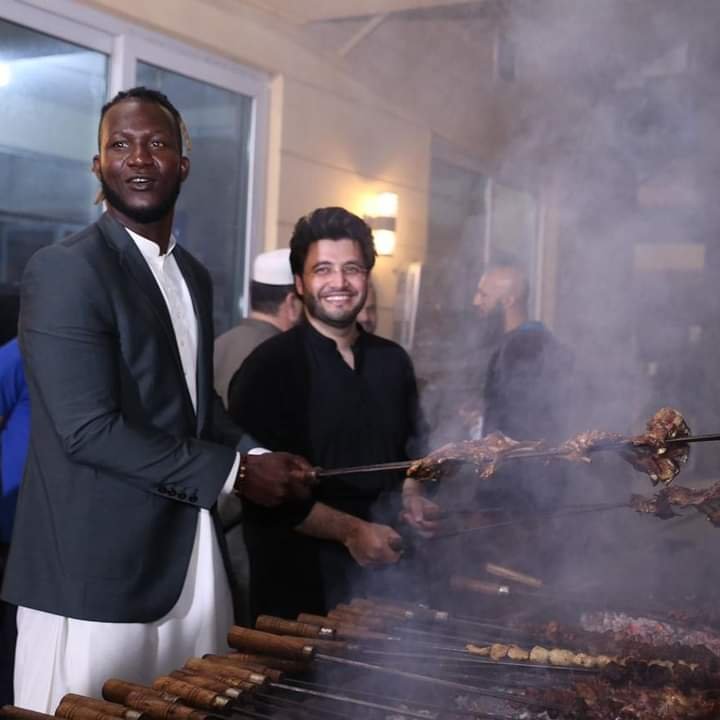
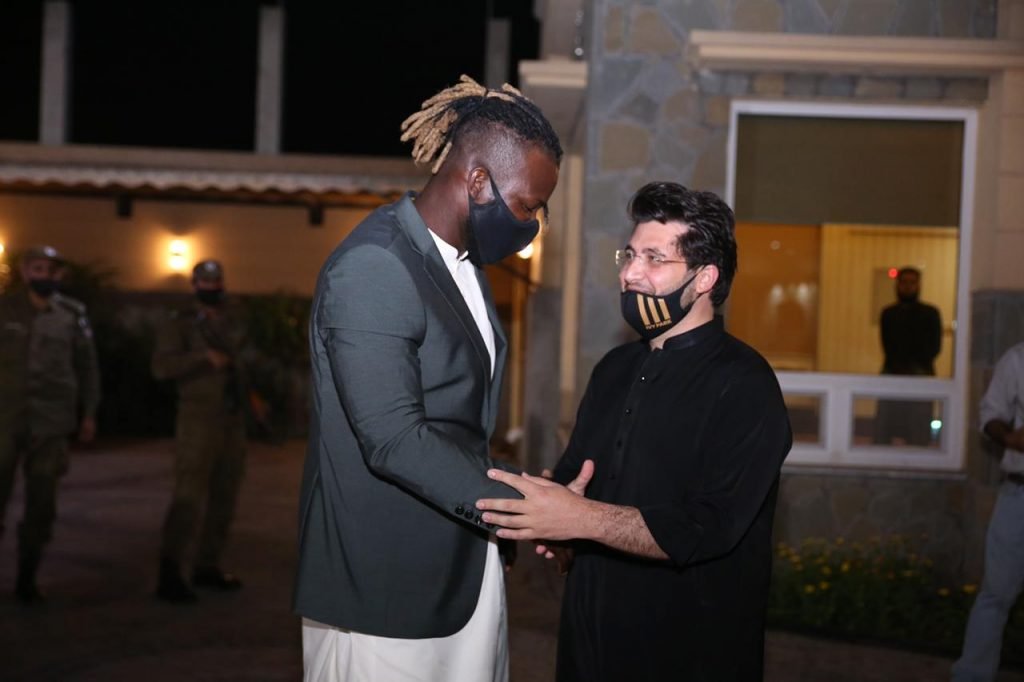
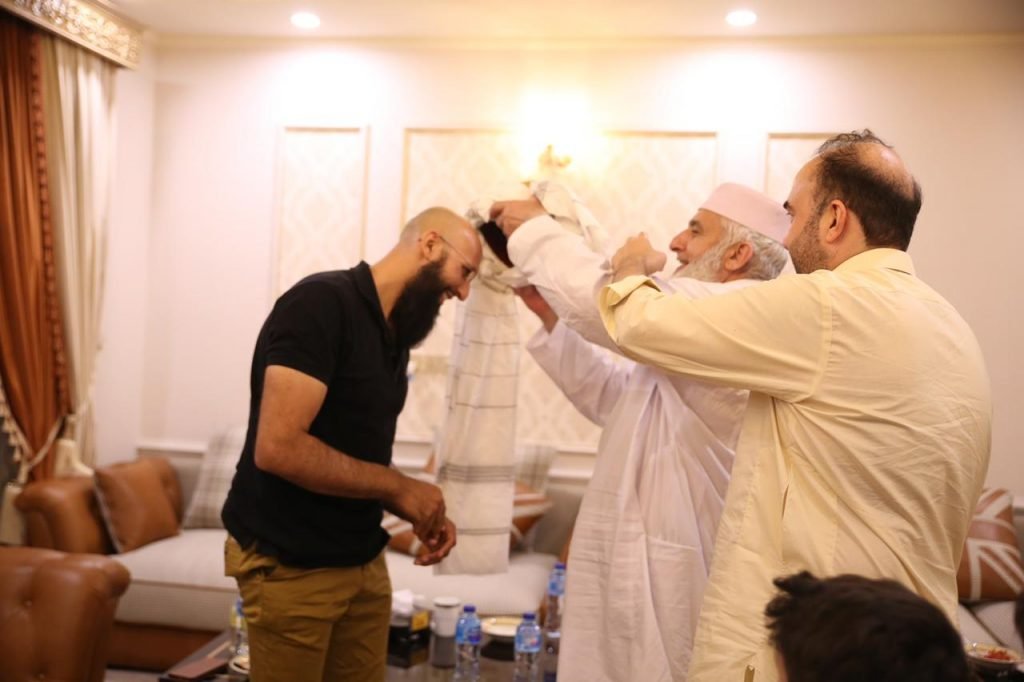
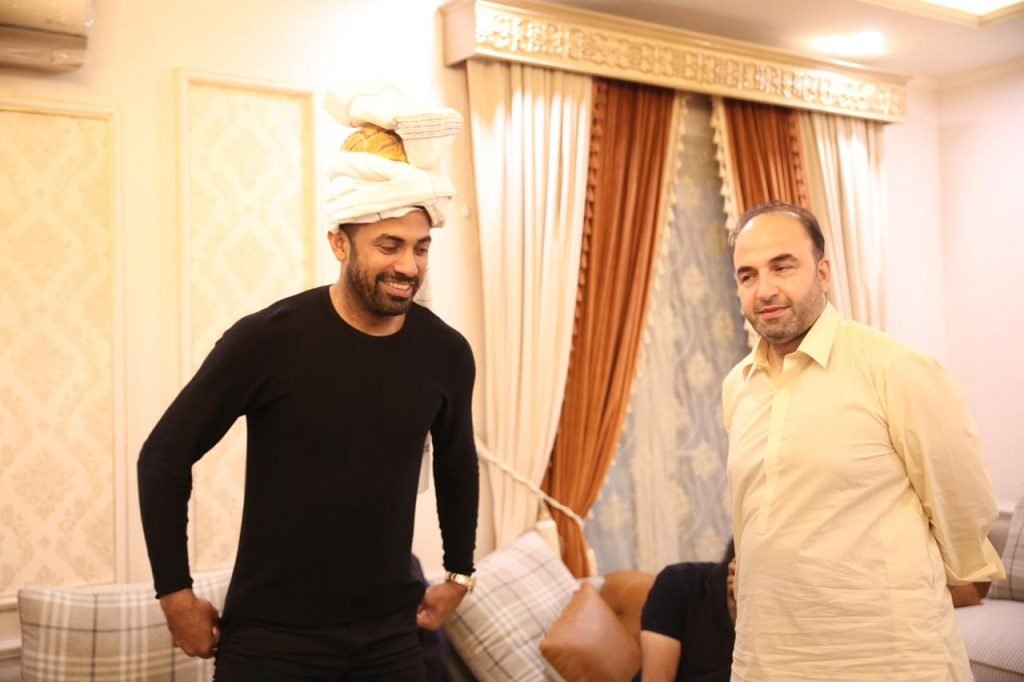
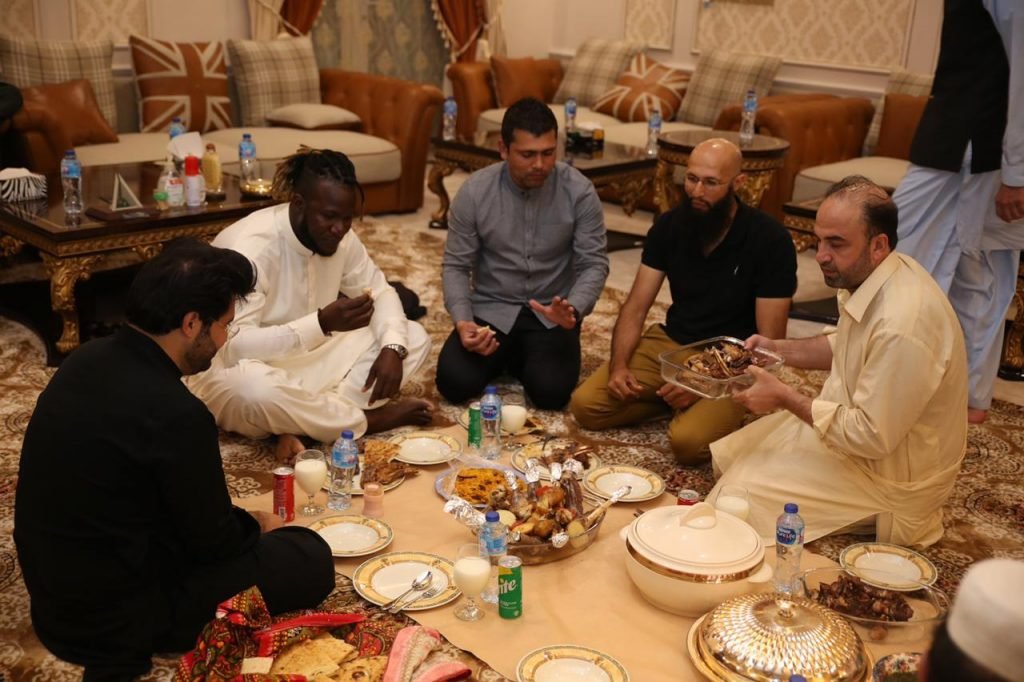
    Earlier, Afridi hosted a dinner in honour of Sammy and South African cricket great Hashim Amla. Captain of Pakistan Super League (PSL) franchise Wahab Riaz and Kamran Akmal were also present at the feast.

  • Canadian vlogger Rosie Gabrielle gets married to Pakistani traveller Adeel Amer

    Canadian vlogger Rosie Gabrielle, who converted to Islam in January last year has tied the knot with Pakistani travel vlogger Adeel Amer.

    Gabrielle announced the news on social media with a picture of the two.

    “I’m married,” wrote Gabrielle in the caption. “Never would I [have] thought that I would come to Pakistan and fall in love. Not only with a country and it’s people, but one very special individual in particular.”

    ‘My whole life I searched for him. My soul mate, my companion, my best friend,” she added.

    The Canadian vlogger further said “Before I came to Pakistan, I surrendered my need to find someone. I made a pact with God, that if I had to spend the rest of my life living for only Him, and loving myself, without needing someone to “complete me”, so be it. I finally knew deep down that I’m ENOUGH. And I didn’t need anyone to make me whole.”

    “It’s a funny thing surrender; the moment you do, you are gifted 10 times over. Divine says, give up your desire for your needs, for what I have in store for you, is much Greater. And it was true!”

    “Not only did I find my soul partner, I also found my best friend. The one who I will cherish and continue to love more deeply every day. Someone whom I can share every detail of my life with without guilt or judgment, who challenges me, who continuously pushes me to be a better person. The one who loves me unconditionally and has patience and compassionate grace for my journey. The man who lights up my life and inspires me every single day with his love and actions. Someone who compliments me perfectly.”

    “Our love was written in the stars. There was a subtle familiarity and connection I had never felt and more, it’s as if we had lived a thousand lifetimes before. In the most unsuspected place I found, a love so rare, so profound. God gifted me you and you to me, to reflect back His Divinity.”

    “To truly find our life’s sacred calling, our souls emerge hearts exalting My bestest friend, companion, motivator, inspiration, my heart my soul, my LOVE My husband Adeel Amer,” she concluded.

    Earlier, the Canadian traveller had opened up on her journey towards Islam and shared how Pakistan had played its part.

  • Mukhtaran Mai to join Aurat March in Multan

    Mukhtaran Mai to join Aurat March in Multan

    Gender and social activist from South Punjab Mukhtaran Mai, has extended her support to Multan’s Aurat March 2021 and is likely to join the country-wide protest on International Women’s Day which is celebrated every year on March 8.

    Mukhtaran Mai is a survivor of sexual assault and had fought to seek justice from the courts. She had taken the men to court who abused her in 2002 to settle a matter of village panchayat.

    A video shared by Aurat March Multan’s Twitter account shows Mukhtaran Mai supporting the march.

    “The reason I attend every march is to represent women in rural areas,” she can be heard saying in the video.

    “I’m [stepping] out for the rights of women in Pakistan. I’ve always participated in Lahore [and] Multan. It’s International Women’s Day. I raise my voice because our woman bears cruelty in society. Our woman is not weak and fight for her rights,” she added.

    Aurat March rallies and sit-ins will be observed today across different cities of the country to mark the  International Women’s Day. Many people come out on the streets to protest for the rights of women  in the society.

  • Vaccination of people 60 and above to begin on March 10

    Vaccination of people 60 and above to begin on March 10

    Minister for Planning, Development and Special Initiatives Asad Umar has announced that vaccination of people over 60 years would start from March 10.

    Read more – ‘Govt does not plan to buy vaccines anytime soon’

    “Vaccination of people 60 years and older will be starting from Wednesday March 10,” announced the Minister, adding: “Vaccinations will be done in reverse order by age – which means the oldest person who has registered will be vaccinated first.”

    Read more: Here’s how you can register for COVID-19 vaccine in Pakistan

    As per reports, Pakistan’s positivity ratio has risen from 3.21% to 4.57% in one month. Pakistan has reported 592,100  virus cases and 13,227 deaths so far. 1,592 cases and 22 deaths have been reported in the last 24 hours in the country.

  • Peshawar University makes ‘shalwar kameez’ compulsory for female students

    The University of Peshawar has reinforced a dress code for students, first introduced in 2013.

    As per a notification issued by the university management, women must wear “white shalwar with kameez of their own choice, while men should wear decent/modest clothes.”

    The dress code is being implemented to “lessen the financial burden on the parents” said the university’s spokesperson while talking about the notification.

    Earlier in January, the Hazara University in Mansehra issued a new dress code for students, faculty members and administrative staff. In the notification, female students were advised to wear abaya/scarf/dupatta in neutral colours without any decorative material. The female students were also instructed to wear shalwar kameez with dupatta or chaddar.