Tag: Pakistan

  • PM Khan shares breathtaking pictures of Skardu with photo credits

    PM Khan shares breathtaking pictures of Skardu with photo credits

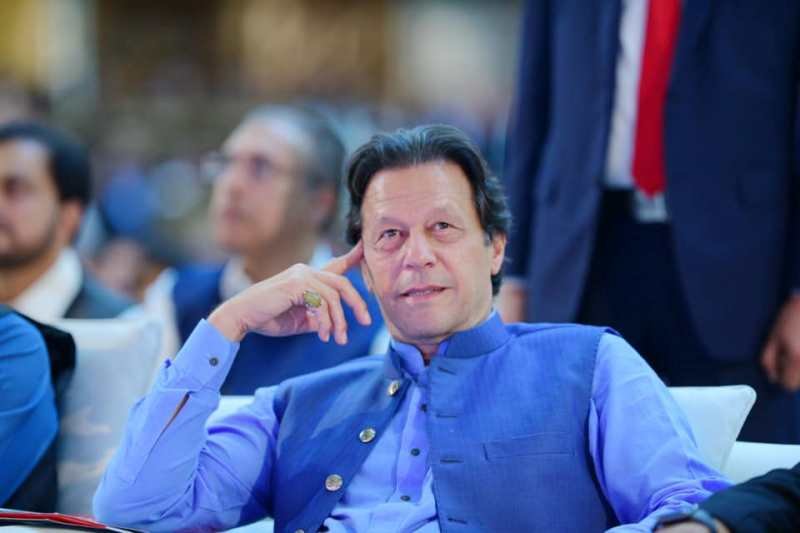
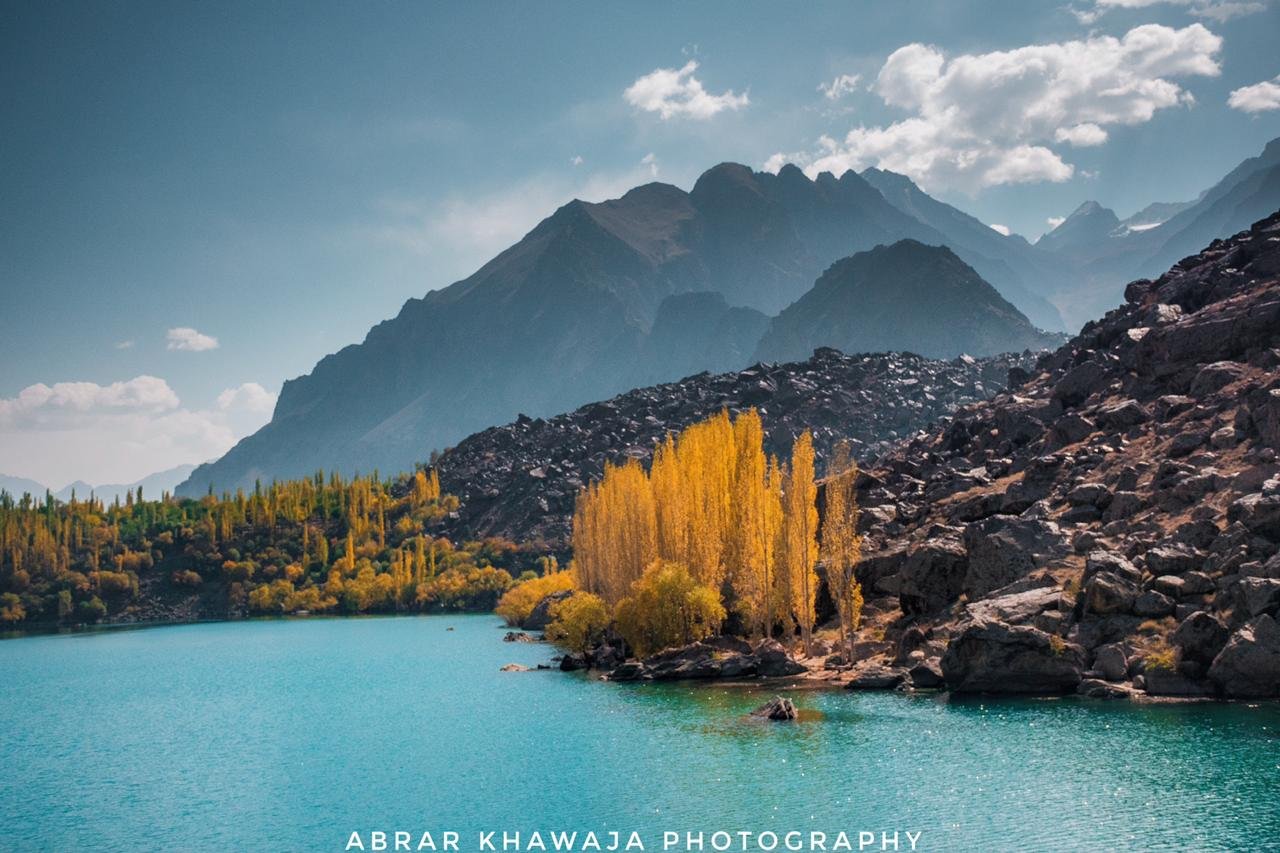
    Prime Minister Imran Khan on Wednesday posted some beautiful pictures of  Skardu, Gilgit Baltistan on his Twitter account but this time the photographer has been credited for his work.

    “I have been sent more pictures,” he wrote on Twitter. “This time from around Skardu after my last tweet with pictures from GB.”

    The photographer Abrar Khawja also took to social media to express his joy over his work being shown to the world.

    “My passion for photography has delivered results today,” wrote Abrar, sharing the premier’s tweet. “My beautiful Pakistan, captured through my lens, is being shown to the whole world by my own prime minister.”

    Earlier, the PM’s post showing Gilgit Baltistan’s beauty stirred controversy when the photographer alleged that his watermark had been removed from the pictures. 

    A day later, however, Asmar tweeted that the PM Office had apologized for the mistake.

  • COVID-19 vaccines to be provided in three phases

    COVID-19 vaccines to be provided in three phases

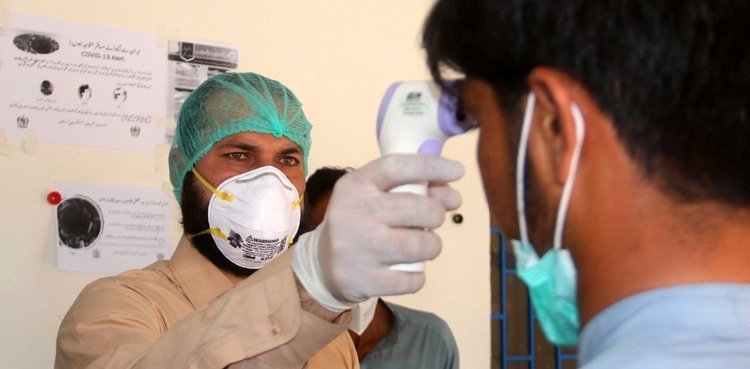
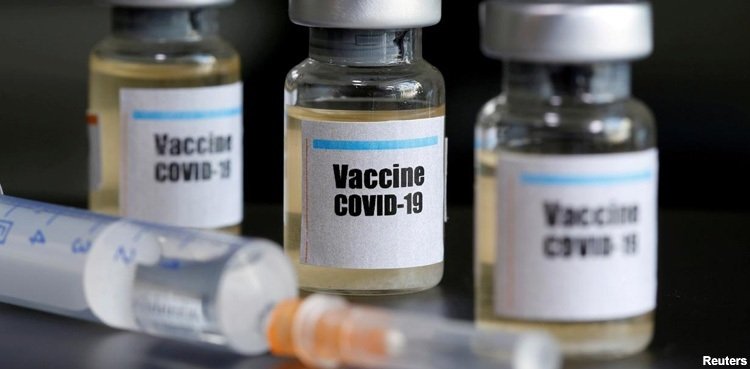
    The federal government has completed the plan for the COVID-19 vaccination drive. Vaccines will be distributed in three phases with the first phase expected to start from March 2021.

    A spokesperson for the Ministry of National Health Sajid Hussain Shah told The Current that in the first phase, vaccines will be provided to 0.5 million frontline essential health workers while in the second phase, it will be given to the population over 65 years of age.

    The remaining population will be given COVID-19 vaccines in the third phase. During the third phase,  the number of people to get the vaccination will depend on the available quantity of COVID-19 vaccines.

    Earlier, a special cabinet committee led by Federal Minister Asad Umar, had been formed for the procurement of the COVID-19 vaccine.

    The National Command and Operation Centre (NCOC) had approved the ‘Vaccine Administration Plan’, the comprehensive strategy prepared by the Expanded Programme on Immunisation (EPI) of the health ministry.

  • Chomsky says Pakistan has no future if it doesn’t come out of world of ‘religious superstition’

    Chomsky says Pakistan has no future if it doesn’t come out of world of ‘religious superstition’

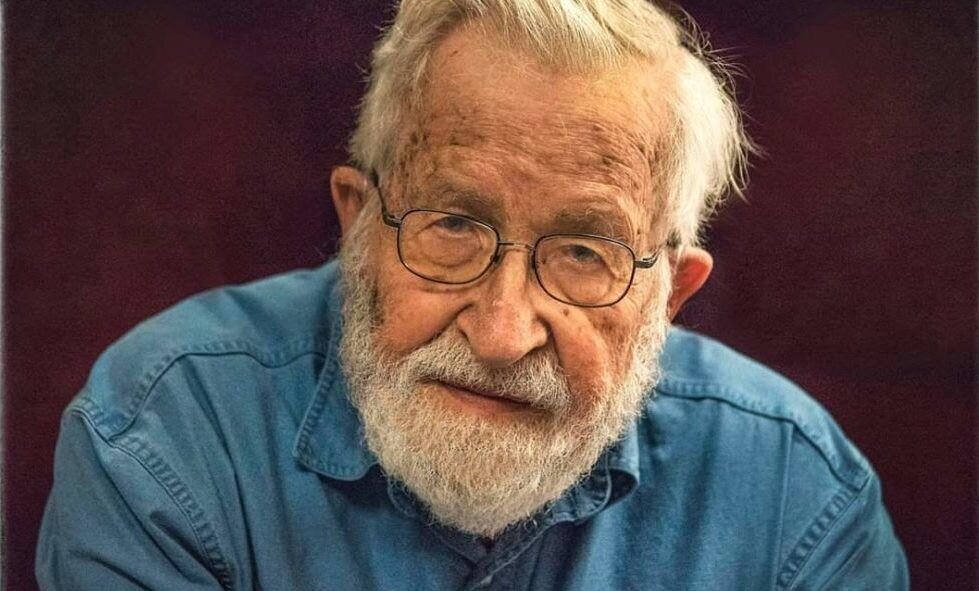
    Professor Noam Chomsky, renowned linguist and analytic philosopher, has said that Pakistan lacks “serious scientists” to preserve a rational education system to deal with the reality of the world.

    Speaking at a seminar organised by Karachi’s Habib University, Prof Chomsky said it’s sad that science has virtually disappeared from the country’s educational system.

    “Pakistan used to have an advanced scientific establishment, Nobel Prize laureates [Abdus Salam] and so on,” the American linguist said. “Now science has virtually disappeared from the educational system.” “Pakistan has no future if it is going to live in a world of religious superstition,” he said.

    During the lecture, Chomsky talked about a number of issues, including climate change, nuclear weapons, and the rise of populist leaders.

    Speaking about Indian PM Narendra Modi, the US professor said India is destroying the remnants of Indian secular democracy, crushing the Muslim rights and placing Kashmir under a brutal rule. “Pakistan is not too far behind,” the philosopher said, referring to the rights abuses in the country.

    Speaking about Iran-US ties under outgoing president Donald Trump, he said the Trump admin “is in a state where it is willing to do anything”. He said the tensions between US and Iran boiled over after Trump came to power.

    The assassination of Iranian general Qasem Soleimani in a US airstrike in Baghdad and the recent killing of its nuclear scientist Mohsen Fakhrizadeh near Tehran have further escalated these tensions. Iranian authorities have pointed fingers at two US allies – Saudi Arabia and Israel.

    “There is a possibility of war,” he said, adding that Iran has no “match for the US war machine” because its relatively low defence expenditure. But Iran would respond by attacking Saudi oil installations and other US allies in the region and that could lead to a full-blown war, said Chomsky.

    Speaking about sanctions imposed on Iran by the US government, Prof Chomsky was of the view that “sanctions against Iran have absolutely no legitimacy”. These sanctions “are means of torturing and terrorizing the Iranian population”. He said the people of Iran have to suffer from those sanctions because the Iranian government is not obeying the US orders.

    He also talked about Iran’s nuclear programme, saying it is very likely that Iran wants to use it as ‘deterrent’. Chomsky believes the countries that want to rampage freely in the region don’t want deterrents, and the US is one of them and its “Israeli client” another.

    “They don’t want a deterrent,” Chomsky said. The US doesn’t even admit that Israel has nuclear weapons, let alone getting its nuclear war inspected, the American philosopher said, pointing out the problems with the US approach towards the Middle East region.

  • PM Khan allegedly shares photos without giving credit

    PM Khan allegedly shares photos without giving credit

    Prime Minister Imran Khan recently took to Twitter to reveal “one of my favorite places on earth”.

    The prime minister shared some very beautiful pictures of  Gilgit-Baltistan with the caption: “The colours of Gilgit Baltistan just before the onset of winter. One of my favourite places on this earth.”

    Soon after the premier’s post, a Twitter user, Asmar’s Photography, requested the PM to give him credits for his photos.

    The photographer tagged the PM and said: “Thank you, sir Imran Khan, for sharing my picture but it would have been great if my watermark haven’t being cropped & credits may have been given to me.”

    PM recently inaugurated Himalaya and Nanga Parbat National Parks during his visit to GB region.

    Later, Asmar Hussain claimed that the PM Office had apologized for the error in not giving him credit for the pictures. “Would like to present this image to PM Imran Khan personally,” he added. 

  • British vlogger loves Pakistani food, people, doesn’t want to leave

    British vlogger Jay Palfrey is in Pakistan these days and he is absolutely in love with the country, its people and the food. 

     During his visit, he visited various beautiful northern areas of the country including Skardu, Hunza, and Gilgit-Baltistan.

    He shared many pictures on his social media accounts. Taking to Instagram, he expressed, I used to run to chase my dreams, now I’m living them, cannot begin to tell you how HAPPY I am to be exploring the raw beauty of Hunza.”

    Jay has been posting videos on his YouTube channel for a year now and earlier he had revealed that he has converted to Islam

    He also visited Lahore and Islamabad and wore the shalwar kameez to blend in with the Pakistani culture. 

    He has documented his trip in his vlog titled Pakistan, The Land of Wonder.

  • Police arrest man for blackmailing kids into sending sexually explicit videos using PUBG, 8 Ball Pool

    Police arrest man for blackmailing kids into sending sexually explicit videos using PUBG, 8 Ball Pool

    Police arrested a man who used online games such as PUBG and 8 Ball Pool to blackmail children into sending sexually explicit videos.

    As per reports, the man was arrested after an operation in Jamshoro.

    The deputy director of the FIA’s Cyber Crime Wing, Mohammad Iqbal, said several pornographic and sexually explicit videos were recovered from the suspect during the search. A first information report (FIR) has been registered against him as well, he added.

    The man PlayerUnknown’s Battlegrounds (PUBG) and multiplayer video game 8 Ball Pool to befriend children.

    The FIA official said the suspect also used to ask for sexually explicit videos from children by attracting them with offers of giving them PUBG’s in-game currency, G-Coins. 

    “In the past, the culprit had forced some children into sending him videos of their families, after which he would blackmail them,” he added.

    The parents of one of the kids had earlier requested the relevant authorities to investigate the matter and filed a case against him.

    The alleged paedophile has cyber-abused and threatened children from Sindh, Khyber Pakhtunkhwa and Punjab along with their families, the FIA official said.

    The criminal investigation and cybercrime agency was also investigating the sale of pornographic videos by the suspect.

  • Dowry culture

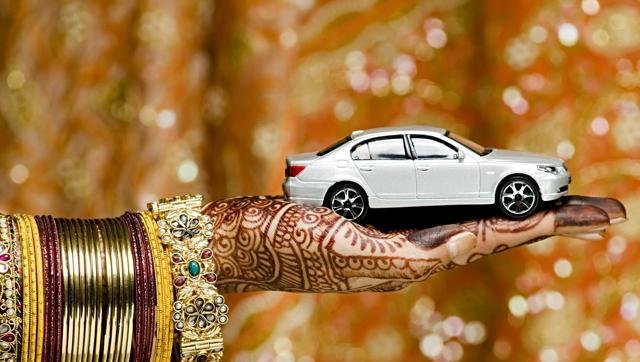
    According to a recent survey conducted by Pulse Consultants, more than 50 per cent Pakistanis believe that a girl’s family should give dowry when she is getting married. Around 61 per cent respondents were of the view that dowry should be allowed in the Pakistani system while 36 per cent were against it. Almost 73 per cent women believed that dowry should be allowed whereas 24 per cent were against it.

    This survey’s results should not be surprising given that dowry has become an unfortunate reality in our region.

    Dowry is used as a measure of worth for the bride; it is used as a bargaining tool or as a price tag when marrying off girls. This is rooted in the patriarchal and misogynist belief that daughters are a burden when they are born and so to marry them off, a price must be attached to them to ‘lure’ a groom. Despite laws against dowry in the country, this ‘tradition’ continues. Underage girls are often married so that the family gives less dowry in comparison to an adult bride. Many women are left unmarried because their families cannot afford to give a sizeable dowry. This tradition is one that perpetuates violence against women. Pakistan has a high rate of dowry-related deaths. Many women are tortured and even killed for not meeting the dowry requirements of their in-laws. Laws can only do so much. Not many people would report that the other party is demanding dowry for their daughter’s hand in marriage. Dowry transcends all classes. A lot of people would say what they are giving to their daughter is a ‘gift’ when actually it is more like ‘ransom’. Sometimes it is also used to deny a woman her inheritance rights – once dowry is given, the family says they have no rights in their inheritance any more. In a patriarchal society, women are treated like a property or objects instead of human beings with any rights. Dowry is a custom that encourages such thinking.

    The need of the hour is a public awareness campaign against dowry and why this cultural tradition must end. Both the government and the media need to do their part to educate the masses that there are laws against dowry in the country and also why this custom is a social evil. The acceptability of dowry will not end overnight. It will take years of education and awareness for the masses to eradicate this menace.

  • Dividing the divided

    “The ruling party’s most recent act of issuing a list of news media talk-show anchors, dubbing them pro-corruption, drives a deeper wedge into a polarised nation.”

    It is no secret that the truth of national integration of the Islamic Republic of Pakistan is not just bitter but severely inconvenient. The fine line that separates diversity and differences among this nation has blurred so many times that it has almost permanently been reduced to a smudge. From the barracks to the parliament, sermons and edicts from atop the mosque minarets, political jargons from atop the containers and trucks, to the unending layers of multiple identities — divisions are the Achilles’ heel of this society.

    Issuing a list of journalists, dubbing them against the interests of the state, vilifying them publicly was like shooting a nuke at this Achilles heel. Driving a wedge at the very source of information of the nation, the media, is creating the deepest division imaginable so far. In the history of deleted tweets in this country, these two might have very long lasting effects.

    A ruling political party being unaware of this landmine or apathetic to the consequences of triggering it can potentially prove to be catastrophic.

    73 years of age, sick, weak and drained it stood on shaky feet, running out of natural body resources, vitals dimming, surviving on one shot of steroids after another, scars of surgical interventions spread across the map of its skin and a plethora of side-effects from past treatments racking its existence. It had almost forgotten the number of doctors that had taken a shot at it, sometimes even without its total consent. Almost every one of those taxing prognosis left it more vulnerable and feeble. All of them focused on treating the symptoms and not the disease, worsening the illness.

    It was almost as if they knew, but never disclosed that it was plagued by the uncanny Autoimmune Disease – an ailment in which the organs of its own body were at constant war with each other. It was almost as if they were intentionally not treating the disease because ending its ailment would end years of profiteering from its misery, and yet they all claimed they did everything to serve its interest. Or maybe decades of varying drugs had blurred its ability to separate those who sought to save it from those who added to its agony.

    The story of Pakistan is difficult to pen down because it is hard to indisputably identify the heroes and the villains. Pakistanis to this day are even conflicted over autocratic dictatorships being good or bad. This is a country where coups were celebrated, even if by a significant minority. Its very inception on the basis of a presumed uniformity of a religion so deeply divided across sectarian lines was unsteady. The ethnic, cultural, political and ideological differences at its core, though dormant at the time, were highly flammable. While these divisions stayed buried under the unanimous rejected of Hindu subjugation, the fault lines under the surface started growing into visible cracks once liberated from the common enemy. This is why, ever since, the integration and unity of this nation has always been a function of hatred, fear and anger against a common enemy, rather than collective growth, pride and prosperity.

    However, in times when an aggravated threat of a common enemy does not exist, Pakistan’s autoimmune disease starts tearing her apart and eating the core of the country hollow. For all these reasons, and more, the worst thing that can happen to this already fragmented and disunited country is fuelling more divisions.

    From its campaign leading to the 2018 elections, PTI and its patron in chief Imran Khan has been extremely careless, if not intentionally exploitative, of this ability of the Pakistani polity. He went further than the usual practice of demonising and defiling his political rivals and berated their voters and supporters as dumb donkeys following their leaders mindlessly like zombies. At his massive public meetings he openly vilified news organisations that disagreed with him. The rants inadvertently led to mob attacks on news media offices and at times on journalists.

    The ruling party’s most recent act of issuing a list of news media talk-show anchors, dubbing them pro-corruption, incites targeted and aggravated hatred against these journalists. But more importantly still, it drives a deeper wedge into a polarised nation. It impacts not just PTI supporters but the supporters of its political rivals as well. With the history of Pakistan and its behavior in view, this action will have consequences far more long-lasting than being perceived.

    This list discourages openness to differing views and perspectives. It freezes the ability to question and challenge one’s hardened positions and clan-vote mentality. It encourages the dangerous practice of sticking to narratives that only feed people’s confirmation biases. It magnifies and glorifies selective perception. But more than anything else, it breeds generations of an ill-informed polity, with an ‘us-versus-them’ mindset for its own countrymen, incapacitated to vote a credible person into power, adding to the long list of bad doctors that would worsen this ailing country’s autoimmune disease and feed off its ailing semi-conscious body.
  • Two Pakistani companies make it to Forbes Asia’s ‘Best Under A Billion’ 2020 list

    Two Pakistani companies make it to Forbes Asia’s ‘Best Under A Billion’ 2020 list

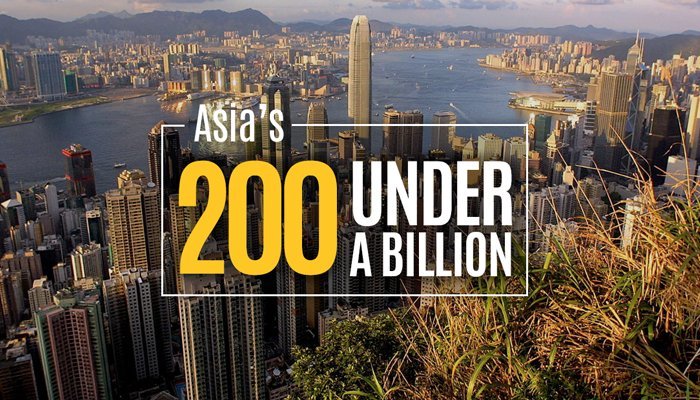
    Two Pakistani companies have made it to this year’s Forbes Asia’s 200 Best Under A Billion 2020 list.

    The Forbes list recognises 200 small and medium-sized companies which have performed the best in the Asia-Pacific region. The criteria for the companies is to have sales below the $1 billion mark.

    Systems Limited Pakistan and Feroze1888 Mills Ltd made it to the annual list. Adviser to the prime minister on Commerce and Investment Abdul Razak Dawood appreciated and congratulated the companies for making it to the coveted list.

    He praised the companies and expressed confidence that the achievement of these firms would “provide impetus to others to achieve similar laurels.”

    Founded in 1977, Systems Limited Pakistan has the distinction of being the country’s first software technology company, according to a statement on its website.

  • Survey reveals 61% Pakistanis support dowry

    Survey reveals 61% Pakistanis support dowry

    The Ministry of Religious Affair recently proposed a bill to ban dowry in the country.

    While the suggested bill was initially appreciated on social media, a new survey by Pulse Consultant revealed that 61% Pakistanis support dowry. More than 2,000 people participated in the survey. On the other hand, only 36% of people opposed the tradition.

    Further statistics revealed that 73% women voted in favour of allowing dowry while 24% opposed it. Among men, 59% were in the support of dowry.

    Earlier, The Current also asked people what they thought about and here is what they said.