Tag: Pakistan

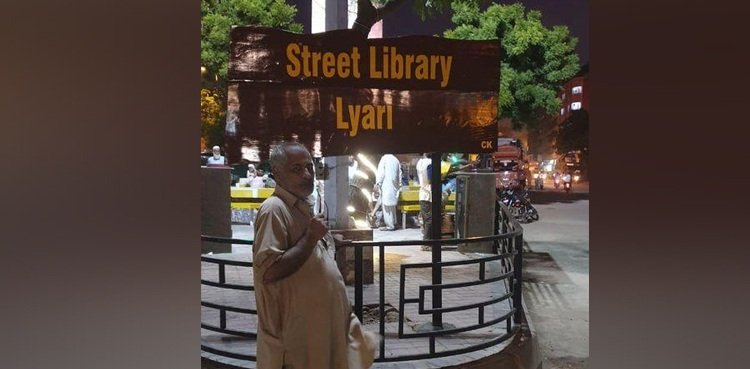
  • Karachi to get its second street library today

    Karachi to get its second street library today

    The second street library of Karachi will be inaugurated on Independence Day (today) at Baloch Chowk in Lyari.

    As per reports, the first street library with over 600 books was inaugurated on December 25, last year on the occasion of the birth anniversary of Quaid-e-Azam Muhammad Ali Jinnah.

    The street library in Lyari has been set up at Baloch Chowk in alliance with the District Municipal Corporation (DMC) South.

    Karachi Commissioner Iftikhar Shallwani is going to inaugurated the street library today.

    The city administration had started its work to establish the second street library from July 05 this year.

    The first street library of Karachi is located at the Commissioner’s Corner at Metropole. The library was inaugurated by Sindh Chief Secretary Syed Mumtaz Ali Shah.

    Not only Karachi, Hyderabad is also going to get its first street library on the Independence Day of Pakistan which is being celebrated across the country today.

    The Hyderabad administration has developed a street library at the city’s iconic “Thandi Sadak”.

  • Army chief to visit Saudi Arabia days after govt’s oops-a-daisy moment

    Chief of Army Staff (COAS) General Qamar Javed Bajwa will visit Saudi Arabia on Sunday to discuss regional security issues and Kashmir dispute with the Saudi leadership, as diplomatic strains occur between Islamabad and Riyadh over the Kashmir issue.

    Inter-Services Public Relations (ISPR) Director-General (DG) Major General Babar Iftikhar confirmed the visit while talking to a foreign news agency on Thursday.

    “Yes, he [Gen Bajwa] is travelling,” the Pakistan Army spokesperson told the foreign media outlet. He added that the visit is pre-planned and “primarily military affairs oriented”.

    During the visit, General Bajwa will have meetings with top Saudi leadership.

    The two countries are traditionally close and Saudi Arabia in 2018 gave Pakistan a $3 billion loan and $3.2 billion oil credit facility to help its balance of payments crisis. But Riyadh is irked by criticism from Islamabad that Saudi Arabia has been lukewarm on the Kashmir territorial dispute, motivating COAS Bajwa’s fence-building visit on Sunday.

    Pakistan has long pressed the Saudi-led Organization of Islamic Countries (OIC) to convene a high-level meeting to highlight alleged Indian violations in the part it controls. But the OIC has only held low-level meetings so far.

    “If you cannot convene it, then I will be compelled to ask Prime Minister Imran Khan to call a meeting of the Islamic countries that are ready to stand with us on the issue of Kashmir and support the oppressed Kashmiris,” Pakistan’s Foreign Minister Shah Mahmood Qureshi told local media last week. Qureshi’s remarks angered Riyadh.

    Last year, Islamabad had pulled out of a Muslim nations’ forum in Malaysia at the last minute on insistence by Riyadh, which saw the gathering as an attempt to challenge its leadership of the OIC.

    Saudia Arabia had already made Pakistan pay back $1 billion two weeks ago, forcing it to borrow from another close ally, China, and Riyadh is yet to respond to Pakistan’s request to extend the oil credit facility.

  • Citizens put pictures of elected members on gutters after sewerage system destroyed in Faisalabad

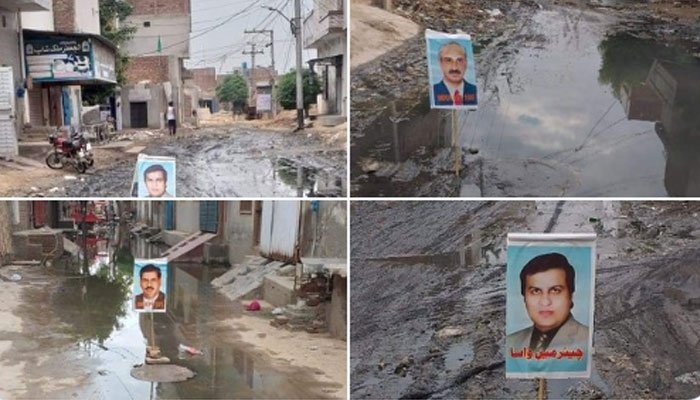
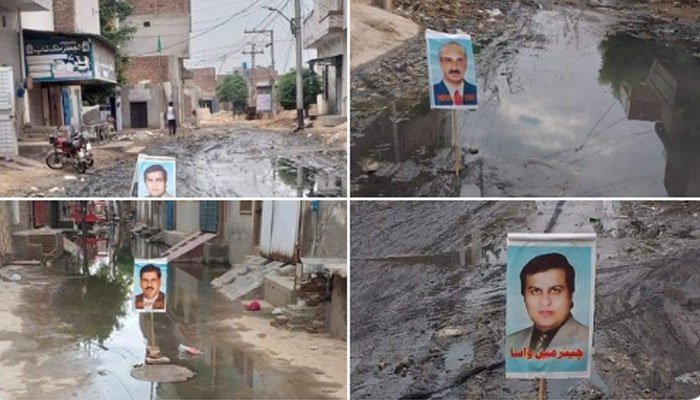
    Citizens put pictures of elected members on gutters after sewerage system destroyed in Faisalabad

    Gutters began to boil in the streets of Faisalabad making the routine life difficult for citizens.

    According to details, residents of the area are stuck in their houses due to the stinking water and they say that guests have stopped coming to their houses because of the filthy water. They complained that no one comes to fix the sewerage system.

    According to a citizen, the problem of sewerage has been going on for a long time. He said that the stench of the dirty water makes it difficult for them to sleep and that children in the area are getting sick because of the germs.

    Residents of the area say that even the elected representatives have disappeared in this difficult time.

    Citizens were so annoyed at the elected representatives that they posted their pictures on boiling gutters.

    Meanwhile, Chairman WASA has said that due to closure of the main sewer line in Samanabad area, there are complaints of water in the streets of many areas. He said that WASA teams are working to solve this problem and it will be resolved soon.

  • ‘#AttacksWontSilenceUs’ trends at No 1 after women journalists release statement on online harassment

    ‘#AttacksWontSilenceUs’ trends at No 1 after women journalists release statement on online harassment

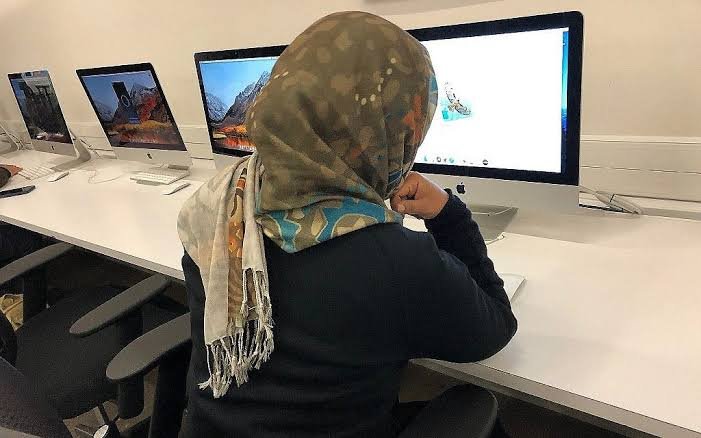
    Pakistani women journalists released a joint statement on attacks on women in media in Pakistan, which says that vicious attacks through social media are being directed at women journalists and commentators in Pakistan, making it incredibly difficult for them to carry out their professional duties.

    The statement was signed by journalists including Asma Shirazi, Nasim Zehra, Gharidah Farooqi, Amber Shamsi, Benazir Shah, Mehmal Sarfraz, Zebunnisa Burki, Alia Chughtai, Ayesha Bakhsh, Munizae Jahangir, Ramsha Jahangir, Alina Farooqi, Reem Khurshid, Najia Ashar and many more.

    “The target of these attacks are women with differing viewpoints and those whose reports have been critical of the Pakistan Tehreek-e-Insaf’s government, and more specifically its handling of the coronavirus pandemic. The online attacks are instigated by government officials and then amplified by a large number of Twitter accounts, which declare their affiliation to the ruling party. In what is certainly a well-defined and coordinated campaign, personal details of women journalists and analysts have been made public. To further discredit, frighten and intimidate us, we are referred to as peddlers of ‘fake news’, ‘enemy of the people’ and accused of taking bribes (often termed as ‘paid’ journalists or lifafas). In some instances, our pictures and videos have also been morphed.”

    The statement further says that women in the media are not only targeted for their work, but also their gender. “Our social media timelines are then barraged with gender-based slurs, threats of sexual and physical violence. These have the potential to incite violence and lead to hate crimes, putting our physical safety at risk. Lately, there have also been attempts to hack into the social media accounts of reporters and analysts, as well as limit our access to information. In some cases, journalists have been locked out of their social media accounts as a result of hacking attempts.”

    The statement said that women in the media, especially those on social media platforms, are finding it increasingly difficult to remain on these platforms and engage freely. Many now self-censor, refrain from sharing information, giving their opinion or actively engaging online. These sustained attacks undermine public trust in journalism and go against the basic tenets of democracy. It is a public right to access accurate and reliable information, especially during a public health emergency.

    “We are being prevented from exercising our right to free speech and participate in public discourse. When we self-censor, others are prevented from receiving information to form their views, which is a violation of their rights under Article 19-A. When attacks and threats are made against us, we do not enjoy the protection of the law as guaranteed under Article 4, and this is the direct result of the actions of those who hold positions in government and are affiliated with the PTI.”

    Women journalists have asked Human Rights Minister Shireen Mazari to fulfil her promise to take notice of threats against journalists and to address the climate of abuse, bullying, fear and censorship.

    Their demands from the government include:

    1) Immediately restrain its members from repeatedly targeting women in the media

    2) Send out a clear message to all party members, supporters and followers, to desist from launching these attacks, whether directly or indirectly

    3) Hold all such individuals within the government accountable and take action against them

    They also called upon the Standing Committees on Human Rights of the upper and lower house of parliament to take notice and hold the government accountable by ensuring they acknowledge, apologise and list the actions they will now take to put an end to such a threatening environment.

    It wasn’t later that the demands became the number one trend on Twitter in Pakistan, and PPP chief Bilawal Bhutto-Zardari tweeted that he has taken notice of threats to women journalists as chair of the NA Human Rights Committee and would like to invite all the signatories to brief the committee.

    As per the latest updates, the human rights minister has reacted to the trend, saying attacking women journalists for doing their job is disgusting.

    In a subsequent tweet, Mazari said she had once again spoken to the information minister and stressed the need for Journalist Protection Bill.
  • Fear in Karachi after five lions escape from farmhouse

    Fear in Karachi after five lions escape from farmhouse

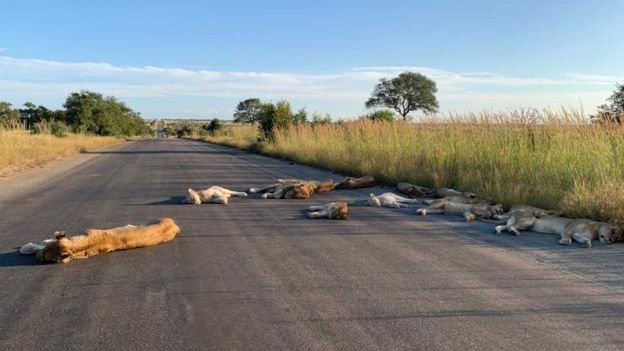
    Five lions are on the loose near Gulshan-e-Hadeed in Karachi after they escaped from a private farmhouse.

    According to reports, five out of six lions escaped from a farmhouse and attacked the dogs of that place. 

    After escaping, the lions entered a nearby seminary spreading fear and panic among the citizens. Residents of the area called Bin Qasim police and wildlife authorities to handle the situation.

    Provincial Wildlife Conservator Javed Ahmed Mehar reached the area to manage the efforts to find and catch the escaped lions. While speaking to a local media outlet he said, “We sent our experts to the area as soon as we received reports of lions’ escape.”

    He lamented that keeping lions at the farmhouse is an illegal activity but there is no definitive law forbidding people from keeping wild animals at their place.

    “Sindh Assembly has passed a law to regulate the presence of wild animals at private places, however, it is yet to be enacted,” he said while remembering that last year one person was also seen roaming with a lion on a Karachi street.

    After an hour-long search operation, wildlife experts finally caught the lions.

    The provincial wildlife conservator said that they have called the lions’ owner on Wednesday (today) to take action against him.

    Meanwhile, the owner of the lions, while speaking to Independent Urdu, dismissed the reports and said that this was all a fake news.

    “Only one of my animals got out of the cage,” said the owner.

    He claimed that though the lions did escape their cages, they did not go out of their vicinity.

    “All our animals are tamed and do not harm anyone,” he added. “We will be charged for the negligence of one of our workers.”

    “We have a farm and have a permit for that,” he explained further. “The license is not been renewed because we did not find it appropriate to visit the office due to coronavirus.”

    “Wildlife department official visited the place last night and recorded all evidence.”

  • PM launches historic tree plantation campaign with 3.5 million trees in a day

    PM launches historic tree plantation campaign with 3.5 million trees in a day

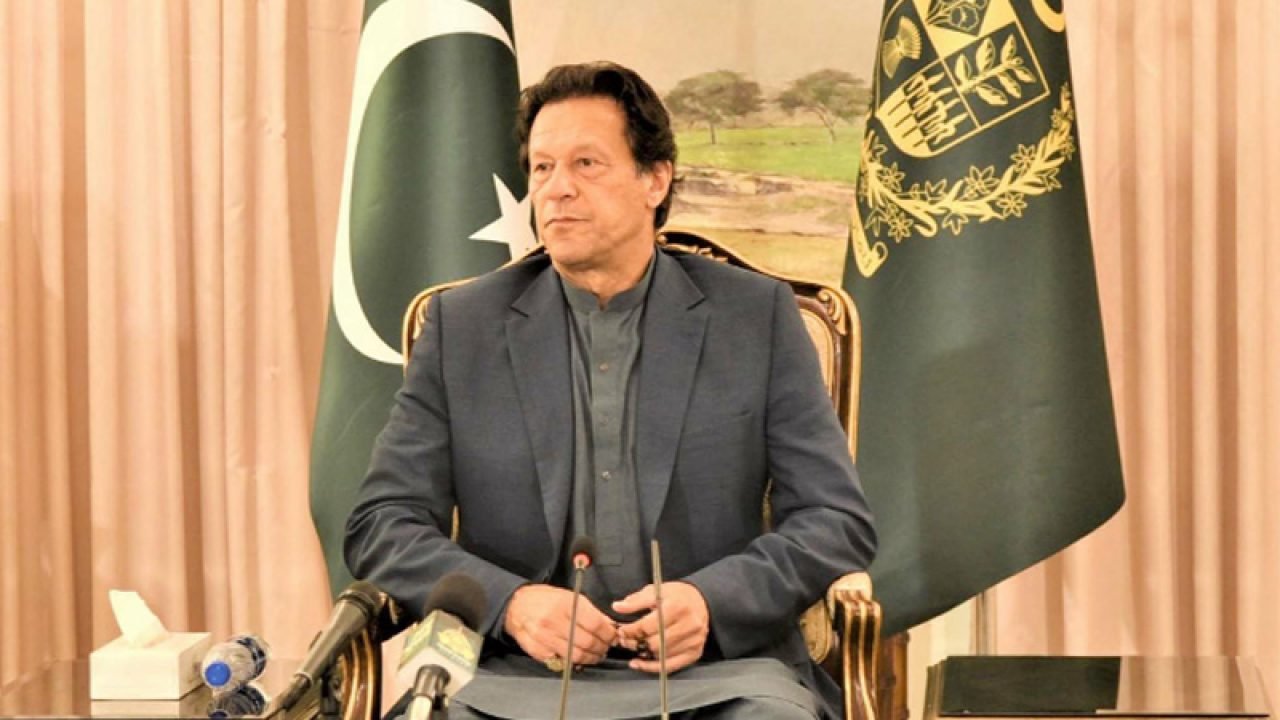
    Prime Minister (PM) Imran Khan has launched the biggest tree plantation campaign in the history of the country, targeting a plantation of around 3.5 million trees in a day across the country.

    Addressing a ceremony in Islamabad, he thanked all those who had participated in Sunday’s campaign.

    He said that Pakistan is among the top ten countries in the world most affected by climate change. “Our wheat production has fallen over the past two years due to climate change and unprecedented rainfall,” the PM said.

    “If we keep continuing on this path, then some of the areas will become deserts,” he said. “It is our responsibility to make the country green for future generations.”

    “The 3.5 million saplings that we have planted today is just the start. This is a constant, ongoing battle, [but] we are not doing this for us. We are doing it for the coming generations,” he further said.

    “This is just the beginning. he said, promising that trees would be planted in empty spaces across cities,” he added.

    The prime minister also urged women to participate. “The women have to participate the most,” he said.

    He added that the nation also had to focus on cleaning the country’s rivers, in addition to making the country green. “So first we have to make the country green by planting trees, but simultaneously we also have to focus on cleanliness and make our rivers clean once again. Planting trees will also help in cleaning our climate and lessening pollution,” he said.

    Earlier, in a tweet, the premier had invited everyone to join him today in planting trees all over Pakistan. He had also asked the parliamentarians, ministers, chief ministers, and Tiger Force volunteers to participate in the biggest tree planting campaign.

    “The target is 35 lakh trees in a day though we will try to exceed it,” the prime minister had said.

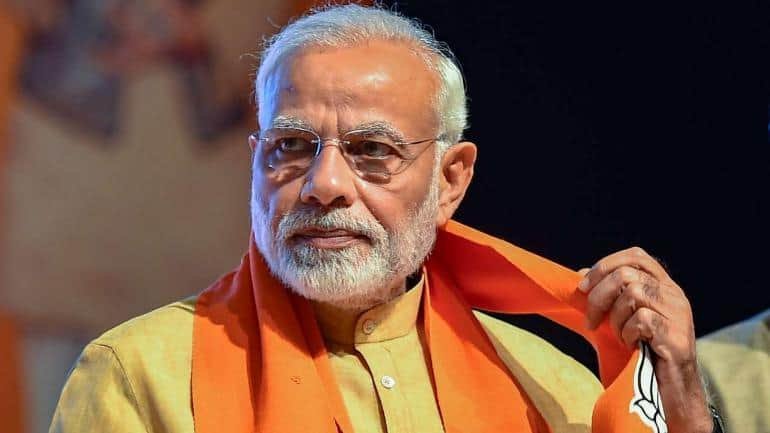
  • Modi’s Hindu Rashtra

    Modi’s Hindu Rashtra

    This year, August 5 marked the one-year anniversary of occupied Kashmir’s illegal annexation and subsequent lockdown.

    Last year, India changed the special status of the troubled valley to union territories. The gross human rights violations that followed and are still taking place is no secret. Pakistan has tried highlighting the issue internationally.  Unfortunately, the international community is least bothered because of economic reasons; every country wants a share in the Indian market pie.

    The myth of Muslim Ummah was also shattered when except for countries like Turkey and Malaysia, nobody raised voice for the plight of the Kashmiris. The same led to what appeared to be a major foreign policy shift for Pakistan as Foreign Minister Shah Mahmood Qureshi asked Saudi Arabia-led Organisation of Islamic Cooperation (OIC) to stop dragging feet on the convening of a meeting of its Council of Foreign Ministers (CFM) on the Kashmir issue.

    READ: VIDEO: FM Qureshi says Pakistan ready to ‘ditch’ Saudi Arabia for Kashmir’s sake

    Revoking the special status of held Kashmir was a step towards establishing Modi’s Hindu Rashtra. The first five years of Modi paved the way for an India that shattered all foundations of secularism. Modi regime’s six years have resulted in a wave of palpable fear amongst the Muslim minority in India. Modi’s Gujarat — where Muslims were killed as if it was a sport — is now being replicated in other parts of India; from beef lynchings to riots, the Muslim minority in India is being subjugated endlessly.

    Modi chose August 5, 2020, as the day of laying down the foundation of the Ram Mandir in Ayodhya. As the New York Times put it, “In a moment of triumph that India’s Hindu nationalists had worked toward for years, Prime Minister (PM) Narendra Modi on Wednesday set the ceremonial cornerstone for a new Hindu temple at the site of a destroyed mosque in Ayodhya.”

    This gesture was a slap in the face of the Muslim minority of India as well as the last nail in the coffin of Indian secularism. Modi’s Hindu nationalism has destroyed the fabric of Nehruvian secularism. It is a reminder that when a fascist ruler is in power, even strong traditions and constitutions cannot guarantee fundamental rights, human rights, freedom of speech and all other traditions of a free society.

    The cataclysmic shift of the Indian polity towards the right under Modi’s rule is not a surprise. In fact, what was surprising was the denial of Indian liberals when Modi was first elected in 2014. They were of the view that India’s secular traditions and constitution could never be destroyed but many pointed out how Modi’s victory was an indictment of the majoritarianism in India.

    This is happening all over the world. From Trump’s America to Brexit in Britain, the world’s shift to right-wing politics is quite disappointing. We hope that some day, sane voices of India and the world will take a stand against Modi’s fascism.

  • May the force be with you

    “Are elected governments regarded as inconvenient guests?”

    Thirty years ago, troops rolled into Islamabad and took up positions around ‘key installations’ and buildings in the Capital. Just over an hour later, around 5 pm, the elected government had been dismissed and the National Assembly dissolved. Benazir Bhutto, who had been prime minister for just twenty months, was sent packing. 

    Two years before that particular dismissal, another prime minister, Mohammad Khan Junejo, had been dismissed in a similarly humiliating manner: while he was addressing a press conference on his return from a foreign tour, the journalists there started leaving and hurrying over to the presidency where they had been told they would hear some big news. There the president, General Ziaul Haq had announced dismissing the government. Junejo was also sent packing without completing his term.

    By the time Bhutto was dismissed on August 6, 1990, General Zia was dead but the idea that elected civilian leaders could be unceremoniously dismissed had become something of a conviction in the minds of General Zia’s army leadership. In the eleven years between 1988 and 1999, five governments were toppled in this manner: Junejo, Bhutto, Sharif, Bhutto, Sharif. Of these PMs, Sharif and Bhutto were popularly elected, Junejo was elected in Zia’s non-party based polls but even though he had been handpicked by the general, he refused to be a puppet PM and once in office, began making all sorts of decisions to try to establish civil supremacy. Bhutto would later be assassinated while campaigning in a bid to be elected a third time while Sharif, though later able to be PM yet again, was forced to step down in a haze of allegations regarding his wealth and offshore accounts. He was charged, convicted and incarcerated. 

    Talking to various people about the 1990 dismissal brought to the fore just how difficult a time this was for civilian politicians to function in government. The main problem was, of course, a hostile establishment — a military and bureaucracy steeped in the Zia era thinking who regarded these elected politicians as troublesome outsiders, to be allowed into government for as long as they could be tolerated — and booted out as soon as they started trying to assert themselves or do anything at all that was not in line with what the forces wanted. The way in which elected leaders were treated as intruders and interlopers — almost as enemies — is instructive. Kamran Shafi, who was Butto’s press secretary at the time, recalls how her speechwriter Farhatullah Babar had to go out and get her speech printed from elsewhere because obstructive bureaucrats refused to sanction ink for a printer. It was such a hostile environment that everything was a struggle and there was a feeling that half of the administration and the staff were actually working against the PM and the government. 

    Benazir Bhutto came to power after a long period of incarceration and exile following the overthrow and execution of her father by General Zia, and she was always regarded with distrust by the military establishment but what is very interesting is that any PM (of any political hue) who tries to be a PM and implement any policy that challenges defence interests in any way is similarly despised and disposed of.

    Here, the example of Nawaz Sharif is very interesting: groomed politically and elevated during the martial law years, Sharif was the generals’ man in Punjab, extremely useful to the ‘powers that be’ as a cunning and aggressive opponent to Bhutto. However, once he came to power and tried to assert his own authority, Sharif suffered the same fate as Bhutto and he was sacked unceremoniously.

    His ‘mein dicatation nahin loonga’ (I refuse to take dictation) speech from April 1993 is a classic expression of this tussle between elected and martial forces in Pakistan. Unfortunately, that speech has disappeared from the archives and everywhere else. In his second stint as PM, Sharif actually fired the chief of army staff, one General Musharraf, and he replaced him with General Ziauddin Butt. The footage of the relevant ceremony was shown on only one PTV news bulletin because then Sharif’s government was overthrown and Pakistan Television Centre, taken over. While the video footage of the installation of the new army chief also disappeared, this process of enforced disappearances was actually quite useful in controlling the narrative.

    But what is important now is to try to prevent key chapters of the country’s political history from being disappeared from the records and erased from public memory. What happened in the 90s in Pakistan is, to some extent, still happening now.

    Because the idea that elected prime ministers are just short term visitors or inconvenient guests still prevails as does the process of constantly destabilising and smearing political governments. To fill in the gaps, we need to speak to people who were witnesses to key events, we need to question official histories and we need to search try to understand — through people’s experiences — how certain systems actually work.

  • Coronavirus in Pakistan: A July-August diary

    Since the beginning of July, there has been a decline in new coronavirus cases and the number of recovered patients has also increased. By the time this report was filed, there were 26,834 active COVID-19 cases in the country.

    While Prime Minister (PM) Imran Khan, as well as members of his team and other experts, repeatedly urged people to follow social distancing guidelines and standard operating procedures (SOPs) on Eidul Azha in order to avoid a June-like surge in coronavirus cases in the days to come, people were seen flaunting the same not only over the Eid weekend but also during rallies protesting illegal Indian annexation of held Kashmir on August 5.

    It was reported by Gulf News that the upper class of Karachi completely ignored Sindh government directives by sacrificing animals wherever they wished to despite 500 sites being designated by the provincial administration for the purpose. “Residents in the most expensive and posh neighbourhoods of the city were no exception… officials didn’t make any effort to ensure the people followed the law,” the report said.

    Meanwhile, the Punjab government on August 3 announced to lift the smart lockdown two days ahead of the scheduled date. The government announced to lift all restrictions on the third day of Eid because of a “significant” reduction in coronavirus cases.

    While Punjab Chief Minister (CM) Usman Buzdar expressed satisfaction over the observance of SOPs on Eidul Azha, Federal Minister for Planning, Development and Special Initiatives Asad Umar announced on Thursday that restrictions on the hospitality and recreational sectors, put in place nearly five months ago to curb the spread of the coronavirus, would be lifted by August 10.

    Dine-in restaurants, parks, cinemas, tourist spots and salons would be re-opened while marriage halls would remain closed at least until September 15 and the decision to re-open educational institutes would be looked into during the first week of September, he said.

    However, just a day after the announcement, Punjab witnessed a sudden increase in the number of new coronavirus cases. The everyday cases that had on an average dropped to below 100 during the past one month after reaching a new high in June, once again increased to around 300.

    Although some medical experts were not perturbed and declared it a routine surge, others believed that it might be a signal for the beginning of the second wave of the outbreak. Punjab reported 277 new confirmed cases of COVID-19 besides five deaths during the last 24 hours against 235 a day earlier, Dawn reported.

    Besides the lifting of lockdown restrictions for the economy’s sake in July, the surge is also being attributed to the fact that next to none social distancing guidelines were followed during the preparations and hosting of seminars and rallies to mark ‘Youme Istehsal [Exploitation Day]’ on the first anniversary of Narendra Modi-led India’s annexation of occupied Kashmir.

    Even though the coronavirus situation in Pakistan is getting better on paper, how the pandemic turns out over the next few days is subject to the behaviour of the masses and the policies of the government.

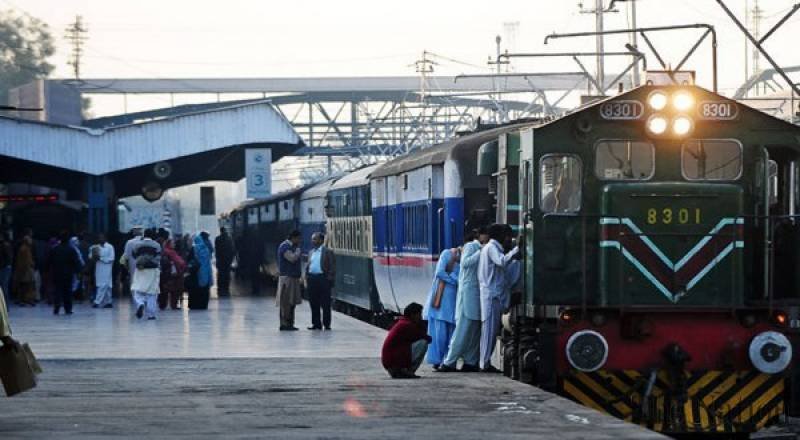
  • Pakistan Railways appoints first woman station manager

    Pakistan Railways appoints first woman station manager

    The Lahore railway station has hired a woman officer as station manager for the first time in its history.

    Railway authorities have appointed Lahore Assistant Transport Officer (ATO) Syeda Marzia Al-Zahra as the station manager of Lahore railway station. She has replaced the additional charge of station manager Lahore from station master Lahore Cantt Younis Bhatti.

    As per reports, Syeda Marzia is the first woman station manager of Pakistan Railways (PR).

    Meanwhile, the Railway Sampars Union protested the appointment. Union Central Chairman Muhammad Irfan, while expressing reservations over the appointment, said that the union would protest if the notification was not cancelled.