Tag: Pakistan

  • PIA flight to bring students back from Wuhan

    PIA flight to bring students back from Wuhan

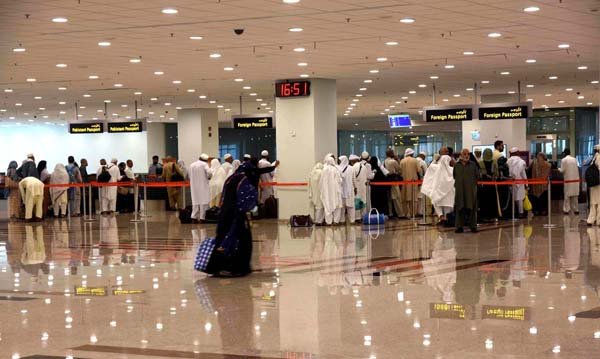
     A day after the government announced to repatriate students from the Chinese city of Wuhan, Pakistan International Airlines (PIA) spokesperson Abdullah Hafeez on Saturday confirmed that a special flight of the national flag carrier will bring back stranded nationals on May 18.

    According to Hafeez, some 250 students will be brought back on the first flight which will land in Islamabad.

    The schedule for three more flights will be announced next week, he added.

    The announcement was originally made by Special Assistant to Prime Minister for Overseas Pakistani Syed Zulfikar Abbas Bukhari on Twitter. “I’m very happy for the 1st flight going to Wuhan to bring back our Pakistani students on 18/05/2020,” he wrote.

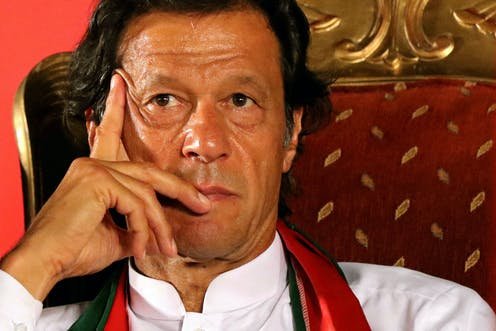
    “You guys have been the bravest soldiers, PM Imran Khan & Pakistan are proud of you,” he added.

  • VIDEO: Woman shot ‘five times’ in Lahore’s posh Model Town colony in broad daylight

    VIDEO: Woman shot ‘five times’ in Lahore’s posh Model Town colony in broad daylight

    A woman was shot and injured in what was allegedly a robbery incident in the posh Model Town neighbourhood of Lahore.

    According to the details, a robber shot and injured the woman at an ATM and made off with cash from her at the colony’s Bank Square market.

    “The robber intercepted the woman and demanded cash and upon resistance, he opened firing leaving the woman injured,” an eyewitness said.

    Rescue 1122 responded to the emergency and shifted the victim to Hameed Latif Hospital while police reached the crime scene and collected forensic evidence.

    An official, on the condition of anonymity, told The Current that while it seemed like a robbery, it is highly unlikely for robbers to shoot a victim multiple times and that too in broad daylight.

    Meanwhile, an Instagram user, who claims to know the woman, has shared further details of the alleged robbery and an update on the victim’s health while also posting a horrifying video of the incident.

    WATCH VIDEO:

    View this post on Instagram

    This is a real footage of a beloved family member being shot five times in broad daylight in model town. Shehla Malik (former principal Divisional Public School) Shehli Api as we call her as she is our very close family member was shot five times outside a bank in a money looting spree. The shooter showed no mercy on her and kept shooting her to take off her bangles. I’m shocked and appalled at this ghastly act which also shows the real picture of disparity and how people are acting up in the times of corona outbreak and subsequent lockdown. It could have been anyone of us. Our shehli Api is a strong woman who has braved many a storms and thankfully her operation has been successful. Please do pray for her quick recovery as she’s a mother of two very young children. I hope that some sense prevail we should be careful while stepping out of the house. May allah keep all of us in His rehmat (Ameen) PS she didn’t put up any resistance but when the robber was taking off her bangle it got stuck in her hand and she screamed in pain when he began to shoot in panic .. (disclosed by shehli Api) in the hospital? it’s a huge shout out and word of thanks to my dear colleagues who helped while she was being shifted to services hospital @get.glamorized @social.inc @drushnahabib #stayhome #staysafe #quarantine #robbery #modeltown

    A post shared by Rubia Moghees (@rubiamoghees) on

    Further investigation is underway.

    It merits a mention here that while coronavirus lockdowns across the country have seen a significant decrease in street crime, experts believe such incidents of robberies are being led to owing to the economic crisis due to the pandemic.

  • Five million births in nine months in Pakistan since pandemic started

    Five million births in nine months in Pakistan since pandemic started

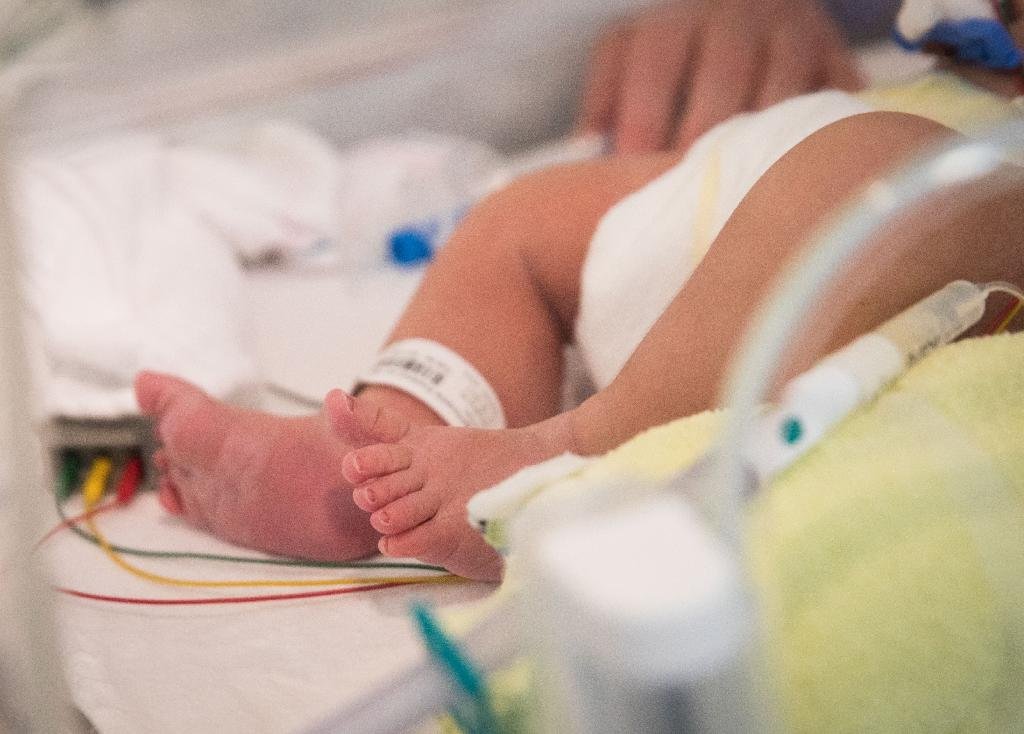
    Ahead of Mother’s Day, the United Nations Children’s Fund (UNICEF) has called for the world’s governments to maintain life-saving services for pregnant women and newborns that are under increasing threat from strained health services and supply chains as a result of coronavirus’ outbreak.

    The UN agency estimates that 116 million babies have been born since the onset of the COVID-19 pandemic, with Pakistan grouped among the countries that have the highest numbers of forecast births.

    It said that new mothers and their babies are facing systems in crisis, including overwhelmed health centres; supply and equipment shortages; and a lack of skilled birth attendants, including midwives.

    “Millions of mothers all over the world embarked on a journey of parenthood in the world as it was,” Henrietta H. Fore, UNICEF executive director, said in a statement.

    “They now must prepare to bring a life into the world, as it has become – a world where expecting mothers are afraid to go to health centres for fear of getting infected, or missing out on emergency care due to strained health services and lockdowns”.

    Mother’s Day, which will be celebrated on Sunday, is recognised by more than 128 countries.

    In her remarks, the UNICEF Chief warned: “This is a particularly poignant Mother’s Day, as many families have been forced apart during the coronavirus pandemic…It is hard to imagine how much the pandemic has recast motherhood”.

    In the nine months span dating from when COVID-19 was declared a pandemic, the countries with the highest numbers of forecast births are expected to be India (20.1 million), China (13.5 million), Nigeria (6.4 million), Pakistan (5 million) and Indonesia (4 million). Most of these nations had high neonatal mortality rates even before the global health crisis.

    And wealthier countries are also being seriously impacted, as trust and supplies run low. The sixth highest country for expected births, the United States, is projected to see in excess of 3.3 million babies born between 11 March and 16 December.

    In New York City, authorities are looking into alternative birthing centres as many women are worried about delivering their babies in hospitals, due to the risk of infection.

    UNICEF warns that although evidence suggests that pregnant mothers are not at greater risk of serious illness due to COVID-19 than other groups, countries still need to ensure they have access to antenatal, delivery and postnatal services.

    Likewise, sick newborns need emergency services and new mothers require breastfeeding support, as well as medicines, vaccines and nutrition to keep their babies healthy.

    While it is not yet known whether the coronavirus can be transmitted from a mother to her unborn baby, UNICEF recommends that all pregnant women protect themselves from the virus, closely monitor themselves for COVID-19 indications and seek medical advice if they have concerns or experience symptoms.

    They are advised to also practice physical distancing, use online health services and seek early medical care if they live in at-risk areas and have fever, cough or difficulty breathing.

    And they should speak to their midwife or doctor about the safest place to give birth along with making a birth plan to reduce anxiety.

    Mothers with COVID-19 should wear a mask when feeding their baby, wash hands before and after touching the child, routinely clean and disinfect surfaces and continue to hold their newborn.

    Henrietta H. Fore said, ” We are living in time for unity, a time to bring everyone together in solidarity”.

    “We can help save lives by making sure that every pregnant mother receives the support she needs to give birth safely in the months to come”, the UNICEF chief added.

  • Indian Air Force’s MiG-29 fighter jet crashes 117 km from Lahore, in Jalandhar

    Indian Air Force’s MiG-29 fighter jet crashes 117 km from Lahore, in Jalandhar

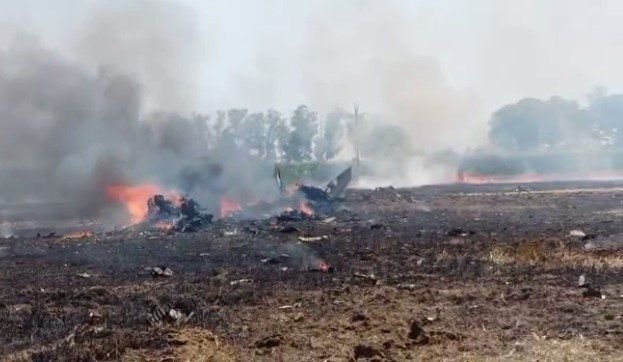
    A MiG-29 interceptor of the Indian Air Force (IAF) on Friday crashed during a training mission near Punjab’s Jalandhar — 117 kilometres (km) from the provincial capital of Pakistan province of Punjab. The pilot ejected safely and was soon taken away in a rescue helicopter, the IAF said in a statement.

    “The aircraft had developed a technical snag and the pilot ejected safely as he was unable to control the aircraft. The pilot has been rescued by a helicopter. A court of inquiry has been ordered to investigate the cause of the accident,” the IAF said.

    The MiG-29 is a Soviet-era fast interceptor that has seen action in the Kargil war in 1999. It has also been used to escort other jets on bombing missions from incoming “bandits” or enemy fighter jets.

    The IAF operates over 60 MiG-29s, all of which have been upgraded with advanced avionics and better weapons to convert them into multi-role jets that can perform air-to-air and air-to-ground missions equally well.

    The Soviet-made jet had taken off from Adampur Air Force Station near Jalandhar which is the second-largest military airbase of India. The No. 47 and No 203 Squadrons of the IAF are stationed at this base. Adampur Base played a crucial role in the Indo-Pak War of 1965 as it is within 100 km from the Indo-Pak border.

    On February 26 last year, another variant of the jet — the MiG-21 fighters were up against much more modern Pakistani jets during aerial skirmishes.

    Indian planes had crossed the line of control and claimed to have bombed what New Dehli described as a terrorist training camp near Balakot. Islamabad had denied the Indian side of the story and provided sufficient evidence to back up its argument.

    A day later, Pakistani F-16s and other planes had crossed the line of control to attack Indian forces, New Delhi claimed. Indian MiG-21s were scrambled to intercept when  Islamabad shot down two MiG-21s of the IAF. An Indian Air Force MiG-21 pilot, Wing Commander Abhinandan Varthaman, was captured by Pakistani security forces.

    He was later released as what Prime Minister (PM) Imran Khan had said was a goodwill gesture.

  • Pakistan to lose Rs628,000,000,000 by June

    Pakistan to lose Rs628,000,000,000 by June

    A report prepared by the sub-committee of the National Coordination Committee (NCC) for coronavirus has said that the country, due to an adverse impact of COVID-19 on the economy, will record a loss of over Rs628 billion by the end of the current financial year.

    The report ‘COVID-19: Preliminary Macroeconomic and Socioeconomic Assessment’ said almost all the departments of the country were going in a loss due to lack of human activity in the wake of the pandemic that has killed over 200,000 people worldwide.

    Giving a breakdown of the losses, the report said the Aviation Division will face an estimated financial loss of Rs13.6bn; the Pakistan Stock Exchange Rs250bn; Petroleum Division Rs 87bn; Ministry of Energy (Power Division) Rs136bn; Pakistan Railways over Rs7 bn; National Food Security Rs 55bn; Overseas Pakistanis over Rs 76bn; Ministry of Information Technology Rs1-5bn under the head of withholding tax; and Maritime Affairs will report a loss of Rs30 million.

    It further said that the Federal Board of Revenue will face a total estimated revenue shortfall of Rs600bn in the last three months of the current financial year.

    The report also suggested the way forward to deal with losses, saying some measures have already been taken.

  • VIDEO: ‘Pakistan’s only mind reader’ leaves Maulana Tariq Jamil shocked

    VIDEO: ‘Pakistan’s only mind reader’ leaves Maulana Tariq Jamil shocked

    Renowned preacher Maulana Tariq Jameel, who had recently made headlines for his controversial remarks during a live telethon to raise funds for coronavirus relief, was left astonished by the ability of a mentalist who read his mind, an undated viral video showed on Wednesday.

    In the video, Shaheer Khan, who is known for his mind reading skills, asks Maulana to imagine a situation that he has not written down or shared with people.

    He then holds the religious scholar’s hand and starts revealing what the latter is thinking.

    WATCH VIDEO:

    Breaking into laughter after the mentalist hits the bullseye, Maulana Tariq lauds Shaheer and jokingly offers to become his follower.

    Shaheer Khan, who rose to fame owing to his mind-boggling ability to read minds, is the country’s first-ever and “only” mentalist. His shows have proven his rising popularity and left many scratching their heads.

    He has been able to guess Rameez Raja’s ATM pin, Waseem Akram’s favourite cricketer and the name of Harsha Bhogle’s first childhood crush.

    While many people claim that the only way to explain his abilities is by the use of the supernatural powers, Shaheer himself says he has just been extremely intuitive ever since he was a kid.

  • Flight from UAE carries 104 coronavirus patients to Pakistan

    Flight from UAE carries 104 coronavirus patients to Pakistan

    The Rawalpindi district administration on Monday said that 104 passengers who were flown in from Abu Dhabi have tested positive for coronavirus.

    “Out of 209 passengers, 104 tested positive for COVID-19,” the district administration said, adding that the flight carrying the passengers had arrived in Islamabad on April 28.

    Following the SOPs prepared by the government, all the passengers were screened at the airport and were shifted to the quarantine centre at Fatima Jinnah Women University.

    With the country having blocked all international commercial flights since mid-March — a ban that’s now set to continue for an indefinite period of time — many of the country’s residents have struggled to find a path back to their homeland, making government repatriation flights a necessity.

    On the other hand, Pakistan has reported 22 more fatalities from novel coronavirus as the death toll in the country has reached 471. The nationwide tally of COVID-19 patients jumped to 20,725 while over a thousand cases were reported in 24 hours.

    According to the latest figures by the National Command and Operation Center, Sindh remains the worst-hit province by the pandemic followed by Punjab, Khyber Pakhtunkhwa (KP) and Balochistan.

    Till now 7,882 coronavirus cases have been confirmed in Sindh, 7,646 in Punjab, 3,129 in KP, 1,218 in Balochistan, 415 in Islamabad, 364 in Gilgit-Baltistan and 71 in Azad Jammu & Kashmir (AJK).

    Earlier in the day, it was reported that three crew members of a special PIA flight from Australia had also tested positive for COVID-19.

    The PIA staffers had performed duties on the flight from Melbourne to Lahore.

  • Mixed signals in the time of corona

    The total number of coronavirus cases in Pakistan, by the time this was written, stood at 19,854 and the same is likely to reach the 20,000 mark some time today or by tomorrow morning.

    Every ten days, the number of COVID-19 cases in Pakistan double. Just look at the month of April and how many cases increased, especially after easing down the lockdown. The government, however, thinks that coronavirus has not been “as fatal in Pakistan as it has been in many other countries”, especially the west.

    Minister for Planning, Development and Special Initiatives Asad Umar recently said, “Coronavirus has caused 58 per cent more deaths in the United States (US), 207 per cent more in Spain and 124 per cent more in the United Kingdom (UK) as compared to Pakistan in the same period.” Even if we think the mortality rate is lower when compared to other countries, it does not mean we have to be lax about it. Official projections predict 150,000 cases by the end of this month.

    What was even more surprising was how, in a recent speech, Prime Minister (PM) Imran Khan shifted the blame of the lockdown to the “elite”. He said the decision to impose a lockdown was taken by the elite and the rich, without thinking of the poor. PM Imran tweeted to that effect also while felicitating Muslims for Ramzan.

    The premier blames the elite and rich for taking this decision when it was indeed he and his government that imposed the lockdown. Granted that Imran himself was against the lockdown and finally gave in due to the health emergency but blaming the elite, in this case, is quite misplaced. The World Health Organization (WHO) and others who are dealing with the coronavirus pandemic have recommended lockdowns and aggressive testing apart from social distancing and other measures that we have to take in order to avoid falling prey to this pandemic.

    China went for a lockdown and PM Imran doesn’t tire of giving China’s example so why blame the rich and the elite for a lockdown in Pakistan — a lockdown that is now not much of a lockdown either. Traffic has increased, more shops are open, and except for Sindh, mosques are open as well during Ramzan.

    While we acknowledge that self-isolation is a privilege that isn’t afforded by many, especially the poor, we do not have the answer to how we will cope with an outbreak if cases start to rise exponentially. Doctors have recently warned that Pakistan’s healthcare system will collapse if this happens. So where will the poor go if lockdown is relaxed and they get coronavirus?

    The rich and elite and privileged will go to private hospitals but what about the poor? We have to choose between struggle and death, and can only hope that the cases in Pakistan remain low.

  • Rethinking a post-COVID-19 future

    Rethinking a post-COVID-19 future

    “We should not go back to the old ways.”

    We are living through a global pandemic and life as we knew it will perhaps never be the same again, That’s the hope anyway. Because there are a lot of things about the way life was before that need rethinking — and COVID-19 has given us an opportunity to do this.

    In the 21st century, there was life before the virus, there is now lockdown and life during the virus and, at some point, there will be life after the virus — but will the latter be the same as our old way of living? There is much discussion now of ‘getting the economy going’ again, of getting things back to ‘normal’ again but is our plan just to restore the same economic model and the same old systems?

    Or is now the time to rethink the way we live?

    Several falsehoods about our lives have been exposed by the lockdown. Key among these is the myth that the old way of working and studying was the only way: fixed hours of attendance at sites you had to physically travel to. It turns out that this ‘hazri’ culture is not actually essential, and many of these ways of working were just constructs whose aim was to strengthen a type of corporate or darbari culture. Not allowing people to work from home stemmed perhaps from a reluctance to lose control of staff. The institutions that would hire expensive consultants to help them ‘save money’ and work efficiently told us that it was too expensive to have individual desks for staff and subjected them to the horrors of hotdesking. This apparently ‘saved’ some money yet these same organisations would be reluctant to allow staff to work from home routinely even though that would have saved even more money. The permission for ‘working from home’ was given not as the norm, but as some kind of great favour or concession which involved HR, applications and a degree of workplace politics.

    Well now nearly everybody’s working from home and we realise this has actually been possible for many, many years and that perhaps the workplace would have caught up with technology long ago if there weren’t so many dubious management practices and vested interests involved. Apart from the workplace, there is the question of the classroom and what it is — is it a physical reality or an intellectual one? In Britain, university education was once state-funded and all about education rather than businesses.

    “We’ll have to rethink education completely — especially university education.”

    But in the last decade universities have been turned into businesses which are less about education and more about profits. The students are called ‘clients’ and since university fees are now more than three times what they were ten years ago, they are saddled with crippling student debt (student loans are given by a private profit-seeking company). Students invest so much that they are afraid to challenge intellectual views of question anything professors say because they know that they need to get good grades because of their investment. Instead of concentrating on the wellbeing of their students, universities seem to have become more focused on marketing their brand in order to attract a maximum number of ‘customers’ or ‘clients’. But even when the riches poured in, it never seemed to be the academic staff who’d benefit but rather the ‘managers.’

    We’ll have to rethink education completely — especially university education. In Argentina, most young people get their first degree while working full time. Work by day and take evening classes. It might take longer but it definitely seems to be a more productive way to live. Oh, and state universities are free.  Of course, education can not all be virtually based but perhaps a large part of it does need to be.

    Then there’s the question of how society values work. Of how bankers are more highly paid and valued than ‘unskilled’ workers. How financial managers are much better paid than medical professionals. Now we realise who are the professionals that society really needs when in times of trouble: they are the medical professionals, the cleaners, the garbage collectors, the bus drivers, the police, the fire brigade, the people who run food shops and stack shelves. These are essential, these are the people we should value, these are the jobs we need to pay people well to do.

    We need to think of new businesses too. Instead of having an endless number of restaurants and coffee shops to ‘provide employment’ perhaps we should have more businesses whose goal is to contribute to community welfare employing people. We need more cooperative models of working and more localised businesses. Instead of manufacturing fast fashion and throwaway clothes which encourage frivolous spending and whose plastic fibres are clogging up the oceans and rivers, we perhaps should concentrate on businesses that produce food.

    “And guess who governments need to fund now? Not bigshot entrepreneurs and investment bankers, they need to support medical professionals, health workers and research scientists.”

    The virus and subsequent lockdown exposed a number of vulnerabilities in life as we were living it, and one of these was the matter of food production and supply. Perhaps now we need to have a national policy of localised production: local dairy farming, local livestock, locally grown fruit and vegetables. Apart from the fact that this will avoid the issue of complicated supply chains, many people in the health, economic and development sectors have long argued that this is a healthier and more sustainable way to live. This way food production would be organic and fresh – not shipped from the other side of the world. And in terms of food, we need to unlearn the mantra that endless choice is good. The illusion that the more choice you have in choosing, for example, a brand of chocolate shows how ‘free’ you are as people needs to be dispelled. And we need to move back to the idea of quality not quantity in the way we live.

    And new initiatives need to be set up to care for the environment. The enforced detox brought on by the lockdown has shown us bluer skies, clearer air and cleaner waters. We need to have a policy of setting up local initiatives to support this which are goal-oriented and not just motivated by a profit motive.

    And guess who governments need to fund now? Not bigshot entrepreneurs and investment bankers, they need to support medical professionals, health workers and research scientists. And they need to provide free broadband and digital access to all citizens because when push comes to shove this is something that will benefit the whole of society. We need more government spending, new frameworks and new initiatives based on a clear vision of what our priorities are now.

    People and governments need to come together and come up with a new way to live and a new model of economics, We can make a whole new sort of world; a world minus dodgy ‘outsourcing’, privatisation, unsound financial instruments, economic disparity and unbridled greed. But what’s needed is a lot of imaginative ideas and a bold new way of thinking. We need to be creative.


  • Naya Pakistan: Govt starts paying unemployed people to plant trees

    Naya Pakistan: Govt starts paying unemployed people to plant trees

    When construction worker Abdul Rahman lost his job to Pakistan’s coronavirus lockdown, his choices looked stark – resort to begging on the streets or let his family go hungry.

    But the government has now given him a better option: Join tens of thousands of other out-of-work labourers in planting billions of trees across the country to deal with climate change threats, Reuters reported.

    Since Pakistan locked down starting March 23 to try to stem the spread of COVID-19, unemployed day labourers have been given new jobs as “jungle workers”, planting saplings as part of the country’s 10 Billion Tree Tsunami programme.

    Such “green stimulus” efforts are an example of how funds that aim to help families and keep the economy running during pandemic shutdowns could also help nations prepare for the next big threat: climate change.

    WATCH VIDEO:

    “Due to coronavirus, all the cities have shut down and there is no work. Most of us daily wagers couldn’t earn a living,” Rahman, a resident of Rawalpindi district in Punjab province, told the Thomson Reuters Foundation.

    He now makes 500 rupees ($3) per day planting trees – about half of what he might have made on a good day, but enough to get by.

    “All of us now have a way of earning daily wages again to feed our families,” he said.

    The ambitious five-year tree-planting programme, which Prime Minister (PM) Imran Khan launched in 2018, aims to counter the rising temperatures, flooding, droughts and other extreme weather in the country that scientists link to climate change.