Tag: Pakistan

  • Top doctors, healthcare professionals ask for strict countrywide lockdown

    Top doctors, healthcare professionals ask for strict countrywide lockdown

    Senior doctors and top healthcare professionals issued a stern warning on Wednesday and appealed to the federal and provincial governments to reconsider relaxation in lockdown given that they fear a spike in coronavirus cases in the country. Doctors said easing relaxation could prove disastrous for Pakistan.

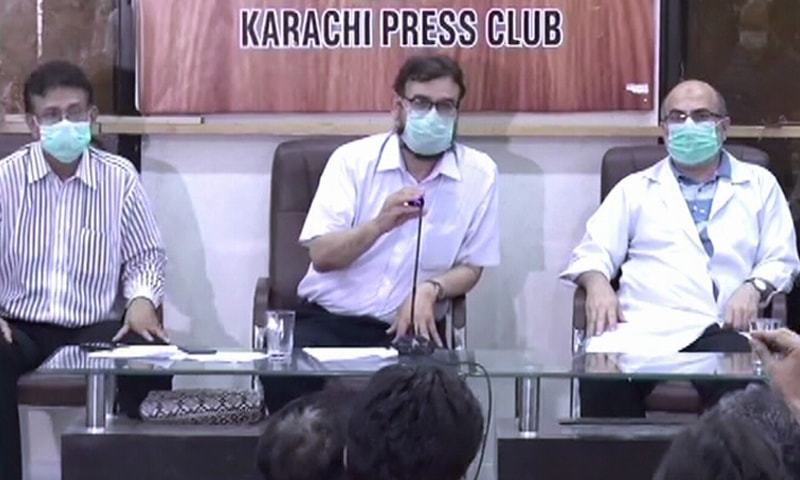
    Addressing a press conference in Karachi, Dr Saad Niaz said that from April 16-April 21, cases have increased around 40 percent.

    “If we don’t strictly enforce lockdown measures, the projected number of coronavirus cases may go up to 70,000 by May 15,” he stated.

    Dr Saad also said that we don’t have the testing capacity. “We are not safe. These are just myths. If there had been no lockdown initially, things would have been worse…Wards are already saturated. We have more patients under the age of 60 than in western countries. We have to realise that we don’t have enough healthcare facilities to cope with cases…In fact, severity is much more than what we think.”

    He said that more than 162 healthcare workers have been tested positive for COVID-19 in Sindh alone. “Don’t take this lightly based on myths. Neither is there any cure nor do we have the capacity to cope with the cases. Lockdown helped contain the spread. The only thing that can help is complete social distancing and lockdown. We know that at least 200 people have died of coronavirus in the last month alone. We don’t want to get to a point where we will be treating people on the roads or deciding who to save – the 35-year-old patient or the 55-year-old one. We are taking risks. It is very depressing for us to see that everything is being opened while we are at the frontline of this war against corona.”

    Watch the complete video of doctor’s press conference here.

    Meanwhile, Dr Atif Siddiqui said that doctors are there for you but please stay at home. “We are running out of beds. We need to understand why the number of cases are increasing.”

    The list of demands by healthcare professionals included :

    • Strict enforcement of lockdown and prevention of congregation of all sorts
    • People will have to cooperate. Do not leave your houses
    • Request the business community to reconsider opening businesses
    • Appeal to religious scholars to review decision to keep mosques open
  • Saudi Arabia gifts 150 tonnes of dates to Pakistan

    The Saudi Embassy in Pakistan delivered 150 tonnes of dates as a gift from the Saudi Arabia to Pakistan ahead of Ramzan.

    As per reports, the gift was delivered by the Saudi Ambassador to Pakistan, Nawaf bin Saeed Al Malki, during a ceremony that was held at the Saudi Embassy’s headquarters in Islamabad.

    The ceremony was attended by the Director of the King Salman Humanitarian Aid and Relief Center (KSrelief) Branch in, Pakistan Dr Khalid bin Mohammed Al Othmani.

  • What protects Pakistan from COVID-19?

    What protects Pakistan from COVID-19?

    The first case of COVID-19 was reported in the Chinese city of Wuhan in late November 2019. Since then, the virus has spread across the globe, infecting over 2.5 million people as of April 22.

    However, the disease that has wreaked havoc in the developed world, has failed to prove as severe in a developing country like Pakistan. While the number of confirmed cases has risen far beyond a few hundred thousands in countries such as the United States (US) and Italy, Pakistan’s tally of COVID-19 cases stands at a relatively meager rate of 10,072 of which 2,156 have recovered and 212 have lost their lives.

    This raises an interesting question: how has a country with far less resources successfully weathered a storm that has brought wealthier states to their knees?

    The first possible explanation can be that the countries’ populace is more resistant to being infected by the virus. Usually, this resistance can only be imparted to humans based on previous exposure to the organism, which is also the basis of most vaccinations used to immune the masses.

    The second possibility can be other diseases and vaccines that most probably granted resistance to people living in these areas.

    Many diseases are endemic to this part of the World. Tuberculosis is one of the most commonly seen conditions, the treatment of which is also available. The Bacillus-Calmette Guerin (BCG) Vaccine is mandatory for newborns in countries such as Pakistan, India and Nigeria.

    This same vaccine, however, is not mandatory in the developed world. It seems that countries that administer the BCG vaccine have reported far less cases of COVID-19 than those who do not.

    No direct evidence, however, has so far surfaced in this regard.

    Another disease endemic to these parts of the world is Malaria. At least 19 countries, including Pakistan bear 98 per cent of the global Malaria burden and hydroxychloroquine is used to treat it.

    It has been observed that countries, where Malaria is rampant and hydroxychloroquine is routinely administered to patients, have encountered far less cases of COVID-19. Pakistan, India and Nigeria are among these countries. Unfortunately, just like the BCG vaccine, the effectiveness of hydroxychloroquine in treating COVID-19 cases has not yet been proven, but it has been approved for use in emergency cases by the US’ Food and Drug Administration (FDA).

    The diseases commonly encountered in a region are not the only distinctive feature of the environment of that region — a widely held perception is that COVID-19 is less dangerous in warmer parts of the world. It is to be noted that warmer countries have also been hit by the pandemic.

    Several other factors can be at play here.

    Perhaps a less virulent strain of COVID-19 is encountered by people in these regions?

    COVID-19 exists as two strains; a less common S-type strain (seen in 30% of COVID-19 cases) which was the original strain, and the more frequently encountered L-type strain (inflicting 70% of COVID-19 cases).

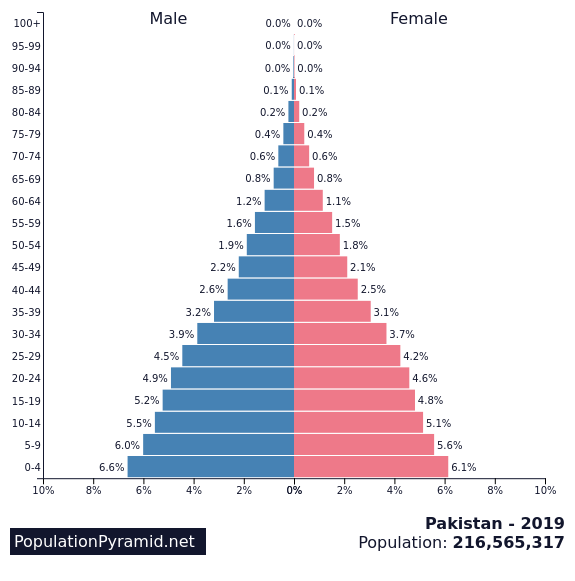
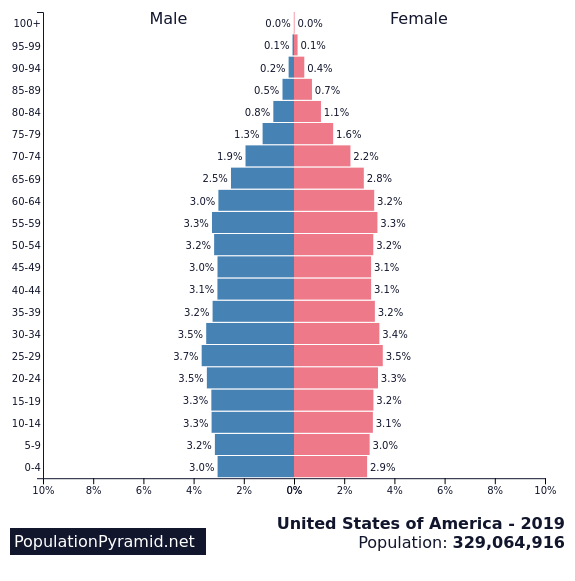
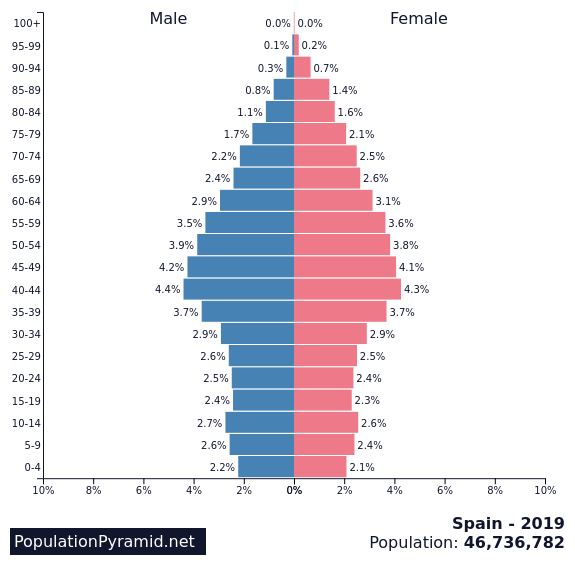
    The World Health Organization (WHO) believes it is natural for viruses to mutate from one form to another and no strain is particularly more dangerous than the other. Age may play an important role in how rapidly the virus spreads as countries such as Italy and France, which have a higher percentage of old people, have fared worse against COVID-19 than countries such as Pakistan with a younger population.


    There is also the possible case that less people are being tested for COVID-19 in developing countries leading to a lower number of confirmed cases. It must be noted, however, that the mortality rate is lower as well.

    Clearly more research has to be conducted into what has allowed countries such as Pakistan to handle the COVID-19 pandemic better than the others across the globe. It could be any one of the factors discussed here or a combination of the variables that allowed it to withstand the worst of the COVID-19 situation.

  • Oil prices have dipped by 305% but what does it mean for Pakistan?

    Oil prices have dipped by 305% but what does it mean for Pakistan?

    Oil prices have turned negative for the first time in history, dipping by 305 per cent as storage space is filling up, discouraging buyers as weak economic data from Germany and Japan cast doubt on when fuel consumption will recover.

    The crash in oil prices on Monday was as disrupting as the pandemic, with the United States (US) oil prices plummeting to a range between $1-2 per barrel. The Brent oil prices also hovered around $22-25 per barrel, the lowest in 22 years. The glut created by the price war between Saudi Arabia and Russia was compounded by the extremely low oil demand in most developed economies.

    Traders have fled from the expiring contract in a frenzy as barely any buyers are willing to take delivery of oil barrels because there is no place to put the crude, creating a global supply glut as billions of people stay home to slow the spread of COVID-19.

    But what does it mean for countries like Pakistan?

    Crash in oil prices is an opportunity for Pakistan because even after passing 50 per cent of the decline on to consumers, the government can make up for revenue fall. Qatari gas will be cheaper than domestic gas.

    Pakistan was in the midst of its worst economic crisis before the coronavirus attack and was finding it hard to finance its huge oil bill as the crude oil was hovering in the range of $55-60 per barrel.

    After the pandemic, the demand for crude started declining sharply, and it ranged for a long time between $30-40 per barrel in March. Its price started declining sharply in the last 10 days with US oil showing more volatility than Brent Oil that is mainly consumed in Asia. 

    With the US oil prices declining to $2, Brent price logically should not be more than $10 which means a price of $12 per barrel. At the moment, Brent Oil is still priced at $22 per barrel but if the buyers started buying from the US this price would not hold.

    This low oil price has vindicated former Prime Minister (PM) Shahid Khaqan Abbasi’s inking of an agreement with Qatar for buying Liquefied Natural Gas (LNG) at 13 per cent of the Brent Oil price. At current Brent Oil rates, Pakistan will be buying LNG from Qatar at $2.6-2.8 per mmbt.

    At this rate, it would be feasible for the state to procure gas from Qatar at a price even lower than our local gas, reports say.

    Qatar is bound under agreement to provide this gas as Pakistan is bound to lift a certain quantity of cargo from Qatar whether we needed it in the domestic market or not.

    If the opportunity is made use of, it could lower gas tariff for all industries much below the price that the government is charging from exporting industries after paying huge subsidy and the cost of electricity from gas-run power plants would also decline appreciably.

    All this can result in the government making up for massive revenue losses.

  • PM’s first official visit to Presidency for ‘most important’ meeting with Dr Alvi, ISI chief

    PM’s first official visit to Presidency for ‘most important’ meeting with Dr Alvi, ISI chief

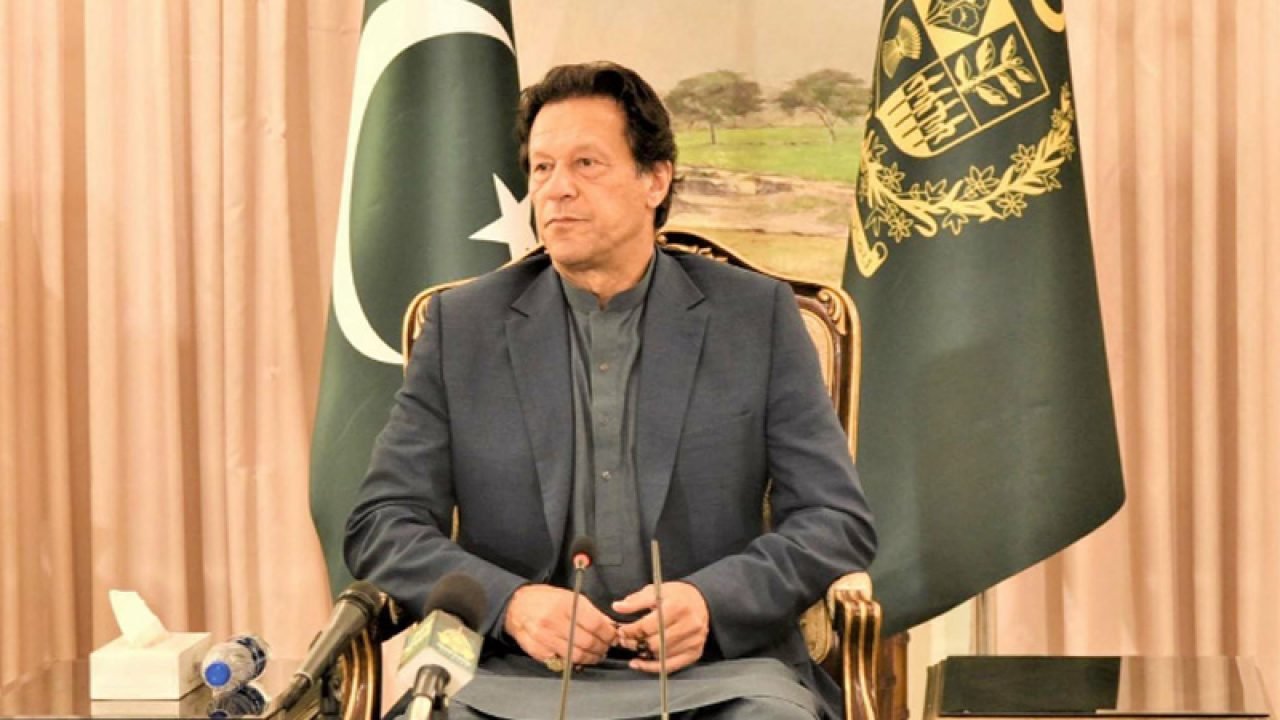
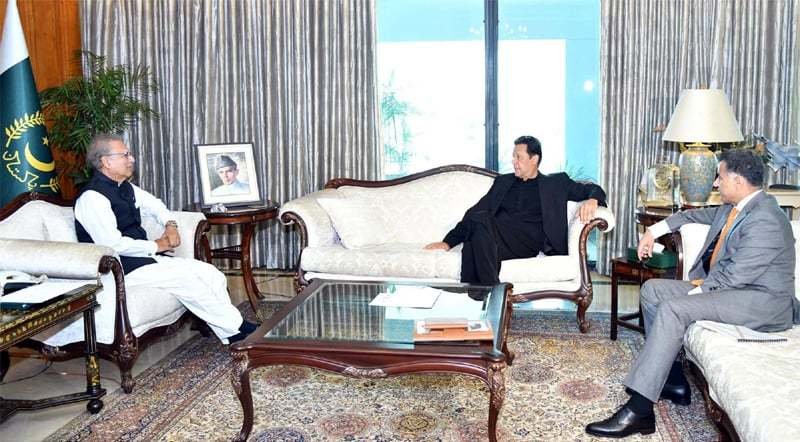
    In what is being called the “most important” meeting, Prime Minister (PM) Imran Khan has called on President Dr Arif Alvi in his maiden official trip to the Presidency, and the two were later joined by Inter-Services Intelligence (ISI) Director General (DG) Lieutenant General Faiz Hameed.

    While an official press release says that the three discussed various domestic and international issues, including the COVID-19 pandemic, precautionary arrangements for the forthcoming holy month of Ramzan and Indian aggression against people of held Kashmir, a report has quoted political quarters as terming it a meeting of the big three.

    The report that emphasised on the most important aspect of the gathering, did not drop any hint regarding it.

    The president appreciated the government steps to curb the spread of coronavirus in the country and the PM’s measures for seeking relief in the debt to be paid by the developing countries, the official version maintained.

    Later, the ISI chief also joined the meeting that condemned unprovoked Indian firing along the Line of Control (LoC). They also denounced the usurping of rights of Kashmiris in the garb of coronavirus in Indian-occupied Kashmir (IoK).

    The premier reportedly thanked the president and lauded his efforts to evolve a consensus among religious quarters regarding prayers and Taraweeh at mosques during Ramzan.

  • Storm blows away domes of Kartarpur Sahib within months of inauguration

    At least two domes recently constructed outside the perimeter of Gurdwara Kartarpur Sahib in Shakargarh collapsed due to a thunderstorm and high-speed winds in the area, drawing strong reactions from people of both Pakistan and India.

    The two domes at Darbar Sahib Kartarpur of the Kartarpur Corridor — the visa-free border crossing and a secure corridor connecting Gurdwara Darbar Sahib in Pakistan to the border with India — fell off due to strong winds coupled with heavy rain showers in Punjab over the weekend.

    No injury was reported as a result of the domes falling off.

    The material used in the construction of the domes raised serious concerns over the quality of the material used in the Kartarpur Corridor. It was alleged that the domes, that appear to be hollow from the inside, were constructed using fibre instead of cement and iron.

    Federal Minister for Science & Technology Fawad Chaudhry said the matter had been addressed before the Religious Affairs Minister Noorul Haq Qadri with a request for an immediate inquiry.

    Frontier Works Organization (FWO) — a military engineering organisation — had been assigned to ensure the immediate renovation of the damaged domes, which ensured the completion of repair work within 48 hours.

  • On This Day: Javed Miandad breaks Indian hearts with last-ball sixer

    On This Day: Javed Miandad breaks Indian hearts with last-ball sixer

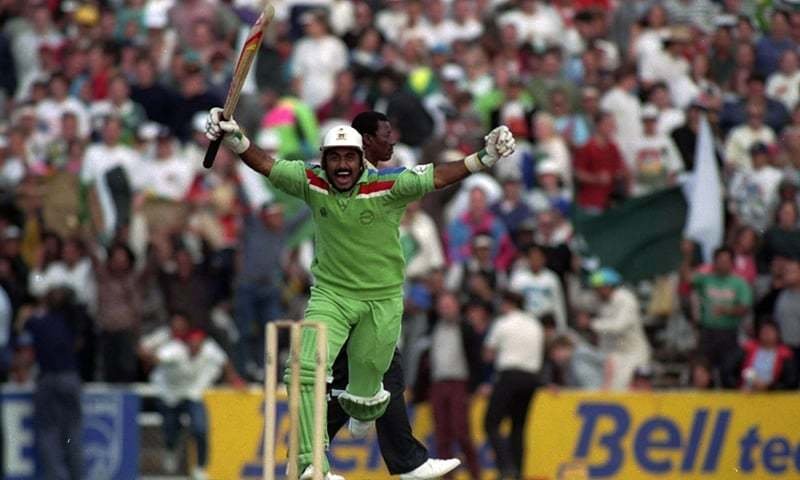
    It was on April 18, 1986, when former Pakistan batsman Javed Miandad struck a final-ball six to defeat India in the finals of the Austral-Asia Cup.

    This match still sends shivers down the spine of ardent cricket fans in both Pakistan and India. Miandad had smashed a six off the final ball of the match bowled by Chetan Sharma, reports said.

    The feat is remarkable as Pakistan needed four runs off the final ball to win the Austral-Asia Cup. Miandad did not succumb to pressure, giving the cricket fans a memory to cherish forever.

    Pakistan needed 246 runs to win the match, and the side found itself at 61/3. It was then that Miandad walked out to the middle and played a match-winning knock of 116 runs.

    WATCH VIDEO:

    In his innings, Miandad struck three fours and as many sixes.

    Batting first, India had got to a score of 245 as Kris Srikkanth made 75 runs while Sunil Gavaskar went on to register 94 runs from 134 balls.

    For Pakistan, Wasim Akram scalped three wickets.

    Miandad has often been involved in fierce battles with India. During the 1992 World Cup group stage game, Miandad ended up mocking the style of India’s wicket-keeper Kiran More.

    The Austral-Asia Cup has been played thrice, with Pakistan winning the tournament on all three occasions.

  • Residents distribute food among policemen doing duties amid lockdown

    The residents of Peshawar helped the policemen positioned on the roads to protect them.

    As per reports, a few volunteers gave food packets to the officers performing lockdown duties in the city.

    Health professionals and medical workers are undoubtedly fighting against coronavirus on the front lines, but we can’t ignore the role being played by the police, said a volunteer.

    The policemen thanked the volunteers for the gesture.

  • Surge in number of dead on arrival, near-death patients at Karachi hospitals amid COVID-19

    As the country, especially Punjab and Sindh, remains in the grip of the coronavirus pandemic, it has emerged that the number of deaths at Karachi hospitals has recorded a significant increase with a large number of patients being brought in dead or in a near-death condition.

    According to The News, over 300 such patients were brought to both public and private sector hospitals within the past two weeks. All of them were either declared dead on arrival (DOA), or showed COVID-19 symptoms.

    The report in the English daily quoted a doctor on emergency duty at Jinnah Postgraduate Medical Centre (JPMC) as saying that a 35-year-old woman was brought in dead. An X-ray revealed that she was suffering from some respiratory disease as a large patch could be seen on her lungs.

    He said the report was sent to a senior pulmonologist treating coronavirus patients, who said that it was most likely a case of COVID-19.

    Doctors also told the media outlet that only a few such cases could be examined in this regard as a majority of deceased patients could not undergo any tests or an autopsy.

    A critical care specialist at JPMC said that the number of patients, who either died on arrival or within a few hours, rose every day for the past few weeks. The patients were mostly 45 to 60 years old.

    Within the past 15 days, 109 patients have been brought in dead and 90 others were brought in a very critical condition and died mysteriously in a very short time at JPMC.

    While private hospitals are reluctant to share any details in this regard, they have confirmed that the number of pneumonia-like symptoms in patients has been climbing. Indus Hospital sources also admitted that the number of patients in critical condition had soared sharply.

    Sindh Health Department officials, on the other hand, refused to comment on the report.

  • Money Heist characters get Pakistani CNICs

    As ‘La Casa De Papel [The House of Paper]’ aka ‘Money Heist’ fever continues to grip the world and Pakistan ever since Netflix dropped its fourth season, a Pakistani Facebook page has given characters of the hit Spanish series their own computerised national identity cards (CNICs).

    Shaikh Parwaiz Imtiyaz (The Professor), Raheela Shaukat (Lisbon aka Raquel), Nadia Akhtar (Nairobi), Bilal Abbasi (Berlin), Taniya Khattak (Tokyo), Raja Zeeshan Ali (Rio), Delawar Khan Masood (Denver), Haji Maqsood Khan (Moscow), Sardar Hari Singh (Helsinki) and Omer Daraz Orakzai (Oslo) are on the list of CNICs by Laari Adda, which is going viral over the internet.

    While the fan art by the Pakistani Facebook page is breaking the internet, it isn’t the only thing that connects the country to Money Heist.

    Ever since the third season of the show, Pakistan has been playing an important part in the successful execution of The Professor and his team’s heist at the Bank of Spain.

    An Islamabad-based team of 65 members, including hackers and surgeons, is helping the gang do wonders.

    “We can activate their microphones, cameras and GPS. It took less than an hour to take over the defense staff’s telecommunications. The work Rio used to do was now done by 65 Pakistanis. They are geniuses, thanks to them, we had access to everything,” Tokyo had said in season 3 about the team that has also played an important part in the latest series of episodes.