Tag: Pakistan

  • US all-praise for Pakistani Americans for serving communities amid coronavirus outbreak

    US all-praise for Pakistani Americans for serving communities amid coronavirus outbreak

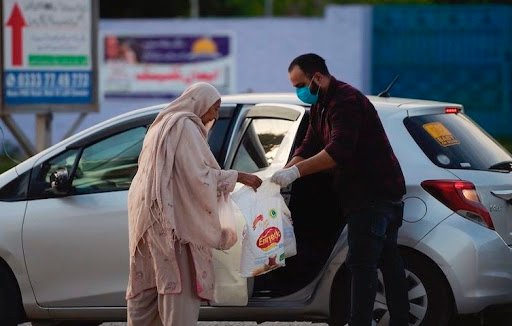
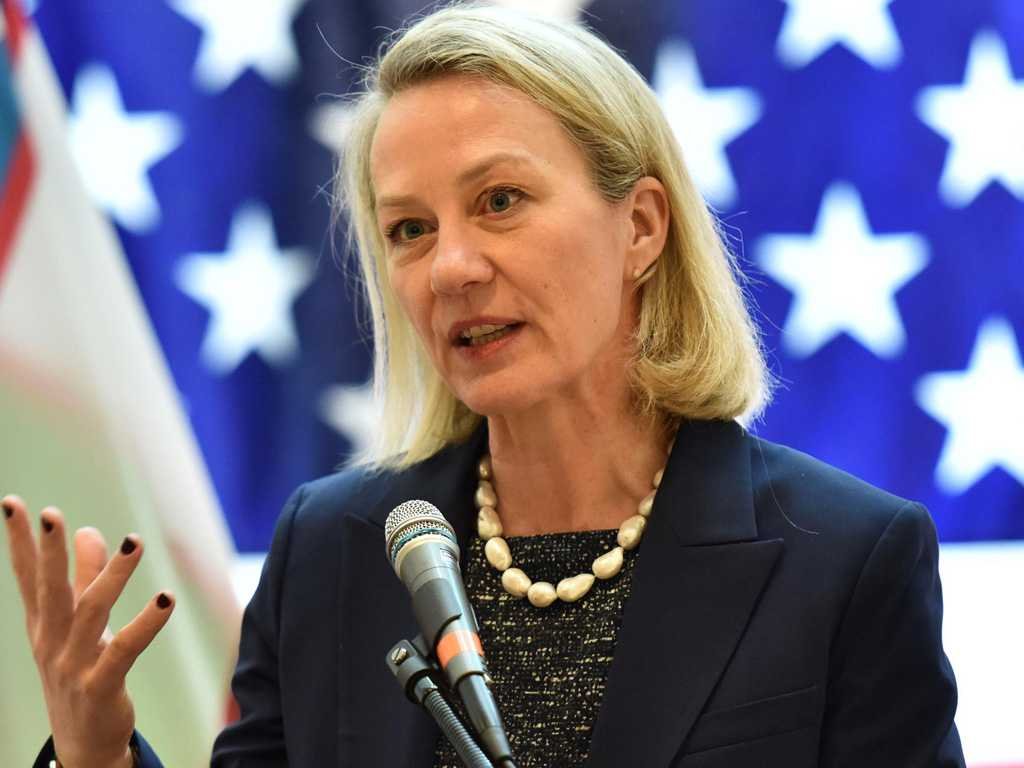
    Alice Wells, principal deputy assistant secretary of the United States’ (US) Bureau of South and Central Asian Affairs, has appreciated Pakistani Americans for serving communities both in the country and back home during the persisting global health crisis of coronavirus.

    The diplomat took to social media to laud Pakistan-born Americans for providing food and assistance in the US, as well as supporting healthcare professionals in their native country.

    The tweet comes days after the US announced that it will give a $1 million grant to Pakistan under the USAID programme to help improve monitoring and rapid response against the COVID-19.

    “The US-Pakistan government partnership is helping fight COVID-19. The US government is responding to COVID-19 in Pakistan with [an] initial $1 million funding to bolster monitoring and rapid response,” Wells had said at the time, adding that Islamabad and Washington were longstanding partners in tackling global health challenges.

  • ‘No special flights between Pakistan, UAE,’ officials warn people of travel agents’ scam

    ‘No special flights between Pakistan, UAE,’ officials warn people of travel agents’ scam

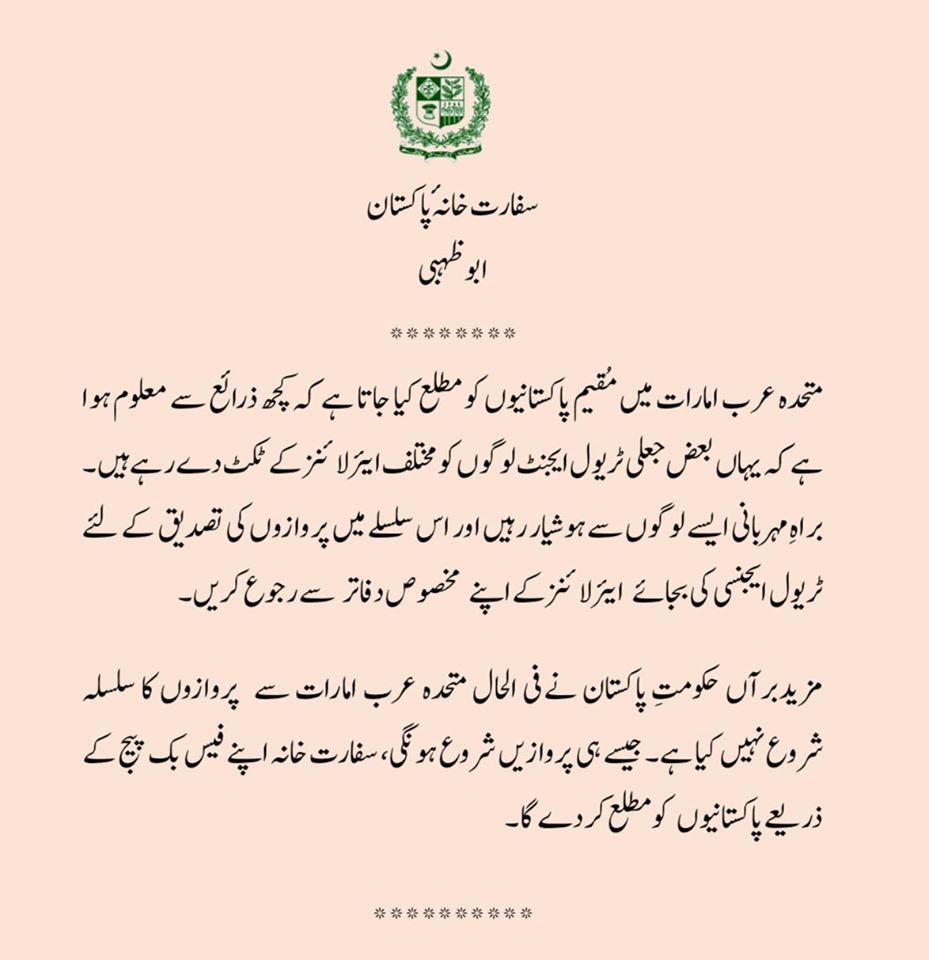
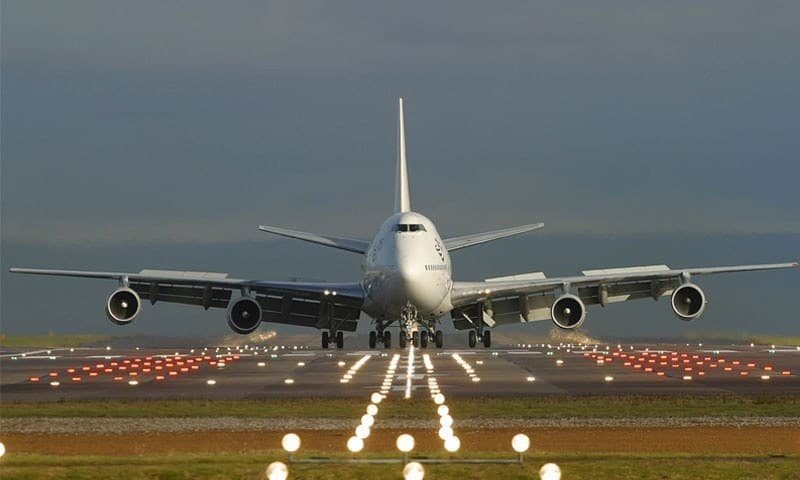
    The Pakistan Embassy in the United Arab Emirates (UAE) has issued a warning about a ticket scam involving travel agents offering to book tickets on “special flights” from the UAE to Pakistan.

    “Flights between Pakistan and the UAE are suspended and there is no announcement of any special flights from UAE to Pakistan so far,” said a statement issued by the Embassy on Tuesday.

    The statement added that the embassy would announce if any special flights would be offered, while stressing that there will be an official announcement whenever normal flight operations between Pakistan and the UAE resume.

    “This is to inform Pakistani community members in the UAE that some agents are offering tickets for ‘special flights’ from the UAE to Pakistan. Beware of such people and instead contact the respective airlines to confirm the flights before purchasing any tickets,” the embassy statement went on to say.

    The Pakistan Consulate General in Dubai reiterated the warning on its Twitter account.

    “Pakistan Consulate General in Dubai has not announced any special flight to Pakistan of any airline yet. The consulate will not be responsible for any such ticket purchases.”

    Thousands of Pakistanis are stranded in the UAE after flights were suspended amid the global coronavirus outbreak.

    It is understood that Pakistanis’ data is being collated to assist the government in formulating plans for repatriation.

    The Foreign Ministry in Pakistan is also believed to be working out how to bring back stranded Pakistanis from around the world, with some flights already being operated.

  • Pakistan delivers flowers to 10 Downing Street as British PM fights coronavirus

    Pakistan delivers flowers to 10 Downing Street as British PM fights coronavirus

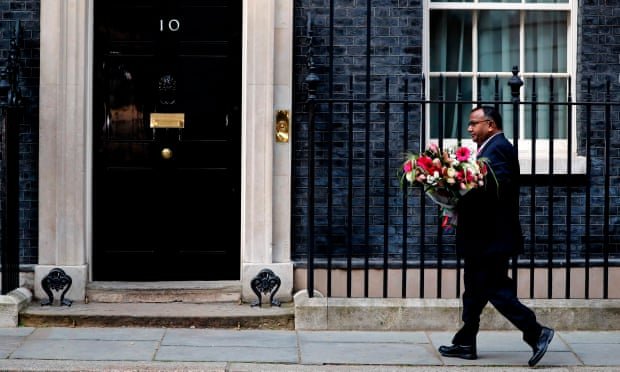
    Pakistan High Commission in London on Tuesday delivered flowers to 10 Downing Street, the official residence of British Prime Minister (PM) Boris Johnson who was admitted to the hospital two days ago after testing positive for the coronavirus, The Guardian reported.

    Johnson tested positive for the virus on Mar 27, following which he went into self-isolation at his official residence. On Sunday, he was admitted to an undisclosed hospital in London and a day later shifted to the intensive care unit as, reports said, his condition worsened.

    On Tuesday, PM Imran Khan also wrote to his British counterpart, wishing him “earliest recovery” and “good health”.

    According to a statement issued by the PM’s Office (PMO), the premier, in the letter, underscored the importance of Pakistan and the United Kingdom (UK) working together to overcome the formidable challenges posed by the coronavirus pandemic.

  • Jeremy McLellan riles up India with his latest Abhinandan tweet

    Jeremy McLellan riles up India with his latest Abhinandan tweet

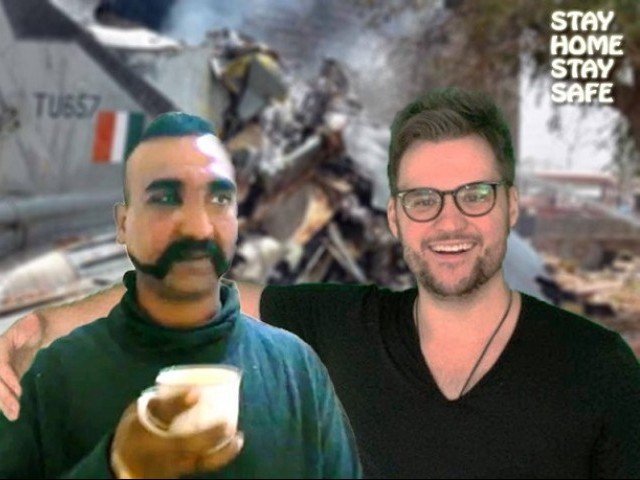
    American comedian Jeremy McLallen who is also famous for his funny tweets has managed to rile up Indian social media users after posting an edited picture of himself with Indian pilot Abhinandan Varthaman.

    In the image posted on Twitter by Jeremy, the Indian pilot can be seen drinking the famous cup of tea given to him during his 60-hour capture in Pakistan in February last year, with the wreckage of downed Indian Air Force (IAF) Mig-21 fighter jet in the background.

    The tweet said, “Stay Home, Stay Safe”.

    The post sparked fury among Indian social media users but the comedian continued with his trolling. “Why are Indians messaging me saying he’s a hero. I know he’s a hero that’s why I gave him tea and took a picture with him,” he tweeted later.

    He then shared a screenshot of a message by an Indian Twitter user named Amit Kumar who asked McLellan if he (Jeremy) was a terrorist.

    McLellan was not done there. He proceeded to post another edited photo of himself with Indian Prime Minister Narendra Modi.

  • Coronavirus: Improved air quality leads to breathtaking view of Kashmir from Sialkot

    With reduced industrial pollution and traffic due to coronavirus resulting in improved air quality across the globe, breathtaking views of Kashmiri peaks from Punjab’s north-eastern city of Sialkot — one of Pakistan’s most industrialised regions — have started doing rounds over social media.

    In the wake of COVID-19, lockdowns have had a dramatic impact on air pollution around the world. While lockdowns have emerged as a temporary but effective solution to the global pandemic, they also appear to be dealing with another pressing problem faced by citizens — suffocating pollution. As millions of humans stay home around the world, pollution is temporarily alleviating.

    While the mountains of Indian occupied Kashmir (IoK) could earlier only be seen from Sialkot after heavy rains — when the weather was super clean –, they can now be seen from the city as improved air quality leads to better visibility and clearer skies.

    Earlier, images of clear skies over China and California, and fish swimming in Venice’s canals also made their way to social media. While they are a glimpse of what it might look like if we take better care of the earth, none of it is likely to last.

    https://twitter.com/ikaveri/status/1239660248207589383

    Much of this temporary environmental reprieve will diminish once the economy picks back up again. And of course, no one should want to curb pollution and tackle climate change via a deadly global pandemic, given the grave health and economic impacts the crisis is creating.

  • Donkey King returns with a coronavirus anthem

     The Donkey King has made his comeback with a coronavirus anthem.

    Mangu – the popular character from the animated movie Donkey King has sung a song ‘Darna Nahi, Larna Hai‘ which is the latest coronavirus anthem urging people to take all the precautionary measures.

    In the video for the anthem, Mangu urges everyone to practice social distancing but keep our hearts connected. The video also features other characters of the movie as they ask us to avoid going out of the house unnecessarily. The video ends with the message, “Stay home, stay safe.”

    Shuja Haider and Asrar lend their vocals for the anthem. The lyrics have been written by Donkey King director Aziz Jindani.

    Donkey King is Pakistan’s comedy animated movie released in October 2018. The movie has been released in cinemas around the world and has also been dubbed in many languages, including Turkish, Ukrainian, Russian, Korean, Spanish, Basque, and Catalan.

  • VIDEO: Pakistan opens up first coronavirus drive-thru screening, testing facility

    VIDEO: Pakistan opens up first coronavirus drive-thru screening, testing facility

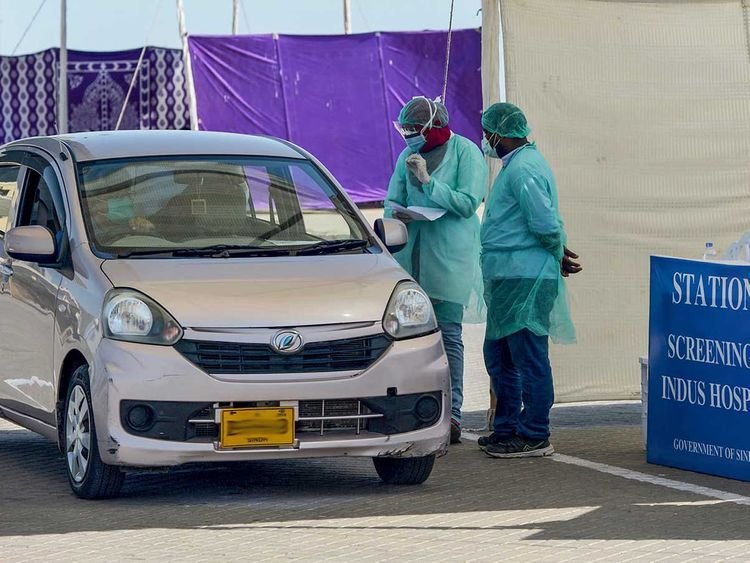
    The Sindh government has opened up Pakistan’s first drive-through coronavirus screening and testing facility in Karachi, as part of its attempts to stem the spread of the pandemic in the province, where the toll is rising, AFP reported.

    Established in the Jahangir Kothari Parade area of Clifton, the testing centre will enable suspected patients to get themselves tested without having to wait in long hospital queues.

    The doctors, paramedical staff and other personnel deployed at the facility have been provided with all the necessary protective equipment and gear to safeguard against the virus, a press release said.

    According to the Sindh government, people who visit the testing station will be registered and given a number, but for the test to be conducted, they should possess a travel history or certain symptoms of the virus.

  • Time for kindness

    Time for kindness

    With at least 1.2 million confirmed cases and 64,000 deaths across the globe, the new coronavirus aka COVID-19 pandemic is continuing to take a toll on the world. The economic impact is so huge that it is being compared to the Great Depression.

    Managing Director of the International Monetary Fund (IMF) Kristalina Georgieva says this is an economic crisis like no other. “Never in the history of the IMF have we witnessed the global economy coming to a standstill. It is way worse than the global financial crisis.”

    Countries are fast realising that the impact of this virus is so huge — and unpredictable at the same time — that whatever they do may not be enough.

    First, it was about creating and spreading awareness as not many were taking it seriously. Then came the lockdowns, partial or complete, in many countries. Now there are some other stark realities that people are facing; financial woes being one of them. Social-distancing is a privilege. Not everyone can afford it. Lockdowns have helped contain the spread to a certain extent but the economic impact on daily wagers, the lower middle class and many others will be quite harsh. Thus, governments and private citizens must step in to help. 

    A Facebook post doing the rounds about a university van driver in Pakistan is heartbreaking. According to the post, the driver has been calling up students asking for his monthly charges but not many are responding to his calls/texts. We need to understand that in these tough times, we must help those who are less privileged than us. Those who have given leave to their domestic staff must pay their salaries — and if possible, an advance salary as well. Help those around you who you think need it. Buy rations or donate to charities and organisations like the Edhi Foundation that are doing credible work and helping people in these troubling times. 

    Another tragic aspect is that those who fall victim to corona have to deal with the illness alone — away from family and friends — in order to keep others safe from the virus. Burying those who die of coronavirus has also become an ordeal. Family members and friends can only say goodbye from a distance. Funerals in the time of coronavirus are quite different. Coronavirus has changed the world so drastically that people cannot even grieve together anymore. These are the new realities until a cure is found. 

    We will keep learning new things with each passing day. We will see the world change. People will be hungry, frustrated, desperate, scared, depressed, angry and much more. But we must be kind and understanding for this is what humanitarianism is all about. Be human! Be safe.

    FOLLOW THIS LINK FOR LATEST CORONAVIRUS UPDATES FROM PAKISTAN

  • The Common Good

    “Pure capitalism is basically selfish in nature and it leads to a particular attitude in the rich — that they deserve to be wealthy and the poor are poor because they are either lazy or stupid or both — or else because they are just an ‘inferior species’.”

    A friend in Karachi describes the unease that fills shoppers at an affluent Karachi supermarket when they step out of the store laden with as much as they can buy amid the coronavirus lockdown. They are faced with the sight of desperate day labourers standing outside staring quietly as they load bags of food supplies into their cars. The labourers hold the tools of their trade — shovels and pickaxes — and to the affluent shoppers, these now appear to be dangerous weapons.

    “They are starving,” says my friend, “their families don’t have food, they could be driven to despair and could easily attack shoppers to get food”.

    The public response to the crisis has been impressive in Pakistan, but can such efforts provide the scale of relief that is needed in a country where, according to a 2016 national assessment, almost 40 per cent of the population lives in poverty? People have donated generously to schemes that deliver basic rations to those in need and many organisations and individuals have mobilised their time and resources to feed the hungry but reports seem to indicate that this is proving woefully inadequate. The livelihood of so many households has been affected that the knock-on effect is totally devastating. Apart from those dependent on a daily wage, those running small business initiatives or taking on work outsourced from running businesses now have no work, no money and no food.

    And they are being told to stay in their homes and maintain social distancing in public places…

    In such circumstances, riots are a very real possibility. Not just in Pakistan but in other countries as well, particularly those with great social and economic inequality. And interestingly, it is this fear of unrest that is now leading many people to the realisation that depriving people of basic rights is not just an issue for the poor and oppressed but rather it is something that, eventually,  affects everybody — even the very rich and powerful. Pure capitalism is basically selfish in nature and it leads to a particular attitude in the rich — that they deserve to be wealthy and the poor are poor because they are either lazy or stupid or both — or else because they are just an ‘inferior species’.

    “For years the world has been veering towards a nasty form of capitalism in which the erosion of workers’ rights and social welfare is seen as an ‘efficient’ way to manage the economy. But the only thing it did efficiently was enriching and protecting a small minority that lived in a fortress bulwarked by wealth and privilege.”

    This basic lack of social empathy is rooted in the belief that wealth can buy you an island of privilege and anything outside the walls of this wealth is a) not your problem and b) does not affect you. Hence the attitude of the Pakistani glitterati, who spend millions on making their homes into palaces but then just tip their garbage onto the street corner instead of a bin; who spend thousands on fast food and designer outfits but are outraged when a staffer asks them for a salary of a few thousand rupees in advance. It is the same attitude that drives coalitions like the Conservative-LibDem one in the UK to close down public libraries or threaten the funding of the public service broadcaster. Instead of understanding that libraries and public service broadcasting can inform and educate, the attitude is that these are not essential as they have no tangible benefit i.e. profit. Public libraries, in particular, are essential to any civilised society as they provide access to learning, opportunity and advice and also provide resources like computers, printers and internet access.

    In Pakistan, schools and colleges with adequate resources have switched to online learning but what about all of those students from poorer institutions? And what about students who are expected to follow online curriculums but may not have a wifi connection or a laptop? The same question is relevant in the UK even though efforts are being made to cater to students with these sorts of disadvantages, many may fall through the cracks. Just a few months ago when the Labour Party announced a policy of free wifi for all in their election manifesto, the idea was widely derided, scoffed at and dismissed as ‘unworkable’, but now Jeremy Corbyn’s insistence that broadband access should be regarded as a basic right does not seem so ridiculous after all.

    For years the world has been veering towards a nasty form of capitalism in which the erosion of workers’ rights and social welfare is seen as an ‘efficient’ way to manage the economy. But the only thing it did efficiently was enriching and protecting a small minority that lived in a fortress bulwarked by wealth and privilege. But now a virus has illustrated that we are all connected. Ensuring access to basic rights and a proper welfare structure provides for a less insecure society and ‘feel good’ philanthropy and private charity or a mai baap approach to individual staff is simply not enough.

    Perhaps it’s time for all of us to embrace the idea of a socialist society, to recognise the importance of the dignity of labour and the protection of employee rights, to stop privatising and outsourcing and spending compulsively. It’s time for us to completely rethink the way we live.
  • Coronavirus survivors celebrate their negative tests by wrestling

    Citizens of Multan, who recovered from coronavirus after proper treatement and quarantine, celebrated being corona-free by wrestling.

    According to reports, the authorities ensured that the people return to their villages safely after their treatment and quarantine. However, breaking protocol, they decided to hold a wrestling match instead to celebrate their homecoming.

    As a result, these people not only violated the most significant coroanvirus precautionary measure, social distancing but also risked the health of the bystanders.