Tag: Pakistan

  • 80’s classic ‘Tanhaiyan’ is coming back to PTV

    80’s classic ‘Tanhaiyan’ is coming back to PTV

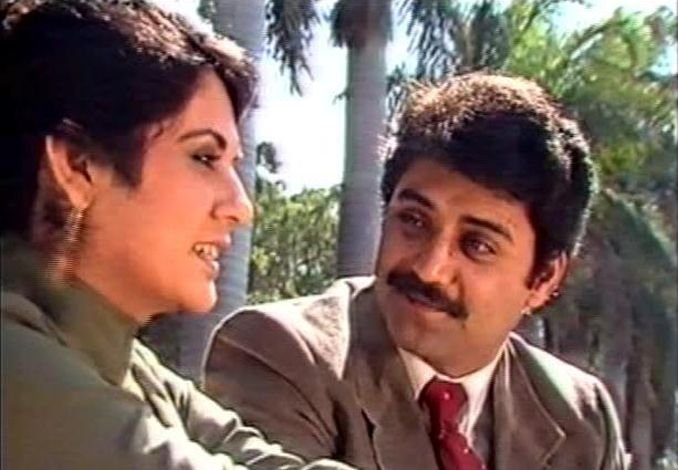
    Pakistan Television (PTV) is revisiting its golden memories with re-runs of PTV classics like Tanhaiyan. The state network has started ‘PTV Gold‘ on which old classics will be aired.

    PTV will be airing Tanhiayan, every Sunday from April 5 at 3 pm. They will also be airing repeats of past episodes at 11 am on Sundays.

    The story of the drama revolves around two sisters who lose their parents and go to live with their aunt. One of their efforts to buy back their parents’ house leads them to realise what makes a house a home.

    It was directed by Shahzad Khalil and written by Hasina Moin. Some of the very legendary actors like Marina Khan, Shehnaz Sheikh, Aasif Raza Mir, Behroz Sabzwari and Badar Khalil were among the cast of the project.

    Fans are already excited about it.

    Some even wanted to see it on Netflix.

  • ‘Punjab hospitals cured 18 patients with anti-malaria drug, azithromycin,’ says expert

    Chief executive officer (CEO) of the Mayo Hospital and Corona Experts Advisory Group (CEAG) co-chairperson, Professor Dr Asad Aslam, has said that 18 patients of the new coronavirus — COVID-19 — were successfully treated with anti-malaria drug hydroxychloroquine and antibiotic azithromycin during the past five days.

    According to reports, Dr Aslam on Thursday said that eight patients at Mayo Hospital, four at Pakistan Kidney and Liver Institute (PKLI) and five at other hospitals of the province were administered the drugs during the past five days.

    “The patients were administered two tablets of hydroxychloroquine in the morning and two in the evening on the first day whereas, on the remaining four days, they were given one tablet in the morning and one in the evening. Simultaneously, they were given one tablet of azithromycin in the morning and one in the evening for five days.”

    He, however, urged people to avoid self-medication and said these medicines should only be used upon a doctor’s prescription because they could have serious side-effects, including hepatotoxicity (drug-induced liver damage), bone marrow suppression and risk of sudden death, especially when used with azithromycin and many other medications that can affect heart rhythm.

    Meanwhile, the Medical Microbiology and Infectious Diseases Society of Pakistan (MMIDSP) strongly advised against the inappropriate use and hoarding of hydroxychloroquine and chloroquine.

    According to Dawn, they said there was a lack of undisputed scientific evidence and the risk of adverse events. “Hydroxychloroquine and chloroquine should only be used as a therapeutic or prophylactic agent for COVID-19, under the supervision of an expert,” read a press release.

    It further said that the anti-malaria drugs were also used to treat immune system disorders.

    “Both these drugs have a new and emerging role in treatment of COVID-19 pneumonia (off-label) and a presumed role in prevention against the infection.”

    Experts associated with MMIDSP include infectious diseases physicians, clinical microbiologists and nurses who are trained in infection prevention and control.

  • Pakistani billionaire announces Rs1 billion for COVID-19 battle

    As Pakistan wages war on the coronavirus pandemic, chairperson of Dawood Hercules Corporation — parent organisation of Pakistani multinational conglomerate Engro Corporation — and billionaire Hussain Dawood has announced pledging a contribution in services, kind and cash of Rs1 billion for a short, medium and long-term basis, on behalf of Dawood Hercules, Engro and his family.

    “We are committed to help solve some of the most pressing issues of our time and it is incumbent upon us to serve our nation best when it needs us most.  These are our fundamental values that continue to be at the core of what we strive to achieve,” Hussain said in a press release issued Thursday

    “We must work on several fronts concurrently. The need of the hour is to target on reducing the spread and impact of this virus,” he emphasised.

    The group further said it would focus on disease prevention, with a major focus on testing and diagnostics, protecting and enabling healthcare practitioners and other key workers, who are at the frontline of the fight against this pandemic, enabling patient care and facilities; and to bolster livelihoods and sustenance of the most deserving in society.

    The company also welcomed the efforts by the government and other organisations who have stepped up to this challenge.

    The contribution comes a day after Prime Minister (PM) Imran Khan announced a relief fund to fight the coronavirus epidemic and urged everyone to donate.

    “Prime Minister’s COVID-19 Pandemic Relief Fund-2020 has been set up to help us fight this pandemic. I want everyone to donate towards this fund which will be used to take care of all those who have been made destitute by the lockdown,” he had tweeted.

  • COVID-19: Deepak Perwani offers to manufacture protective gear

    COVID-19: Deepak Perwani offers to manufacture protective gear

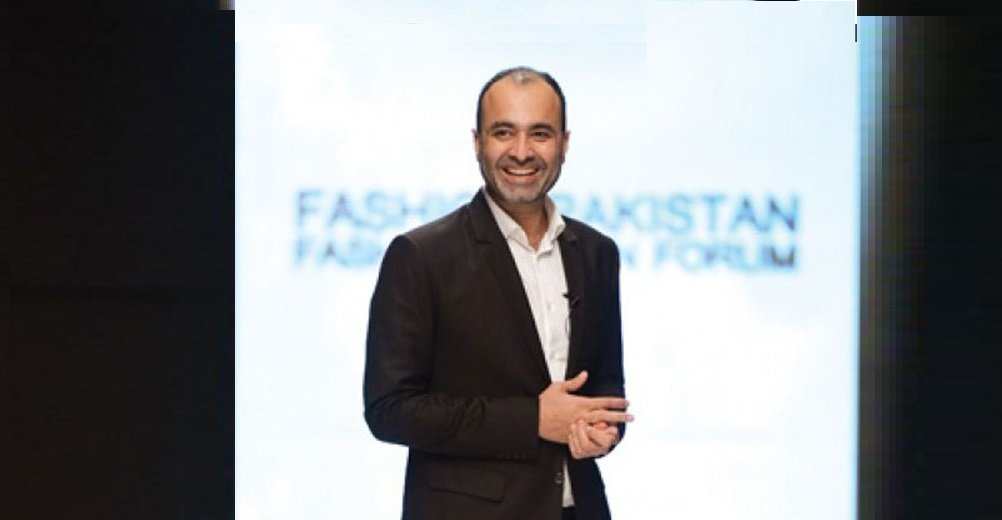
    Following Asim Jofa, renowned fashion designer Deepak Perwani has offered to produce Personal Protective Gear for the medical staff and volunteers who are fighting against coronavirus on the frontlines. Perwani’s announcement comes after Sindh Governor Imran Ismail discussed with him the importance of locally produced equipment.

    Governor Ismail on Wednesday had said that doctors, nurses, paramedical staff and volunteers are fighting on the frontlines against coronavirus, so every step will be taken to ensure their safety and well-being.

    He said this while talking to a four-member delegation led by Deepak Parwani, representing the fashion designing and textile industry who had called on him at the Governor House.

    Local production of protective gear against the coronavirus pandemic, the needs of the Corona Relief Tiger Force announced by the prime minister, less dependence on imported items and other matters of mutual interest were discussed in the meeting.

    Governor Ismail said that the personal protective gear for health care professionals is very important, and due to the difficulties in its availability, the local production of such gear would be encouraged by the government.

    He asked for the details of the planned local manufacture of protective gear, assuring that he would personally look into the issue and facilitate them.

    Meanwhile, Perwani said that the textile and fashion designing industry considered it their national duty to provide whatever was required to facilitate the health professionals and volunteers in the challenging times faced by the country.

    Other members of the delegation included Kehkashan Saiyed, Furqan Riaz and Shozaib Kapadia.

    Other brands like Lulusar has also announced to manufacture medical protective suits for the medical staff.

    https://www.instagram.com/p/B-ZwTLHjs-f/?utm_source=ig_web_copy_link
  • VIDEO: CM Buzdar wants Punjab to beat the world in introducing coronavirus vaccine

    VIDEO: CM Buzdar wants Punjab to beat the world in introducing coronavirus vaccine

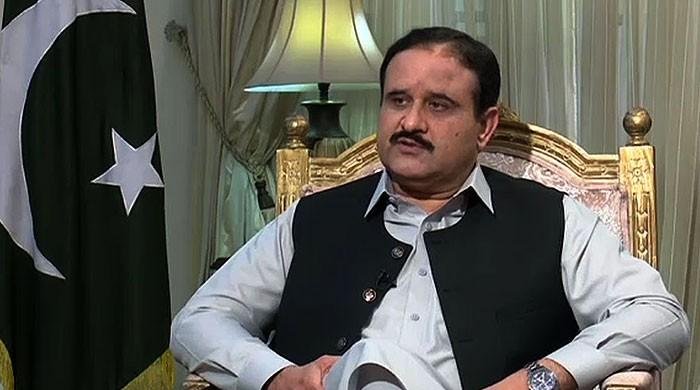
    Punjab Chief Minister (CM) Usman Buzdar has said that the province is doing “groundbreaking research” as the global coronavirus pandemic continues to spread and he wants Pakistan to become the first country in the world to introduce vaccination for COVID-19.

    Even the most effective containment strategies have only slowed the spread of the respiratory disease while some 35 companies and academic institutions around the world are racing to create a vaccine that can prevent people from getting sick as COVID-19 leaves around 940,000 people infected globally with at least 47,000 fatalities.

    While the number of confirmed cases in Pakistan stands at 2,252 with at least 32 deaths and 107 recoveries, Buzdar’s Punjab is the worst-hit with 845 infections and Sindh is trailing behind at 709.

    “Pakistan could become the first country to prepare a vaccine for coronavirus with Punjab taking the lead in this regard,” the provincial chief executive said during a press conference in Lahore on Tuesday. “I will assure them [experts] that I will exhaust all available resources for the research.”

    WATCH VIDEO:

    Earlier, the Punjab CM had directed experts to accelerate research activities for the eradication of coronavirus.

    A meeting chaired by the provincial chief executive told that four study groups had been formed and research had been started under the supervision of the University of Health Sciences (UHS).

    CM Buzdar directed the experts to make fruitful efforts to deal with coronavirus as soon as possible. He was informed that a BSL-3 Lab had started working at Jinnah Hospital and Pakistan Kidney and Liver Institute (PKLI).

    The experts briefed the meeting that COVID-19 found in Pakistan was quite different from the coronavirus found in Wuhan and Iran.

  • ‘They made it harder to breathe’: Coronavirus patient from Lahore shares horrifying experience

    ‘They made it harder to breathe’: Coronavirus patient from Lahore shares horrifying experience

    With the country struggling to contain the outbreak of the new coronavirus, horrifying experiences of both suspected and confirmed patients of the COVID-19 have started pouring in as people narrate their ordeals amid the global health crisis.

    In this regard, I reached out to a “recovered” coronavirus patient, who remained admitted to Lahore’s Mayo Hospital for three long weeks.

    Not only did I ask them what it was like to stay away from their family at such a critical time, fearing never getting to see them again, but also about their experience at a rather infamous government facility.

    “Nothing you have heard is untrue. The deplorable condition of the hospital, the initial inattention of the government and slackness of the hospital staff… all these things made headlines because they were true,” said the patient, who asked not to be named.

    They said they had travelled from Abbottabad to Islamabad in the last week of February and later to Lahore following a two-week stay in the federal capital. “I fell sick two days after arriving in Lahore, my hometown. At first, I ignored the symptoms… a mild fever, after all, is quite common when you’ve been travelling back and forth.”

    “But then I started developing other symptoms. I couldn’t stop coughing and [my] fever just didn’t go away,” the patient said, adding that they had already isolated themself as a precautionary measure after returning from Islamabad where the virus was rumoured to be spreading.

    They said they got themself tested from a government facility but the results turned out to be negative and a second test from a different facility proved that they actually had contracted the virus.

    “One suspected patient, two different facilities, two different tests, two different results in two days. Doesn’t make sense, does it?”

    It merits a mention here that the patient hasn’t been the only one to receive two different test results from two different facilities in Lahore. Last month, the wife of a political bigwig had reportedly tested positive at a private facility and later negative at a government facility. Fashion designer Maria B’s cook had also tested negative for coronavirus on March 26, a few days after testing positive at a private laboratory and being admitted to a Lahore hospital.

    According to reports, the federal government is also sceptical of Punjab’s coronavirus testing data. “So far, 13,380 people have been tested for [COVID-19] in Punjab,” Chief Minister (CM) Usman Buzdar tweeted on March 28.

    While according to statistics of the provincial government, the figure jumped to 14,890 on March 30 in Punjab, it doesn’t tally with the data maintained by the National Institute of Health (NIH) that coordinates with all provinces to update it on a daily basis. According to NIH data, only 13,321 tests had been conducted in Punjab till March 28.

    “Mayo [Hospital] was not an option for me, owing to the poor condition it is known to be in for the past several decades. But I had to go there because a doctor in the family advised me to seek treatment at Mayo,” the patient said.

    They added that they had no other option but to listen to their “doctor-friend” since the government had been keeping people in the dark. “I had no idea where else to go or what else to do.”

    The patient then started narrating their experiences from the hospital and shared what their family had to go through due to the Punjab government’s policy of “criminalising patients”.

    “Not only was I admitted after a group of men in hazmat suits picked me up from my residence, but my house was also guarded by police as other family members were home-quarantined.”

    Although Punjab government officials say that such policing is required to arrest the pandemic, many believe such dealings have led to creating panic among citizens.

    “At the hospital, nobody came to check my temperature within the first 24 hours. Hygienic conditions were pathetic at the hospital, there were bloodstains on the floor and walls, clean drinking water was not available and the bedsheets we were being forced to lie on were pitiful.”

    They said given how disgusting the washroom was, going there was like a punishment and it felt like they would get sicker if they stayed at that hospital any more.

    “While things did start getting better with the number of cases in Punjab increasing and media bringing patients’ ordeal to the notice of authorities concerned, there still was a long way to go. Those around me at the hospital and no escape from my dreadful reality made it harder to breathe with infected lungs,” they said.

    “Every passing second added to my anticipation to recover and get back home, or just lose my battle against coronavirus instead of being forced to live in that depressing environment.”

    Internet, they added, “is always a sweet relief”, but the ages-old structure of the hospital with limited access made it nearly impossible to get any signals.

    “I thought things would get better for me and nothing could be as hard as the first week, but it only got worse when people I had seen being brought in, started to get very sick. One of them, a really old patient, even passed due to the staffers’ [alleged] negligence.”

    The patient in question was a 73-year-old, who was seen tied helplessly to his bed in a video on social media. In the hospital’s isolation ward, the patient could be heard asking for medical staff to tend to him, but his hands and feet were tied to the bed.

    The patient was allegedly not given medication, oxygen or adequate attention by the staff, following which he reportedly passed away. Subsequently, Punjab CM Buzdar ordered an investigation into his death.

    “But you cannot put the blame entirely on doctors and other staff members. They too are humans who are being forced to work under extremely poor conditions. Until my second-last day at the hospital, which was last Friday, I had not seen all staffers in the coronavirus ward with proper protective equipment.”

    To a question, the patient said they were extremely grateful to the doctors performing their duties on the frontline in the war on the pandemic, “and to Allah for finally making the provincial government authorities take the matter seriously”.

    “I don’t know how I survived both the infection and my stay at Mayo Hospital. But what matters is that I did,” the patient said while also urging people to stay at home “if not for themselves, for their loved ones who might not be able to survive such an ordeal”.

    At least 2,079 people had contracted the illness by the time this report was filed on Wednesday. The number of infections in Punjab stood at 748 with Sindh trailing behind at 676 cases, 253 infections in Khyber Pakhtunkhwa (KP), 184 in Gilgit-Baltistan (GB), 158 in Balochistan, 54 in Islamabad and six in Azad Jammu & Kashmir (AJK).

    The number of fatalities stood at 27 while 82 recoveries had been reported.
  • Government launches Covid-19 information service on WhatsApp

    Government launches Covid-19 information service on WhatsApp

     The Federal Government has launched a ‘Coronavirus Information Service’ on Whatsapp to deliver updates about the coronavirus pandemic.

    According to the Prime Minister’s Office, people can get all information about the coronavirus, latest statistics and nearest labs by sending a message writing ‘Hi’ at 00923001111166.

    The Coronavirus Information Service will deliver information in Urdu and six regional languages, including Punjabi, Sindhi, Pashto, Balochi and Kashmiri.

    On Tuesday, Prime Minister Imran Khan announced the formation of youth force and public fund during his address to the nation to fight coronavirus pandemic across Pakistan.

    PM Khan said Corona Relief Tiger Force will be made of young doctors, drivers and people from any field which would be utilised to provide food and essential commodities to the areas likely to face lockdown. The force will also guide people to self-isolate inside their houses.

  • HEC orders universities to resume online classes

    The Higher Education Commission (HEC) has directed all universities and accredited institutions with sufficient resources to resume online classes as the government-ordered closure of schools, colleges and universities remains in place amid the spread of new coronavirus — COVID-19 — across Pakistan.

    In an official notification, HEC has reportedly asked all universities which have well-built learning management systems (LMS) to initiate online classes. However, universities facing technological, technical or spatial limitations can remain closed for academic activities till May 31 and mark the said period as summer vacations.

    In the meantime, these universities should make arrangements for conducting online classes in case the closure is extended because of the global pandemic, the notification read further.

    “Such universities shall plan, acquire, train and shall be able to execute an LMS from June 1 so that [the] ongoing semester could resume even in an eventuality of the extended closure of universities.”

    On Thursday, the federal government announced that education institutions across Pakistan would remain closed till May 31. The government also announced that the closure would be treated as summer vacations and if the coronavirus outbreak was dealt with in the meantime, the institutions would reopen in June.

    At a time when higher education institutions in Pakistan and elsewhere in the world are fast shifting to online learning in the wake of closures to contain the spread of coronavirus, Pakistani students took to social media last week and demanded the authorities converted closures into semester break.

    “We reject online education” popped up as one of the top trends in Pakistan on the microblogging website Twitter and the hash tag remained on the top for quite some time with most of the tweeters expressing concerns over no or poor internet connectivity and lack of, what they termed, “effectiveness” of the online education.

    They demanded that the institutions instead of shifting to online education should convert closures in semester breaks and hold on-campuses classes when campuses reopen in summer.

    According to The News, there are around 40 million students enrolled in public and private sector schools, colleges and universities of Pakistan. Of these, 24 million students are enrolled in primary schools, 7.6 million in middle schools, 4 million and over 1.5 million at secondary and higher secondary levels, respectively.

    Punjab alone has around 13 million students enrolled in government schools. This shows that in terms of numbers the real affectees are particularly the schoolchildren for whom there is no online education facility during the current countrywide closures.

  • VIDEOS: Pakistanis, Indians start robbing banks of hand sanitisers

    VIDEOS: Pakistanis, Indians start robbing banks of hand sanitisers

    From wearing masks to cleaning hands with soap and water or sanitiser every hour, people are trying every possible way to protect themselves from falling sick amid the coronavirus outbreak.

    With this leading to a shortage of sanitisers not just in Pakistan but also across the globe, videos showing rather desperate attempts by people to stay healthy in time of COVID-19, have started doing rounds over the internet.

    One such video was recently shared by journalist Naila Inayat, who wrote, “When you think no one is watching you.”

    The 32-second clip is a CCTV footage from March 27 of an ATM. The video shows a man taking out money from the machine. As soon as he puts the money in his pocket, he spots the bottle of hand sanitiser. Instead of pumping it in his hands, he puts the entire bottle inside his jacket and walks out of the vestibule.

    WATCH VIDEO:

    It, however, wasn’t the only video of its sort.

    Here’s another video shared by a user on Facebook last week.

    Meanwhile, similar videos have gone viral from across the border too.

    Have something to add to this story? Let The Current know in the comments.

  • Coronavirus: ‘Military sidelined PM Imran to enforce countrywide lockdown,’ NYT claims

    A report in The New York Times has claimed that the military “sidelined Prime Minister (PM) Imran Khan to enforce a countrywide lockdown” last week as the coronavirus pandemic in Pakistan worsened while the premier rejected calls from healthcare workers and provincial officials to enforce the same, saying it would ruin the economy.

    “[Imran] Khan rejected calls from healthcare workers and provincial officials to enforce a lockdown, saying it would ruin the economy. Instead, he urged citizens to practice social distancing and ordered everyone back to work, many returning to the sweltering, cramped factories that are the backbone of the economy,” the report said.

    It added, “Finally, the military stepped in on Sunday and sidelined Khan, working with provincial governments to deploy across the country and enforce a lockdown. They erected a maze of military checkpoints in cities like Karachi and sent baton-wielding police officers to violently disperse crowds.”

    While the report suggested that the action might be too late, it is pertinent to note that governments of Balochistan, Khyber Pakhtunkhwa (KP) and Punjab had last Sunday sought the army’s help in dealing with the coronavirus pandemic, asking it to assist civil institutions as the number of confirmed cases in the country crossed 600. The requests had come a day after the Sindh government’s decision to impose a complete lockdown and seek military help under Article 245 of the Constitution.

    The 18th Amendment provides the provinces with significant decision-making autonomy. While Sindh imposed a lockdown on March 23 and requisitioned the army to help carry it out, other provinces followed with varying levels of the halt.

    The Interior Ministry had approved the deployment of the army across the provinces and Inter-Services Public Relations (ISPR) Director General (DG) Major General Babar Iftikhar had on Monday confirmed Chief of Army Staff (COAS) General Qamar Javed Bajwa’s directions for troops and medical resources to be deployed “as per need” in order to contain the spread of the new coronavirus.

    Addressing a press briefing, the military spokesperson had said that the government summoned army for assistance in accordance with the constitution. “This is the time to take tough and difficult decisions on an individual, familial and societal basis.”

    Click here for latest COVID-19 updates from Pakistan and around the world