Tag: Pakistan

  • Why we march

    International Women’s Day is celebrated across the globe on March 8. Pakistan, too, marks the day as women from all walks of life take out rallies and marches across the country to ask for equal rights.

    Aurat March, a rally organised by women, is being held across several cities of Pakistan today. 

    Despite threats from the Jamiat Ulema-e-Islam-Fazl (JUI-F), Lal Masjid affiliates and other right-wing elements, women have not backed down and will continue marching, bearing the flag of equality.

    As for why we march; we march for those 1,000 women killed in the name of “honour” every year. We march because domestic violence has been normalised in our society. We march because more than a thousand Christian and Hindu girls are forcefully converted and then married off to Muslim men against their will. We march because only 5-10 per cent of women have land in their own name. We march because 70,000 young girls die during childbirth as a result of underage marriages. We march because acid attack victims are shunned by society. We march because rape survivors are shamed into silence. We march so that victims of sexual harassment do not fear speaking out. We march because freedom should win over fear. We march because misogynists like Khalilur Rehman Qamar are glorified by our media while strong women like Marvi Sirmed are asked to tone down their behaviour. 

    Women were told to change or tone down the slogans of Aurat March. They are being threatened that if this is how they ask for their rights, they will not be given anything. Well, enough! We will ourselves decide how to speak, how to walk, how to sit, what to wear, where to go, what to do. When a woman says no, it means NO! 

    When we say ‘Mera Jism, Meri Marzi’, we speak for those nameless rape survivors, for those who are victims of domestic violence, for those who are victims of sexual violence, for those whose reproductive health rights have been snatched away, for those women who continue to suffer silently because society does not give them a chance or a way out. 

    We will march and continue to fight patriarchy every step of the way. Without equality, there is no going forward. It is not an easy task but our women have never let us down. From Fatima Jinnah to Benazir Bhutto, from Asma Jahangir to Malala Yousafzai, our women have continued to make us proud. We are proud of each and every one of our women. More power to you. Happy Women’s Day!

  • PTA warns people to beware of thumb impression forging mafia

    PTA warns people to beware of thumb impression forging mafia

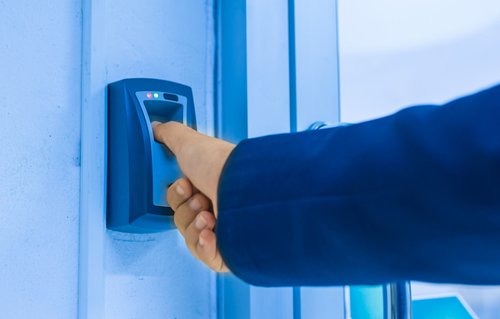
    The Pakistan Telecommunications Authority (PTA) has warned people to be careful of a gang that has been forging thumb impressions to issue SIM cards used in grey trafficking.

    A report submitted during a meeting of the Senate’s Standing Committee on Information Technology and Communication showed that more than 15,000 SIM cards were used for grey trafficking in 2020.

    Grey trafficking is a route that is legal for one country but illegal for the alternative end.

    The PTA spokesperson said, the mafia steals people’s identities, even their thumb impressions, to commit crimes.

    He added that it is suspected that data is being stolen from NADRA and an investigation is being initiated to look into the matter.

    All the complaints received by the authority this year have been sent to the Federal Investigation Authority (FIA) for further investigation.

  • Vanity projects and double standards

    Women in public life are judged on what they wear rather than what they do.”

    The runup to International Women’s Day in Pakistan has been marked by a heated national debate: not about the sorry state of women’s status in the country, but about the witty and audacious slogans raised in connection with Sunday’s Aurat March.

    The absurdity of the debate about Aurat March is characterised by the terrible misogyny it reveals in terms of women’s choices, particularly in relation to their bodies and their appearance. And here it is pertinent to take a step back and recognise just how deeply ingrained preconceptions about women’s appearance and sartorial choices are in Pakistan — and how, to some extent, all of us are guilty of this.

    For me, the most telling thing is the different way in which male and female politicians are regarded and judged and the very different standards to which they are held.

    Most young people will not remember this, but not so long ago, the Sharif brothers sported gleaming pates. Then over a decade ago, they had whatever work is required done and then they sprouted hair on the top of their heads. Nobody really commented on this even though it was essentially a vanity undertaking.

    I wrote about this on my blog on BBC Urdu, pointing out the complete double standards at play: Benazir Bhutto’s appearance had been routinely criticised and her clothes, shoes, gait, hairdo and makeup were something that nearly everybody in Pakistan — men or women — would hold forth upon. My blog which was titled Naye Baal, Nayee Zindagi pointed this out but much of the feedback it generated had an outraged tone telling me how dare I “criticise” these wonderful men — even though all I was doing was pointing out the double standards.

    “Nearly every woman politician in Pakistan is careful to cover her head in public and to look modest, yet the Vawdas and Khans in the political arena will wear tight jeans and designer garb or any other less-than-occasion-appropriate attire yet arouse no comment and suffer no public backlash at all.”

    Bhutto was the first woman elected Muslim prime minister in the world and she achieved this at the very young age of 35. Yet, most of the public discourse around her was less about her policies or her politics and more about her clothes or her looks. People discussed, ad infinitum, the possibility that she might have had plastic surgery as if it was a matter of grave national importance. There was endless holding forth upon this by armchair experts who insisted, authoritatively, that her face looked different than in her early photos. Implicit in all of this commentary was the idea that Bhutto was somehow a terrible, vain and wealthy person if she had had any “work” done.

    Yet, when the Sharifs got new hair, nobody even batted an eyelid.

    Now fast forward to the present day where botox and hair regrowth procedures are becoming more and more common in Pakistan. Notice how little comment there is when a male politician or TV personality appears with a suddenly creaseless forehead or with jet black hair. No surprise, no comment, no embarrassment.

    The prime minister, Imran Khan, had a small bald patch about 14 years ago, but now he periodically appears with slightly thicker hair and nobody seems to comment on it or on any small changes to his face. I’m not saying that we need to comment on people’s appearance or their choices about that appearance, I’m just pointing out that the prevalent view is that men can do what they want but women’s appearance or clothes are considered something that everybody simply MUST criticise.

    These attitudes are, of course, linked up with a primitive social view that “honour” reposes in the body of the woman and she is a possession that might be “stolen” or “lost”. As a possession, she must be controlled by a man because there is a perception that if she is “free”, society will collapse and “immorality” or “fahashi” will prevail.

    Nearly every woman politician in Pakistan is careful to cover her head in public and to look modest, yet the Vawdas and Khans in the political arena will wear tight jeans and designer garb or any other less-than-occasion-appropriate attire yet arouse no comment and suffer no public backlash at all. Educational institutions will have a very strict dress code and rules for females, but be lenient with the males. It is always the women who have to be conscious of what they wear, how they walk or who they speak to.

    Times are changing, but there still is a long way to go because the people who are guilty of this sort of double standards are not just the chauvinists or the religious right — it is nearly everyone. These attitudes are now normalised and are so ingrained in our society that even educated, reasonable people — both men and women – are guilty of such behaviour. But the more aware of these double standards we can become, the more we will be able to overcome them.
  • Judge summons buffalo to court

    A senior civil judge has summoned a buffalo into the court after two persons claimed ownership of the dairy animal in Chiniot.

    A case was being heard by a senior civil judge in the suburban area of Punjab’s Chiniot city after the theft of the buffalo that was stolen from Sambha and was found from a house in Kakkay Tibbay village.

    A local of Moza Samundar village, Nazir, had filed the complaint to the Chiniot local court where he claimed that he owns the buffalo recovered from Kakkay Tibbay village.

    Following his claims, the judge directed authorities to summon the dairy animal in the court. The person accused of stealing the buffalo kept insisting that the animal belongs to him. 

    The civil judge ordered police not to hand over the buffalo to any party until ownership of the animal is proved with evidence and witnesses.

  • Coronavirus can cause $5 billion loss to Pakistani economy

    Coronavirus can cause $5 billion loss to Pakistani economy

    The Asian Development Bank (ADB) has given a “hypothetical worst-case scenario” that shows Pakistan’s economy sustaining a whopping $5 billion loss due to the outbreak of the new coronavirus, in which case Pakistan’s GDP will go down by 1.57% and 946,000 people will be unemployed, The Express Tribune reported.

    According to the report published Friday, the global GDP will also be affected from $77 billion in the best-case scenario to $347 billion in the worst-case scenario, with China affected the most.

    ADB projected that Pakistan’s economy may face $16 to $61 million losses due to the spread of COVID-19, while in a one-page paper issued by Tola Associate — tax and corporate advisors — it was also claimed that the economy of the country will sustain a $5 billion loss due to coronavirus.

    The firm based its claim on an ADB publication.

    According to the estimates published by the ADB the impact of the coronavirus, in terms of the global GDP ranges from $77 billion in best case scenario to $347 billion in worst-case scenario, or 0.1% to 0.4% of the global GDP.

    The report said the total losses likely to be sustained by Pakistan will be only $16.23 million in best case scenario. It projected that in best case scenario, Pakistan’s agriculture and mining sector could sustain a loss of $5.5 million; business trade, personal and public service $5.54 million; hotels and restaurants $0.67 million;  light and heavy manufacturing $3.6 million and transport services $0.92 million.

    In moderate case scenario, the projected losses to be faced by Pakistan are $34.2 million. In worst case scenario, the projected losses to be faced by Pakistan are $60.8 million.

    In the worst case scenario, Pakistan’s agriculture and mining sector will face $21.7 million losses; business and trade $18.8 million losses; hotel and restaurants $2.4 million losses; light and heavy engineering $14.6 million losses; and transport services $3.4 million.

    While discussing the hypothetical worst case scenario, the ADB projected that Pakistan’s economy will lose $5 billion. There will be $1.5 billion loss to agriculture and mining; $1.94 billion to business and trade; $253.7 million in hotel and restaurants; $671 million to light and heavy engineering and $565.6 million loss to transport services.

    In addition to the global slowdown, the fear caused by the COVID-19 is going to cause an estimated loss of $1.5 trillion across the globe in hypothetical worst case scenario. The lockdown has slowed down the pace of the Chinese economy, if compared to the last 30 years.

    Coronavirus losses will depend on the magnitude of the problem and the scale of the underlying uncertainties in countries which have strong trade and production linkages with China, according to the Tola Associate.

    According to the ADB estimates, around 946,000 people will be unemployed in Pakistan in hypothetical worst case scenario.  The net effect of the drop in oil prices due to coronavirus is neutral, yet alarmingly negative for the economy of Pakistan.

    If this crisis prolongs, it will eventually lead to a significant increase in expenditures; a further slowdown in tax collection; a rise in inflation; and an increase in the fiscal deficit.

  • CJP distributes motorbikes among female lawyers

    CJP distributes motorbikes among female lawyers

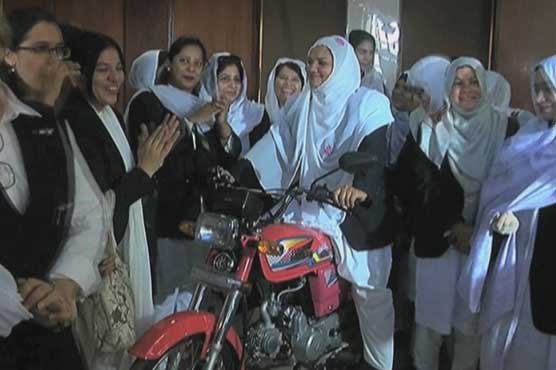
    Chief Justice of Pakistan Justice Gulzar Ahmed distributed motorbikes among women lawyers on Friday. While giving out the motorcycle-driving training to women lawyers, the CJP encouraged women to ride the bikes adding that this was a good start and that he hoped this practice will continue. He also advised women lawyers to avoid talking during motorcycle-riding.

    Addressing a motorbike distribution ceremony at the Sindh High Court Bar Association, the CJP appreciated the bar association’s efforts for providing a motorbike-driving training opportunity to women advocates.

    He said that although motorbike-riding was dangerous, it was the responsibility of the trainers as well as of women motorbike riders to drive safely and ensure that they did not meet with an accident.

    He said women lawyers kept on talking during the programme and advised them to curb their habit of talking during motorcycle-riding.

     Sindh High Court Chief Justice Ahmed Ali M Sheikh also appreciated the SHCBA and senior lawyers for making arrangements to award motorbikes and training to the women lawyers.

    Salman Sufi, head of Salman Sufi foundation, said that his organisation had given motorbike-riding training to as many as 15,000 women since 2016, and have set a target that his organisation would provide training to 500,000 women by 2025.

  • Weekend events in your city

    Weekend events in your city

    Lahore

    Women Festival 2020

    Date: March 8, Sunday

    Time: 10 AM – 7 PM

    Venue: Alhamra Arts Council, Mall Road.

    Meet & Greet of Blogger & Vlogger

    Date: March 7, Saturday.

    Time: 10 AM – 10 PM

    Venue: Hyper bazaar, D Block Commercial, Valencia town.

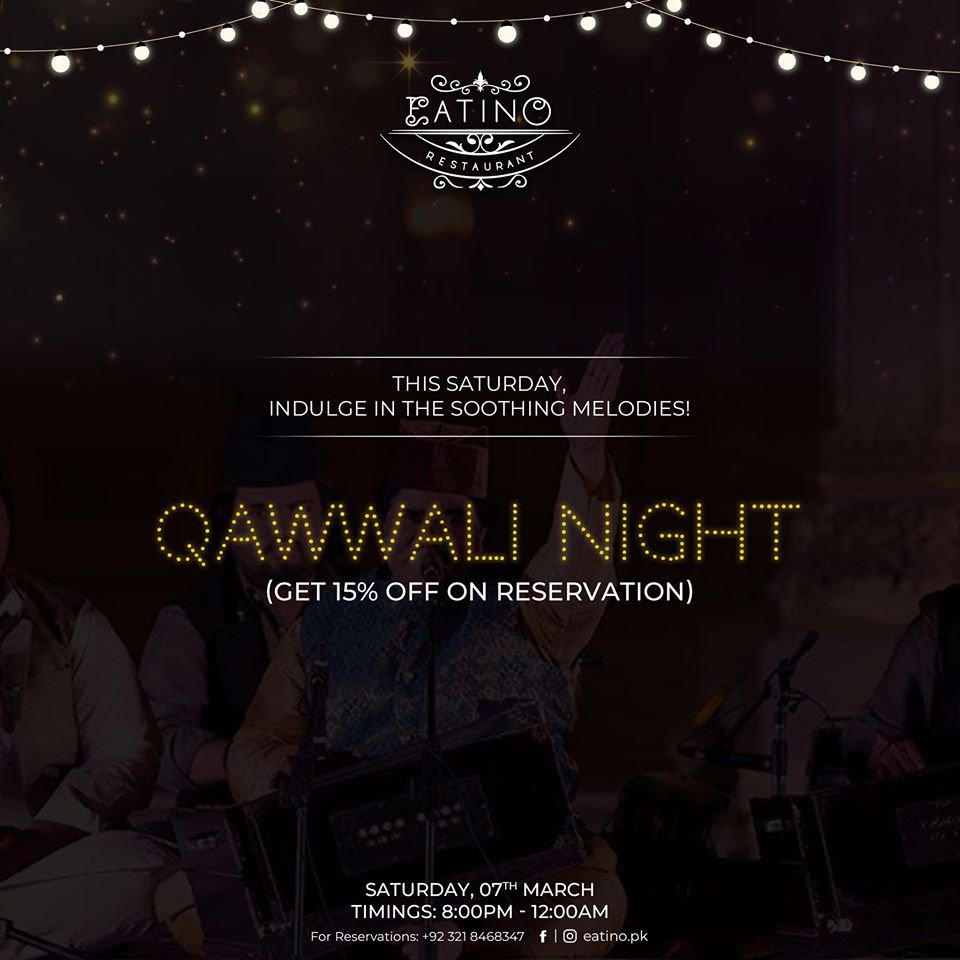
    Qawwali Night

    Date: March 7, Saturday.

    Time: 8 PM – 12 AM

    Venue: Eatino, 8-B1, Phase 1 PGECHS.

    Islamabad

    Bhangra Night

    Date: March 8. Sunday.

    Time: 7 PM – 10:30 PM

    Venue: The Rock Musicarium, Plot9, Lake view Park, Phase 2, Rawal Lake, Promenade.

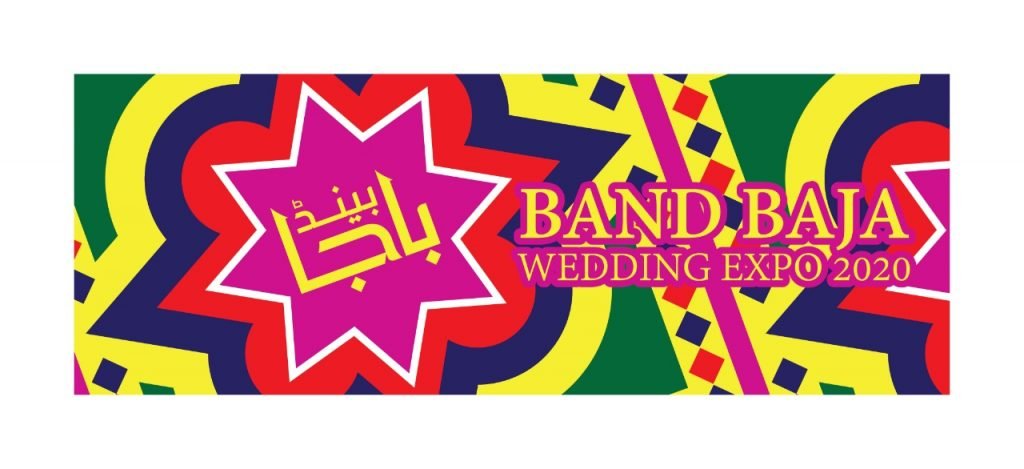
    Band Baja Wedding Expo 2020

    Date: 7-8 March, (Saturday – Sunday)

    Time: 11 AM – 10 PM

    Venue: Pak-China Friendship CenterPak China Friendship Center, Islamabad.

    Karachi

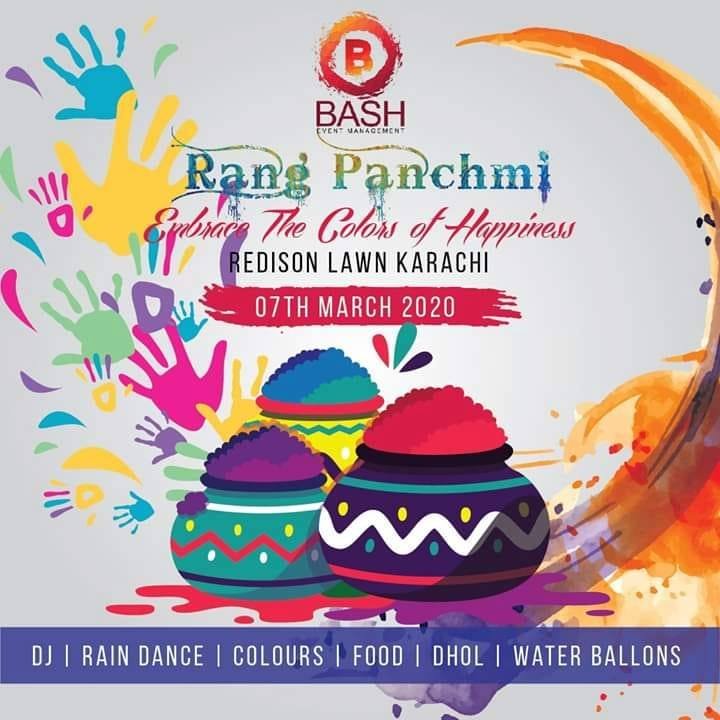
    Rang Panchmi

    Date: March 7, Saturday.

    Time: 8 PM – 12 AM

    Venue: Redisson BanquetDHA Phase I, adjacent PSO Petrol Pump, near KPT Interchange.

    1st Women Conference

    Date and Time: Mar 6 at 3 PM – Mar 7 at 8 PM

    Venue: Arts Council of Pakistan, M. R Kayani Road, Karachi.

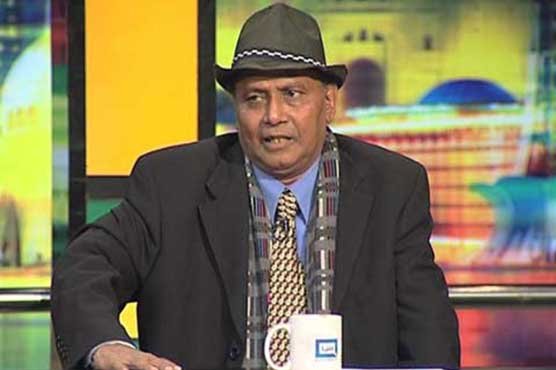
  • Veteran comedian, stage actor Amanullah passes away at 70

    Veteran comedian, stage actor Amanullah passes away at 70

    Veteran comedian and stage actor Amanullah on Friday passed away at the age of 70 after prolonged illness.

    Family sources and senior journalist Dr Shahid Masood also confirmed the news.

    https://twitter.com/Shahidmasooddr/status/1235820998357729280

    Amanullah had on March 3 once again been admitted to a private hospital in Lahore after his health deteriorated.

    He had been shifted to the hospital for the fourth time as his condition was not getting stable. He was suffering from multiple medical complexities such as lungs, kidneys and breathing issues.

    According to Amanullah’s family, he was admitted to hospital after his condition got precarious and that he was on ventilator.

    The family had also appealed to the actor’s fans to pray for his recovery.

  • Realme aims to diversify beyond smartphones, become country’s top tech-lifestyle brand

    Realme aims to diversify beyond smartphones, become country’s top tech-lifestyle brand

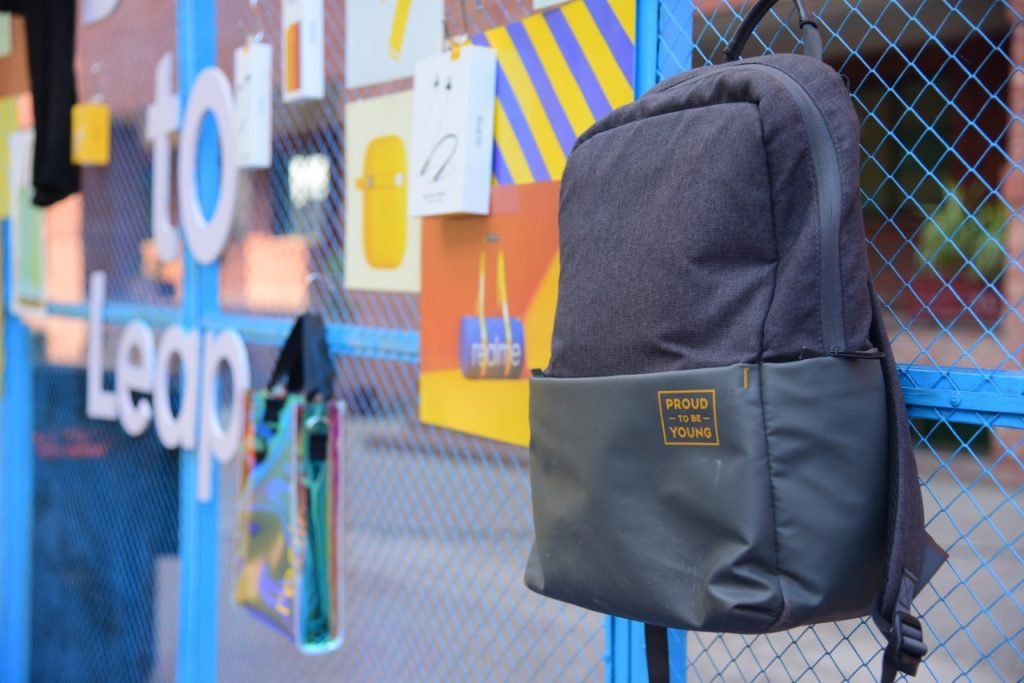
    realme has gone on to become one of the most popular smartphone makers in Pakistan, primarily owing to its incredible value offerings. In a downhill battle with competitors to win the market, the manufacturer has introduced some of the best entry-level to mid-range smartphones.

    With an aim to break the notion of just being a smartphone player, realme, which entered Pakistan last year, now aspires to be a young, tech and fashion brand, as it forays into Internet of Things (IoT) products.

    realme is especially focusing on introducing IoT-based products in the coming year, which will include audio and wearables; and has already launched in Pakistan a number of other products like wireless ear-buds and power banks.

    It is known for the best quality products at affordable prices, and is anticipated to soon launch a fitness band, smart TV, smart-watches and several other products. In line with the outlook of being a young brand targeting millennials, with its own software experience, the realme UI, it will transform into a young tech and fashion ecosystem.

    “For us, 2020 will be about mobile phones and accessories. Ultimately, we want to become a lifestyle products company. Devices will be the major business for us, but we are building realme for the youth. A smartphone is not the only thing the youth wants. There are multiple other things. We want to cater to those demands of the younger generations as well,” realme Pakistan Country Manager Harvey He has said.

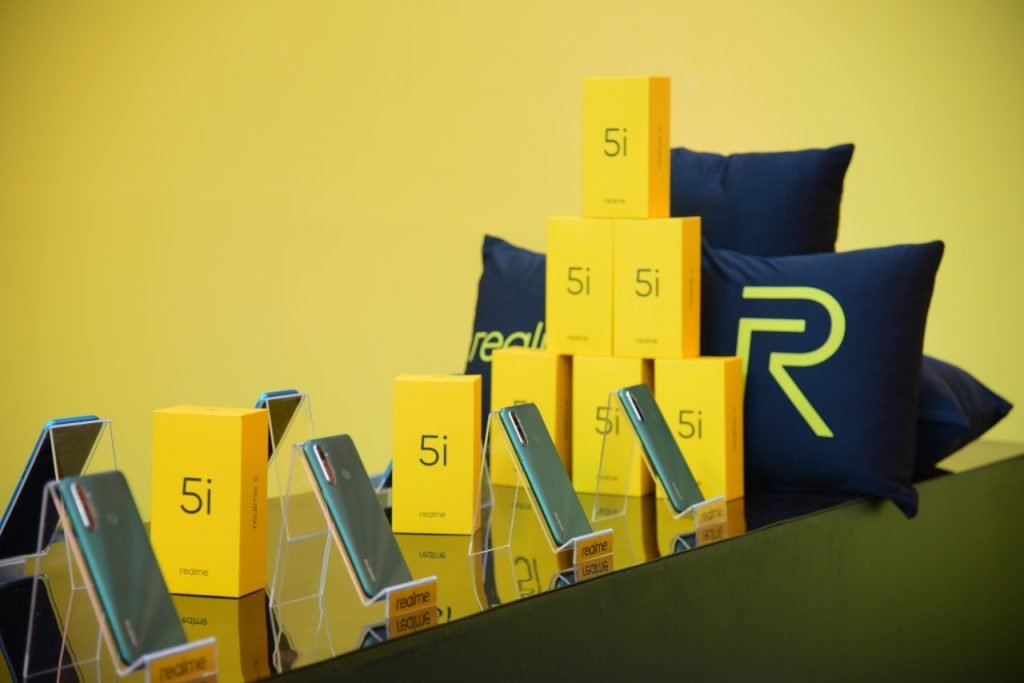
    Since entering the Pakistani market, realme has already launched 11 products across different price segments – from premium flagships to trendy mid-rangers like the recently-launched realme 5i and C3 the key selling points of which have been designed particularly for the youth.

    They are also gearing up for the launch of their latest additions to the classic realme series this month, and is proving its plans for an even steeper growth trajectory than its parent company, through a targeted focus on youngsters.

  • Pakistan ranks 76th on ‘Inclusive Internet Index 2020’

    Pakistan ranks 76th on ‘Inclusive Internet Index 2020’

    Pakistan ranks 76th out of 100 countries on the inclusive internet index 2020 released by the Economist Intelligence Unit (EIU), reported DAWN.

    The ‘Inclusive Internet Index’ place countries on the availability, affordability, relevance and the readiness of masses to use it. This annual report is generated by Facebook.

    READ MORE: US firm helps Modi govt keep social media blocked in held Kashmir

    This report covered 100 countries, which includes 91 per cent of the world’s population and 96pc of global GDP.

    On a benchmark of one (best) to 100 (worst), Pakistan stood at the 76th place out of the total countries surveyed. Apart from the global index, Pakistan ranks 24th out of 26 Asian countries.

    The fundamental reasons for this ranking are gender gaps, low levels of digital literacy and relatively poor network quality, according to the EIU report.

    READ MORE: Apple, Nike and Samsung among 83 brands using Uyghur Muslim ‘forced labour’

    In terms of availability — a category that examines the quality and breadth of available infrastructure required for access and levels of internet usage — Pakistan ranked 86th out of 100.

    The country fared relatively better on affordability (57th) that is described as the cost of access relative to income and the level of competition in the internet marketplace.

    READ MORE: Sensitive personal information of Pakistanis leaked over the internet

    In terms of readiness — measured on the basis of access to the internet, including skills, cultural acceptance, and supporting policy — the country ranked 64th. Finally, Pakistan stood 71st on relevance, which is the existence and extent of local language content and relevant content.

    Looking at South Asia, Pakistan ranked the lowest, Bangladesh at 70th, Sri Lanka at 56 and India on the 46th spot.

    The first country ranked in this year’s index is Sweden, followed by New Zealand and the United States. Australia and Denmark both ranked fourth, followed by South Korea, Canada, the United Kingdom, France and Spain.

    Among the global worst are Burandi at 100th, Liberia, Madag­ascar, Malawi and Burkina Faso.