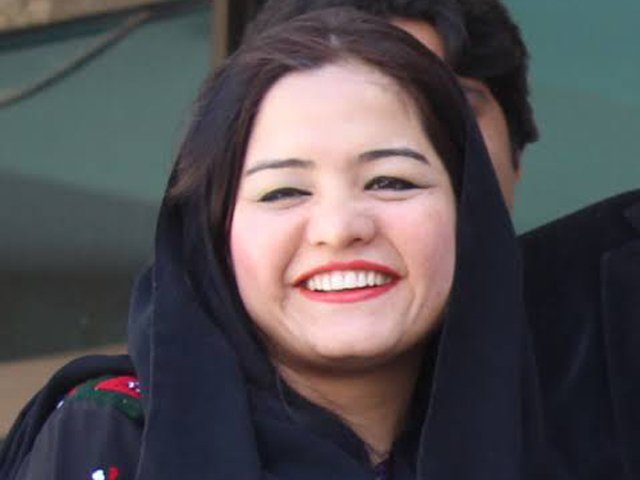
Pakistani human rights activist and lawyer Jalila Haider is being honoured by the United States Department of State with the International Women of Courage Award for the year 2020. Jalila is among the 12 women from across the world who will be receiving the honour.
According to a statement posted on their official website, the award recognises women around the globe who have “demonstrated exceptional courage and leadership in advocating for peace, justice, human rights, gender equality, and women’s empowerment at great personal risk.”
The department stated that Haider was the “Iron Lady” of Balochistan, who had initiated a non-profit to support local communities by strengthening opportunities for vulnerable women and children.
The statement further read: “She has fought against violence against women in public spaces. She specializes in defending women’s rights and provides free counseling and legal services to poverty-affected women. The first female attorney of her Hazara community, Haider led a peaceful hunger strike to recognise the right to life for the Hazaras.”
Other women on the list include Zarifa Ghafari (Afghanistan), Lucy Kocharyan (Armenia), Shahla Humbatova (Azerbaijan), Ximena Galarza (Bolivia), Claire Ouedraogo (Burkina Faso), Sayragul Sauytbay (China), Susanna Liew (Malaysia), and Amaya Coppens (Nicaragua).
Haider is a rights lawyer giving free legal services to women in poverty. In October last year, Haider was named one of the 100 most influential women of 2019 by the British Broadcasting Corporation (BBC).
Besides being a vocal activist for the rights of women, she is also the founder of We the Humans, a non-profit organisation working with local communities to provide opportunities for vulnerable women.
Indian media reports have quoted Defence Research and Development Organisation (DRDO) experts as saying that the industrial autoclave — a pressure chamber used to carry out industrial and scientific processes — seized from Chinese ship Dai Cui Yun, can be used for the manufacture of very long-range ballistic missiles or satellite launch rockets.
According to Hindustan Times, the ship on February 3 was detained by Customs at Kandla Port in Kutch District of the Indian state of Gujarat while en-route to Port Qasim in Karachi “on the basis of an intelligence tip-off” and later allowed to proceed to Pakistan on February 20 after dual-use equipment was seized.
The autoclave was declared as an industrial dryer.
According to top government and intelligence officials, the DRDO’s technical experts and missile scientists informed the Kandla Customs, the Ministry of External Affairs and national security planners on Tuesday morning that the seized 18 metres by 4 metres autoclave could indeed be used in the manufacture of weapons of mass destruction (WMD) platforms.
“The autoclave can be used for the manufacture of the motor of very long-range missiles, with range upwards of 1,500 kilometres or even in the construction of a motor for the launch of satellites. Pakistan has the Shaheen-II missile in the 1,500-2,000 kilometre range and the platform was tested last May,” the report quoted an official as saying on the condition of anonymity.
Islamabad’s nuclear missile programme is not indigenous and is based on Chinese design with Beijing helping Islamabad since the 1980s. India claims it is for no other reason that China is blocking India’s entry into the Nuclear Suppliers Group (NSG) till Pakistan is also allowed to enter the nuclear club”.
The report added that given the seizure of the autoclave, Indian “friends” such as France and the United States (US) “could now pressure Beijing to allow India into the NSG”.
NADRA, PTA spokespersons reject claims against their respective departmentsas data leakmakes headlines
In a massive breach of privacy, personal and sensitive data of millions — if not hundreds of millions of Pakistanis — has been leaked over the internet as blame game continues between the authorities concerned with none of them willing to take the fall for the divulgence.
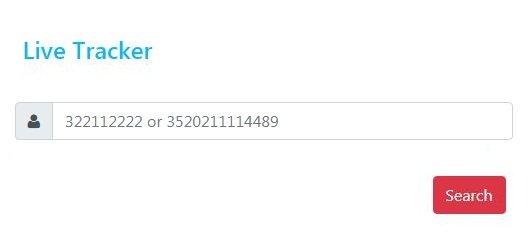
According to the details, multiple smartphone applications and websites, one of which is Sim Database Online, are hosting millions of Pakistani telecom users’ sensitive data such as their Computerised National Identity Card (CNIC) numbers, names and even residential addresses, all of which can be accessed by simply entering the victim’s mobile number.
Not only does the web-based application further goes on to reveal other mobile numbers registered in the name of the privacy breach victim, but also claims to be providing services such as mobile phone tracking.
A screen grab of ‘Sim Database Online’
“Such applications have been around for quite some time now and most probably are the reason behind the recent spike in number of identity theft incidents in Pakistan,” sources told The Current, adding that leaks of government-held databases remain the biggest contributor to identity theft-related crimes in the country, around 50,000 of which were reported in 2019 alone.
Some groups on Facebook are also offering information regarding driving licences, current location, call details and even criminal records associated with any CNIC numbers if you pay them, sources claimed. “You can even dig out the National Database and Registration Authority (NADRA) family trees associated with a CNIC for a few hundred rupees.”
They went on to claim it wasn’t just Pakistanis’ confidential data that was being hosted by such web applications. “Sensitive personal information of Afghans and Indians can also easily be accessed through these websites, but there appears to be no urgency among authorities of the three countries to protect their citizens,” they claimed.
When asked if NADRA or the Pakistan Telecommunication Authority (PTA) were to be held responsible for the leak, they blamed the latter, saying the watchdog had failed to keep an eye on what the country’s telecommunication companies were doing with sensitive data of their customers.
“How else do you the inboxes of so many people get flooded with text advertisements?” sources questioned, alleging that a data archive of registered telecom users was leaked online in August 2017.
“The archive contains information about registered mobiles users of Pakistan categorised by their telecom companies. It is publicly available and contains personal information recorded to verify SIM cards. Despite the leaked information being brought to light by many, the data remains available.”
Speaking to The Current, an information technology (IT) expert said that e-governance came with a set of standards across the world. “If you give access to someone, you have to follow these standards and maintain a certain security level. But unlike the rest of the world… where they have emergency response teams to investigate such issues, Pakistan has had no such probes I know of.”
“Instead of having teams that react to such incidents, we need certain proactive measures,” the IT expert said, adding that privacy over the internet was a right of the users, and most identity theft-related crimes could be linked to data leaks associated with government bodies over the years.
NADRA & PTA:
When approached, NADRA spokesperson Faik Ali told The Current that there was no truth to the claims being made regarding the role of the authority in the data leak as it very carefully managed the sensitive registration database of all citizens.
“NADRA has nothing to do with it,” he said and also rubbished claims regarding a data breach from two years ago.
“We had in 2018 also denied accusations of leakage of voters’ data ahead of the general election,” he said, adding that it was also clarified by the authority in a letter to the Election Commission of Pakistan (ECP). “There has never been a data breach in the history of NADRA and we have never shared any citizen’s data with anyone.”
Faik also reiterated NADRA’s commitment to protect sensitive data of all citizens come what may.
PTA Public Relations Director Khurram Mehran, on the other hand, rejected all claims regarding the watchdog’s alleged inability to protect the data of telecom networks’ customers, saying that no telecommunication companies were involved in releasing confidential information of their customers.
He, however, said that action would be taken against any company if evidence to support such claims is there.
To a query, the PTA spokesperson further said if there were any such cases, they were to be dealt under the Prevention of Electronic Crimes Act (PECA) provisions by the agency concerned, as they were cybercrime cases.
Repeated attempts were made to contact the chairperson of Senate Standing Committee on IT and Telecommunication, Rubina Khalid, but she was unavailable.
Ayyan Ali was arrested at Islamabad airport on March 14, 2015 for travelling with $500,000 and later, a currency smuggling case was filed against her for allegedly trying to smuggle money to the United Arab Emirates (UAE).
Ayyan spent four months in Adiala Jail and her name was also put on the Exit Control List (ECL). However, she was granted bail in July 2016. She flew to Dubai after the court ordered the removal of her name from ECL.
Meanwhile, in November 2018, Ayyan had promised to return with a bang and had shared an update regarding her ongoing cases.
Local English daily had claimed student quarantined at private Karachi hospital under strong suspicions of coronavirus had ‘conclusively tested negative for the disease‘
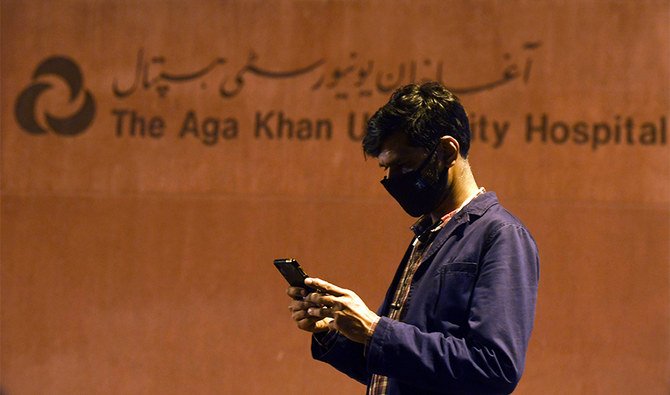
Sindh health officials have rebutted a media report claiming that the first case of coronavirus in Pakistan, which was reported in Karachi last week, “had turned out to be a hoax” as the 22-year-old patient, who was quarantined at a private hospital under strong suspicions of coronavirus, had “conclusively tested negative for the disease”.
According to The News, Karachi University (KU) student Syed Muhammad Yahya Jafri had recently returned from Iran and developed symptoms of influenza.
“The symptoms, coupled with the fact that he had recently returned from Iran, made the doctors and senior provincial health management prematurely declare him as the first case of coronavirus in Pakistan without receiving his final lab reports wherein he tested negative for the virus,” the report had said.
It had quoted KU Vice Chancellor Professor Dr Khalid Mehmood Iraqi as confirming that Jafri’s medical and laboratory reports “clearly indicated he was not suffering from coronavirus”.
“Jafri and his family members who were quarantined by Sindh’s Health Department at a private hospital were discharged on Friday,” he was quoted as saying, adding that a large number of students, including Jafri’s classmates at the varsity’s Department of International Relations, were also tested in the same hospital. “None of them were found affected by coronavirus.”
The claims were, however, refuted by Sindh Health Secretary Zahid Abbasi, who said that the youngster was being kept in isolation after testing positive for coronavirus.
The cybercrime wing of the Federal Investigation Agency (FIA) has arrested a man for blackmailing a woman based on indecent pictures in Karachi’s Nazimabad.
As per reports, the man was arrested during a raid at an ice cream parlour. A first information report (FIR) was filed against Azhar on a complaint of the woman who accused him of harassing her. The suspect had been blackmailing the woman for the past three years.
In a report submitted to a court, the FIA stated that the woman and man became friends on Facebook and later started meeting at restaurants. It added that the suspect had threatened the woman that he would tell her family about their relationship if she didn’t meet him in probate.
According to the FIA report, the suspect forced her to have sexual relations with him on several occasions and recorded it every time on his cell phone. The officials said they recovered a mobile phone containing immoral pictures of women, including that of the complainant.
The suspect had confessed to blackmailing and harassing the woman. He has been sent on remand for three days.
A Hong Kong-based smartphone manufacturer, Infinix, has become the first smartphone company to start manufacturing in Pakistan. Prior to this, only a certain amount of mobile phones were being assembled within the country, including Xiaomi Mi phones.
“Fully aligning with the country’s initiative of ‘Make in Pakistan’, the company keeps growing its investment to contribute and help transform Pakistan into a regional tech hub. This is just one step further towards our mission and commitment to putting Pakistan on the road to progress and prosperity,” Infinix Pakistan said in a statement on Friday.
Located in Pakistan, the Chinese smartphone brand’s manufacturing facility helps prevent the unnecessary worry of coronavirus and the inaccessibility of the newest Infinix products. With the launch of the facility, the company also fulfils its aim of playing its role in empowering the local labour, particularly women, as 60pc of the workforce working in the Infinix Pakistan factory comprised of women.
The manufacturing vicinity was also visited by Chinese Consul General Li Bijian, who applauded Infinix’s contribution in promoting local employment in the country.
Talking about their company mission, Infinix Pakistan CEO Joe Hu said, “Infinix’s vision as a company is to enrich our customers’ experiences, whether it is through our products, or what goes in their manufacturing. To be able to play a small part in the empowerment of the labour force in Pakistan, particularly women, is an important step further towards our mission.”
Infinix’s products in Pakistan are priced from approximately Rs11,000 to Rs40,000.
The development comes as the government finalises the Mobile Device Manufacturing Policy with the theme ‘Make in Pakistan’ under which regulatory duty (RD) on the local assembly of smartphones (Android) will be reduced from the existing five per cent to zero.
Within the next two to three years’ time, 40 per cent localisation in manufacturing will be attained, meaning that the charger manufacturing, casing of the phones and its packing would be done locally and with the passage of time 100 per cent manufacturing of android mobile phones will be done.
Local device manufacturing activity is projected to create 200,000 direct and indirect jobs in the country alongside the development of an efficient manufacturing ecosystem and linking Pakistan to the global supply chain.
Pakistan Super League (PSL) 2020 is the fifth season of the Twenty20 cricket league established by the Pakistan Cricket Board (PCB). And for the first time, all of its matches are being held in Pakistan.
After the Mumbai attack in November 2008, Indian franchise owners refused to include Pakistani cricketers in the Indian Premier League (IPL) due to pressure from the Board of Control for Cricket in India (BCCI). Pakistan had been working on its own premier league for a while, but the idea of PSL was only materialised under the leadership of former PCB chairman Najam Sethi.
The first season of PSL was a huge hit and led to an interest in all cricketing countries. PSL opening and closing ceremonies, as well as all the matches, have had record-breaking numbers on the league’s digital platforms. This year, the numbers are said to be even more than the four previous seasons.
All six teams have their unique qualities as well as strengths and weaknesses. Every cricketing fan in Pakistan has an opinion about these teams and has his or her favourites. While we’ve only had PSL semi-finals and finals in the country in the past, this year’s tournament is even more special with all matches being played here in a development that we had not seen in a long time.
Although one would think it would lead to full houses in all stadia, only Multan has seen housefuls at matches. Karachi’s turnout has not been that bad and same goes for Rawalpindi, but the most disappointing turnout has been in Lahore.
Whether it was due to the security arrangements and road closures, one cannot say for sure, but we think Pakistanis should come out in full force to support the PSL. There are 36 international players who are in the country and this gives Pakistan cricket a huge boost as it takes away some of the baggage that we have carried since the terror attack on the Sri Lankan cricket team in 2009.
To some people, shutting down roads on match days seems like a hassle, but to be fair, this is the only way forward to bring international cricket back to Pakistan. Hopefully, in the years to come, we would not be needing this much security, but for now, we have to live with the discomfort that for the good of cricket and Pakistan, doesn’t seem much.
A Christian labourer, who was tortured by local landowners in Kasur three days ago on accusations of “polluting” their tube-well water by bathing in it, succumbed to his injuries on Friday, Pakistan Today reported.
The report quoted the deceased’s family members as saying that 22-year-old Saleem Masih on Thursday was brought to General Hospital in a critical condition from Chunian tehsil.
“On February 25, Saleem had finished unloading chaff in fields in Baguyana village and was rinsing himself off in the tube-well when a group of men, including Sher Dogar, Iqbal, Altaf, Jabbar and Haji Muhammad, rushed over, yanked him out of the water and began beating him,” Saleem’s father Ghafoor Masih said.
“They cursed and abused Saleem for ‘polluting’ the water, calling him a ‘filthy Christian’,” Masih claimed, adding that the assailants then dragged the youth to their cattle farm, where they chained his hands and feet and continued to torture him with sticks and rods. “They also rolled a thick iron rod over Saleem’s entire body, causing multiple fractures and internal injuries.”
Ghafoor said that the family was informed about the incident by police officials four hours after his son was taken hostage and tortured.
“When we reached the cattle farm, we found Saleem lying unconscious on the ground, his face and body bloodied,” he said. He alleged that according to Dogar and the other men, Saleem had “committed a crime by dirtying” their well water and that his punishment was “justified”.
Masih said that after much pleading, the family was allowed to take Saleem to the hospital while the police acted like spectators.
Accusing the Ila Abad Police of favouring the accused, Pakistan Center for Law and Justice (PCLJ) Executive Director Napolean Qayyum said that police had helped the five men obtain bail after briefly holding them in custody.
He said successive governments have failed to reform a deeply corrupt police system that often shows religious prejudice toward minority and marginalized communities.
“The police’s attitude is often biased when they deal with matters relating to blasphemy, forced conversions and marriages of girls belonging to minority faiths, and even in minor disputes,” Qayyum said. “In this instance, for example, the police favoured the accused and helped them in getting bail even though a young man’s life was at serious risk.”
Punjab Minister for Human Rights and Minorities Affairs Ejaz Alam Augustine said that the incident was in his knowledge and stern action would be taken against the perpetrators and the police officials concerned.
Regarding the family’s claim that their son’s killing was religiously motivated, Augustine said the incident was a result of the mindset that prevails in society. “No law can change such a mindset. The government is trying to promote tolerance for the other faiths but it is an uphill task that cannot be achieved overnight.”
It merits a mention that Kasur is the same district where an illiterate young Christian couple was beaten and burned to death by a frenzied mob in 2014 over false allegations of blasphemy. Shahzad and Shama Masih, 26 and 24 respectively, had been accused of desecrating pages of the Holy Quran along with other household waste.
The mob beat the two with sticks and stones before burning them in a brick kiln in front of police officials who stood watching. Postmortem reports revealed that the two were alive when they were thrown into the kiln.
After the attack, it emerged that the couple had been falsely accused. The pages that the family burned were their personal documents.
In what is being termed as a major win against the new coronavirus — COVID-19 — for China, the country has discharged a total of 36,117 patients from hospitals after recovery, official state-run Chinese press agency, Xinhua, reported.
The criteria for deciding if a patient has recovered varies between provinces, but in general, Chinese hospitals require people to test negative twice in a row, and to show no obvious symptoms such as a fever. Patients who are released are supposed to check in with their hospital and can face retesting — which is when some tested positive again.
A total of 36,117 patients infected with the novel coronavirus had been discharged from hospital after recovery by the end of Thursday, reports quoted Chinese health officials as saying on Friday.
Thursday saw 3,622 people walk out of hospital after recovery, the National Health Commission said in its daily report.
By the end of Thursday, a total of 78,824 confirmed cases of novel coronavirus infection had been reported in 31 provincial-level regions of mainland China, and 2,788 people had died of the disease.
Meanwhile, another report quoted a key Chinese respiratory disease expert as saying that some discharged coronavirus patients could still carry the virus and be infectious, potentially posing another complication to Beijing’s efforts to control the epidemic.
Zhao Jianping, the head of the coronavirus containment team in worst-affected Hubei province, said a minority of patients who were discharged from hospital after tests showed they were negative for the virus later tested positive again. China counts patients whose throat or nose swabs show up positive for the virus in a nucleic acid test, and those whose CT scans show lesions in their lungs, as infected cases.
It is pertinent to note that the news of recoveries from China — epicentre of the virus — comes as the world fights a global outbreak of the disease. While cases are being reported in the United States (US), Europe and the Middle East, Pakistan has also confirmed the presence of virus with first two infections.
The presence of coronavirus in Pakistan was confirmed on Wednesday, with Special Assistant to the Prime Minister (SAPM) on Health, Dr Zafar Mirza, tweeting the reaffirmation.
220/ I can confirm first two cases of corona virus in Pakistan. Both cases are being taken care of according to clinical standard protocols & both of them are stable. No need to panic, things are under control. I will hold press conf tomorrow on return from Taftan.
Dr Mirza also addressed a joint press conference with Balochistan Chief Minister Jam Kamal Khan late on Wednesday night confirming the two cases in Karachi in Islamabad.
The SAPM, while urging calm across the country, confirmed that the first patient along with his family had been quarantined. The 22-year-old man in question had returned to Pakistan from Iran on February 20, with all passengers from the flight set to be tracked and tested. At least 100 patients have been tested negative thus far.