Tag: Pakistan

  • Pakistani Hindus reject Indian offer for citizenship

    Pakistan’s minority Hindu community has rejected India’s offer to grant them citizenship under a new law, a private media outlet reported.

    Citing the harassment of minorities in Pakistan, Bangladesh, and Afghanistan, the Indian parliament recently amended its citizenship law, offering citizenship rights to Hindu, Buddhist, Christian, Parsi and Jain communities migrating from these countries.

    The law, however, excluded Muslims, triggering mass protests across the country.

    “Pakistan’s Hindu community unanimously rejects this bill, which is tantamount to dividing India on communal lines,” Raja Asar Manglani, patron of the Pakistan Hindu Council, told Anadolu Agency.

    “This is a unanimous message from Pakistan’s entire Hindu community to Indian Prime Minister [Narendra] Modi. A true Hindu will never support this legislation,” he said.

    He added that the law has violated India’s own constitution.

    Anwar Lal Dean, a Christian member of the Pakistani parliament’s upper house or Senate, also said the law is meant to pitch religious communities against each other.

    “This is a clear violation of fundamental human rights. We categorically reject it,” said Dean, a leader of the opposition Pakistan People’s Party.

    “Through such unjust and uncalled steps, the Modi government wants to pitch religious communities against each other,” he said, citing scrapping of Jammu and Kashmir’s longstanding special rights law, Indian Supreme Court’s judgment on Babri Mosque, and growing violence against minorities in India.

    Pakistan’s tiny Sikh community has also denounced the controversial law.

    “Not only Pakistani Sikhs but the entire Sikh community in the world, including those in India, also condemn this move,” said Gopal Singh, leader of the Baba Guru Nanak.

    “The Sikh community is a minority both in India and Pakistan. Being a member of a minority, I can feel the pain and the fears of the Muslim minority [India]. This is simply persecution,” he said.

    Singh urged Modi not to push minorities “back to the wall.”

    While introducing the citizenship law, Indian Home Minister Amit Shah told parliament that non-Muslim population in Pakistan has alarmingly decreased over the years.

    He said the minorities comprised 23% of Pakistan’s population in 1947, when it was formed. “But now it has decreased to a mere 3.7%,” he said, adding that this means either they have been killed, migrated or forced to convert their religion.

    The official figures available with the Pakistan Census, however, contest his claims.

    The minority population was never 23% in the then-West Pakistan (present-day Pakistan).

    According to the 1961 census, the non-Muslim population was recorded at 2.83%. A decade later in 1972, the census recorded non-Muslim population at 3.25% of the total population. That means, it increased by 0.42%.

    In the 1981 census, the non-Muslim population was 3.30%. In the next census carried out in 1998, it was recorded as 3.70% of the total population.

    Though Pakistan carried out a fresh census in 2017, its religious data has yet to be released. However, according to Pakistan Hindu Council leader Manglani, Hindus make up 4% of the total 210 million population. Nearly 80% of Hindus — Pakistan’s largest minority — inhabit the southern part of the Sindh province.

    Pakistan’s government has accused India’s government led by Bharatiya Janata Party of toeing the ideology of “Hindutva Supremacy.”

    “The Modi government continues to curb and undermine the rights of minorities in accordance with Hindutva supremacist ideology,” Foreign Minister Shah Mahmood Qureshi said in a series of tweets on Monday.

    “Illegal annexation of Kashmir, [handing over of] Babri Masjid [to Hindus], and [the] Citizenship Amendment Bill which excludes Muslims, are all targeted towards subjugation of minorities,” he added.

    Condemning the use of force against students protesting against the controversial bill in different parts of India, Qureshi said: “Concerned about the brutal and indiscriminate use of force by the state on Indian Muslim students of Jamia Millia Islamia and Aligarh Muslim University, protesting against the Citizenship Amendment Bill.”

    Pakistan’s main opposition leader Shehbaz Sharif too decried the Modi government for stifling the voice of dissent through state force.

    “Disturbing news and images emanating from India. The state fascism being perpetrated on students of Jamia Millia Islamia and Aligarh Muslim University, is a reminder that Modi’s hatred of Muslims is ideologically driven,” he said in a twitter post.
  • ‘Who’s trying to save their dad?’ Bilawal asks PM Imran

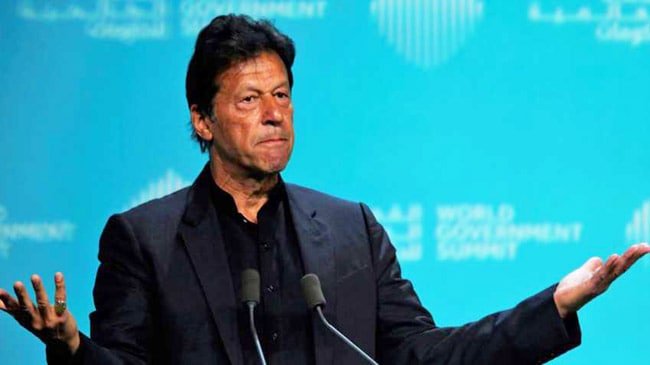
    A day after the government announced to review the death sentence awarded to former military ruler General (r) Pervez Musharraf, Pakistan People’s Party (PPP) chief Bilawal Bhutto-Zardari has taken a dig at Prime Minister (PM) Imran Khan by asking him that “who was trying to save their father”.

    “Who is running a ‘Save the Dad’ (abbu bachao) campaign?” the chairman of the country’s second-largest opposition party said in a tweet that apparently came in response to Pakistan Tehreek-e-Insaf (PTI) ministers and the premier himself repeatedly calling out Bilawal and Pakistan Muslim League-Nawaz (PML-N) leader Maryam Nawaz for launching “Save the Dad” campaigns.

    On Tuesday, a special court awarded death sentence to former military dictator Musharraf in absentia for suspending the constitution on November 3, 2007.

    While the counsel for the convict and the armed forces’ media wing in separate statements strongly criticised the decision that they said was taken “in haste”, opposition parties maintained that “justice had prevailed”.

    Meanwhile, Special Assistant to the Prime Minister (SAPM) on Information and Broadcasting Firdous Ashiq Awan has said that the government will “review in detail” the ruling.

    “We will review in detail, today’s verdict as well as yesterday’s,” Dawn quoted her saying on Tuesday. She further said that legal experts would analyse all legal and political aspects as well as the impact on national interests, after which a government statement would be presented to the media.

    In response to a question about whether the government will bring Musharraf back to Pakistan, Awan said the government would assess the matter with its legal team. “The premier himself will look at the relevant ground realities and legal framework, following which a final decision will be taken.”

  • Pakistan ranked 151 out of 153 in gender equality index: WEF

    Pakistan ranked 151 out of 153 in gender equality index: WEF

    According to the Gender Equality Index report of the World Economic Forum, Pakistan stood 151 out of 153. The only two countries below Pakistan are Iraq and Yemen.

    Though grand claims have been made about improving educational opportunities for youth, empowerment of democracy and the betterment of health facilities in the country, all have been shattered after the INGO placed Pakistan at number 150 in the list of economic participation and opportunities, 143rd in education attainment, 149th in health and survival and 93 in political empowerment globally.

    While Pakistan stood 112th in 2006, the standing has drastically slipped to 151 in the the last 14 years.

    The report highlights that there is a huge gap of 32.7 percent between men and women in the context of economic opportunities. The gap has also widened to 94.6pc – which means that women do not have the same facilities in comparison to men.

    On the contrary, Bangladesh ranked 50, followed by Nepal 101, Sri Lanka 102, India 112, Maldives 123 and Bhutan 131.

  • Sri Lankan commentator Russel Arnold becomes a Biryani fan

    Famous
    Sri Lankan cricket commentator Russel Arnold has become a fan of Karachi’s
    biryani. The former cricketer is now  in
    Karachi with the ICC’s official commentators’ team for the second Test match
    between Pakistan and Sri Lanka.

    Russel took to Twitter to express his love for biryani, stating Karachi as the ‘Biryani Capital’ of the world.

    Unsatisfied with a single plate, Russel even hit an extra session in the gym to eat  some more biryani.

    The
    arrival of Sri Lankan cricket team has marked the return of Test cricket in
    Pakistan. With the first Test match in Rawalpindi being washed out by
    rain, everybody is now waiting for Karachi Test that will decide the series.

    The matches are scheduled from December 19 (Wednesday) to December 23 (Monday) at the National Stadium, Karachi.

  • ICC selects Pakistan’s Nida Dar for its T20I team of the year

    ICC selects Pakistan’s Nida Dar for its T20I team of the year

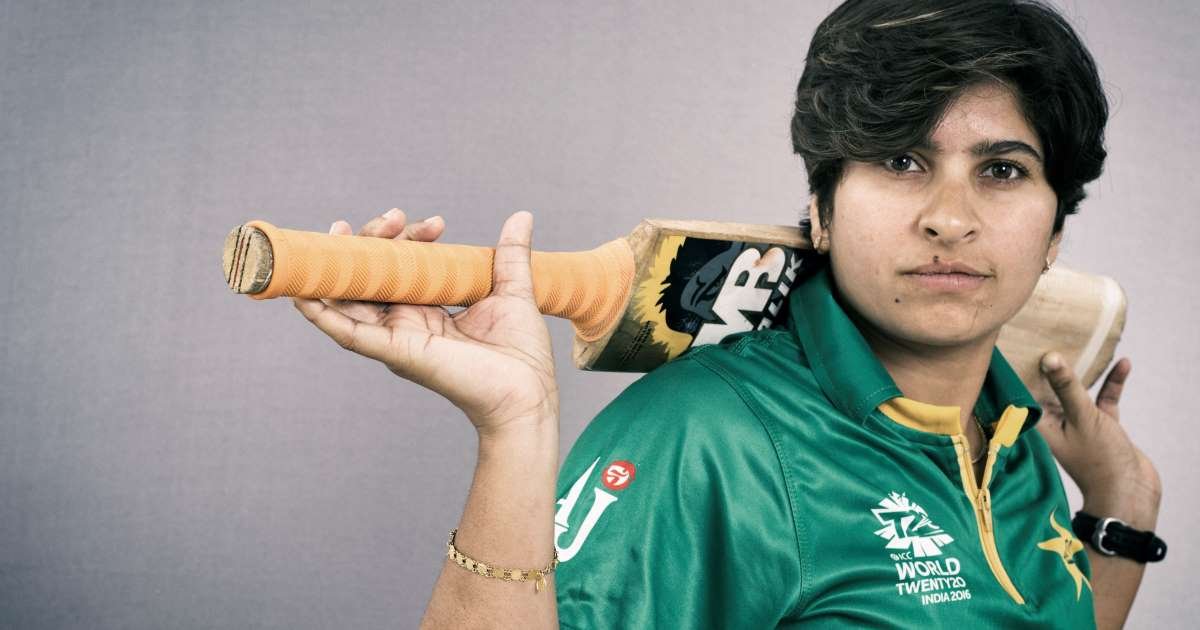
    Pakistan’s Nida Dar, more popularly known as Lady Lala, was picked in the ICC Women’s T20I team of the year.

    The 32-year-old is the only Pakistani player in the 11-member squad led by Australia’s Meg Lanning. The maximum number of players have also been selected from Australia namely Alyssa Healy, Ellyse Perry and Megan Schutt.

    Other members in the team include India’s Smriti Mandhana, Deepti Sharma and Radha Yadhav, South Africa’s Lizelle Lee and Shabnim Ismail. Dani Wyatt is the only England player in the team.

    Nida Dar made her debut as a bowler in women’s twenty20 match against Sri Lanka in 2010. She took her first five-wicket haul in a match against Sri Lanka in women’s Twenty20 Asia Cup 2018. She was also named as the standout player in the team by the International Cricket Council for the 2018 ICC Women’s World Twenty20 tournament.

  • ‘Saudi Arabia telling a nuclear-power what to do’; Twitter react to PM Imran’s Malaysia decision

    ‘Saudi Arabia telling a nuclear-power what to do’; Twitter react to PM Imran’s Malaysia decision

    Prime Minister (PM) Imran Khan has cancelled his scheduled visit to Malaysia reportedly after succumbing to pressure from Saudi Arabia and Twitter is not happy about it.

    According to reports, Foreign Minister (FM) Shah Mahmood Qureshi will represent Pakistan in the premier’s place at the Kuala Lumpur Summit scheduled for December 18-20, after a meeting between PM Imran with Saudi Crown Prince Mohammad Bin Salman in Riyadh, during which matters related to bilateral relations were discussed.

    The Kingdom has reportedly raised serious concerns over the statement of Malaysian PM Mahathir Mohammad, who had recently said that the Muslim countries at Kuala Lumpur Summit would form a new platform to replace the Organisation of Islamic Cooperation (OIC) that he said had failed to deliver on issues faced by the Muslims across the world.

    Here’s what politicians and journalists among other Twitterati have to say about PM’s Malaysia decision.

    And many have termed the move “a failure of Pakistan’s foriegn policy”.

    Meanwhile, Special Assistant to Prime Minister (SAPM) on Information and Broadcasting Dr Firdous Ashiq Awan has said that after his Bahrain visit, the premier will travel to Geneva and return to Pakistan Thursday, following which a final decision regarding his Malaysia trip would be taken.

  • Saudi Arabia ‘forces’ PM Imran to cancel Malaysia trip

    Prime Minister (PM) Imran Khan has cancelled his scheduled visit to Malaysia following his meeting with Saudi Arabia’s Crown Prince Mohammad Bin Salman in Riyadh, The News reported.

    According to reports, Foreign Minister Shah Mahmood Qureshi will be representing Pakistan in the premier’s place at the Kuala Lumpur Summit scheduled for December 18-20, which will also be attended by notable Muslim leaders, including Qatari Emir Sheikh Tamim Hamad Al Thani, Turkish President Recep Tayyip Erdogan and Iranian President Hassan Rouhani.

    “Saudi Arabia raised serious concerns over the statement of Malaysian PM Mahathir Mohammad who had recently said that the Muslim countries at Kuala Lumpur Summit would form a new platform to replace the Organisation of Islamic Cooperation (OIC) which he said had failed to deliver on issues faced by the Muslims across the world,” the report quoted sources as saying.

    Saudi Arabia and its allies, including the United Arab Emirates (UAE), Kuwait and Bahrain are perturbed over the expected presence of Qatari emir, Turkish president and Iranian president at the summit and fear a new but parallel leadership forum is being developed to undermine Saudi Arabia and its allies, it said.

    The report further claimed that the UAE has also raised its concerns over Mahathir’s statement and has requested Pakistan to avoid the Kuala Lumpur Summit that “may trigger a new controversy among the Muslim Ummah”.

    “PM Imran was also conveyed concerns by Bahrain’s King Hamad Bin Isa Al-Khalifa over the intentions of the Kuala Lumpur Summit. The premier assured the royals of Saudi Arabia and Bahrain that he would not be a partof any scheme being planned to undermine the Gulf leadership,” sources were quoted as saying.

    They said that UAE’s Emir Sheikh Mohammed Bin Zayed Al Nahyan had raised his concerns with Chief of Army Staff (COAS) General Qamar Javed Bajwa three days ago on December 14 as well.

    Meanwhile, Special Assistant to Prime Minister (SAPM) on Information and Broadcasting Dr Firdous Ashiq Awan has said decision about Imran Khan’s visit to Malaysia to attend the Kuala Lumpur Summit will be taken according to national interest.

    She noted that after his Bahrain visit, the premier will travel to Geneva and return to Pakistan Wednesday, following which a final decision regarding his Malaysia trip would be taken.

  • Singapore sets a mosquito factory to curb dengue cases

    Singapore sets a mosquito factory to curb dengue cases

    Every year dengue fever comes and makes us all worried even though the government is trying to control the deadly virus with initiative like fumigation, surveys to check larvae, public awareness campaigns on television and radio etc. However, the mosquito-borne disease is far from being under control.

    But what Singapore has done to fight against dengue is surprising as well as interesting.

    Instead of killing mosquitoes, Singapore has set up mosquito factories which produces a new type of mosquito. What happens is when this ‘new kind’ of mosquito goes out and ‘falls in love’ with other mosquitoes, the outside world mosquito will no longer be able to reproduce which means that the mosquito population decreases.

    And what’s even more interesting is that this new mosquito does not bite.

    https://www.youtube.com/watch?v=PJfBmHgSxBA
  • We forget…

    It was a cold December morning when Pakistan had woken up to the gloom of having lost Dhaka over four decades ago.

    Leaving their abodes, hundreds of thousands – if not millions – had taken to social networks to vent their frustration over the tragedy that until December 16, 2014, was deemed the darkest in the 70-something years history of the country.

    Little did they know that 150 coffins, 134 of which were to be the heaviest, were to be lifted later that day; that a tragedy much similar to 2004’s Beslan massacre in Russia, was in the offing.

    Six gunmen affiliated with Tehrike Taliban Pakistan (TTP) conducted a terrorist attack on Army Public School (APS) Peshawar at around 10 am. The militants, all of whom were foreign nationals, entered the school and opened fire on staff and children, killing 150, including 134 between the ages of eight and 18.

    The attack sparked widespread reactions from across the country, as condemnations from the public, government, political and religious entities, journalists and celebrities, poured in. Imran Khan’s infamous 126-day Islamabad sit-in as a member of the opposition was also called off.

    While media reacted strongly to the events as major newspapers, news channels and many commentators called for a renewed and strong action against militants, many countries, international organisations and important personalities also condemned the attack.

    Reacting to the carnage at the army-run school, terrorist organisation Al-Qaeda said that “soldiers should be targeted, not their children”.

    Today marks five years since wails of the nation broke through the deafening silence of December amid the state’s failure to protect its own; since those at odds vowed to rise above their differences to unite and fight extremism, and since the moment when we started forgetting yet another tragedy.

    Although it is believed that memories hanging heaviest are the easiest to recall, it is regrettable how we tend to forget even the ones that hold in their crinkles the ability to change not only our lives as individuals but also the fate of the entire nation.

    It is regrettable how we have limited our recalling of these painful memories to certain days such as December 16, without thinking of the families that go through the pain of losing their loved ones, especially minors, all day every day.

    Make no mistake as what we argue is not torturing ourselves with the misery that is our own creation, but what we advocate for is realising every day what led to the tragic episode that should’ve defined us for the generations to come.

    Because it is regrettable how we were let down, it is regrettable how we let down those 150 innocents, regrettable how we let down millions of others killed because of the failure of the state to protect its citizens, and regrettable how many of us fail to realise there still is time for us to pick ourselves up, dust ourselves off and get back in the saddle.

    Here’s to the courageous survivours who beat the cowards five years ago… here’s to the memory of the 150 souls, from the ashes of whom, we must rise.

  • Pakistan post suffered losses worth Rs61 billion in last 10 years

    Pakistan post suffered losses worth Rs61 billion in last 10 years

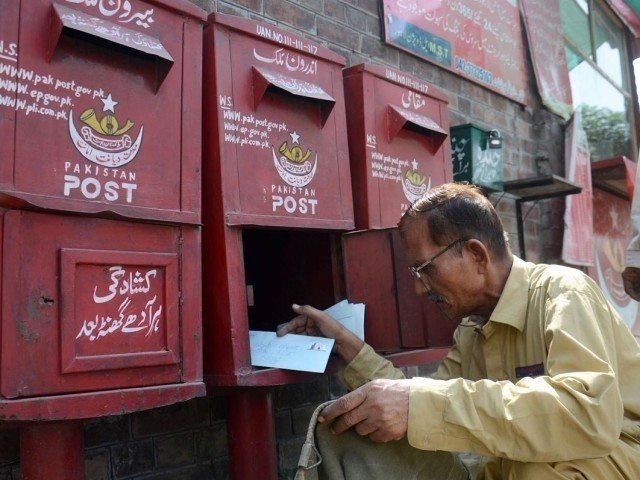
    The Pakistan Post has suffered a loss of Rs61 billion in the last 10 years.

    According to reports, the Ministry of Postal Services, while presenting statistics regarding organisation’s performance, told the Senate Standing Committee that the institute faced a loss of Rs140 million in year 2008-2009 and this loss swelled to Rs10 billion in 2018-2019.

    The ministry while explaining the causes of this huge loss
    said that the increase in pay, allowances and pension benefits was a major
    contributor to widening gap between expenditure and revenue.

    They said that the Finance Division had decreased the rate
    of post office commission in Savings Bank Scheme from 1.56% to 0.50% in
    October, 2010 which reduced the receipts of the institute.

    The panel’s chairman Senator Mian Ateeq observed that the situation of the postal service was no different from the Pakistan International Airlines (PIA) – the national flag carrier –facing huge losses since over a decade.

    The chairman also suggested that the operating expenditure
    against income must be added as well. While reviewing recruitment discrepancies
    during previous regimes, the panel recommended that Pakistan Post must focus on
    figures.