Pakistani authorities last month thwarted an attempt by a Sikh girl to enter the country illegally.
According to reports, the girl came to Darbar Sahib Gurdwara in Kartarpur and entered Pakistan as a Sikh pilgrim in order to meet her Pakistani boyfriend at the Darbar Sahib.
The girl, identified as Manjeet Kaur, met her boyfriend who was from
Faisalabad. The guy had come along with a couple of friends including a woman.
Kaur decided to stay in Pakistan and the woman who had accompanied the Faisalabad man gave the girl her visitor card. Kaur then discarded her pilgrim card in a dustbin in order to avoid being caught.
However, Pakistani authorities hindered the plan and confronted the couple before the girl could escape into the country.
Following the incident, security around the Sikh holy site was tightened and visitors will now have to provide biometric verification when exiting the holy place as well.
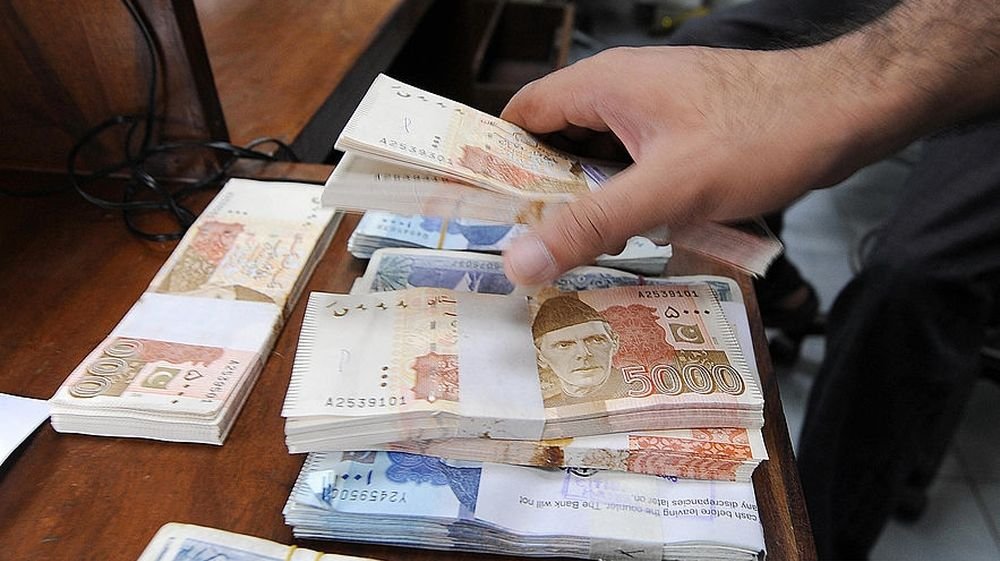
Pakistan has successfully reapaid a foreign debt of over $1 billion, shaking up the country’s foreign currency reserves on the day Moody’s rating agency upgraded Islamabad’s credit rating outlook to from ‘negative’ to ‘stable’, Express Tribunereported.
According to the details, Pakistan on Monday has paid back around $1 billion on maturity of five-year international Sukuk.
“We paid over $1 billion including interest payment at the maturity of a Sukuk today (Monday),” reports quoted SBP’s official as saying.
Pakistan had earlier launched a $-denominated Islamic bond worth $1 billion with a five-year tenure in the international bond market in November 2014, during the Pakistan Muslim League-Nawaz (PML-N) government’s tenure. The sovereign bonds were issued at a rate of 6.75%.
The bond got matured in November 2019 and accordingly, the State Bank of Pakistan (SBP) has repaid $1 billion, borrowed to build the foreign exchange reserves.
A sukuk is an Islamic financial certificate, similar to a bond in Western finance, also commonly referred to as “sharia compliant” bonds. Since the traditional Western interest-paying bond structure is not permissible, the issuer of a sukuk sells an investor group a certificate, and then uses the proceeds to purchase an asset, of which the investor group has partial ownership. The issuer of the sukuk bond must also make a contractual promise to buy back the bond at a future date at par value.
The said payment from the SBP’s foreign exchange reserves will be reflected in the next weekly forex report. However, the reports reveal that with this repayment, the SBP’s reserves will most likely slip below $7 billion.
Moody’s in its report has highlighted that Pakistan’s foreign exchange reserve adequacy remains low, adding that that foreign exchange reserve adequacy will take time to rebuild.
At the time of launching the Sukuk, the bond fetched bids amounting to $2.3 billion, five times higher than the actual target set by the government.
The government had planned to raise $1-2 billion in fresh foreign debt before the Sukuk payment was made. The floating of new Sukuk and Eurobond has remained pending for long.
At the time of launching the Sukuk bond, it fetched bids amounting to $2.3 billion which is five times higher than the actual target set by the government.
The government had planned to raise $1-2 billion in fresh foreign debt before the Sukuk payment was made. The floating of new Sukuk and Eurobond has remained pending for long.
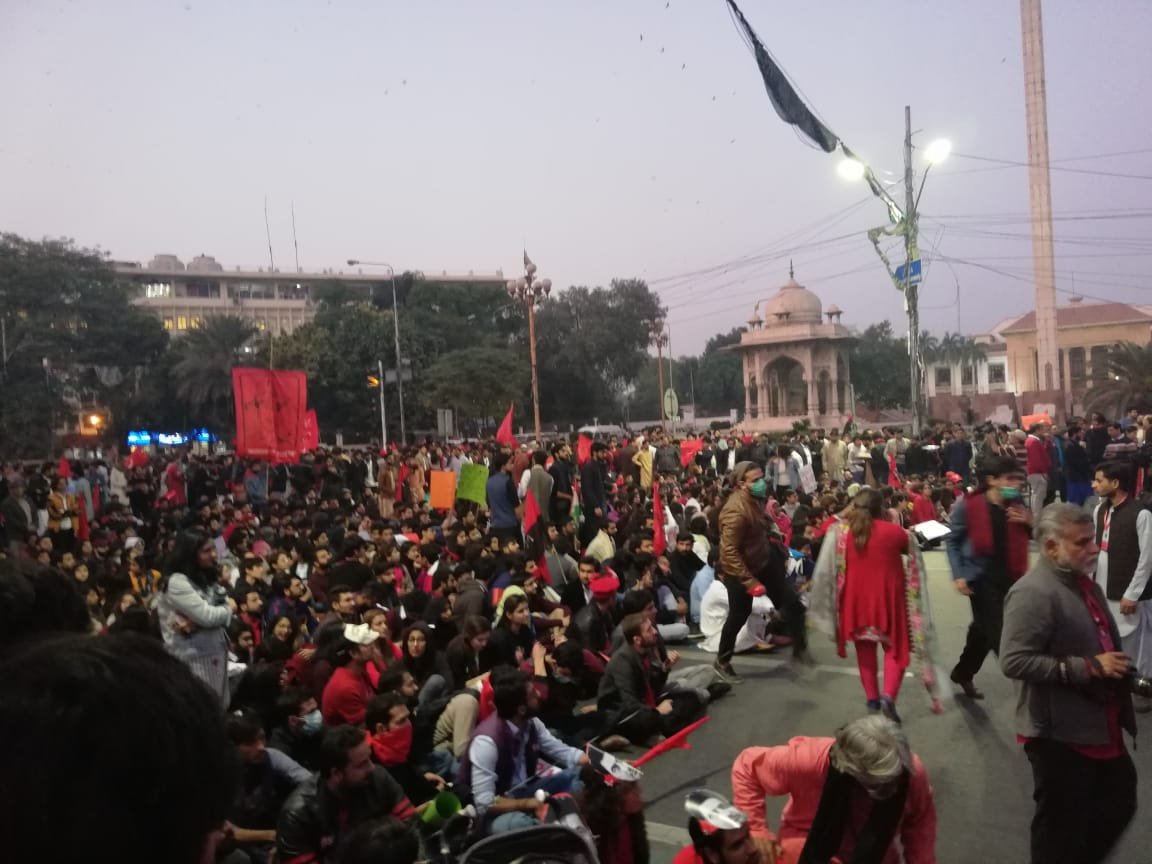
On November 29, hundreds of thousands of students marched in 50 cities of Pakistan. Their main demand was that the ban on student unions be lifted; other demands included right to free education, better education facilities, etc.
Any civilised country would have celebrated that the country’s youth came out on the streets to ask for their rights. In a country where more than 64 per cent of its population is under the age of 30, Students’ Solidarity March should have been a moment of pride for Pakistan. Instead, we saw that the top trend on Twitter the following day (November 30) was #StudentsMarchExposed.
From calling these students ‘foreign agents’ to ‘traitors’, this and many other comments on social media portrayed this march in a negative colour. This isn’t entirely a Pakistani phenomenon. In our neighbouring India, the same card has been used against students. The sedition case against Jawaharlal Nehru University (JNU) students comes to mind. A sedition case was registered against JNU Students’ Union President Kanhaiya Kumar, Umar Khalid, Anirban Bhattacharya and eight others for allegedly raising ‘anti-national slogans’ during an event at JNU in February 2016.
This is not to say that all comments pertaining to the Students’ Solidarity March in Pakistan were negative – our mainstream media and many on social media praised the students for organising such a successful march on the streets of Pakistan. But we must question this negativity regarding an indigenous movement that should be lauded for its efforts.
On December 1, an FIR pertaining to sedition charges was registered against the organisers of the march in Lahore as well as some of the participants, including Iqbal Lala who is the father of Mashal Khan, a student lynched on allegations of blasphemy, academic Ammar Ali Jan, labour rights activist Farooq Tariq, Alamgir Wazir Mohammad Shabbir and Kamil Khan. One can only wonder why sedition charges were brought against peaceful protestors.
Well, if there is one thing common since Pakistan came into being, it is how the state hands out certificates of who is a ‘traitor’/‘anti-national’/‘anti-state’ to whosoever challenges the status quo. What to talk of others if someone like Māder-e-Millat (Mother of the Nation) Fatima Jinnah – who fought for Pakistan’s independence alongside her brother Quaid-e-Azam Mohammad Ali Jinnah – couldn’t escape the tag of being a ‘foreign agent’ by the then military dictator Ayub Khan. Nationalist leaders were also dubbed anti-state. From Bacha Khan to Baloch nationalists, from G.M. Syed to mainstream leaders like Benazir Bhutto and Nawaz Sharif, all have been labelled ‘anti-national’ at one point of time or another.
Dissenting voices that challenge how the state has failed its citizens or those who question the flawed policies of the Pakistani state are dubbed as ‘foreign agents’ working on the agendas of some foreign powers. Patriotism of politicians, students, human rights activists, civil society, NGOs, lawyers, social media activists, media groups, journalists and anyone who has crossed a ‘red line’ or gone against the status quo has been called into question. Just recently, Chief Justice Asif Saeed Khosa lamented how the three judges including the CJP were being called Indian agents, CIA agents, etc., for questioning the government’s notification regarding the army chief’s extension.
Pakistanis should realise that dissenting voices are the conscience of a country and that freedom of expression is a fundamental right. We must not go down this dangerous path of silencing dissent for if we do, there will no one to speak for the rights of the marginalised, the rights of minorities, the rights of any human being. Let us not go down a disastrous path from where there is no turning back.
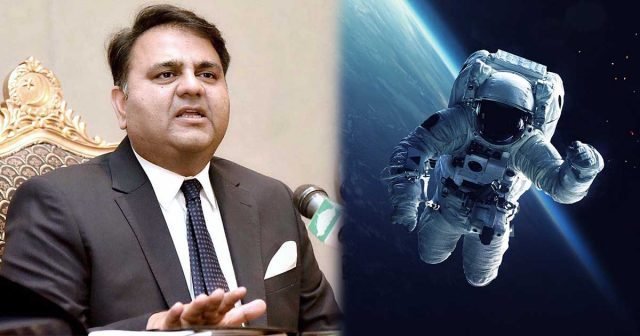
Federal Minister for Science and Technology, Fawad Chaudhry has revealed that Pakistan will become the first country of South Asia which would introduce battery-powered electric buses in the country.
The minister in his Twitter message has said that the budget of science and technology has increased up to 600% in the current year, adding that he would make efforts to hike the budget to 1000 per cent next year.
Fawad credited Prime Minister (PM) Imran Khan for his special attention in the sci-tech sector, saying that the government has brought back the country to research and development with the support of the PM.
Chaudhry said that ministerial commissions are being established with Russia and the government is now focused on the European Union (EU) and United States (US).
اس سال سائنس اور ٹیکنالوجی کے بجٹ میں چھ سو گنا اضافہ ہوا وزیر اعظم کی بھرپور سپورٹ سے ہم پاکستان کو ریسرچ اور ٹیکنالوجی کی دینا میں واپس لائےہیں اگلے سال بجٹ میں ہزار گنا اضافے کی کوشش کروں گا۔ چین کے بعد روس سے وزارتی کمیشن قائم ہو رہے ہیں اب توجہ یورپی یونین اور امریکہ پر ہے
He said, “It is our failure for not manufacturing engines, but we will make up solar panels and lithium batteries in the next three years. The energy system of the country will be completely changed.”
The minister further announced that Jhelum biotech park will become the largest herbal medicine park of South Asia, whereas, Pakistan will be the first country which would manufacture battery-powered [electric] buses in the region.
اس سال سائنس اور ٹیکنالوجی کے بجٹ میں چھ سو گنا اضافہ ہوا وزیر اعظم کی بھرپور سپورٹ سے ہم پاکستان کو ریسرچ اور ٹیکنالوجی کی دینا میں واپس لائےہیں اگلے سال بجٹ میں ہزار گنا اضافے کی کوشش کروں گا۔ چین کے بعد روس سے وزارتی کمیشن قائم ہو رہے ہیں اب توجہ یورپی یونین اور امریکہ پر ہے
On November 20, it emerged that the government had set to launch electric buses in Pakistan to combat air pollution. The federal government has reportedly signed a Memorandum of Understanding (MoU) with private ride-hailing service to introduce electric vehicles in the country.
The MoU was signed by Fawad Chaudhary and CEO of bus hailing service in Islamabad on Tuesday, according to Radio Pakistan.
Under this agreement, the company will introduce electric battery-powered buses and also spend Rs12 billion to expand its transport bus service in the country.
Ministers, leaders of opposition parties, journalists as well as rights activists have voiced their support for marchers as students across the country take to roads for 2019 edition of the Students’ Solidarity March and press the authorities for better educational facilities.
The marchers insist that the government must ensure the following:
Lift the ban and hold elections for student unions
Abandon privatisation of educational institutes and reverse the recent decision of school and college fee hike
The state should pledge free education for all
No more budget cuts for the Higher Education Commission (HEC) or sacking of educational staff
At least five per cent of the GDP should be allocated for education
Abolish the semester system
Lift the ban on students from participating in political activities
End the intervention of security forces in educational institutions and release all students held captive in the name of national security
Establish committees to investigate incidents of sexual harassment and ensure women are made a part of the setup
All universities should have a library, hostel and provide transport and an internet connection
Modernise education systems according to the modern scientific requirements
Set up schools and colleges in lesser developed areas and increase the quota of students coming from outside main cities
Establish research centres for a transition from fossil fuel energy to renewable energy in public sector universities
Announce April 13 as a national holiday to honour Mashal Khan
The march on Friday was held in over 50 cities across Pakistan, including Karachi, Lahore, Islamabad, Rawalpindi, Quetta, Gilgit, parts of Khyber Pakhtunkhwa (KP), Azad Jammu & Kashmir (AJK) and interior Sindh.
Students, labourers, lawyers and rights union members all joined in as thoroughfares flooded with marchers holding banners, placards and red flags. Solidarity was also expressed with members of New Delhi’s Jawaharlal Nehru University Students’ Union (JNUSU) as protests against fee hike continues across the border.
In a tweet, the Progressive Students’ Collective (PSC) shared the final locations for the march.
Rawlakot A) Degree college to Zaheer Chowk 10.30 am B) Poonch University to Main Road 11.00 am
— Progressive Students’ Collective (@PSCollective_) November 29, 2019
Pakistan People’s Party (PPP) chief Bilawal Bhutto-Zardari also lent his support to the marchers.
“The PPP has always supported student unions. The restoration of student unions by SMBB [late former prime minister Benazir Bhutto] was purposely undone to depoliticise society,” he tweeted.
end to privatization of public universities, implementation of sexual harassment legislation, right to student housing & the demilitarization of campuses. The spirit of activism and yearning for peaceful democratic process from a new generation of students is truly inspiring. 2/2
“Today students are marching in the #StudentSolidarityMarch for the restoration of unions, implementation of right to education, end to privatisation of public universities, implementation of sexual harassment legislation, right to student housing & the demilitarisation of campuses. The spirit of activism and yearning for a peaceful democratic process from a new generation of students is truly inspiring [sic].”
Earlier in the day, Federal Minister for Science and Technology Fawad Chaudhary also came out in support of the restoration of student unions and termed the ban “undemocratic”.
I fully support Restoration of students unions, ban on students unions is anti democratic,we can always ensure that students politics must remain violence free and regulations may be introduced for smooth functioning but ban on students politics amounts to limit future politics
Federal Minister for Human Rights Shireen Mazari wrote:
Causing polarisation. What is needed is not a ban on Student Unions but clear rules – which Unis shd enforce – so that student unions function effectively as they do in other parts of the world – learning tolerance & accommodation of the other.
Among others who expressed support for student marchers were politicians including PPP’s Farhatullah Babar, former Awami National Party (ANP) parliamentarian Bushra Gohar and journalists, including Mazhar Abbas.
We stand by and with #StudentSolidarityMarch. Ban on unions unacceptable, intimidating presence of uniform on campuses unacceptable, forced occupation of students space by uniform unacceptable, shrinking space for intellectual infrastructure in name of 5G war unacceptable https://t.co/0lovJs2aIO
Earlier, the PSC and other organisations from all over Pakistan had formed the committee (SAC) at a national level to demand the revival of student unions and other issues. Representatives of student organisations from Sindh, Balochistan, Gilgit Baltistan, KP, AJK and Punjab are part of the SAC.
According to Dawn, over the past three weeks, SAC office bearers have conducted corner meetings in public and private educational institutions to hold the march in their respective areas. They said the Pakistan Tehreek-e-Insaf (PTI) government had left students dejected and directionless and reduced the higher education budget to almost half, bringing Pakistan into the list of countries that spend very less on education.
Ahead of the march, scores of Pakistani student leaders studying at international universities have also voiced their support for the march.
In an open letter addressed to the government, students have come together under the banner of the Pakistan International Students Alliance (PISA) and registered opposition to the ban on student unions.
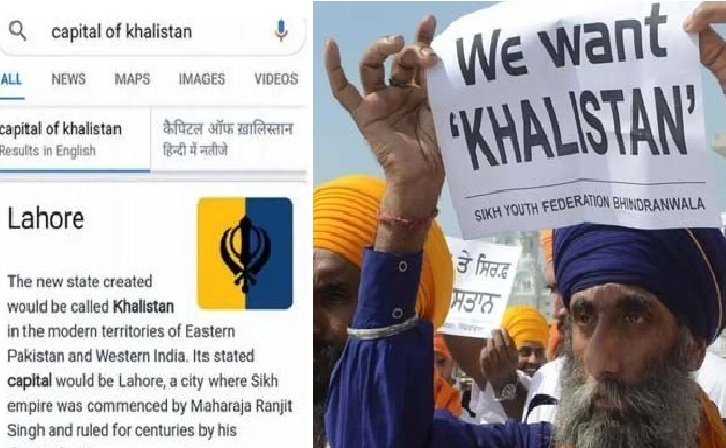
In yet another faux pas, Google now says that ‘Lahore’ is the capital of Khalistan — a seperate country that Indian Sikhs seek as their homeland in the Punjab region of eastern Pakistan and western India.
An Indian Twitter user attached the screenshot of the Google search declaring Lahore as the capital of Khalistan state with a blue-saffron flag and a ‘Khanda’ insignia of Sikhism on it.
Indian media went into haywire following the circulation of the images, saying that Google search had “substantiated its accusations on Pakistan for fanning and supporting the separatist movement”.
“The new state created would be called Khalistan in the modern territories of Eastern Pakistan and Western India. Its stated capital would be Lahore, a city where the Sikh empire was commenced by Maharaja Ranjit Singh and ruled for centuries by his descendants,” one of the search results read.
Khyber Pakhtunkhwa’s Chief Minister Mahmood Khan has introduced a smartphone application, “Mera Bacha Alert” to help citizens and concerned departments in the recovery of missing children in the province.
According to reports, the launch event of the application took place at the Chief Minister’s Secretariat where CM Mahmood appreciated the efforts of the Performance Management and Reforms Unit of Khyber Pakhtunkhwa. He said that the app would not only help in recovering the missing children but would also discourage dreadful incidents regarding innocent children in the province.
The mobile app is available in the KP citizen’s portal and soon will be added to the Pakistan citizen’s portal.
This application will allow parents to register a report if their child goes missing. They will be able to upload a picture along with the necessary attributes.
The application will auto-generate alerts and SMS
will be sent to the District Police Officer (DPO), Regional Police Officer
(RPO), Inspector General of Police (IGP) and the chief secretary.
Moreover, the details including registration of FIR,
starting of investigation, dispatching of the team, evidence collection and
completion of investigation would also be added to the dashboard of District
Police Officer (DPO)
This application will also help in developing a
directory of all the cases of missing children at the provincial level and can
be monitored by the Chief Minister and Chief Secretary as well.
A Muslim aerospace Engineer from Pakistan, Dr. Sarah Qureshi has developed a pollution free engine for airplanes to help in reducing global warming as well as creating artificial rain.
According to the details, Sarah Qureshi holds a Masters degree in Aerospace Dynamics, as well as a PhD in Aerospace Propulsion from Cranfield University, United Kingdom and her pollution free aeroplane engine has taken all the aerospace industry by storm.
Sarah, in a recent interview said that she has launched a company called “Aero Engine Craft” to make environment friendly airplane engines, with her father, Masood Latif Qureshi who is also a Scientsit and a Physicist.
The engine which she has developed has an idiosyncratic pressure-based condensation system which will help in cooling the water vapours in the airplane’s exhaust.
Moreovert, the water will be on the airplane and can be released as rain if required.
The Federal Ministry of Information Technology and Communication has issued a confidential letter to concerned authorities and advised them not to use WhatsApp for official correspondence.
According to reports, hostile Israeli intelligence has installed a stealth spyware ‘Pegasus’ to monitor users sensitive data, activities, and movements. The spyware was recently deployed in 1,400 senior government and military official’s phones in 20 countries, including Pakistan.
The ministry said that in order to minimise the possibility of any infection by Pegasus malware, government officials holding sensitive portfolios and dealing with national security matters should not share any classified information on WhatsApp or any similar application.
Furthermore, Pakistani users could be in a more precarious situation as the Indian government is also reportedly using the spyware to monitor the Pakistani user’s cellphone data.
Congress leader Priyanka Gandhi has also alleged Prime Minister Modi’s government of collaborating with Israeli spy agencies to spy into the phones of journalists, lawyers, activists and politicians in India.
The spyware (Pegasus) has sent waves of concerns in every corner of the world because it has infected millions of smartphones. WhatsApp has officially acknowledged the cyber-attack and filed a lawsuit against the maker of the software. WhatsApp/Facebook has also sued the Israeli company in the US court of San Francisco for violating the US, California state laws as well as the WhatsApp terms of services.
Considering the Ministry doesn’t have any solution in place to curb cyber-attacks of this level, they have advised government officials to discard all mobile phones purchased before May 10 this year.
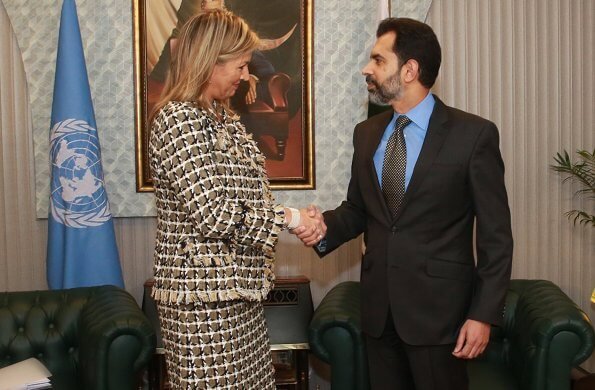
United Nations (UN) Secretary General’s Special Advocate for Inclusive Finance for Development (UNSGSA) Queen Maxima has said that Pakistan is in a good position for a boost to the technology-enabled financial inclusion, Express Tribune reported.
According to the details, Queen Maxima in a meeting with State Bank of Pakistan (SBP) Governor Reza Baqir said that in the last five years, the country’s start-up tech and fintech ecosystems had made some notable progress in relation to improving their supporting networks.
She also appreciated the progress made by the SBP and Pakistan with respect to financial inclusion while focusing on gender mainstreaming and digital financial services.
The queen said it could be helpful to establish a pro-poor gateway for the wider acceptance of micropayment methods and introduce consumers to micropayments on a large scale and supported the steps taken by the SBP for creating a micropayment gateway in 2020.
She, however, added that while resolving the technical issues was important, it was more challenging to encourage people to engage in digital modes of payment.
The UNSGSA emphasised that in this regard the inclusion of new players was important, whereby they should not only be competing but also participating in expanding the delivery of services as well.