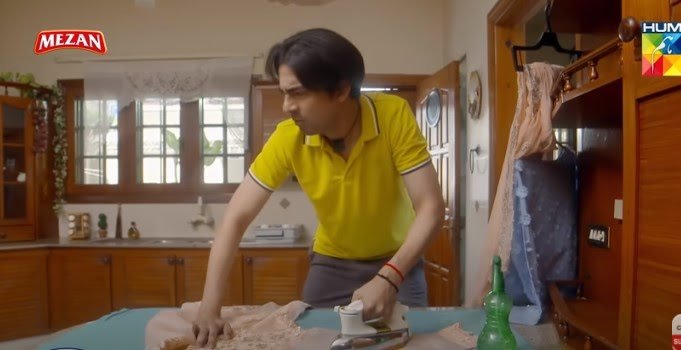
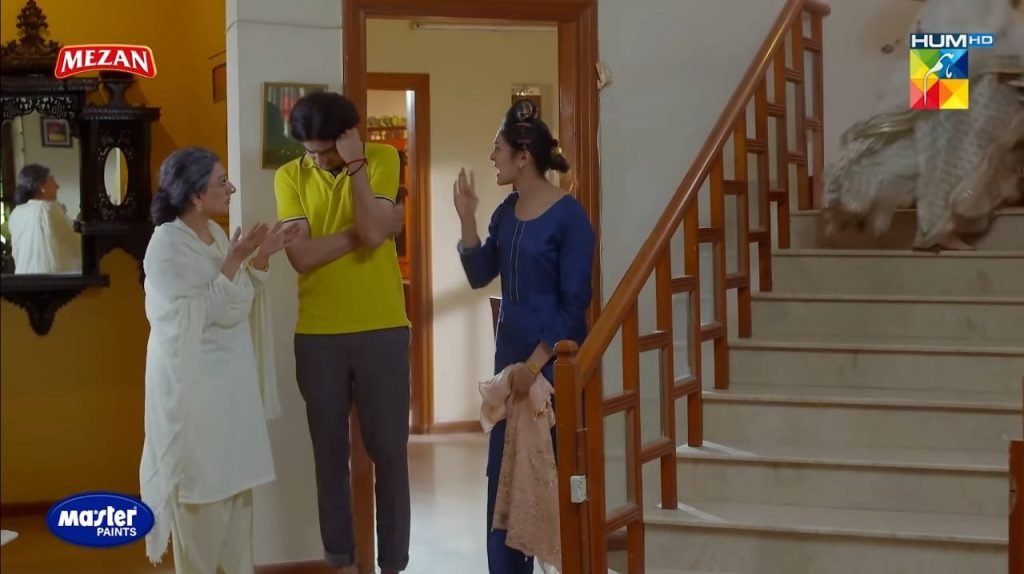
Ali Safina has responded to the criticism on a character he is playing in a Hum TV’s special Ramzan series Chupke Chupke.
When a social media user asked Safina how he feels about the criticism on his role of a ghar damad, the actor said: “Bhai jab Miskeen bhai apni family k saath khush hai to logon ko kya fikar hai? Chill karein sab and enjoy the show (If Miskeen is happy with his family then why are people worried? Chill and enjoy the drama).”
Bhai jab miskeen bhai apni family k sath Khush hai to logon ko Kya fikar hai? Chill karein sab and enjoy the show. https://t.co/8aDM6C073C
Safina’s character has sparked a heated debate on social media with many saying that the drama is showing sons-in-law in poor light. Safina, who plays Miskeen is married to Gul (Mira Sethi) and lives in his wife’s house with her family. His duty is to look after the kitchen and to do all the other house chores.
Miskeen’s in-laws and wife never leave a chance to insult him and mock him for being “useless” and only a burden to the family. Some viewers are unhappy with this problematic portrayal of a ghar damad.
Earlier, Osman Khalid Butt had justified the character saying that Miskeen is ridiculed because he refuses to work even though he has an opportunity to join the family business.
“And while he’s played for broad comedy, has his own arc,” he had added.
Maybe she just doesn’t…want to? I think if anything, Gul-e-Rana is in complete control of her life. I can’t believe we’re policing the choices of a fictional character?
Written by Saima Akram Chaudhry and directed by Danish Nawaz, Chupke Chupke is a comic caper involving two families. It also features Ayeza Khan, Asma Abbas, Farhan Ali Agha, Aymen Saleem, Arsalan Naseer, Mira Sethi and Tara Mahmood besides Butt and Safina.
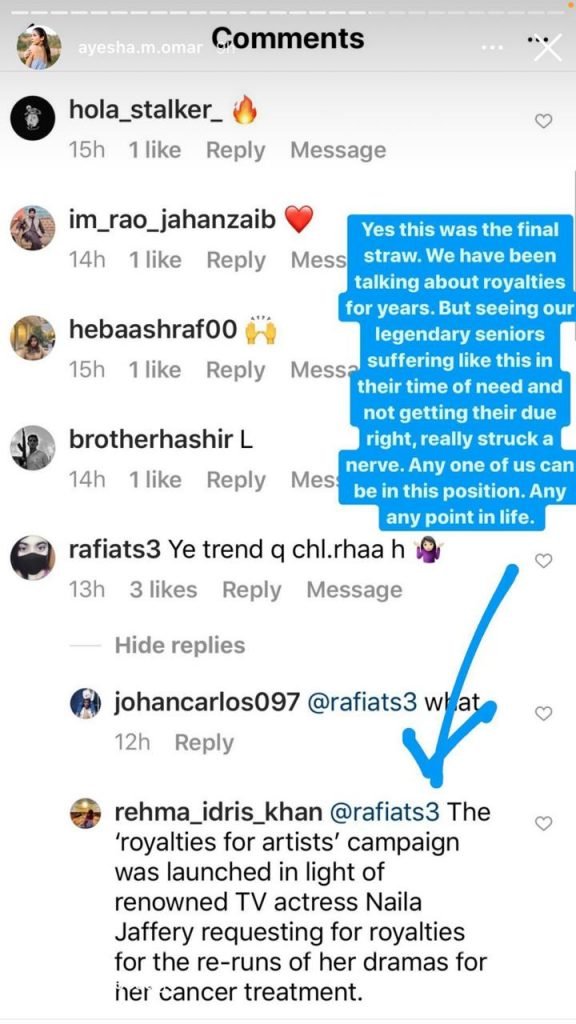
Pakistani artists from the entertainment industry on Monday came together to start a campaign on social media. The hashtag #GiveRoyaltiesToArtists was posted all over Instagram and Twitter as actors, musicians, models and others stood together to demand royalties for artists.
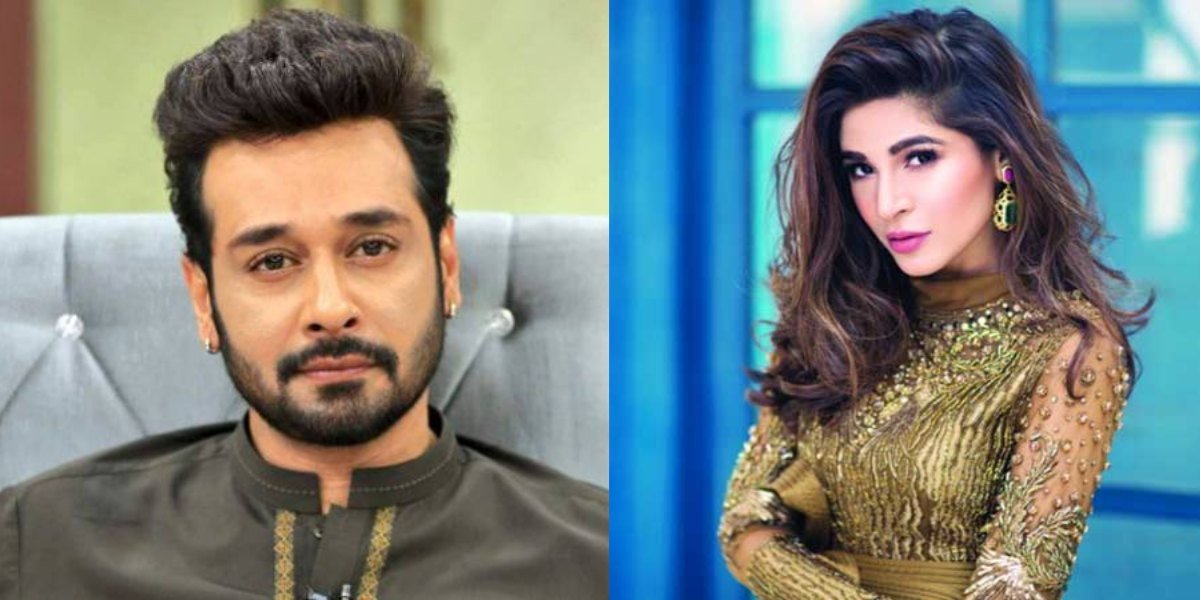
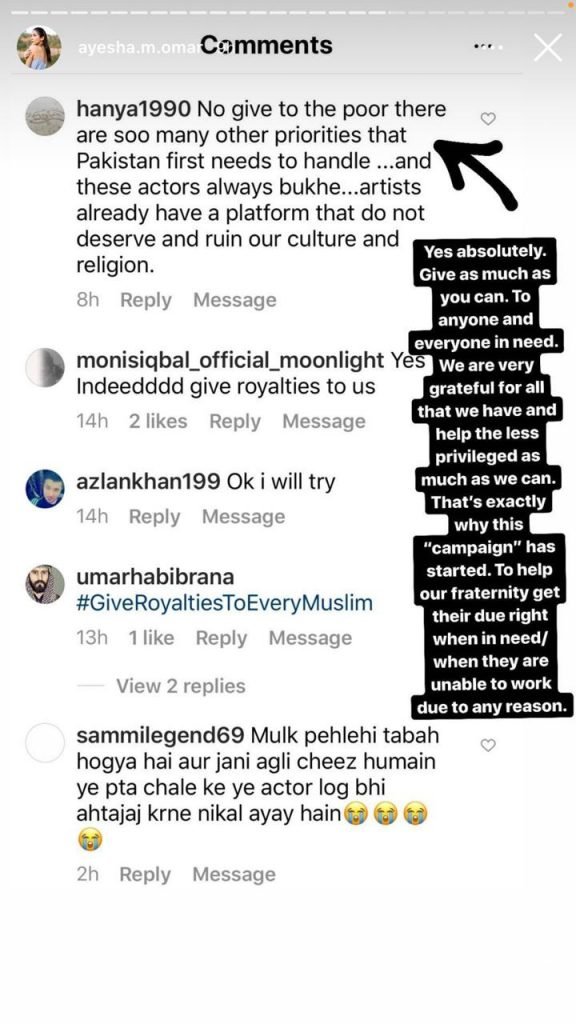
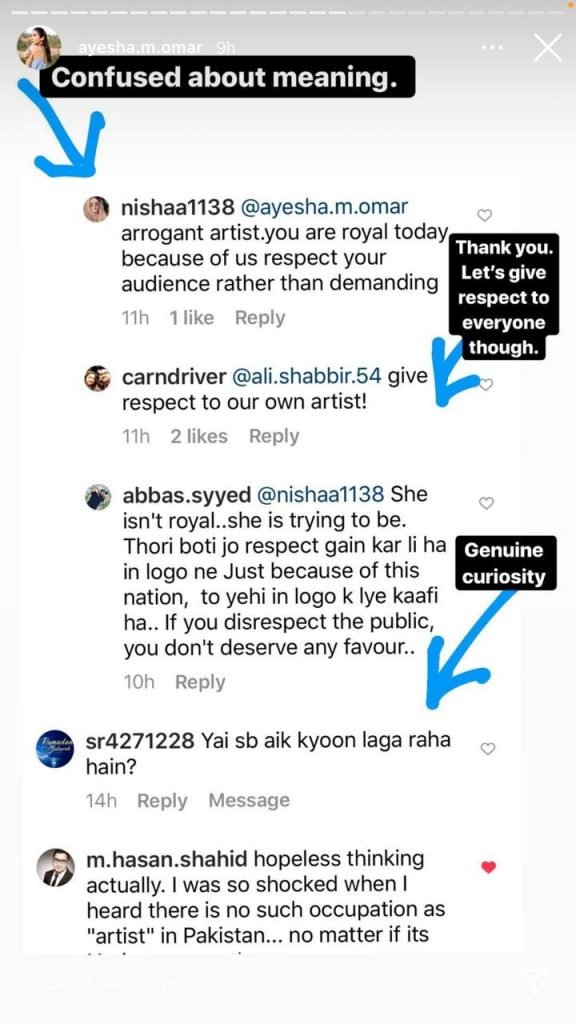
Following the feedback which some artists got on their posts, along with some hate comments, Ayesha Omar and Faysal Quraishi took to their respective Instagram accounts to give a crash course of what royalties are and what is it that artists are really asking for.
Omar wrote: “I did some research…. was very helpful. All over the world, artists get residuals and royalties. It is their due right. That’s how they survive.”
“P.s. A couple of decades ago, royalties were given to Pakistani artists by PTV. Then it all changed. This movement has been started to secure the future of actors/artists/performers in their times of need. More like a pension of sorts, for their hard work and contributions and for all that comes with being in the entertainment industry,” she added.
“Lots of people don’t understand the meaning of royalties and are not even bothering to check what this term means, before writing insensitive, mean and derogatory comments,” said Ayesha. “Some do know but are still being demeaning and downright horrible. Some don’t understand why this campaign has started. Others are genuinely curious and want to find out more. Some agree wholeheartedly. Some are offering excellent explanations. Some think artists are asking to be ‘treated’ like ‘Royalty’ and mocking us. So, let’s talk about royalties.”
Omar went on to address the difference between royalties and residuals, as some tend to confuse the two terms. Sharing definitions of each term, Omar shared a screenshot highlighting the difference between the two. “Royalties are payments made to you by a one to one contract between you and the licensor or publisher” while “Residuals are payments made to you because of a UNION collective bargaining contract Union representing Actors, Writer or Directors and Producers and Studios covering reuse (reruns) and new use” read the slide. According to the same, “residuals tend to scale down over time while royalties always remain the same percentage.”
While Omar also shared some comments which were made under her post regarding royalties for artists.
Faysal Quraishi chose to address the matter through a video.
Speaking directly to his followers, Quraishi explained how the whole movement began as a result of Naila Jaffery’s plea for royalties. Referring to artists around the world, Quraishi mentioned how writers get royalties for each book sold and the same applies to actors and painters for their services. However, more than actors, it is the producer who usually suffers more. After paying off the team and investing in a project, producers in Pakistan tend to face delays in their payments. Quraishi mentioned how independent producers like him even tend to give up on the profession due to these problems.
Coming to ‘royalties’ and what they mean, the actor provided quite a simple definition. Quraishi explained how royalties are much like pension which is received by an individual after they have retired and have reached the end of their career. The same way, artists are also entitled to receive a certain amount even after they have stopped providing their serviced.
Quraishi also explained how the campaign is not just for actors, but everyone involved in creating projects for the entertainment industry. Elaborating on the number of people employed for a single production, Quraishi emphasised on how royalties are meant to benefit everyone, and not just actors and are essential in keeping the cycle going.
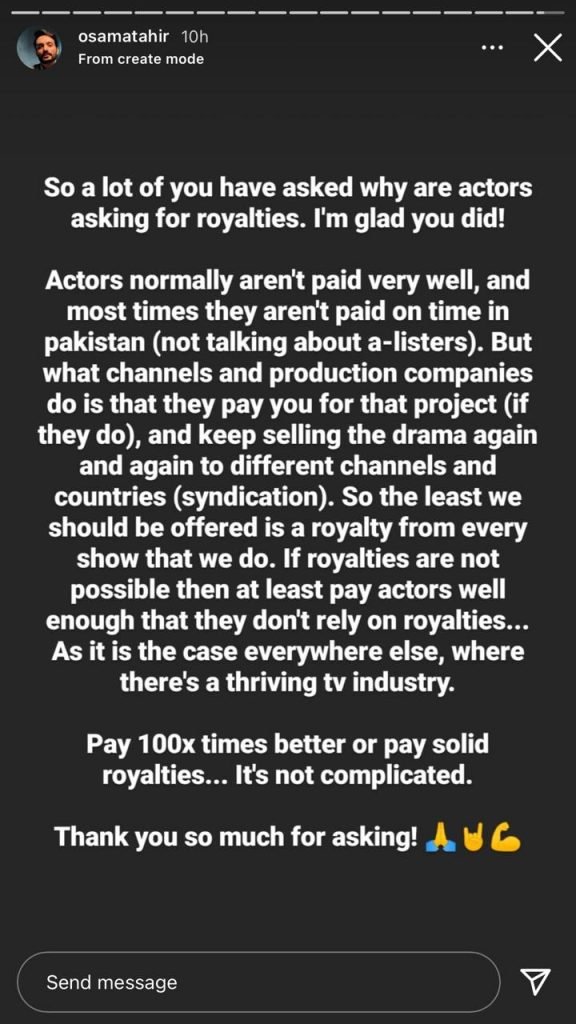
Earlier, Ruswai actor Osama Tahir had also explained what royalties are and why Pakistani artists are demanding them.
Ali Bhatt has appreciated and praised Pakistani rapper and comedian Muhammad Shah for a rap video he made on her.
Titled Alia, the video is part of the rapper’s What if… series and shows him use references to the actor’s various films to create a beat. Shah, through the video, also expresses his desire to get to know Bhatt, asking her to “come a little closer,” but not too close because of the pandemic.
In the credits at the end of the rap, Shah, while giving credit to his team, has also thanked Alia’s father Mahesh Bhatt.
Appreciating the rapper’s hard work, Alia said: “Bohut hard,” in response to which Shah said: “I love you.”
Earlier, Shah had also made three videos for Hania Aamir. When Shah’s first video did not grab Hania’s attention, he made another one on which Hania asked Shah about his plans on the 16th of that month. The 16th never came and a heartbroken Shah made a third video, hoping to catch Hania’s attention again.
Gunga Saain, a specially-abled dhol player, passed away in Lahore, after suffering from a heart attack, Hum News has reported.
Saain was famous across the country for his spiritual dance on the beats of dhol. The famed musician used to dance and perform while playing the dhol himself. He used to perform on Thursdays on the shrine of Baba Shah Jamal in Icchra. He had also performed in various national and international festivals.
Talking about the success of his latest song Yaad, the 24-year-old singer said: “It makes me happy to see fans giving value to the craft we make.”
“I hope its an eye opener for A LOT of the artists (mainstream too) to start making original content and music videos,” he continued, adding: “Sirf brands ka wait karte reh jaoge tou hogaya kaam. Thora jaib mai haath daalo aur saath do.”
Azhar further said: “I can literally count on one hand keh sirf kitne (established) artists hain that are investing in their craft and the music industry constantly.”
“Baaki sab? Bas koi brand ajaye, koi drama karlain, koi controversy ajaye. Aise nahi hota dost. Kuch dogay tou kuch milega,” he concluded.
I can literally count on one hand ke sirf kitne (established) artists hain that are investing in their craft & the music industry constantly. Baaki sab…? Bas koi brand ajaye, koi drama karlain, koi controversy ajaye. Aise nahi hota dost. Kuch dogay tou kuch milega
Responding to Asim’s tweet, fellow singer from the Young Stunners Talha Anjum said: “Hard work and consistency beats talent and controversies. Let that sink.”
To which Asim added: “When talent doesn’t work hard, hard work beats talent.”
“We seem to still be struggling with our sense of identity. And this makes us prone to blocking all history and ethnicity that does not conform to a narrow conservative identity.”
A friend in the UK recently had a bizarre experience involving Pakistan Customs.
She had bought two volumes of a massive art book on the acclaimed and much decorated artist Sadequain. She assumed the whole process would be straightforward and that the books would arrive in two days so she could proceed to gift them to people who were interested in Pakistani art, but then the air shippers informed her that the Customs people at Karachi airport were refusing to allow the book through. Their reason? That it contained inappropriate/objectionable pictures or “na munasib tasweerain”.
It is a little disturbing that Customs officials should think it’s okay for them to decide what is and is not appropriate content in a book, in this case a book documenting the work and life of one of Pakistan’s greatest artists. Especially when the artist in question is nationally well recognised and the recipient of such national awards as the Tamghae Imtiaz and the Pride of Performance.
So, what does this incident tell us about modern day Pakistan? Does it indicate that everybody, at every level, considers themselves some sort of custodian of moral and social values? Or is this incident just an example of the absurdity of bureaucratic process and a red tape mentality?
It’s probably a bit of both: it is not just religious and social prejudices and a mindset of morality policing that are driving factors in such behaviour, it is also a culture of that strange mix of megalomaniac tendencies and job insecurity that exists within the bureaucracy.
Here the officials could have been playing it safe and working from precedent (the book had been stopped once before when it was being sent by DHL) or they could have simply been asserting their power to obstruct or approve – i.e. their ‘afsari’. Or perhaps in their personal role of moral custodians they were genuinely horrified by the content and the title (Sadequain – The Holy Sinner) and thought such “inappropriate” content should not be exported lest the pristine reputation of the country be sullied.
This incident is unsettling because it shows not just the arbitrary nature of official “approvals” but also the national tendency towards moral policing, censoring and disapproving. It is also a reminder that the nation has still not been able to come to terms with, and appreciate, its own history and culture. Any other country would have made sure that not just the world but also the people of Pakistan knew about the genius of Sadequain. Any other country would have encouraged publicity, research and work about the artist, any other country would have capitalised on the association. But we seem to still be struggling with our sense of identity. And this makes us prone to blocking all history and ethnicity that does not conform to a narrow conservative identity, insisting instead, that the history of the land began only with some Arab conquest.
This narrow definition of identity encourages people to be blind to the rich history of the country and to neglect and destroy monuments to early civilisations and peoples. It makes people close their minds to the work of those artists and writers who seek to explore ideas and question norms. It makes people ignorant of the art and culture around them and insensible to the fact that art and expression matter. Cultural censorship is a dangerous path to go down, but we are seeing a simultaneous resurgence and questioning of this all over the world. It is made worse by the rise of right-wing nationalist narratives and reactionary movements like the ones that portray the oppressors as the “victims”.
These are big questions and by this point you might just be thinking ‘well, perhaps the customs officials were just trying to make a quick buck?’ But even if that were the case, the fact that an art book should be considered an opportunity to do so underlies the issue of what is and is not “appropriate” for the reputation of a country (surely jihadists were a more negative export than any art books).
But this particular story might yet have a happy ending. The customs officials let the book through after my friend sent in as much information as she could about the artist and the book. She had asked them to put their objections in writing if they were going to stop the book, but this they had been reluctant to do. So perhaps to get rid of her noise, or perhaps because they were otherwise persuaded or perhaps because they had better things to spend their time screening and stopping (drugs, smuggled goods) they let the book through.
It hasn’t been received yet but hopefully it should be soon. In the meantime, we can both laugh and cry at the absurdity of the matter. And we can reflect on what it tells us about Pakistani society today.
Pakistani Artist Salman Toor has been listed among “2021 TIME100 NEXT”, a list revealed by Time Magazine that includes 100 emerging leaders who are shaping the future.
Salman’s profile in the TIME feature says, “In his painting The Star, Salman Toor uses classical techniques—deploying brushstrokes and lighting reminiscent of the 1800s—to render a thoroughly modern scene: a young South Asian man sits backstage in front of a mirror, wearing a furry pink jacket, as a makeup artist and a hairstylist fuss over him. That these contrasts might seem unexpected is exactly the point.
“Toor, who was born in Lahore, Pakistan, and lives in New York City, has made his career subverting the styles of old paintings by centring openly queer men of South Asian descent in an attempt to, as he says in the audio guide for The Star, ‘play with the idea’ of societal norms. Now more people than ever are paying attention: the artist recently secured his first solo show at the Whitney Museum of American Art in New York City, which will be on display through April 2021.”
Dan Macsai, the editorial director of the TIME100, said: “Everyone on this list is poised to make history. And in fact, many already have.”
TIME editor-in-chief and CEO Edward Felsenthal writes in his letter to readers: “Amid a global pandemic, deepening inequality, systemic injustice and existential questions about truth, democracy and the planet itself, the individuals on this year’s list provide ‘clear-eyed hope’.”
TIME100 Next list consists of Artists, Phenoms, Leaders, Advocates, and Innovators.
The Federal Board of Revenue (FBR) has sent another notice to Rahat Fateh Ali Khan (RFAK), seeking an explanation for his alleged bank accounts.
According to reports, the FBR has asked RFAK to submit a reply by January 15. The singer reportedly failed to satisfy the FBR about his alleged bank accounts, after he was served with the initial notice in December 2020.
The FBR started investigating RFAK’s finances in October last year. Later, in December, the FBR traced the alleged bank accounts and the singer was asked to submit a reply by December 23.
Meanwhile, the FBR recently also sent a tax notice worth 58 million to Atif Aslam after the audit of his income for the year 2018. According to details, Aslam has been given one month’s notice to pay the tax. If the singer fails to pay the due amount, the revenue board will make the recovery by freezing his bank accounts.
Pakistan’s renowned truck art will move from the highways to the skies, as a flying academy has decorated a two-seater Cessna aircraft using the colourful technique.
In recent times, Pakistan’s colourful truck art has grown increasingly popular in the West. With elaborate and flamboyant motifs, Pakistani truck art has inspired gallery exhibitions abroad and prompted stores in Western cities to sell miniatures. In fact, UNESCO has been using this unique art blended with indigenous motifs to communicate messages on girls’ education in Kohistan district in Khyber Pakhtunkhwa.
“We want to show the world that Pakistan is not all about Financial Action Task Force and terrorism issues; it’s a very diverse country and a land of opportunities,” says Imran Aslam Khan, chief operating officer of Sky Wings, a flight training organisation.
He also plans to paint other aircraft, with the aim of promoting tourism in Pakistan.
“The world is familiar with our truck art representation; now, with this aircraft, our colours will fly in the air. We are really excited,” said Haider Ali, the artist painting the aircraft.
Ali who is now 40, has been decorating trucks since his childhood. He was trained by his father and now he is one of the most prominent such painters in Pakistan.
He also hopes to paint an Airbus or Boeing aircraft in the future, saying an opportunity to work on such gargantuan planes would truly be a learning experience.
Art is something we all love but few have the eye to determine which artist might be the next big thing. On a popular Pakistani Lifestyle Instagram account called Bhindifries, an NCA graduate and miniature artist, Ayesha Jatoi lists her favourite artists for 2021. Jatoi decided to reflect on 2020 not by the grief it gave, but by the potential for 2021. Jatoi’s recommended top nine Pakistani artists to look out for are:
1. Fazal Rizwi:
Like Jatoi, Rizwi is also an NCA graduate. This Karachi based artist blames his love for art to lead him to explore the dimensions of the sea and internal turmoil. Rizwi believes that the two main reasons for mental conflict are your soul and your family. That’s primarily why he bases his artworks on conceptual minimalism.
2. Mahrukh Bajwa:
Since this list has quite a few candidates from NCA, Bajwa is another one of them. This lady’s large charcoal sketches convey the unbiased observations of the outside world from the perspective of the mind.
3. Alyssa Mumtaz:
Mumtaz is an American Muslim whose mixed media art highlights the importance of ordinary objects in a unique way as her tools can range from a mere string or colour pigment to gold or silver.
4. Faraz Aamer:
Another NCA candidate with an extraordinary mastery in artist books, he tries to use his artistic expertise to highlight human conditioning due to societal influences.
5. Lujane Pagganwala:
A graduate of Indus Valley, Pagganwala shifts her focus from paper to sculpture, to bring her thoughts to life.
6. Sahyr Sayed:
Another NCA graduate and sculptor who efficiently uses miniature sculpting to make sure that the viewer is not devoid of any details. Her work featuring woman empowerment was appreciated on forums like Dawn Newspaper.
7. Maryam Atiq:
She employs the use of collage paintings to grip the attentions of the admirer.
8. Ayesha Sultana:
A BNU graduate with a Bangladeshi origin, Sultana is a minimalist who uses her artwork to transcend international boundaries.
9. Kainat Jillani:
Last but not the least, Jillani is a mixed media painter who has everything in her toolbox to create magic.