Tag: Pakistani dramas

  • This Ramzan, Ayesha Omar wants Pakistanis to learn discipline and self-control

    This Ramzan, Ayesha Omar wants Pakistanis to learn discipline and self-control

    Ramzan is a month of restraint and patience, which, actress Ayesha Omar thinks is important for us to learn in order to refrain from being quick to pass judgement and hurting others.

    In an Instagram post, the ‘Bulbulay’ actress called this her favourite month because it helps her practice self-control and discipline, as well as purify the mind, body and soul:

    “My favourite month has started. Time to practice self-control and discipline, time to reset, to detox, to purify the body, mind and soul, time to find our centres and our ground, time to ponder over our being and our habits, time to practice compassion and kindness towards ourselves and others, time to pray and meditate and set a precedence for the rest of the year.”

    Read her complete caption here:

  • Twitter users, activists condemn Mahira Khan, Anwar Maqsood’s sexist remarks about Maryam Nawaz, Marriyum Aurangzeb

    Social media was enraged yesterday at the comments made by Pakistan Muslim League-Nawaz (PML-N) senator Afnan Ullah Khan who remarked that Mahira Khan had mental health problems and Anwar Maqsood was a drunkard, in a tweet which celebrities and feminist activists slammed as sexist.

    What had prompted this reaction? It was a conversation at a session titled ‘An Evening With Mahira Khan’ held at the Arts Council of Pakistan in Karachi. In a clip that went viral, Mahira Khan was seen commenting about two females fighting and poisoning each other. To which Maqsood responded by saying that these two women were PML-N leaders Marriyum Aurangzeb and Maryam Nawaz.

    “I am restricted from talking about politics, I can’t say anything about anyone. Hopefully the situation will get better soon. What you said about poisoning, abusing each other so I gave an example, it is also happening in real life. Also both are actors, not character actors.”

    Can we condemn the disparaging comment made by the PML-N senator, whose party is currently under the leadership of a woman, and is also the one ruling the country? Absolutely, because how a politician comments about their critics reveals how thin-skinned and shallow-minded they are, especially when the critic is a woman.

    But to completely sideline the fact that Khan, who has been outspoken about gender inequality and the need to improve the way media represents women on screens, especially sitting next to a renowned leftist screen writer, could resort to making sexist jokes about female politicians whose views she doesn’t agree with? Twitter users could not over look this fact, and criticised Khan’s sexist behavior for directly targeting female politicians of the opposite party as a way to score points.

    Feminist activist Leena Ghani mentioned that it was male politicians who are consistently over-emotional, and behave in a horrible manner, but it’s astounding why Khan chose to overlook them and target Aurangzeb and Nawaz

    The Twitter page of Aurat March condemned Khan’s and Maqsood’s comments as ‘cringe’

    Twitter users like journalist Gharidah Farooqi criticised these comments as ‘shameful’:

    Zebunnisa Burki criticised both Khan and Maqsood for making such disgusting comments

    Another user wrote that it wasn’t proper for a woman to mock another woman politician in this manner

  • ‘We need more men like him’: Writer behind ‘Mujhe Pyar Hua Tha’ revealed why she wrote Saad as a non-toxic character

    Saad from the drama ‘Mujhe Pyar Hua Tha’ has won the nation’s heart for breaking stereotypes that are associated with the toxic male lead in Pakistani dramas, and being an attentive husband and care giver to the female lead, Maheer (played by Hania Amir).
    Twitter users have praised Wahaj Ali for brilliantly portraying the sensitive and caring Saad, and how at every step he has remained a character who was fearlessly devoted to his wife, and was a dedicated son to his parents.

    The writer behind the iconic drama, Sidra Sahar Imran, gave an interview to Fuchsia magazine where she opened up about the character of Saad, and why she felt that it was important to address the toxic double standards in our society that shame men for showing emotions or for being ‘kind-hearted’:

    “I had observed that often romance novels will depict the girl as the sati savitri who will sacrifice all that she has, but I used to think that men also exist in our society why can’t we depict them the same way?”

    Looking at the feedback Saad’s character was receiving, Imran said that most people were shocked.

    “I can see that mostly people are shocked that a man like Saad is acting this way. Because we are so used to men not being able to tolerate a lot of abuse. Our society cannot understand the fact that men should be sensitive and soft-spoken, since we are used to the standards telling them to be tough and loud. In our male-dominant society, we encourage men that to be a real man, they need to be aggressive and out-spoken to prove their worth. But there are a lot of men like Saad out there and I wanted to write a character like him.”

    Imran also revealed that there was a way she could have catered to these expectations after Maheer and Saad’s marriage, and demonstrate his anger and possessiveness but she refused:

    “I didn’t want my character to act in this manner, after coming a long way. He will not cater to such toxic standards about what a real man is.”

  • ‘Jahil’: Celebrities, activists slam Senator Afnan Ullah Khan for horrifying remarks about Mahira Khan, Anwar Maqsood

    Yesterday, a clip from a session named An Evening With Mahira Khan went viral on social media, featuring Anwar Maqsood. The renowned writer made a disparaging comment about two female Pakistan Muslim League -Nawaz (PML-N) leaders, Maryam Aurangzeb and Maryam Nawaz.

    In the clip, Khan was seen asking about two women who are fighting and shouting with each other, to which Maqsood responded that these women are Maryam Nawaz and Maryam Aurangzeb,

    “I am restricted from talking about politics, I can’t say anything about anyone. Hopefully the situation will get better soon. What you said about poisoning, abusing each other so I gave an example, it is also happening in real life. Also both are actors, not character actors.”

    This comment was rightfully criticized because of how it chose to directly target the female politicians through the same misogynist stereotypes Khan was condemning in her session. Twitter users also slammed Khan for her selective morality, urging the actor to reflect on the feminist morals she is presenting because repeatedly calling out misogynist slurs used to put down women, but in the same breath applauding this way of publicly targeting female politicians and humiliating them? Baffling.

    https://twitter.com/Bubbleskhanum/status/1637942268773519367?s=20

    “I don’t expect anything good from him, because he is a man, but it’s so baffling to see Mahira Khan applauding over this incitement of misogyny and sexism, she literally made a brand by capitalizing over feminism, but is not consious about how harmful this is for Pakistani women,” one user wrote.

    This is the proper manner of responding to an opinion you disagree with, by pointing out mistakes and urging the other person to reflect and correct themselves. Because after all, celebrities have a public platform through which they can influence other people to follow their actions.

    What is the most vile, awful way to counteract? By using abelist, abusive language and making personal remarks like the way Senator Afnan Ullah Khan did on Twitter

    “Mahira Khan has mental health problems and Anwar Maqsood has become a drunkard at this stage of life. Both of them are shameless characters and the public should condemn them for it. There are books written about Mahira Khan’s character, and she is known for even flattering Indian actors for the sake of money and Anwar Maqsood is filled with hatred at this point of his life,” wrote the PML-N senator on Twitter.

    To condemn a misogynist remark is the right of any politician, but to go even lower and make personal, completely distorted and abusive comments about someone is completely not acceptable.

    Targetting Khan and Maqsood with such awful comments from the politician whose party is currently ruling the country proves how deep misogyny runs in this country. Celebrities like Atiqa Odho and Farhan Saeed openly condemned these comments for showcasing Dr Ullah Khan’s misogynist state of mind.

    Farhan Saeed retweeted this comment and condemned the way free speech in Pakistan has been suppressed

    “This is the mentality that doesn’t let #Pakistan grow , this is what they do when someone just gives an opinion or has a political preference . They get personal so people stop giving their opinion . Senator ? Zuban jahilon wali,” he wrote.

    Odho shared a picture of both Khan and Maqsood on her Instagram account and in the caption she condemned the PML-N politician for using such foul language against two “hard working and committed people.”

    She wrote: “#AnwerMaqsood a living legend and mentor and #MahiraKhan our beloved star. Both shine where ever they go and leave others way behind. Shameful when anyone dares to say anything against such hard working and committed people as these are national treasurers. PMLN should expel the senator who behaved so poorly from their party at once to teach him a lesson and show their sincerity towards our iconic soft image ambassadors. Such acts must not go unnoticed as these are not political people and as citizens have a right to an opinion within a true democracy. Hope action is taken and a public apology is given by #PMLN !”

    Actor and writer Mira Sethi tweeted that these remarks are ‘utterly shameful’.

    https://twitter.com/sethimirajee/status/1638106602828865539?s=20

    Actor Iffat Omar, who is critical of Imran Khan, also condemned the tweet and tagged Maryam Nawaz, urging her to take action against the senator.

    The twitter account of Aurat March called out the Senate of Pakistan to teach their politicians to refrain from using such abusive, sexist language against their critics, especially when it is a woman involved.
  • The many times Manzar Sehbai’s praise for wife Samina Ahmed moved us to tears

    We are quite used to the stereotypical narrative that the best time to find success and wealth, especially love, is in your youth. Most of our dramas keep catering to the misogynist mindset that any woman who is 21 or older is too old to get married or live her life any more.

    Very rarely do we see public figures debunk these misconceptions beautifully by teaching us that even in older age, you can keep on living your life and even find your soulmate. And there is no one who is aging with grace and celebrating life like Manzar Sehbai and Samina Ahmed are. The two thespians got married in 2020 when they were both in their seventies, and continue to prove that age is just a number.

    Sehbai has moved social media to tears with the gorgeous birthday wish he sent his wife Samina, on his Instagram page and on Twitter, where he called her the most “courageous, loving and most caring of all the women I came across in my life.”

    Twitter users were overwhelmed by such a powerful declaration of love.

    But this isn’t the only time Sehbai proved there is no one who loves his wife more than him. Countless times on social media he has championed Ahmed’s beauty and powerful career and we’re providing you with a tear-jerking journey of what a healthy relationship looks like.

    Warning: keep tissues nearby.

    Like this time when Sehbai praised Ahmed for her role as the nani in the critically acclaimed ‘Ms. Marvel’ series.

    Or this sentimental moment when at a talk show with Neo News, Sehbai recalled the moment when they were planning to get married but the thought that struck them was “what will other people think?” To which Sehbai responded:

    “I said whatever they want to say, they can go to hell. This is about me and you, we’re making this decision. People will keep talking as they will.”

    Or basically every moment he has celebrated her life’s achievements like when Ahmed received the Lifetime Achievement Award and he said she “deserves much more than that.”

  • ‘Don’t label things as agenda without knowing the complete context’: Muneeb Butt responds to Maria B’s criticism of Sar-e-Rah

    ‘Don’t label things as agenda without knowing the complete context’: Muneeb Butt responds to Maria B’s criticism of Sar-e-Rah

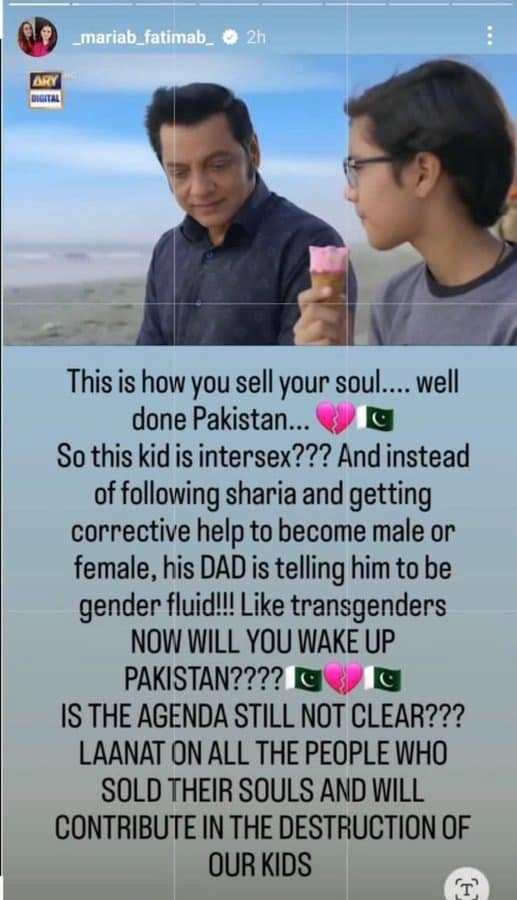
    When Sar-e-Rah aired its fourth episode, the story shifted to the struggles of an intersex boy who struggled to get love and acceptance from his family, and was determined to work hard and make his father proud. A significant moment in this episode which had caused social media users to declare it as the best television series of the decade, was an interaction between father and son when he explained to his child that it was okay to embrace gender fluidity.

    However, fashion designer Maria B had criticized the episode for encouraging acceptance of the transgender community, and called the actors who had taken part in the show ‘sell outs’ who were contributing to the destruction of Pakistan.

    In an interview with Maliha Rehman, actor Muneeb Butt addressed the criticism of the episode being ‘anti-Islamic’ by calling it wrong and entirely taken out of context.

    “I was disappointed to listen to her accusation because we are not anti-Islamic, we are Muslim, as well as the writers who wrote this script. We have a problem that we are quick to label other people as having agendas, or we distribute certificates that they’re anti- Muslim or taking an anti-Islamic stance. We think that we’re right, and the other people around them are wrong…When I read this drama, I was analyzing that there is nothing insensitive being spoken, clashing with my Islamic beliefs, and I didn’t think it was contradicting any Islamic value.”

    Butt addressed the scene which was slammed by B and other right wing critics as promoting ‘vulgarity’, by explaining that these critics had not taken into account the back story of these characters to understand the scene properly:

    “You should listen to the context behind this clip. If you watch a clip and judge an entire drama from this, then you’re completely wrong. No one can predict an entire drama from just a clip, because you don’t remember what happened before it. Before this, the father had seen his son dancing like a woman and wearing makeup, and his mother was forcing him to do this. The dad simply asked him did he want to do all of this in the bathroom, to which the son responded yes he does. The father is silent for a minute, then again asks ‘Beta, if you like doing this then tell me. I won’t feel bad at all.’ Then the son says ‘Baba, I don’t want to do this.’ It’s after that the father gently explains to him that right now his son is young but when he grows up that’s when you will learn to understand the feelings inside your body. He wasn’t saying that it’s your choice if you want to become a girl or a boy. The father was trying to make his son understand that the feelings your body is trying to tell you, whether you’re a male or female, that is something you will decide on your own. Right now it’s not necessary for you to figure out these things, you have to focus on your studies. This is the entire context, and it was beautiful how the father was encouraging his son to keep moving forward and study hard.”

    Given the entire context, Butt slammed critics for labeling him and the rest of the ‘Sar-e-Rah’ crew, saying it could have placed his life in danger.

    While social media overflowed with different takes on Sarang’s character, Butt had chosen to remain silent and did not address the allegations on social media. Butt explained that he had planned to write a note as soon as episode 6 came out, when Sarang gives a speech at a convocation.

    Butt revealed that the wife of a prominent actor had reached out to him when this episode had aired, and had sent him an audio note which said some things that proved she wasn’t happy with the drama.

    “It was her right to say all of these things because we make shows for the public. It’s their right to tell us about their opinions about our dramas, but for that you need to watch the complete episode to understand the context rather than judging it from a small video clip.”

    Listen to the complete interview here:

  • Four Pakistani dramas that broke stereotypes to introduce wide age-gap couples

    Four Pakistani dramas that broke stereotypes to introduce wide age-gap couples

    . We are all familiar with the stereotypical Pakistani lead couple, a toxic and underwhelming boy who is ‘edgy’ and ‘dark’ because of his traumatizing past, and the hoor-pari good girl who has never walked outside apnay ghar ki chaar dewariyan, and has apparently never interacted with a man in her life. They meet, stalk, harass, fall in love, shaadi, divorce, phir pyar and then happy ending.

    But quiet rarely, Pakistani dramas take a step to break these stereotypes and introduce us to a couple where either both or one person is a middle-aged woman. It’s a rare stand against stereotypical depictions of women disappearing after they turn forty.

    But it’s important now that women are reminded that their beauty and desirability doesn’t finish the moment they turn thirty. Life doesn’t end.

    Thankfully, Pakistani dramas have slowly been catching up on breaking this stigma by giving us a few very poignant and well-written dramas that had cast a middle-aged woman in a romantic relationship as the central lead of their drama.

    1 Dobara

    Pakistani dramas OST

    Dobara was embraced with open arms by Pakistani audiences when it debuted. Hadiqa Kiana starred as Mehru Nisa, a woman in her forties with two grown children who was learning to re-live her life on her own terms after being forcibly married when she was sixteen years old and deprived of doing everything she had ever loved. Mehru Nisa’s relationship with Maahir, a man who was in his twenties, is the most heart warming aspect of this drama because of the way he helps her gain confidence in doing whatever she wanted to do, and also defends her from her family members who consistently bully her.

    2 Jhoom

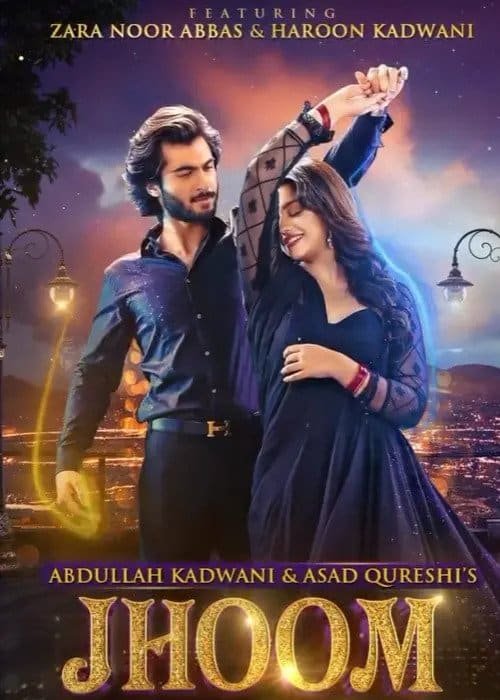
    This upcoming drama features Zara Noor Abbas and Haroon Kadwani as lovers with a wide age gap between them. According to the trailer, the premise revolves around backlash from society who cannot accept an older woman marrying a younger man.

    3 Samjhota

    Shahista Lodhi’s on-air drama revolved around an old man’s marriage. After his wife passes away, he decides to marry Nargis. But his re-marriage at this age doesn’t bode well with his children, who refuse to treat Nargis with kindness.

    Speaking on the importance of approaching this topic, Lodhi who starred as Nargis in the drama, said that she wanted to do this project because of how it reminds that the elderly that life doesn’t end when they grow old:

    “It showed that at a certain age when we think our elderly mother and father are only around to take care of our children, but instead you’ll witness the love story between these two main characters in the drama. I thought this was such a great example being set. The other thing is in our society at a certain age our parents are left lonely while we get busy building our own lives. We seem to think that our parents can’t find a new partner after their own spouse and they don’t have a life of their own.”

    4 Teri Raah Mein Rul Gayi

    Samiya Mumtaz essays the role of a middle aged woman whose husband passed away a year after their marriage, leaving her in grief. Her brother-in-law stands up to society by providing for her every single need, and declares that he has fallen in love with her.

  • ‘Mera Jism Meri Marzi is more than just being about clothes’: Amna Ilyas

    Actor Amna Ilyas was a guest on “The Talk Talk Show’ where she opened up about being a feminist, and clarified the misinformation around the Aurat March slogan ‘Mera Jism Meri Marzi’.

    When the placcard was raised at the 2018 Aurat March, it caused outrage after many right-wing critics said that the chant supports promiscuity and challenges family values in Pakistan. Many religious clerics had used the placard as justification to call ‘Aurat March’ un-Islamic and accused it of promoting a Western agenda in Pakistan.

    Many feminist activists have defended the slogan for protecting women’s bodily autonomy, and now Ilyas has also done the same, as she explained that the slogan ‘Mera Jism Meri Marzi’ was more than about clothes, it’s about protecting the rights of women:

    “It’s about having body autonomy rights and consent. It’s about harassment, domestic violence, and concepts like, ‘No one has the right to touch me without my consent, even if I’m married to you’.”

    Ilyas went on to debunk the stereotype associated with feminism that women who support this ideology are promoting vulgarity, when in reality the ideology supports the rights of women to have the same opportunities as men:

    “Whenever I talk about feminism, people always object by saying ‘Oh, Amna is bold, of course, she will spread vulgarity as she’s from the industry, she wants all our daughters to be like her’. No, I don’t want that, I only do what I want to for myself.”

    “When we speak of equal rights, it’s about having the same opportunities to thrive in my career as the man beside me. If you’re a father of four children who excel in your profession, why can’t I do the same? Honestly, it’s not about whether you’re getting permission to wear jeans or not. What we truly need, is the space to work in a cerebral capacity,” she explained.

    Watch the complete interview here:

  • Urwa Hocane speaks out after being labelled as ‘difficult to work with’ by director Nadeem Baig

    Urwa Hocane speaks out after being labelled as ‘difficult to work with’ by director Nadeem Baig

    Nadeem Baig made national headlines when, on talk show ‘The Fourth Umpire’, he was asked which actress was the most difficult to work with on set, and he revealed it was Urwa Hocane.

    Hocane and Baig was worked together in ‘Punjab Nahi Jaungi’ in 2017.

    Now, Hocane has responded in a post on Friday where she addressed the allegation that she was ‘difficult’ by revealing her side of the story:

    “Nadeem bhai and I have only done one project together and had one difference of opinion about the song ‘Lak Hilna’ where we eventually went with his aesthetics, choice of song and dance step as I sensed he was unwilling to hold a discussion probably because as a society we have become so intolerant to difference of opinion, specially when it’s a woman.”

    Hocane revealed that despite being trolled heavily for the past few days since Baig’s comment on the show, she had never thrown him under the bus out of respect for him.

    “Despite being extremely trolled for the song I never threw my director under the bus out of respect for him. I am so hurt with how my personality is being misrepresented publicly merely for holding a healthy discussion on set which I believe is a basis to team work while in all these years it was never pointed out to me in person.”

    You can read her complete statement here:

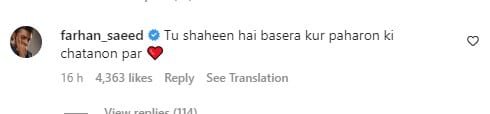
    Other celebrities had applauded Hocane’s post, including her husband, Farhan Saeed, who had writtten:

    “Tu shaheen hai basera kur paharon ki chatanon par ❤️”

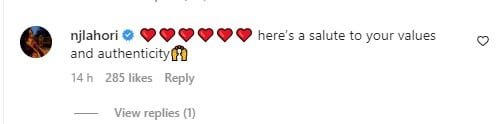
    Nadia Jamil applauded Hocane for her ‘values and authenticity’

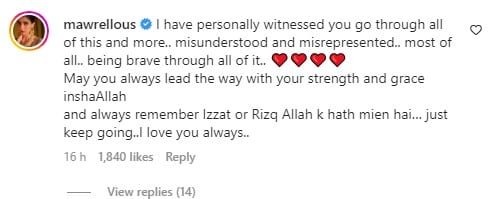
    Hocane’s sister, Mawra, also commented that she was proud of the strength and grace her sister had shown

  • ‘Sharam karo’: Aima Baig slams FHM magazine for misinformation

    ‘Sharam karo’: Aima Baig slams FHM magazine for misinformation

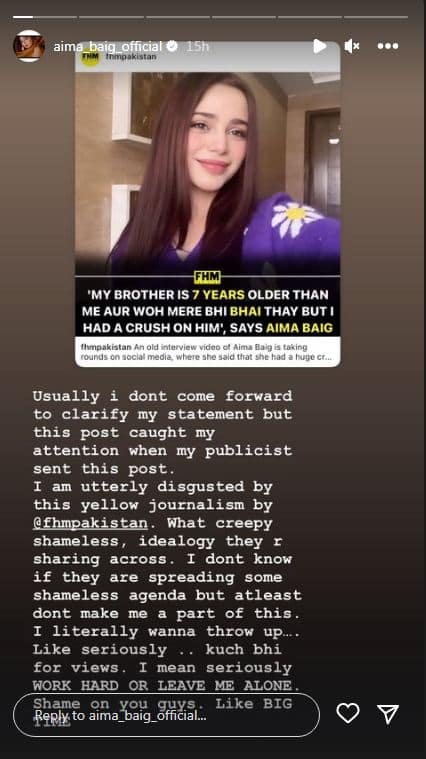
    Aima Baig called out FHM, an online celebrity magazine, for spreading incorrect information about her and lectured them on the importance of fact checking before publishing stories.

    FHM had published a story about a re-surfaced interiview in which they claimed Baig had said that she had a crush on her elder brother, who was seven years senior to her.

    Baig commented underneath the post, stating that she was horrified because she had never said such a thing.

    “What in the actual f**k is that????
    I never said anything stupid like that wth!
    Kuch to sharam kar lo yaaar. Like seriously is this really something we should be talking about, clearly not knowing how sensitive is this topic.”

    On her own Instagram page, Baig revealed that her publicist had sent her the FHM post. She said she was dissapointed by ‘yellow journalism’.

    “Usually I don’t come forward to clarify my statement but this post caught my attention when my publicist sent this post. I am utterly disguisted by this yellow journalism by @fhmpakistan. What creepy, shameless ideology they are sharing across. I don’t know if they are spreading some shameless agenda but atleast don’t make me a part of this. I literally wanna throw up…like seriously..kuch bhi for views. I mean seriously WORK HARD OR LEAVE ME ALONE. Shame on you guys. Like big time.”

    Baig also clarified that the story was not true, and shared the link to the interview where she had actually said that her crush was her elder brother’s best friend, when she was ten years old.

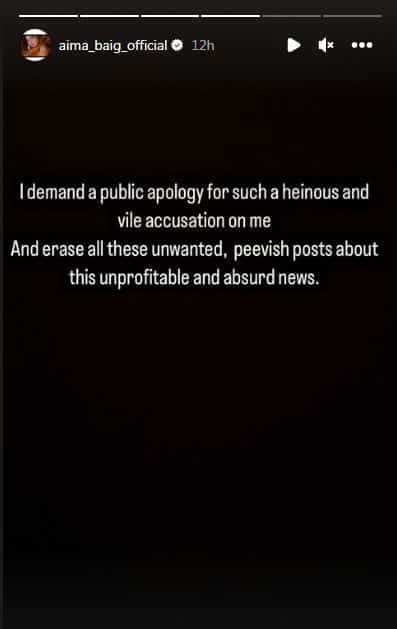
    Baig also demanded an apology from the online website for spreading degrading information about her:

    “I demand a public apology for such heinous and vile accusation on me. And erase all these unwanted, peevish posts about this unprofitable and absurd news.”