Tag: Pakistani dramas

  • Five Pakistani dramas with tragic endings that shocked the audience

    Five Pakistani dramas with tragic endings that shocked the audience

    We are all familiar with the token Pakistani drama formulae: boy meets girl, romance begins, saas intervenes, marriage, fights, divorce, forgiveness and then happily ever after. It’s such a prevalent formula that it’s no wonder that audiences crave a change with complex stories that can draw them in.
    However, once in a blue moon we have gotten interesting stories that deviated from the stereotypical shaadi drama to give us a heart-wrenching love story and left their audience completely devastated. Despite the ever-standing belief among drama creators that audiences need to keep being fed the same ‘Humsafar’ formulae, these dramas elevated themselves among the rest because they remind us that despite all our efforts, we never get the happy ending we crave and that is what life is all about. After a lot of careful searching, here are the five Pakistani dramas that deviated from the expected ‘happy ending’ and gave us a heart-wrenching love story audiences will never forget!

    1 Daastan
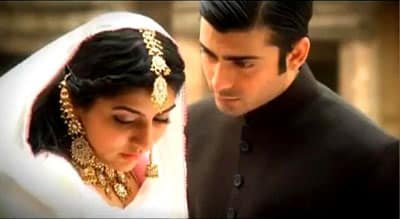
    Bano and Hassan’s love story was the epitome of what made Dastaan the timeless drama it remains today. Both fell in love when they met at Suraiya’s wedding. Both are engaged and Hassan immediately leaves for Rawalpindi to begin his job, promising that he would bring Bano along. However, this love story is torn apart by the violence of partition, after which Bano is forcibly married and Hassan believes her to be dead. When they meet up after years, Bano has a child, and because of the trauma of the violence she underwent and then at the hands of her abuser at her workplace, she gets admitted in a mental assylum.

    2 Ye Dil Mera
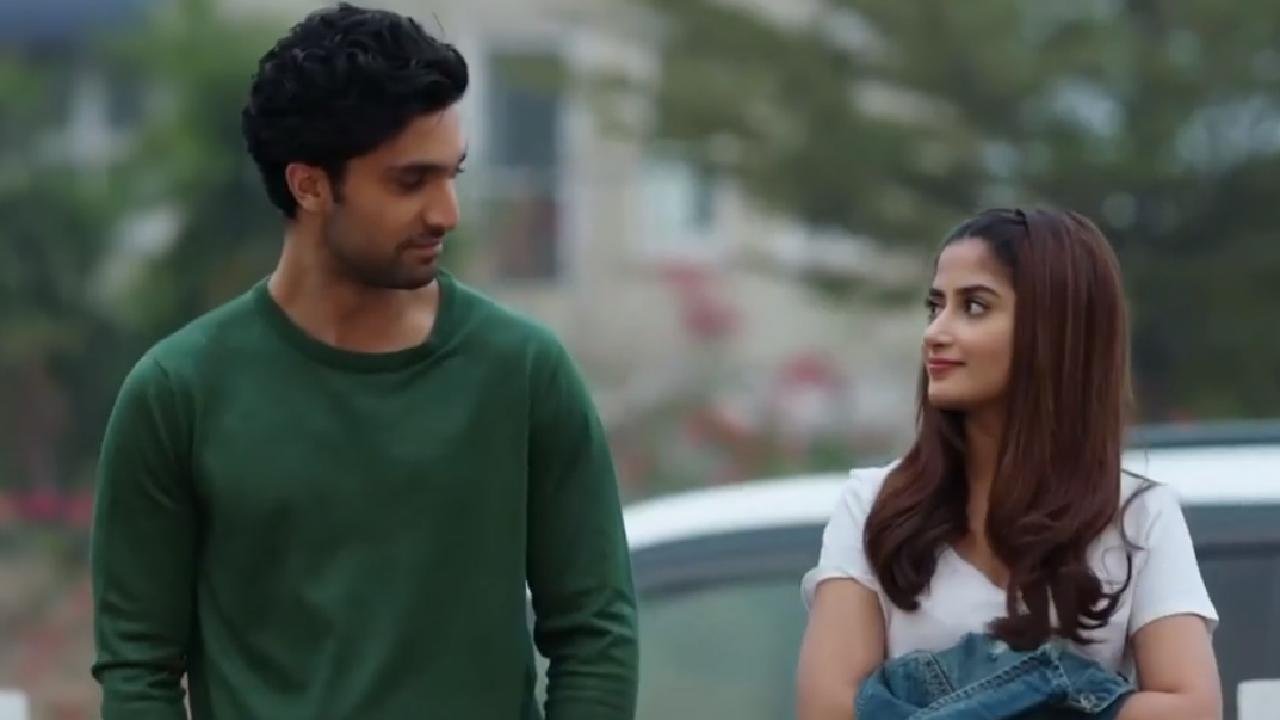
    Sajal Aly and Ahad Raza Mir broke hearts across the country when they chose to part ways, but real fans know that the couple had already been breaking hearts with this tragic drama about family trauma and long lost secrets. Aly plays Noor-ul-Ain, a student who starts interning at AK Oil Industry, whose CEO is Aman-Ullah Khan (Mir). Both get closer and are married in a few days, but are driven apart after Khan realizes that it was Noor’s father who had murdered his family. By the end of the drama, the couple decide to part ways in order to heal from their own wounds, and leave us unsure on whether they would come back together or not.

    3 Pehli Si Muhabbat
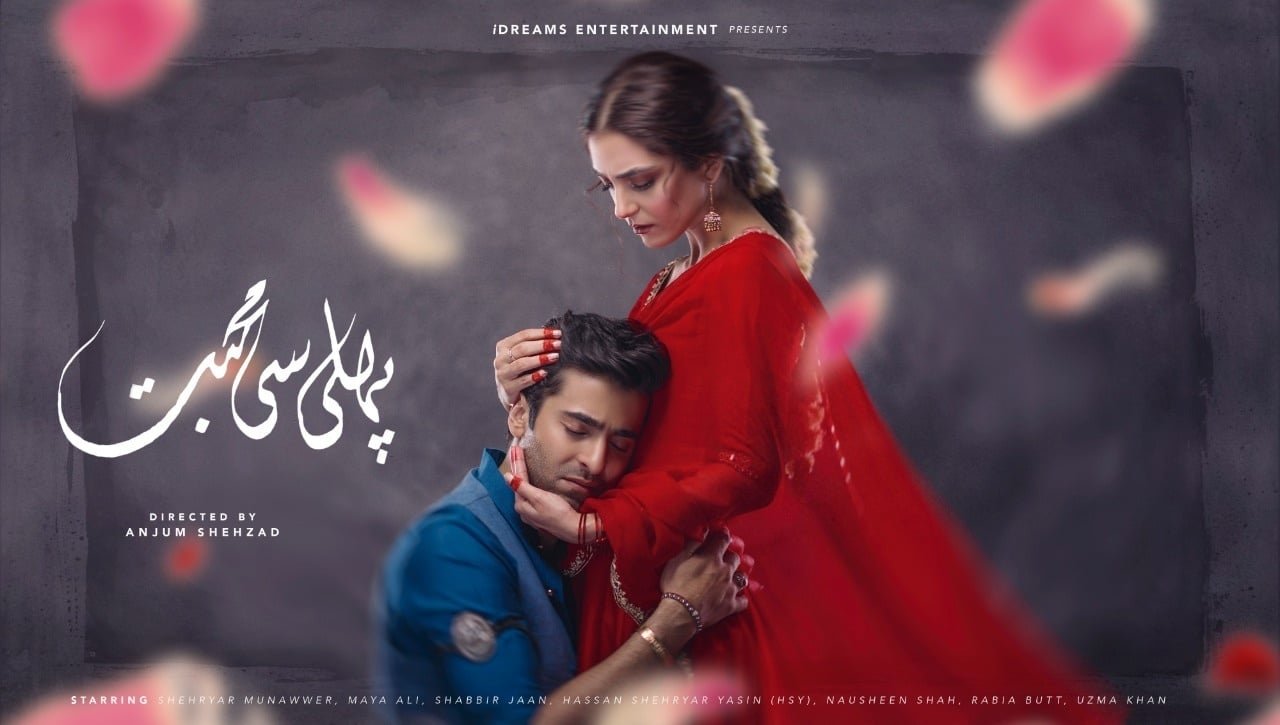
    Rakshi (played by Maya Ali) and Aslam (played by Shehryar Munawar) are childhood friends who start getting closer, but tragedy strikes when Rakshi’s father get’s married for the second time to Nargis, who was a former sex worker. Aslam’s elder brother, Akram, is the one who opposes this relation the most and orders the entire community to ostracize Rakshi and her family. Despite their efforts to convince their families to let them get married, Rakshi and Aslam are married off to other people. When they meet up years later at the marriage of their children, both reminisce their times together and say they were happy being each other’s first love.

    4 Ishq-e-Laa
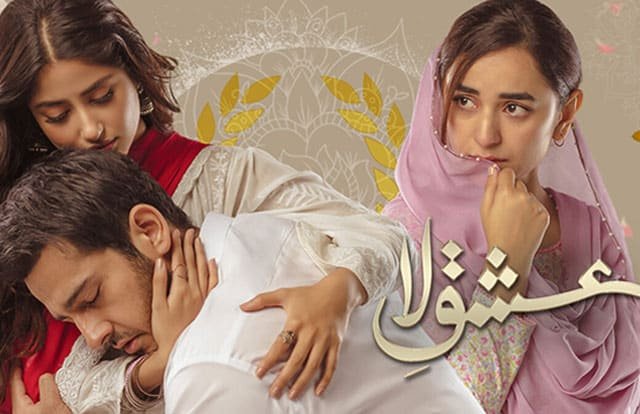
    Shanaya (played by Sajal Aly) is a dedicated journalist who seeks to empower oppressed voices through her work, but her husband Azlan (played by Azaan Sami Khan) is unable to understand her passion for social issues and asks her to quit her job after marriage. However, when Shayana is killed while investigating a murder committed by the son of a rich man, Azlan is heartbroken and decides to fulfil her wish to fund Azka’s medical education. By the end of the series, when Azka and Azlaan are married, he goes to Shayana’s grave to tell her how much he loved her for influencing him to change his mindset.

    5 Mata-e-Jaan Hai Tu
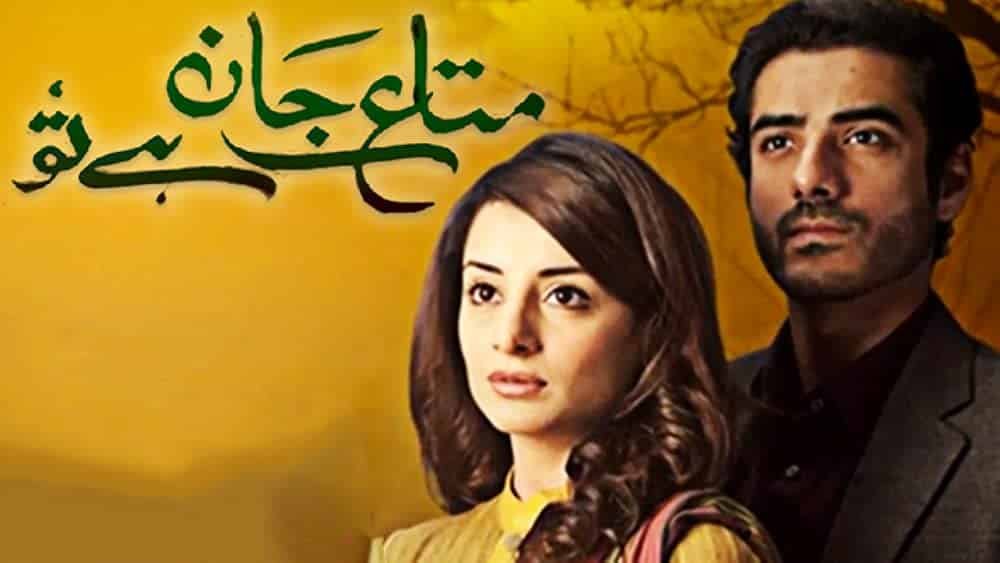
    Haniya (played by Sarwar Gilani) and Ibad Uzar (played by Adnan Sami) are college students in America who fall in love and want to get married Ibad’s parents oppose the marriage. When Haniya’s grandmother passes away and she is distraught, Ibad decides to marry her. To convince his parents, Ibad flies back to Pakistan ten days after his wedding, but is killed on the day he is flying back. Haniya is distraught but decides to go back to Pakistan herself to start working for Ibad’s parents office. By the end of the drama, his parents and Haniya are incredibly close and are able to grieve together over the loss of their loved one.
  • Shaista Lodhi wants more dramas about older people falling in love

    Shaista Lodhi wants more dramas about older people falling in love

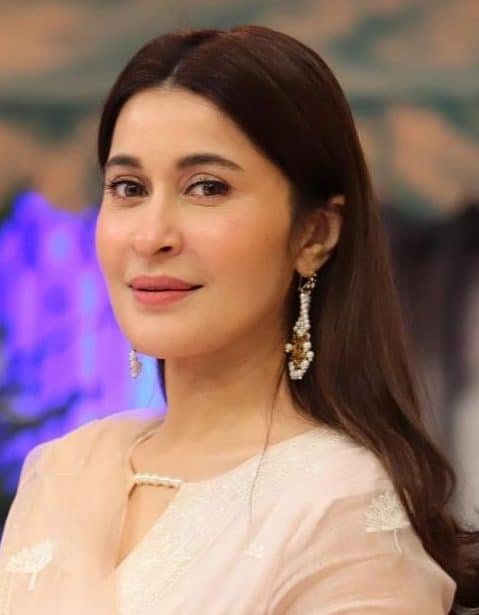
    Dr. Shaista Lodhi spoke to BBC Urdu about her on-air drama ‘Samjhota’, which revolves around an elderly man getting married for the second time to a divorcee, after his first wife passes away.

    Lodhi revealed that she wanted to do this drama because it explored the kind of stigma elderly people face, and encouraged them to remember that they can restart their lives after retirement.

    “Whenever I’m offered a project, I try to make sure that it is on a subject that can be relatable for a lot of people…So when I heard about this story, I felt like I should do it because we need to address this issue in our society…It showed that at a certain age when we think our elderly mother and father are only around to take care of our children, but instead you’ll witness the love story between these two main characters in the drama. I thought this was such a great example being set. The other thing is in our society at a certain age our parents are left lonely while we get busy building our own lives. We seem to think that our parents can’t find a new partner after their own spouse and they don’t have a life of their own. We are busy with our own life, we aren’t able to give them any time, or the responsibilities we have as their child. We also can’t imagine if our father gets married for the second time. So I thought this would be food for thought for our society, and I liked the script and decided to take it on.”

    She also talked about the ways ‘Samjhota’ breaks away from formulae drama, and brings the love story between an elderly couple to the forefront.

    “It’s incredibly important that we remind our elderly that life doesn’t end when you grow old. Once they age, we restrict them in a box, and I don’t think any other drama has taken a step to discuss this topic…If our father is coughing, why do we want to send our house help to get him a glass of water and cough syrup? Instead, why don’t we show our father getting up and keeps working in this age so he can prove that he is an active part of the social set up. We snatch this energy from elderly people by telling them that they’re retired so they must sit at home…Don’t you think that as a society we are cruel to the growing segment that we call ‘elderly’ because we completely ignore them? We ignore children the same way we ignore our elderly. We only cater to the middle ground because that is the only way we can get ratings.”

    On the feedback she has been receiving on ‘Samjhota’, Lodhi said a lot of people meet her on planes and continuously ask her questions about her dramas, and have praised her for her performance.

    Listen to the full interview here:

  • Underrated Pakistani dramas that dared to touch upon taboo subjects

    Underrated Pakistani dramas that dared to touch upon taboo subjects

    When one thinks of Pakistani dramas, we all know what comes to our minds: weddings, divorce, the cheap version of 50 Shades of Grey, more weddings etc.
    But to distract ourselves from the current mundane pile of breakups, crying and abuse, we can’t forget that kabhi kabar you can find a gem, a refined drama that accurately reflects the stories we want Pakistani drama creators to tell.
    It’s not often that dramas with original, well crafted stories are brought into the spotlight as they get targeted with endless criticism from right wing critics and are even sent notices for displaying ‘vulgar’ content and soon are forgotten as the next show steps into the spotlight.
    We have found some dramas that were helmed by prominent women like Bee Gul and Angelina Malick, which shone light on taboos.

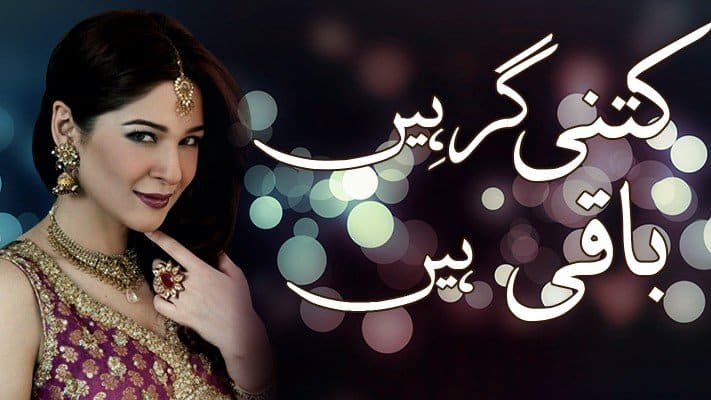
    1 Kitnay Girhain Baki Hain (2011-2017)

    Produced by Angelina Malick and written by Bee Gul, this series was an anthology of short stories that reflected the struggles of women in our society, and explored topics like homosexuality, infidelity, rape etc

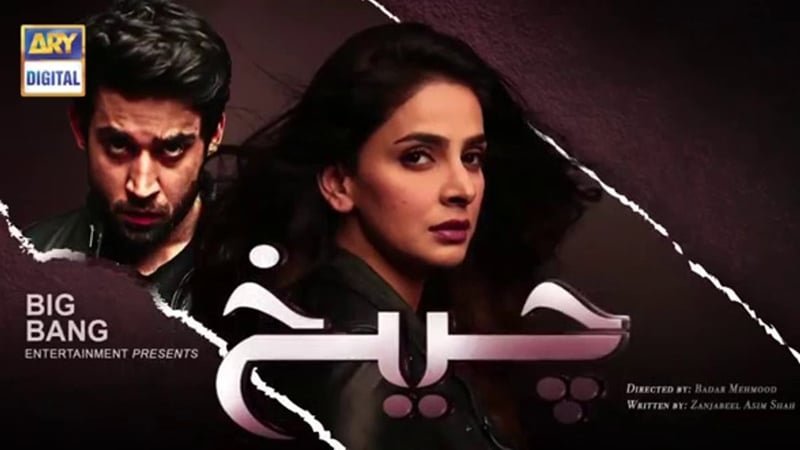
    2 Cheekh (2019)

    When Mannat (played by Saba Qamar) finds out that her closest friend Nayab was raped by her brother-in-law and then murdered for trying to reveal the truth, she strives hard to find justice for her friend in court and in the process, has to face hurdles from her in-laws.

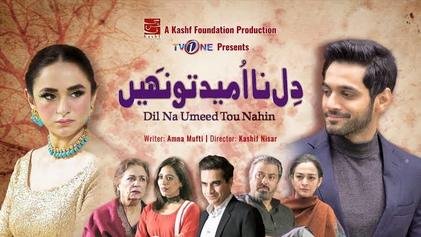
    3 Dil Na Umeed Tou Nahi (2021)

    Penned by Amna Mufti and produced by Kashf Foundation, the show received several notices from PEMRA for ‘vulgarity’, so that’s even more reason to give it a watch. It delves into the lives of child sex workers, who are kidnapped from their homes and forced to work in prostitution in order to make a living.

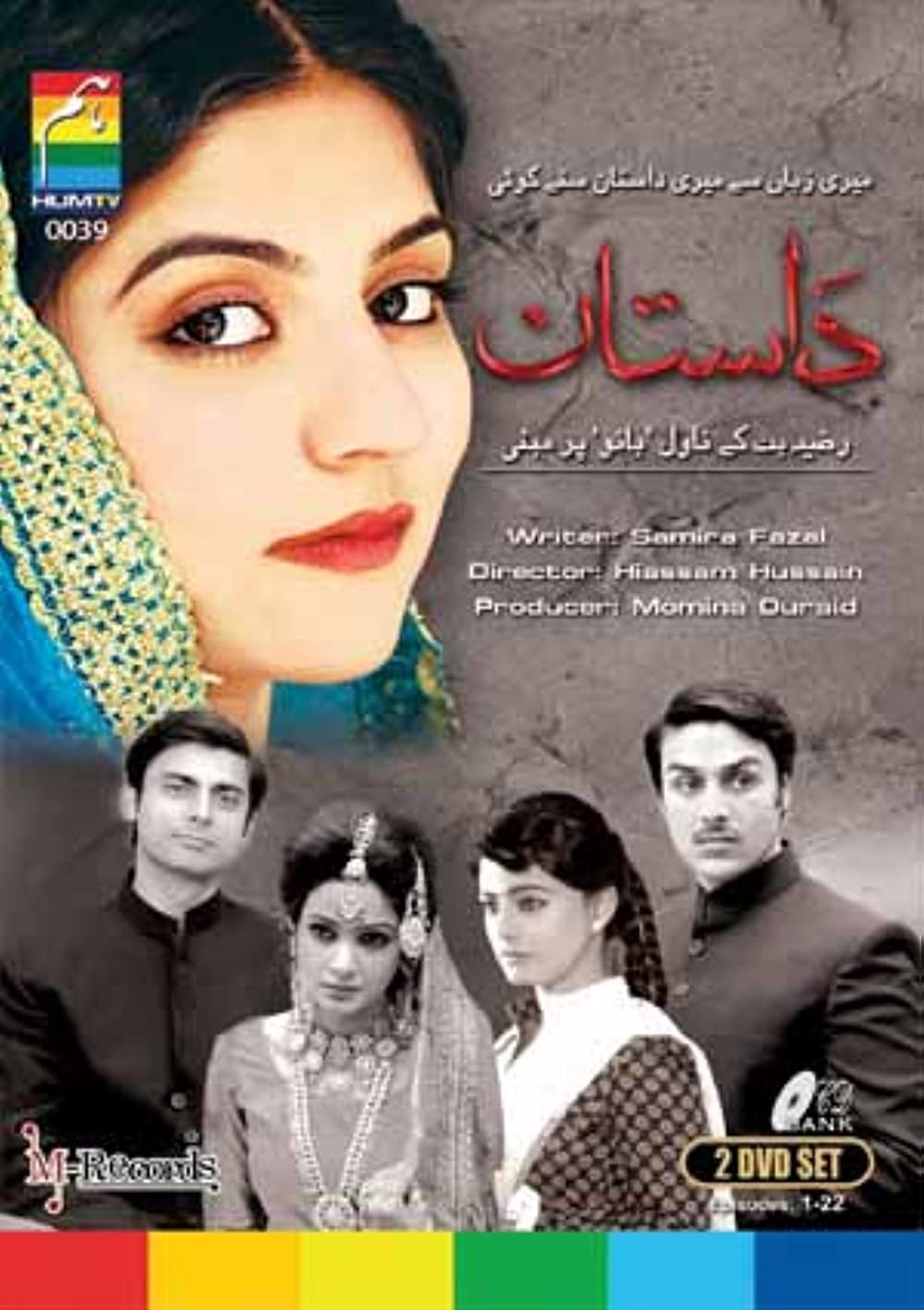
    4 Dastaan (2010)

    Adapted from the novel ‘Bano’ by Rabia Butt, the show explores the trauma caused by Independence, and how it upturned the life of one woman, Bano. Bano and her family lived in India, where her brother supports the cause of the Indian National Congress, and is against the cause of setting up Pakistan. However, when the separation of the two countries was announced in 1947, Bano’s life was completely overturned overnight.

    5 Neeli Zinda Hai (2021)

    Aman and Sumbul are a married couple who have had stillbirth, and are now trying to restart their lives in a new home. When they shift with their daughter to a new house, the couple keeps hearing noises at night which convinces them that the house is haunted.

    6 Manto (2017)

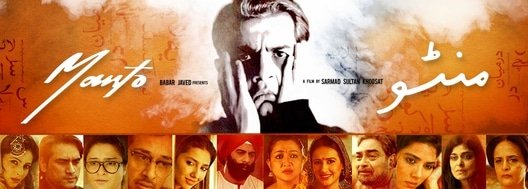
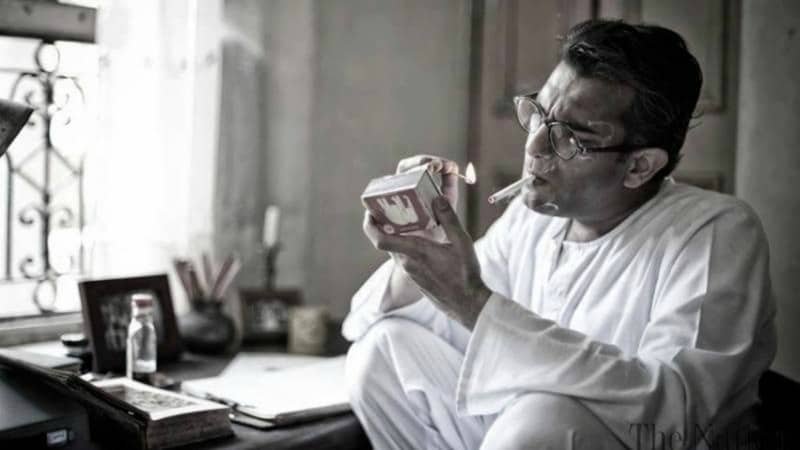
    Directed by and starring Sarmad Khoosat, the series was previously released as a film in 2015, and then as a television drama in 2017. The drama revolves around the popular Urdu writer Saadat Hassan Manto, and the last seven years of his life when he had to face charges of obscenity for his short stories like ‘Thanda Gosht’, ‘Peshawar say Lahore’ and ‘Toba Tek Singh’.

    7 Talkhiyaan (2012)

    Written by Bee Gul, the drama is an adaptation of Arundhati Roy’s acclaimed novel ‘The God of Small Things.’ It revolves around the life of Bibi, who leaves her abusive husband and moves back to her parents home with her two children, Zoya and Jugnu, where her parents criticize her for taking such a stand, but refuse to treat her divorced brother the same way.

  • Sajal Aly calls out Pakistani dramas for romanticizing toxic relationships

    Sajal Aly calls out Pakistani dramas for romanticizing toxic relationships

    Actress Sajal Aly sat down for an interview with BBC Urdu where she opened up about the difficulties of finding good scripts in the Pakistani entertainment industry which do not romanticize toxic relationships. She reflected on how she had to work hard to ensure progressive dramas aren’t just once in a blue moon happening, but then the industry goes back to making sexist, regressive shows:
    “We have to fight hard, we have to say no to a lot of scripts. Right now you would notice there are a lot of dramas airing on our Pakistani screens where harassment is shown to be a sign of love. And then at the end of the day that harasser falls in love with the girl and that gets a lot of views, unfortunately. But I think television has the power to change the mindset of the audience. Because we think our audience isn’t smart but they’re very intelligent. So we will keep fighting for better roles in dramas.”
    Aly also talked about how she got selected for her role in the upcoming rom-com ‘What’s Love Got To Do With It’ and revealed it was her agents who told her this was a role she could excel at.
    “My agents, who are responsible for international projects, had told me about this role and said I was made for it. They sent me two scenes and asked me to record them…Later I got an email saying I was on board.”

    Watch the full interview here:

  • Some of our favourite OSTs from Pakistani dramas

    It’s an undisputed fact that Pakistani dramas will never stop one-upping each other on who can make the most cringe worthy, mediocre version of the good-girl-saves-bad-boy-by-becoming-his-punch-bag trope. But another important element of Pakistani dramas remain unchallenged as being the best: the title songs. If a drama disappears from public attention because of churning out the same old stale storylines, their title songs will still remain evergreen and loved by the social media users.
    After a lot of careful searching, here are some of our favourite title songs from Pakistani dramas!

    1 Humsafar by Quratulain Baloch

    No one can start an article about this topic without mentioning the song that kickstarted it all. Humsafar will remain a prominent element of pop culture discourse for creating the kind of chemistry between the main leads that no television show has been able to match to this day, but one can’t talk about the drama without acknowledging the grip this song had over the entire country. Even today, this song is considered as Baloch’s finest hit.

    2 Ranjha Ranjha Kardi by the Justin Bibi’s and Rahma Ali

    Fans of ‘Peechay Hutt’ should give this iconic song some justice and credit the prodigious sisters for making something that will forever remain among the best title songs for Pakistani dramas.

    3 Mein Na Munh Kholi by Azad Asim and Shehroze Butt

    This gorgeous, moving song was the title track for the drama ‘Habs’ and had captured the hearts of fans on Twitter as soon as it released. It reflects the anguish of a couple who are unable to express their true feelings to each other, despite being married.

    4 Mujhay Apnay Jeenay Ka Haq Chahiye by Tahira Syed and Roshaneh Zafar Ft. Shabana Azmi 

    Written for the drama ‘Akhri Station’ and penned by legendary Urdu poet and writer Amjad Islam Amjad, the powerful melody is an anthem for every woman out there struggling to find her own voice, and reflects the anguish of the main characters and their difficult backgrounds.

    5 Dil Moom Ka Diya by Soch the band ft Sanam Marvi

    Fans are obsessed with the band’s Coke Studio song ‘Neray Neray Vas’, but please do give this song the acclaim this deserves, as it is rarely mentioned as one of the best written title songs for Pakistani dramas.

    6 Dobara by Sehar Gul Khan and Shuja Haider

    Hadiqa Kiani’s powerful drama ‘Dobara’ about a woman who reclaims her life after the death of her controlling husband deserves an equally gripping song that captures the anguish and nervousness of the main characters and the stigma society has towards aging women, and this song does an excellent job at it.

    7 Asamanon Se by Sohail Haider

    Only real fans who stick with us till the end will be happy to see a timeless classic included in this list. The gorgeous period piece features stunning performances from actors like Fawad Khan, Sanam Baloch, Saba Qamar and is still regarded as one of the best dramas produced in Pakistan.

  • Six Pakistani dramas that revolve around female friendship

    Six Pakistani dramas that revolve around female friendship

    Pakistani dramas aren’t the first option one would think of when looking for strong female representation and well written, complex characters. Pakistani screenwriters and drama creators have for long refused to acknowledge the power of storytelling. They refuse to believe it is necessary to have positive depictions of women on screen rather than relying on the same age-old mantra ‘aurat he aurat ke sabse bari dushman hoti hai.’

    Our television screens are littered with tropes that demonize women who actually seek their own independence rather than being obsessed men. Characters like the gold digger, the career-obsessed heartless woman, or fighting saas/ bahu are the norm. It seems like most dramas are obsessed with getting the right amount of misogynist and sexist content in order to get better ratings.

    However, there are a few dramas that were able to get representation right and give the viewers depictions of what wholesome friendships can do to a woman’s life. In the spirit of the upcoming Aurat March, here is our selection of Pakistani shows that have gotten female friendships represented properly.

    1 Akhri Station (2018)

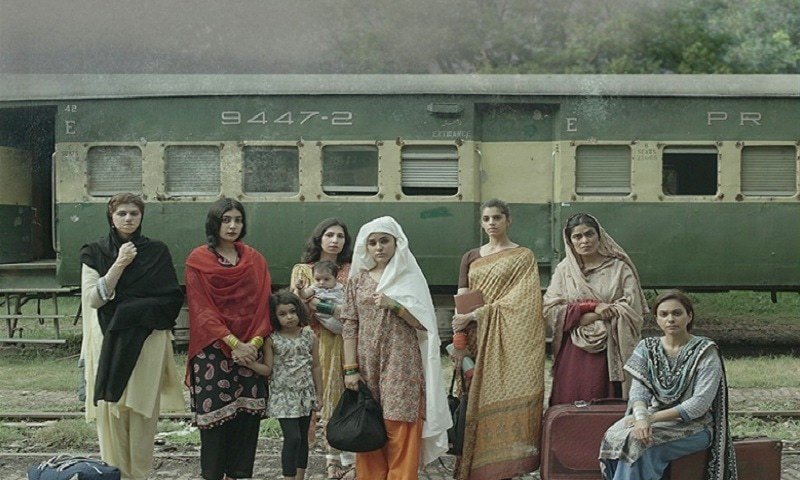
    Written by Amna Mufti and directed by Sarmad Khosat, the series is a wonderful depiction of how women suffering from abuse and trauma can come together to revel in their pain and find their catharsis together. At a train station in Lahore, a group of women meet up and begin opening up to each other about the kind of suffering they had undergone. Produced by Kashf Foundation, the mini series didn’t shy away from exploring tabooed topics like sexual abuse, mental illness, HIV/ AIDS and acid attacks.

    2 Churails (2020)

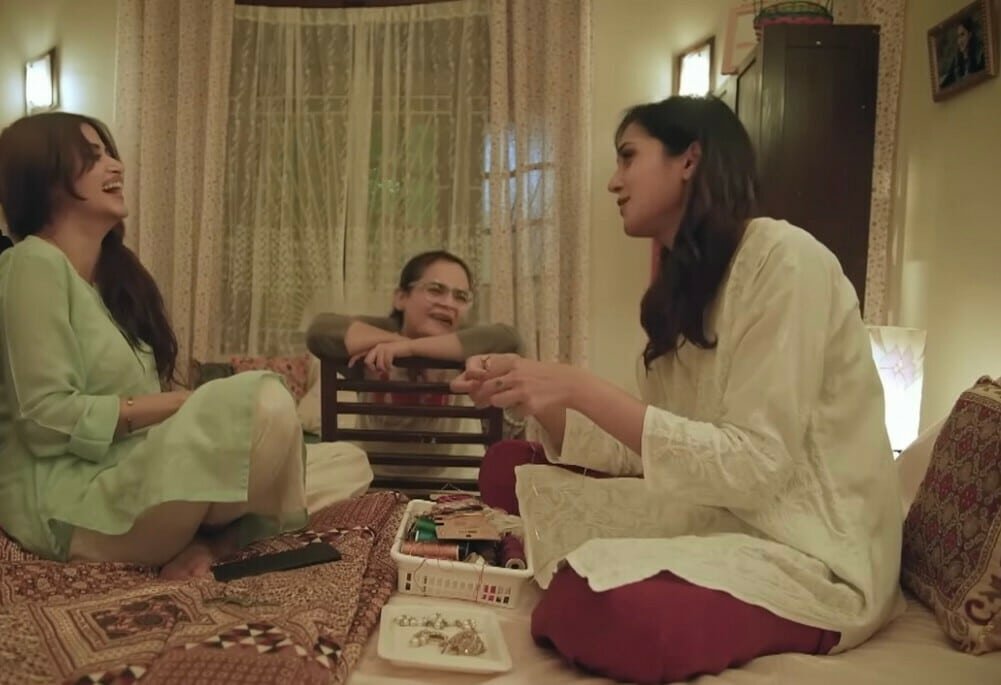
    Written and directed by Asim Abbassi, the drama made waves across Pakistan when it was released in 2020. It is now regarded as a powerful feminist drama that centers around women coming together to take revenge on their abusers. When stay-at-home mother Sara Khan finds out that her husband, Jameel, has been cheating on her with several women, she vows to get back at him. After blackmailing him to send her money, she and a group of close friends open a secret agency, disguised as a boutique, where they help other women who are suffering from abuse or are unhappy in their marriages.

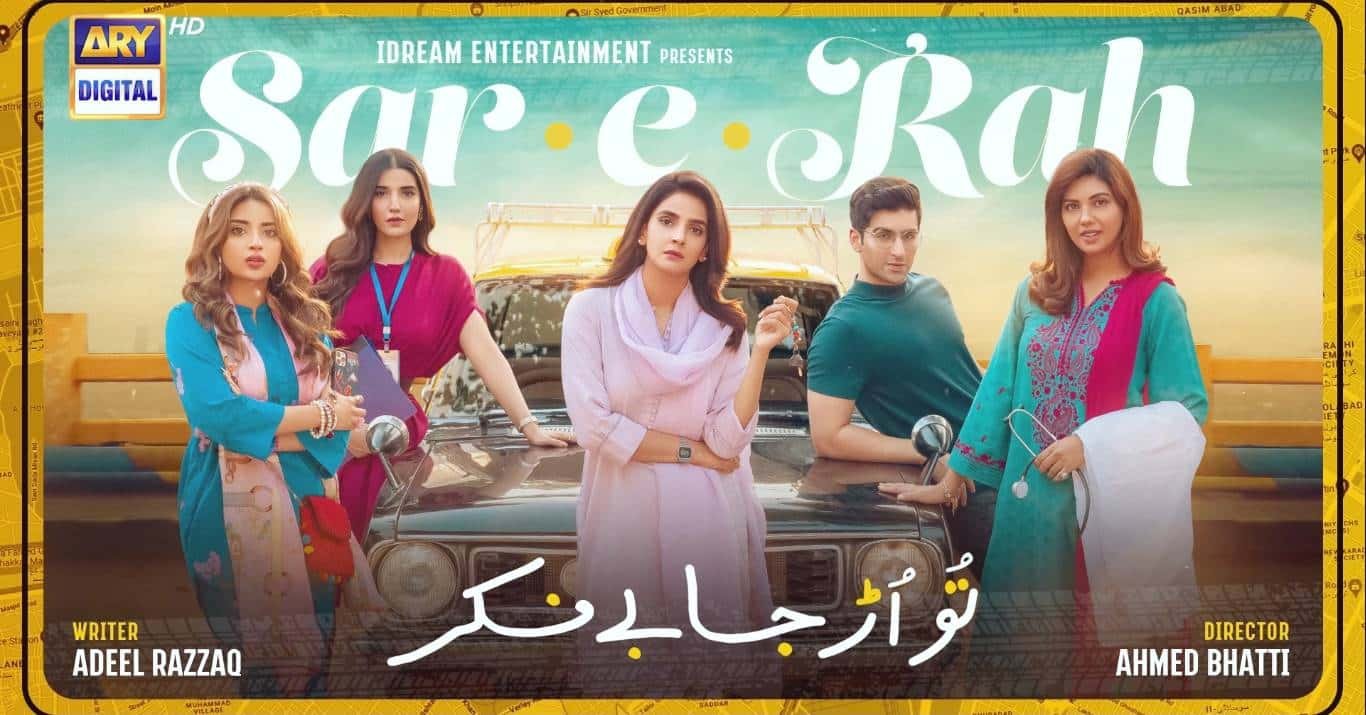
    3 Sar-e-Rah (2022- on going)

    One of the most well-rated dramas currently playing on ARY, it accurately captures how one woman who breaks away the shackles of patriarchy can help other women do the same, regardless of being from different backgrounds. When Rania’s father suffers a heart attack, his family loses their source of income. She decides to step up and follow his footsteps to become a taxi driver. At first, Rania faces immense difficulties because of harassment and backlash from strangers, as well as from family members who keep taunting her with ‘log kya kahenge’, but she refuses to let harsh criticism keep her from becoming the breadwinner. Soon, Rania is able to use her power and knowledge to help other women suffering from the same issues.

    4 Tanhiyaan (1985)

    When it comes to powerful dramas, Tanhaiyaan will always remain part of the discussion for being one of the earliest dramas depicting women living their lives to the fullest, and refusing to obsess about a man’s approval. The legendary Haseena Moin had written powerful, complex female characters and championed social issues in her dramas. The show revolves around two sisters, Zara and Saniya, who are visiting their aunt in Karachi when they find out that their parents have passed away in a car accident. Because of their father’s debts, the sister’s lose their home and have to adjust to their new life in Karachi, while Zara fixates on becoming rich and regaining the house and furniture she had lost.

    5 Raqeeb Se (2021)

    Penned by the powerful Bee Gul, the drama revolves around the issue of domestic violence and women finding solace in each other’s company to escape their abuse. Sakina escapes her abusive husband’s home by arriving at her former lover Maqsood’s home with her daughter, where she meets his wife. Seeking shelter and rejected by Maqsood, it’s his wife, Hania who helps Sakina find ground in their new home.

    6 Kuch Ankahi (2022- on going)

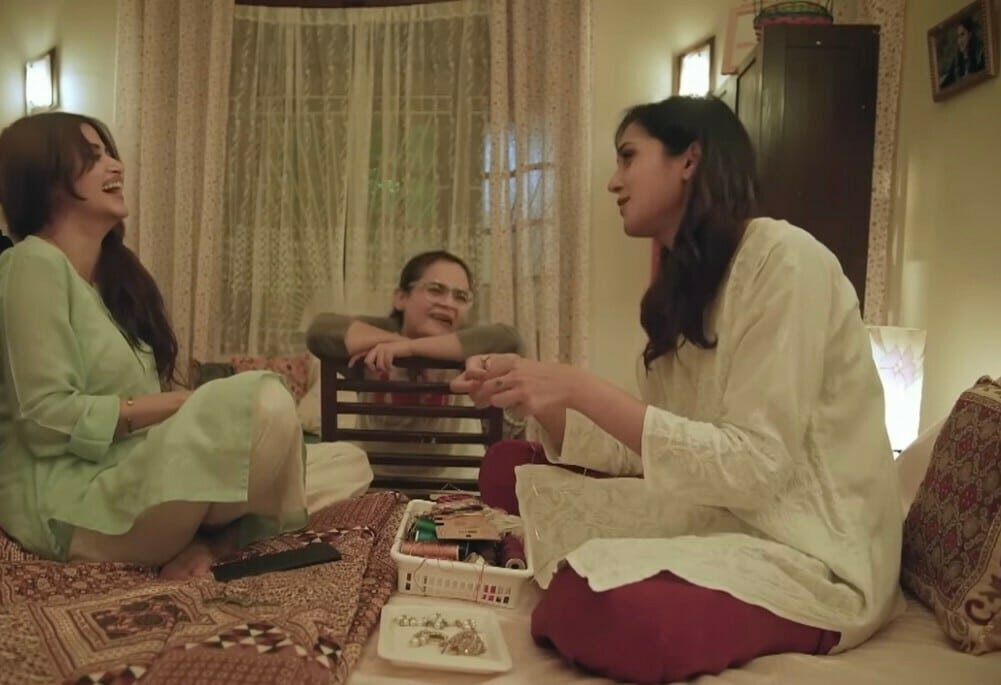
    If you’re reminiscing about the days of PTV dramas that had not held back from addressing social issues, then this drama is the perfect blend of comedy and social awareness. The plot revolves around the three elder sisters and their home in Karachi, where their father is facing pressure from his siblings on the ownership of their home. The eldest sister, Samiya is being pressurized by her mother to marry someone and facing taunts about her age, and her siblings, as well as phupoo, help her find her own voice.

  • Are we allergic to joy?

    Are we allergic to joy?

    There is a poignant moment in the documentary ‘The Romantics’ where filmmaker Aditya Chopra reflects back on the 26/11 Mumbai attacks that shook the entire country. At the time, his production company had been gearing up for the release of his upcoming romantic comedy film ‘Rab Ne Banadi Jodi’. Many of his colleagues had urged him to push forward the dates to prevent an uproar. Chopra said in the documentary that he knew that more than ever, that was the time people needed a reminder of joy and happiness in their lives, so he decided to stick with the original date. When the film released in cinemas across India, it became a hit.

    Currently in the state ‘Bannistan’ is in, with our economy struggling, inflation rising and more women finding it difficult to access public spaces without the fear of sexual assault or harassment, we have now developed an allergy to joy. Anything that prompts laughter or makes people happy. Solution: ban it. We ban our films, we call for festivals to be stopped because of fears like “western sazish” or “anti-Islamic” and then we wonder why our upcoming generation has no creative skills or any motivation to find work.

    Art is not just a prop to promote state policies, but a way to encourage members of society to find joy and reflect on the way they are living their life. We need art because it encourages us to express our inner selves and also because it is a powerful way to spread messages on social issues to the masses. Perhaps this is why art terrifies our public officials so much, and why it is censored more than any other industry in this country. We label the art we don’t like as ‘immoral’ because it is the only medium that can reflect the tabooed topics we are so afraid to speak about. Consider dramas in the past like “Dil Na Umeed to Nahi” which got several notices from PEMRA because it discussed the issue of child sex trafficking, and the difficulties survivors face in rehabilitating themselves. Another notice was sent to ban hugs or caressing, because God forbid any marriage is seen as being happy or affectionate. But we refuse to think about the numerous domestic violence and abuse scenes we watch on our screens every day.

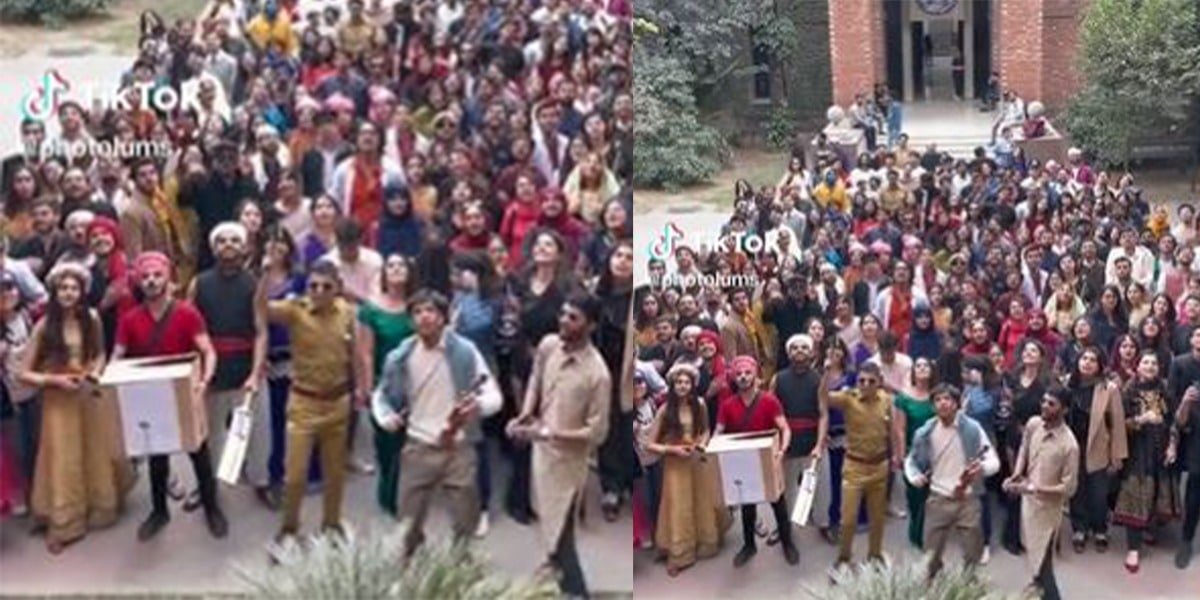
    A few days ago, a video began trending online featuring Bollywood day at LUMS, where students showed up dressed as their favorite characters from movies and dramas. But in response, social media users began criticizing the university for promoting vulgarity, and called the participants “kanjarkhana”

    Slur words are labels that we put on people who do not conform to the idea that it is shameful to seek celebration and joy in our lives, and words like these can be traced to our colonial roots. The British had demoralized the kunjar community in the sub-continent, a nomadic community of folk entertainers. As Jasir Shahbaz writes for Samaa, under the British rule, the kanjar community had been socially outcasted and under the Criminal Tribes Act, 1871, they were listed as “addicted to the systematic commission of non-bailable offences.”

    These terms are thriving under the ongoing reign of Bannistan: shame anyone who works in entertainment as a ‘kanjari’. We criticize female actors for performing on screens, deem women who seek their independence or protest for equal rights as loose and immoral, when in reality anything that challenges our misogynist and regressive mindset is improving our lives.

    In defense of the students who celebrated the end of their University days and any other woman out there trying to live her life, kanjari is an empowering term because it means we’re celebrating life. In times of repression and censorship, celebrating art can be the greatest form of living because it allows us to represent ourselves on screen. And gives space to every individual in society, regardless of caste or background. So instead of shaming these children for celebrating Bollywood day or just protesting in the streets, hold back your thoughts and just go about your own day if you’re not interested in what they have to say. Because now more than ever, we need joy in our lives. We need a reason to keep moving and find solace in the countless stories we see in films or read.

  • Kiran Ashfaque talks about her divorce with Imran Ashraf in a Q&A session on Instagram

    Kiran Ashfaque talks about her divorce with Imran Ashraf in a Q&A session on Instagram

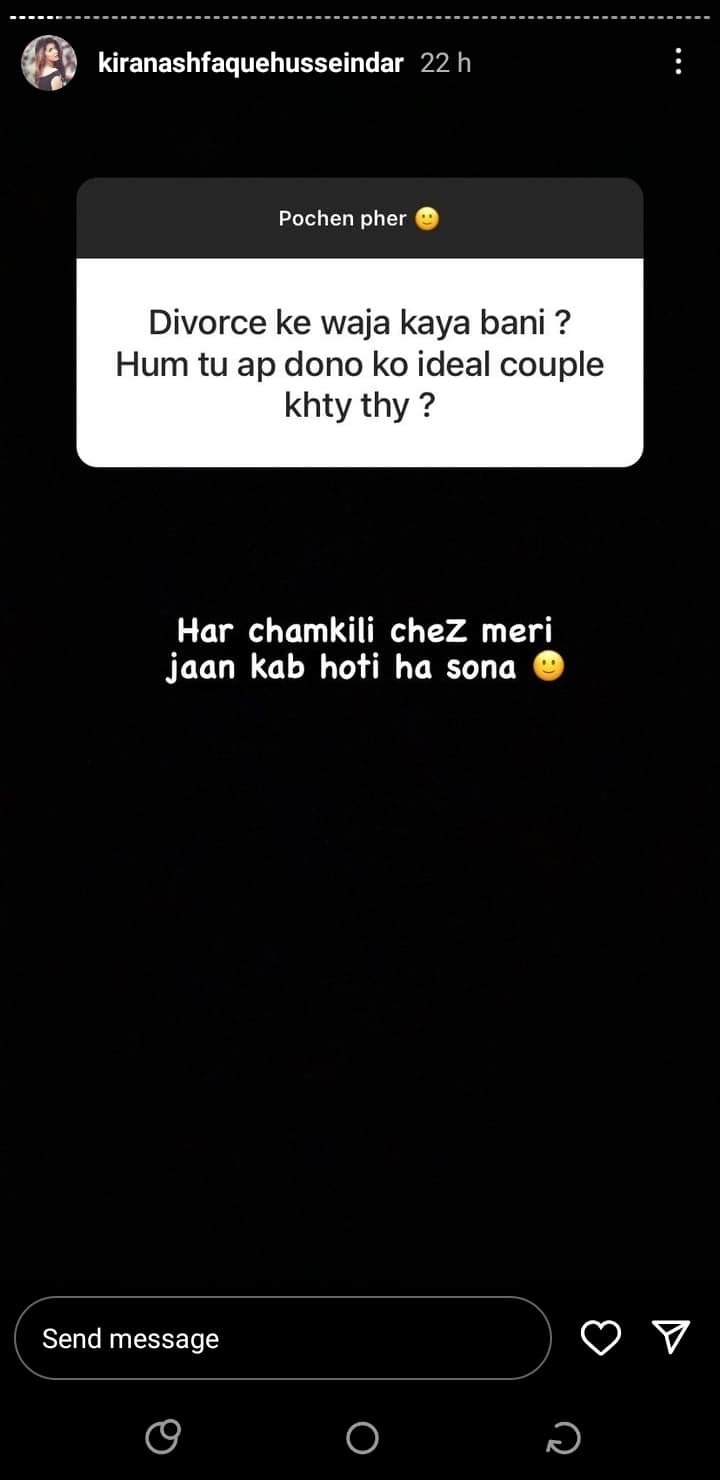
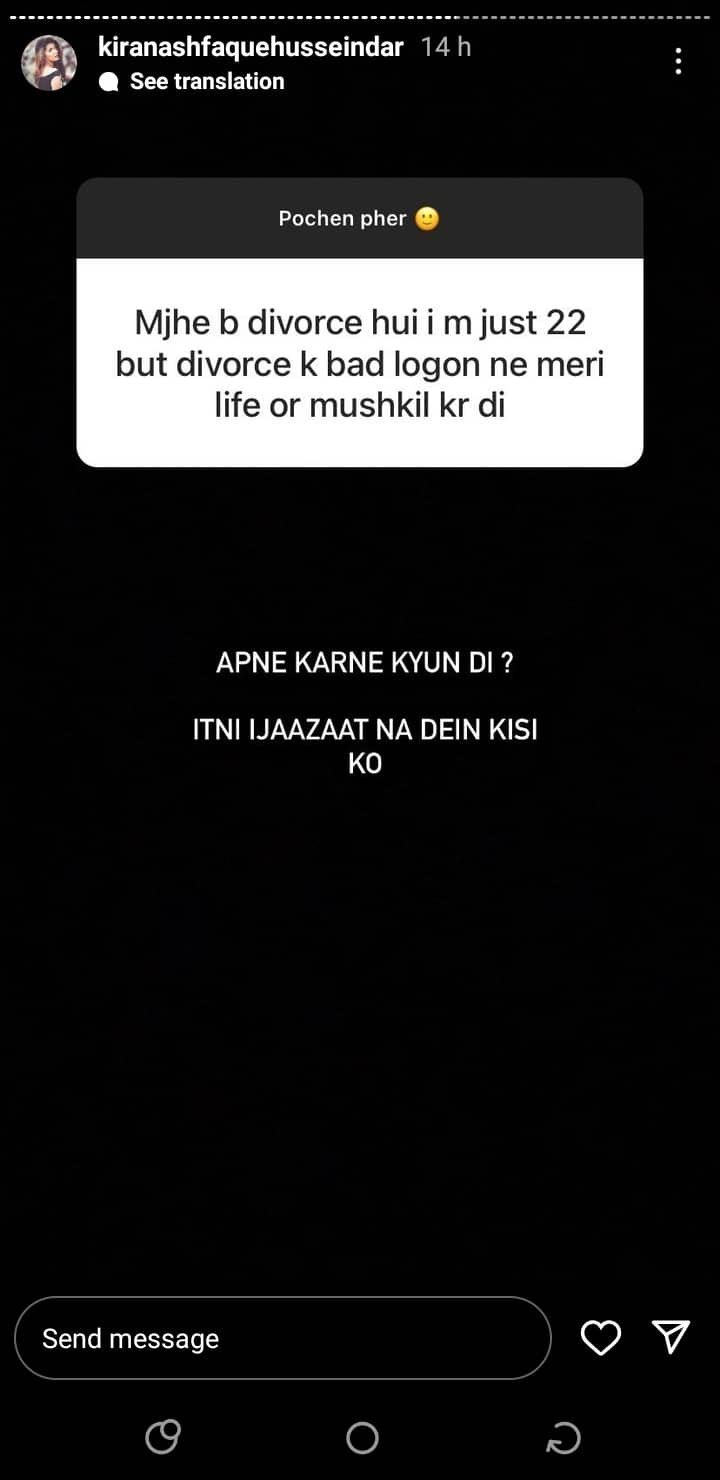
    Actor Imran Ashraf announced last year that he and his wife Kiran Ashfaque had chosen to part ways after four years of marriage. Both had not addressed the reason why they had decided to end their marriage, until now Ashfaque held a Q&A session with her fans on her Instagram stories, where she spoke out about why she had chosen to get a divorce.

    When a fan had asked Ashfaque about why she chose to end her marriage to Ashraf, she had responded:

    “Not all that glitters is gold.”

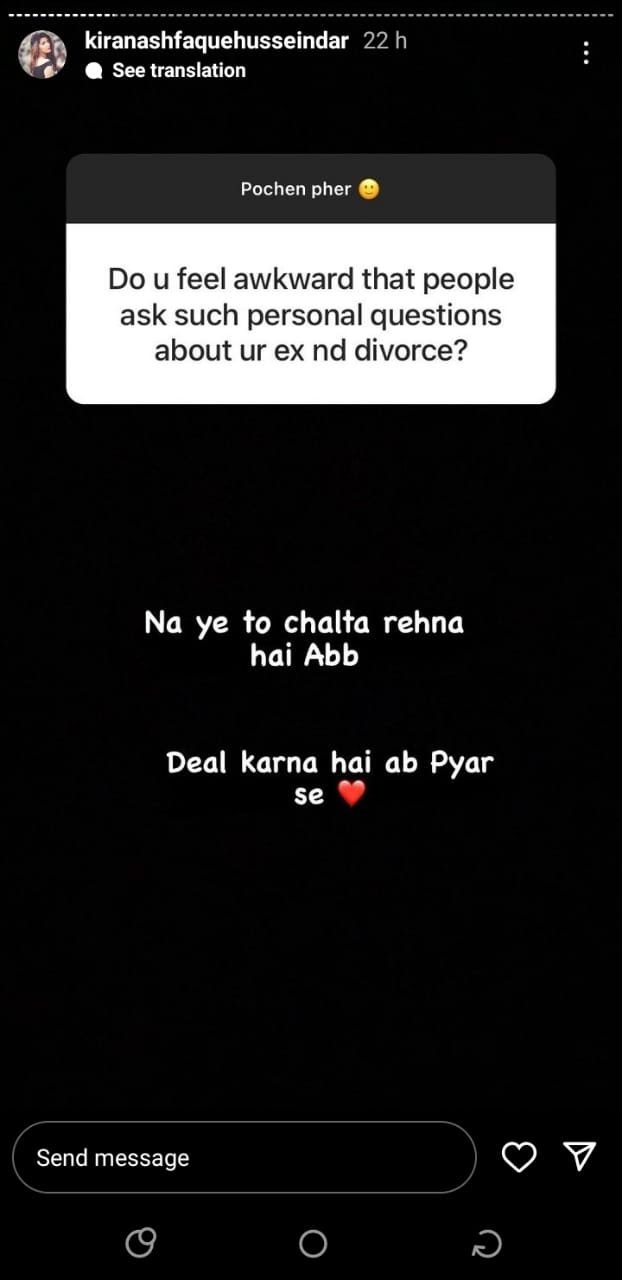
    Among the other questions, Ashfaque was also asked about whether she had felt insecure and awkward when other people asked her a lot of questions about her divorce, to which she proudly let other women who followed her know that becoming a divorcee isn’t a stain on your identity, and it was empowering to escape a situation that wasn’t helping you grow.

    “This will not go on for long. We will keep dealing with it with a smile.”

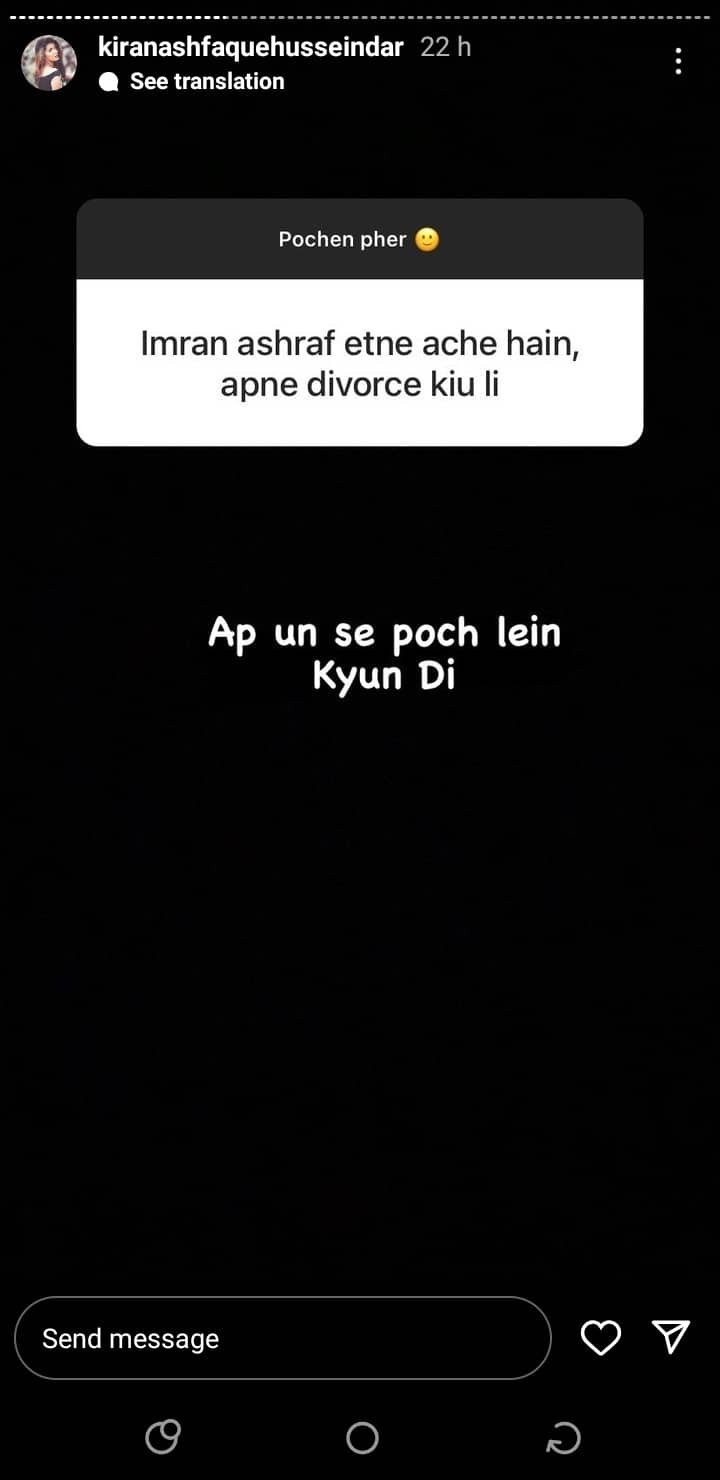
    Other followers also asked her why she had chosen to leave Ashraf to which she had said

    “Why don’t you go and ask him yourself.”

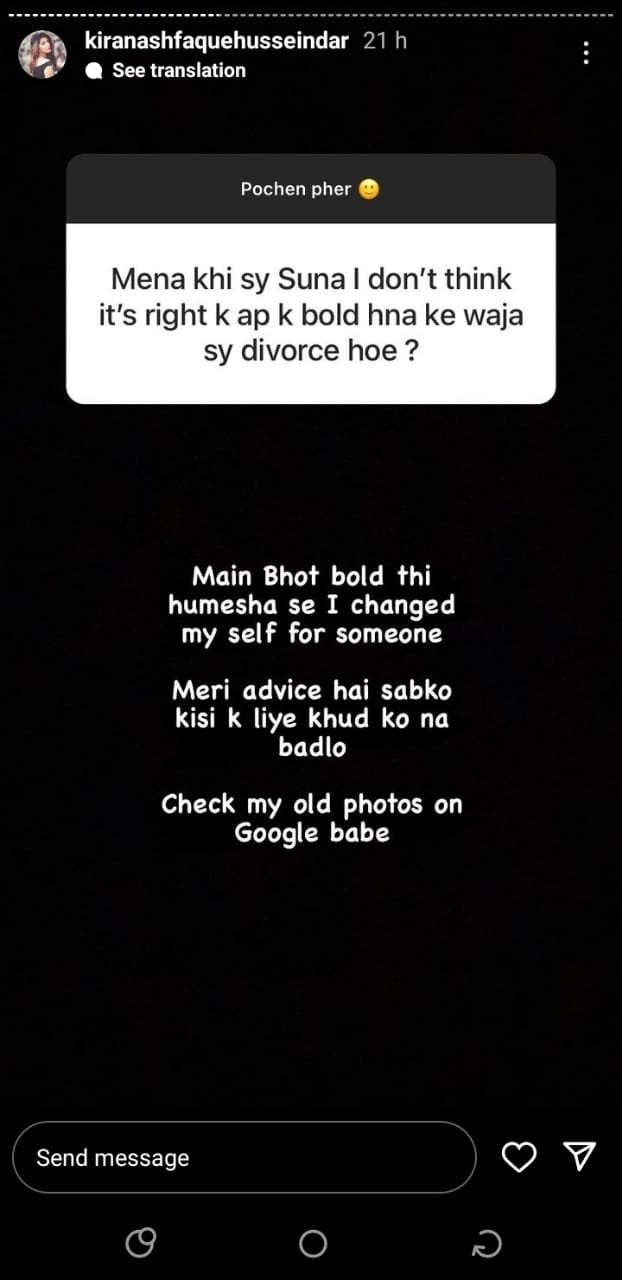
    One of the common ways society shames women for seeking their independence or for escaping repressive situations is by labelling them as ‘bold’ a term associated with women who refuse to break themselves down for the sake of keeping others happy. When a fan asked Ashfaque about other people calling her bold for choosing to get a divorce, she addressed it in the most badass way.

    “I was always a very bold person but I changed myself for someone else. My advise to anyone out there is that they should never change themselves for anyone else.”

    Ashfaque also had advice for another woman who asked her how to deal with society’s taunts, after she got divorced when she was 22. Ashfaque replied by telling her that she should never allow other people to dictate her life choices.
    “Why did you allow them to do that? Never give anyone permission to disrespect you.”

  • Are actors responsible for educating their audiences?

    Once again, the Pakistani entertainment industry is stirring up reminders of why people should stop viewing their content because even they don’t want to own up to the material they work on.

    Actor Danish Taimoor appeared on a celebrity talk show yesterday where he was questioned about his choice of dramas for the past few years, and the criticism his characters are subjected to. Taimoor firmly responded to the rumors by saying that he was an actor, not a teacher. ‘It’s not my job to educate an audience,” he said.

    These kind of statements are usually used to reject society’s expectations. It is not a person’s responsibility to dress the way society wants or to keep imposing restrictions on themselves that hinders their creativity, just so that society remains happy. But when it comes to filmmakers, the line is rather crooked.

    Sorry Mr Taimoor, but when you chose to become an actor and get involved in dramas, you inadvertently become an educator. Films are a platform that educates our audience on issues, and as a person with a public position, the onus does fall on you to be mindful that the kind of message your dramas are sending not harmful.

    Perhaps we should widen the screen to remember what was the kind of content that Taimoor was being questioned on. His past few dramas like Kaisi Teri Khudgarzi and Ishq Hai had attracted widespread criticism for featuring abusive, toxic male leads who were projected as romantic heroes regardless of the way they stalked, coerced and pressurized the female characters to marry him. One of the most memorable examples was a scene in Ishq Hai, where Taimoor’s character holds a gun to his head and starts counting down from 10, threatening the girl that he would shoot himself unless she agrees to marry him.

    Can we allow our actors and other members of the entertainment industry to dissuade their responsibility while depicting such triggering scenes that show a woman being kidnapped, threatened and pressurized in to marriage? Especially in a country like Pakistan where the rape conviction rate is less than 5%, and a recent report that was presented to the National Assembly of Pakistan showed that between 2019 to 2021, more than 3,987 women were killed because of domestic violence? More women in Pakistan are turned away from their families, and the courts in order to bring their abusers to justice because they’re told by public officials, including our own entertainment bretheren, that their wounds don’t matter. Because our screen writers and actors have pushed the narrative through their work that belittles and demoralizes women who aren’t passive or submissive.

    But Taimoor isn’t the first person to respond to criticism with this statement, as so have other members of the acting fraternity as a complete justification to their choice of dramas. When Fahad Mustafa was questioned about his choice to produce Dunk, a drama that revolved around fake sexual harassment allegations, he had responded with the same remark. “I don’t run a school, I am an actor so it’s not my job to educate audiences.” Even another roundabout way to defend the choice of drama was from Yasra Rizvi who had outshone with her brilliant performance in the web series ‘Churails’ but then was one of the main performers in ‘Dunk’. Defending her decisions on her Instagram page, the actor stressed that “Actors who play rapists and murderers are not ACTUALLY rapists and murderers and they are not condoning or justifying such actions in real life by playing said characters.”

    Any sane person watching Akshay Kumar play a broke man in Hera Pheri knows that he actually doesn’t live in a crammed room with three other people, but is playing a character. Your audiences aren’t dumb and they aren’t here to just be entertained, but they are absorbing the message you are sending through playing that characters on screen. Because the reason why the entertainment industry is being held responsible for the kind of material they are churning out is because theirs’ is a powerful medium through which we educate our audiences. Films have the power to reach out across countries and to the masses who are sitting at home and watching it on screens. Actors are not merely just entertainers who get to perform in front of an audience, but they are powerful individuals with platforms that have the power to change and influence ideals that no politician or public official can do so. When our entertainment industry consistently put drama after drama where women are being beaten, and churning out regressive messages, they don’t get to wonder in shock that why is the there a never ending rape pandemic in Pakistan, and how more women are posing a threat to their lives if a video of them dancing on Tik Tok goes viral. It’s because our dramas and filmmakers need to realize that they have a social responsibility to be mindful of the message they are sending out to their audiences.

    Especially for celebrities like Mansha Pasha who had said in defense of Rizvi, that “Actor’s aren’t echo chambers”, then there won’t really be any point of the entire profession. Activism is not a toy you can pick and drop when it pleases your image. Despite public appearances at marches and protests for women’s rights, it is ultimately your films and dramas that define what kind of social issues you are advocating for. So regardless of how you may protest how much of a feminist you are, it is the women from backgrounds less privileged than yours who suffer more because of your stance. The reason why the rise of the right wing government BJP is able to cement their stance and consolidate their anti-Muslim stance was through peddling their narrative with the power of films and influential celebrities.

    Actor Sania Saeed reflected on why more drama creators need to remember that their content isn’t just providing entertainment, but it is also projecting out messages that the audience will follow. In an interview with Something Haute, she spoke about why art has an essential political role in society:

    “Television shows want dense topics they feel can be understood by audiences quickly and will also be easily made and accepted by the people. I feel that this has become a business formula now to write television series, and we have started pressurizing our artists and writers to adjust to this….I do believe that art has a role beyond entertainment which is to help expand our mindsets.”

    The responsibility to educate the masses isn’t something that an actor gets to avoid, but it is attached with every form of entertainment they are sending out to their audience. So to Danish Taimoor, Fahad Mustafa, and other members of the acting industry, it is your responsibility to ensure that your films are not peddling dangerous narratives that hinder the efforts being made by women, transgenders and other minorities to regain their humanity within Pakistan.

  • ‘I don’t feel comfortable with slapping scenes’: Bushra Ansari

    ‘I don’t feel comfortable with slapping scenes’: Bushra Ansari

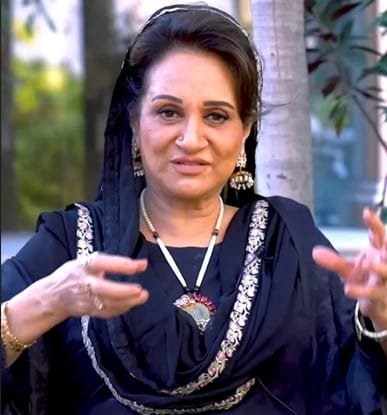
    Bushra Ansari’s currently winning hearts as the strict mother-in-law on the ARY drama ‘Tere Bin’, however it seems like the actor isn’t too comfortable with the character’s cold, selfish nature. Especially in a particular scene where her character Maa Begum slaps Meerab for dancing.
    In a behind the scenes interiew, Ansari confessed that she finds slapping scenes quite difficult to perform:
    “The one thing that I don’t like is slapping people, and I get incredibly upset over it. Not just girls, but with boys as well I have to give a lot of re-takes. In a lot of previous dramas I had to slap actors like my own son. I slapped Wahaj, Ahsan Khan and then Mikaal Zulfiqar…Just one thing I would change about her character is how much she slaps people. Because it breaks my heart. Allah karay I never have to come across such a situation.”
    Ansari also explained the mindset and personality of Maa Begam, and elaborated on how when Meerab began dancing at her wedding, she challenged this mindset which is why she was slapped.
    “I (my character) have a set of rules like ‘this is my house, this is my family and these are my rules, and this isn’t right that my daughter-in-law is dancing at wedding. But no one would find this to be proper, as this is a part of our own culture… I see women now days are dancing at their wedding and wearing full makeup. Back in our days we had a tradition that a bride would wear no makeup so that her face would glow.”

    You can watch the complete interview here: