Tag: Pakistani dramas

  • ‘Sabaat’ will have you hooked

    ‘Sabaat’ will have you hooked

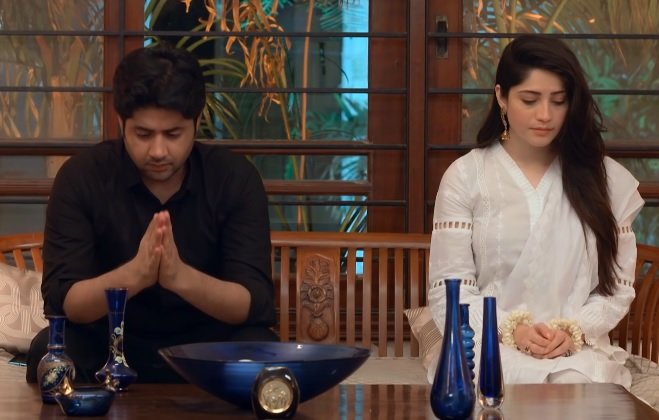
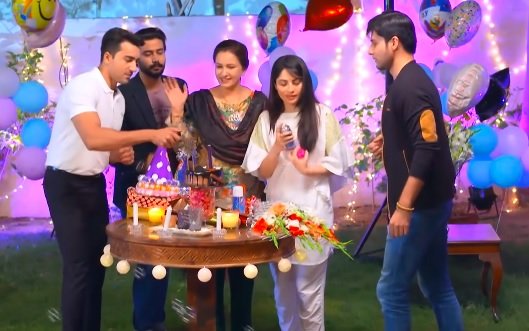
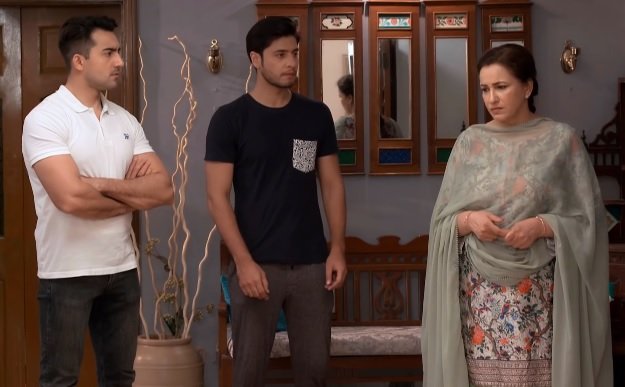
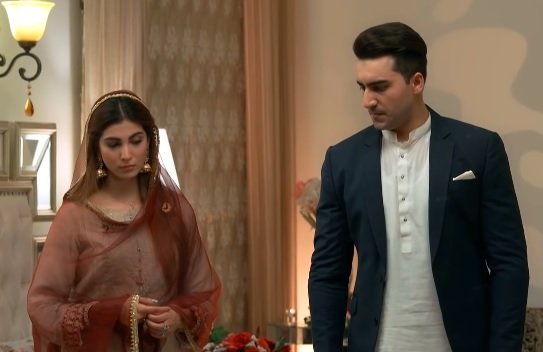
    Six episodes in, Sabaat has managed to capture the audiences with its compelling and entertaining storyline and strong performances. The drama had intrigued viewers before it even aired thanks to one of the main leads Mawra Hocane, who is an ace at the social media game – but a few episodes in, it has everyone, myself included, hooked.

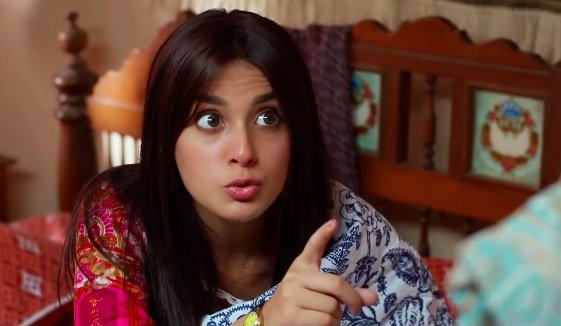
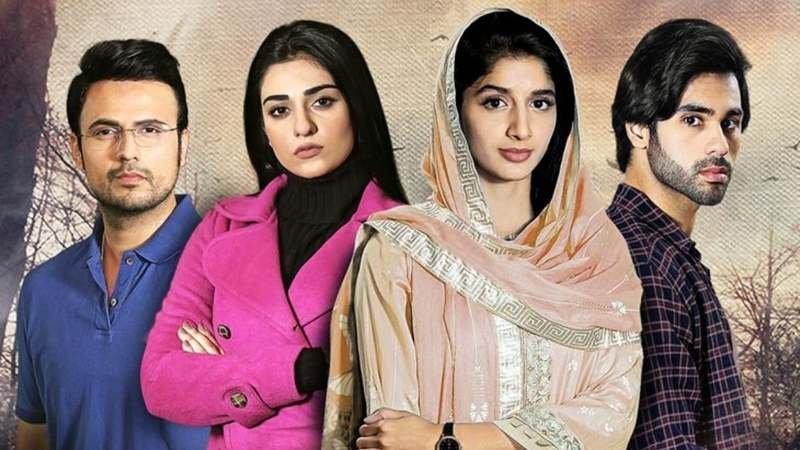
    Sabaat is centred on two families: Hasan Fareed (Ameer Gillani) and Anaya Aziz’s (Mawra). Anaya belongs to an average middle-class family. She has big dreams and wants to make a difference in society. She actively campaigns for harassment against women in workplaces and is a class topper. Hasan, on the other hand, is from an affluent and well-off family. He and Anaya are class fellows and start off as fierce competitors but an incident changes that and the two become acquaintances following which Hasan develops feelings for Anaya and wants to marry her. Though Hasan’s character development is a little weak, given how the swiftly the drama is progressing and how sparkling the chemistry is between him and Anaya, we are willing to overlook this.
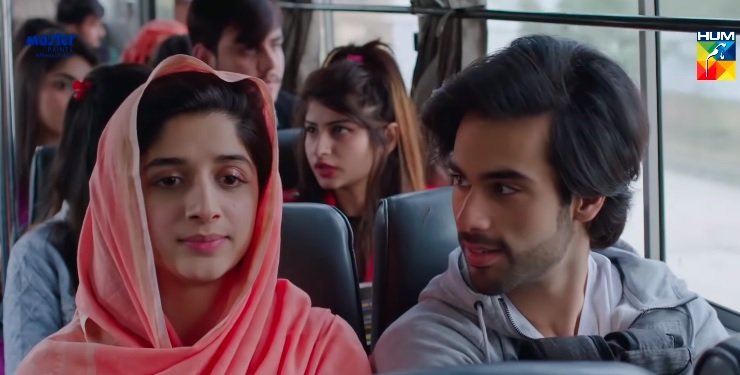
    While these two are in their own little university bubble, Hasan’s elder sister Miraal (Sarah Khan) is the real devil of the show. She is a spoilt brat who cannot take no for an answer. Miraal is rude, arrogant and selfish and thinks she can get away with anything because she is rich to the point that she goes to her brother’s university and slaps Anaya for no reason. She generously uses the dialogue “Tumhari aukaat kya hai” and is enabled by her father who is also a snob.

    While Mawra’s character, for now, is one-dimensional, it is Sarah who steals the show with her bratty act. Her facial expressions, body language and moods are on point and she delivers a convincing performance making you hate Miraal. Nonetheless, it is refreshing to see both women essay strong and confident characters. At this point, I’d like to add here that Sarah’s wardrobe, hair and makeup are brilliantly done and she looks super chic in all of her scenes.
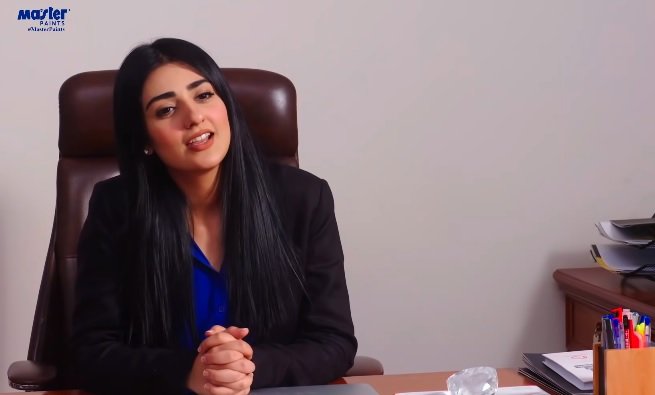
    Sarah Khan Sabaat

    Usman Mukhtar is yet to make an entry and fans are waiting with bated breath for it. While the theme of the drama is still unclear, Mawra in an interview had shared it is primarily a love story which is meant to entertain audiences and not deliver sermons or lessons. However, she added that the drama will highlight several issues including classism in our society.

    Read more – We take it back; ‘Ghalti’ is ARY’s best running drama

    Sabaat has been penned by Kashif Anwar and directed by Shehzad Kashmiri of Anaa fame. Apart from the four leads, the drama also starres Simi Raheel, Laila Zuberi and Mohammad Ahmed.

    It aires every Sunday at 8 pm on Hum TV.

  • We take it back; ‘Ghalti’ is ARY’s best running drama

    When ARY’s drama Ghalti’ started, it seemed like a huge mistake. Typical saas bahu, beychari bahu and crazy saas. Husband is a complete disaster, giving talaaq after talaaq, which is so typical of Pakistani dramas.

    But after this week’s episode, we are happy to issue an apology and say, WOW, what happened? It’s turning out to be one of the best running dramas on ARY.

    Hina Mani delivers a stellar performance

    That being said, it’s not like it has much competition. The drama ‘Jhooti ‘ is probably Iqra Aziz’s biggest mistake and the high that Ayeza Khan got from ‘Meray Paas Tum Ho’ crashes in ‘Thora Sa Haq’.

    In this week’s episode, three massive twists made ‘Ghalti’ a fantastic watch. Zaira (Hira Mani) is married to her cousin Saad (Affan Waheed) and Saad’s mother Zaitoon (Saba Hamid) has it out for them. She tries her best to destroy their marriage and finally succeeds.

    The best part about this latest episode was Zaira. Hira Mani delivers a stellar performance, one in which you shockingly and immediately feel her pain. She acts perfectly. So perfect that you immediately are drawn to her. There is no overacting when her husband delivers the final blow and when she tells her mother. This is so realistic that you can imagine it happening in real life. And that is where the drama takes a turn.

    You can only be team Zaira then.

    At such important moments in this episode Hira Mani hits constant sixers.

    You feel her pain and she so elegantly takes on what what Zaitoon has handed her and the drama no longer becomes about divorce but actually becomes about a woman’s strength.

    Zaitoon is also not to be messed with and Saba Hamid does her total justice. She is perfect in her narcissism and her selfishness and Saba’s every expression reflects what Zaitoon is.

    Saba Hamid is full of expression and elegance, making a stellar villain

    The voice of reason is Shanzay (Mehr Bano). She is a strong, independent, working woman married to Saad’s brother. When her character was first introduced, you wondered: Ugh, here is another drama demonising the working woman. But wait. It didn’t.

    What’s going on? How is this drama getting so good?

    Shanzay tells off Zaitoon, Saad, the sisters, so well that you feel like clapping and feeling like wow, how is this possible that her husband is taking HER side? This isn’t typical at all. And it’s done so normally, matter of factly, simply. No dramatic angles, dialogues, music.

    Mehr Bano delivers a performance that rivals that of Saba Hamid

    The teaser for the next episode promises to be even better, filled with confrontation and dare we hope, a not dragged out end. We have our theories on what might happen but it isnt the time to speculate just yet. It’s almost the beginning of the week and we are already waiting for the next episode.

    So we take it back and apologise because this is one drama we wait for every Thursday and hope you guys have the time to catch up. This is the one to wait drama to look forward to during the lockdown.

  • ‘Kaheen Deep Jalay’ keeps getting worse

    ‘Kaheen Deep Jalay’ keeps getting worse

    Saach baat bataoon toh Neelum Munir and Imran Ashraf’s Kaheen Deep Jalay on Geo was my guilty pleasure. The drama was full of well, drama, and it had a heavy dose of masala complete with over-the-top twists and turns which were oh-so-fun to watch. But the last couple of episodes have turned the serial into a painful watch.

    Let’s take a quick run through the plot. Rida (Neelum Munir) is the only sister of three brothers: Hatim (Hammad Farooqui), Fahaam (Ali Abbas) and Asim (Syed Arez). The brothers dote on their sister and pamper her to no extent. Rida’s maternal cousin Shamila (Nazish Jahangir) gets married to her eldest brother Fahaam. Shamila is a conniving and manipulative girl who is jealous of Rida because of the attention she gets from her brothers. Shamila’s only brother doesn’t pamper her much and seeing Rida get so much attention from her brothers irks Shamila who then uses every opportunity to mentally torture her sister-in-law.

    Meanwhile, Rida gets married to Zeeshan (Imran Ashraf). Zeeshan, who was Hatim’s colleague had fallen in love with Rida from the moment he saw her. The two get married and are happy but soon Zeeshan’s insecurities coupled with Shamila’s manipulation cost them their marriage.

    Read more – ‘Kahin Deep Jalay’ is terribly typical but full of masala

    The recent episodes have seen the plot spiral completely out of control. A misunderstanding on Zeeshan’s part leads him to believe that Rida cheated on him. This gives Shamila a chance to lash out on Rida even more and Rida’s brothers who doted on her through the course of the drama now refuse to even acknowledge her to the point that they wish that she was dead. It is impossible to understand how Rida’s brothers just suddenly turned their back on their sister and refuse to believe her innocence. This plot twist is beyond my understanding.

    Hatim, Asim and Rida’s mother

    Though Zeeshan later realises his mistake and asks Rida for forgiveness, she refuses to forgive him (and rightly so) and the two spend their days crying. Zeeshan, in particular, is very annoying. He cries all the time (not that I’m against men crying) and feels sorry for himself and doesn’t really make much of an effort to make amends. He just hopes that Rida will come around.

    On the other hand, Shamila, whose husband Fahaam is shot dead, manipulates her brother-in-law Hatim into marrying her so that she can once again become the bahu of the house. Another over-the-top and absolutely unnecessary plot twist. It’s so annoying to see how the men in the family are so oblivious to Shamila’s actions.

    Shamila and Hatim

    Despite the frustrations, I don’t want to overlook the positive which is Rida’s relationship with her mother-in-law (Saba Faisal). It is refreshing to see a mother-in-law stand up for her daughter-in-law and criticise her son for being unfair to her. Her character is probably the only balanced one in the entire drama – the rest of them are an emotional mess.

    Rida and her mother-in-law

    While Kaheen Deep Jalay continues to test my patience, the only reason I will continue to watch the drama is because I’m curious to know Shamila’s end. And I’m pretty sure it’s not going to be a pleasant one. So that should make up for the frustrations. In my opinion, things could have been accelerated and the drama should have wrapped up by now.

    Another thing that has been bothering me is how Geo repeats the last ten minutes of the previous episode in the new episode.

    Nonetheless, if you’re looking for a masalaydaar drama which does not require too much of your brain cells, give Kaheen Deep Jalay a go. Otherwise given how it’s progressing, or regressing, you can skip it.

  • Jhooti: The drama that replaced ‘Meray Paas Tum Ho’

    Jhooti: The drama that replaced ‘Meray Paas Tum Ho’

    Meray Paas Tum Ho left some big shoes to fill. The Humayun Saeed-Ayeza Khan starrer received unprecedented success and was reported to be television’s highest-rated drama of all time. The serial wrapped up on January 25 and the next week on February 1, Iqra Aziz, Ahmed Ali Butt and Yasir Hussain’s Jhooti took over.

    Much before its release, when the teasers of the drama were released, Jhooti had stirred up controversy for allegedly showing women in a bad light and portraying them as money-hungry, two-faced creatures and the first episode did nothing to change the perception.

    The drama opened with the same-old storyline. Nirma’s (Iqra) parents want their daughter to get married and settle down. But the rebel daughter wants a better life for herself and doesn’t want to settle for the “useless” boys in her “poor” neighbourhood. She spends her days shouting or passing snide remarks to her family members. There are a lot of screaming sessions as Nirma clashes with her family over the rishtas that come for her. The only person who supports her is her father.

    In comes Ahmed Ali Butt as Nasir, a simple man *yawn* madly in love with Nirma. He runs a small store in the neighbourhood and lives a fuss-free life. He comes over with his family with a rishta for Nirma. While Nirma herself rejects him by constantly calling him fat, her family thinks that he is a good choice for her. Eventually, Nirma’s partner in crime and equally vile friend advises her to marry Nasir only if he agrees to put his shop and house in her name. Interestingly Nasir’s parents agree to her condition and they come over to fix the date for the wedding when Nirma flips and tells them that she’s already rejected the proposal.

    While the drama doesn’t appear to have anything new to offer as yet and is as regressive as it can get – I mean Nirma’s mother tells her that she cannot go to university because she needs to get married – the only department in which it excels is acting. Iqra has given a solid performance and you absolutely hate her at the end of the episode. The rest of the actors including Butt and Asma Abbas as Nirma’s mother put up commendable performances.

    The drama has a bit of a negative vibe to it and reminds you of the over the top Star Plus sagas. But I’m going to watch a couple of more episodes before deciding whether the drama is worth watching or not.

    Jhooti has been directed by Syed Ramish Rizvi and penned by Ali Moeen. It airs every Saturday at 8pm.

  • ‘Ruswai’ gets frustrating with each passing episode

    ‘Ruswai’ gets frustrating with each passing episode

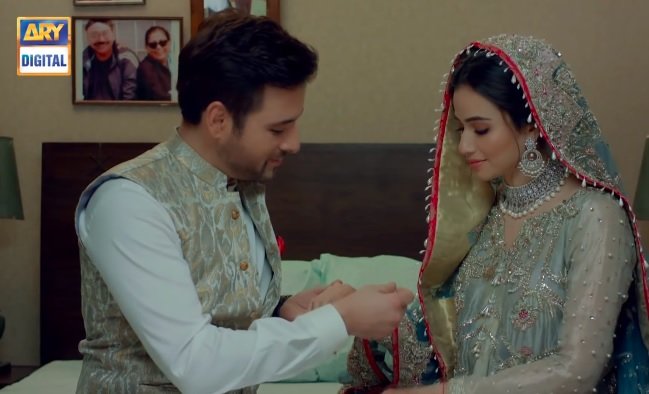
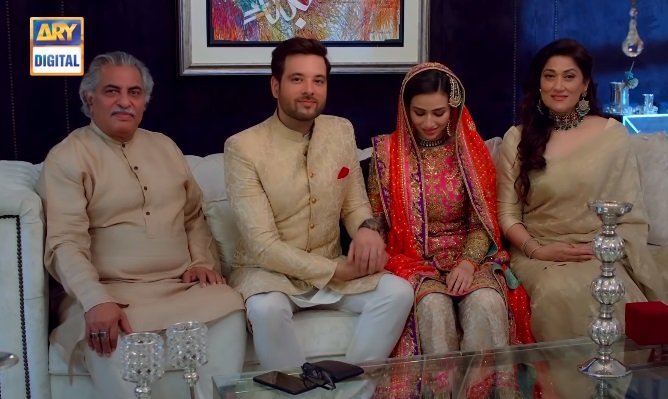
    Seventeen episodes of Sana Javed and Mikaal Zulfiqar’s Ruswai, based on the story of a rape victim, have been aired so far and recent episodes just make you want to pull your hair out. What irks you further is the fact that the drama has been written and directed by women – namely Naila Ansari and Rubina Ashraf.

    The premise of the drama is fairly simple – Sameera (Sana) and Salman (Mikaal) are family friends and are in love. Their parents are also well-acquainted though Salman’s mother looks down upon Sameera’s family because she considers herself to be above them. At the same time, Sameera’s brother, Hamza is hitched to Salman’s sister, Wardah. Its a perfectly normal case of watta satta. Though Salman’s mother is okay with Wardah marrying Hamza, she doesn’t want Sameera as her bahu. But Salman is insistent about marrying Sameera. So she is left with no choice.

    However, one evening when the family is walking out of a restaurant after dinner, a group of men abduct Sameera and rape her before dumping her back on the road. The intentions behind their actions are not yet known. Sameera’s father ends up saving his bahu, Wardah instead of his daughter. After the incident, life goes on and the weddings take place as planned though Salman is now disgusted with his wife because she is no longer the pure virgin he wanted to marry. Soon after the wedding while Hamza and his wife enjoy marital bliss, Sameera is miserable at Salman’s house. He starts mistreating her and with each passing episode his actions get worse. He also starts having an affair with another girl who his mother had wanted him to marry. Meanwhile his parents especially his mother doesn’t care about Sameera and in the latest episode even commented that she deserves to die.

    This is where the drama starts getting frustrating. Sameera is a qualified, well-educated doctor who has been working in the hospital well before her marriage. However, she chooses to give into her husband’s demands while her parents encourage her to stay in an abusive marriage just for the sake of marriage and because Salman “nay usko apna naam aur izzat di“. She doesn’t pursue a case against her rapists because of her husband and father who want the matter brushed under the carpet and erased from their memories. On the other hand, Hamza who initially appeared to be a level-headed character chooses to ignore his sister’s misery and focus on his own marriage.

    Hamza & Wardah

    Why are we time and time again shown miserable women? Showing Sameera’s miseries were fine in one or two episodes but extending it is making the whole drama, which was probably an honest attempt to depict the ordeal of a rape victim, a drag. The only glimmer of hope appears to be Sameera’s senior at the hospital Dr Feroze. He seems to genuinely care about Sameera and is trying to ensure that she does not go down the rabbit hole which she is going.

    At the same time, what sends a chill down your spine is the fact that the drama, if not 100 percent, does depict reality. Rape victims are often ostracised and shunned for something that is not even their fault. Instead of being handled with care and dealt with gently, they are shunned and seen as impure.

    Salman’s mother and Sameera

    Sana has done a great job as Sameera. Osama Tahir as Hamza and Irsa Ghazal as Salman’s mother stand out among the rest of the cast with their brilliant performances. However, Mikaal falls short as Salman – his body language is too stiff and his expressions wooden.

    While Ruswai does a decent job in sensitising us towards the plight of a rape survivor, it also chooses to lean on the typical saas-bahu drama and meek, helpless larki to garner ratings.

  • Regressive roles perpetuate myths

    Regressive roles perpetuate myths

    If you are an avid follower of Pakistani serials/dramas, the one thing that is common in almost all of them is how women are portrayed.

    There is a ‘good girl’ who is a homemaker, wears eastern clothes, who will sacrifice everything for family, who is often seen in the kitchen cooking food or cleaning the house, who hardly steps out of the house unless it’s with her husband and/or family, who will forgive her husband for many things, including domestic violence or infidelity or both.

    Then there is the ‘bad girl’, who is more often than not a working woman, who wears western clothes, drives a car, goes out on her own, is ambitious and ‘conniving’. Divorced women are either shown as bad girls or sad girls.

    We often wonder how educated writers can write such stuff and why educated women actors can take up such roles.

    Actor Hina Bayat in an interview with Fifi Haroon for BBC Urdu once said, “ “Most scriptwriters today are women who have never seen the inside of an office. In their real-world, working women don’t exist so they don’t write them into their fictional worlds either – except perhaps as negative characters or mothers who ignore their children.”

    This explains why the writers write what they do to a certain extent.

    As for the actors, maybe there is not much they can do when acting is their bread and butter and these are the roles that are in the market. We are not blaming the actors, but we do believe that if there is a market for plays like ‘Udaari’, then why do we need plays like ‘Jhooti’ that perpetuate falsehoods about domestic violence.

    We need more progressive writers. Otherwise, these dramas will keep feeding our already patriarchal and misogynist society.

    Lest we forget, when 20-year-old law student Dua Mangi was kidnapped from Karachi on November 30, 2019, it highlighted a dark side of Pakistan that we often ignore, i.e. extreme misogyny.

    BBC did a story on the Mangi case titled, ‘Dua Mangi: Slut-shamed in Pakistan for being abducted’. The story talked about the inappropriate remarks regarding Dua’s dressing and comments on how she was out at night with a male friend were discussed more than the actual incident of kidnapping.

    It was tragic to see that there was more outrage online over Dua’s clothes, her friend and why she was out at night than over the actual crime. It should have been a moment of introspection for us. Instead, we ignored it once again. By ignoring or not calling out such perverted behaviour, we normalise misogyny. Horrid practices like ‘honour killing’ and ‘Vani-Swara’ are not frowned upon; instead, they are dismissed as tribal culture.

    When women and young girls are used to settle family disputes, it is a crime, not tribal culture.

    That our society is prevalently misogynistic is no secret as this vile misogyny has always been on display when it comes to crimes against women.

    When General (r) Musharraf was asked in an interview with the Washington Post about the high-profile gang rape case of Mukhtaran Mai, he said, “You must understand the environment in Pakistan… this has become a money-making concern. A lot of people say if you want to go abroad and get a visa for Canada or citizenship and be a millionaire, get yourself raped.”

    When heads of a state of a country can think like this and say it out loud to an international media organisation, we can imagine the state of overall apathy and insensitivity regarding women.

    Meesha Shafi’s sexual harassment case against Ali Zafar is another case in point. The kind of abuse that Meesha got online shows why it is hard for Pakistani women to talk about sexual abuse let alone coming out in public with the details.

    It doesn’t matter if the woman is Mukhtaran Mai, Meesha Shafi or Dua Mangi, she will get abused. Victim blaming and victim shaming has become the norm. It seems as if being a woman is some sort of a crime. According to a report by Media Matters for Democracy, “95 per cent of women journalists feel online violence has an impact on their professional choices, while 77 per cent self-censor as a way to counter online violence.”

    This is the reality of Pakistan – where women are the culprits even after being harassed, raped, kidnapped, shot at and even after being murdered. A country where ‘Aurat March’ triggers ‘ghairat’ but where the kidnapping of a young girl cannot even elicit apathy.

    This is why we don’t need regressive roles for women in dramas. This is why we don’t need to portray working women who are independent and strong as the ‘bad girls’ or ‘vamps’. This is why we need good writers who don’t demonise women or stereotype them. This is what we ask of our entertainment industry.

  • Fawad Chaudhry requests Netflix, Amazon to invest in Pakistani content

    Fawad Chaudhry requests Netflix, Amazon to invest in Pakistani content

    Former Minister for Information and Broadcasting Fawad Chaudhry in a recent tweet requested Netflix and Amazon to look towards Pakistani content and invest in them because “we have immense talent and experience.”

    The minister asserted that Pakistani dramas have recently made a huge comeback and that he can assure the movie streaming website successful partnerships.

    Speaking exclusively to The Current, Fawad said that after observing the ratings and business done by Pakistani dramas, he was motivated to share Pakistani content with the world which is why he devised a strategy and pitched Pakistani content to Netflix and Amazon while he was the information minister. While in office, Fawad had also planned to digitise PTV and the Associated Press of Pakistan (APP) as well as introduce a digital sports channel. However, his plans were shelved soon after he left office.

    Fawad further said that he had also reached out to Saudi Arabia, Egypt and Turkey to collaborate on content creation. Content from Turkey and Egypt is the highest viewed in the Arab world and Pakistan can learn a lot from it. It is pertinent to mention here that Prime Minister Imran Khan is a fan of Turkish content and has even directed PTV to dub his favourite series Diriliş: Ertuğrul in Urdu so more people can view it.

    Earlier, in an interview with The Current, Special Assistant to the PM for Overseas Pakistanis Sayed Zulfiqar Bukhari said that PM Imran has a vision to produce good quality films that showcase the culture, religion and heritage of Pakistan.

  • Meray Paas Tum Ho’s most emotional episode yet as Bewafa turns to atonement

    Ouch. Danish is still hurting but he’s definitely not going to take Mehwish back. That phone call between the two makes it evidently clear. Or does it?

    The episode starts with Mehwish (Ayeza Khan) trying to get her friends to help her out but they are initially averse to the idea of doing so because she has committed the ultimate sin – betraying their friend. She goes to meet Hania (Hira Mani) trying to get help from her, and also trying to figure out what Hania’s relationship is with Danish (Humayun Saeed) and Mehwish’s son Rumi. It is obvious that Mehwish’s main goal is now to get back with Danish and she tries her best to talk to the people who know him to find out where his head is at, before she calls him herself.

    Hania also feels for Mehwish as Mehwish tells her about what’s happened

    The phone call is painful. Humayun Saeed is such a perfect actor that you can actually feel the pain in his voice as he tells his ex-wife how much he used to miss her. And how they can never get back together.

    Danish, stone-faced as he listens to Mehwish on the phone

    But the phone call that makes everyone’s heart tug is the one between Mehwish and her son Rumi. He couldn’t sleep without her and one feels so strongly for the child, and also despises Mehwish in that moment; not for following what she wanted and leaving Danish, but for not considering her child’s feelings as well. She tries to make amends with him and as any child, Rumi also cannot help but become warm with Mehwish – she is after all his mother. But when he tells her how his father used to miss her by calling her name, forgetting she wasn’t there, in that moment, you cannot help but feel that Mehwish never deserves redemption. As she cries, you become conflicted. People make mistakes.

    Rumi tells his mother how his father reacted after she left him

    But as Danish explains to his son later, it wasn’t a mistake. It was a sin. And therefore, cannot be redeemed. He does tell his friend that he’s forgiven her, “Kehdo uska maaf kar dia,” Danish tells his friend, “Khuda ki qasm maaf kar dia,” but as he talks to Rumi he is a little more honest, saying, “jis din mai usko bhool jaonga tou mil jaye gi usko maafi”

    Rumi and Danish share a heartfelt conversation, showing they’re a team

    It’s an emotional episode because you see Danish struggle. He still loves her and it’s quite possible he always will. And he knows that just one word, and he can have her back. Possibly, more in love with him than he was with her. Her life has turned upside down. She’s gotten a job and is living in a women’s hostel. Right now, Danish has everything that she wants. She just doesn’t have Danish.

    Mehwish, trying to atone for her sins, goes to a mazar

    Do you feel for her? Yes, you do and Ayeza Khan does an absolutely fantastic job as the arrogant woman who thwarts love and then realizes the incredibly huge mistake she’s made. The acting is what does it. There’s no way you cannot feel, even a little, for her. Her fall from ‘greatness’ is that big. And you wonder that if the tables had turned and this was a husband who had cheated, the wife would most likely take him back.There are many Pakistani dramas that already have that ‘happy ending’. So when she goes to a mazar, remembers her husband who was good and loving, she tries to atone for her sins. And maybe, she can have it. Everyone sins, everyone makes mistakes. Just because she’s a woman, doesn’t mean she doesn’t get a second chance.

    Hania’s expression when Danish says he wants to marry her

    But according to the teaser for the next episode, it does. Danish is seen asking Hania to marry him, or rather asking someone else in front of Hania, if Hania will marry him. Mehwish ends up in the hospital and he rushes to find out what’s happened. Love is unfortunately love. It doesn’t die, even if you’re side-lined, betrayed or even when you come back.

  • Five million views in 12 hours, Meray Paas Tum Ho’s new entry slaps a hit episode

    The moment we were all waiting for. There were rumours that Kubra Khan was going to play Shehwar’s (Adnan Siddiqui) wife who he has a terrible marriage with, but the episode ends with the entry of Maham, Shehwar’s domineering wife played perfectly by Savera Nadeem. Maham, a towering figure enters the episode and slaps Mehwish (Ayeza Khan) as she introduces herself to her about-to-become sautan.

    Maham’s entry has Anushay hiding in the corner

    The episode does have some difficult to understand situations. How did Shehwar suddenly decide to marry Mehwish after he had so adamantly said that marriage ruined love? There’s no explanation about his change of heart. And why is Roomi, Danish’s son, so fixated on getting his father married to Hania (Hira Mani)? The obsession stems from the fact that Danish obviously doesn’t want to get married and he will marry Hania because his son wants him to. Otherwise he wouldn’t be the true lover of love that he has been projected to be so far.

    Roomi trying for the hundredth time to get Hania to get his father to marry ‘another girl’. How she doesn’t know yet, that the girl is her, is very strange

    There’s also the concept of fake and real friends that plays into this episode. Danish is lucky to have a friend who is helping him with his work, staff that is helping him with his life. His life has literally changed in days and as he says to his friend, “log jubh aapse subh kuch cheen layte hain tou khush hojao, kyuinke Khuda tumhe sub kuch deyne wala hai,” (when people take everything from you, be happy. Because God is about to give you everything) and it seems like Danish is about to get everything.

    Danish and Roomi are happy with each other and getting loads of money

    But Mehwish is made of some strong stuff too. She doesn’t look or feel embarrassed when her friend Anoushey asks her about leaving her husband and child to have an affair with a married man. She takes it in stride and doesn’t pay any attention to the rumours (that are bound to be true) about Shehwar having forged his wife’s signatures and living in a house in her name.

    Mehwish doesn’t care at all about what people think of her

    Maham will take over the next episode and it’s going to be a brilliant one. With the already strong presence that Savera Nadeem exudes, she is the perfect person to play a woman who is not to be messed with. The only character that is still very weak is that of Hania. Hira Mani is playing the role like a dheemi beychari and compared to the other strong female characters, she’s coming across as not having a clue. Here’s to hoping that the writer didn’t have a beychari in mind for Danish and Hania develops into a character strong enough to take on the memory of Mehwish.

  • Meray Paas Tum Ho is a drama which has never been done before

    We assumed it was going to be a drama about love, betrayal and revenge. But Episode 13 shows it’s a lot more than that. Meray Paas Tum Ho is slowly building into a drama about child custody and the battle between being a wife or a lover.

    Mehwish (Ayeza Khan) is slowly realizing that she’s missing her son Rumi, as the high of divorcing her husband for a rich guy is wearing off. She asks Shehwar (Adnan Siddiqui) if she can bring her son home and Shehwar agrees.

    Shehwar telling Ayeza he’s cool with her bringing her son to his place

    Danish (Humayun Saeed) is mourning the loss of his best friend Mateen Sahib and when Mehwish goes over to speak to him about Rumi, Danish tells her that he’s put Rumi in boarding school. He also tells her that she shouldn’t upset him or do anything drastic since Rumi has just settled in and had almost been expelled. Mehwish doesn’t listen and heads to the school to take her son home, only to find out that she needs Danish’s permission to take her son out of school.

    Mehwish confronting Danish about taking her son with her

    The most interesting part of the drama was when Danish consults his lawyer and the lawyer tells him to wait it out saying that no man would want his lover to bring home her ex husband’s son. And at the end of the episode, that’s exactly what happens. Shehwar tells Mehwish that her desire to have Rumi with her on the weekends isn’t one that he’s willing to indulge. He gets the weekends off and he wants her around for him – not have to deal with her former husband’s child.

    Shehwar telling Mehwish he wants the weekends with her

    The episode is the most realistic episode in the show yet. A custody battle, harsh truths and the dark face of reality are revealed – your lover is only your lover until you do what he or she says. When you make a decision based on greed, then it will come back to bite you and you can see the ripples of uncertainty that are affecting Mehwish.

    Also, where is Shehwar’s wife? Mehwish is living in his house like she owns it and there is no sign of the real lady of the house. There should definitely be an introduction to his wife when she comes back to town and that will be an episode which cannot be missed.