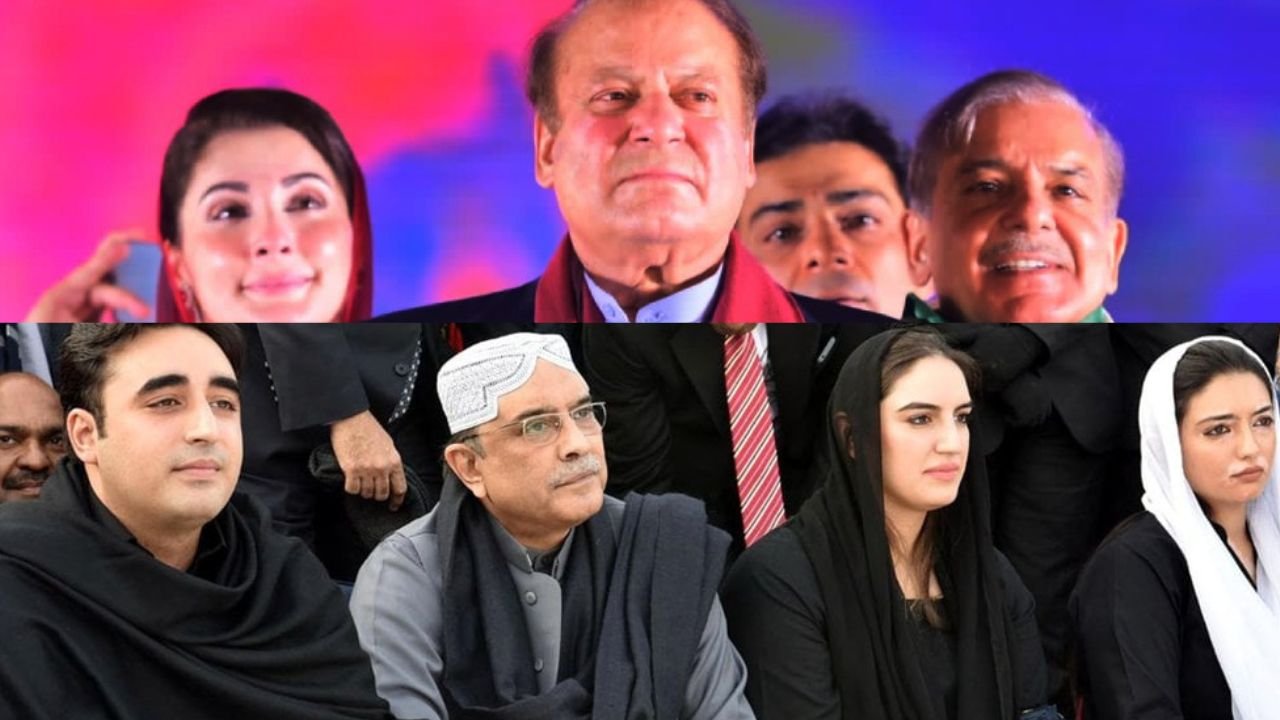
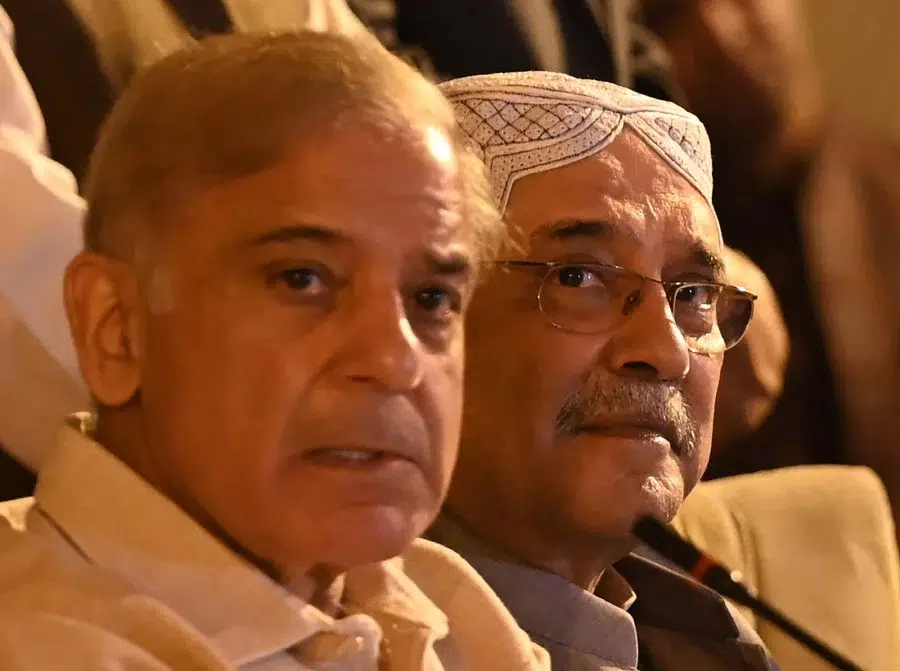
After Aseefa Bhutto Zardari won the by-election on NA-207 unopposed, the Zardaris now hold the record for having the most number of legislators from a political family in Pakistan.
With President Asif Ali Zardari’s daughter Aseefa’s election in the National Assembly (MNA) from Shaheed Benazirabad (former Nawabshah-I) constituency, the Zardari family has broken the record of the Sharif family as it now has the most number of members from the same family in the Pakistan’s parliamentary history, explains a report by Geo’s Maqsood Awan.
Asif Ali Zardari himself is the country’s president, his daughter Aseefa, son Bilawal Bhutto Zardari and brother-in-law Munawar Ali Talpur are MNAs, while both sisters Faryal Talpur and Azra Pechuho are members of the provincial assembly in Sindh.
On the other hand, Prime Minister Shehbaz Sharif’s elder brother Mian Nawaz Sharif, and his son Hamza Shehbaz Sharif have been elected MNAs, while his niece Maryam Nawaz Sharif is the chief minister of Punjab. Meanwhile, members of the extended family, Bilal Yasin and Ishaq Dar are serving as Punjab Food Minister and Minster of Foreign Affairs respectively.
As a result, in terms of having the greatest number of immediate family members elected as MNAs or MPAs, the Zardari family stands first, while the Sharifs are the second.
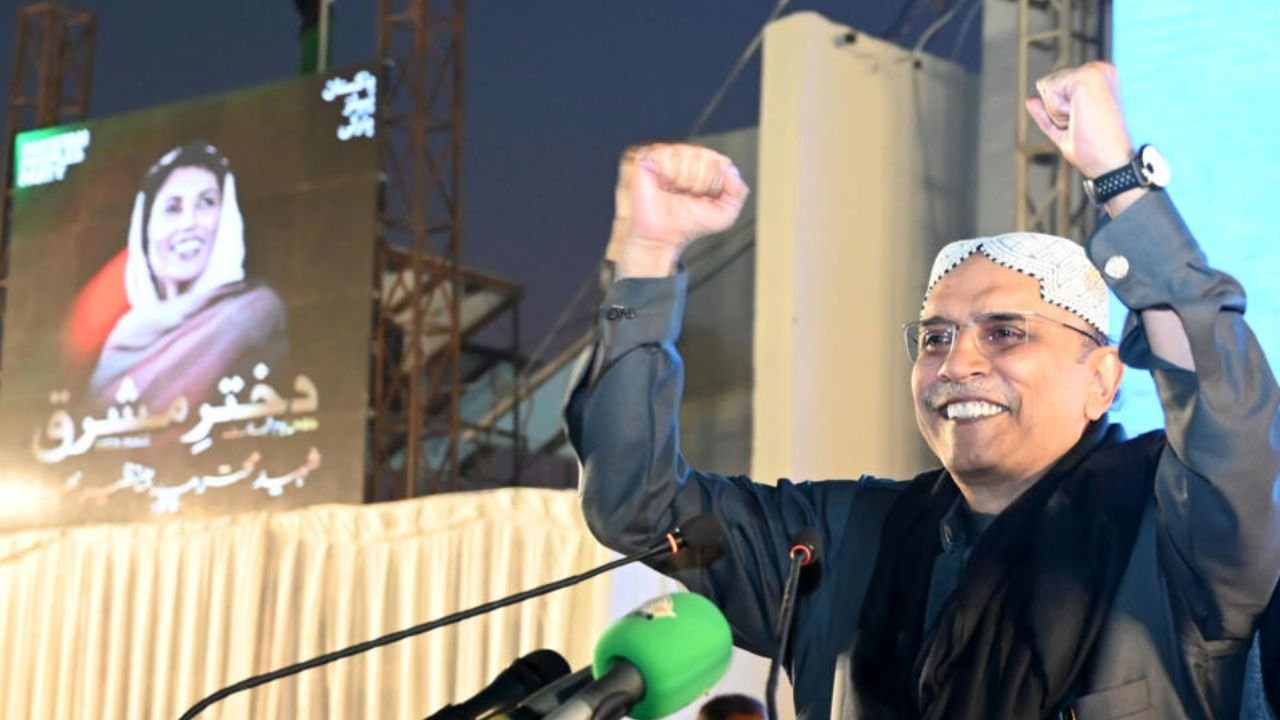
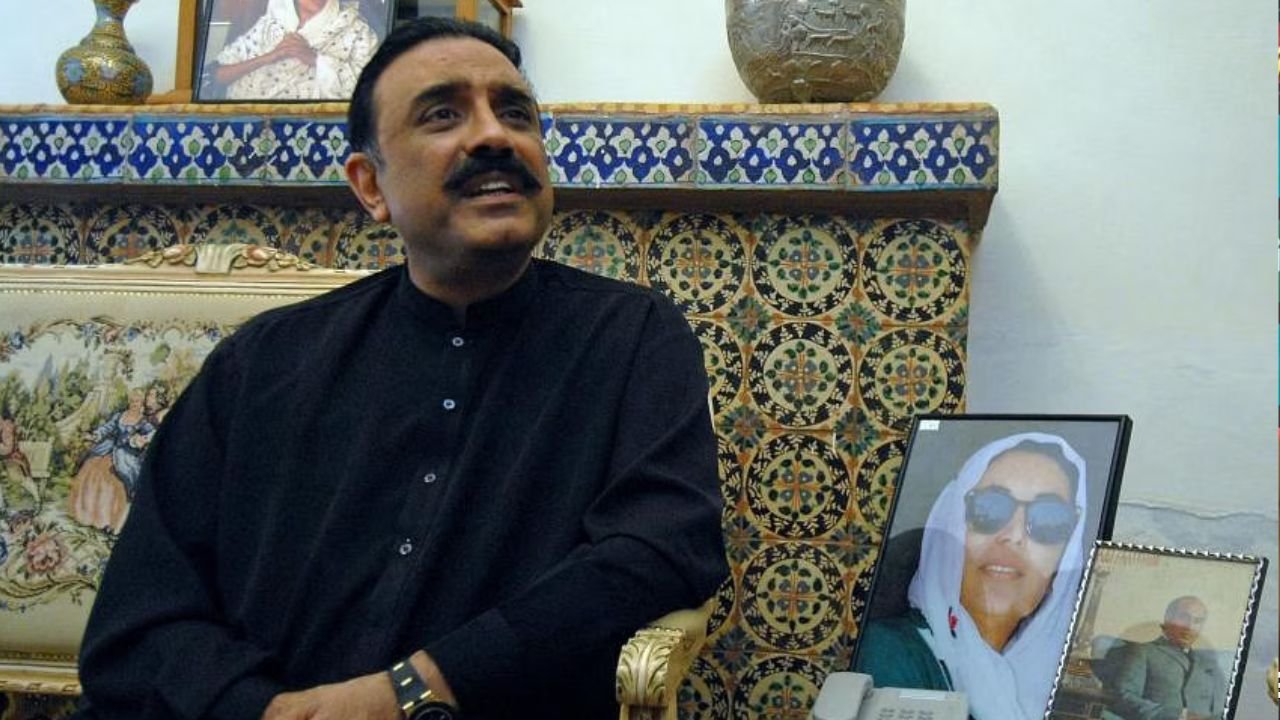
Asif Ali Zardari, the widower of Pakistan’s slain first female premier Benazir Bhutto who has had a life storied equally by tragedy and farce, is set to become president for a second time on Saturday.
Initially a background character as Bhutto’s consort, Zardari was stained by a bevy of corruption and other allegations, including absurd kidnapping plots and taking kickbacks lavished on hoards of jewellery.
Despite a reputation as “Mr. Ten Percent” — the alleged cut he took for rubber-stamping contracts — a sympathy vote propelled him to office when his wife was assassinated in a 2007 bomb and gun attack.
Between 2008 and 2013, he ushered in constitutional reforms rolling back presidential powers, and the 68-year-old’s second term will see him steer a largely ceremonial office.
He has spent more than 11 years in jail, a long time even by the standards of Pakistani politicians, with a wheeler-dealer’s talent for bouncing back after scandals.
Back in 2009, the New York Times said he had a knack for “artful dodging” — “maneuvering himself out of the tight spots he gets himself into”.
Newly sworn-in lawmakers were set to vote him in under the terms of a coalition deal brokered after February 8 elections marred by rigging claims.
Under that deal, Zardari’s Pakistan Peoples Party (PPP) will take the presidency, while its historic rivals the Pakistan Muslim League-Nawaz (PML-N) party secured the prime minister’s position for Shehbaz Sharif, who was officially sworn in on Monday.
Zardari was born in 1955 into a land-owning family from the southern province of Sindh.
“As a child, I was spoilt by my parents as an only son,” he said in a 2000 interview with the Guardian newspaper. “They indulged my every whim.”
He expressed only limited political ambitions as a young man — losing a 1983 local government election.
It was his 1987 arranged marriage with PPP leader Benazir Bhutto that earned him a spot in the political limelight.
Their union — brokered by Bhutto’s mother — was considered an unlikely pairing for a leader-in-waiting from one of Pakistan’s major political dynasties.
Bhutto was an Oxford and Harvard graduate driven by the desire to oust then-president Mohammad Zia-ul-Haq, who forced her father from the prime minister’s office and had him executed.
Zardari was a university dropout with a reputation for brawling, partying and romancing women at a private disco in his family home.
On the eve of their wedding, Bhutto’s team issued a formal statement denying he was “a playboy who plays polo by day and frequents discos at night”.
Their nuptial celebrations were dubbed the “people’s wedding” — doubling as a political rally in the megacity of Karachi, where a crowd of 100,000 fervently chanted PPP slogans.
Initially, Zardari pledged to keep out of politics.
Bhutto served as prime minister from 1988 to 1990 — the first woman to head a democratic government in a Muslim country — and again from 1993 to 1996.
PPP insiders regarded Zardari as a liability, considering him likely to embarrass her leadership.
Their fears were perhaps well-founded. In 1990, he was embroiled in accusations of an absurd plot to extort a businessman by tying a bomb to his leg.
He was jailed for three years on extortion and kidnapping charges but was elected to the national assembly from behind bars.
In Bhutto’s second term, he served as investment minister.
A bombshell New York Times investigation detailed how he tried to engineer vast kickbacks on military contracts over this period while lavishing huge sums on jewellery.
After Bhutto’s government fell in 1996, Zardari was back behind bars within half an hour.
In December 2007, Bhutto was assassinated while on the campaign trail for a third term in office.
Her killing shook the nation to its core, a wave of sympathy carrying the PPP to victory in 2008. The party nominated Zardari as president.
In 2010, he was widely criticised for continuing a European holiday when the nation was devastated by floods that killed almost 1,800 and affected 21 million.
He was also head of state when US commandos trespassed onto Pakistani soil for the 2011 assassination of Osama Bin Laden, an episode that humiliated many compatriots.
He did, however, usher in constitutional reforms rolling back the sweeping powers of the presidency and bolstering parliamentary democracy that had been undermined by three decades of military rule since 1947.
In 2013, Zardari became the first Pakistani president to complete his full term.
He was jailed once again over money laundering charges in 2019 but was released months later.
Zardari and Benazir had three children, including Bilawal Bhutto Zardari, the current chairman of the PPP.
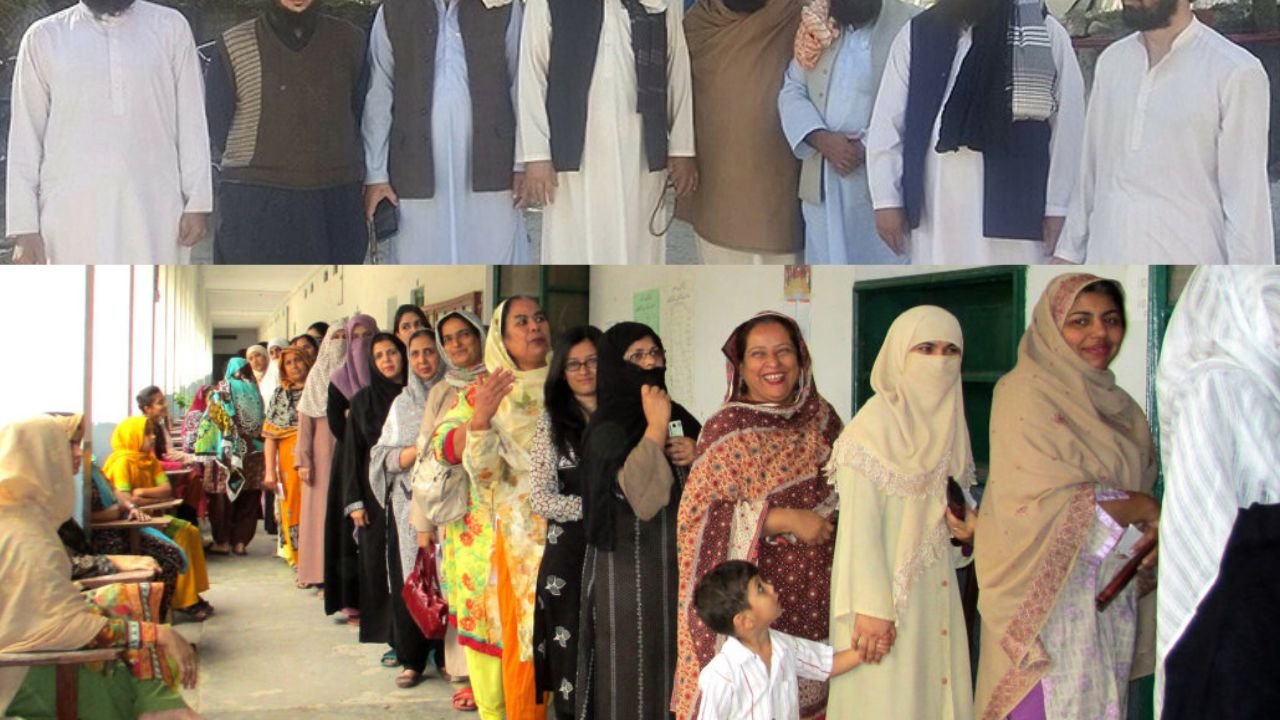
Parties competing for elections in Kohistan will not be allowed to send female members for door-to-door campaigning to mobilise voters in different constituencies after a 30-member group of clerics — mostly from the Jamiat Ulema-e-Islam-Fazl (JUI-F) — unanimously issued a verdict against it, declaring it un-Islamic.
In their decree, the clerics have strictly banned canvassing by women for the upcoming February 8 general elections.
In a gathering at the JUI-F central office in Kohistan’s Kamila town, Mufti Gul Shahzada of Kandia said: “Taking women door-to-door for seeking votes is against the Islamic injunctions and Shariah.”
At least 400 clerics from different parts of the district attended the gathering and endorsed Mufti Shahzada, as he spelled out six decrees, all related to upcoming elections, in front of them.
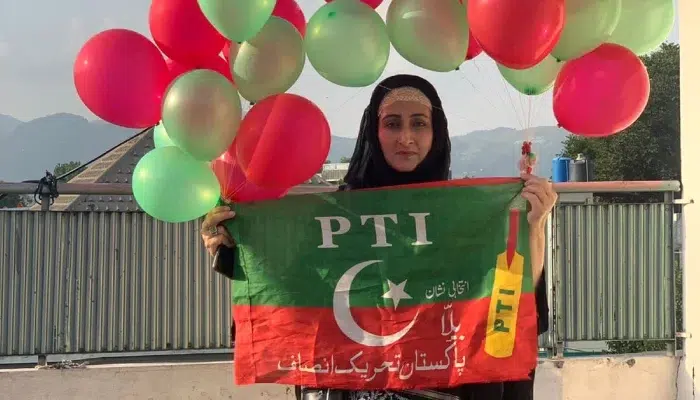
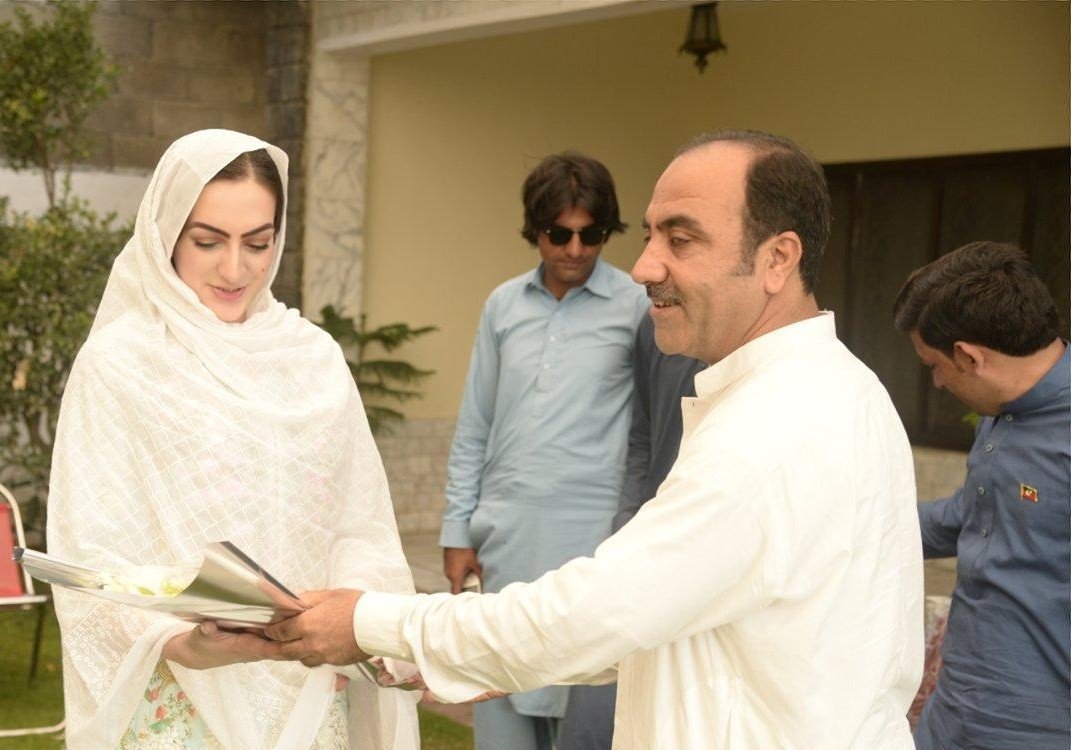
It is important to note that two women aspirants backed by the Pakistan Tehreek-e-Insaf (PTI), including Tehmina Faheem from PK-31 Kohistan-I and former lawmaker Momina Basit, and an independent Sanaya Sabeel from PK-33 Kolai-Palas are campaigning to win seats in the February 8 general elections for the first time in the district’s history.
Tehmina FaheemMomina Basit
Mufti Shahzada told the gathering that all decrees had been issued in light of the current situation. He said these were based on Islamic jurisprudence with references taken from different religious books.
“If anybody votes against Islamic ideology, it means he is testifying to an untrue and biased statement, which is a grave sin and also against Islamic Shariah,” he added.
The clerics warned that taking the Holy Quran to compel people to vote was a sacrilegious act and should never be exercised.
“Those casting votes on the linguistic, regional and clan grounds are also negating Islamic teachings and no such exercise should be carried out in this district,” the mufti added.
When approached, the women contestants in Kohistan in the February 8 general elections said they would give their point of view after consulting their parties, The News reported.
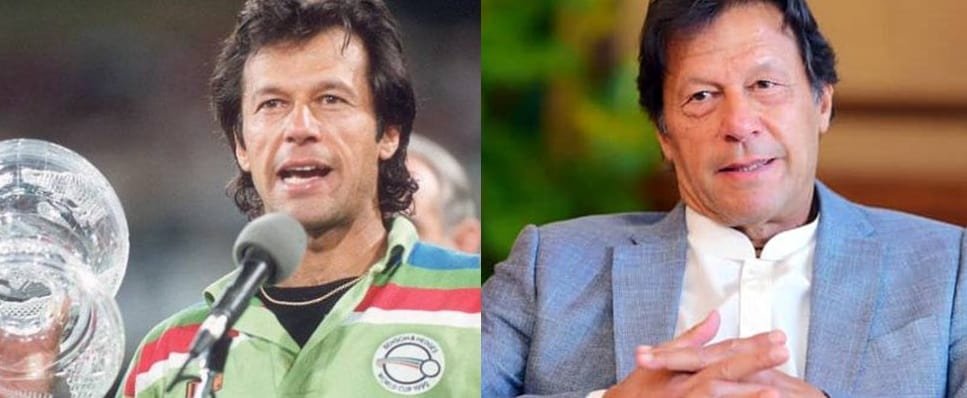
Journalists at Dawn reporting on Imran Khan’s trial in Adiala Jail, Rawalpindi, shared on Twitter that the former Prime Minister said that although he was critical of the newspaper while he was in power, he is surprised at the outlet’s coverage since his ouster from the government. The editor at Dawn shared this on Twitter.
As per Dawn’s Malik Asad, who is covering PTI leader Imran Khan’s trial inside Adiala Prison ” ڈان اخبار پر تو میں بہت تنقید کرتا تھا حیران ہوں کہ ڈان اب میری بڑی زبردست کوریج کر رہا ہے ” عمران خان کا اڈیالہ جیل میں ڈان اخبار سے وابسطہ سینئر صحافی اسد ملک @asadrp سے مکالمہ
Dawn reporters Saqib Bashir, Asad Malik and Amir Saeed Abbasi posted on X (formerly Twitter) that Imran Khan said to reporter Asad Malik, “I have always been critical of Dawn but the coverage is stupendous now, which is surprising for me.”
” ڈان اخبار پر تو میں بہت تنقید کرتا تھا حیران ہوں کہ ڈان اب میری بڑی زبردست کوریج کر رہا ہے ” عمران خان کا اڈیالہ جیل میں ڈان اخبار سے وابسطہ سینئر صحافی اسد ملک @asadrp سے مکالمہ
The statement spurred many, including journalists, to react. Norbert Almeida tweeted, “Always covered him he just didn’t like what was said in the past and now likes it.”
Always covered him he just didn’t like what was said in the past and now likes it.
Omar R Qureshi also joined in to share his two cents, writing, “Proof that for Imran Khan a good paper praises him and writes editorials favouring him and his party”. He went on to add that in case the former Prime Minister comes to power again, Dawn has nothing to worry about.
Proof that for Imran Khan a good paper is one that praises him and writes editorials favouring him and his party – Chalo in case he does come back to power Dawn should have nothing to worry about https://t.co/FQrxTYUS9l
Lawyer and Columnist Abdul Moiz Jaferri tweeted, “Imran Khan still doesn’t get it. Everything is not about him. Journalists were not after him when they criticised him, and they were not with him when they report on his current plight. Journalism is a duty to the people. He should recognise its value.”
Imran khan still doesn’t get it.
Everything is not about him. Journalists were not after him when they criticised him, and they’re not with him when they report on his current plight.
A follower jumped into the discussion as many others shared a Cartoon published on January 23 in Dawn that mocked the duplicity of Imran Khan’s stance.
I am sure this Gentleman, Rohait, is nothing but a military pay roll tout Journalist. The picture he wants to depict here is a total lie and baseless. Imran Khan said it many times that hes not going to talk to any anti-Pakistan. How come dawn news, who claims to be neutral,…
— Mo Usman Shk(Release Imran Khan) (@SadaatAli0) January 23, 2024
Dawn, long considered Pakistan’s ‘paper of record’, was repeatedly targeted by PTI followers for criticising Imran Khan’s government.
The Karachi chapter of women’s rights movement Aurat March has taken to X (former Twitter) to criticize former Prime Minister and Pakistan Muslim League-Nawaz (PML-N) Nawaz Sharif over his remarks delivered in a speech in Minar e Pakistan’s procession on Saturday.
The tweet started with a sardonic tone, “Bohat Khoob”. It further criticised Nawaz Sharif for jibing at women’s politics. “He has not learnt up till now that categorising women as “good” or “bad” is a thing of ancient times.” The tweet said that raising questions over a woman’s character on the basis of dance is a “ghatiya harqat” [an extremely bad action].
Bohat khoob! Aik baar phir Nawaz Sharif, PML-N ke sarbarah ne siyasi mukhalifat mein khawateen ki siyasi sargarmiyon pe sasti juggat ki. Unhon ne abhi tak yeh nahi seekha ke khawateen ko ‘achi’ aurat aur ‘buri’ aurat mein taqseem karna pathron ke zamanay ka tareeqa-e-kar hai. 1/3 pic.twitter.com/c947nAGSvO
The tweets came in response to Nawaz praising the women at his rally for not dancing with the beat of drum, a thinly veiled swipe at arch rivals Pakistan Tehreek-e-Insaf (PTI). He asked the crowd to clap for him if they understood what he implied.
Aurat March suggested to the PML-N leader to let go of misogyny.
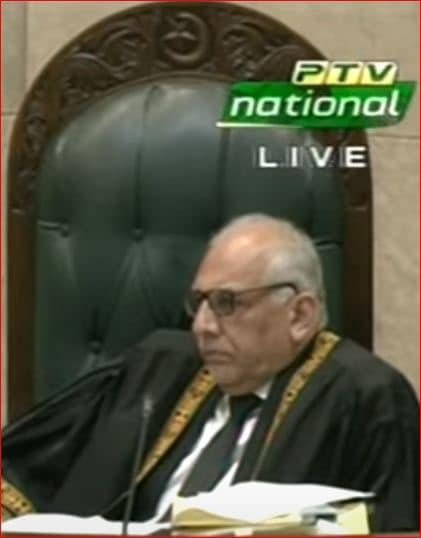
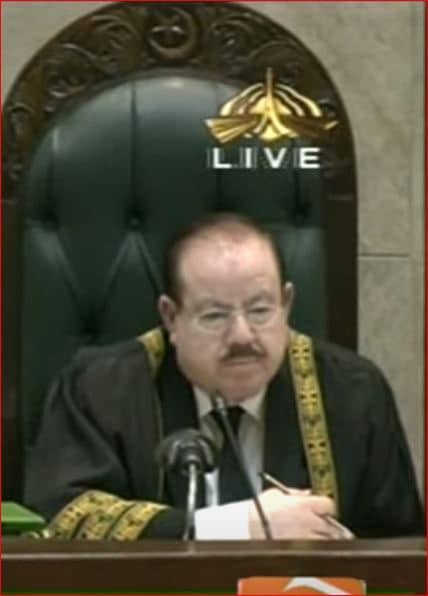
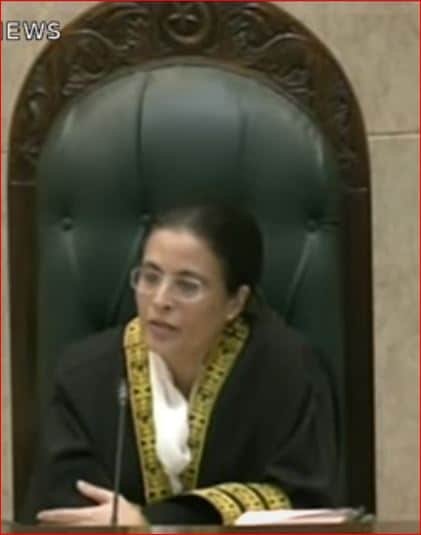
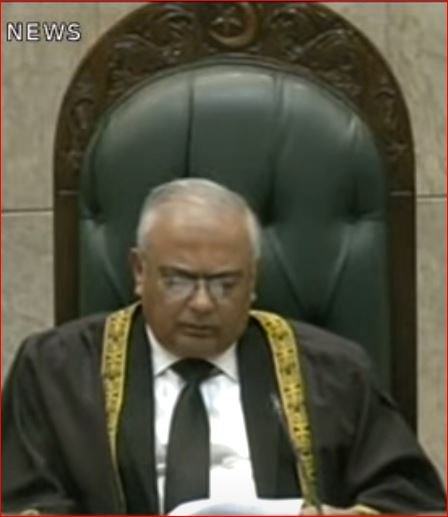
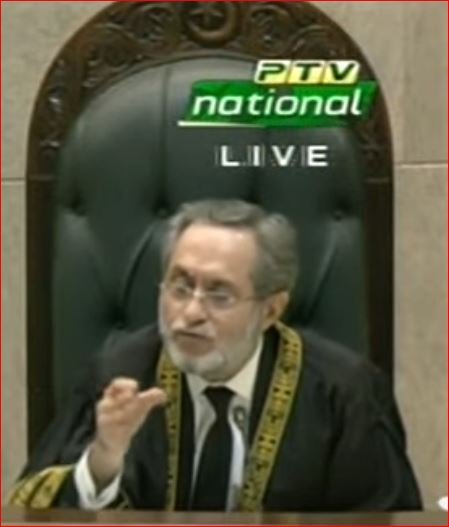
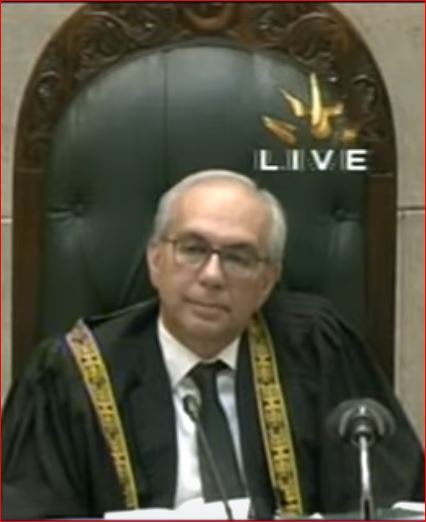
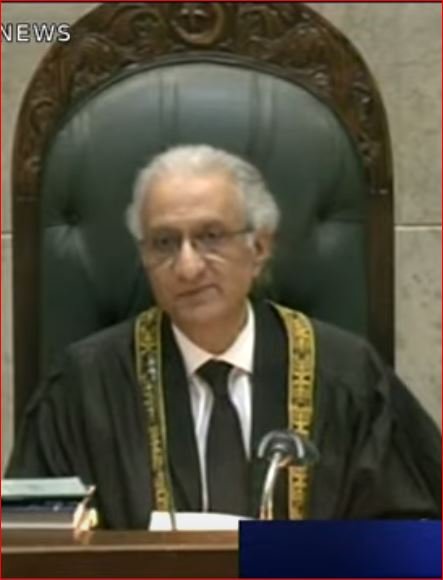
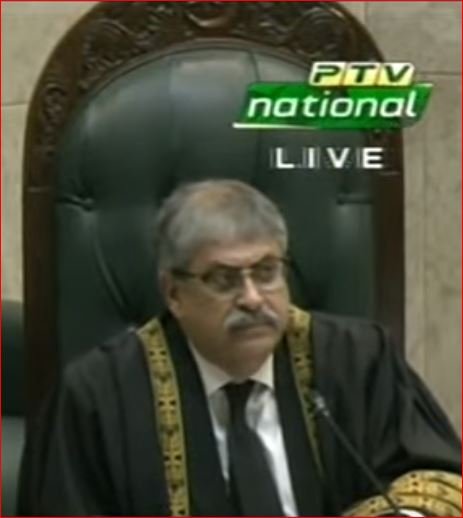
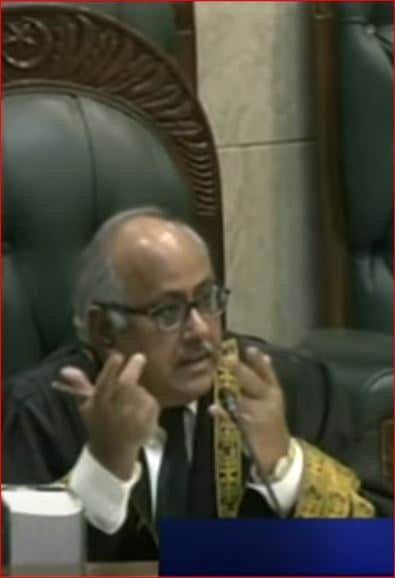
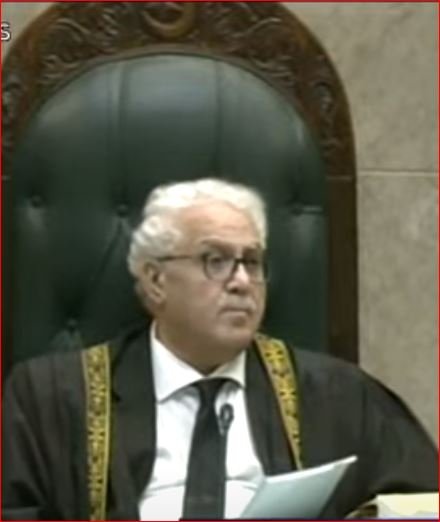
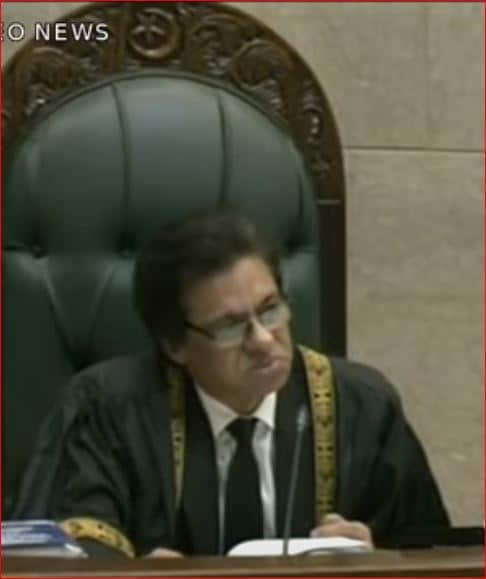
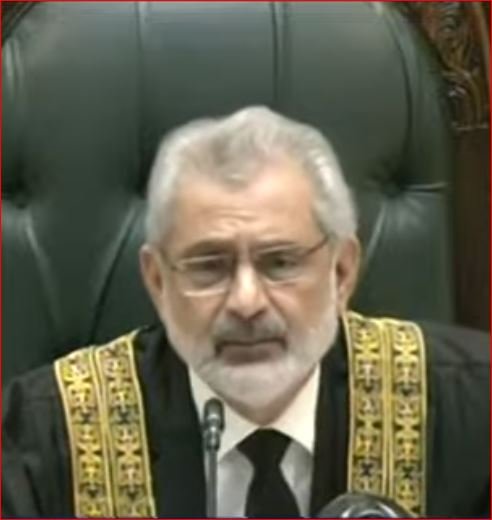
Today, for the first time in Pakistan’s history, proceedings of the full bench in the Supreme Court were broadcast on PTV. Most people were confused about who was who as they saw the 15 judges on screen for the first time.
If you’re not familiar with them, here is a short intro to each of the 15 judges.
1 Mr. Justice Syed Mansoor Ali Shah
Formerly the 45th Chief Justice of the Lahore High Court, Mr Ali Shah has been serving as a justice at the Supreme Court since 2018. He was born in Peshawar and educated at Aitchison College, University of the Punjab and then Downing College, Cambridge.
2 Mr. Justice Syed Hasan Azhar Rizvi
Mr Hasan Azhar Rizvi has been serving as a judge at the Supreme Court of Pakistan since November 2022, prior to which he was a Justice of the Sindh High Court from Febuary 2010 to November 2022.
3 Mr. Justice Sardar Tariq Masood
Mr Justice Sardar Tariq Masood has been serving as a justice at the Supreme Court of Pakistan since November 2015. He began practicing law in the Rawalpindi district in 1985 and became an Advocate of the Supreme Court in 2008.
4 Mrs. Justice Ayesha A. Malik
At the age of 55, Mrs Ayesha Malik made history by becoming the first female Supreme Court judge, a victory that was celebrated by all women in Pakistan. In 2021, she outlawed the deeply misogynist virginity test which was used on survivors of rape and sexual abuse. She earned her Bachelors of Commerce from Government College of Commerce and Economics, then received her law degree from Pakistan College of Law, and her LL.M from Harvard Law School.
5 Mr. Justice Amin-Ud-Din Khan
Justice Amin-ud-Din Khan was sworn in as a Supreme Court judge in 2019. He began practicing in lower courts in 1985 after which he was issued a license. He was appointed as an Advocate of the Lahore High Court in 1987, and later of the Supreme Court in 2001.
6 Mr. Justice Jamal Khan Mandokhail
Justice Jamal Khan Mandokhail was elevated to the Supreme Court of Pakistan as a Judge on August 2021. He completed his Matriculation from the Federal Government High School, Quetta Cantonment, and then his FSc. from Government Science College, Quetta. Mr Mandokhail completed his Masters in Political Science and Economics from the University of Balochistan, and later did his LLB from University Law College Quetta in 1987.
7 Mr. Justice Munib Akhtar
Justice Munib Akhtar took oath as a Supreme Court judge in 2018. He is the son-in-law of the former law minister Khalid Anwar.
8 Mr. Justice Ijaz Ul Ahsan
Justice Ijaz Ul Ahsan was appointed as a Judge of the Supreme Court of Pakistan in 2016. He had earlier been appointed the Chief Justice of the Lahore High Court in 2015. He recieved his early education in Lahore and then graduated in 1979 from Forman Christian College with a merit scholarship.
9 Mr. Justice Athar Minallah
Justice Athar Minallah was appointed as a judge of the Supreme Court of Pakistan in November 2022. Prior to this, he served as the 5th Chief Justice of the Islamabad High Court from 2018 till 2022.
10 Mr. Justice Shahid Waheed
Justice Shahid Waheed completed his graduation from Government College Lahore in 1986, after which he did his LL.B from the University Of Punjab in 1989. He was elevated as a judge of the Lahore High Court on March 2012, and appointed as a judge of the Supreme Court of Pakistan in 2022.
11 Mr. Justice Sayyed Mazahar Ali Akbar Naqvi
Justice Sayyed Mazahar Ali Akbar Naqvi was appointed as a judge of the Supreme Court of Pakistan in March 2020, and has been a practicing Advocate of the Supreme Court of Pakistan and at the High Courts since 2001 and 1988.
12 Mr. Justice Muhammad Ali Mazhar
Justice Muhammad Ali Mazhar was appointed as a judge of the Supreme Court of Pakistan in August 2021. Before his tenure in the apex court, he became a judge of the Sindh High Court in February 2010. Born in Karachi, he completed his graduation in Commerce and later passed his LL.B examination in 1990.
13 Mr Justice Qazi Faez Isa
Mr. Justice Qazi Faez Isa was appointed as a judge of the Supreme Court of Pakistan in September 2014, and was elevated to the position of Chief Justice on Sunday. He completed his early education from Karachi, then went on to earn a Bachelors in Law from London, where he completed his Bar Professional examination at the Inns of Court School of Law.
14 Mr. Justice Yahya Afridi
Justice Yahya Afridi was elevated as a judge of the Supreme Court in June 2018, and was previously appointed as the Chief Justice of the Peshawar High Court in December 2016.
15 Ms. Justice Mussarat Hilali
Justice Mussarat Hilali became the first woman Chief Justice to be appointed at the Peshawar High Court in March 2023, and later became the second female judge to be appointed at the Supreme Court of Pakistan.
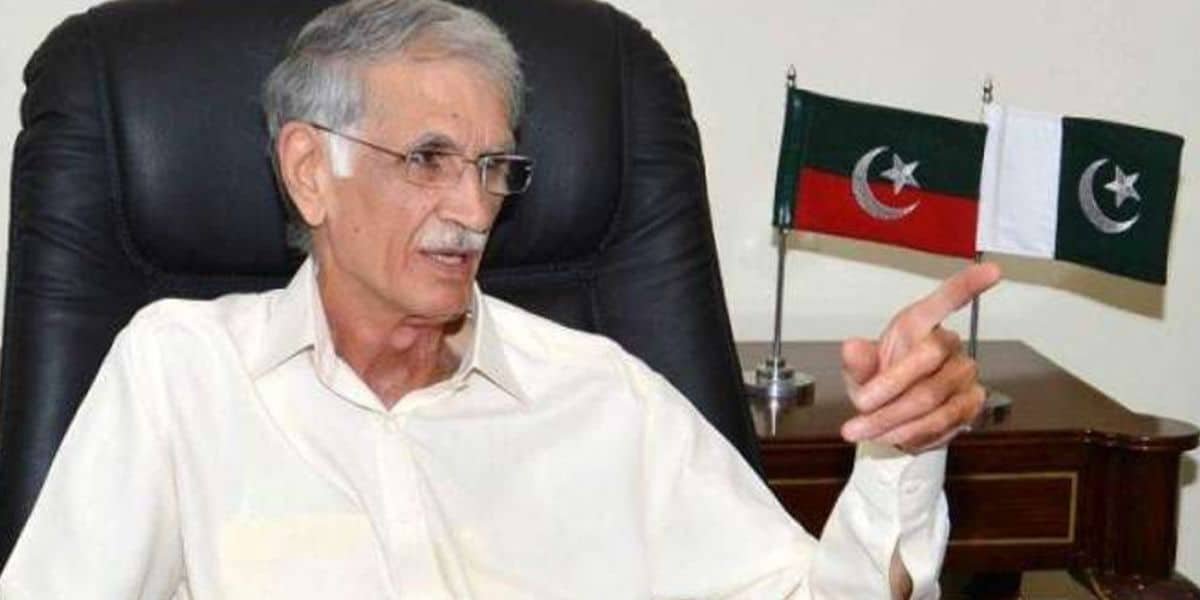
Once one of the most important members of the Pakistan Tehreek-e-Insaf (PTI), Pervez Khattak has on Wednesday been thrown out of the party for failing to respond to a show-cause notice issued on June 21.
Khattak, who became a powerful Chief Minister and the President of the party in Khyber-Pakhtunkhwa (KP), had been asked in the show cause notice to explain why he was asking workers to quit the party.
A termination letter was sent to Khattak by PTI General Secretary Omar Ayub Khan while a copy of the same was also posted on the party’s social media handles.
“Your membership from Pakistan Tehreek-e-Insaf has been terminated with immediate effect,” said the letter.
Khattak himself had resigned from the post of KP party president after May 9 riots.
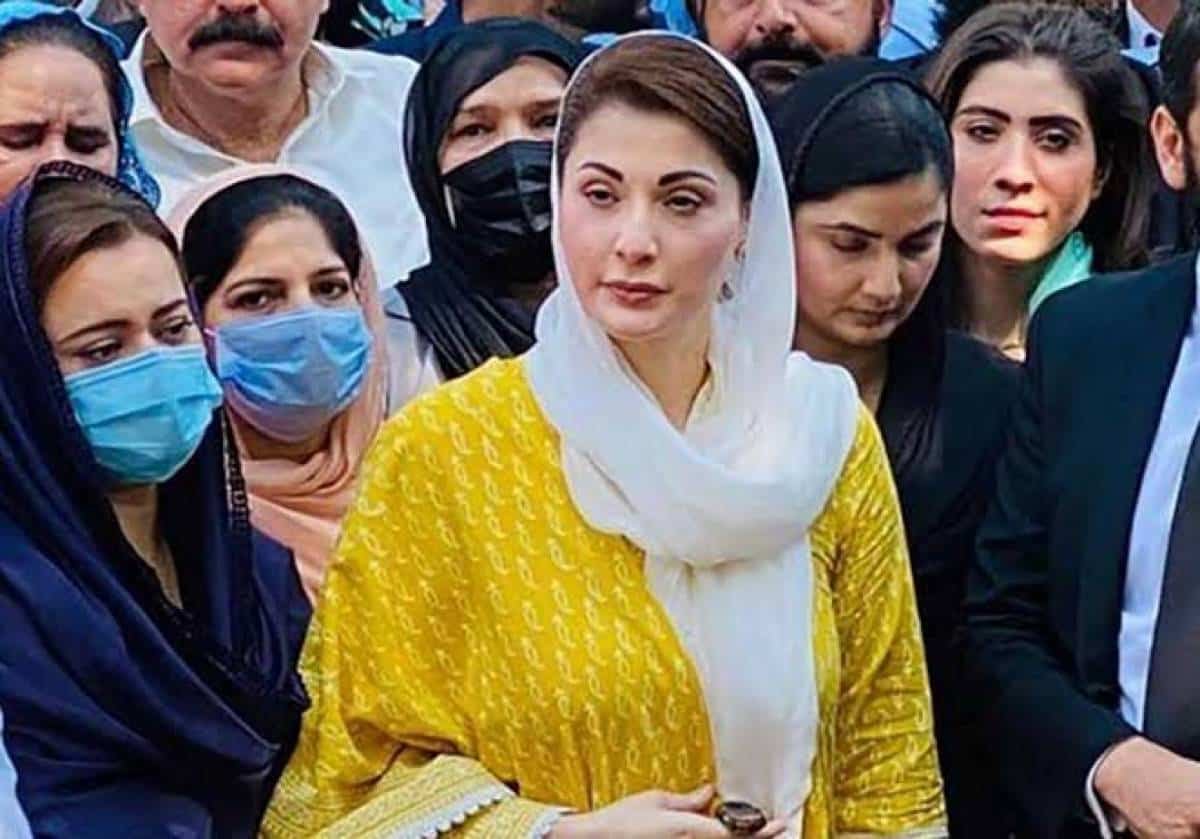
Senior Vice-President of Pakistan Muslim League-Nawaz (PML-N) Maryam Nawaz wants former Director General Inter-Services Intelligence (ISI) General (retd) Faiz Hameed to be court martialed.
In an interview with a web channel, Maryam Nawaz accused the former spymaster of plotting to overthrow PML-N’s government for two years.
“The biggest punishment for those who brought the ‘hybrid system’ was the public awareness campaign in the form of ‘Respect Vote’,” Maryam Nawaz said, asking that Faiz Hameed be made an example for playing an unconstitutional role.
However, she said that she was against no institution and only wanted them to hold their own people accountable for their actions, adding that doing so would lead to an increase in their respect and honour.
Journalist Kamran Khan tweeted on Wednesday that General (retd) Hameed had sent him messages, responding to Maryam Nawaz’s accusations. He wrote: “In response to Maryam Nawaz’s allegations, former ISI head Lt Gen Faiz reminded that 1. He was a Major General in 2017-18. Can a lone Major General remove a government given army’s discipline? 2. The only decision maker in the army is the Chief. 3. All decisions were made by courts.”
سابق ISI سربراہ Lt Gen Faiz نے مریم نواز کی جانب سے ان پر لگے الزامات کے جواب میں مجھے بھیجے گئے messages میں یا دہانی کروائی 1) 2017-18 میں صرف میجر جنرل تھا کیا فوجی ڈسپلن میں تنہا میجر جنرل حکومت ختم کرسکتا تھا؟ 2)فوج میں فیصلہ صرف چیف کا ہوتا ہے 3) تمام فیصلے عدالتوں نے کئے pic.twitter.com/JHnYzkYyYc
Maryam Nawaz also slammed former Chief Justice Saqib Nisar, calling him the biggest criminal in the country’s history, accusing him of taking instructions from a colonel and a brigadier.
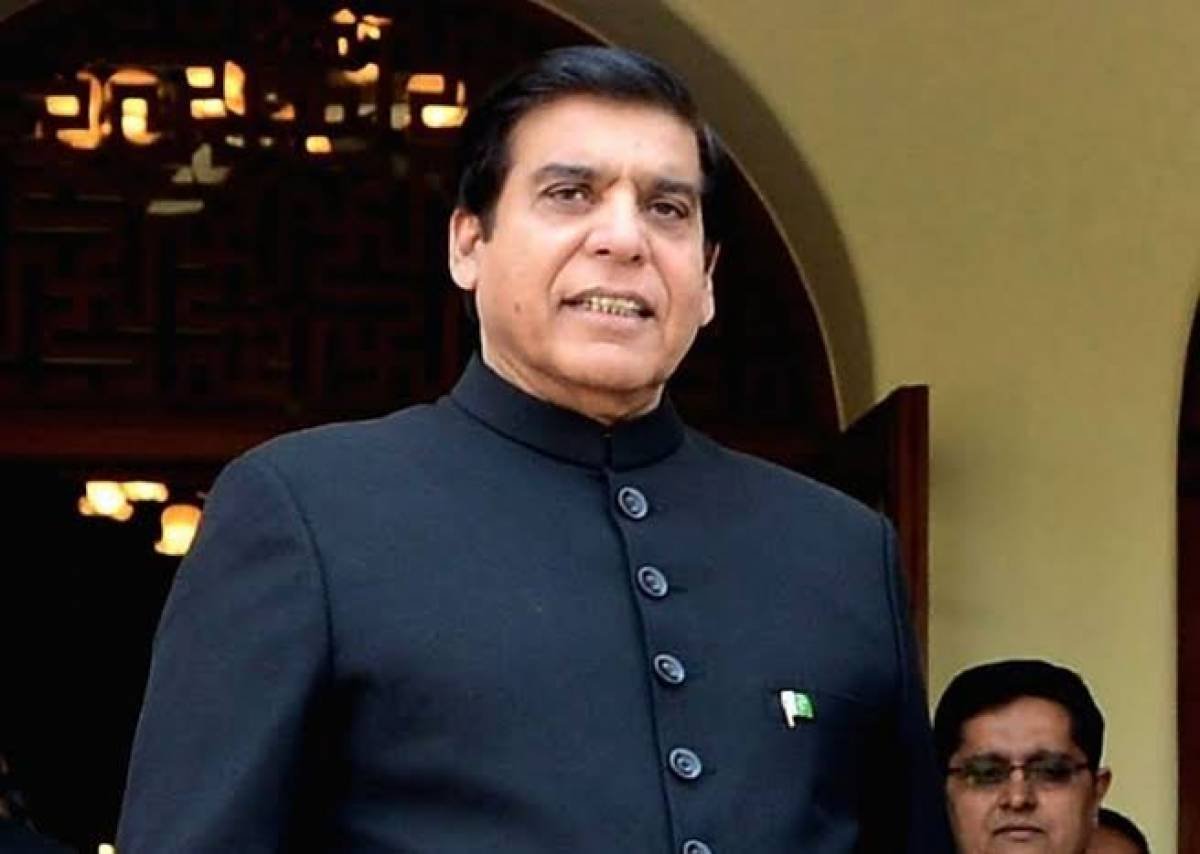
Former prime minister and Pakistan People’s Party leader Raja Pervez Ashraf was elected Speaker of the National Assembly unopposed on Friday following the en masse resignations by the Pakistan Tehreek-e-Insaf (PTI) members from the lower house of the parliament after the success of a no-confidence vote against former prime minister Imran Khan.
It is to be noted that the seat of the National Assembly speaker fell vacant after Asad Qaiser resigned in accordance with the PTI’s decision minutes before voting on the no-confidence motion against then-Prime Minister Imran Khan on April 9.
Who is Raja Pervaiz Ashraf?
On Saturday, a no-confidence motion against Deputy Speaker Qasim Suri is set to be introduced in the House. On Saturday, the National Assembly was scheduled to assemble to pick a new speaker. Suri, on the other hand, has adjourned the house on April 22.
As part of the Pakistan Tehreek-e-Insaf’s (PTI) campaign for the March 31 local body elections in Khyber Pakhtunkhwa (KP), Prime Minister (PM) Imran Khan is set to address the public in Thakral Stadium, Mansehra on Friday.
Previously, it was reported that the Election Commission of Pakistan (ECP) had taken notice of PM Khan’s visit to Mansehra. The commission called it the breach of code of conduct as it had earlier restricted the premier and other government officials from attending any public gathering ahead of local elections.
Despite this, the PM ignored the warning and attended a public gathering in Swat on March 16 for which the commission slapped a Rs50,000 fine on the PM and government officials. The premier also attended a gathering in Lower Dir on March 19 where the region’s District Monitoring Officer (DMO) Hameedul Lah had imposed a fine of Rs50,000 on him.
According to Dawn, DMO of the Provincial Election Commission Hayatullah Jan has written a letter to the chief secretary asking him to convey to PM Khan that his visit to Mansehra is a violation of the election law and he should cancel it.