Tag: Pakistani Rupee

  • Honda Atlas passes on sales tax burden to customers with another massive price hike

    Honda Atlas passes on sales tax burden to customers with another massive price hike

    Honda Atlas Cars announced on Friday that it would be increasing the prices of its completely knocked down (CKD) models in response to a rise in sales tax.

    The car manufacturer cited several reasons for this decision, including the devaluation of the Pakistani rupee against the US dollar, a volatile business environment, and the increase in sales tax.

    As a result, the company will raise the prices of its CKD models by up to Rs550,000, marking the third hike.

    The new retail sale price (RSP) will be effective for all new orders placed from February 18 onwards.

    Here are the new prices of all Honda cars:

    Model Od price New price Hike
    City MT 1.2L Rs4,329,000 Rs4,579,000 Rs250,000
    City CVT 1.2L  Rs4,469,000 Rs4,729,000 Rs260,000
    City CVT 1.5L  Rs4,739,000 Rs5,019,000 Rs280,000
    City Asp MT 1.5L Rs4,939,000 Rs5,229,000 Rs290,000
    City Asp CVT 1.5L Rs5,119,000 Rs5,419,000 Rs300,000
    BR-V CVT S Rs5,649,000 Rs5,949,000 Rs300,000
    HR-V VTI Rs6,799,000 Rs7,199,000 Rs400,000
    HR-V-VTI S Rs6,999,000 Rs7,399,000 Rs400,000
    Civic 1.5L M CVT Rs7,299,000 Rs7,779,000 Rs480,000
    Civic 1.5L Oriel M CVT Rs7,599,000 Rs8,099,000 Rs500,000
    Civic RS 1.5LL CVT Rs8,649,000 Rs9,199,000 Rs550,000
    Honda Cars Latest Prices in Pakistan – February 18, 2023

    Customers who have existing back orders as of February 17 will also be subject to the new retail sale price. Additionally, a 1 per cent additional sales tax will be applied to all back orders that have been paid in full as of the previous price increase letter, dated February 6.

    Honda Atlas Cars stated that any unclear back orders, with the exception of the Civic model, that are due up until March 23 can be invoiced if full payment (February 6 price + 1 per cent additional sales tax) is received by February 27 (with an instrument date of February 27). However, the automaker noted that the prices are subject to change and that the prices prevailing at the time of delivery will be final. Any changes in government levies or taxes will be borne by the customers.

    Furthermore, Honda Atlas announced an increase in the rates of its motorcycles the day before.
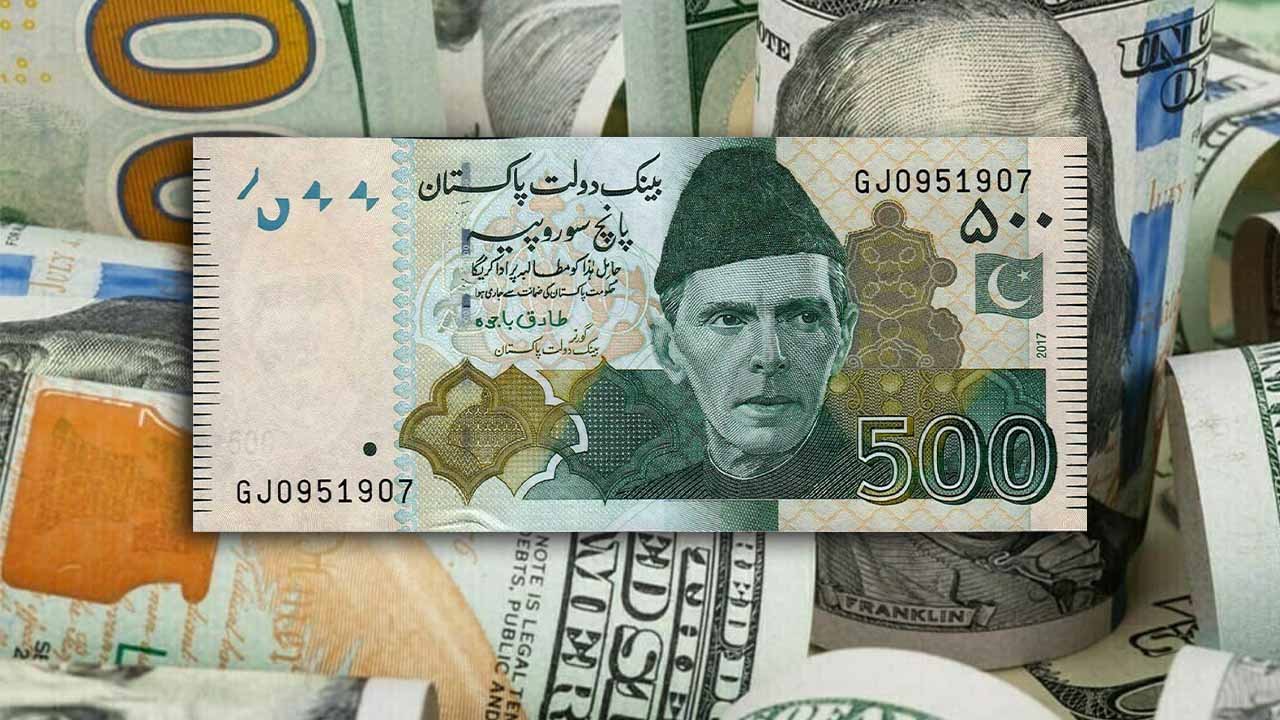
  • Pakistani rupee strengthens by Rs2.82 against dollar, closes at Rs270.51

    Pakistani rupee strengthens by Rs2.82 against dollar, closes at Rs270.51

    The Pakistani rupee (PKR) experienced an upward trend against the US dollar in the inter-bank market on Thursday, appreciating by 1.04 per cent due to expectations surrounding the revival of the International Monetary Fund (IMF) program.

    According to the State Bank of Pakistan (SBP), the currency closed at Rs270.51 against the US dollar, reflecting an increase of Rs2.82. Despite this improvement, the currency has depreciated by 23.7 per cent during the current fiscal year against the US dollar.

    On Wednesday, the PKR also saw significant gains against the US dollar, closing at Rs273.33, reflecting an appreciation of Rs2.95 or 1.08 per cent.

    In a key development, Finance Minister Ishaq Dar said on Thursday negotiations between Pakistan and the IMF are “on track” and “we will announce good news soon”.

    Speaking to the media, Dar said talks between the two sides had entered the final round, progress has been “satisfactory” and he hopes discussions will conclude today.

    The dollar index, which measures the US currency against six rivals, was 0.029 per cent higher on Thursday at 103.460, having dropped nearly 0.3 per cent in the previous session.

    Gold prices, rose for a fourth straight session as the dollar faltered, although bullion’s outlook remained cloudy amid the comments made by Fed officials.

    Meanwhile, oil prices, a key indicator of currency parity, were broadly steady on Thursday as the prospect of higher fuel demand in China as it reopens post-COVID curbs were offset by fears that US crude stocks hitting their highest for months may signal weakening demand in the world’s number one economy.

  • Pakistani rupee gains Rs1.28 against US dollar, closes at Rs275.30

    Pakistani rupee gains Rs1.28 against US dollar, closes at Rs275.30

    On Monday, the Pakistani rupee exhibited a slight improvement in its exchange rate against the US dollar, closing with a gain of 0.46 per cent in the inter-bank market. The local currency settled at Rs275.30 per US dollar, an improvement of Rs1.28, according to the State Bank of Pakistan (SBP).

    During the current fiscal year, the rupee has depreciated by 25.47 per cent against the US dollar. This appreciation follows a recent decline, with the rupee hitting an all-time low against the US dollar on Friday, closing at Rs276.58, a decrease of Rs5.22 or 1.89 per cent.

    Last week, the Pakistani rupee experienced a cumulative decline of 5.05 per cent. This was due to a number of factors, including low foreign exchange reserves, which decreased by an additional $592 million to reach a mere $3.09 billion.

    Additionally, comments made by Prime Minister Shehbaz Sharif regarding the challenging loan negotiation process with the International Monetary Fund (IMF) further added to investor concerns.

    Discussions with the IMF are ongoing, and reports indicate that the organization is requiring reforms and preconditions in several critical areas, including taxation, the power sector, and energy pricing. Analysts predict that the rupee will continue to face pressure until the IMF program is fully clarified.

  • Intraday update: Pakistani rupee drops to historic low of Rs278.67 against US dollar

    Intraday update: Pakistani rupee drops to historic low of Rs278.67 against US dollar

    After Finance Minister Ishaq Dar authorised a proposal for charity groups to help raise almost $2 billion from overseas Pakistanis, the Pakistani rupee (PKR) fell by over 2.5 per cent against the dollar during intraday trade on Friday, falling as low as Rs278 against the dollar.

    The rupee was trading at Rs278.67 versus the dollar in intraday trade on the interbank market around 12:50 pm, according to the Exchange Companies Association of Pakistan (ECAP).

    The local currency fell by Rs7.32 from its previous day’s closing rate of Rs271.35 to the US dollar.

    The PKR has lost Rs7 or more versus the US Dollar during intraday trade for the third time in a week.

    Bloomberg reports that Pakistani rupee and dollar bonds fell after Prime Minister Shehbaz Sharif said that the International Monetary Fund (IMF) is making life difficult for the country in the ongoing loan negotiations.

    According to information gathered by the US publication, USD/PKR increases 1.8 per cent to a record 275.0250. Bonds that are due in April 2024 were priced at 56.94 cents on the dollar, down 0.3 cents.

    Experts claim that the market is responding to news stories about the demands put forward by the IMF. In the coming days, rupee losses will intensify if Pakistan is unable to reach a staff-level agreement with the Fund.

  • ‘Toughest’ technical level talks between Pakistan and IMF on ninth review begin in Islamabad

    ‘Toughest’ technical level talks between Pakistan and IMF on ninth review begin in Islamabad

    Negotiations to reach a staff-level agreement on the ninth review of the $7 billion Extended Fund Facility (EFF) have started between Pakistan and the International Monetary Fund (IMF) on Tuesday.

    As the cash-strapped government launches new efforts to conclude the lingering ninth review, Finance Minister Ishaq Dar is leading the Pakistani side and Nathen Porter is in charge of the IMF review team. The review team from the IMF arrived in Islamabad on Monday.

    Pakistan is likely to discuss its strategy for implementing further revenue measures with the visiting review delegation.

    The Fund has refused to compromise on the terms it outlined for the restoration of the lending facility, causing analysts to label the technical level negotiations as “toughest.”

    According to The News, Pakistan is experiencing a severe economic crisis, with the currency falling, inflation skyrocketing, and a shortage of electricity. Because he was worried about backlash before the upcoming elections in October, Prime Minister Shehbaz Sharif resisted the IMF’s demands for tax increases and subsidy reductions for months.

    However, Islamabad has begun to yield to pressure in recent days as the threat of national insolvency grows and no friendly nations are ready to give less severe bailouts.

    To manage a growing illicit market in US dollars, the government relaxed limitations on the rupee, which led to the currency falling to historic lows. Additionally, artificially low petrol costs have increased.

    “We’re at the end of the road. The government has to make the political case to the public for meeting these (IMF) demands,” former World Bank economist Abid Hasan told AFP.

    “If they don’t, the country will certainly default and we’ll end up like Sri Lanka, which will be even worse.”

    Last year, Sri Lanka entered into debt default and experienced months of food and fuel shortages that led to unrest and finally forced the nation’s government to depart the country.

  • Intraday update: Pakistani rupee drops to all-time low of Rs270 against US dollar

    Intraday update: Pakistani rupee drops to all-time low of Rs270 against US dollar

    According to information provided by the Forex Association of Pakistan (FAP), the Pakistani rupee depreciated by an additional Rs7.4 after falling to a record low last week, trading at Rs270 per dollar in the interbank market at approximately 1:30 pm on Monday.

    From Friday’s close of Rs262.6, this represents a loss of more than 2.5 per cent.

    The decline of the rupee was blamed on a lack of dollars by Zafar Paracha, general secretary of the Exchange Companies Association of Pakistan (ECAP). He said that the dollar supply had not been resumed. Even though there is no agreement, we do not know where the banks will obtain their supplies.

    The SBP deputy governor assured representatives of exchange businesses last week that commercial banks would be instructed to provide money to the exchange companies.

    “There is a lot of panic in the market.” If dollars are received, it will cool down a bit. “As long as the market doesn’t settle, people will not sell their remittances or export proceeds,” Paracha said.

    The current spell of depreciation came after the coalition government ended its control on dollar’s price in order to convince the International Monetary Fund (IMF) officials to revive the $7 billion loan programme.

  • IMF mission to visit Pakistan next week to discuss stalled bailout programme

    IMF mission to visit Pakistan next week to discuss stalled bailout programme

    At the end of this month, an IMF delegation will travel to Pakistan to discuss the stalled ninth review of the country’s ongoing funding programme.

    The IMF provided Pakistan with a $6 billion bailout in 2019, which was increased by an additional $1 billion in 2022. However, the lender halted disbursements in November because Pakistan had not made further progress on fiscal reduction and economic reforms.

    “At the request of the authorities, an in-person Fund mission is scheduled to visit Islamabad January 31st–February 9th to continue the discussions under the ninth EFF review,” according to IMF Resident Representative in Pakistan Esther Perez Ruiz.

    A successful visit is crucial for Pakistan, which is facing an increasingly acute balance of payments crisis and is desperate to secure external financing with less than three weeks’ worth of import cover in its foreign exchange reserves.

    Multilateral and bilateral financing pledges for the cash-strapped country’s effort to rebuild after devastating floods last year are also tied to the country getting the green light from the IMF.

    According to Ruiz, the mission’s main objectives would be power sector reforms and local and international sustainability restoration strategies, such as strengthening the budgetary situation while aiding flood victims.

    The reinstatement of a market-based process to decide the value of the Pakistani rupee would also be discussed, she added. The country must have such a structure in place before receiving IMF assistance, but up until this week, it had not done so.

    The relaxation of price ceilings that the government had established but that the IMF disagreed with has resulted in a loss of close to 10 per cent of the value of the Pakistani rupee in just two days.

    In just two days, the local currency has lost close to 10 per cent of its value after the removal of price caps imposed by the government, which the IMF opposed.

    Stronger policy initiatives and reforms, according to Ruiz, are essential for Pakistan to get financial help from official partners and the markets and to lessen the high level of uncertainty that is weighing on its future.

    Market observers claimed that the IMF programme was trying to be restarted when the price limitations were abruptly removed.

  • Intraday update: Pakistani rupee drops to Rs268.30, losing more than Rs12 versus US dollar

    Intraday update: Pakistani rupee drops to Rs268.30, losing more than Rs12 versus US dollar

    Pakistani rupee (PKR) continued its downward trend on Friday, with the rupee declining over Rs12 versus the US dollar in the interbank market. The local currency was trading at Rs268.30, compared to yesterday’s close of Rs255.43 in the interbank market.

    The dollar has gained Rs30.41 in the interbank market since Thursday as exchange companies removed the dollar cap, a key demand of the IMF as part of a bailout programme agreed upon in 2018.

    PKR fell to Rs265 against the US dollar in the open market, a decline of Rs3 compared to the day before.

    The removal of the cap on the dollar rate took the currency market by surprise and resulted in extreme volatility. Experts termed it a “much-awaited adjustment” and predicted that it would help in increasing export proceeds and inward remittances through legal banking channels.

    The difference in rates between the interbank and open markets owing to the price cap removal, which had widened to Rs15 in recent months, was almost wiped out.

    The country’s foreign exchange reserves have depleted to a critical level, falling to $3.678 billion in the week ending January 20. This is not enough to finance even three weeks of imports.

    This is a developing story and will be updated after interbank closing.

  • Pakistani rupee witnesses biggest single-day decline against dollar in more than two decades

    Pakistani rupee witnesses biggest single-day decline against dollar in more than two decades

    Pakistani rupee dropped significantly against the US dollar in the interbank market on Thursday, as it fell more than 9 per cent during the intraday trade. Around 1:30 PM, the dollar’s intraday quote was Rs254.75, which represents a depreciation of Rs23.86.

    According to Ismail Iqbal Securities, “This is the largest single-day decline in both absolute and percentage terms, at least since 2000.”

    Earlier in the day the local unit was trading under Rs231.

    Experts predicted that as Pakistan attempted to meet the International Monetary Fund’s (IMF) requirements to renew its bailout programme, the local currency would depreciate significantly in the coming days.

    While speaking to Brecorder, the Head of Research at Ismail Iqbal Securities Limited, Fahad Rauf, said it seems like the rupee has been let go today.

    “This is a market-driven rate,” Rauf said. “This is a sign that we are moving closer to reviving the stalled IMF programme.”

    The market expert said the development was much-needed, as capping the interbank rate only led to the creation of the grey market. He said that the development will improve the greenback supply to a significant extent.

    On Wednesday, the rupee registered a loss for the 26th successive session against the dollar to settle at Rs230.89, a decrease of Re0.49 or 0.21 per cent.

    Pakistani rupee on Thursday fell 9.61 per cent or Rs24.54 to a shocking all-time low of Rs255.43, according to the State Bank of Pakistan (SBP).

  • Exchange companies remove cap on dollar-rupee exchange rate to abolish grey market

    Exchange companies remove cap on dollar-rupee exchange rate to abolish grey market

    The exchange companies have decided to stop artificially keeping Pakistani rupee (PKR) overvalued against US dollar in the open market and let the rupee-dollar exchange rate depreciate to its actual value.

    Pakistani rupee may steadily lose value until it reaches the level of the grey market in a few days, according to reports.

    The black market price of local currency is currently between Rs250 and Rs260 per US dollar, although traders had artificially kept the rate at Rs238 till Tuesday.

    “The association has decided to remove cap on rupee-dollar exchange rate,” Exchange Companies Association of Pakistan (ECAP) President Malik Bostan said in audio and video messages after chairing a zoom meeting on Tuesday.

    “The move would help eliminate black currency markets, increase flow of foreign currencies to the dealers and available to public (for international travelling, education and hospital fees and etc.”

    He said that in the interest of the country, traders voluntarily opted to restrict the exchange rate. But the choice led to an underground market for cash that seemed to be more detrimental to the country.

    “People were buying dollars from open market (at Rs238) and selling in black market (at Rs250-260), making it a business to mint profit,” he said, adding no one was coming to the dealers’ counters to sell foreign currency which resulted into drying up supplies on the other hand.

    According to ECAP General Secretary Zafar Paracha, the decision to abolish the exchange rate ceiling will aid in the eradication of the black market and restore the inflow of foreign money from the illicit system into the legitimate one.

    Additionally, the government has been urged by the International Monetary Fund (IMF) to relinquish control over the rupee-dollar exchange rate in the interbank market and allow market forces to decide the rate while taking the demand and supply of US dollars into account.

    Accordingly, it is anticipated that the local currency would also reach Rs250-260 in the interbank market as compared to the US dollar.

    Pakistan technically has three currency markets, including the interbank, open, and black markets. As a result, each of the three markets is providing a different rate.

    The black currency market was formed after Finance Minister Ishaq Dar tried to keep the currency artificially overvalued at Rs180–200 to the US dollar after returning to the ministry in late September 2022.

    The currency, therefore, appreciated to Rs218 in the early days of October from its all-time low of Rs240 the first time in late July 2022 and the last time in September 2022.

    Dar opened an investigation against the commercial banks, blaming them for market forces that had artificially devalued the currency to Rs240 per dollar.

    Governor State Bank of Pakistan (SBP) Jameel Ahmed said that the central bank has completed the investigation against 13 commercial banks allegedly involved in rupee-dollar parity manipulation.

    “The central bank is all set to take action against them in days (instead weeks and months). The action could be fiscal or regulatory one,” he added.