Tag: Pakistani Rupee

  • Gold price surges by Rs4,900 in a single day, reaches Rs202,000 per tola 

    Gold price surges by Rs4,900 in a single day, reaches Rs202,000 per tola 

    The price of gold in Pakistan has experienced a significant surge following an increase in the global market.  

    According to the All-Pakistan Sarafa Gems and Jewellers Association (APSGJA), the cost of 24-carat gold has risen by Rs4,900, reaching Rs202,000 per tola.  

    Meanwhile, the price of 10-gramme gold has also seen a substantial increase, going up by Rs4,201 to settle at Rs173,182. 

    In the international market, the price of gold saw a notable uptick, with a $46 increase, bringing it to $1,938 per ounce.  

    Concurrently, the US dollar (USD) weakened by Rs5.07 against the Pakistani rupee in the interbank market over the course of this week’s trading. In interbank trading, the USD declined from Rs282.69 to Rs277.62 this week. 

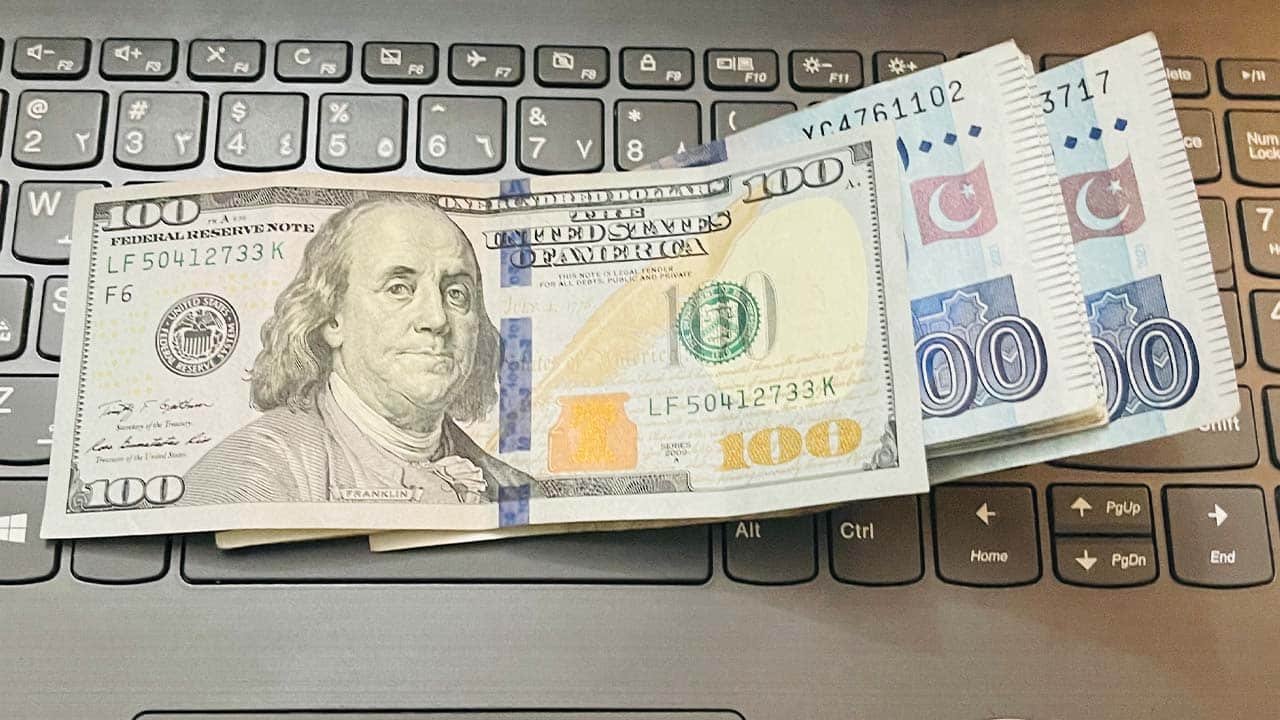
    Furthermore, the American currency witnessed a decrease of Rs4.50 in the open market at the end of the week, closing at Rs277, down from Rs281.50. 

  • Pakistani rupee appreciates by Rs5.07 against US dollar in five days 

    Pakistani rupee appreciates by Rs5.07 against US dollar in five days 

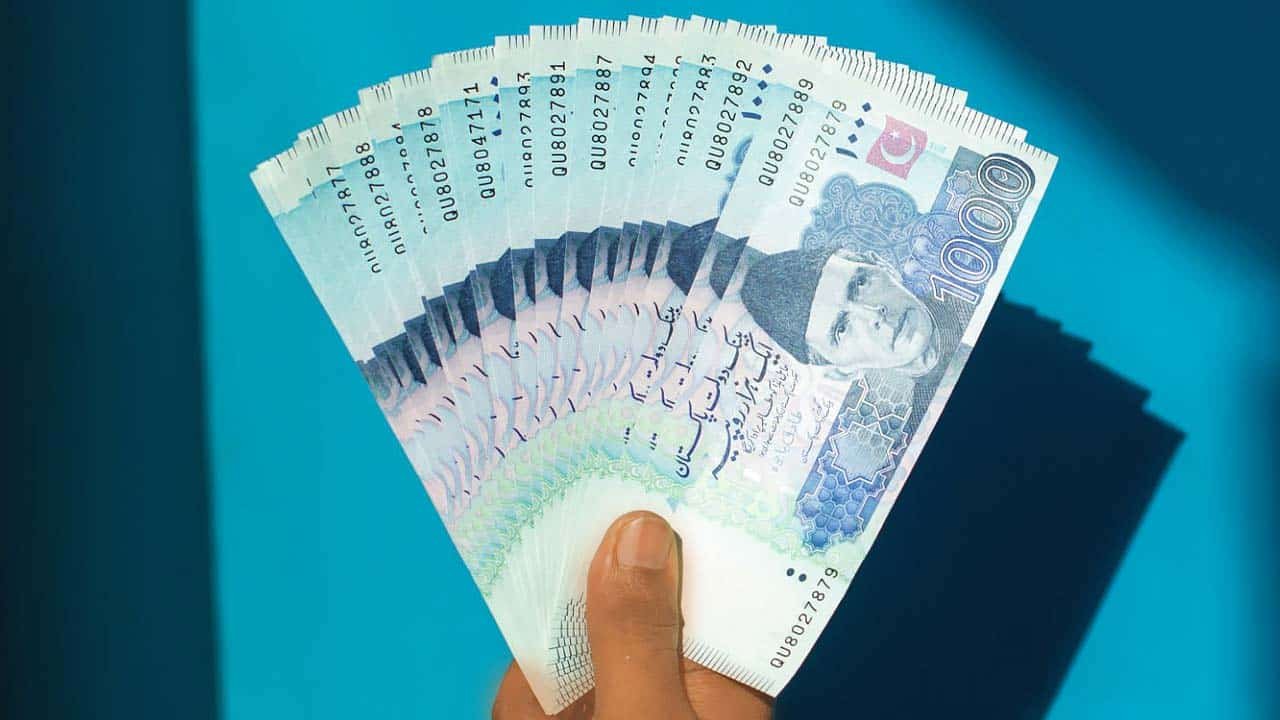
    The Pakistani rupee (PKR) showed a notable increase in value against the US dollar (USD), appreciating by 5.07 PKR in five days to reach a closing rate of 277.62 PKR per USD on Friday. This stands in contrast to the previous week’s closing rate of 282.69 PKR per USD.

    In today’s interbank trading session, the local currency exhibited a gain of 96 paisa. It reached an intraday high (bid) of 278.5 PKR and a low (ask) of 287.55 PKR.

    In the open market, exchange companies adjusted their rates, with the rupee strengthening by 1 PKR. These companies quoted the dollar at 274 PKR for buying and 277 PKR for selling, as opposed to the prior rates of 275 PKR for buying and 278 PKR for selling.

    This increase in the value of the rupee can be attributed to several factors. Notably, there has been a concerted effort, backed by the military, to curtail illegal outflows of US dollars from the country.

    Additionally, the government has implemented various measures aimed at bolstering the local currency.

    Addressing concerns related to Afghan transit trade, Pakistan’s Ministry of Commerce recently took a significant step by imposing a ban on 212 items that were previously imported into Afghanistan through Pakistan under the Afghan transit trade agreement.

    This move, enacted through a Statutory Regulatory Order (SRO) issued on October 3, was executed in accordance with the authority granted by the Imports and Exports (Control) Act of 1950.

    Furthermore, the Federal Board of Revenue (FBR) has imposed a 10% processing fee on five key categories of Afghan transit commercial goods imported into Afghanistan via Pakistan.

    In parallel, the State Bank of Pakistan has introduced recent reforms aimed at consolidating and redefining various types of exchange companies into a single category. These changes come with well-defined mandates and higher capital requirements, ultimately contributing to a more transparent financial landscape.

  • SBP reports $112 million increase in workers’ remittances

    SBP reports $112 million increase in workers’ remittances

    In September 2023, Pakistan experienced a notable surge in workers’ remittances, marking a 5.3 per cent increase compared to August 2023.

    This uptick can be primarily attributed to a crackdown on the informal money transfer systems known as hawala and hundi.

    According to the State Bank of Pakistan (SBP), the country received remittances amounting to $2.206 billion in September 2023, up from $2.094 billion in August 2023, equating to a $112 million rise.

    The majority of remittance inflows for September 2023 were derived from several key sources, with Saudi Arabia contributing $538.2 million, the United Arab Emirates $400 million, the United Kingdom $311.1 million, and the United States of America $263.4 million.

    This increase in remittances can be linked to the fact that a substantial number of Pakistani expatriates resorted to using the Hawala/Hundi channels during the initial two months of the fiscal year, largely due to a significant disparity between official and unofficial exchange rates.

    Subsequently, strict enforcement measures against illegal currency dealers have curbed this volatility, leading to a gradual appreciation of the Pakistani rupee in both the interbank and open currency markets.

    In the last month, the rupee has rebounded by 9 per cent, recovering from its record low of 307.1 against the dollar on September 5. The crackdown on these illicit currency dealers has also contributed to the 5 per cent month-on-month increase in remittances for September.

    However, when examining the entire first quarter of fiscal year FY24, the overall home remittances to Pakistan have experienced a sharp decline of 20 per cent, totalling $1.57 billion. Home remittances for the July-September period of FY24 amounted to $6.33 billion, a decrease from $7.90 billion during the same period in the previous fiscal year, FY23.

    During this initial quarter, remittances from all major sources displayed a downward trajectory. Specifically, home remittances from Saudi Arabia decreased by 22 per cent to $1.516 billion for July–September in FY24, down from $1.946 billion in the equivalent period in FY23.

  • US dollar hits six-month low against Pakistani currency 

    US dollar hits six-month low against Pakistani currency 

    The Pakistani rupee (PKR) has been on an upward trajectory, with the US dollar (USD) experiencing its lowest value in six months.

    This development follows a concerted effort to combat dollar smuggling, resulting in a decrease of Rs5.50 in interbank trading this week. The greenback concluded the week at Rs282.69.  

    In the open market, the US dollar saw a significant drop of 6.50 rupees, closing at Rs281.50, down from Rs288.

    This decline has been a consistent trend in recent weeks, starting from the beginning of September, when the US currency has been steadily losing ground against the Pakistani rupee.  

    Notably, other foreign currencies have also seen a decrease in their value within the currency market. Over the past week, the Euro fell by 8 rupees, going from Rs306 to Rs298. Similarly, the British Pound Sterling lost Rs5, reaching a rate of Rs248 from its previous Rs253.

    The Saudi Riyal experienced a modest decrease of one rupee, moving from Rs76.20 to Rs75.20, while the Emirates dirham shed Rs2.60 to settle at Rs77.20, down from its previous rate of Rs79.80 over the weekend.  

    This strengthening of the Pakistani rupee against the US dollar in the open market has occurred while maintaining a narrow gap with the interbank market, aligning with the limits stipulated by the International Monetary Fund (IMF).  

    This positive trend in the rupee’s value against the dollar can be attributed to a nationwide crackdown on illegal currency operations carried out by law enforcement agencies. 

  • Petrol price may drop by Rs41 per litre: AHL

    Petrol price may drop by Rs41 per litre: AHL

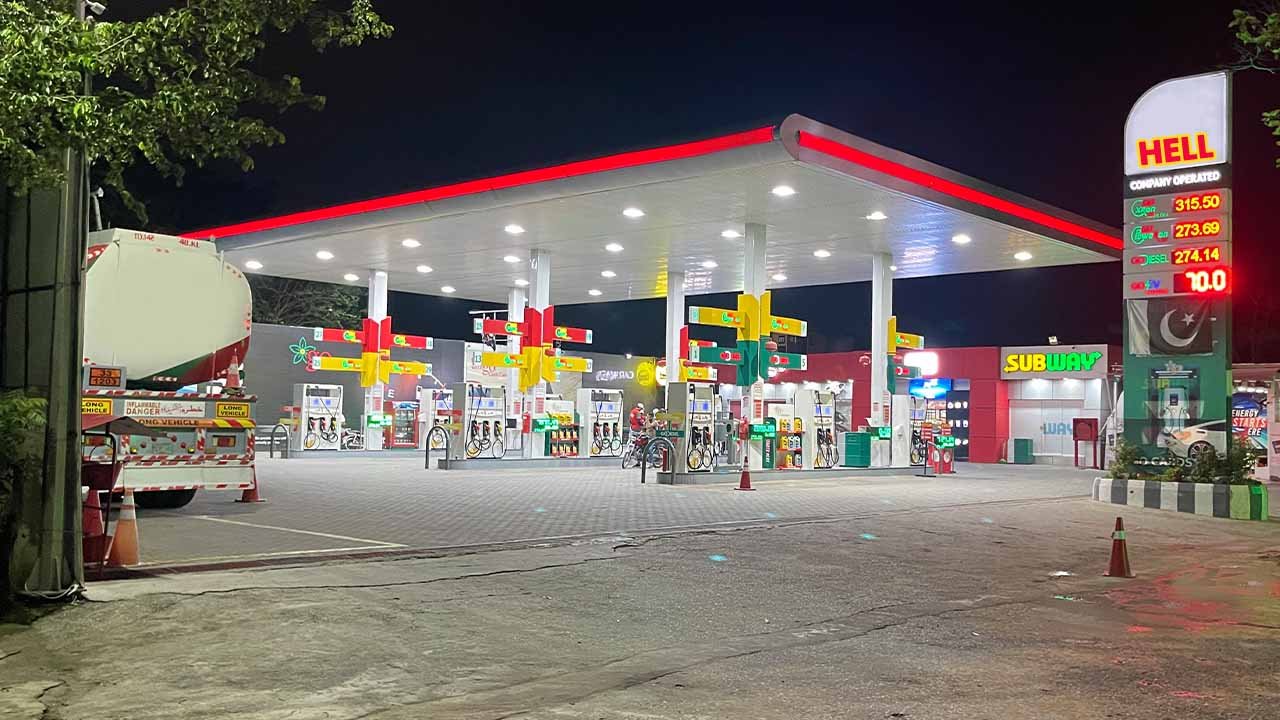
    Petroleum prices may decrease in the upcoming announcement due to a significant drop in global oil prices and the strengthening of the Pakistani rupee against the US dollar, according to Arif Habib Limited (AHL), a brokerage house.

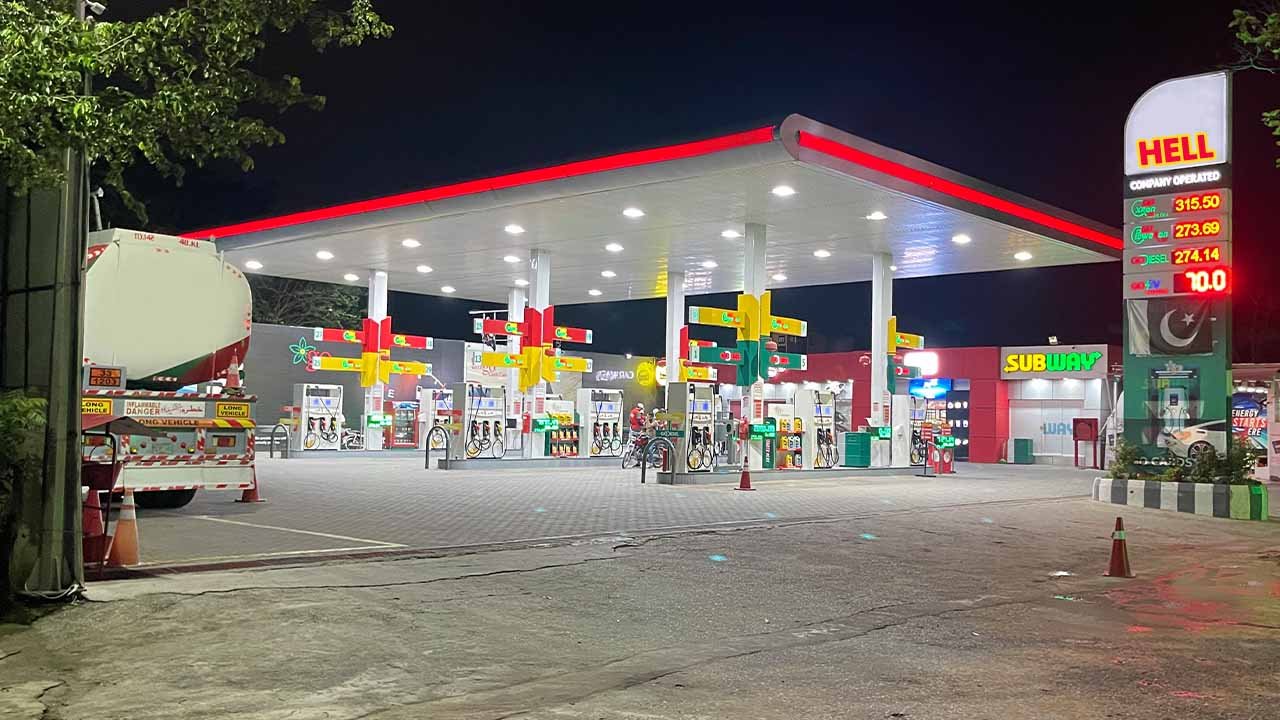
    In the next fortnightly pricing cycle starting on October 16, 2023, AHL predicts a reduction of Rs41 per litre for petrol and Rs19 per litre for diesel in local prices.

    AHL’s projection is based on several factors. International oil prices have fallen considerably in the past week due to concerns about demand, a stronger US dollar, inflationary pressures, and increased oil supplies. 

    The prices of WTI, Brent, and Arab Light have dropped by approximately 9 per cent to 11 per cent compared to the previous fortnightly averages. International gasoline (MS) prices have plummeted by 15 per cent to $84.3 per barrel, while high-speed diesel (HSD) prices have dipped by 10 per cent to $110.6 per barrel compared to the previous fortnightly averages.

    Additionally, the Pakistani rupee has appreciated by 2.7 per cent against the US dollar, standing at 283.87 compared to the previous fortnightly average of 291.65. 

    AHL’s calculations, factoring in these price changes and the assumption of stable international prices and currency rates over the next 10 days, suggest that local petrol and diesel prices are expected to decrease by Rs41 per litre and Rs19 per litre starting on October 16, 2023.

    AHL also mentioned that in the previous fortnightly pricing, there was an exchange rate adjustment of Rs11.9 per litre for MS and a negative adjustment of Rs2.8 per litre for HSD. 

    Even assuming similar currency adjustments for MS and no adjustment for HSD in the upcoming fortnightly prices, AHL anticipates that MS and HSD prices will decrease by Rs28.6 per litre and Rs19.3 per litre, respectively.

    In terms of inflation, AHL revised its October CPI inflation estimate to 27.5 per cent. Last week, the interim government announced a reduction of Rs8 per litre for MS and Rs11 per litre for HSD, resulting in new prices of 323.38 and 318.18 per litre for petrol and diesel, respectively, effective from October 1.
  • Pakistan Stock Exchange crosses 47,000-mark after five weeks

    Pakistan Stock Exchange crosses 47,000-mark after five weeks

    The Pakistan Stock Exchange (PSX) enjoyed a favourable trading session on Wednesday, with its key KSE-100 Index surging above the 47,000 level for the first time in five weeks. This uptrend was primarily driven by the robust performance of the banking sector.

    Throughout the trading session, the KSE-100 Index remained firmly in positive territory, ultimately settling at 47,079.83. This represented a notable gain of 323.03 points, or 0.69 per cent. The last instance the benchmark index closed above the 47,000 mark was on August 28.

    In a post-market report, Ismail Securities, a prominent brokerage house, attributed the positive momentum in the equity market to increased liquidity, particularly within the banking sector.

    On the preceding day, Tuesday, the KSE-100 Index managed to eke out a 0.28 per cent gain in a session characterised by a relatively narrow trading range.

    Shares of 342 companies were traded, with 172 witnessing an increase, 134 recording a decline, and 36 remaining unchanged.

    Topline Securities, another respected brokerage house, envisions the KSE-100 Index approaching the 50,000 level in a potential “pre-election rally.” They expressed their belief that the Pakistani market could experience an 8–10 per cent surge in the lead-up to the elections, assuming a smooth election process and the approval of the IMF tranche in November, stating this in an earlier note.

    Simultaneously, the Pakistani rupee continued its strengthening trend against the US dollar, registering a 0.37 per cent gain in the interbank market on Wednesday. According to the State Bank of Pakistan, the rupee settled at 284.68 after an increase of Rs1.04, marking the 20th consecutive appreciation against the greenback.

    Trading activity also saw an uptick, with the all-share index volume rising to 330.2 million shares from Tuesday’s 213.2 million. The value of traded shares also increased, reaching Rs7.3 billion compared to Rs6.1 billion in the previous session.

  • Petrol price reduced by Rs8 to Rs323.38 per litre for two weeks

    Petrol price reduced by Rs8 to Rs323.38 per litre for two weeks

    In a noteworthy development aimed at alleviating concerns over inflation, the interim government has decided to implement a reduction in the prices of petroleum products for the upcoming two weeks.  

    As of October 1, 2023, the price of petrol will see a substantial decrease of Rs8 per litre, resulting in a new rate of Rs323.38. Additionally, a price reduction of Rs11 per litre has been announced for diesel, bringing the revised rate to Rs318.18 per litre. 

    This decision has been prompted by the strengthening of the Pakistani rupee and a global decrease in petroleum prices, as indicated by the Ministry of Finance in an official statement.  

    The Ministry stated, “In the wake of variations in international prices of petroleum products and the improvement in the exchange rate, the Government of Pakistan has decided to revise the consumer prices of petroleum products.” 

    Furthermore, the government has taken steps to lower the cost of kerosene oil by Rs7.53 per litre, establishing a new rate of 237.28, while light diesel oil will witness a reduction of Rs7.77 per litre, resulting in a price of 212.45 per litre. 

  • Pakistani rupee claims top spot as best-performing currency worldwide 

    Pakistani rupee claims top spot as best-performing currency worldwide 

    Amidst a determined crackdown on smuggling and illegal financial activities, the Pakistani rupee has emerged as the world’s top-performing currency for September. During this remarkable month, the rupee’s value surged from Rs305.54 against the US dollar on August 31st to Rs287.74 on September 28th, a notable increase of Rs17.8 or 6.2 per cent.

    Impressively, this positive trend persisted for 17 consecutive trading sessions, resulting in an overall gain of nearly 7 per cent since hitting its lowest point at 307.1 on September 5th. 

    It’s essential to note that the currency market was closed on Friday, September 29th. In terms of global currency performance, the Mauritian rupee secured the second position with a modest appreciation of 0.7 per cent, while the Hong Kong dollar claimed third place, showing a slight improvement of 0.2 per cent throughout September. These figures are based on data from the brokerage house Arif Habib Limited (AHL), reported on a recent Friday. 

    Financial experts attribute this remarkable rupee surge to a series of government measures aimed at curbing dollar smuggling and currency hoarding. Additionally, during the same month, the State Bank of Pakistan (SBP) introduced structural reforms targeting the Exchange Companies (ECs) sector. These reforms included a directive for commercial banks to establish their own ECs as wholly-owned subsidiaries and an increase in the minimum capital requirement for ECs from Rs200 million to Rs500 million. 

    Notably, the Pakistani rupee recorded substantial gains in the inter-bank market, appreciating by 6-9 per cent against three major currencies – the US dollar, UK Pound, and Euro – over the past few weeks. Even in the open market, the rupee showed a significant upswing of 11-13 per cent, effectively eliminating the premium associated with the open-market rate. This is particularly impressive given that the US Dollar index reached a 10-month high. 

    This strengthening of the rupee aligns with the commitment made by Pakistani authorities in July when they entered into a vital $3 billion Stand-By Arrangement (SBA) with the International Monetary Fund (IMF). This agreement was pivotal in averting a potential sovereign default and required the adoption of a market-based exchange rate, which has now proven to be a pivotal factor in the rupee’s impressive resurgence. 

  • Petroleum prices expected to decline as rupee gains ground against US dollar 

    Petroleum prices expected to decline as rupee gains ground against US dollar 

    As reported by Geo News on Saturday, there’s an expectation that starting on October 1st, petroleum prices will see a decrease due to the stability of the Pakistani rupee (PKR) against the US dollar (USD). This shift is also attributed to a decline in international market prices. 

    The final decision on these petroleum prices will be made by the Ministry of Finance following consultations with interim Prime Minister Anwaar-ul-Haq Kakar. 

    In recent news, the Oil and Gas Regulatory Authority (OGRA) cautioned against prematurely speculating about petroleum product pricing. This comes after federal ministers suggested that rates for petroleum, oil, and lubricants (POL) might decrease in the next fortnightly review. 

    Earlier statements by Caretaker Federal Commerce and Industries Minister Gohar Ejaz and Interim Federal Minister for Information and Broadcasting Murtaza Solangi hinted at a potential drop in POL prices, thanks to the recent strengthening of the Pakistani rupee against the US dollar. 

    Over the past two weeks, the Pakistani rupee has gained about Rs19 against the US dollar. This is significant because Pakistan, as a net importer of POL products, conducts transactions in US dollars. 

    In the previous fortnightly review, the caretaker government had raised petrol prices by more than Rs26 per litre and diesel prices by over Rs17 per litre, reaching record highs at Rs331.38 and Rs329.18 per litre, respectively. 

    OGRA emphasised that the pricing of petroleum products in Pakistan depends on international market trends and the exchange rate between the US dollar and the Pakistani rupee. While international petroleum prices have risen recently, the exchange rate between the US dollar and the Pakistani rupee has improved. 

    However, OGRA pointed out that there’s still one week left before the official announcement of new prices. So, any speculations about price changes during this period are speculative and could disrupt the smooth operation of the oil supply chain. 

  • Pakistani rupee set to become best performer against US dollar following record-low recovery

    Pakistani rupee set to become best performer against US dollar following record-low recovery

    In September, Pakistan’s rupee emerged as the global front-runner in currency performance, driven by the interim government’s vigorous measures to curb illicit US dollar trading.

    According to a comprehensive report by Bloomberg, the Pakistani rupee has experienced a remarkable surge of nearly 6 per cent during this month, a notable accomplishment given the downward trajectory of most other currencies like the Thai baht and South Korean won against the strengthening US dollar, fueled by expectations of prolonged high US interest rates.

    On Thursday, the rupee exhibited resilience by rising 0.1 per cent, reaching Rs287.95 per dollar after hitting a record low of approximately Rs307 earlier in the month.

    Khurram Schehzad, the Chief Executive Officer of Alpha Beta Core Solutions Pvt. Ltd., a financial consultancy located in Karachi, commented on the situation, highlighting the prevalence of leakages through informal channels such as hawala and hundi trade, which are common in South Asia.

    Schehzad noted, when the USD rate reverses, everyone from hoarders to exporters, who have been holding onto their export proceeds, starts offloading their dollars.

    The Bloomberg report underscores the Pakistani government’s intensified efforts to crack down on illegal dollar trading, which have significantly contributed to the rupee’s resurgence.

    In addition to these measures, the central bank has raised capital requirements for smaller exchange companies and mandated large banks to establish their exchange entities, aiming to enhance transparency and oversight in the retail foreign exchange market.