Tag: pakistani society

  • Social media is sharing controversial opinions about desi culture

    What would be the most controversial, yet important take you have about desi society?

    A user on X posed this challenge to their followers, asking for opinions about every single aspect of desi society. Whether it is excessive body shaming, poor funeral etiquettes, division of household chores within family members, or wedding obsessions, desi social media users held back nothing, leaving us with some very blunt, but direly needed takes.

    Your wives are not unpaid house helpers. We wish more families would understand this.

    Please understand that funerals are a time when family members need to grieve. Instead of giving them space, desi family members end up doing the opposite which is tragic to witness.

    Teach your sons to be the kind of men your daughters would feel safe around.

    We hope more people start unlearning that talking about periods is a taboo.

  • Pakistani women are sharing their unpopular opinions about marriage on Twitter

    Pakistani women are sharing their unpopular opinions about marriage on Twitter

    If you could share an unpopular opinion about marriage, what would you say?

    Pakistani women are sharing cold hard facts with this trend on X (formerly Twitter), sharing their frank opinions about marriage. Since desi societies predominantly consider marriages to be a system arranged without a woman’s consent or opinion, many women shared what they thought about relationships, living with parents and other issues Pakistanis should really consider listening to.

    We completely have to side with this one. Your wives are not hired helpers for your home or your parents.

    Never take any excuses like this from someone who claims to love you.

    https://twitter.com/HamadRajpvt/status/1700195083272732771?s=20

    Please also adding ‘Nikkahfied’ in their bio is super cringey.

    When will desi people even listen to this?

    Normalize small weddings!

    https://twitter.com/girlwithwingss/status/1700024689475891622?s=20

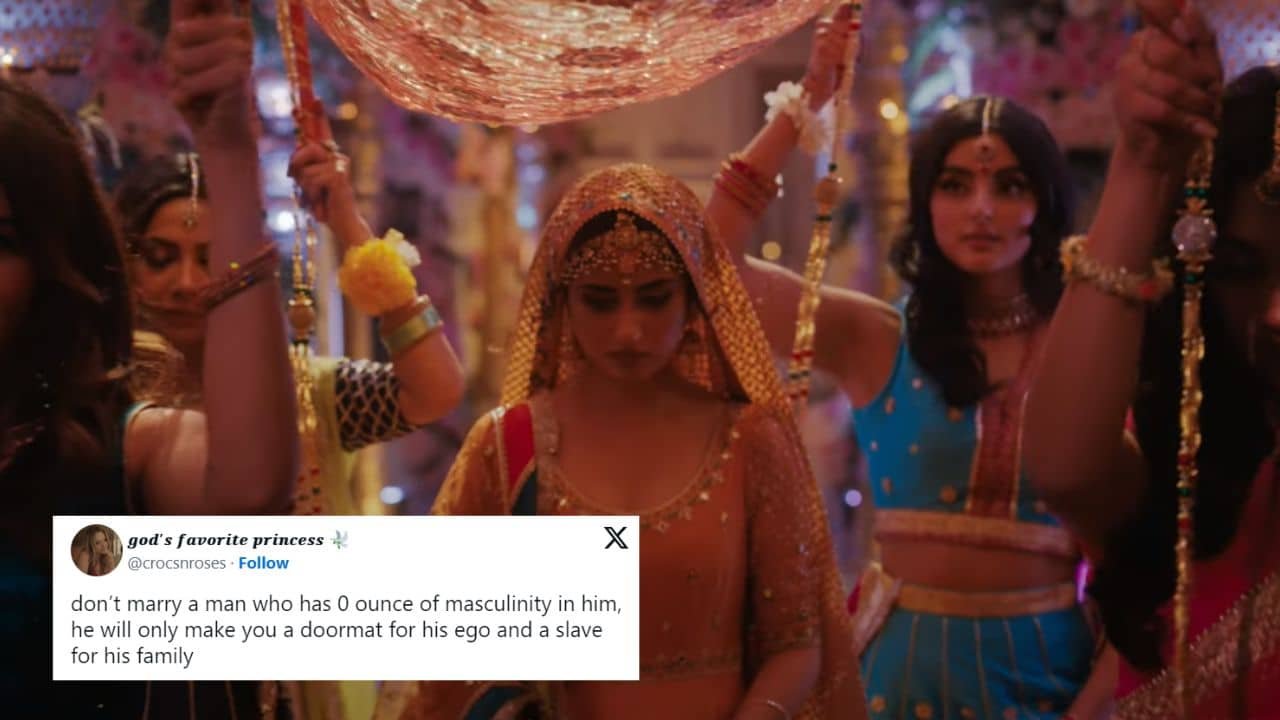
    Marry someone who is self-confident and makes sure he never burdens you with his demands

    https://twitter.com/crocsnroses/status/1700154712937410594?s=20
  • Are we allergic to joy?

    Are we allergic to joy?

    There is a poignant moment in the documentary ‘The Romantics’ where filmmaker Aditya Chopra reflects back on the 26/11 Mumbai attacks that shook the entire country. At the time, his production company had been gearing up for the release of his upcoming romantic comedy film ‘Rab Ne Banadi Jodi’. Many of his colleagues had urged him to push forward the dates to prevent an uproar. Chopra said in the documentary that he knew that more than ever, that was the time people needed a reminder of joy and happiness in their lives, so he decided to stick with the original date. When the film released in cinemas across India, it became a hit.

    Currently in the state ‘Bannistan’ is in, with our economy struggling, inflation rising and more women finding it difficult to access public spaces without the fear of sexual assault or harassment, we have now developed an allergy to joy. Anything that prompts laughter or makes people happy. Solution: ban it. We ban our films, we call for festivals to be stopped because of fears like “western sazish” or “anti-Islamic” and then we wonder why our upcoming generation has no creative skills or any motivation to find work.

    Art is not just a prop to promote state policies, but a way to encourage members of society to find joy and reflect on the way they are living their life. We need art because it encourages us to express our inner selves and also because it is a powerful way to spread messages on social issues to the masses. Perhaps this is why art terrifies our public officials so much, and why it is censored more than any other industry in this country. We label the art we don’t like as ‘immoral’ because it is the only medium that can reflect the tabooed topics we are so afraid to speak about. Consider dramas in the past like “Dil Na Umeed to Nahi” which got several notices from PEMRA because it discussed the issue of child sex trafficking, and the difficulties survivors face in rehabilitating themselves. Another notice was sent to ban hugs or caressing, because God forbid any marriage is seen as being happy or affectionate. But we refuse to think about the numerous domestic violence and abuse scenes we watch on our screens every day.

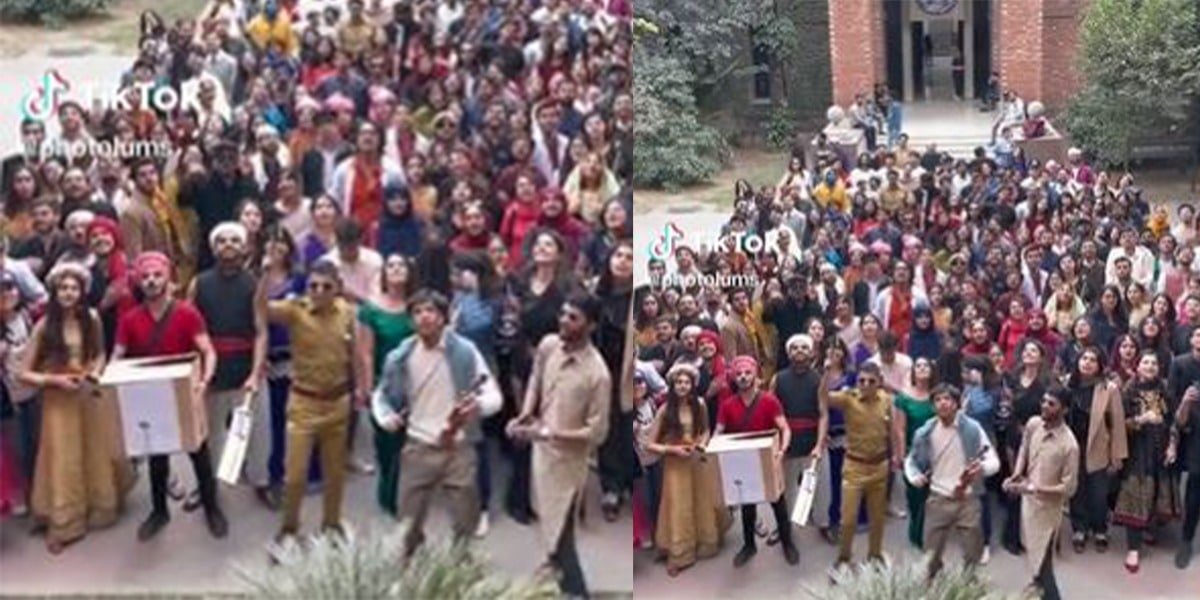
    A few days ago, a video began trending online featuring Bollywood day at LUMS, where students showed up dressed as their favorite characters from movies and dramas. But in response, social media users began criticizing the university for promoting vulgarity, and called the participants “kanjarkhana”

    Slur words are labels that we put on people who do not conform to the idea that it is shameful to seek celebration and joy in our lives, and words like these can be traced to our colonial roots. The British had demoralized the kunjar community in the sub-continent, a nomadic community of folk entertainers. As Jasir Shahbaz writes for Samaa, under the British rule, the kanjar community had been socially outcasted and under the Criminal Tribes Act, 1871, they were listed as “addicted to the systematic commission of non-bailable offences.”

    These terms are thriving under the ongoing reign of Bannistan: shame anyone who works in entertainment as a ‘kanjari’. We criticize female actors for performing on screens, deem women who seek their independence or protest for equal rights as loose and immoral, when in reality anything that challenges our misogynist and regressive mindset is improving our lives.

    In defense of the students who celebrated the end of their University days and any other woman out there trying to live her life, kanjari is an empowering term because it means we’re celebrating life. In times of repression and censorship, celebrating art can be the greatest form of living because it allows us to represent ourselves on screen. And gives space to every individual in society, regardless of caste or background. So instead of shaming these children for celebrating Bollywood day or just protesting in the streets, hold back your thoughts and just go about your own day if you’re not interested in what they have to say. Because now more than ever, we need joy in our lives. We need a reason to keep moving and find solace in the countless stories we see in films or read.

  • Sri Lankan factory manager tortured to death in Sialkot over alleged blasphemy

    Sri Lankan factory manager tortured to death in Sialkot over alleged blasphemy

    Trigger warning : This article contains graphic content.

    A Sri Lankan factory manager has been tortured to death on the charges of blasphemy. As per social media reports, he was working as a manager at a private sportswear manufacturing factory.

    As per District Police Officer (DPO) Umar Saeed Malik, the man was murdered by factory employees. According to the DPO, the police have arrived at the place of incident.

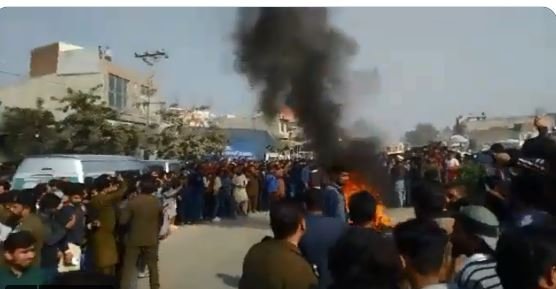
    In the video shared on social media, it can be seen that the man’s body was burnt publicly after he was murdered.

    According to sources, the Sri Lankan national allegedly tore posters off a wall in the factory, which had religious text written on it. He removed it from the wall as the wall was not a place where posters were allowed. After taking down the poster, hundreds of people gathered, dragged him outside, killed him and then burnt his body.

    His name was Priyantha Diyawadana. He joined the factory in 2010 and has been here since.

    TW: The video contains content that can be disturbing for some viewers.

    https://twitter.com/saboohsyed/status/1466694258199465987?s=21

    According to journalist Rabia Mehmood, “Factory workers Talha, Furhan complained and decided on the spot to kill the SriLankan national.”

    She shared a picture of the two men who claimed to be part of the lynch mob and complained against the manager and then “dragged him out to burn him to death, and are using Tehreek Labbaik’s violence inciting narrative to justify why they did it”.

     Punjab Chief Minister Usman Buzdar have termed the incident as “horrific”. Buzdar has also instructed IG Police to investigate the incident.

    People on social media are condemning the incident:

  • Polish blogger Aleks Mroz busts Katherine George’s charade

    Polish blogger Aleks Mroz busts Katherine George’s charade

    If you’ve recently been active on social media, chances are you might have come across two pictures of a white woman standing with a group of men and claiming that Pakistan “is a country that loves and respects women”.

    The pictures were tweeted from an account by the name of Katherine George, which has now been deleted. Katherine’s tweets were widely shared by social media users, with some endorsing her statement and others sceptical with her comments and identity.

    Turns out that Katherine George does not exist and her Twitter account was fake. Because pictures shared from that account were actually of Polish travel blogger Aleks Mroz, who took to her Instagaram account to clear the air and set the facts right.

    “I can personally talk about my own experience and the hospitality and kindness I received and it’s true,” said Alex while talking about her experience in Pakistan. “But I can never speak for the Pakistani women and I will never do.”

    “As any other foreigner here, I am the guest in Pakistan and and I can not speak out for local people,” she said further. “The amount of hate spread by one FAKE Twitter post influenced many people’s opinions causing huge harm not only to me (as my face was used in the highly-biased post), to other foreigners who are fully aware of the difference between the perception of a tourist and a local, but also to Pakistani people facing a FAKE white tourist who undermines their voice.”

    “Spreading hatred, ignorance and colour-oriented posts is the LAST thing I would like to do,” she added.

    Mroz also busted Katherine’s pretence, shared her own experience of being a tourist in Pakistan and what she thinks about the safety of local women in Pakistan.